Biographies: Alexander the Great
With detailed lesson plans, slideshow presentations for the teaching input and a range of activities for each lesson, this Alexander the Great KS2 lesson pack provides everything you need to teach this engaging scheme of work. By the end of the seven ready-to-teach lessons, your class will have gained an overview of the life of this remarkable historical figure, be familiar with the features of biographies, and have planned, written and edited their own biographies about Alexander the Great.
Teaching ancient Greece? Check out our collection of KS2 Ancient Greece lesson packs and resources.
Features of a Biography
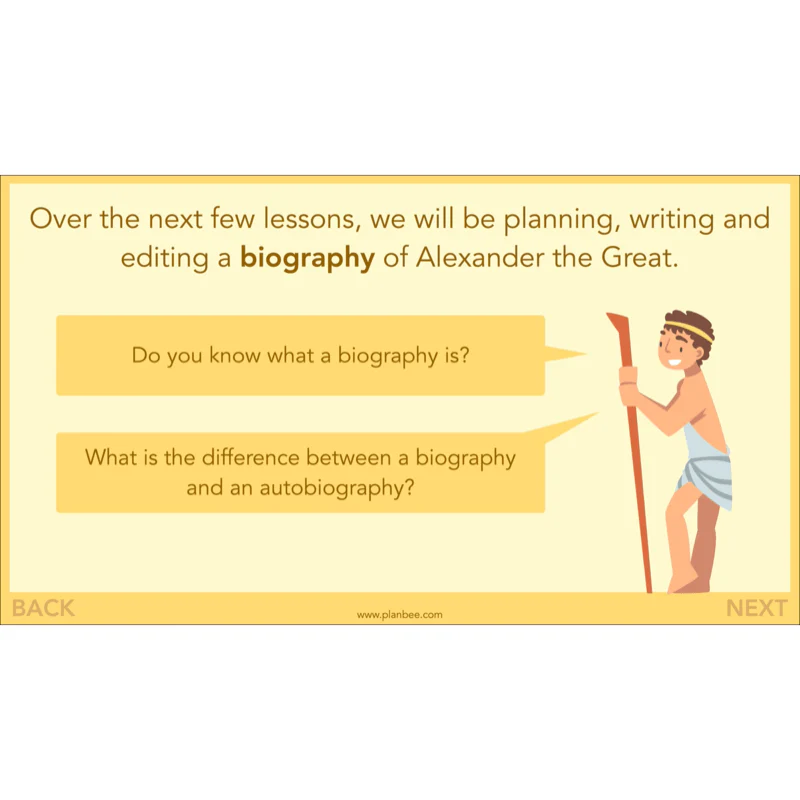
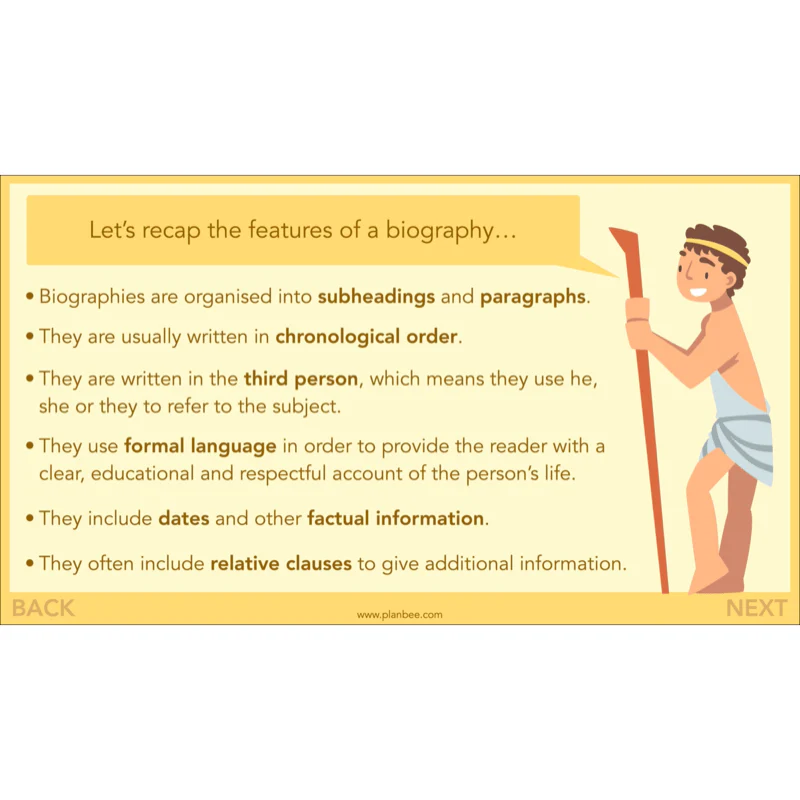
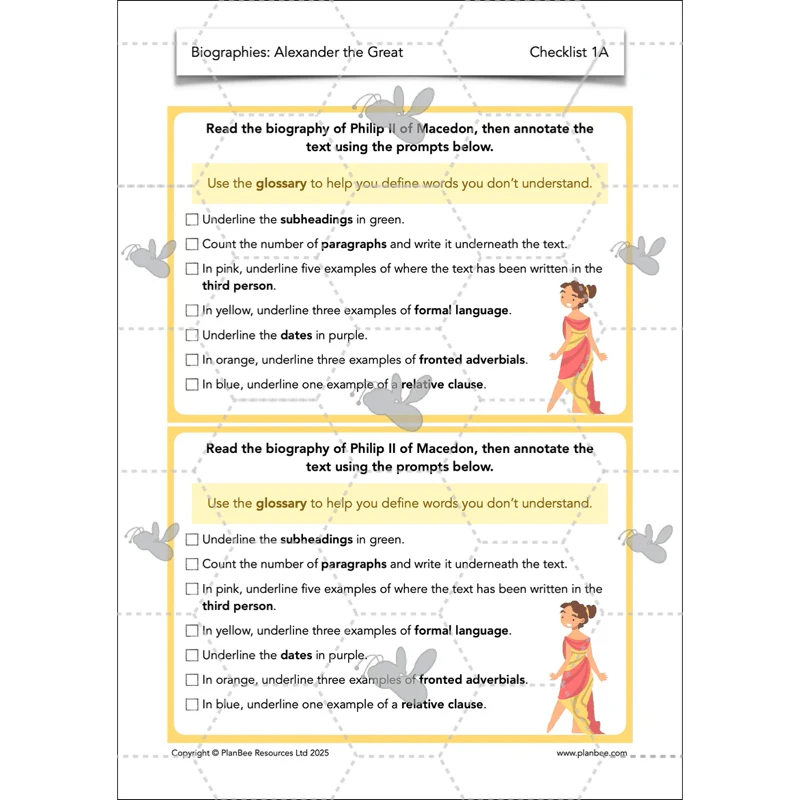
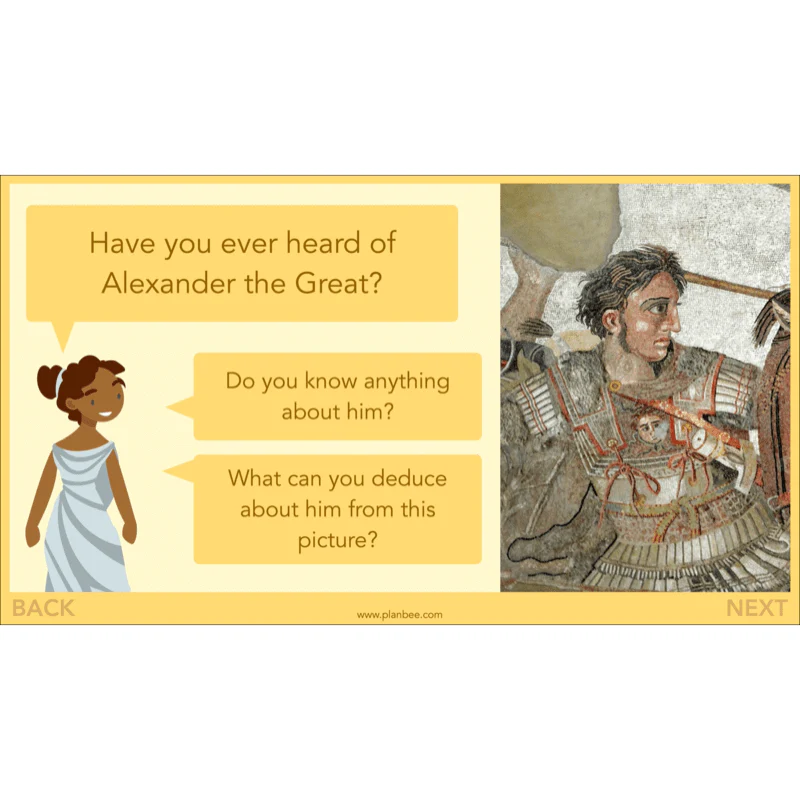
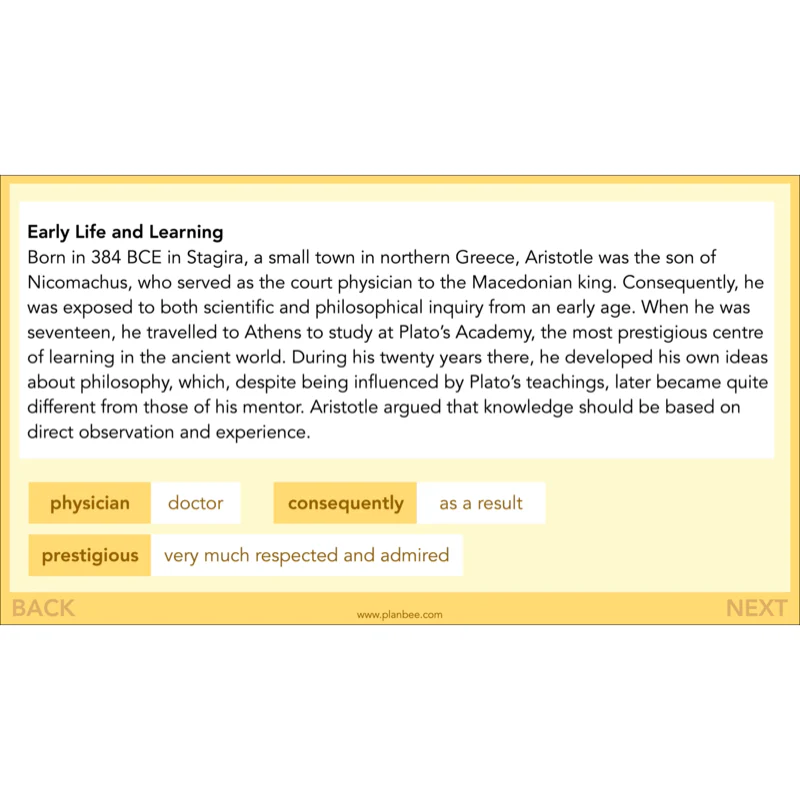
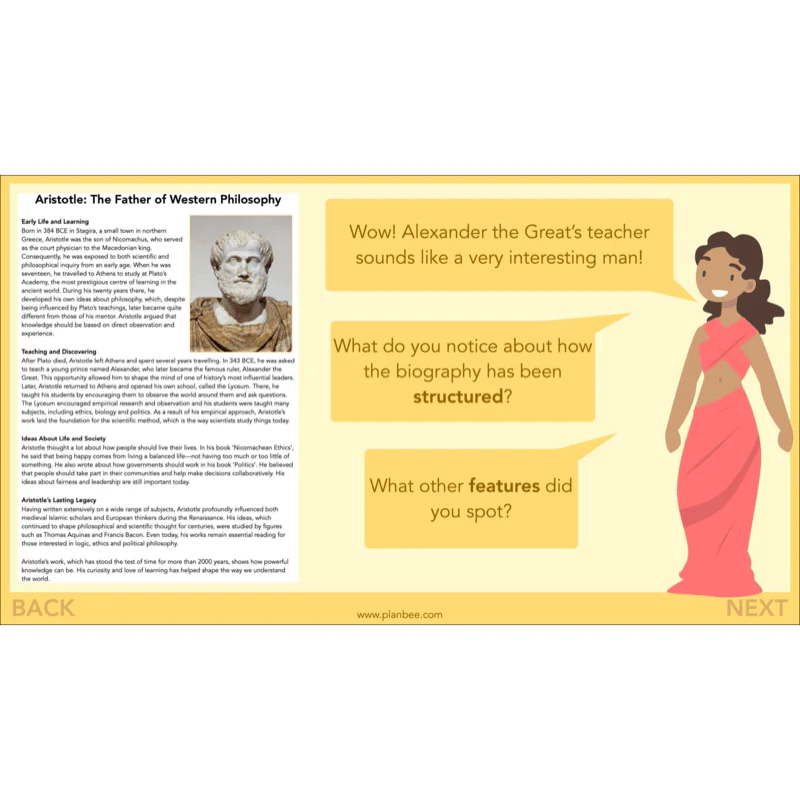
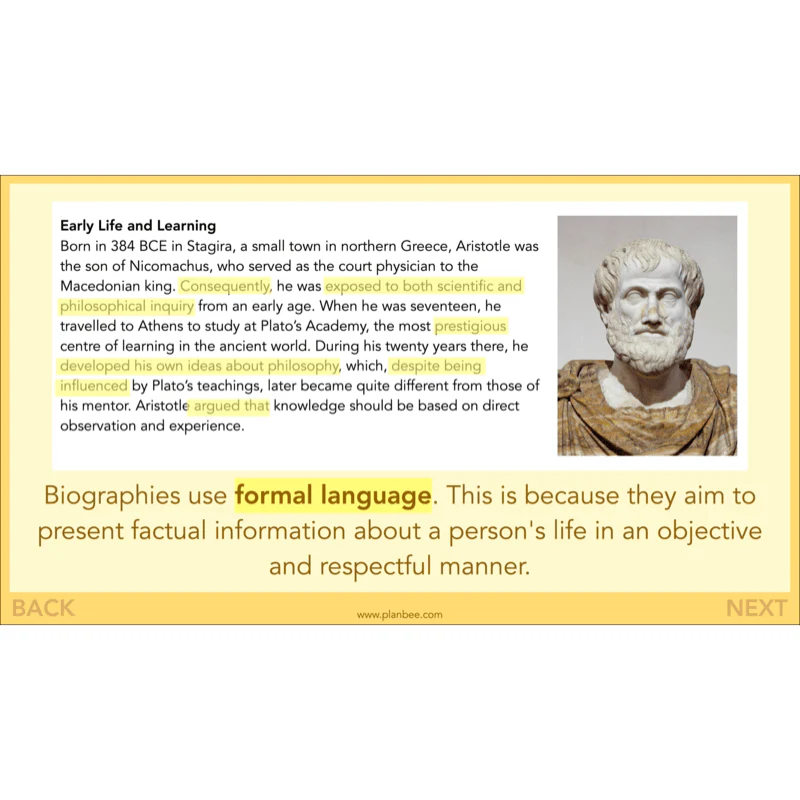
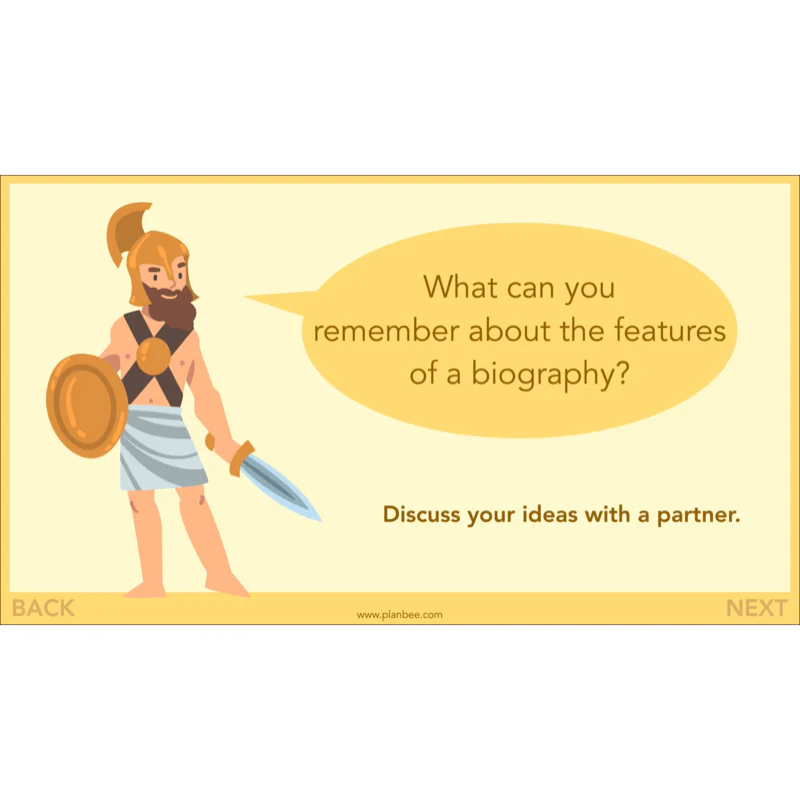
The first lesson in this scheme of work gives your class a brief introduction to Alexander the Great before exploring the features of a biography. During the teaching input, children will read a biography of Aristotle (Alexander the Great's teacher) and use this to identify features such as subheadings, paragraphs, tense, fronted adverbials, factual information and formal language.
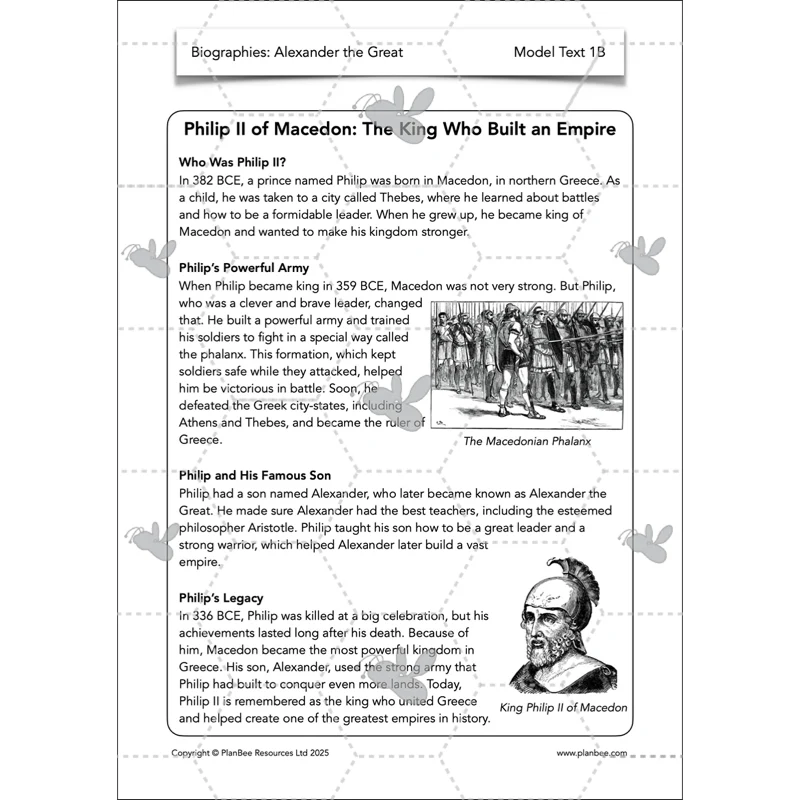
During their independent learning activities, they can then spot these features in a biography on Philip II of Macedon (Alexander the Great's father) or use this biography to answer comprehension questions.
- Activity ideas
- Differentiated model texts
- Differentiated checklists
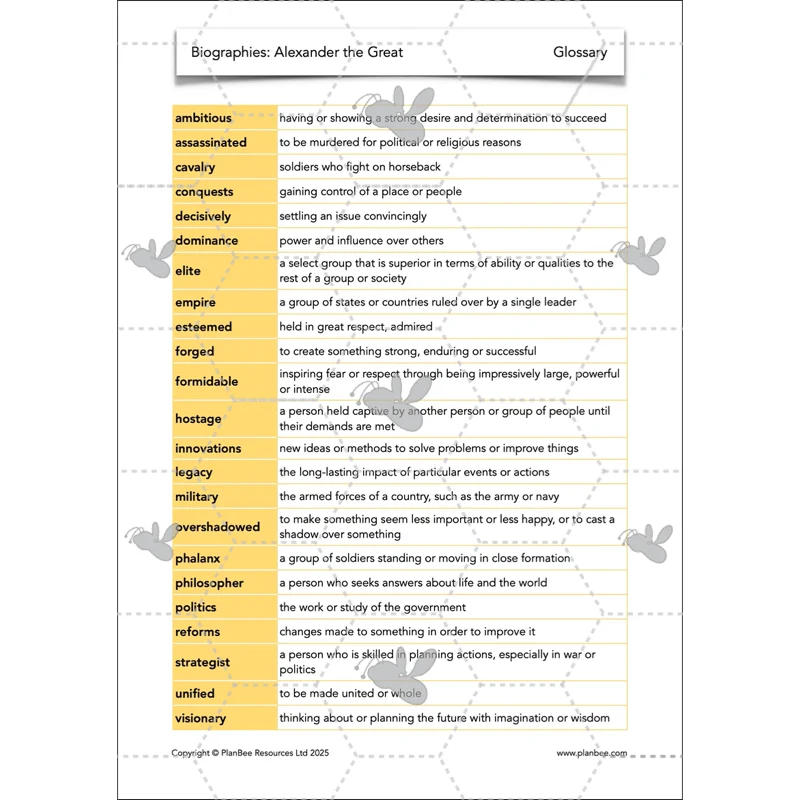
- Glossary
- Worksheet
- Question Cards
Chronological Order
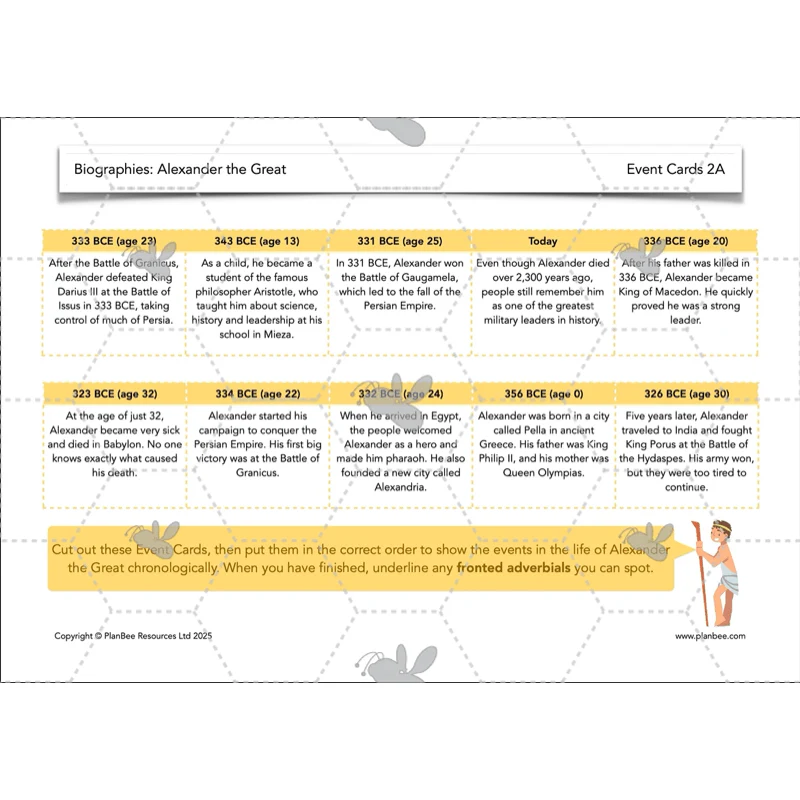
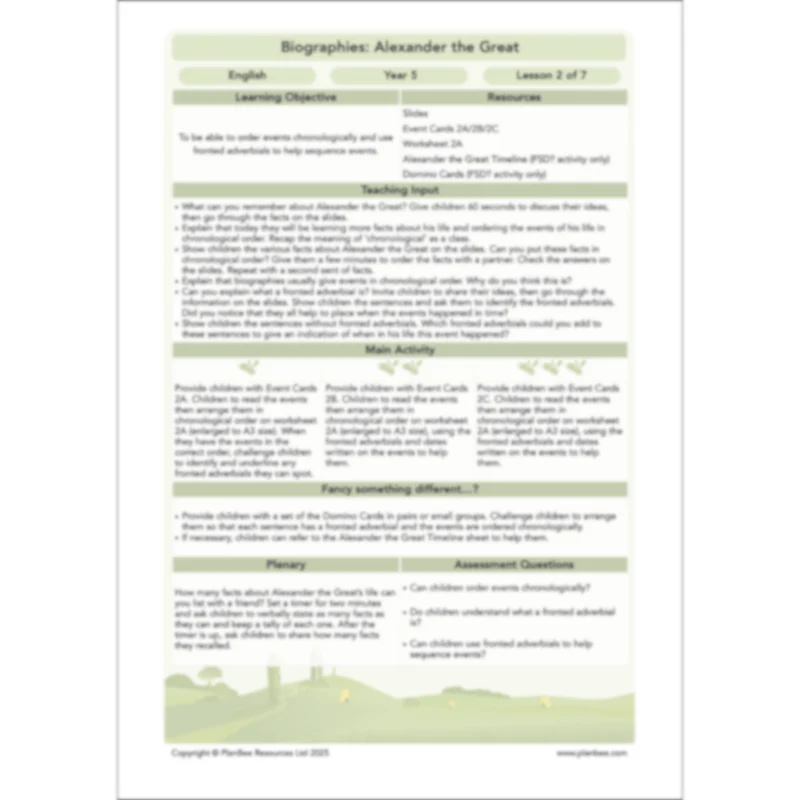
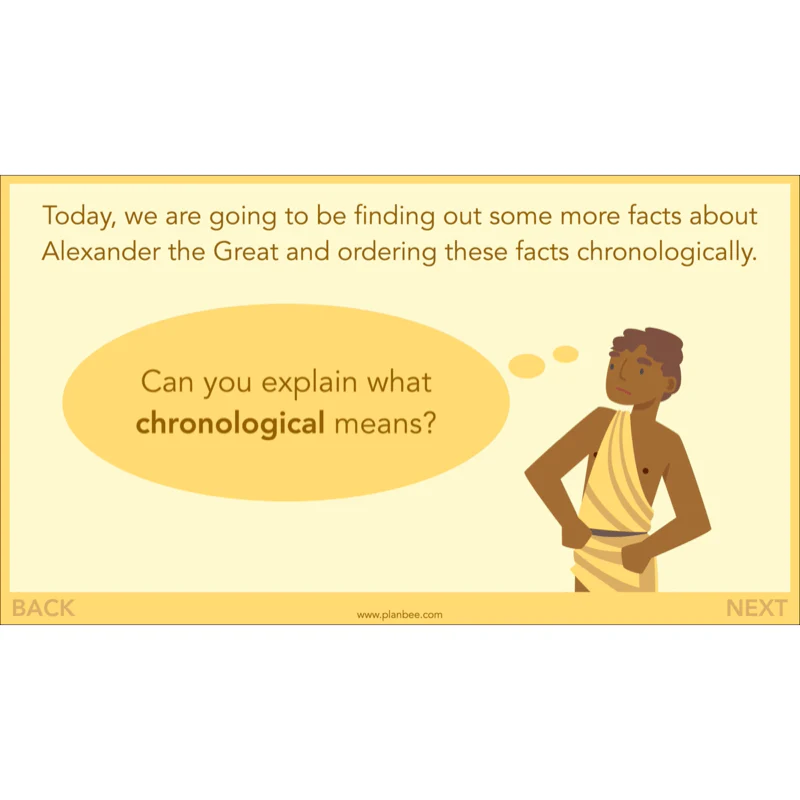
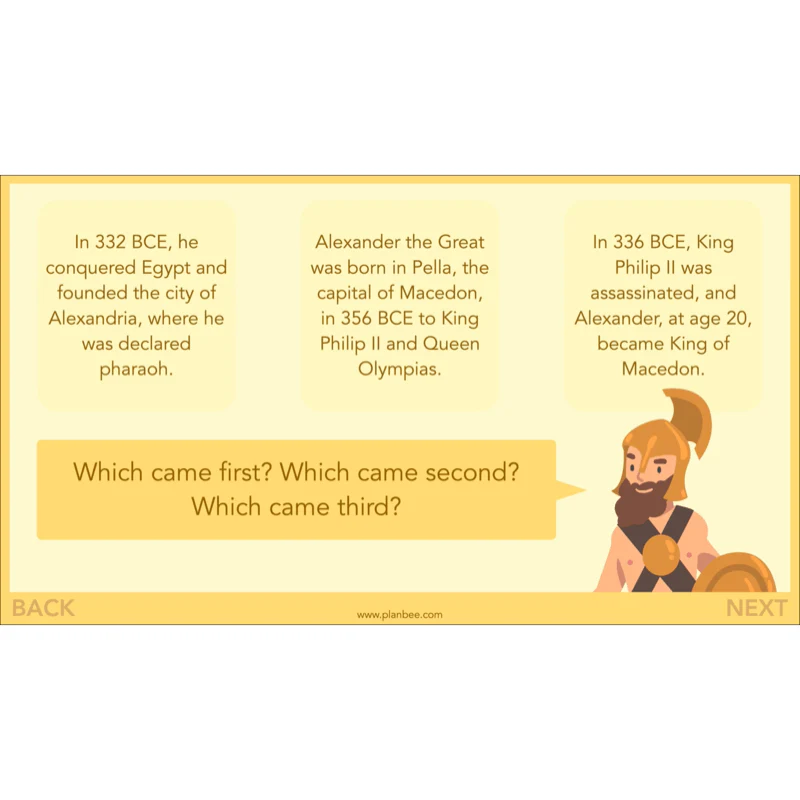
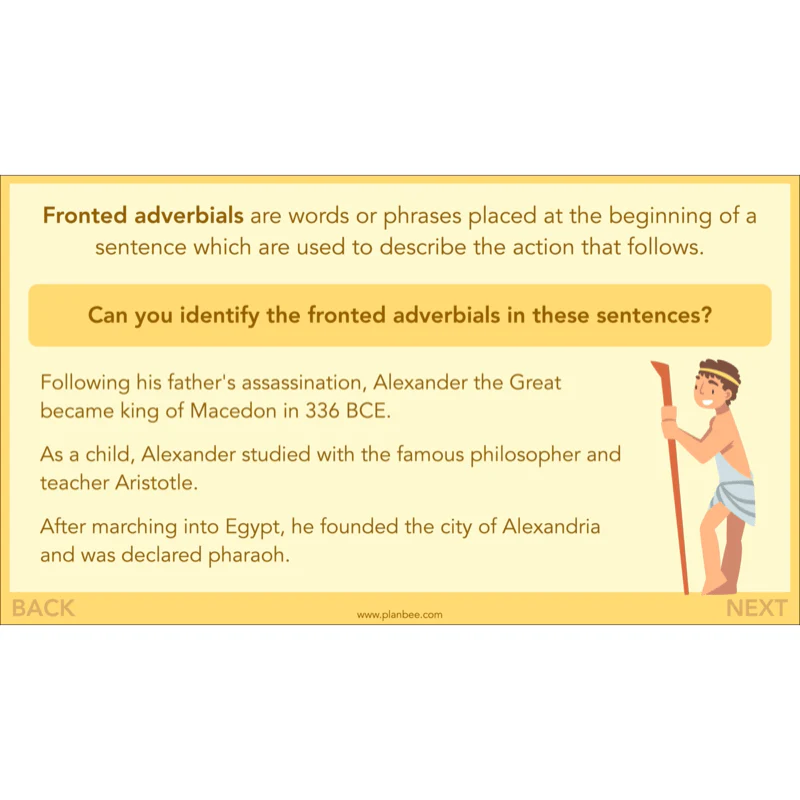
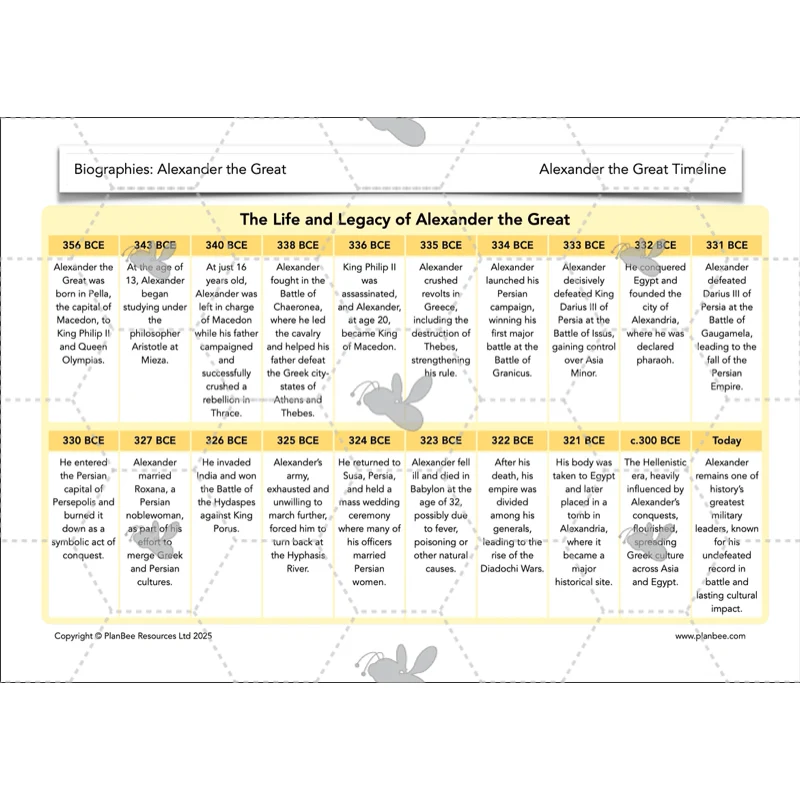
In this lesson, children will explore different events in the life of Alexander the Great and arrange them in chronological order. A quick recap of the difference between BCE and CE is given in order to help them to do this. They will also explore how to use fronted adverbials to help sequence events.
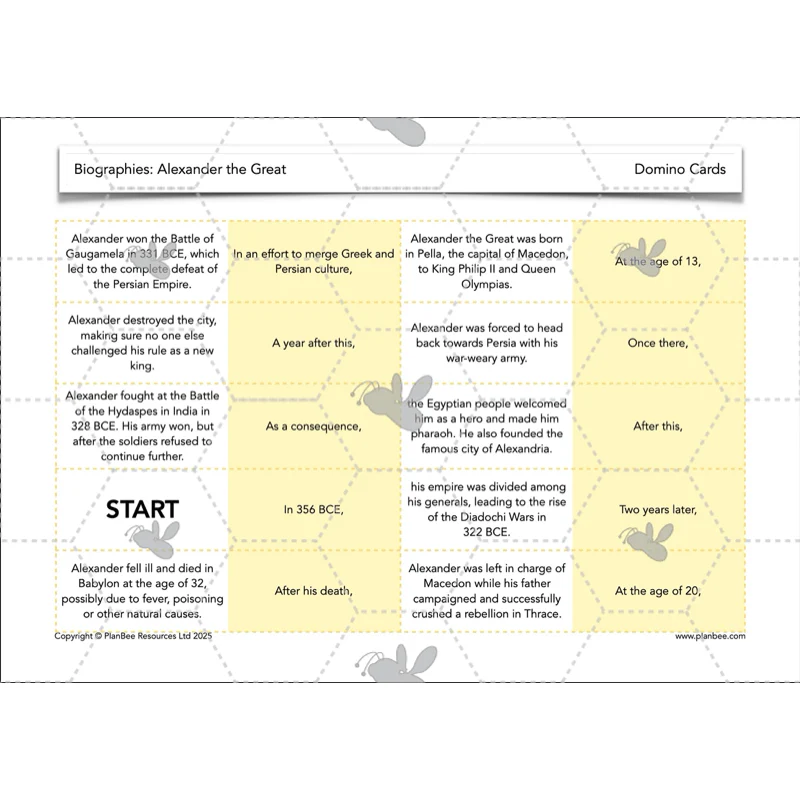
Once they have explored this together as a class, children can then either order differentiated Event Cards chronologically, adding in fronted adverbials where appropriate, or they can match a set of domino cards where one side has a fronted adverbial and the other has an event. Both activities will give your children an overview of the main events in the life of Alexander the Great by the end of the lesson.
- Activity ideas
- Differentiated event cards
- Worksheet
- Alexander the Great Timeline
- Domino Cards
Précising Longer Passages
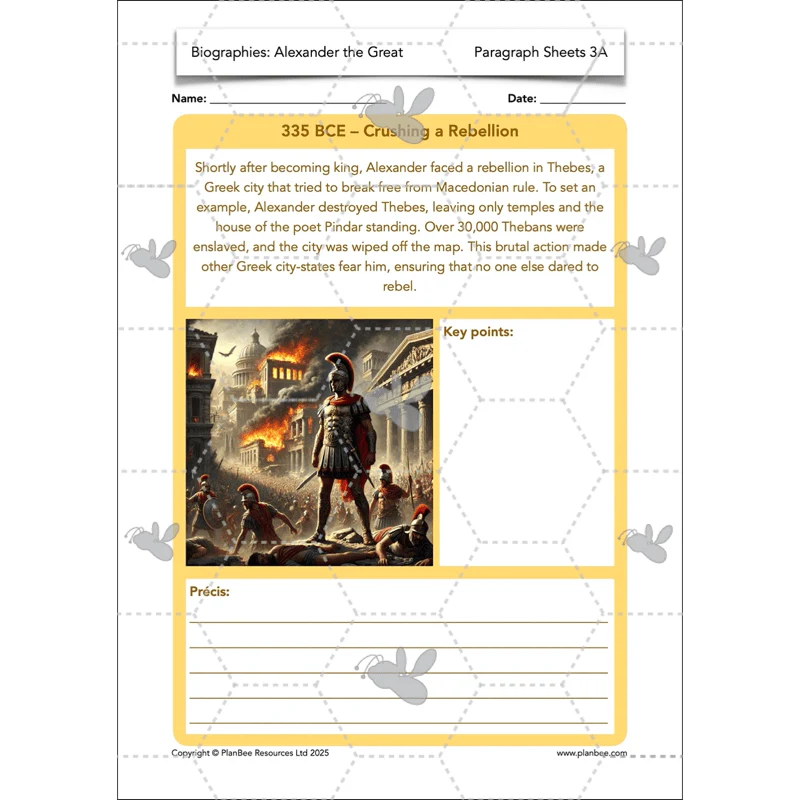
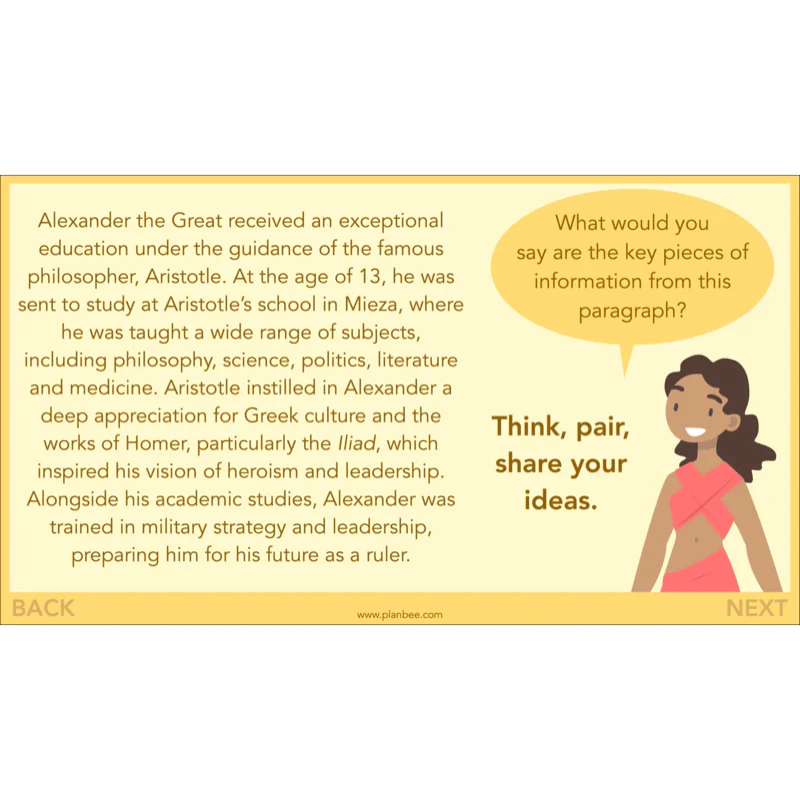
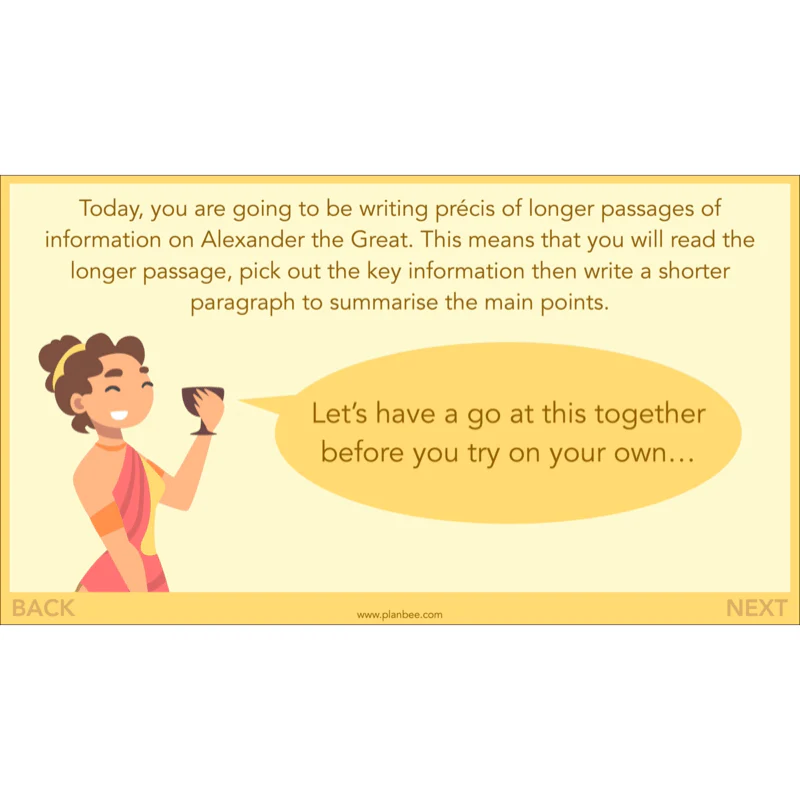
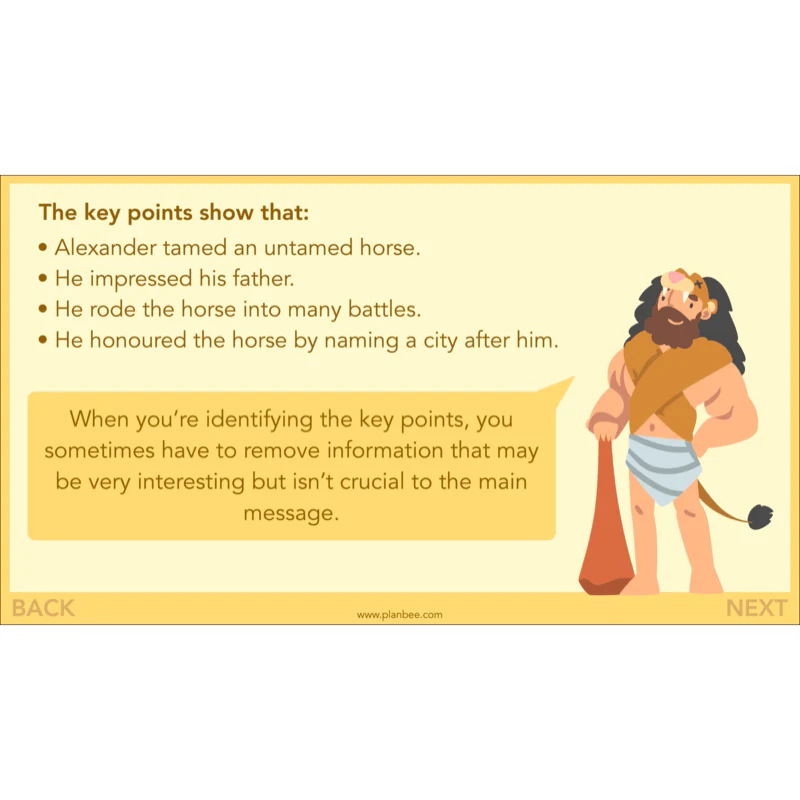
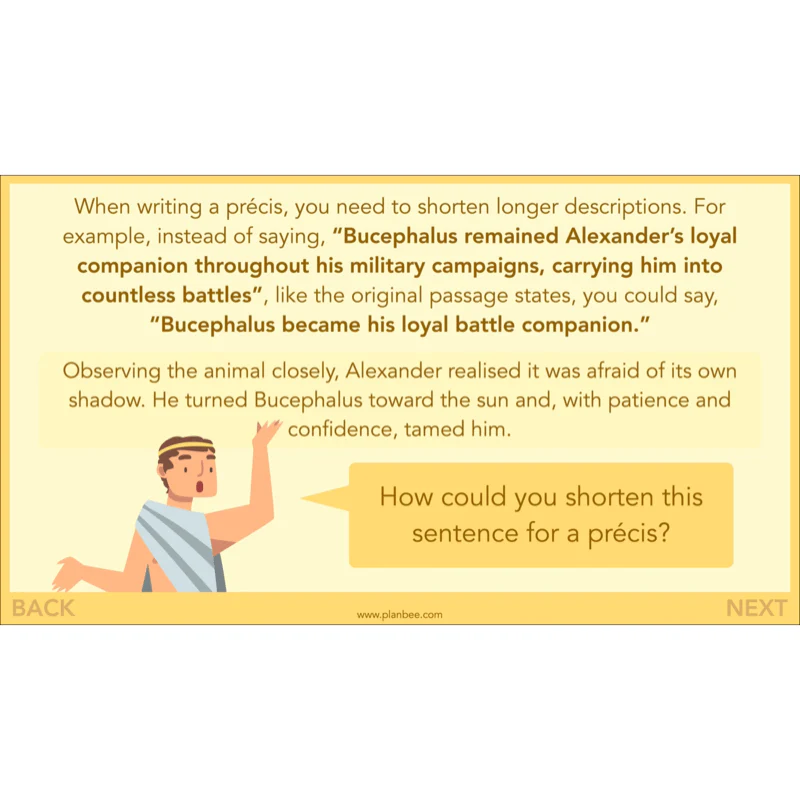
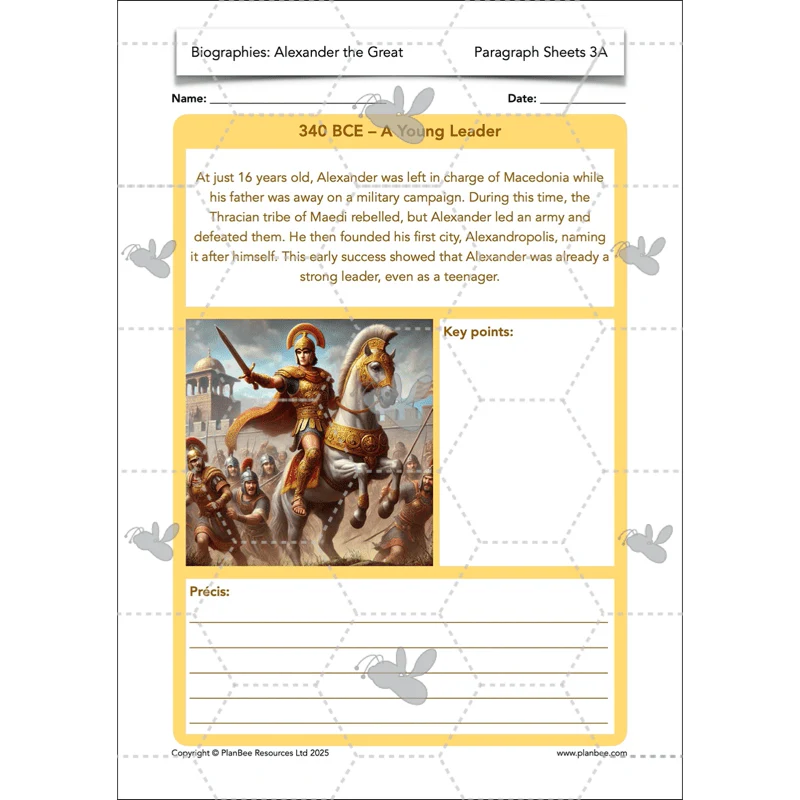
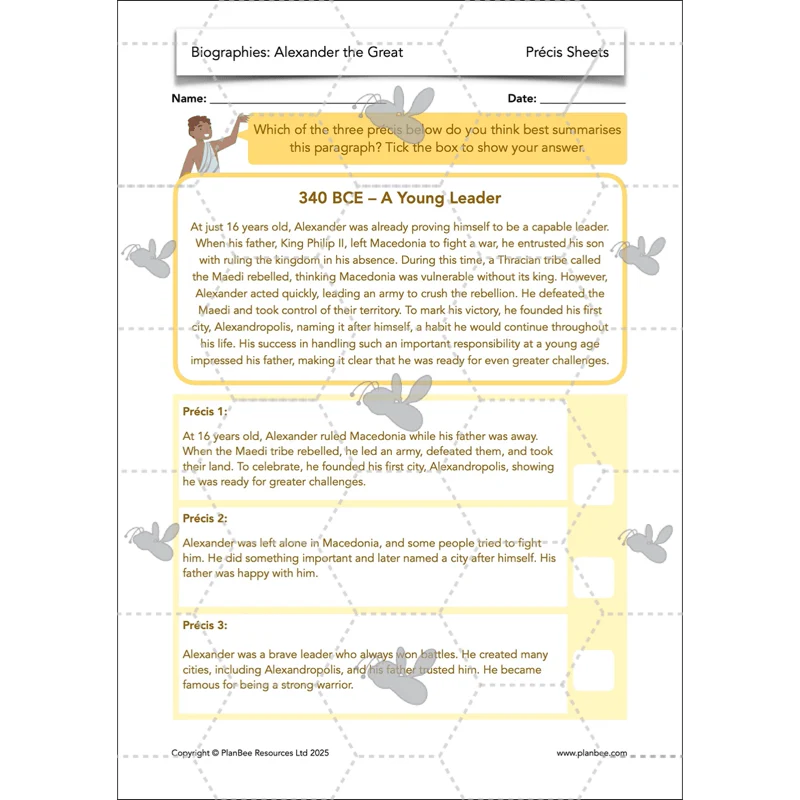
Now that your class has a basic overview of the events of Alexander the Great's life, it's time to delve a bit deeper! After a quick quiz to recap what they know, children will read longer passages of information about different events in his life then learn how to write a précis to summarise the information.
After doing several examples together as a class, children can then have a go for themselves. There are two different activities to choose from, both of which are designed to be adaptive to suit different learning levels.
What's included:
- Lesson plan
- Slides
- Activity ideas
- Differentiated paragraph sheets
- Précis sheets
Facts and Formal Language
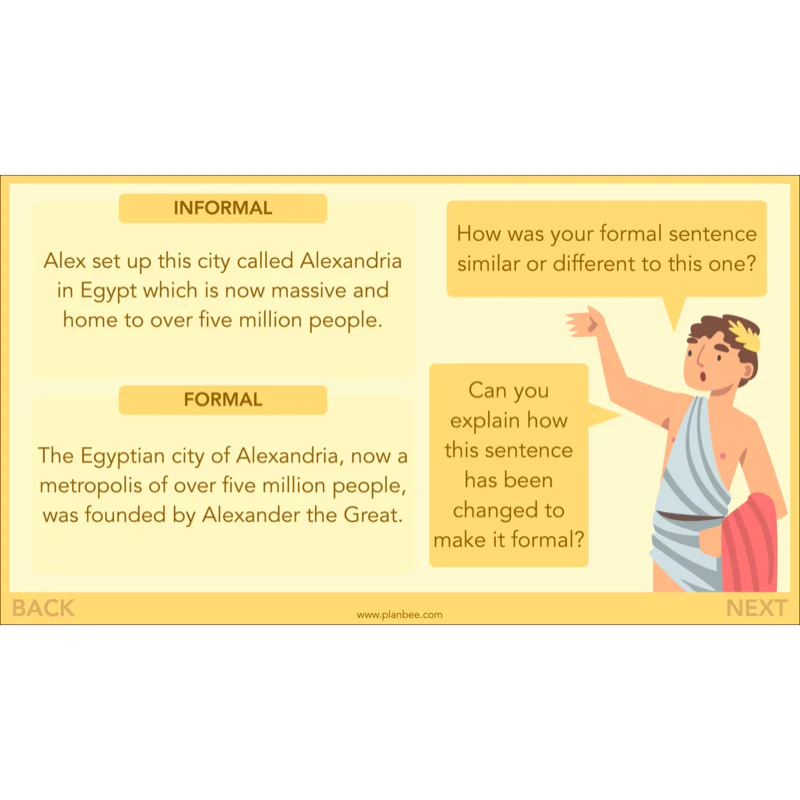
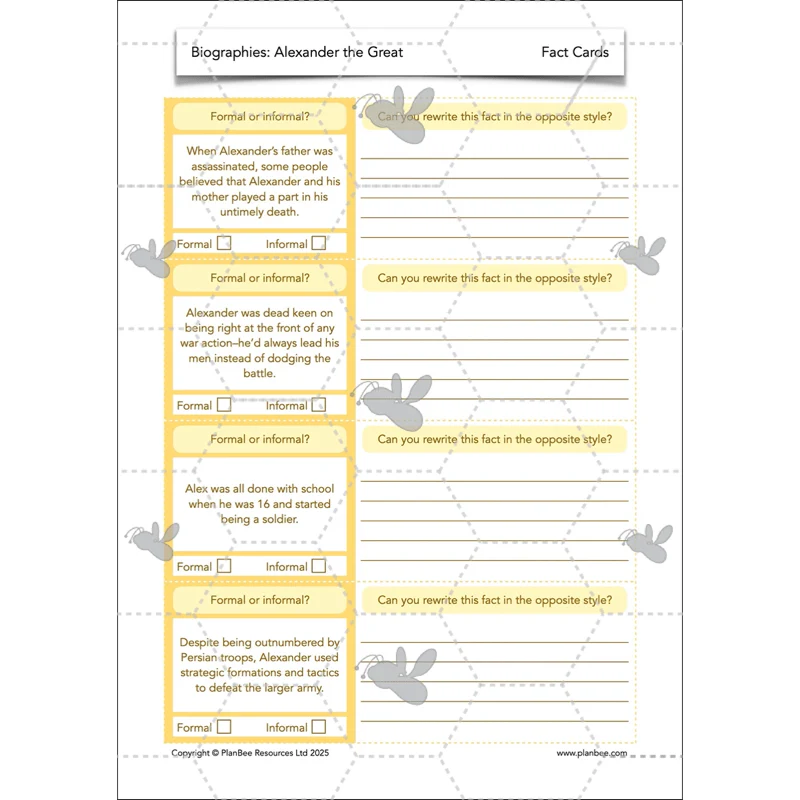
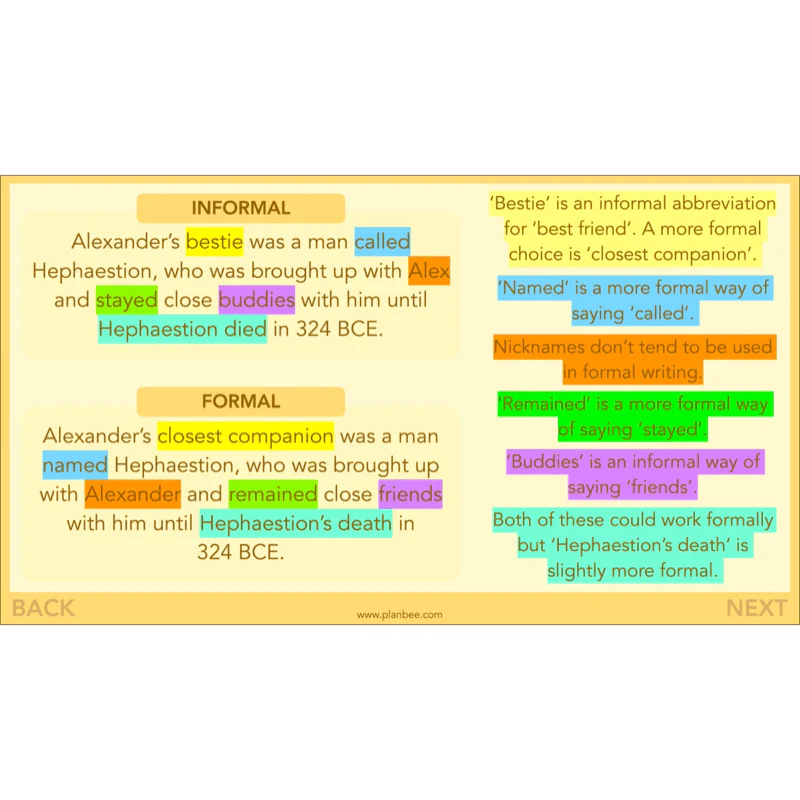
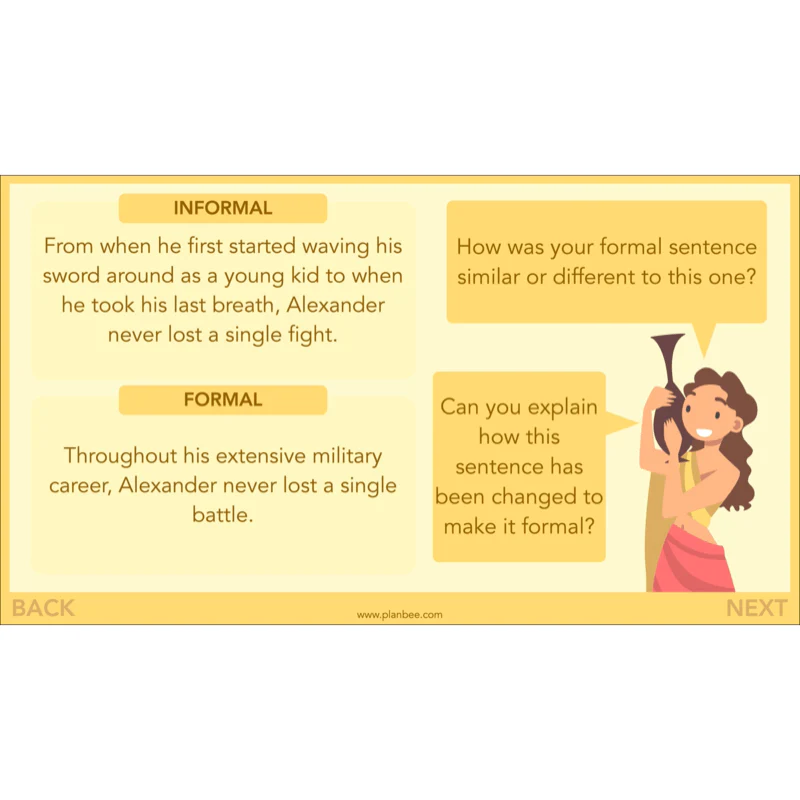
In this lesson, your class will define the difference between fact, fiction and opinion, looking at a variety of sentences and identifying which category they belong to. Once children are secure with this, they can then look at statements that have been written in both a formal and informal style. Which would be used for a biography and why? By the end of the teaching input, children will be able to confidently answer this question.
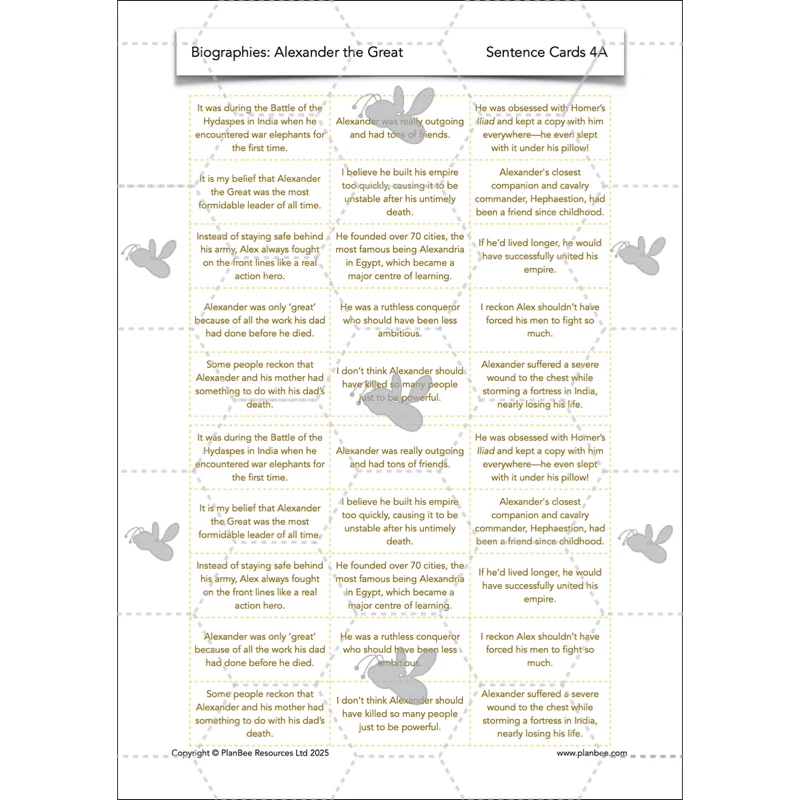
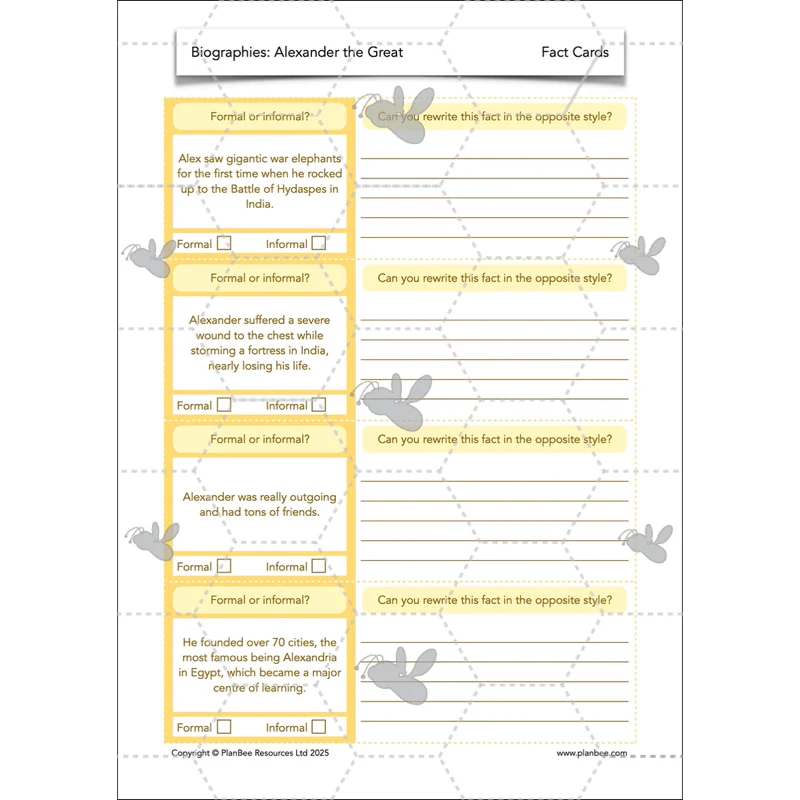
During their independent activities, children can then sort sentences depending on whether they are fact, fiction or opinion, and whether they are written formally or informally. Alternatively, they can rewrite formal facts informally or vice versa.
What's included:
- Lesson plan
- Slides
- Activity ideas
- Differentiated sentence cards
- Differentiated worksheets
- Fact cards
Planning a Biography
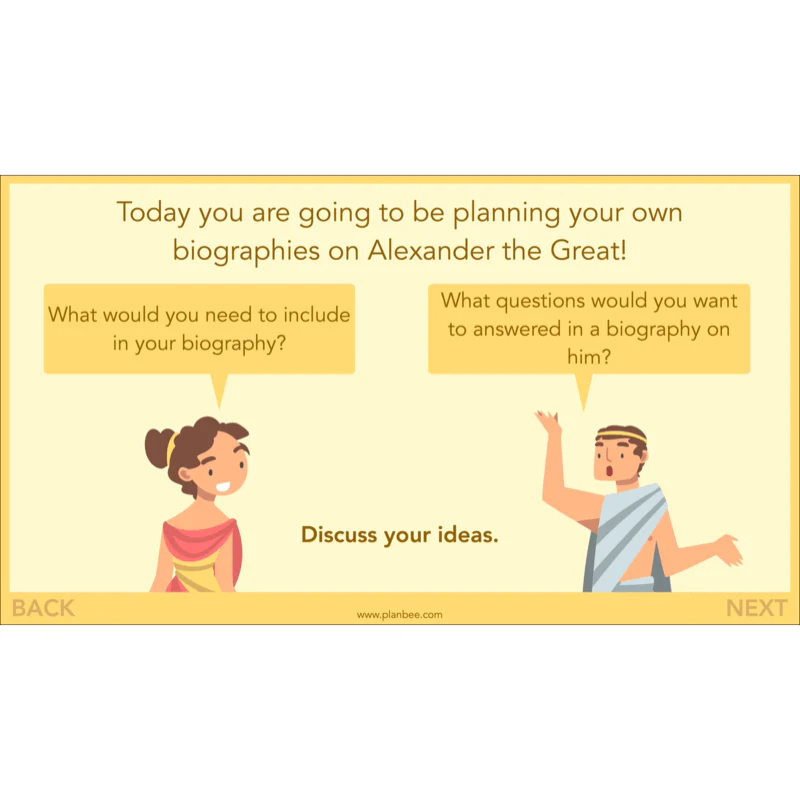
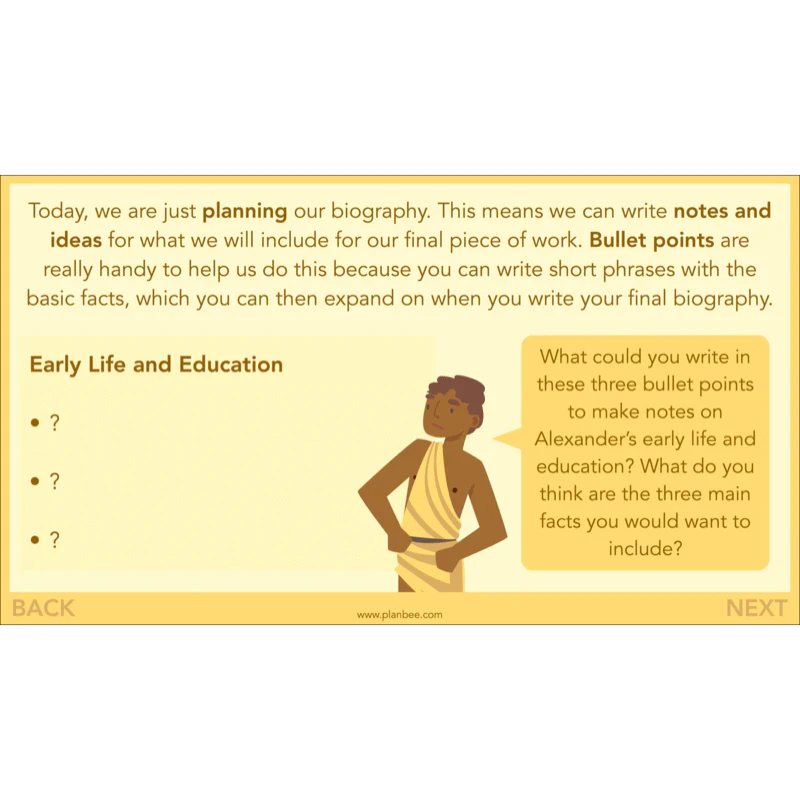
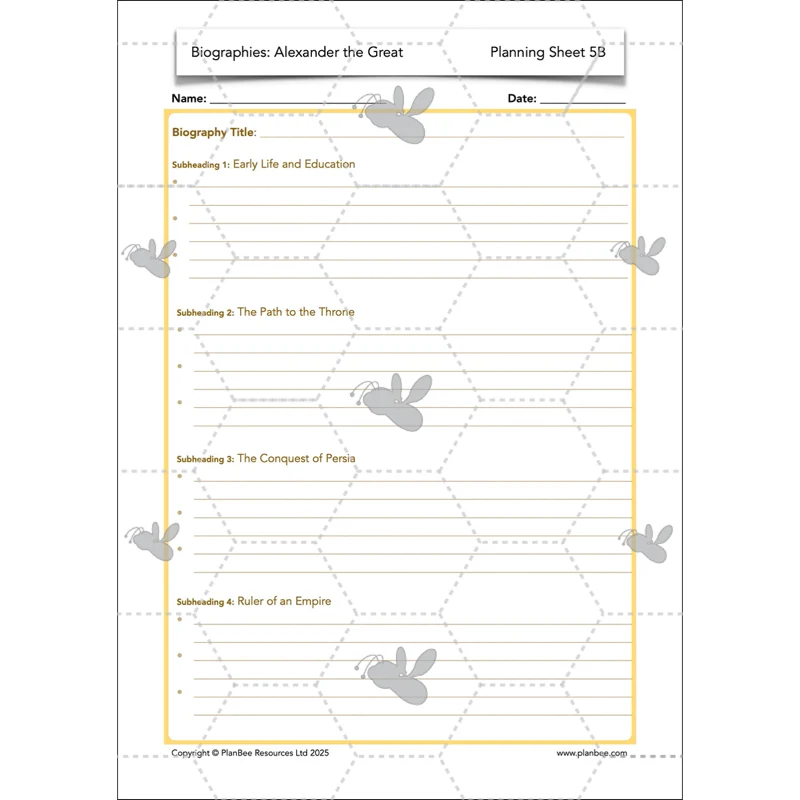
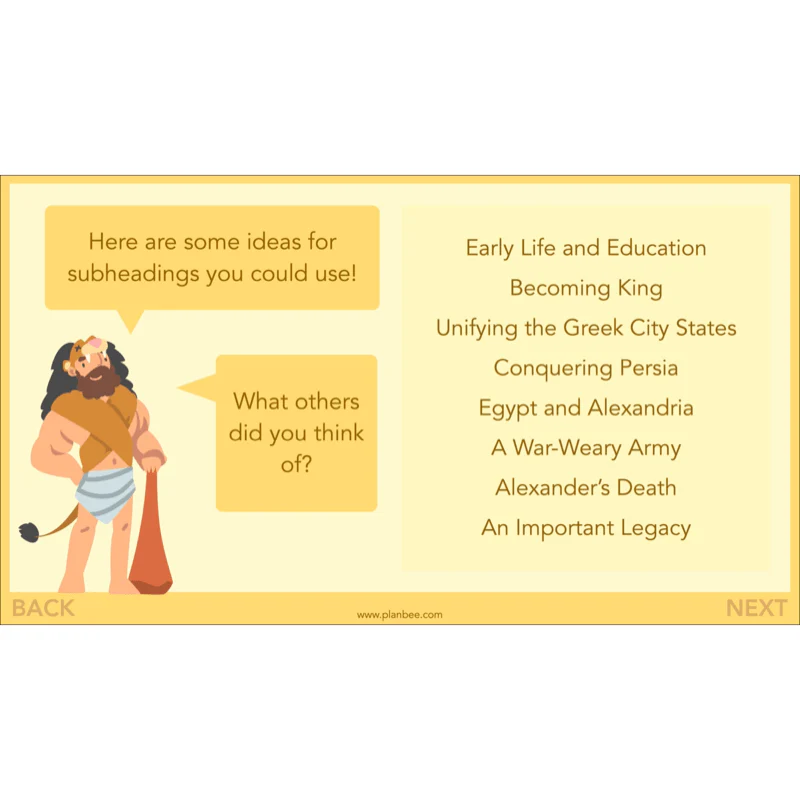
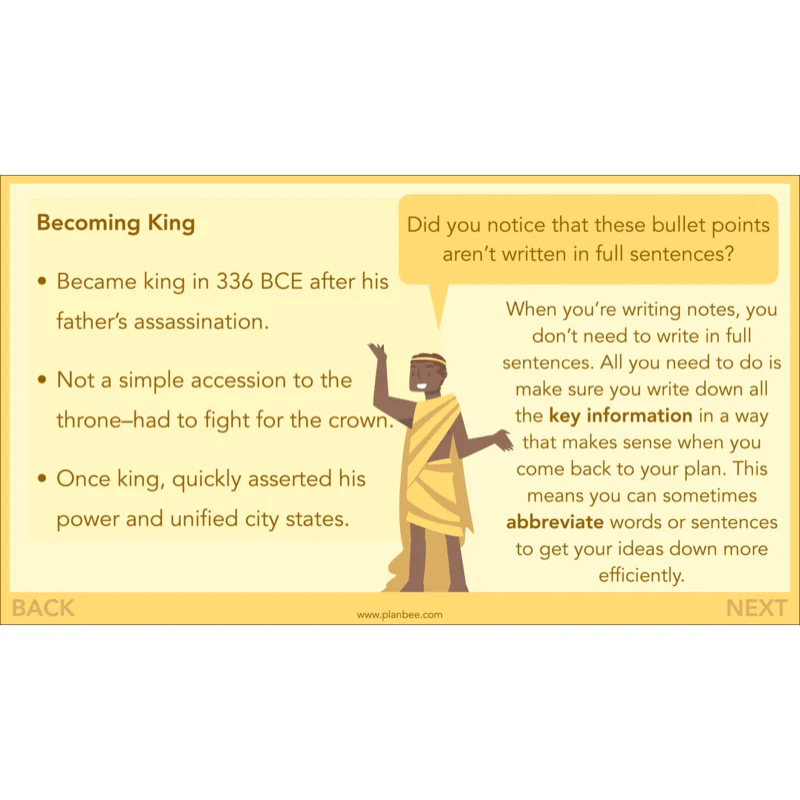
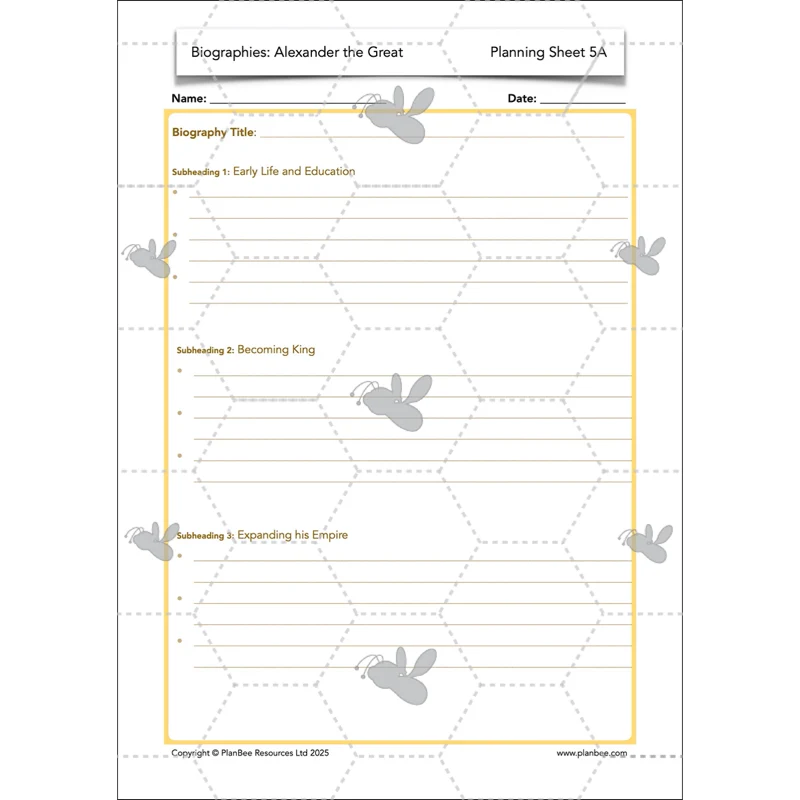
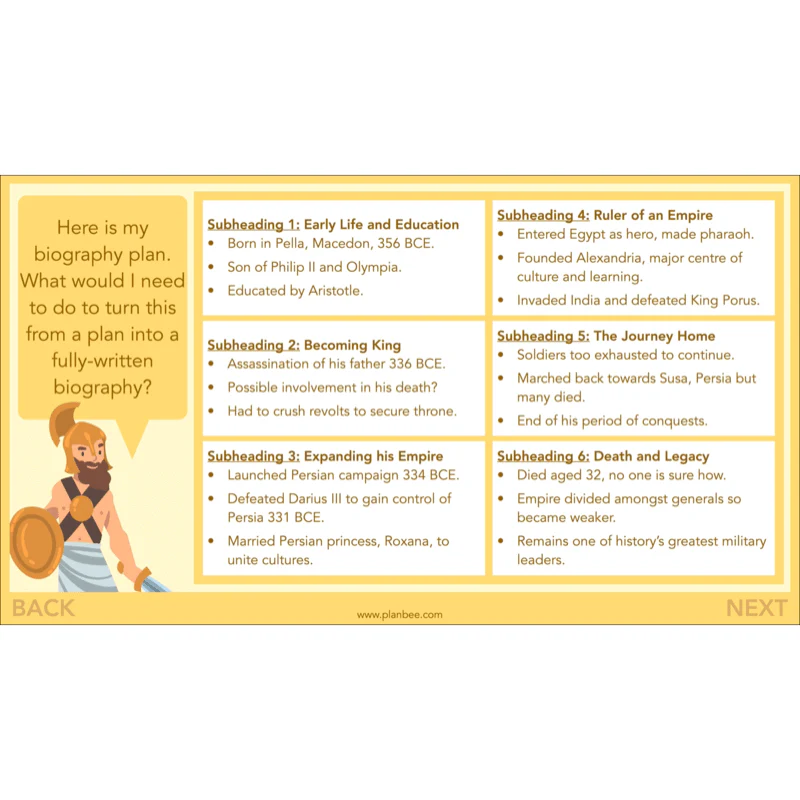
Now that your class has a broad knowledge of the events in the life of Alexander the Great, it's time to start planning their biographies! The slideshow for this lesson demonstrates how to use subheadings and bullet points to plan what should be included in the final piece of writng.
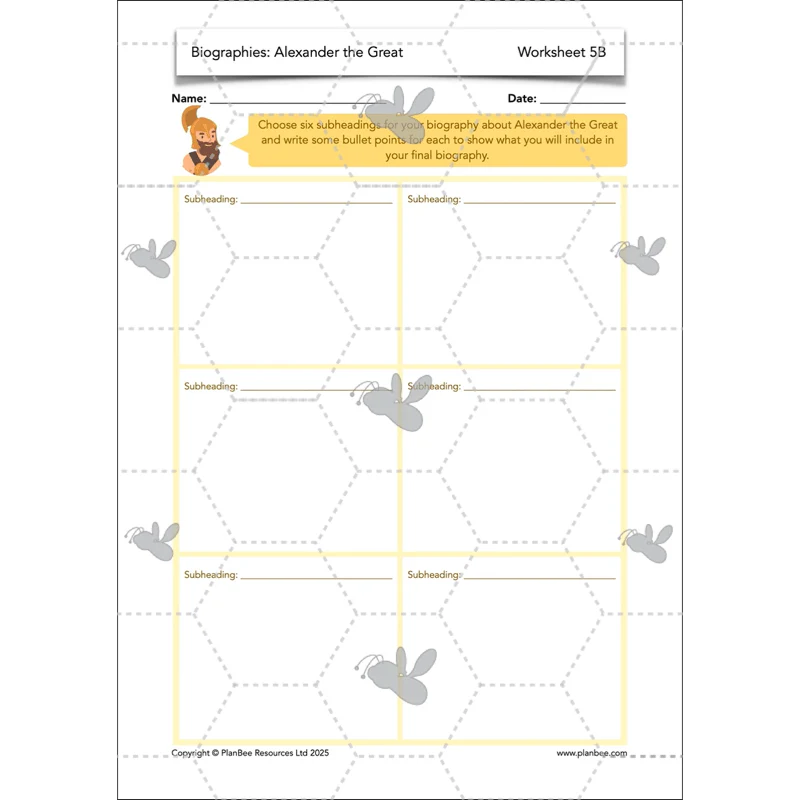
Once they are confident in how to structure their plans, children can then choose the subheadings they would like to include and write bullet-pointed information to help them plan what they will include in their Alexander the Great biography. A variety of resources are available to support children in doing this.
What's included:
- Lesson plan
- Slides
- Activity ideas
- Differentiated worksheets
- Differentiated planning sheets
Writing a Biography
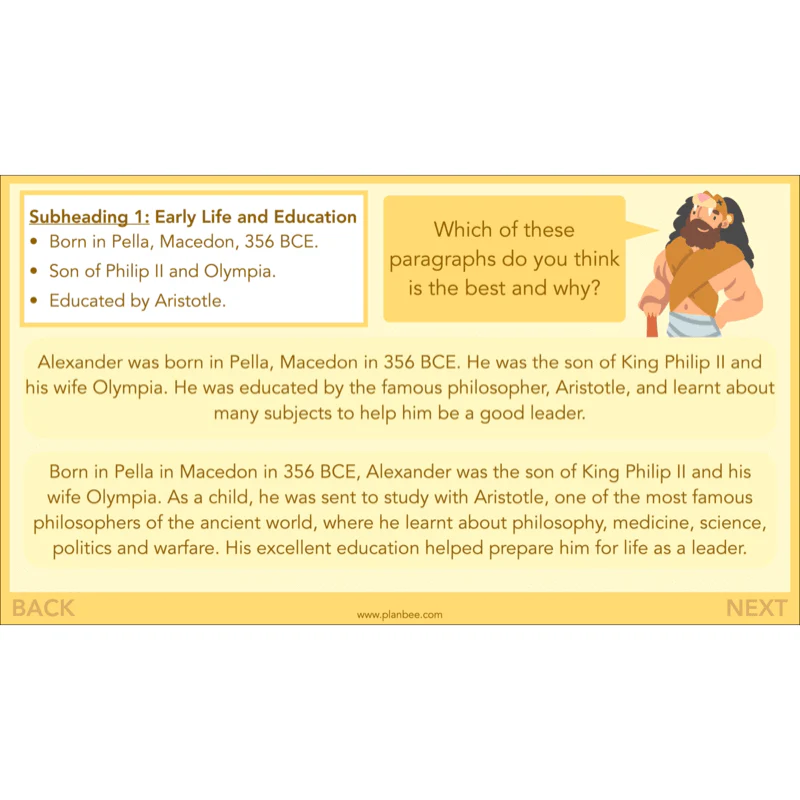
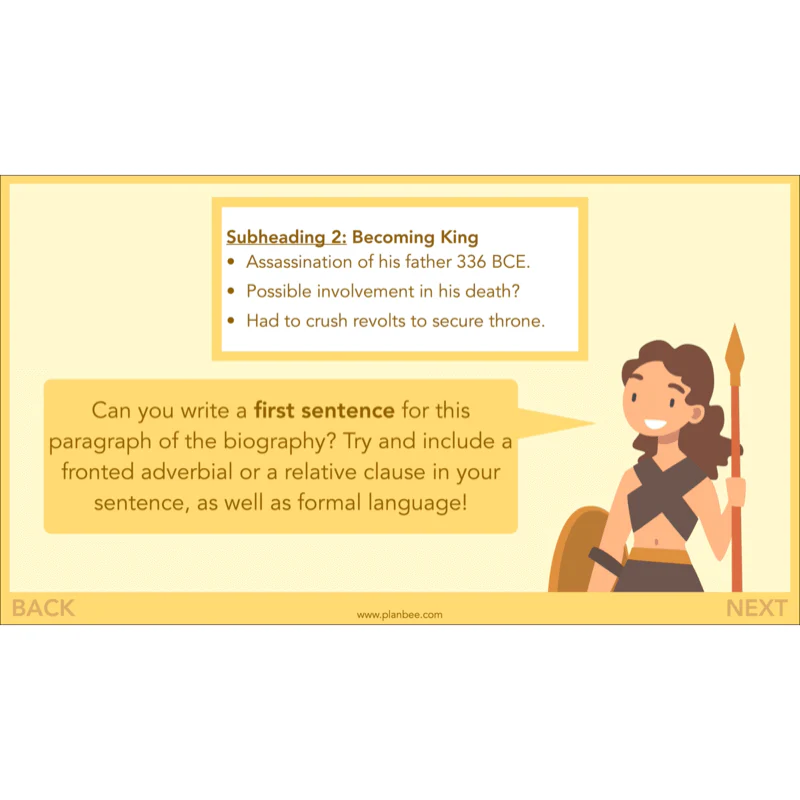
Children now have a solid plan for writing their biography on Alexander the Great, so now they have to actually write it! During the teaching input, the included slideshow presentation demonstrates how to expand bullet points into full sentences, reminding children about using devices such as fronted adverbials and relative clauses. Several examples of sentences are used to demonstrate the different ways the bullet points could be expanded, challenging children to identify which they think works best for a biography and why.
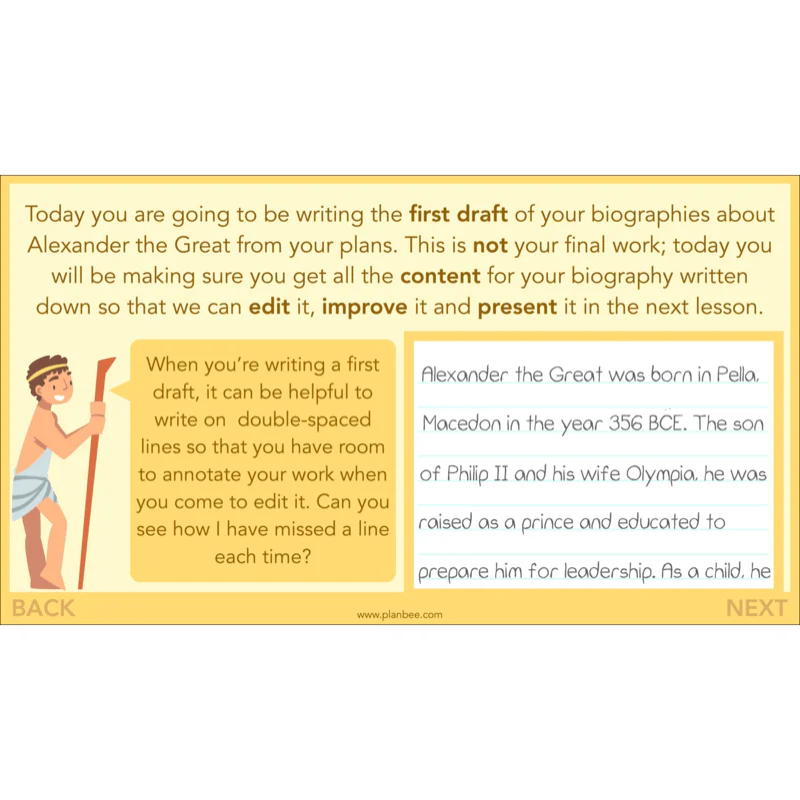
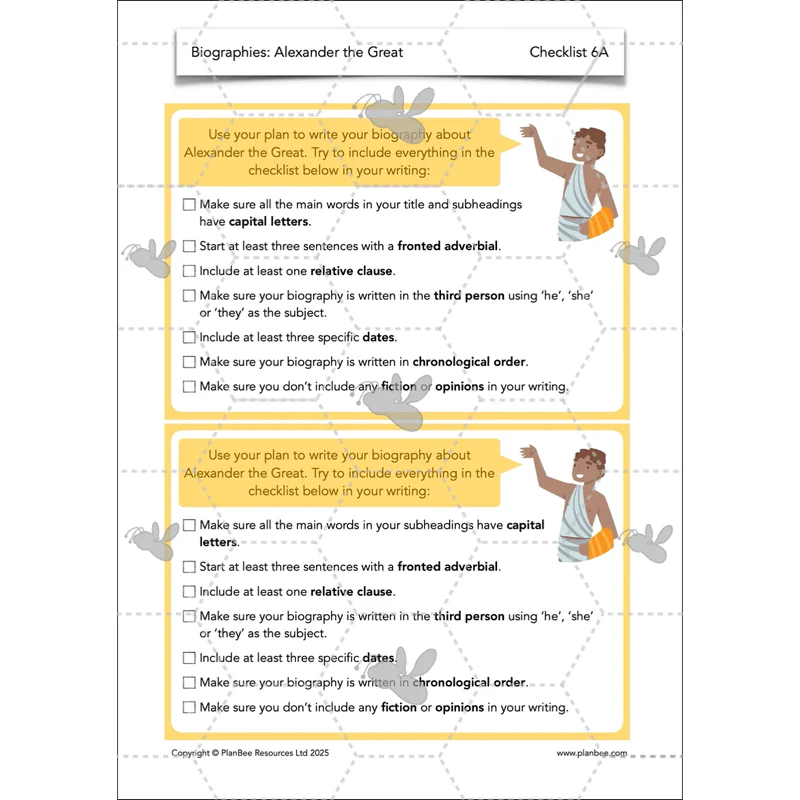
Children can then work independently to write the first draft of their biography from the plans they have created, or from the basic plan provided. Checklists are included to help children include all the features of biographies that they have learnt about.
What's included:
- Lesson plan
- Slides
- Activity ideas
- Writing frame
- Differentiated checklists
- Alexander the Great Timeline
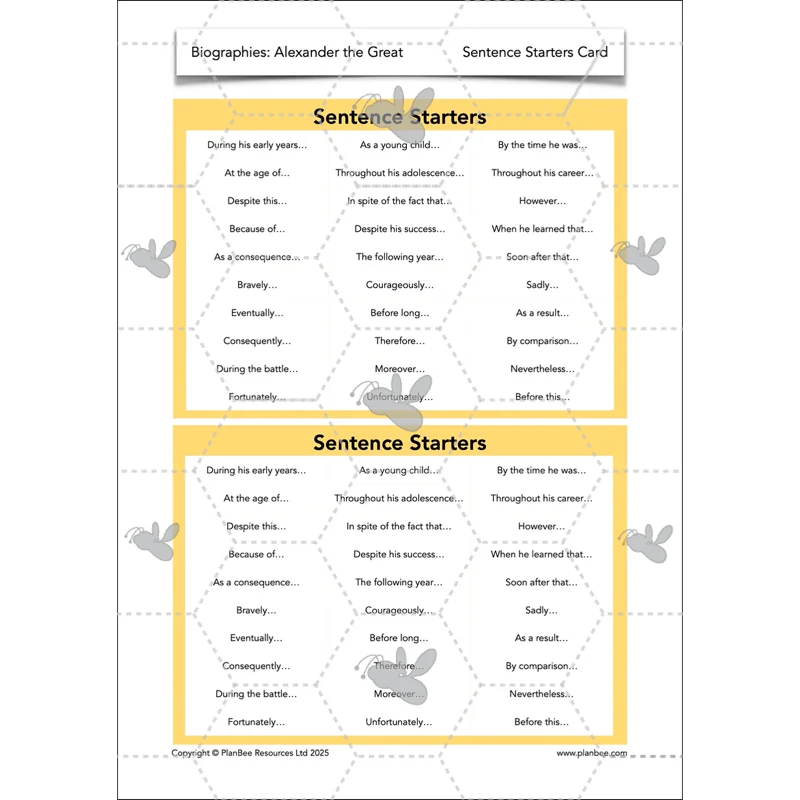
- Sentence Starter cards
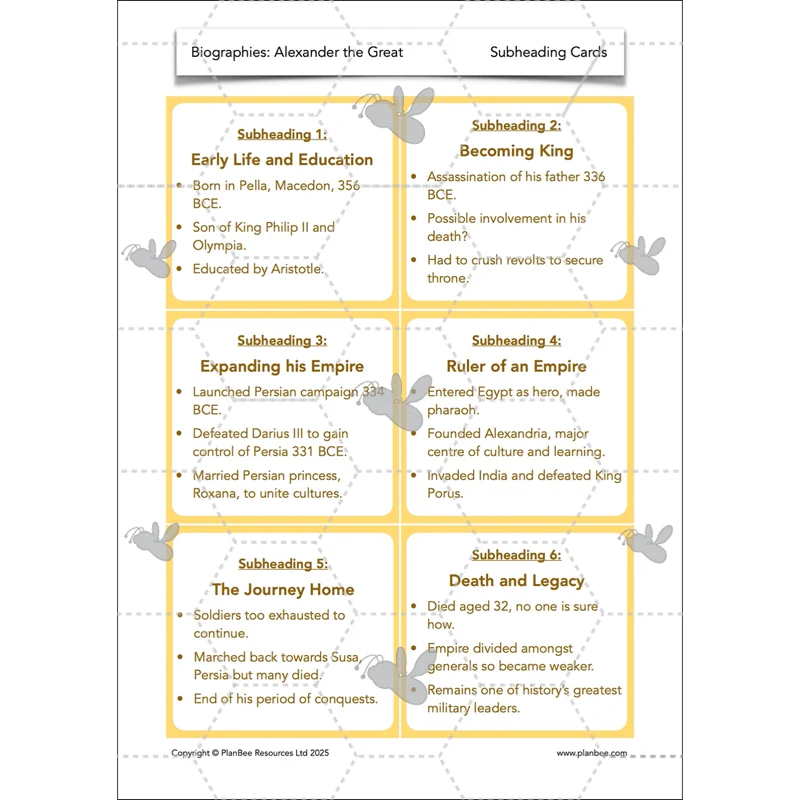
- Subheading cards
Editing a Biography
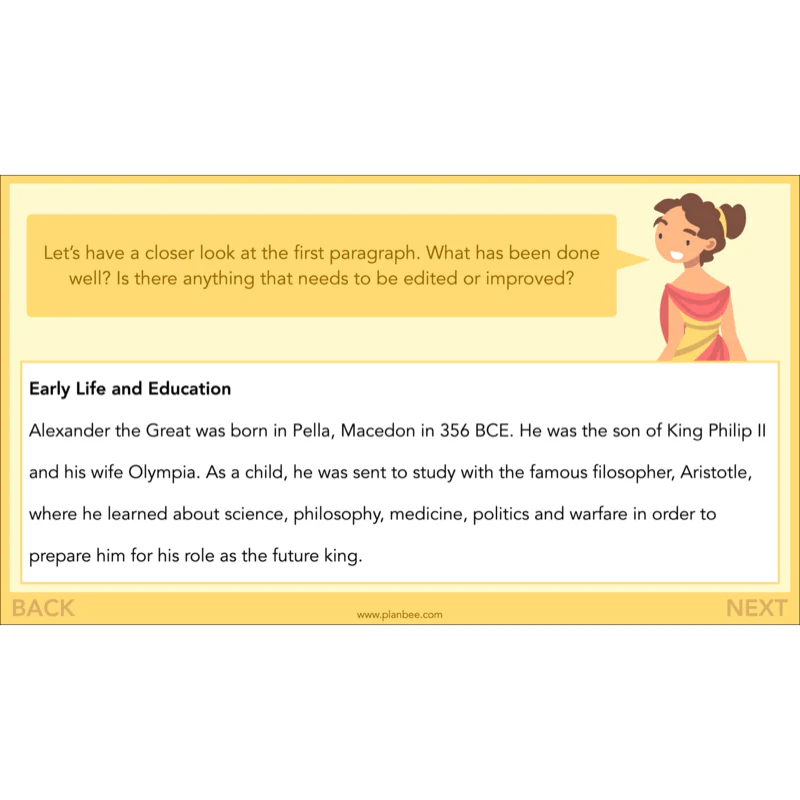
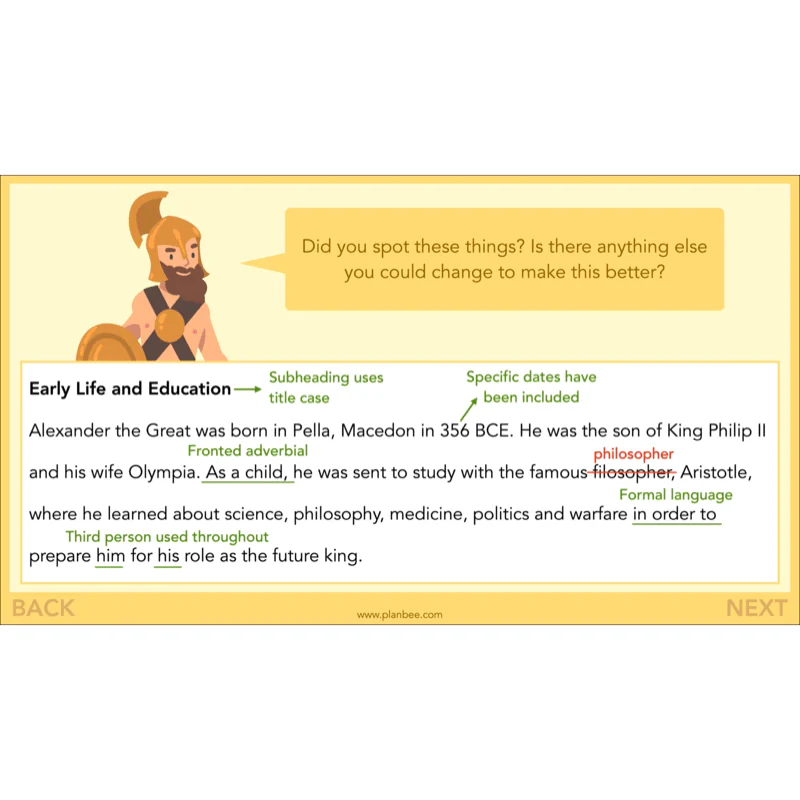
Your class has now written the first draft of their biographies on Alexander the Great so now it's time to get editing! The slides go through the first draft of a biography (which has some deliberate mistakes to spot and plenty of scope for improvement) so that children can learn how the editing process works. As well as looking for errors in spelling and punctuation, your class will also consider how sentence structures can be changed and improved, how word choices can be changed to make writing more formal and several other factors.
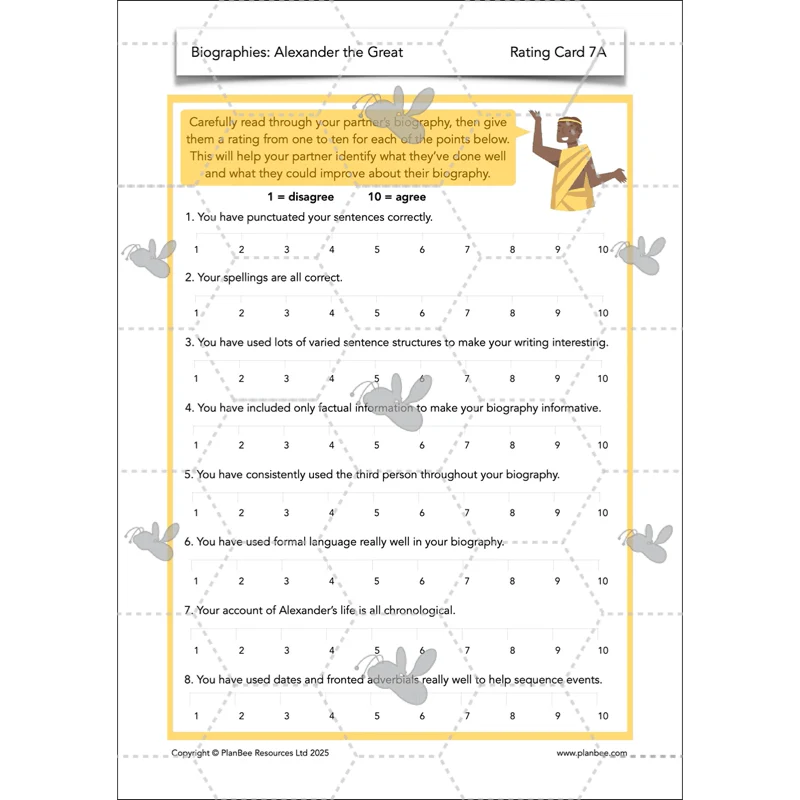
During their independent learning time, children can then either edit their own biography against a differentiated checklist of criteria or use rating cards to rate each other's work.
Once they are happy that their biographies are as good as they can be, children can then write up their biographies using plain paper, digital word processing or the template provided.
What's included:
- Lesson plan
- Slides
- Activity ideas
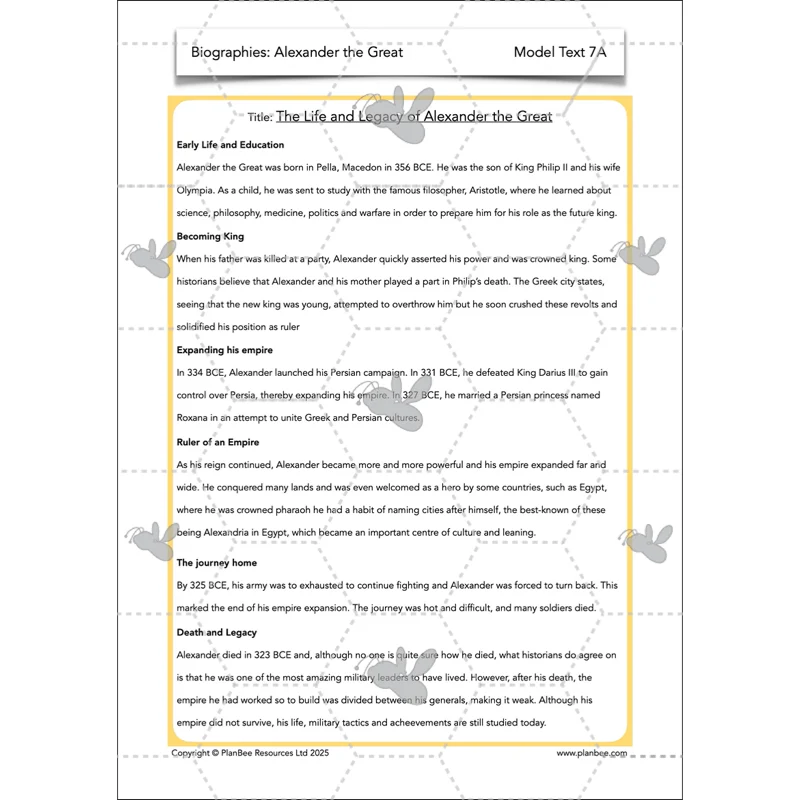
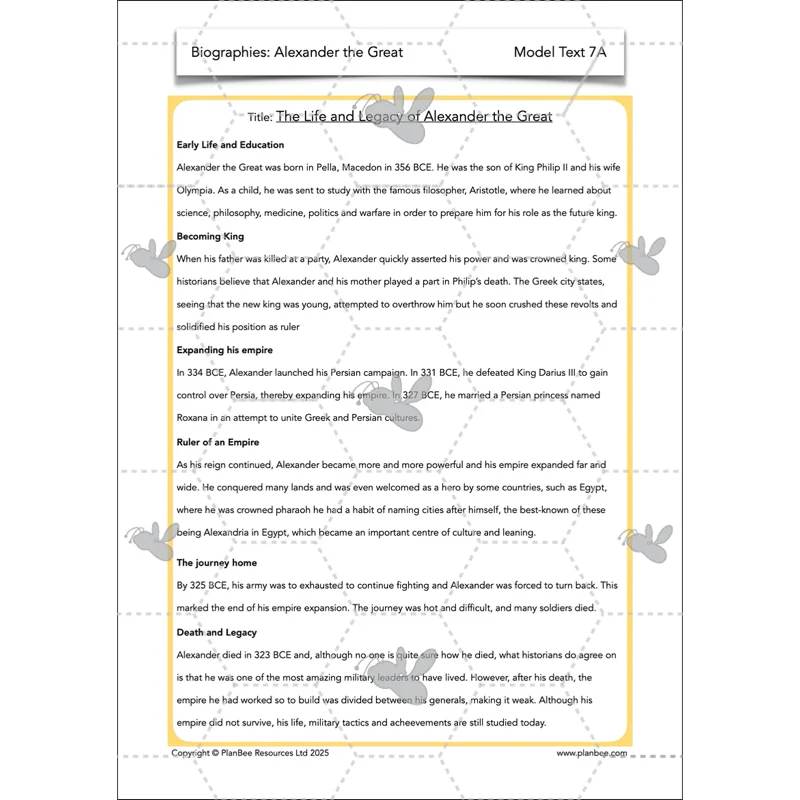
- Model text
- Differentiated checklists
- Writing frames
- Differentiated rating cards
Original: $3.49
-70%$3.49
$1.05More Images





















Biographies: Alexander the Great
With detailed lesson plans, slideshow presentations for the teaching input and a range of activities for each lesson, this Alexander the Great KS2 lesson pack provides everything you need to teach this engaging scheme of work. By the end of the seven ready-to-teach lessons, your class will have gained an overview of the life of this remarkable historical figure, be familiar with the features of biographies, and have planned, written and edited their own biographies about Alexander the Great.
Teaching ancient Greece? Check out our collection of KS2 Ancient Greece lesson packs and resources.
Features of a Biography
The first lesson in this scheme of work gives your class a brief introduction to Alexander the Great before exploring the features of a biography. During the teaching input, children will read a biography of Aristotle (Alexander the Great's teacher) and use this to identify features such as subheadings, paragraphs, tense, fronted adverbials, factual information and formal language.
During their independent learning activities, they can then spot these features in a biography on Philip II of Macedon (Alexander the Great's father) or use this biography to answer comprehension questions.
- Activity ideas
- Differentiated model texts
- Differentiated checklists
- Glossary
- Worksheet
- Question Cards
Chronological Order
In this lesson, children will explore different events in the life of Alexander the Great and arrange them in chronological order. A quick recap of the difference between BCE and CE is given in order to help them to do this. They will also explore how to use fronted adverbials to help sequence events.
Once they have explored this together as a class, children can then either order differentiated Event Cards chronologically, adding in fronted adverbials where appropriate, or they can match a set of domino cards where one side has a fronted adverbial and the other has an event. Both activities will give your children an overview of the main events in the life of Alexander the Great by the end of the lesson.
- Activity ideas
- Differentiated event cards
- Worksheet
- Alexander the Great Timeline
- Domino Cards
Précising Longer Passages
Now that your class has a basic overview of the events of Alexander the Great's life, it's time to delve a bit deeper! After a quick quiz to recap what they know, children will read longer passages of information about different events in his life then learn how to write a précis to summarise the information.
After doing several examples together as a class, children can then have a go for themselves. There are two different activities to choose from, both of which are designed to be adaptive to suit different learning levels.
What's included:
- Lesson plan
- Slides
- Activity ideas
- Differentiated paragraph sheets
- Précis sheets
Facts and Formal Language
In this lesson, your class will define the difference between fact, fiction and opinion, looking at a variety of sentences and identifying which category they belong to. Once children are secure with this, they can then look at statements that have been written in both a formal and informal style. Which would be used for a biography and why? By the end of the teaching input, children will be able to confidently answer this question.
During their independent activities, children can then sort sentences depending on whether they are fact, fiction or opinion, and whether they are written formally or informally. Alternatively, they can rewrite formal facts informally or vice versa.
What's included:
- Lesson plan
- Slides
- Activity ideas
- Differentiated sentence cards
- Differentiated worksheets
- Fact cards
Planning a Biography
Now that your class has a broad knowledge of the events in the life of Alexander the Great, it's time to start planning their biographies! The slideshow for this lesson demonstrates how to use subheadings and bullet points to plan what should be included in the final piece of writng.
Once they are confident in how to structure their plans, children can then choose the subheadings they would like to include and write bullet-pointed information to help them plan what they will include in their Alexander the Great biography. A variety of resources are available to support children in doing this.
What's included:
- Lesson plan
- Slides
- Activity ideas
- Differentiated worksheets
- Differentiated planning sheets
Writing a Biography
Children now have a solid plan for writing their biography on Alexander the Great, so now they have to actually write it! During the teaching input, the included slideshow presentation demonstrates how to expand bullet points into full sentences, reminding children about using devices such as fronted adverbials and relative clauses. Several examples of sentences are used to demonstrate the different ways the bullet points could be expanded, challenging children to identify which they think works best for a biography and why.
Children can then work independently to write the first draft of their biography from the plans they have created, or from the basic plan provided. Checklists are included to help children include all the features of biographies that they have learnt about.
What's included:
- Lesson plan
- Slides
- Activity ideas
- Writing frame
- Differentiated checklists
- Alexander the Great Timeline
- Sentence Starter cards
- Subheading cards
Editing a Biography
Your class has now written the first draft of their biographies on Alexander the Great so now it's time to get editing! The slides go through the first draft of a biography (which has some deliberate mistakes to spot and plenty of scope for improvement) so that children can learn how the editing process works. As well as looking for errors in spelling and punctuation, your class will also consider how sentence structures can be changed and improved, how word choices can be changed to make writing more formal and several other factors.
During their independent learning time, children can then either edit their own biography against a differentiated checklist of criteria or use rating cards to rate each other's work.
Once they are happy that their biographies are as good as they can be, children can then write up their biographies using plain paper, digital word processing or the template provided.
What's included:
- Lesson plan
- Slides
- Activity ideas
- Model text
- Differentiated checklists
- Writing frames
- Differentiated rating cards
Product Information
Product Information
Shipping & Returns
Shipping & Returns
Description
With detailed lesson plans, slideshow presentations for the teaching input and a range of activities for each lesson, this Alexander the Great KS2 lesson pack provides everything you need to teach this engaging scheme of work. By the end of the seven ready-to-teach lessons, your class will have gained an overview of the life of this remarkable historical figure, be familiar with the features of biographies, and have planned, written and edited their own biographies about Alexander the Great.
Teaching ancient Greece? Check out our collection of KS2 Ancient Greece lesson packs and resources.
Features of a Biography
The first lesson in this scheme of work gives your class a brief introduction to Alexander the Great before exploring the features of a biography. During the teaching input, children will read a biography of Aristotle (Alexander the Great's teacher) and use this to identify features such as subheadings, paragraphs, tense, fronted adverbials, factual information and formal language.
During their independent learning activities, they can then spot these features in a biography on Philip II of Macedon (Alexander the Great's father) or use this biography to answer comprehension questions.
- Activity ideas
- Differentiated model texts
- Differentiated checklists
- Glossary
- Worksheet
- Question Cards
Chronological Order
In this lesson, children will explore different events in the life of Alexander the Great and arrange them in chronological order. A quick recap of the difference between BCE and CE is given in order to help them to do this. They will also explore how to use fronted adverbials to help sequence events.
Once they have explored this together as a class, children can then either order differentiated Event Cards chronologically, adding in fronted adverbials where appropriate, or they can match a set of domino cards where one side has a fronted adverbial and the other has an event. Both activities will give your children an overview of the main events in the life of Alexander the Great by the end of the lesson.
- Activity ideas
- Differentiated event cards
- Worksheet
- Alexander the Great Timeline
- Domino Cards
Précising Longer Passages
Now that your class has a basic overview of the events of Alexander the Great's life, it's time to delve a bit deeper! After a quick quiz to recap what they know, children will read longer passages of information about different events in his life then learn how to write a précis to summarise the information.
After doing several examples together as a class, children can then have a go for themselves. There are two different activities to choose from, both of which are designed to be adaptive to suit different learning levels.
What's included:
- Lesson plan
- Slides
- Activity ideas
- Differentiated paragraph sheets
- Précis sheets
Facts and Formal Language
In this lesson, your class will define the difference between fact, fiction and opinion, looking at a variety of sentences and identifying which category they belong to. Once children are secure with this, they can then look at statements that have been written in both a formal and informal style. Which would be used for a biography and why? By the end of the teaching input, children will be able to confidently answer this question.
During their independent activities, children can then sort sentences depending on whether they are fact, fiction or opinion, and whether they are written formally or informally. Alternatively, they can rewrite formal facts informally or vice versa.
What's included:
- Lesson plan
- Slides
- Activity ideas
- Differentiated sentence cards
- Differentiated worksheets
- Fact cards
Planning a Biography
Now that your class has a broad knowledge of the events in the life of Alexander the Great, it's time to start planning their biographies! The slideshow for this lesson demonstrates how to use subheadings and bullet points to plan what should be included in the final piece of writng.
Once they are confident in how to structure their plans, children can then choose the subheadings they would like to include and write bullet-pointed information to help them plan what they will include in their Alexander the Great biography. A variety of resources are available to support children in doing this.
What's included:
- Lesson plan
- Slides
- Activity ideas
- Differentiated worksheets
- Differentiated planning sheets
Writing a Biography
Children now have a solid plan for writing their biography on Alexander the Great, so now they have to actually write it! During the teaching input, the included slideshow presentation demonstrates how to expand bullet points into full sentences, reminding children about using devices such as fronted adverbials and relative clauses. Several examples of sentences are used to demonstrate the different ways the bullet points could be expanded, challenging children to identify which they think works best for a biography and why.
Children can then work independently to write the first draft of their biography from the plans they have created, or from the basic plan provided. Checklists are included to help children include all the features of biographies that they have learnt about.
What's included:
- Lesson plan
- Slides
- Activity ideas
- Writing frame
- Differentiated checklists
- Alexander the Great Timeline
- Sentence Starter cards
- Subheading cards
Editing a Biography
Your class has now written the first draft of their biographies on Alexander the Great so now it's time to get editing! The slides go through the first draft of a biography (which has some deliberate mistakes to spot and plenty of scope for improvement) so that children can learn how the editing process works. As well as looking for errors in spelling and punctuation, your class will also consider how sentence structures can be changed and improved, how word choices can be changed to make writing more formal and several other factors.
During their independent learning time, children can then either edit their own biography against a differentiated checklist of criteria or use rating cards to rate each other's work.
Once they are happy that their biographies are as good as they can be, children can then write up their biographies using plain paper, digital word processing or the template provided.
What's included:
- Lesson plan
- Slides
- Activity ideas
- Model text
- Differentiated checklists
- Writing frames
- Differentiated rating cards