At the Farm
Take a trip to the countryside with your class and explore a working farm in this fun scheme of work for KS1. Find out about arable, livestock and dairy farms and the difference between them, before taking a closer look at a fictional farm that does a little of everything! Your class will learn about the features of a farm and use a map to navigate around a farm, as well as thinking about the differences between life in the country and life in a busy town.
With lesson plans, slides, differentiated worksheets, maps, challenges and much more, these Year 1 and 2 'At the Farm' lessons provide all you need to teach a variety of geographic ideas through stimulating and fun-filled activities.
A Knowledge Organiser is available to support the learning in this scheme. It is included in the Complete Series download or can be purchased individually.
What and Why?
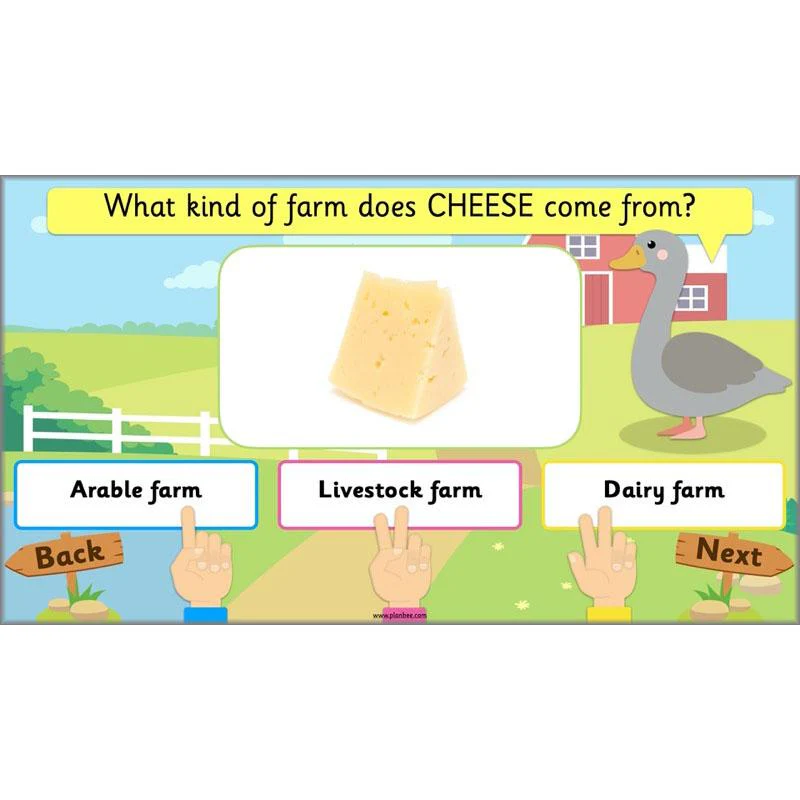
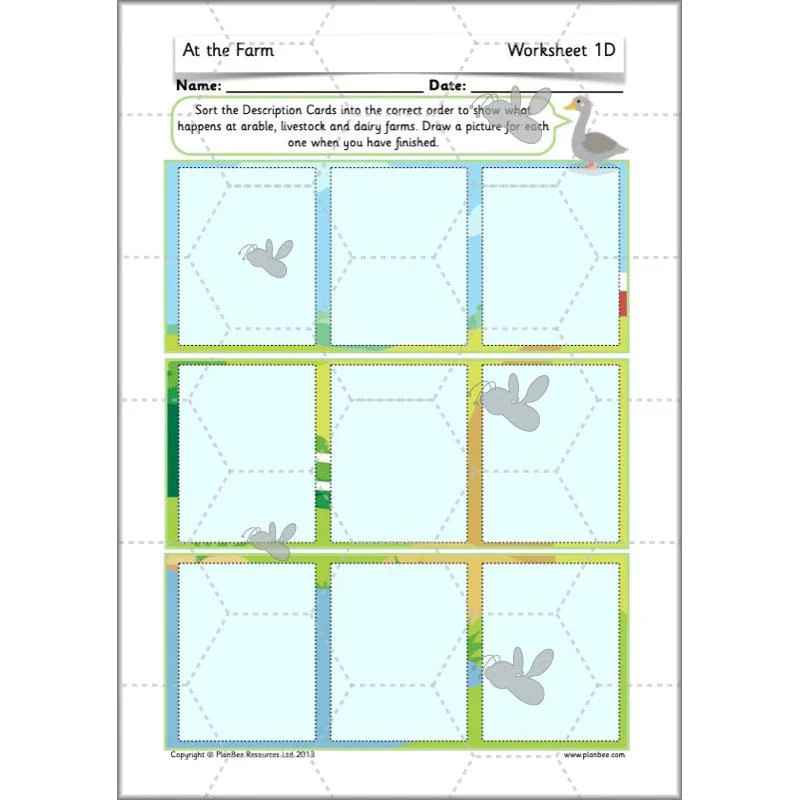
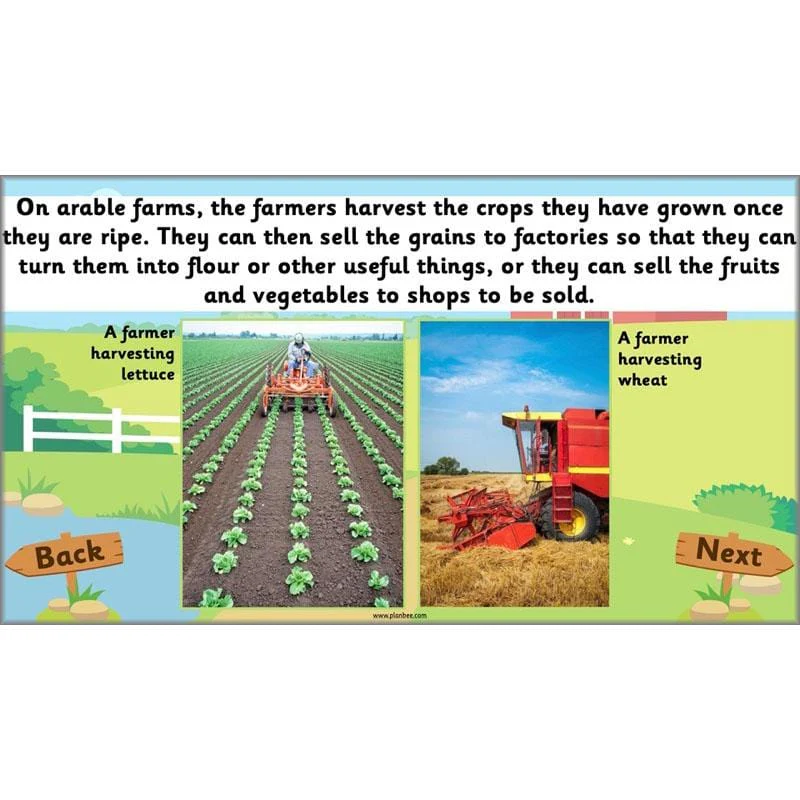
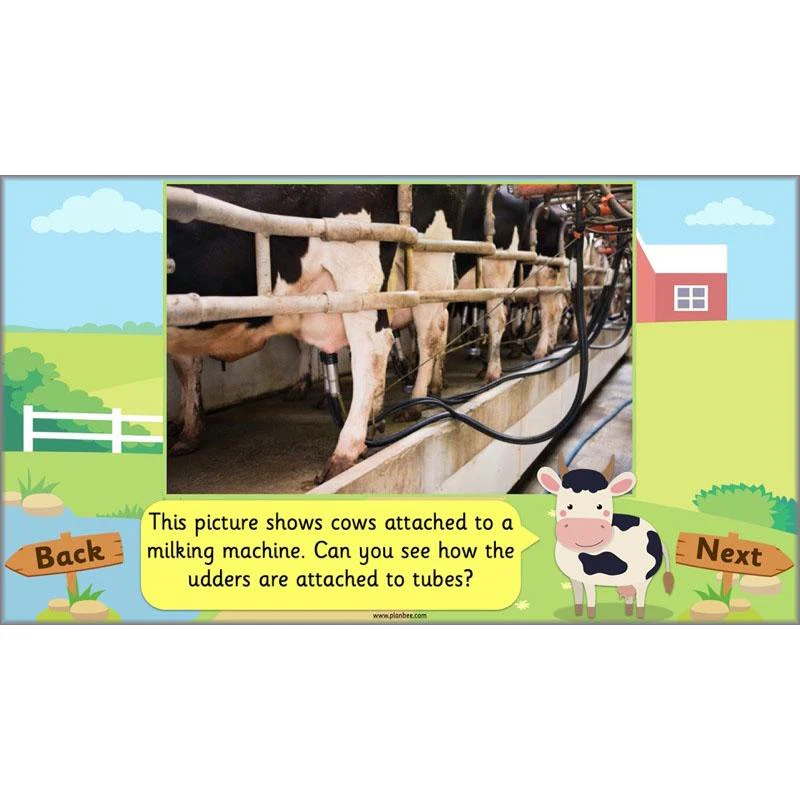
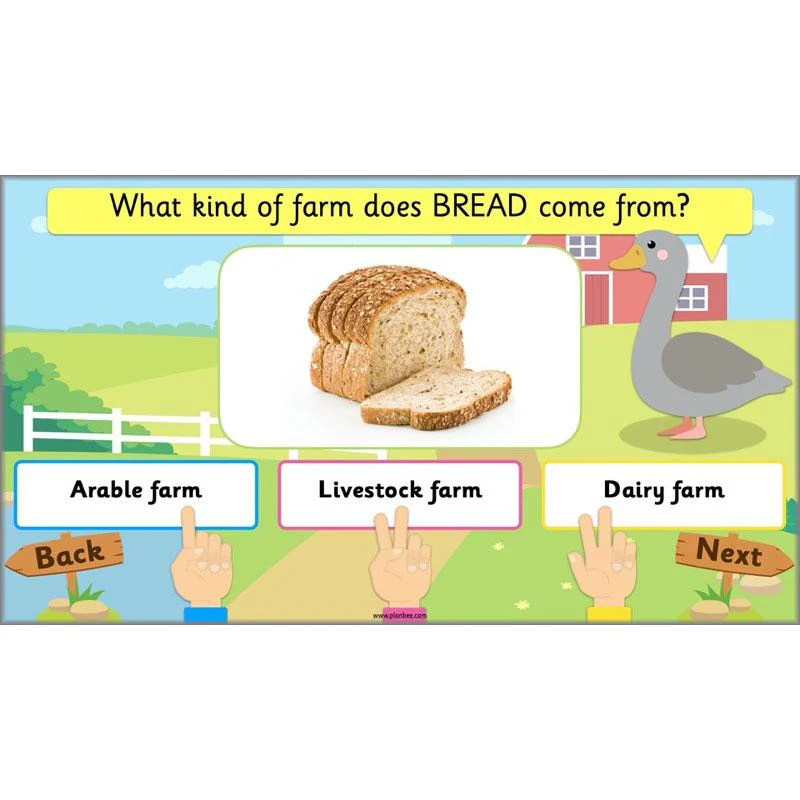
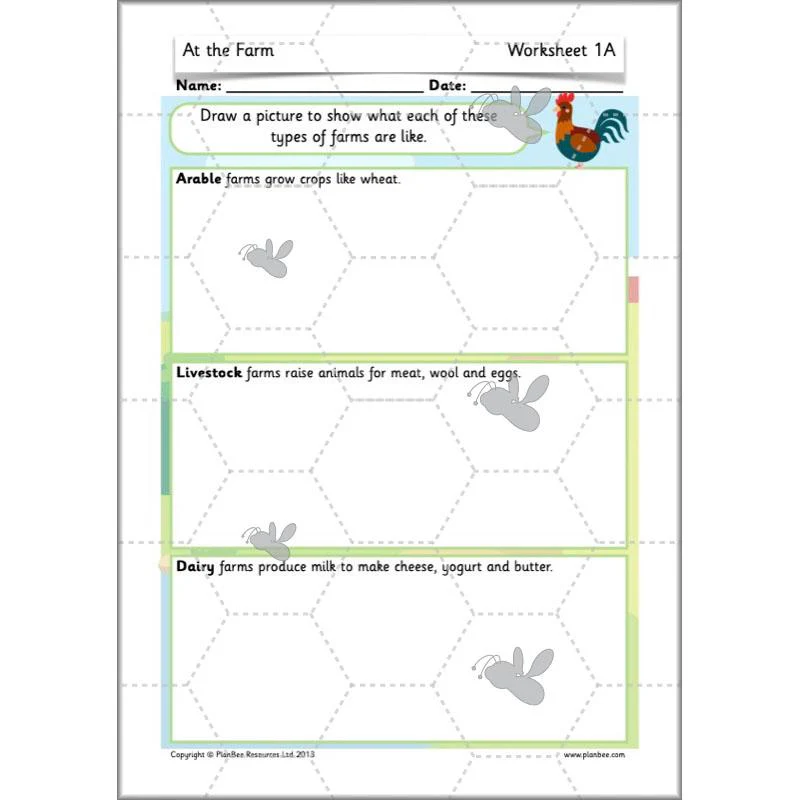
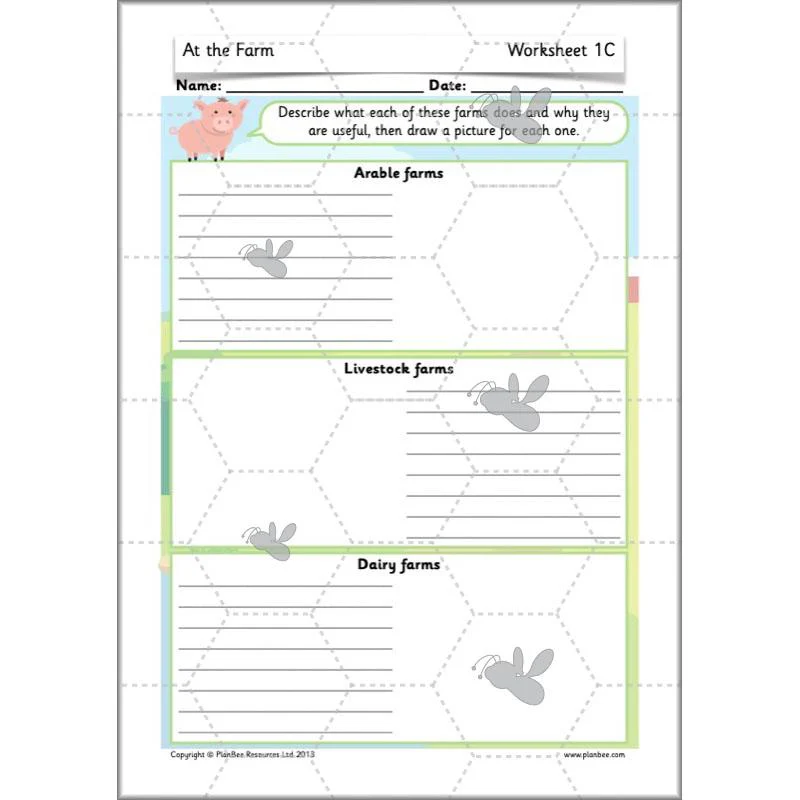
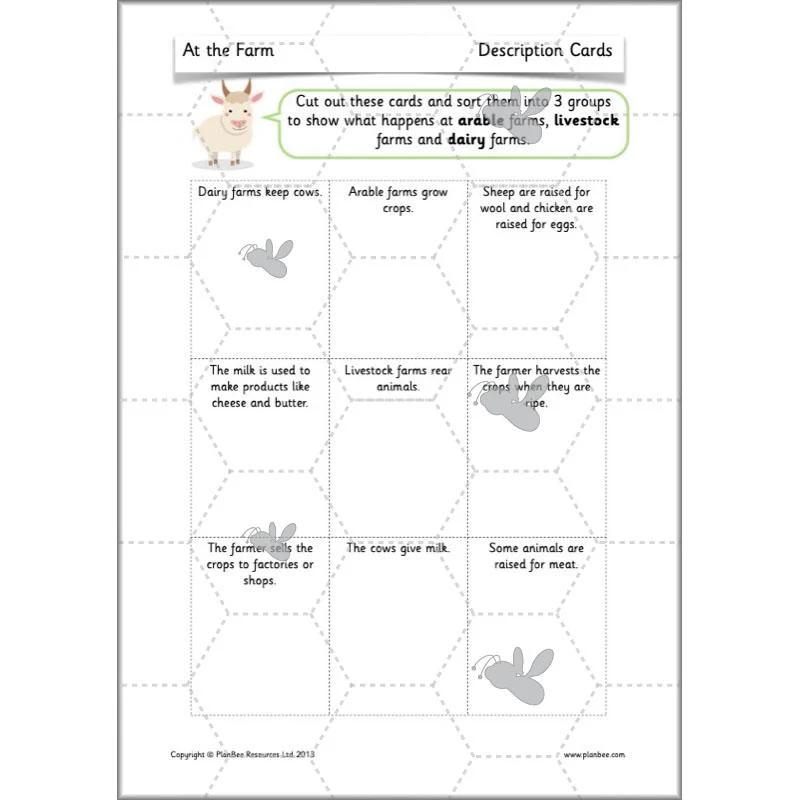
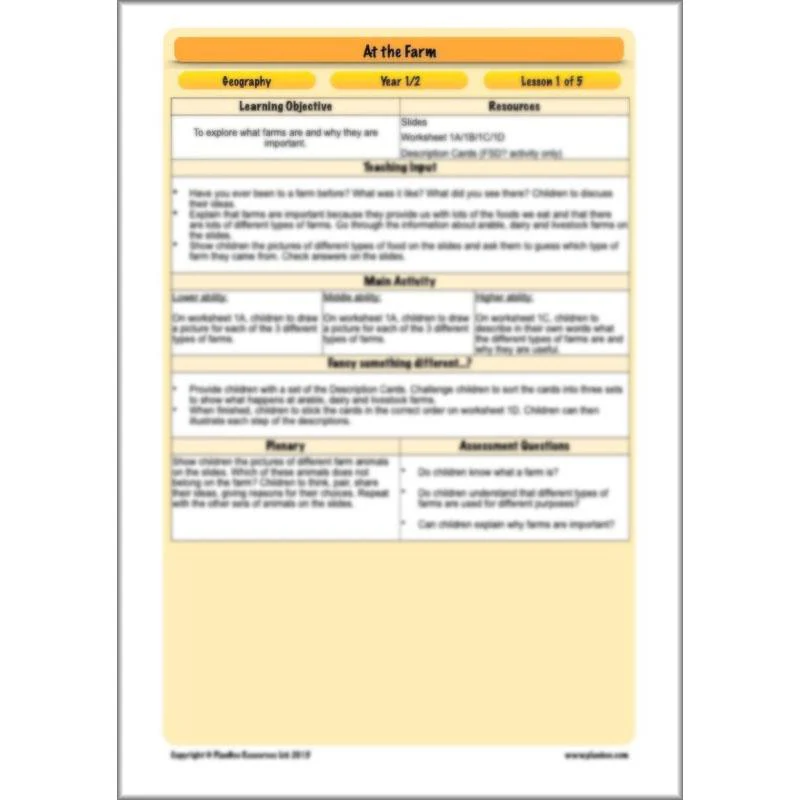
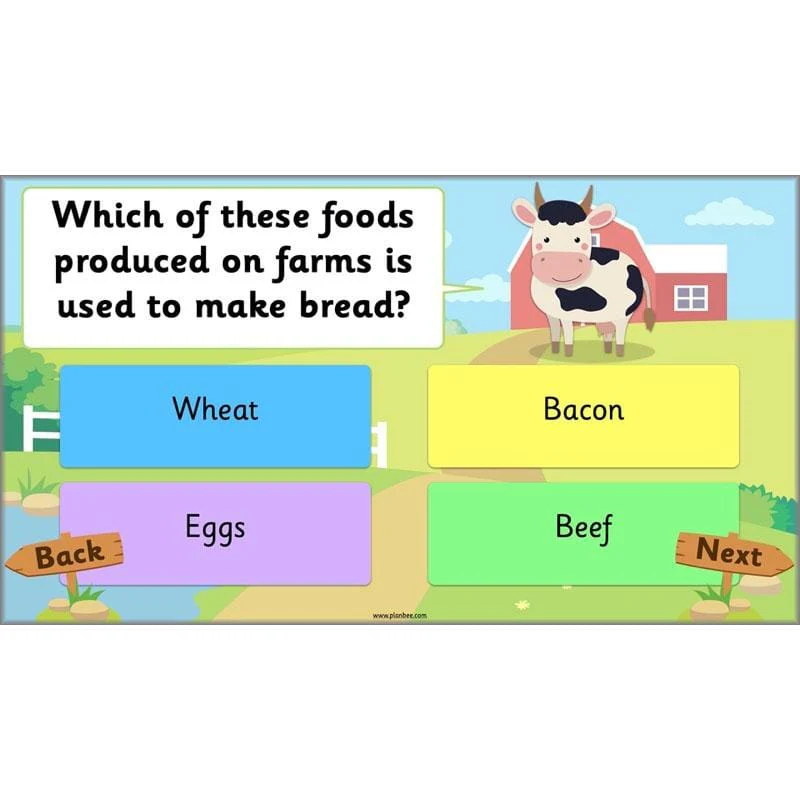
The first lesson in this series starts by thinking about what a farm actually is and why farms are important. It looks at different types of farms, namely arable, livestock and dairy, and what happens on each one. It also gives your class the chance to think about what different foods we get from the different types of farms from chips to chipolatas!
What's included:
- Lesson plan
- Slides
- Activity ideas
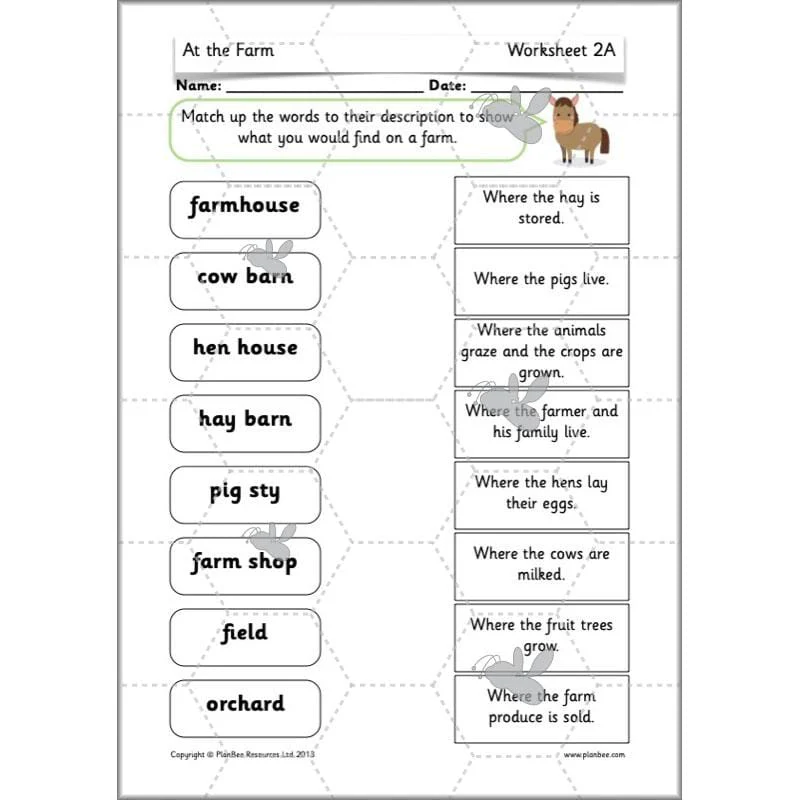
- Differentiated worksheets
- Description cards
Farm Features
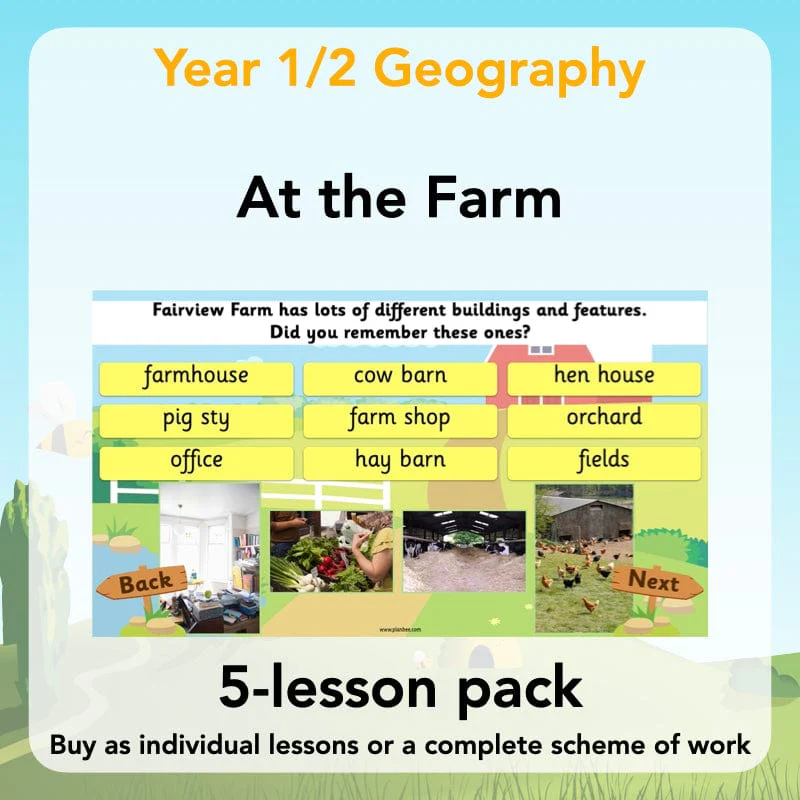
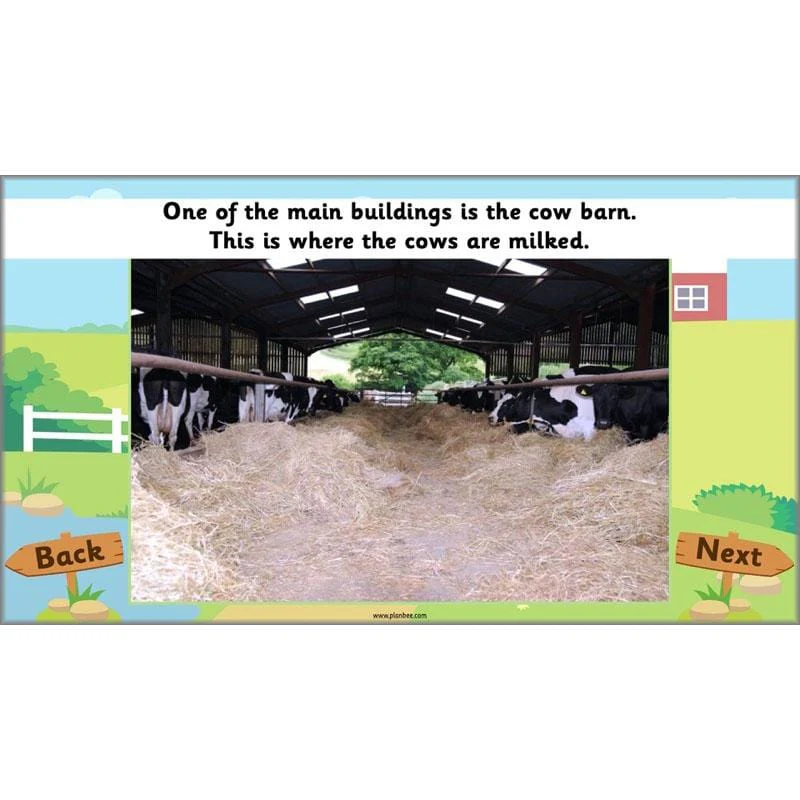
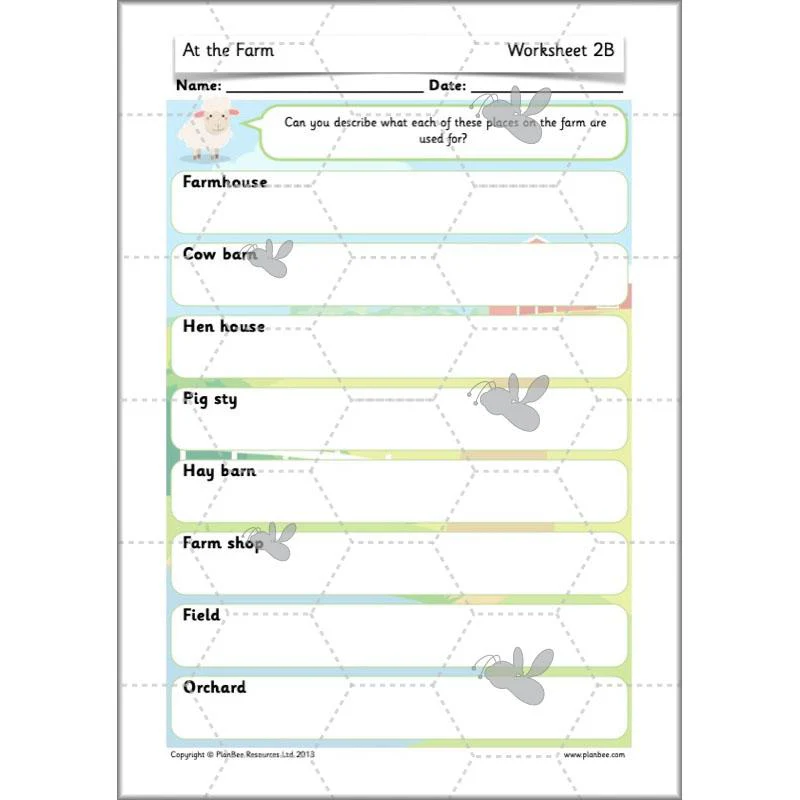
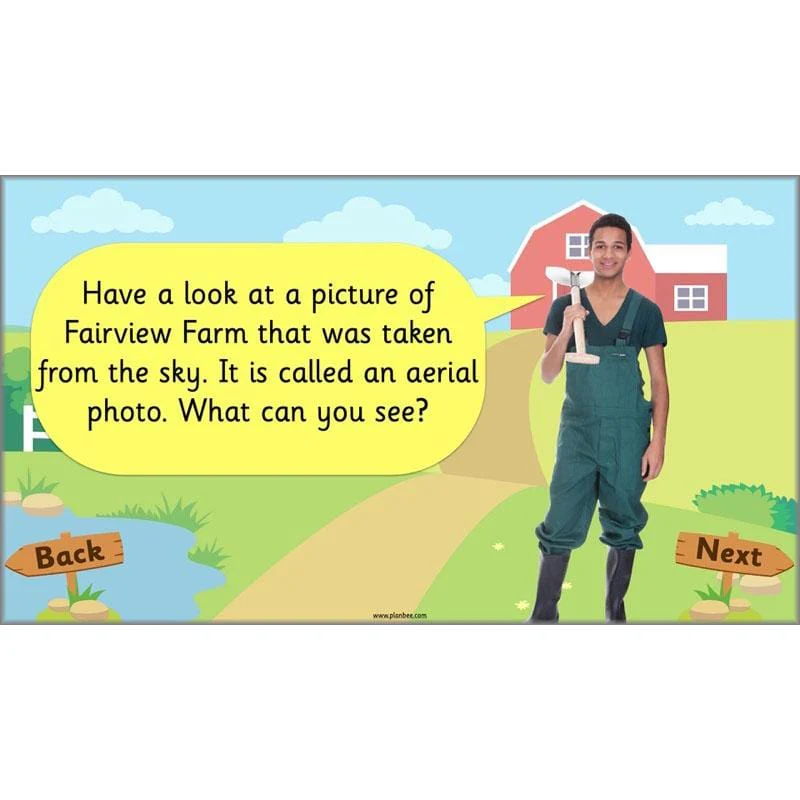
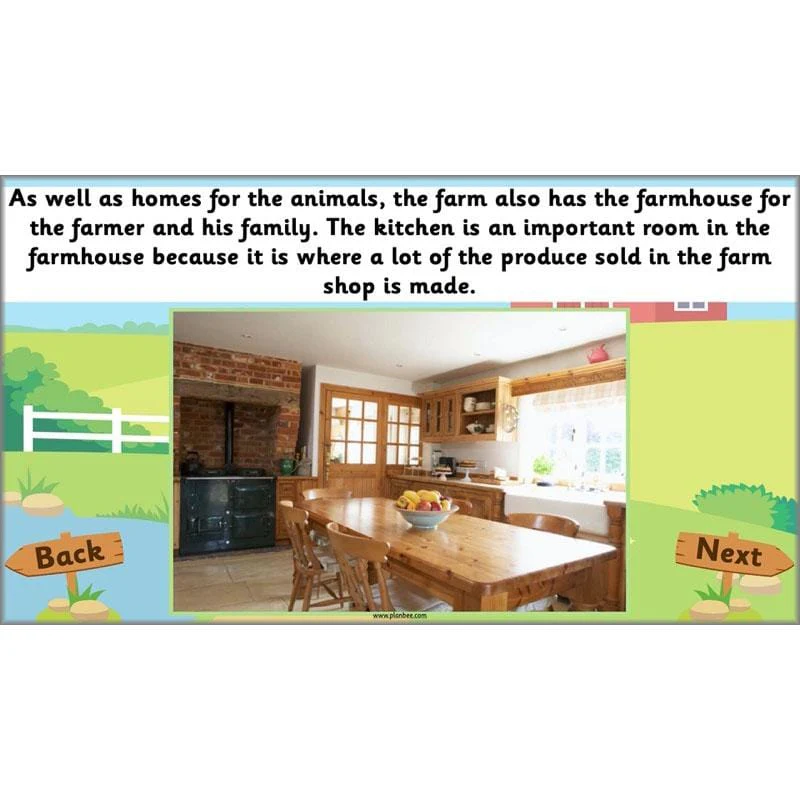
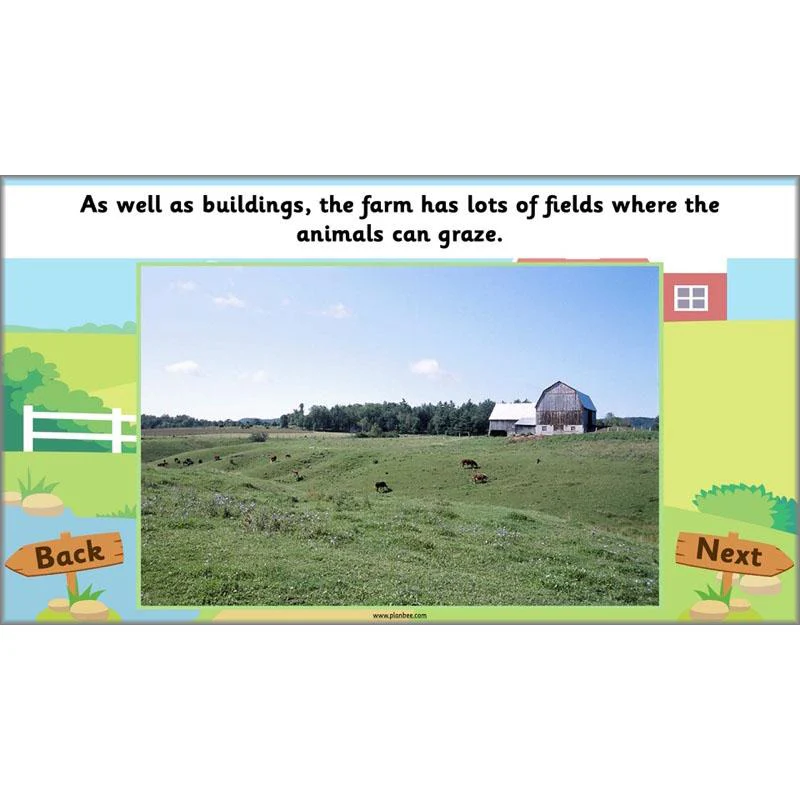
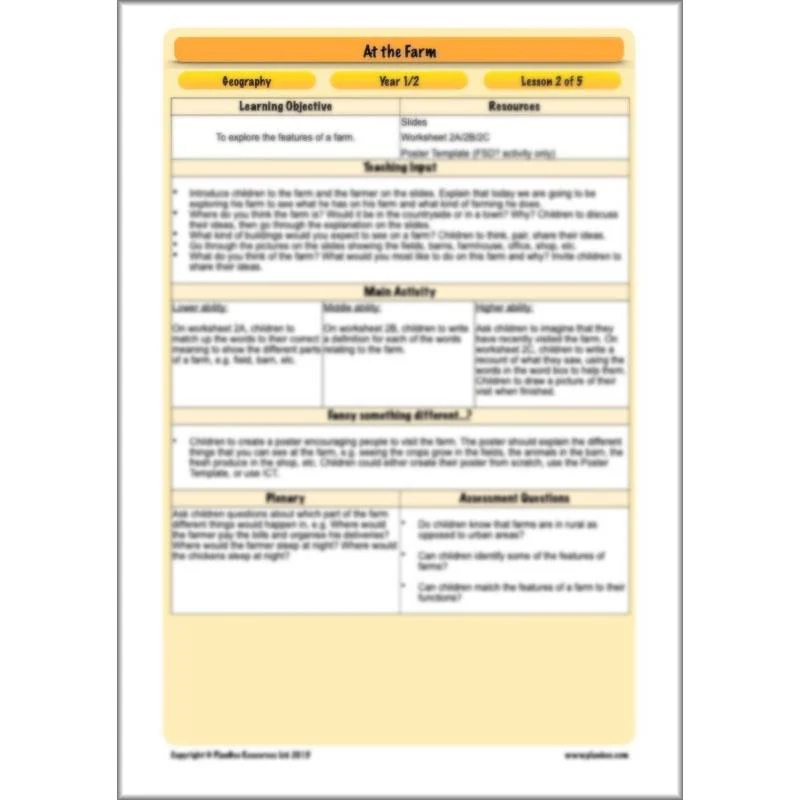
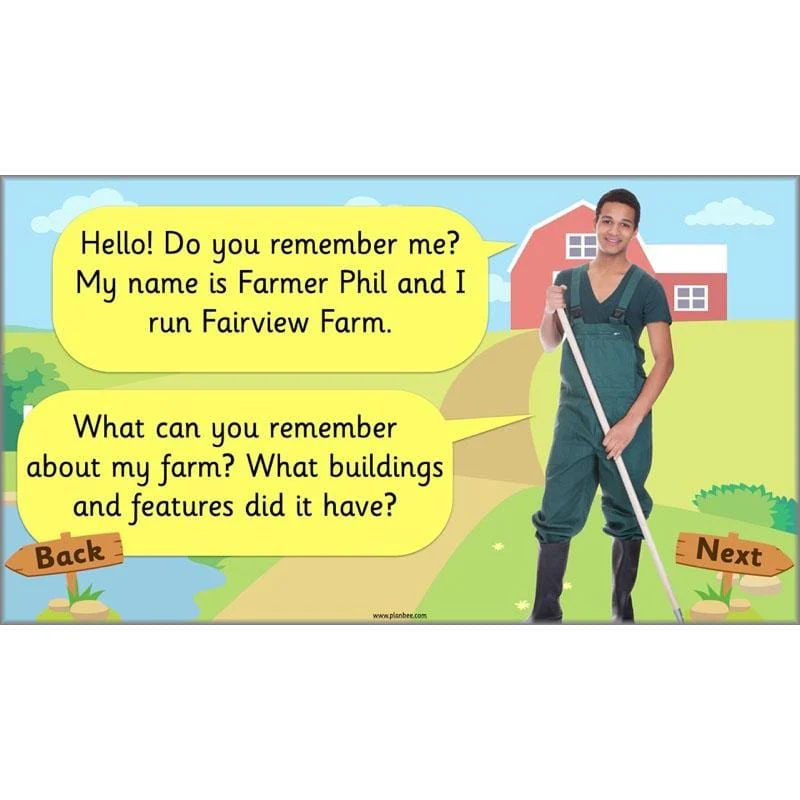
This lesson explores a fictional farm and looks at its features. Your class will find out about the barns, farmhouse, office, farm shop, pig sty, hen house, crop fields, pastures and more as they take a walk through the farm. By the end of the lesson, your class will be more familiar with how farms work and the vocabulary needed to describe them.
What's included:
- Lesson plan
- Slides
- Activity ideas
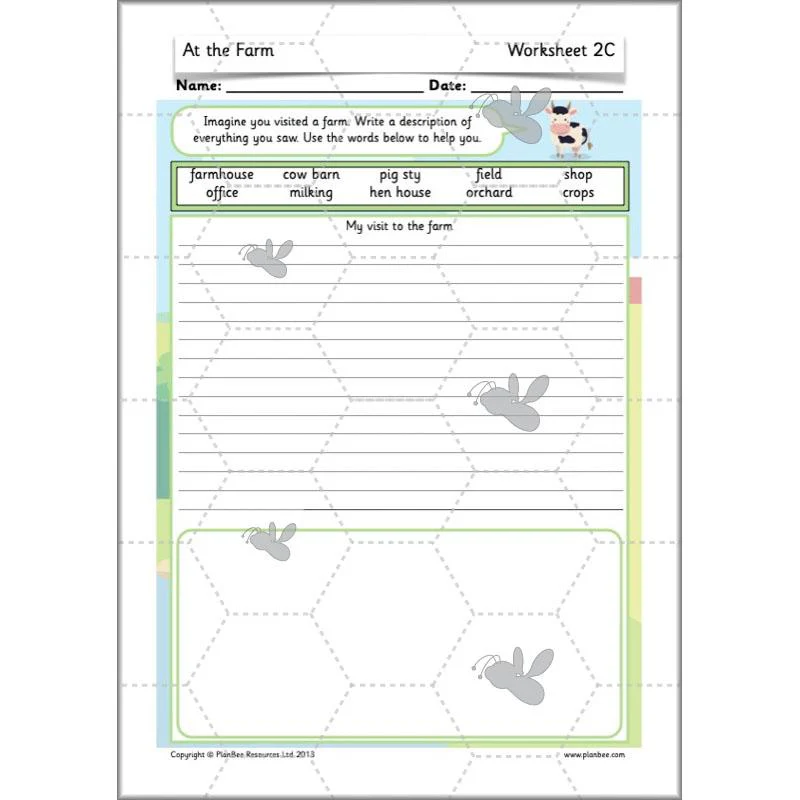
- Differentiated worksheets
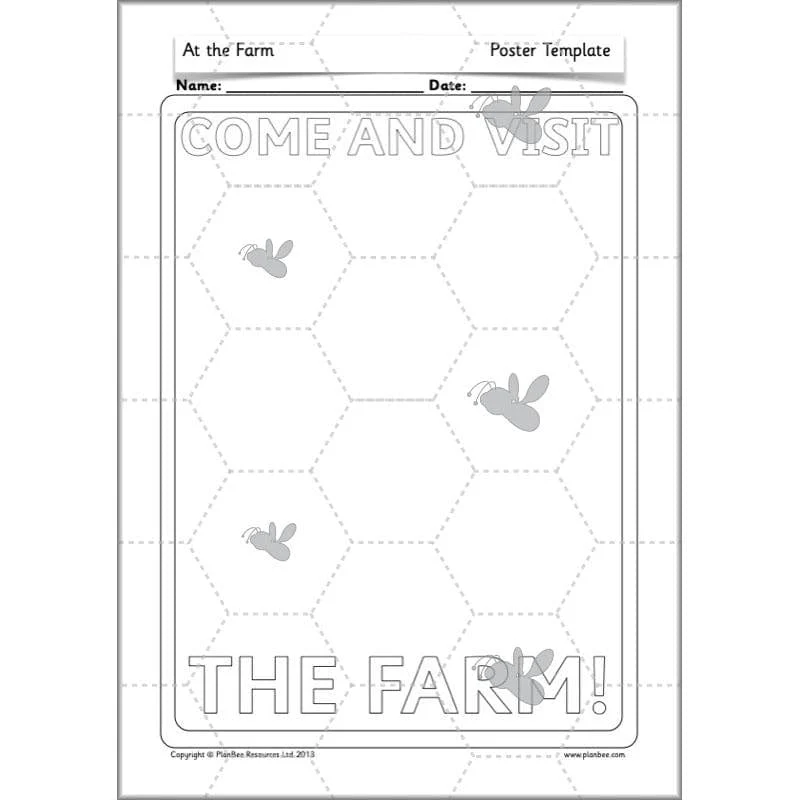
- Poster template
Maps and Keys
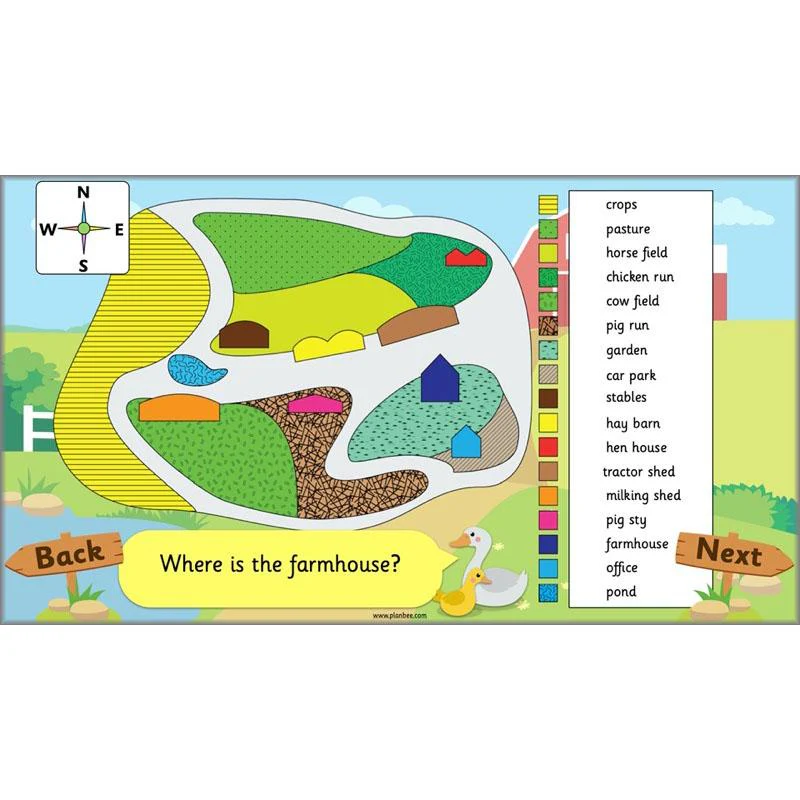
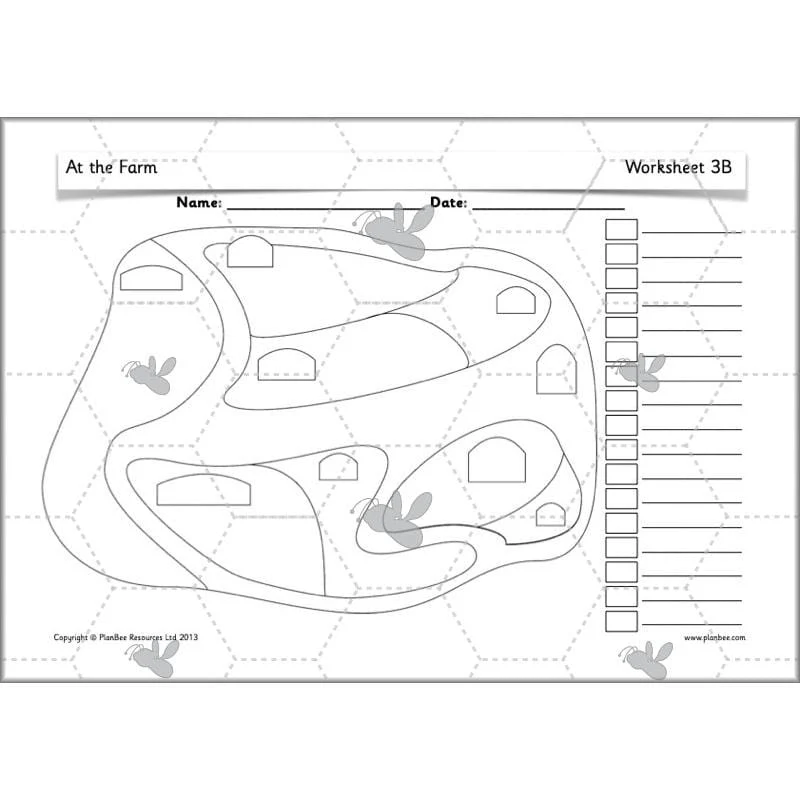
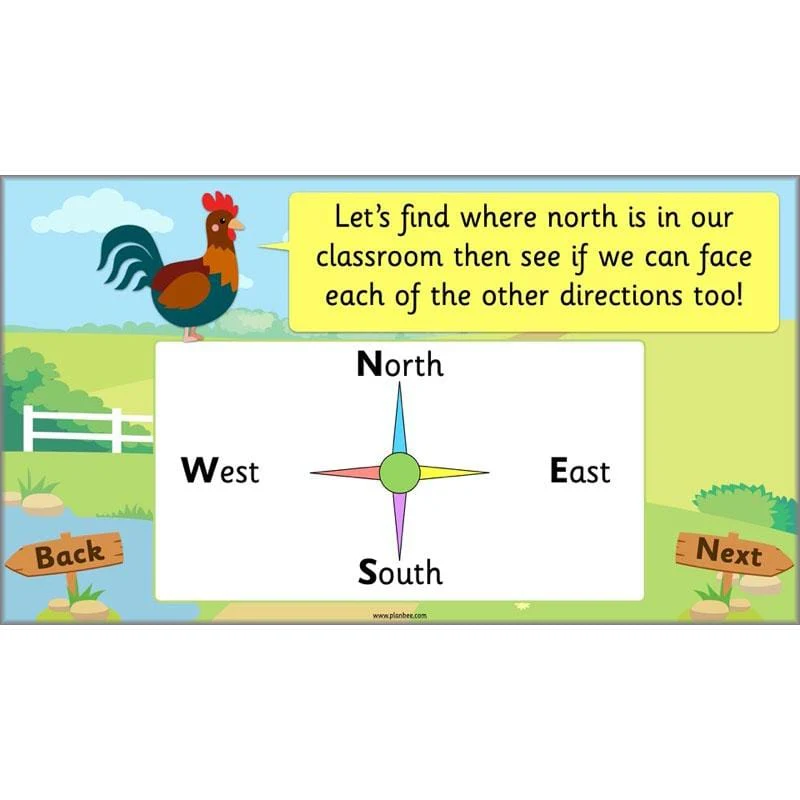
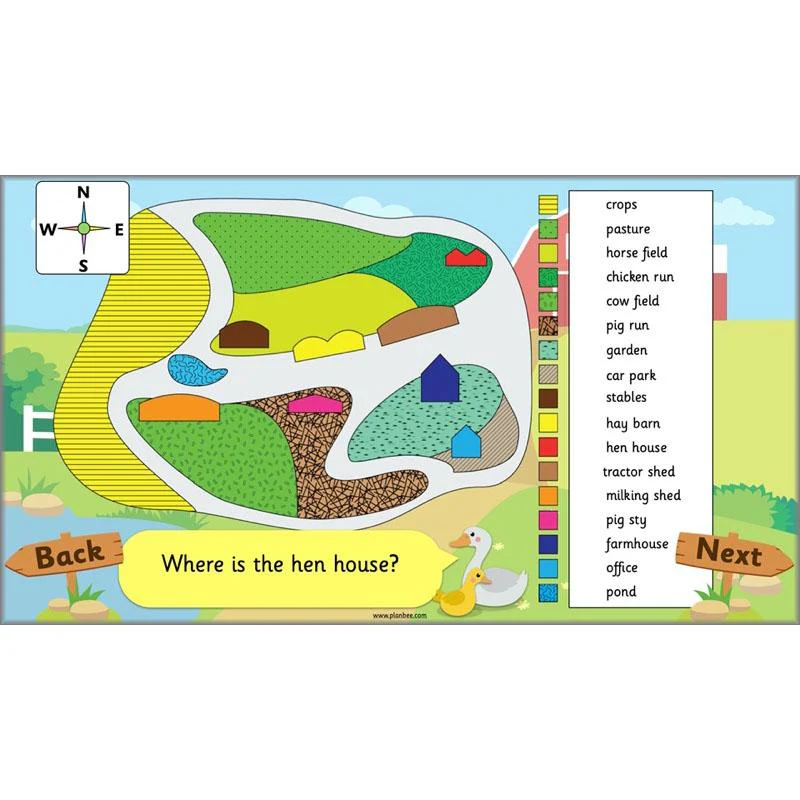
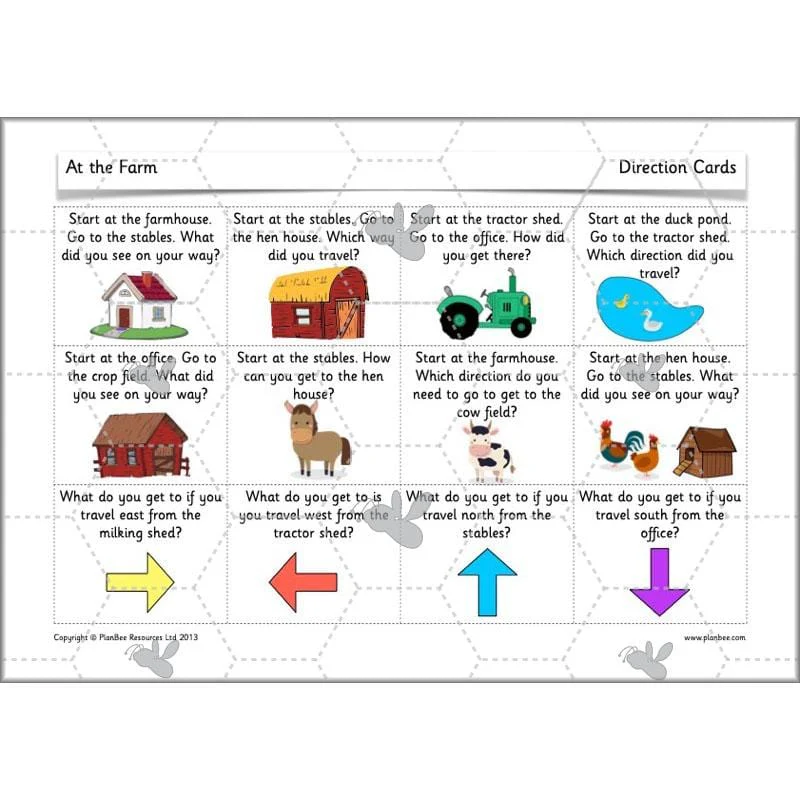
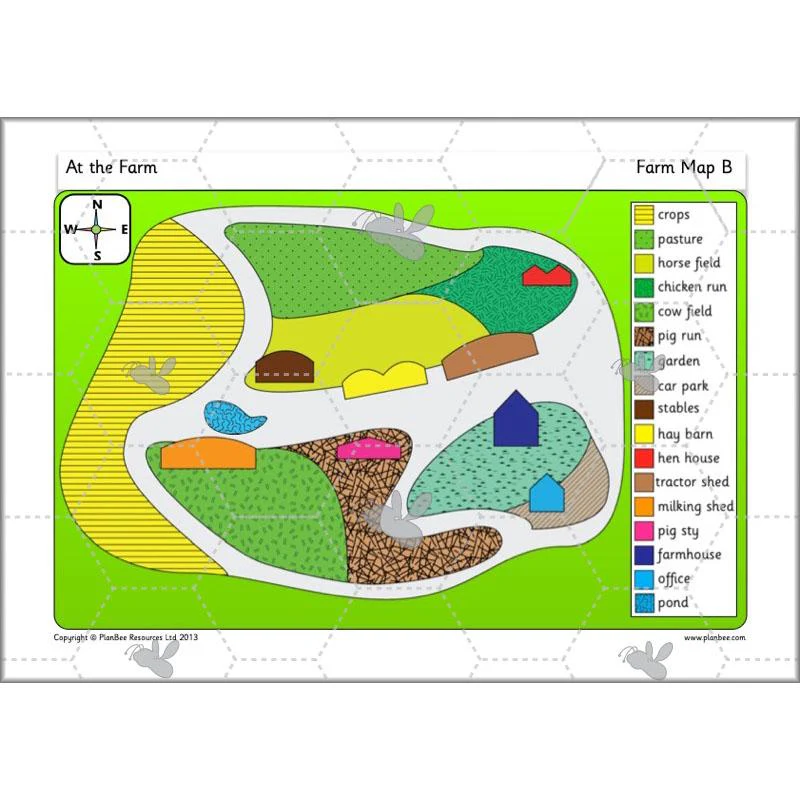
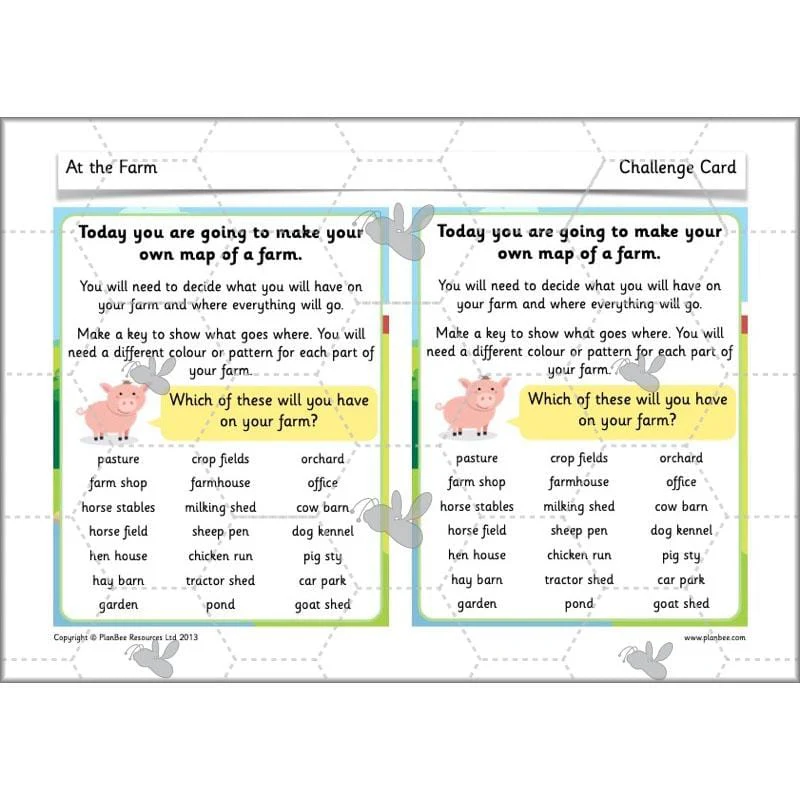
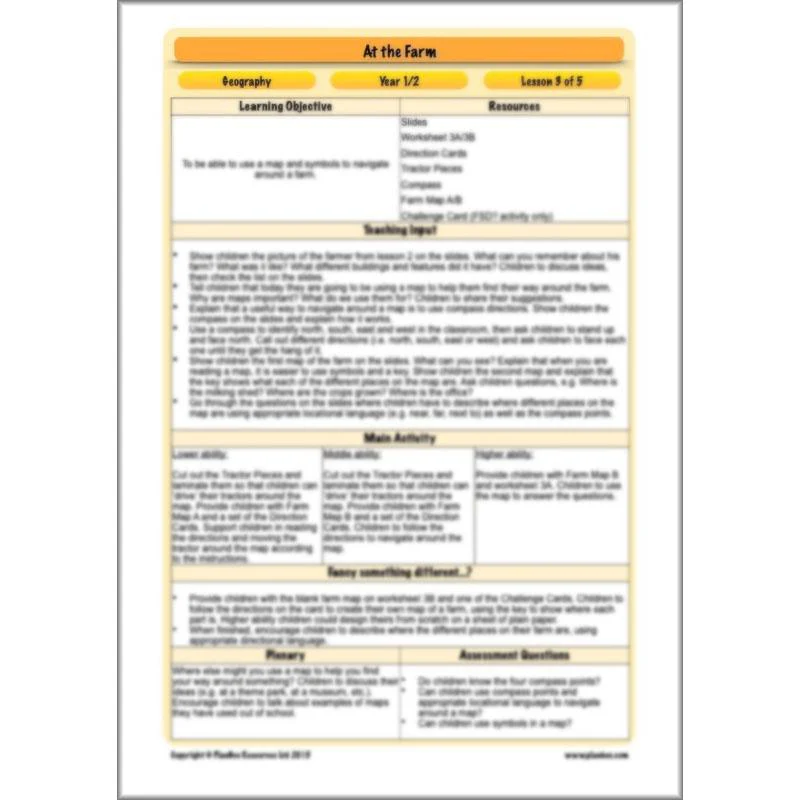
Now that your class know what kind of features they will find on the farm, they will learn how to navigate around the farm using a map. After looking at compass directions and how they can help describe positions on a map, your class will have the chance to use a map of the farm to describe where places are in relation to each other. They will also find out how keys on maps can make them easier to read and how to construct them.
What's included:
- Lesson plan
- Slides
- Activity ideas
- Differentiated worksheets
- Differentiated farm maps
- Tractor pieces
- Challenge cards
Farm Seasons
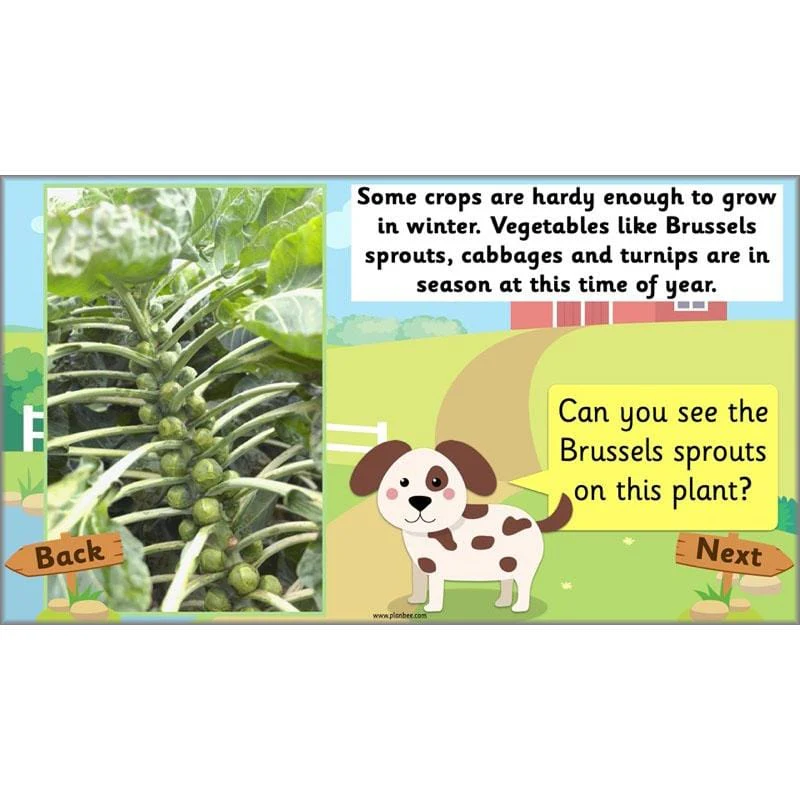
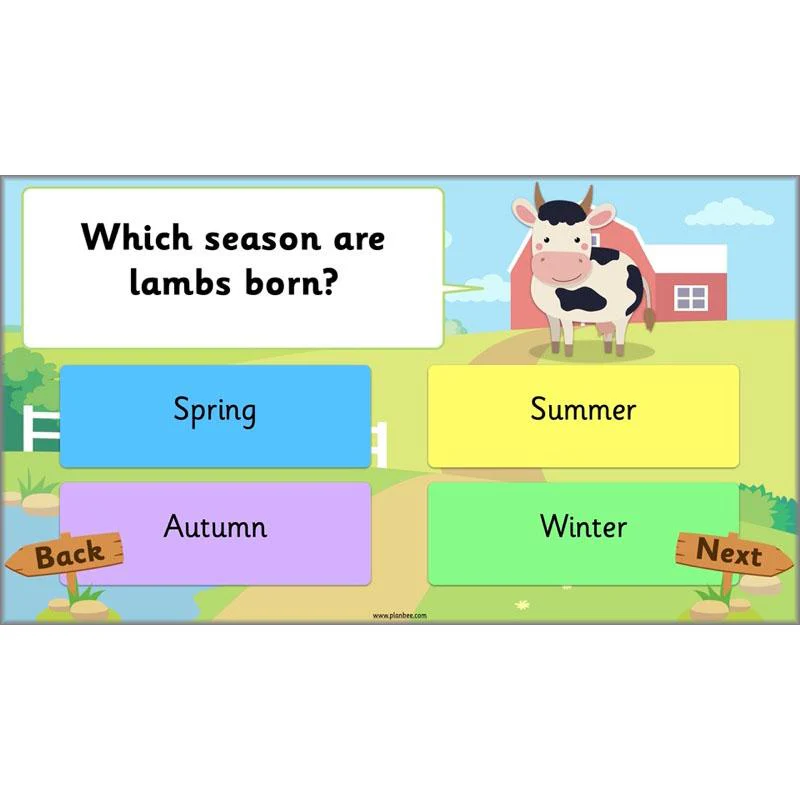
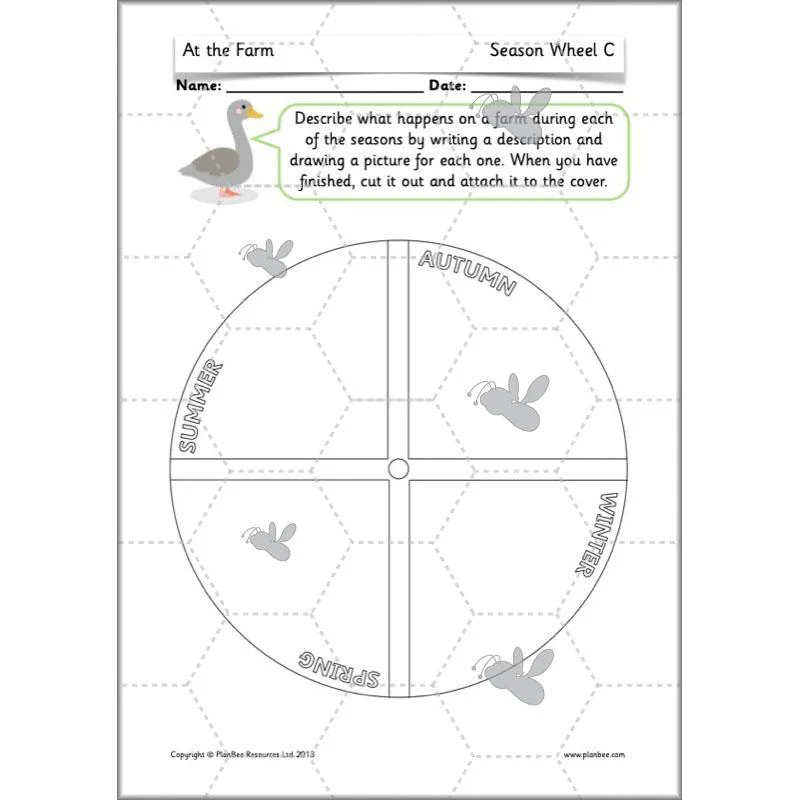
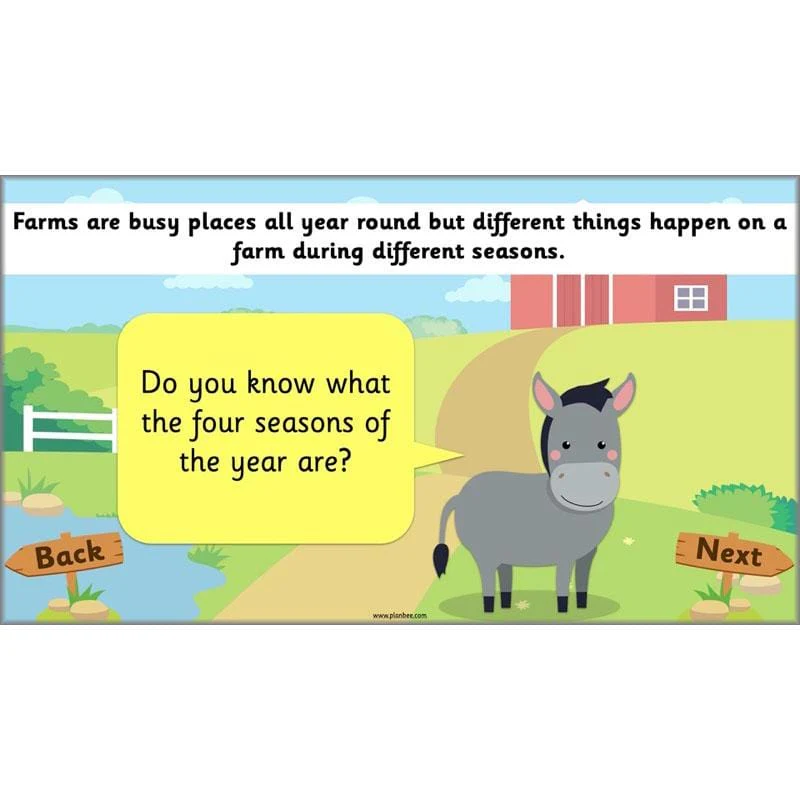
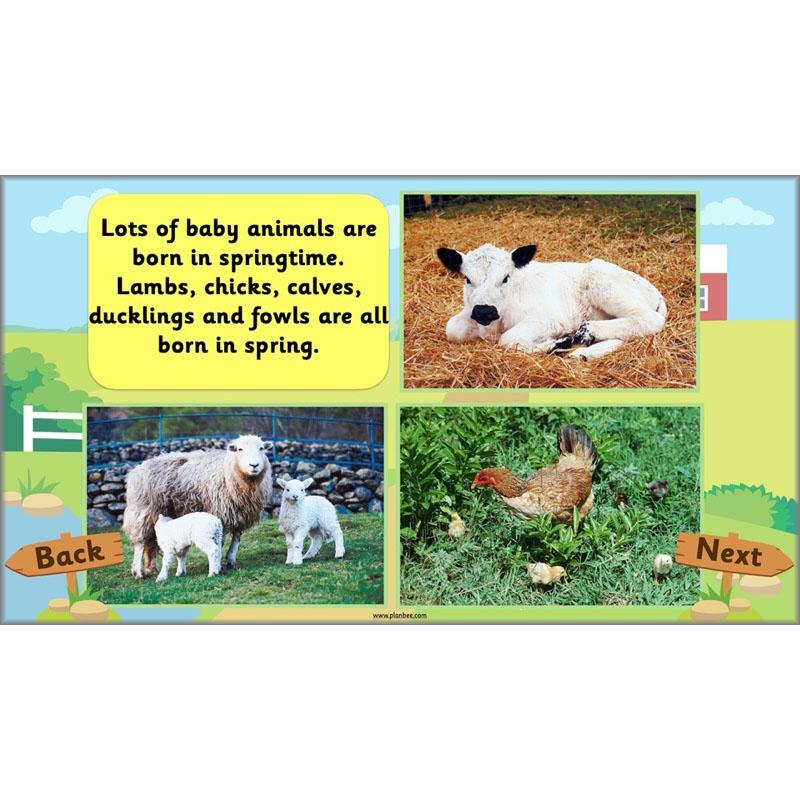
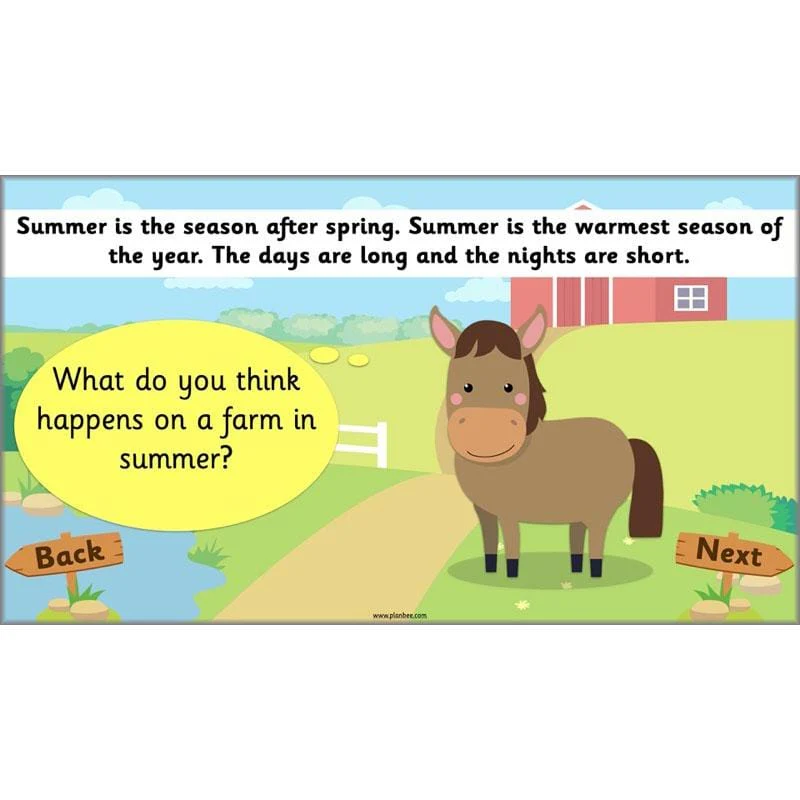
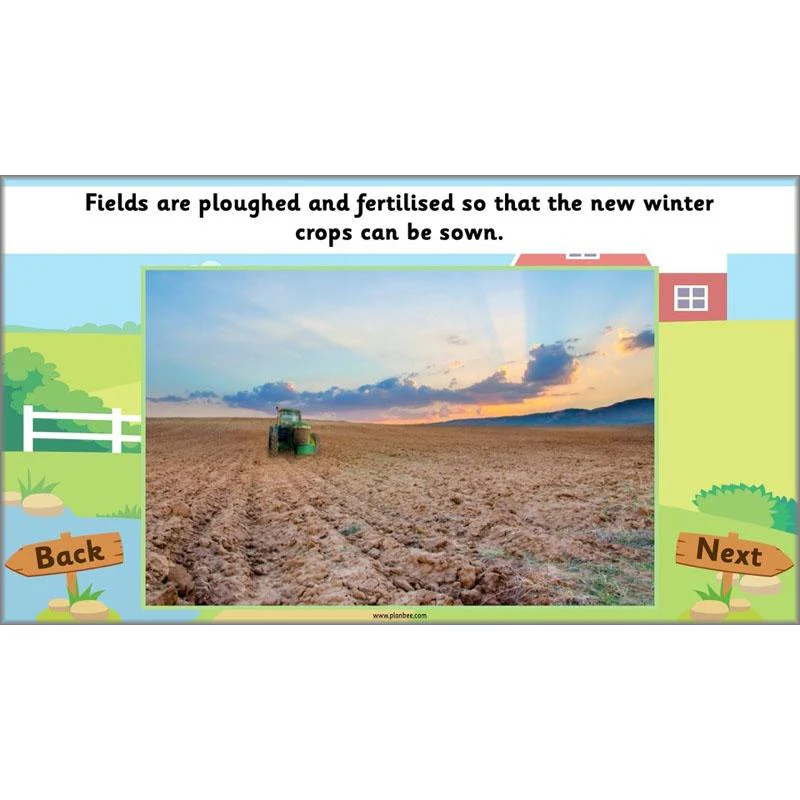
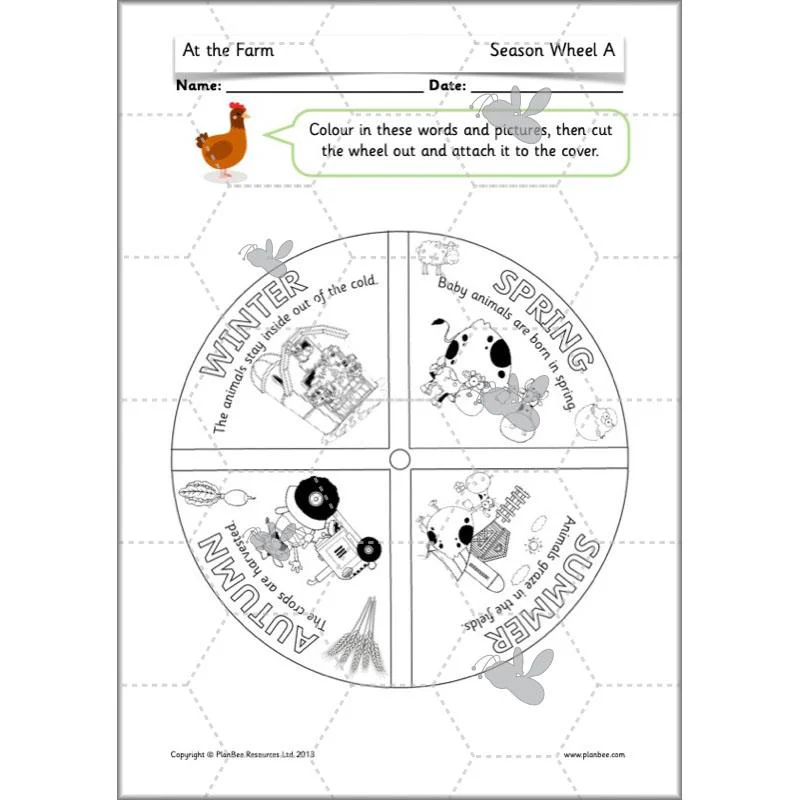
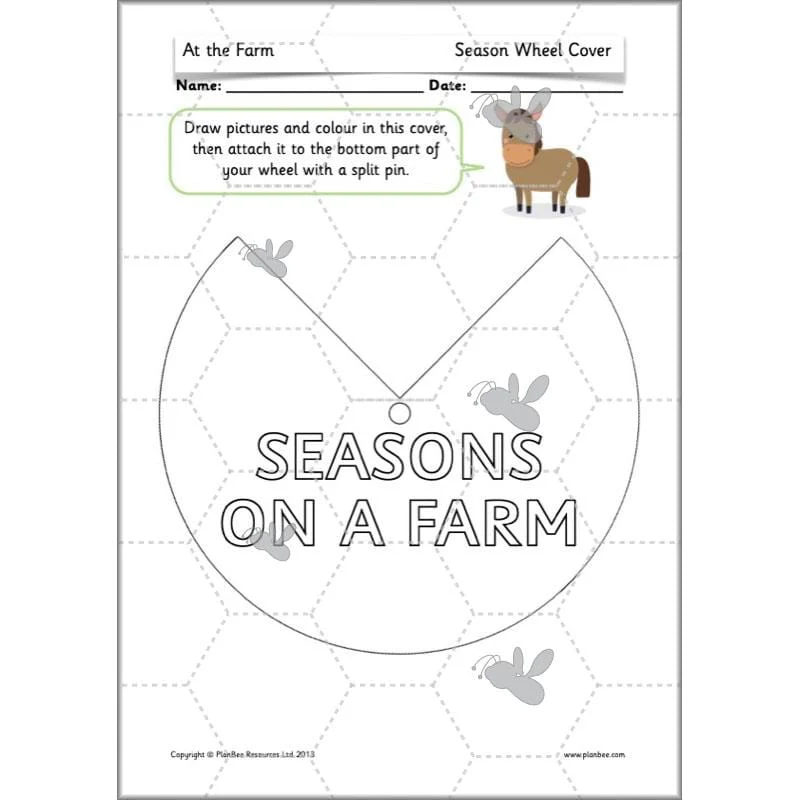
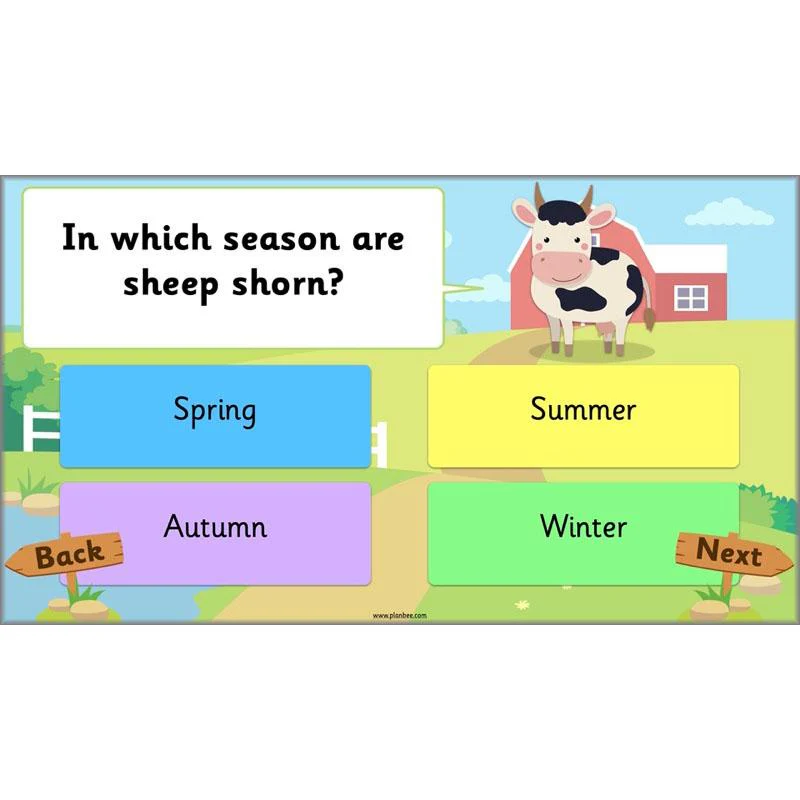
What happens on a farm during the different seasons? By the end of the lesson, your class will be able to answer this question as they find out about the events and changes on a farm in spring, summer, autumn and winter. They will find out how animal care changes through the year and look at what farmers do in each season to ensure that their crops are taken care of.
What's included:
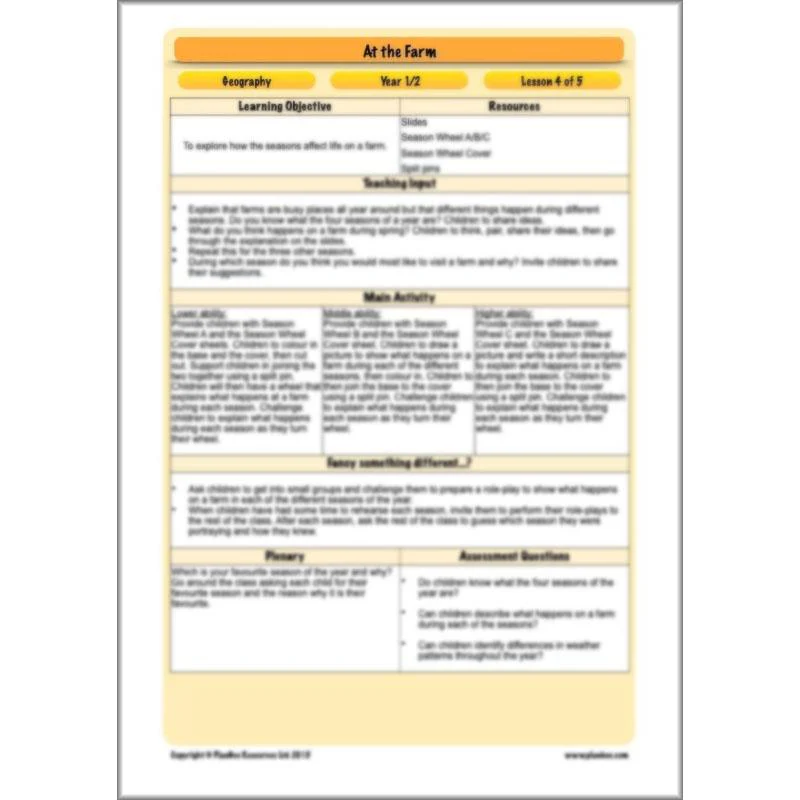
- Lesson plan
- Slides
- Activity ideas
- Differentiated season wheels
- Season wheel cover
Town and Country
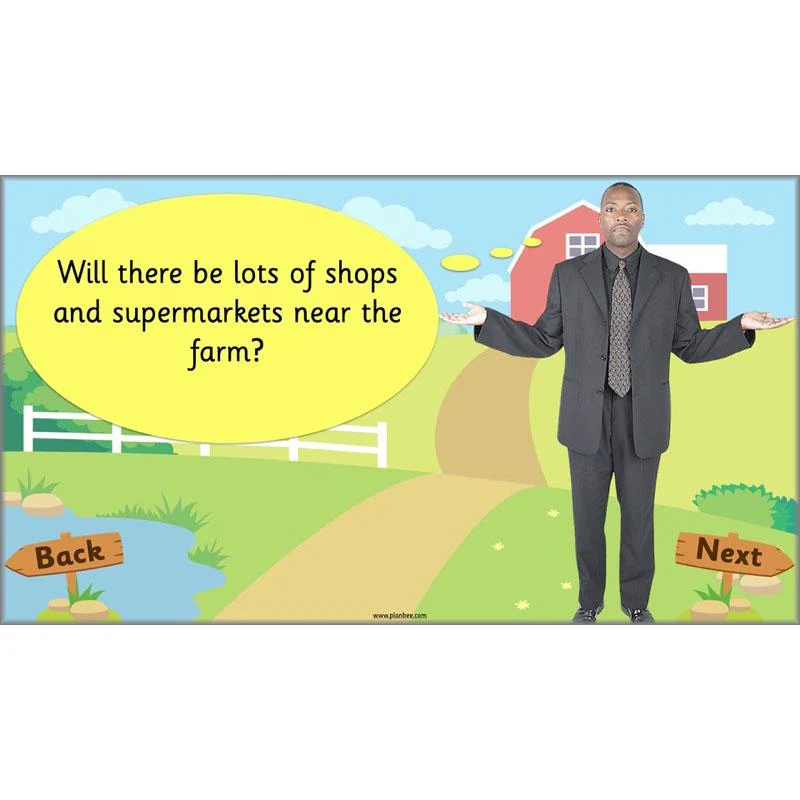
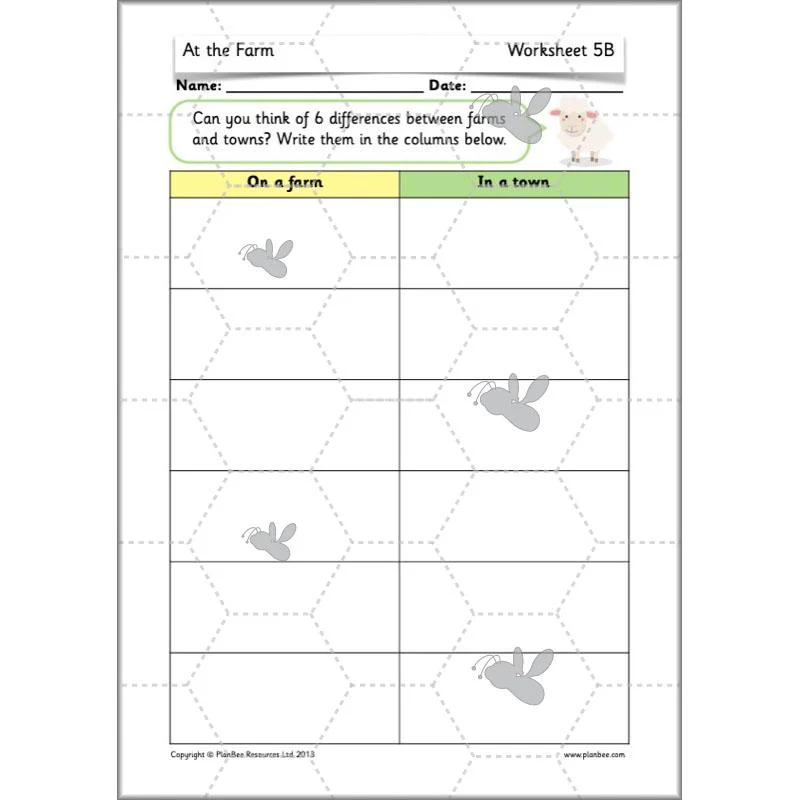
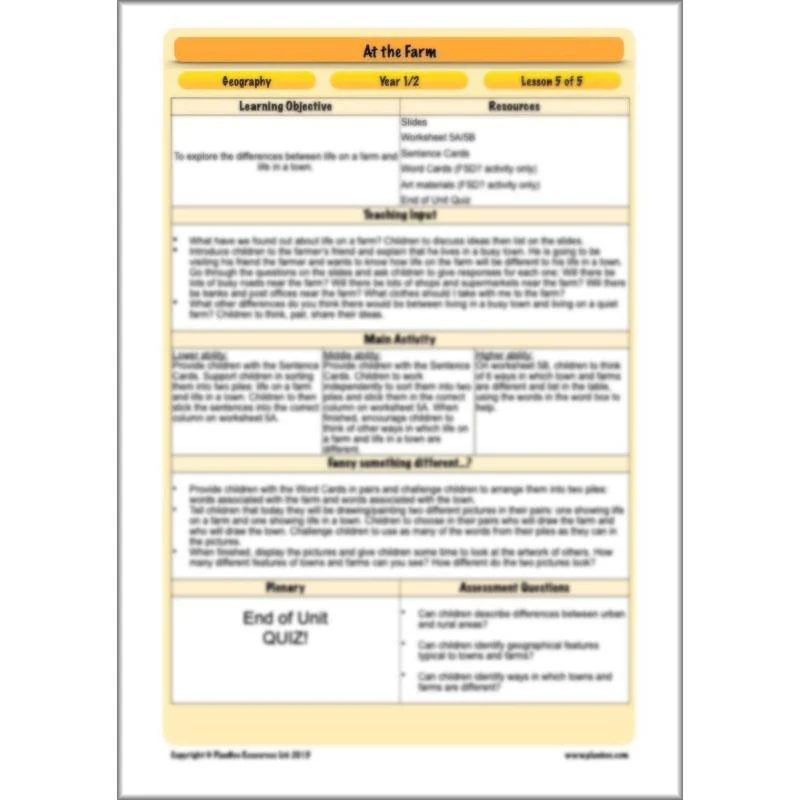
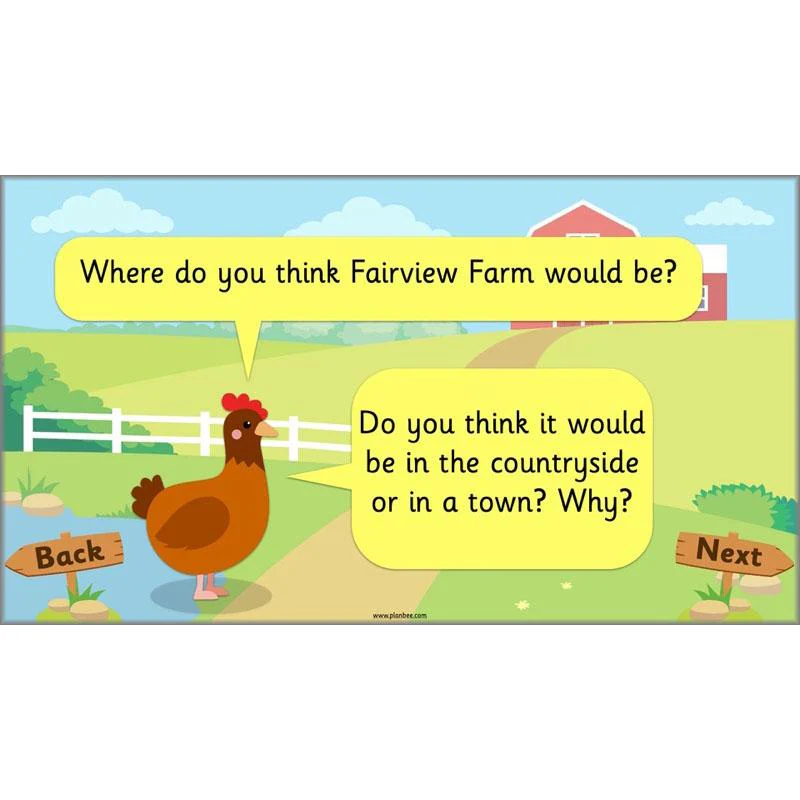
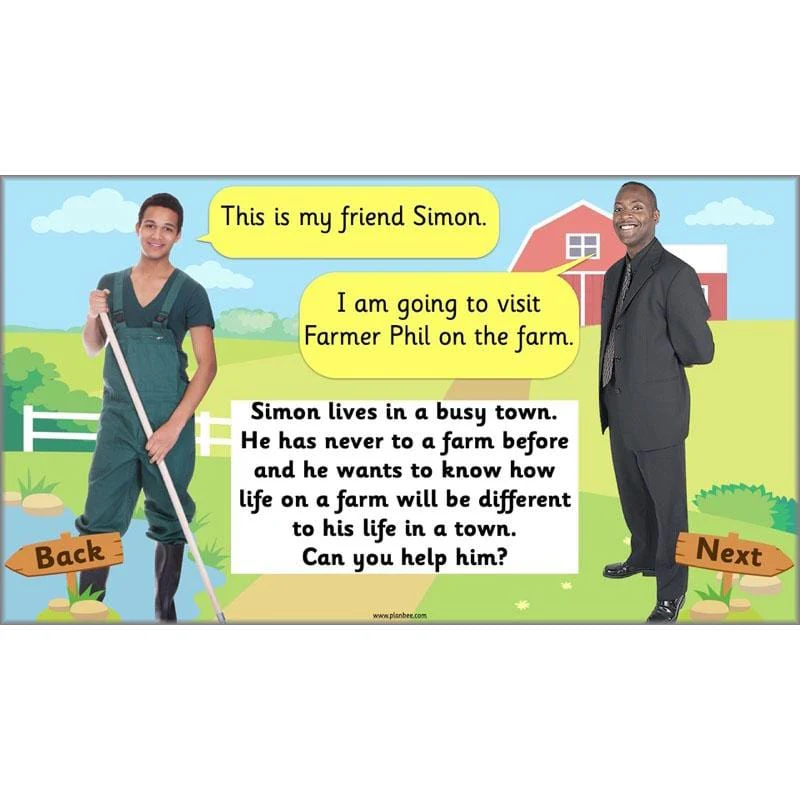
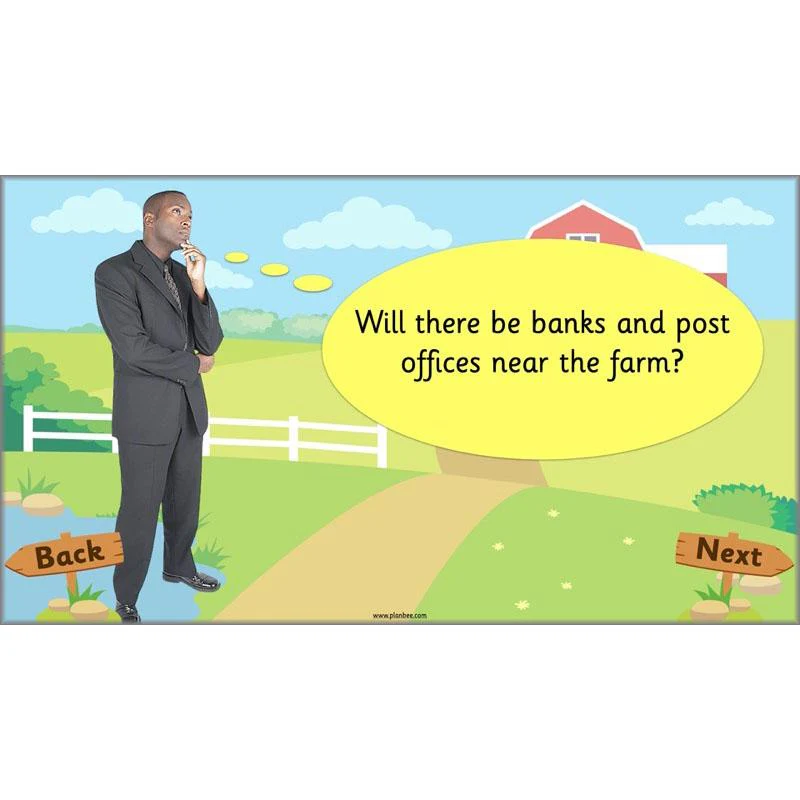
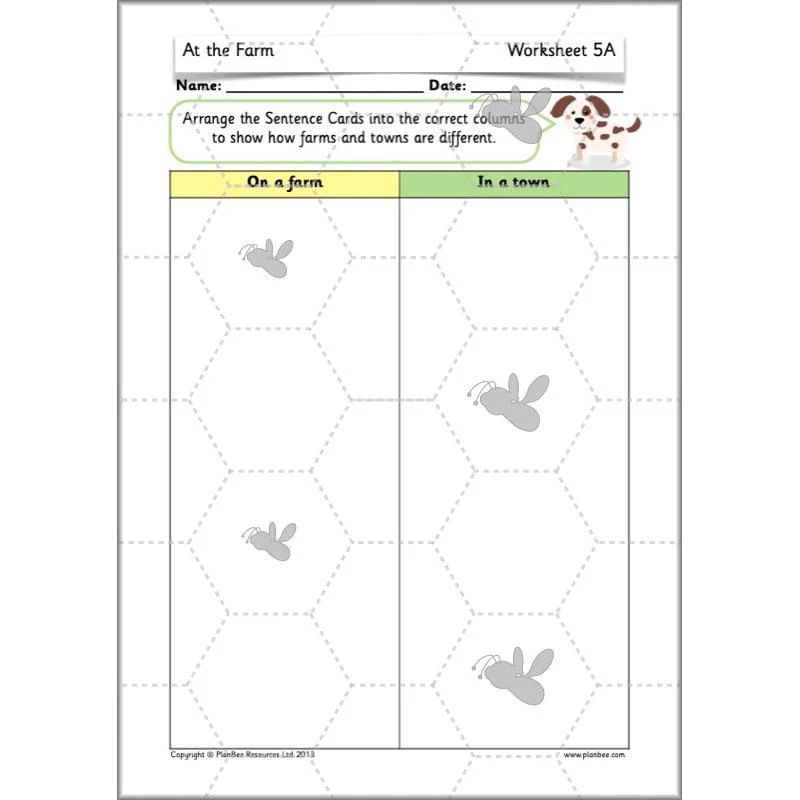
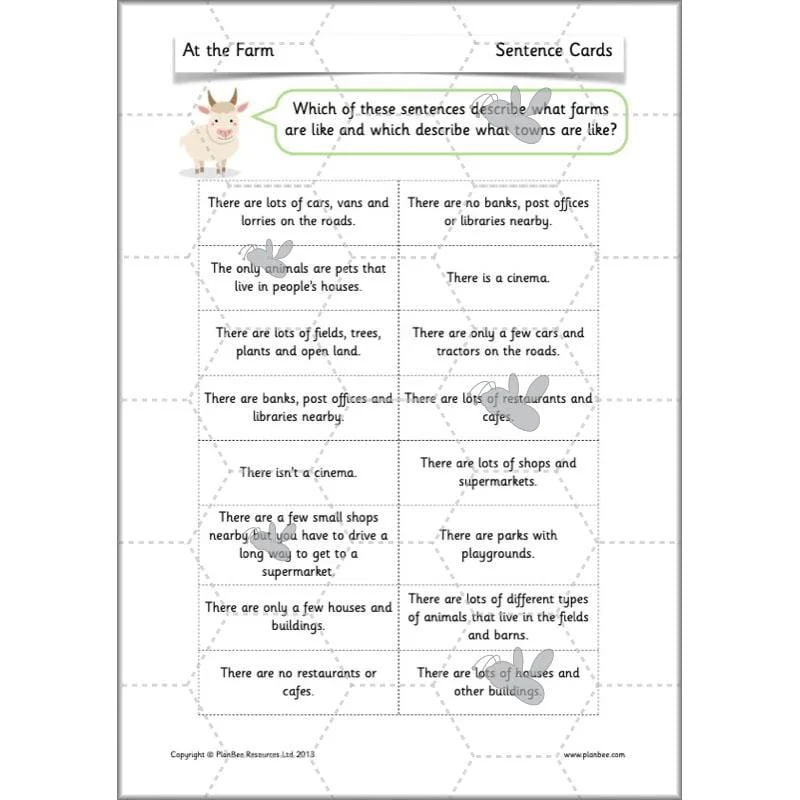
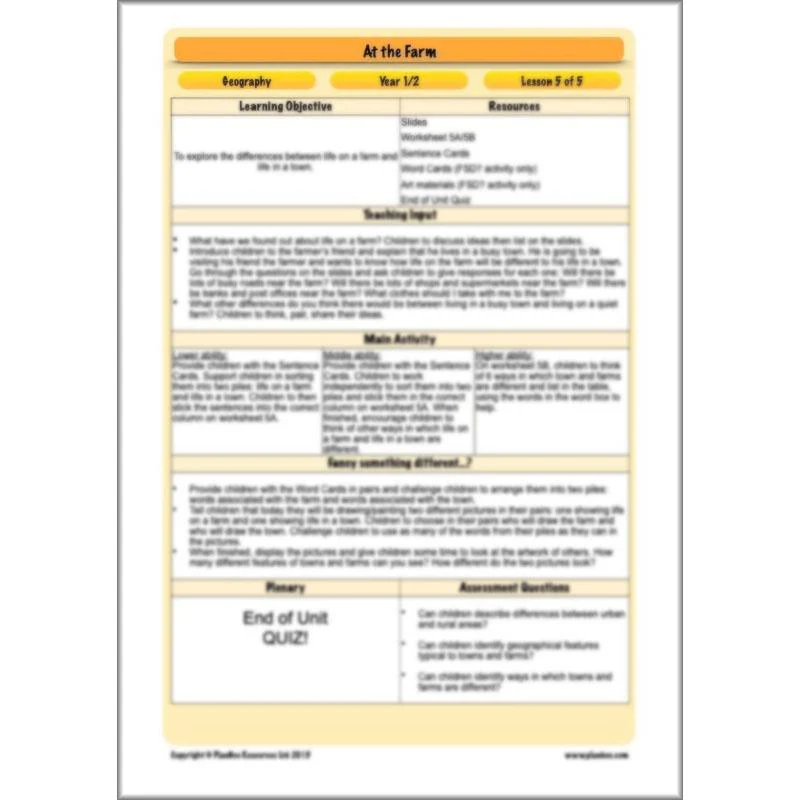
The final lesson in this series asks your class to help someone who has never visited a farm to prepare for a visit. They will think about how life in a busy town and a country farm are different in terms of both the physical and human features found in each, and what this means for the people who live in each.
What's included:
- Lesson plan
- Slides
- Activity ideas
- Differentiated worksheets
- Sentence cards
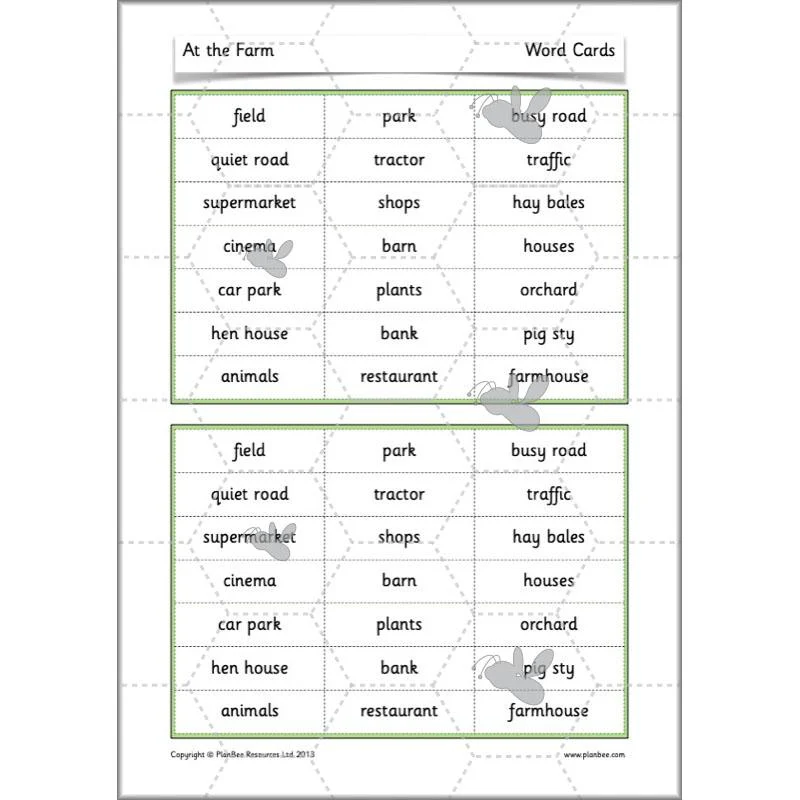
- Word cards
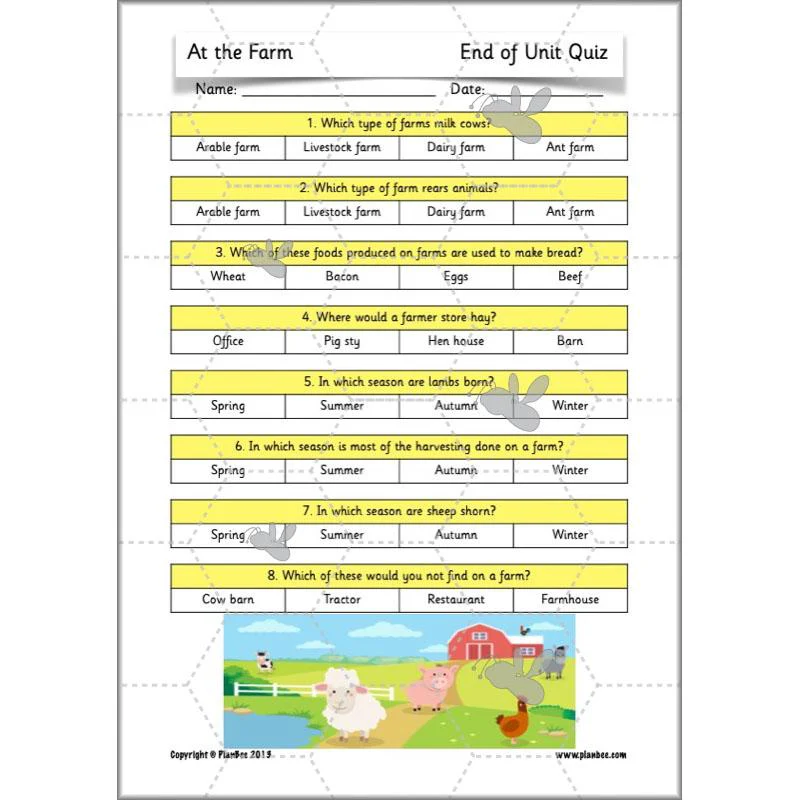
- End of unit quiz
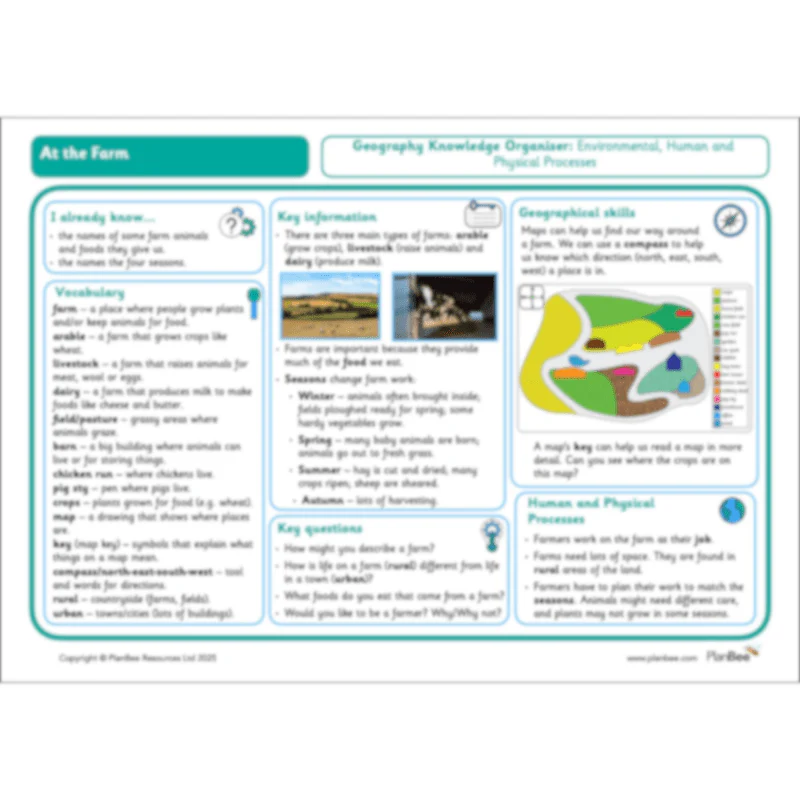
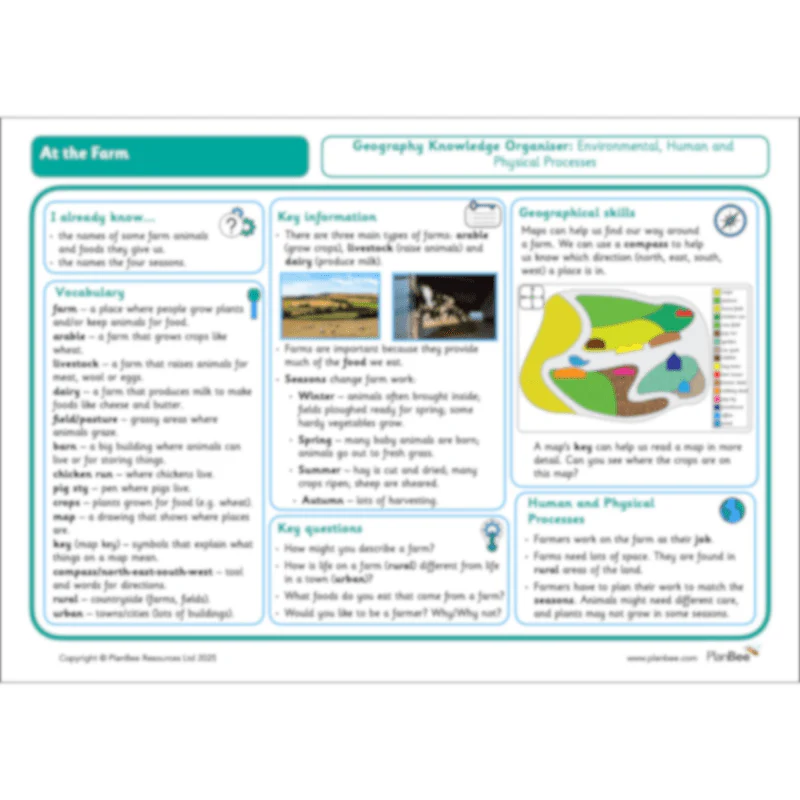
This Year 1/2 Geography Knowledge Organiser has been created to complement our Environmental, Human and Physical Processes strand. It is designed to support your children’s understanding of key vocabulary linked to this scheme of work. Key questions and relevant geographical skills have been identified to encourage children to apply their knowledge around this topic.
Original: $1.99
-50%$1.99
$1.00More Images
At the Farm
Take a trip to the countryside with your class and explore a working farm in this fun scheme of work for KS1. Find out about arable, livestock and dairy farms and the difference between them, before taking a closer look at a fictional farm that does a little of everything! Your class will learn about the features of a farm and use a map to navigate around a farm, as well as thinking about the differences between life in the country and life in a busy town.
With lesson plans, slides, differentiated worksheets, maps, challenges and much more, these Year 1 and 2 'At the Farm' lessons provide all you need to teach a variety of geographic ideas through stimulating and fun-filled activities.
A Knowledge Organiser is available to support the learning in this scheme. It is included in the Complete Series download or can be purchased individually.
What and Why?
The first lesson in this series starts by thinking about what a farm actually is and why farms are important. It looks at different types of farms, namely arable, livestock and dairy, and what happens on each one. It also gives your class the chance to think about what different foods we get from the different types of farms from chips to chipolatas!
What's included:
- Lesson plan
- Slides
- Activity ideas
- Differentiated worksheets
- Description cards
Farm Features
This lesson explores a fictional farm and looks at its features. Your class will find out about the barns, farmhouse, office, farm shop, pig sty, hen house, crop fields, pastures and more as they take a walk through the farm. By the end of the lesson, your class will be more familiar with how farms work and the vocabulary needed to describe them.
What's included:
- Lesson plan
- Slides
- Activity ideas
- Differentiated worksheets
- Poster template
Maps and Keys
Now that your class know what kind of features they will find on the farm, they will learn how to navigate around the farm using a map. After looking at compass directions and how they can help describe positions on a map, your class will have the chance to use a map of the farm to describe where places are in relation to each other. They will also find out how keys on maps can make them easier to read and how to construct them.
What's included:
- Lesson plan
- Slides
- Activity ideas
- Differentiated worksheets
- Differentiated farm maps
- Tractor pieces
- Challenge cards
Farm Seasons
What happens on a farm during the different seasons? By the end of the lesson, your class will be able to answer this question as they find out about the events and changes on a farm in spring, summer, autumn and winter. They will find out how animal care changes through the year and look at what farmers do in each season to ensure that their crops are taken care of.
What's included:
- Lesson plan
- Slides
- Activity ideas
- Differentiated season wheels
- Season wheel cover
Town and Country
The final lesson in this series asks your class to help someone who has never visited a farm to prepare for a visit. They will think about how life in a busy town and a country farm are different in terms of both the physical and human features found in each, and what this means for the people who live in each.
What's included:
- Lesson plan
- Slides
- Activity ideas
- Differentiated worksheets
- Sentence cards
- Word cards
- End of unit quiz
This Year 1/2 Geography Knowledge Organiser has been created to complement our Environmental, Human and Physical Processes strand. It is designed to support your children’s understanding of key vocabulary linked to this scheme of work. Key questions and relevant geographical skills have been identified to encourage children to apply their knowledge around this topic.
Product Information
Product Information
Shipping & Returns
Shipping & Returns
Description
Take a trip to the countryside with your class and explore a working farm in this fun scheme of work for KS1. Find out about arable, livestock and dairy farms and the difference between them, before taking a closer look at a fictional farm that does a little of everything! Your class will learn about the features of a farm and use a map to navigate around a farm, as well as thinking about the differences between life in the country and life in a busy town.
With lesson plans, slides, differentiated worksheets, maps, challenges and much more, these Year 1 and 2 'At the Farm' lessons provide all you need to teach a variety of geographic ideas through stimulating and fun-filled activities.
A Knowledge Organiser is available to support the learning in this scheme. It is included in the Complete Series download or can be purchased individually.
What and Why?
The first lesson in this series starts by thinking about what a farm actually is and why farms are important. It looks at different types of farms, namely arable, livestock and dairy, and what happens on each one. It also gives your class the chance to think about what different foods we get from the different types of farms from chips to chipolatas!
What's included:
- Lesson plan
- Slides
- Activity ideas
- Differentiated worksheets
- Description cards
Farm Features
This lesson explores a fictional farm and looks at its features. Your class will find out about the barns, farmhouse, office, farm shop, pig sty, hen house, crop fields, pastures and more as they take a walk through the farm. By the end of the lesson, your class will be more familiar with how farms work and the vocabulary needed to describe them.
What's included:
- Lesson plan
- Slides
- Activity ideas
- Differentiated worksheets
- Poster template
Maps and Keys
Now that your class know what kind of features they will find on the farm, they will learn how to navigate around the farm using a map. After looking at compass directions and how they can help describe positions on a map, your class will have the chance to use a map of the farm to describe where places are in relation to each other. They will also find out how keys on maps can make them easier to read and how to construct them.
What's included:
- Lesson plan
- Slides
- Activity ideas
- Differentiated worksheets
- Differentiated farm maps
- Tractor pieces
- Challenge cards
Farm Seasons
What happens on a farm during the different seasons? By the end of the lesson, your class will be able to answer this question as they find out about the events and changes on a farm in spring, summer, autumn and winter. They will find out how animal care changes through the year and look at what farmers do in each season to ensure that their crops are taken care of.
What's included:
- Lesson plan
- Slides
- Activity ideas
- Differentiated season wheels
- Season wheel cover
Town and Country
The final lesson in this series asks your class to help someone who has never visited a farm to prepare for a visit. They will think about how life in a busy town and a country farm are different in terms of both the physical and human features found in each, and what this means for the people who live in each.
What's included:
- Lesson plan
- Slides
- Activity ideas
- Differentiated worksheets
- Sentence cards
- Word cards
- End of unit quiz
This Year 1/2 Geography Knowledge Organiser has been created to complement our Environmental, Human and Physical Processes strand. It is designed to support your children’s understanding of key vocabulary linked to this scheme of work. Key questions and relevant geographical skills have been identified to encourage children to apply their knowledge around this topic.