Biomes
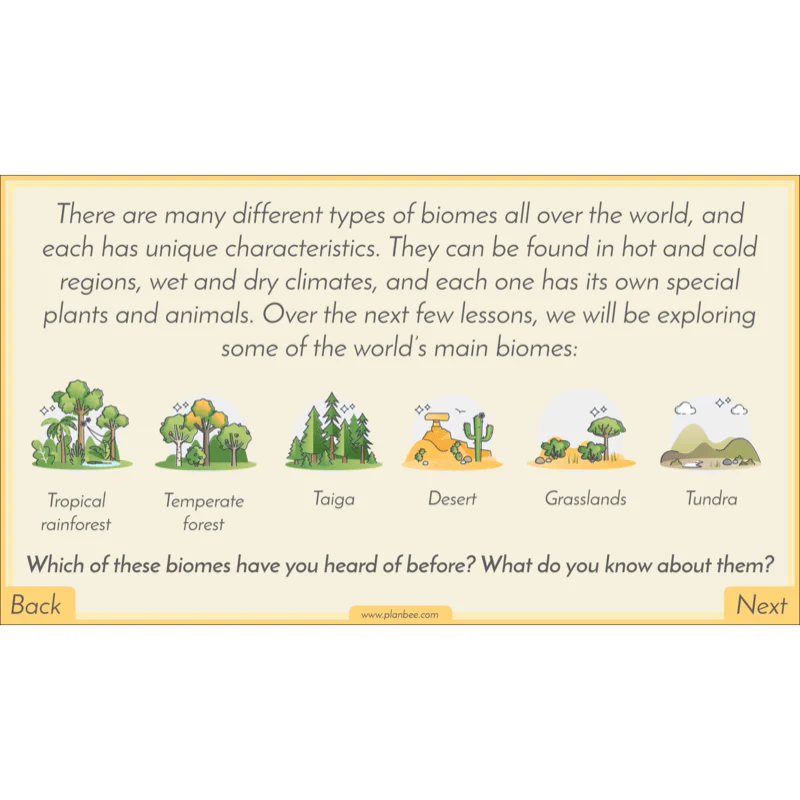
Over the course of seven engaging lessons, your class will find out about the diverse range of ecosytems on our planet by exploring six of the main biomes: tropical rainforest, temperate forest, taiga, desert, grasslands and tundra.
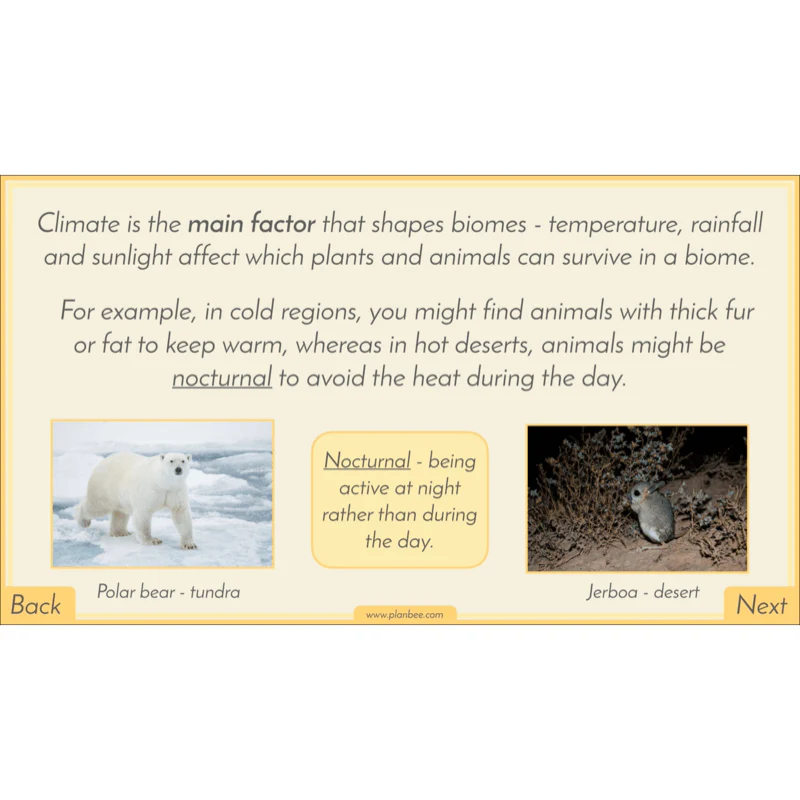
Children explore six of the world's main biomes, learning about their locations, climates, unique plants and animals and human impact. Through a mix of class discussions, map work, climate graphs and creative activities like quizzes, Venn diagrams, posters and dioramas, they investigate how organisms adapt to their environments and how climate change affects fragile biomes like the tundra. The unit ends with a review of all biomes, encouraging children to compare them and demonstrate their understanding through collaborative projects. Each lesson pack comes complete with a detailed plan, an engaging and informative set of PDF slides for the teaching input, as well as a range of printable resources to support your class with their independent learning.
Looking for LKS2 Geography lessons on biomes? You might like our In the Desert Y3/4 scheme, or our The Rainforest Biome Y3/4 scheme!
Definition and Location
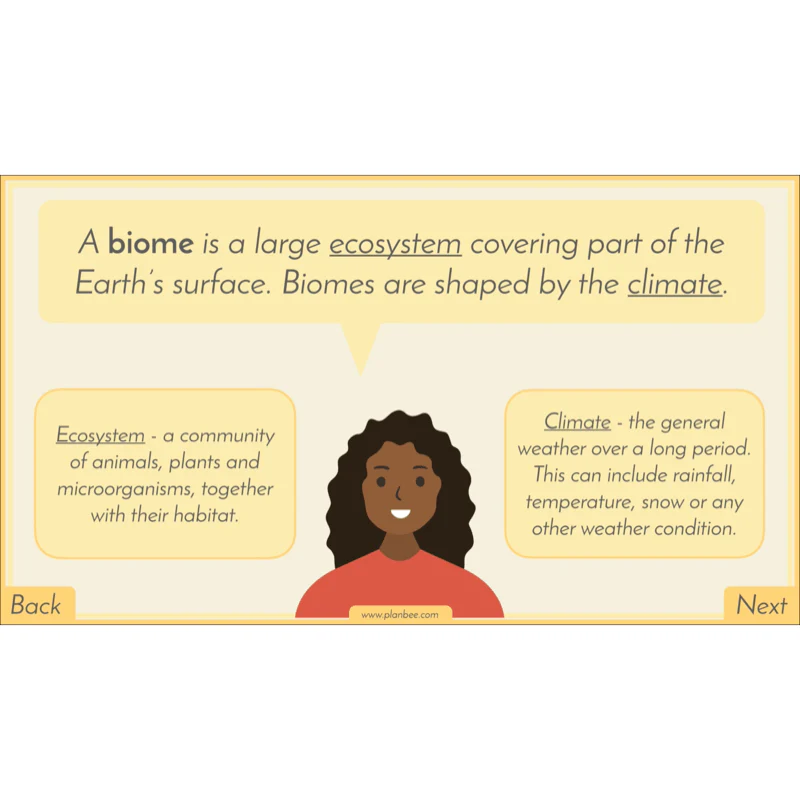
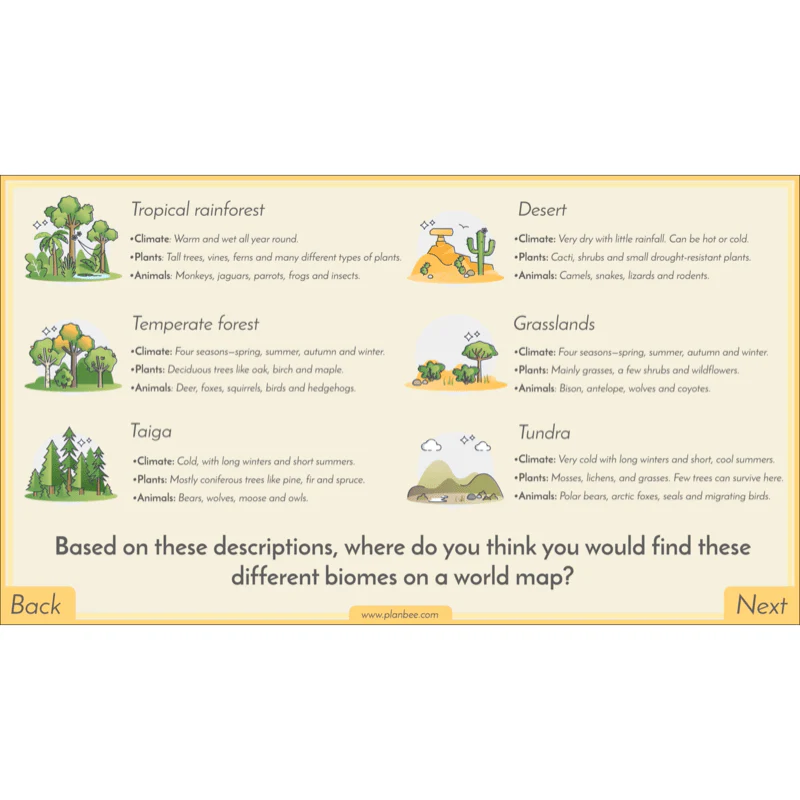
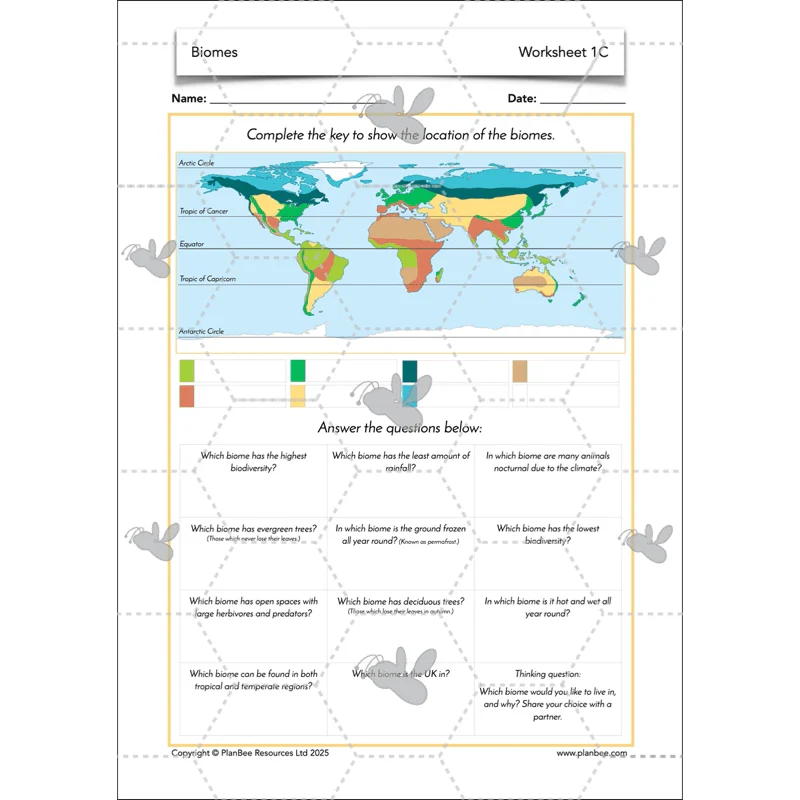
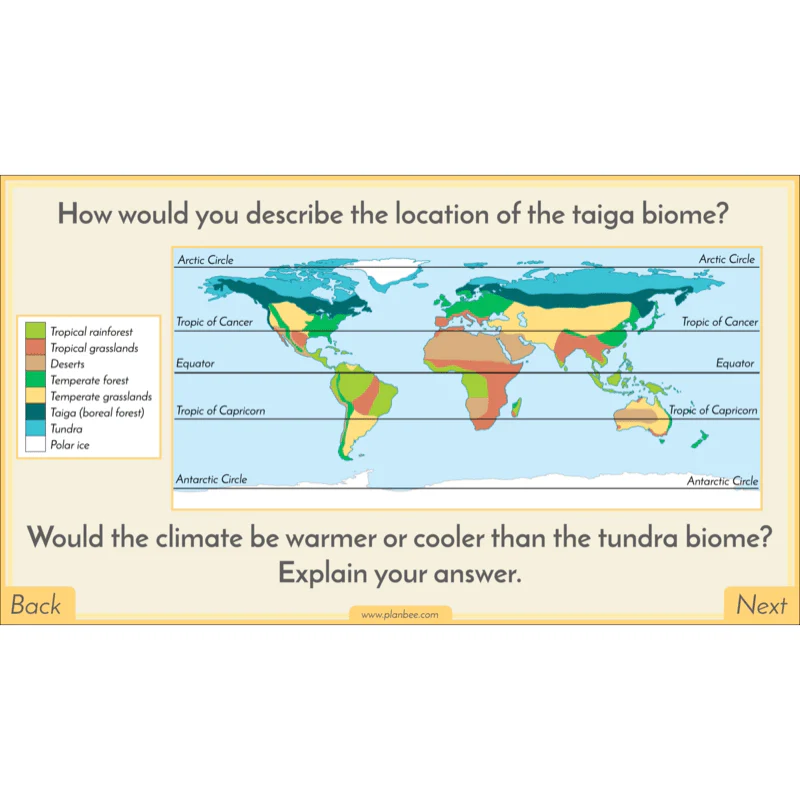
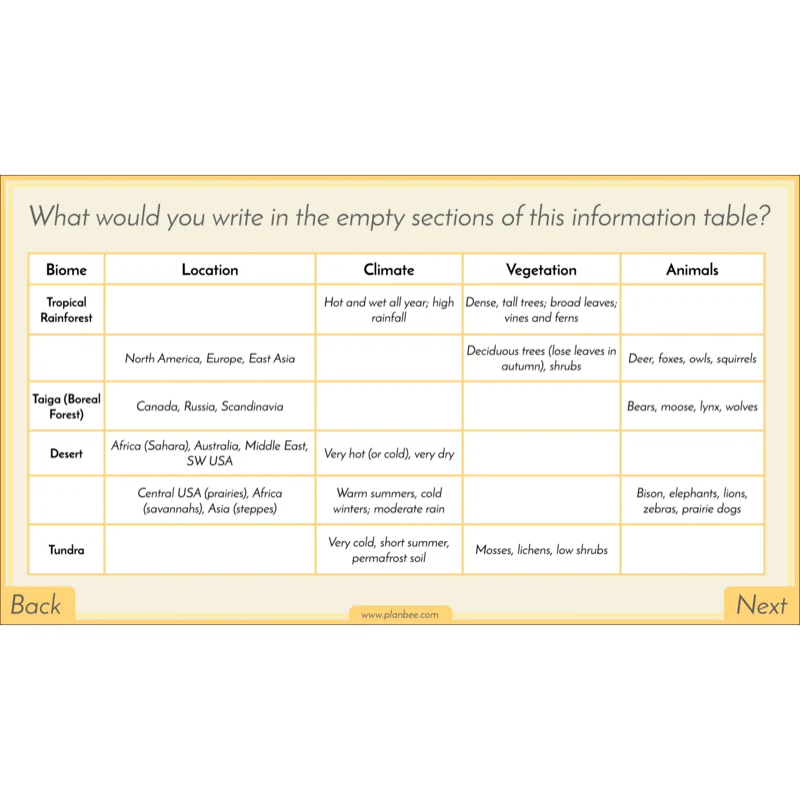
In this first lesson, children will explore the locations of some of the world’s main biomes, and find out about their distinctive characteristics, including their climates and the unique plants and animals that inhabit each of them.
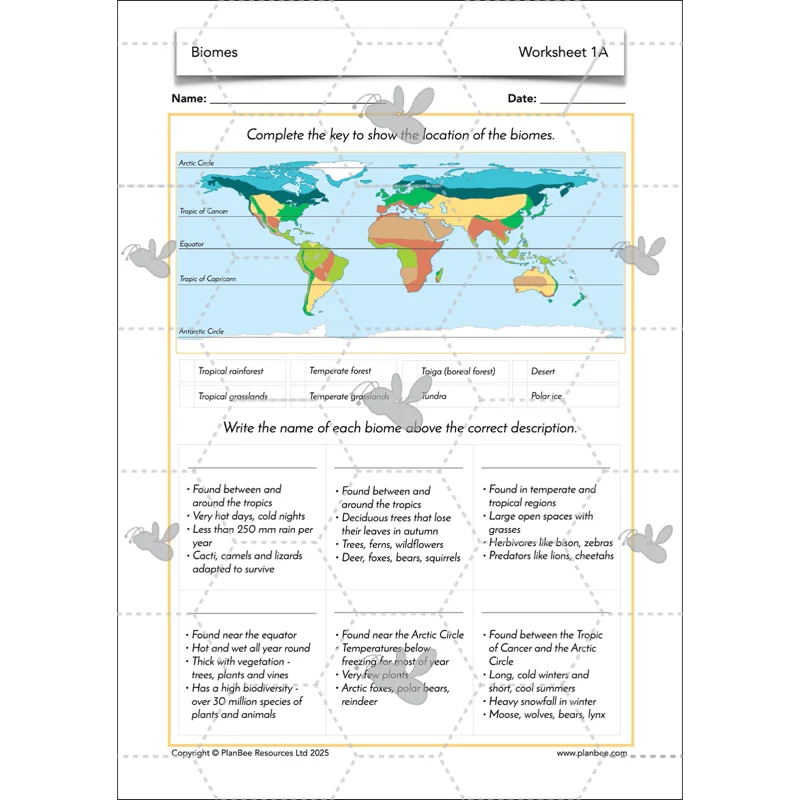
During their independent activities, children will identify the world’s biomes on a map and use their knowledge of each one’s characteristics to write facts and answer questions. In the alternative activity, children are challenged to work in groups to create their own imaginary biome, considering the climate it will have, as well as how the plants and animals there are adapted to their habitat.
This ready-to-teach Biomes KS2 lesson pack includes everything you need: a detailed plan, a set of informative PDF slides, activity ideas and printable resources.
What's included:
- Lesson plan
- Slides
- Activity ideas
- Differentiated worksheets
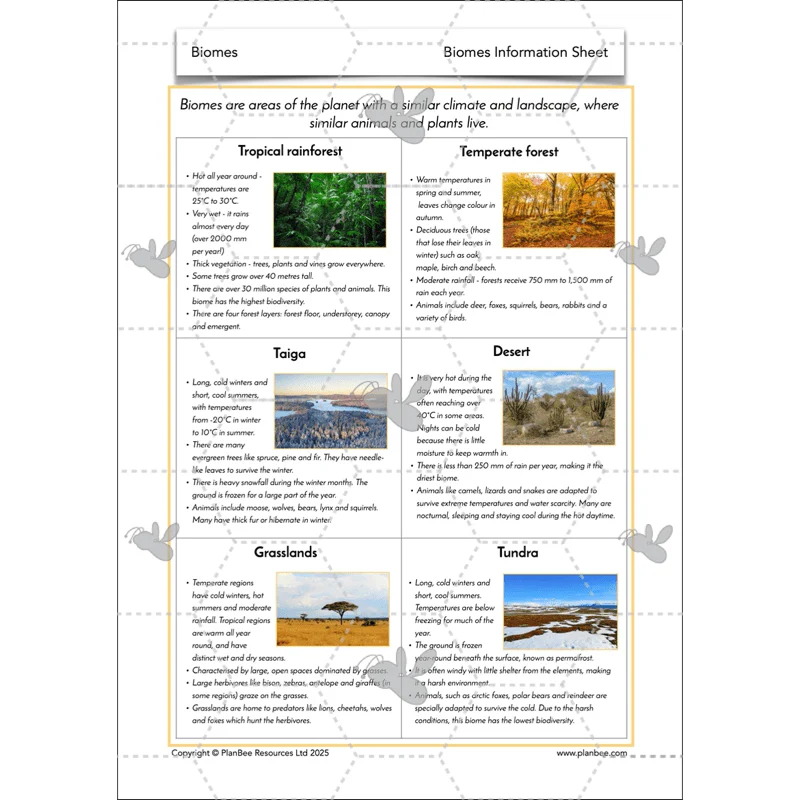
- Biomes Information Sheet
- Challenge Cards
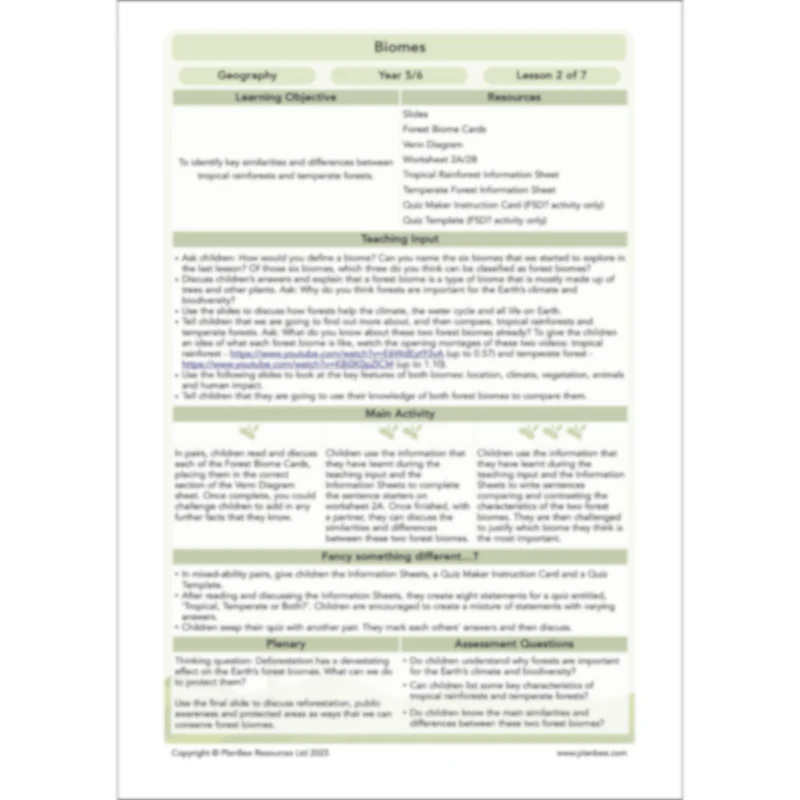
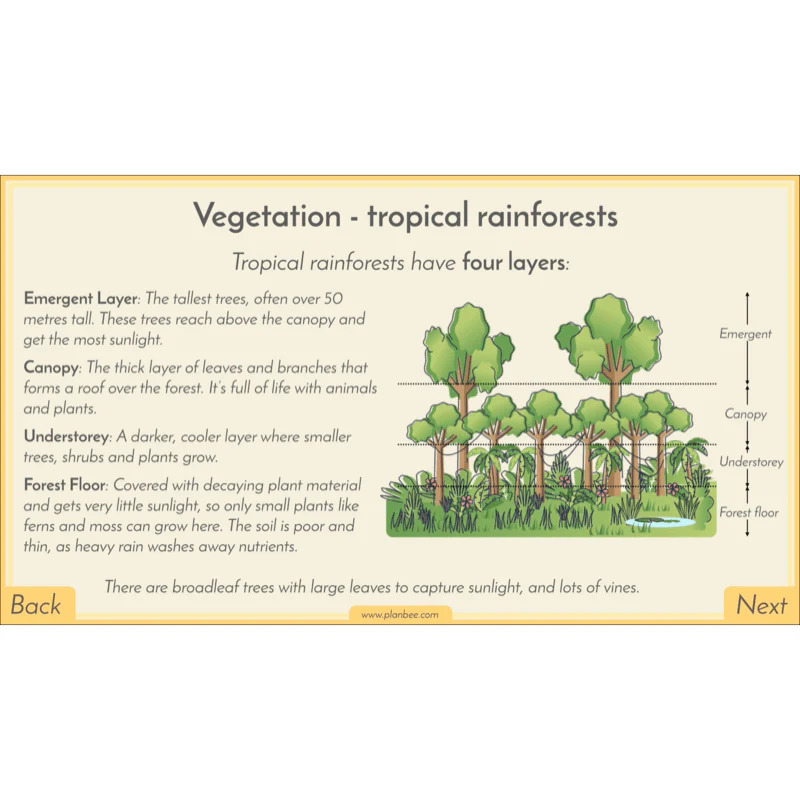
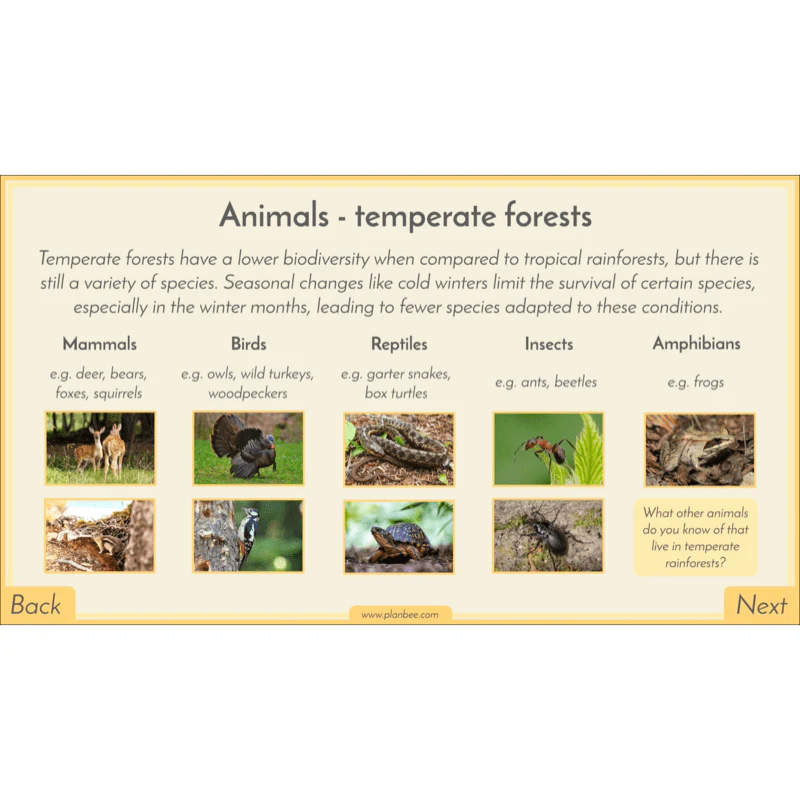
Tropical Rainforests and Temperate Forests
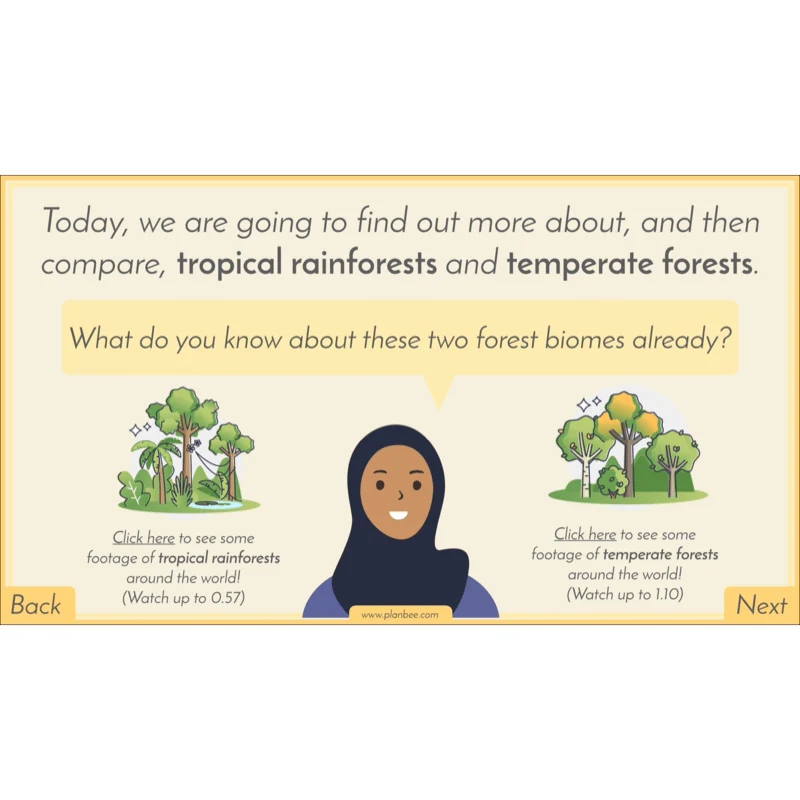
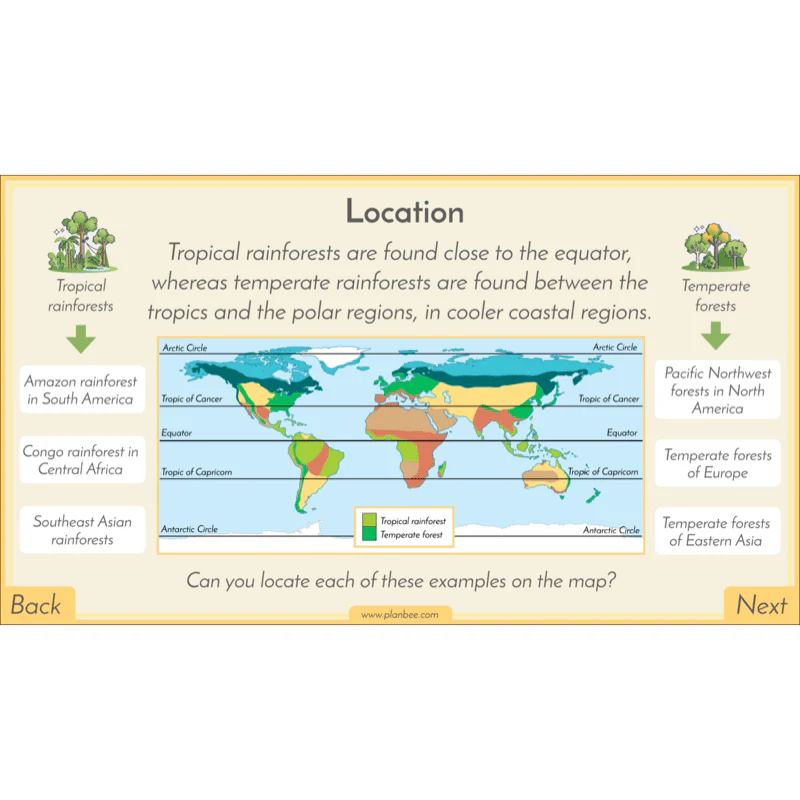
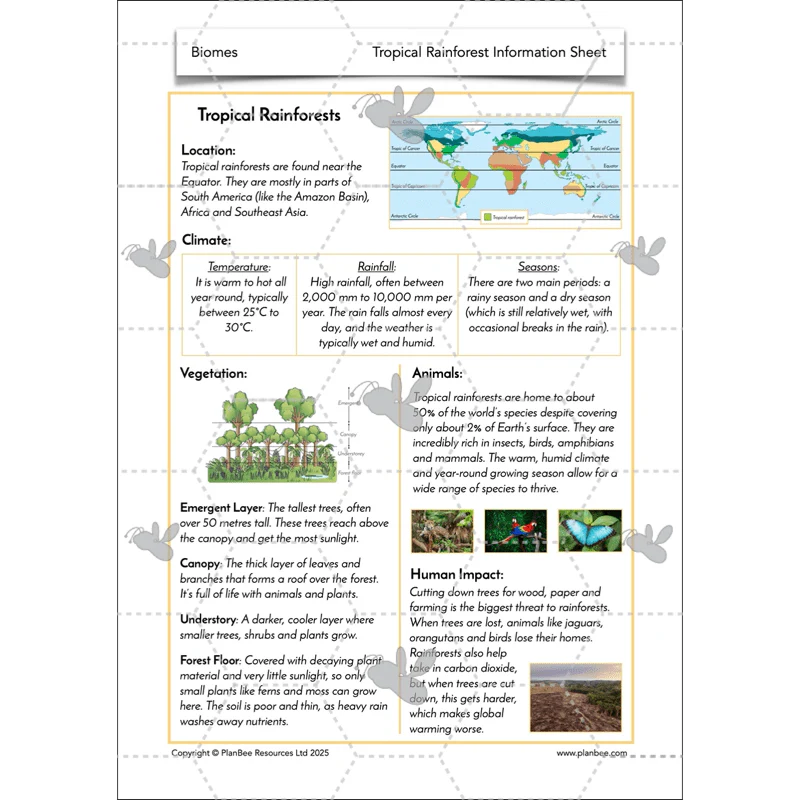
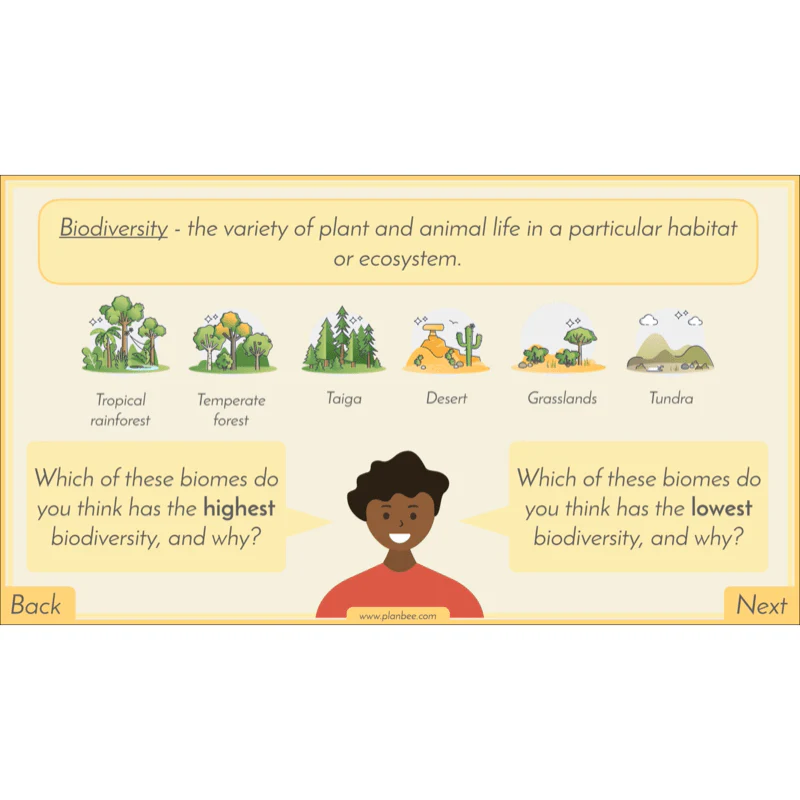
After finding out why forest biomes are important for the Earth’s climate and biodiversity, children will focus in on the characteristics of tropical rainforests and temperate forests, looking at their location, climate, vegetation, animals and human impact.
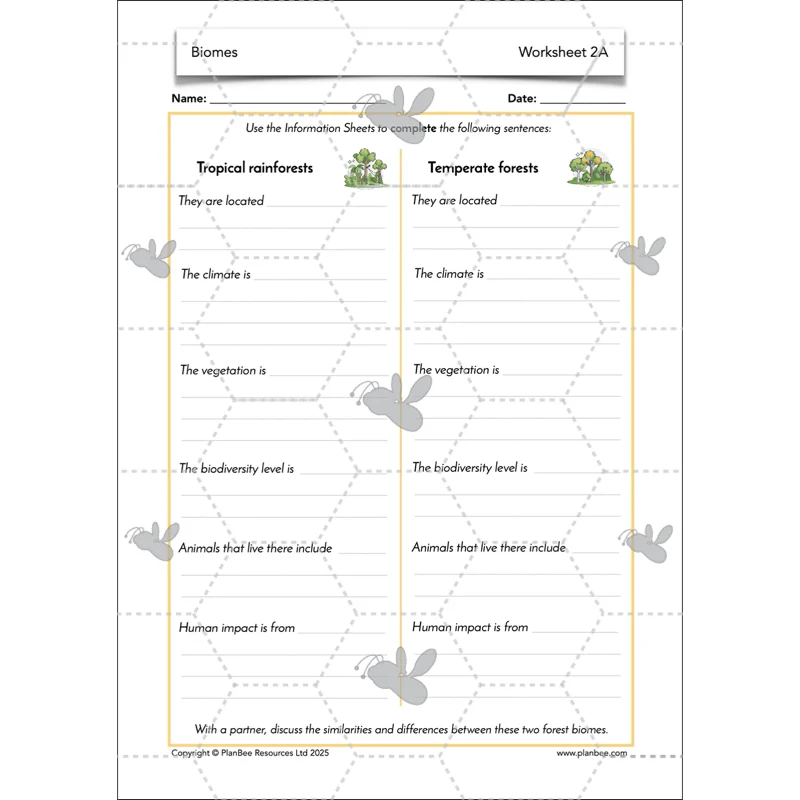
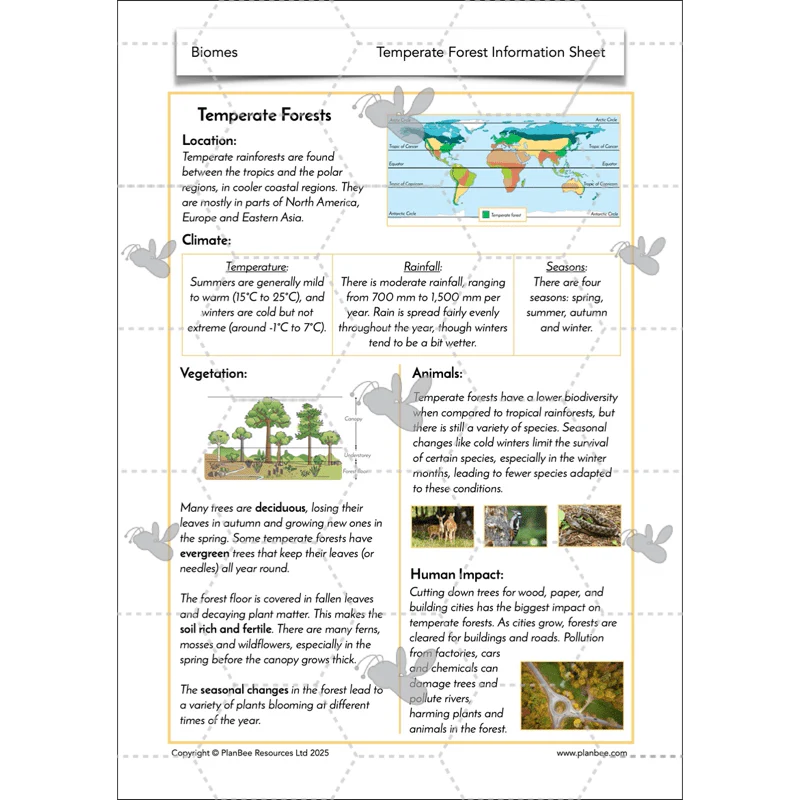
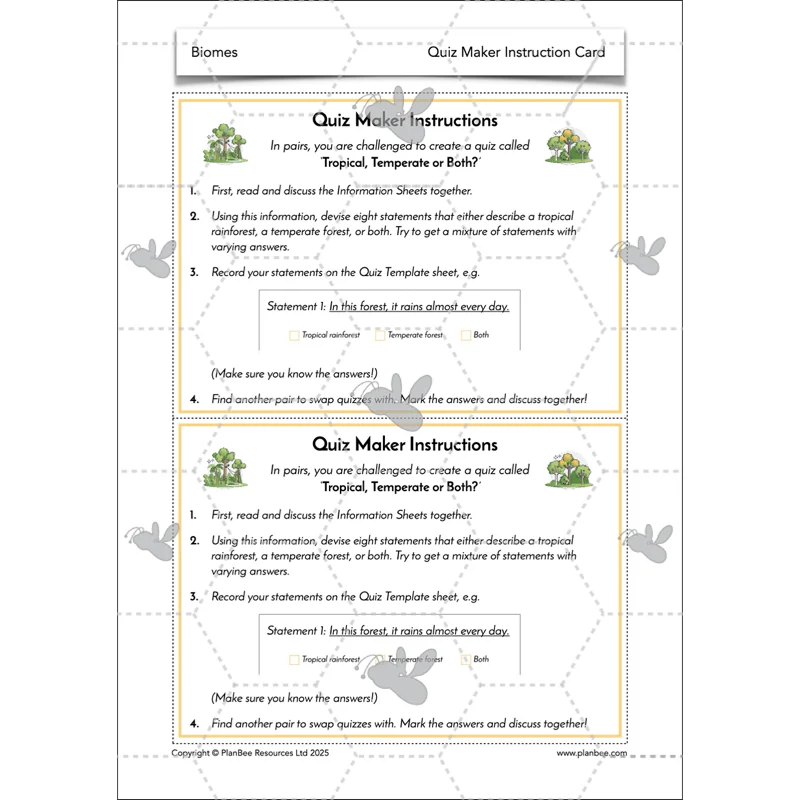
In their independent activities, children use the knowledge gained during the teaching input as well as information sheets to compare and contrast the two forest biomes using Venn diagrams, writing comparative sentences and creating quizzes.
This Forest Biomes KS2 lesson pack includes an easy-to-follow plan, a set of engaging PDF slides for the teaching input, fun activity ideas and a range of printable resources.
What's included:
- Lesson plan
- Slides
- Activity ideas
- Differentiated worksheets
- Forest Biome Cards
- Venn Diagram
- Tropical Rainforest Information Sheet
- Temperate Forest Information Sheet
- Quiz Maker Instruction Card
- Quiz Template
Taiga Biome
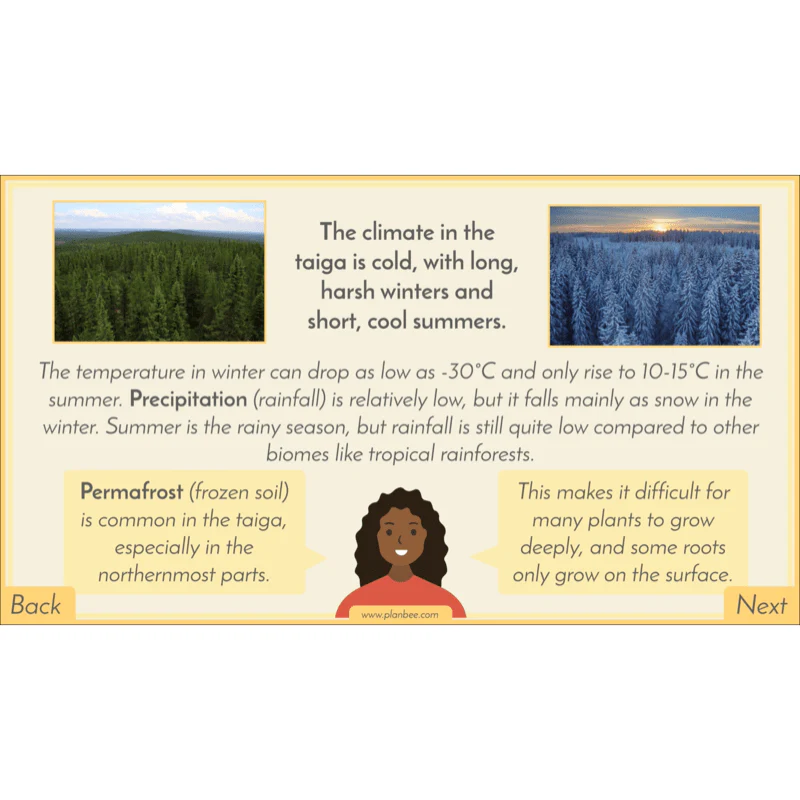
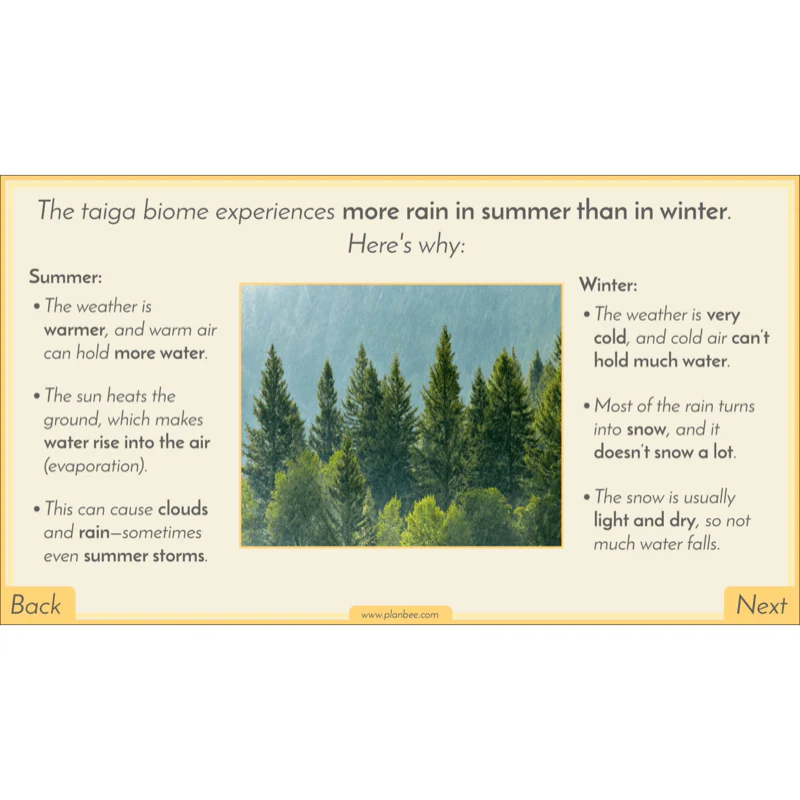
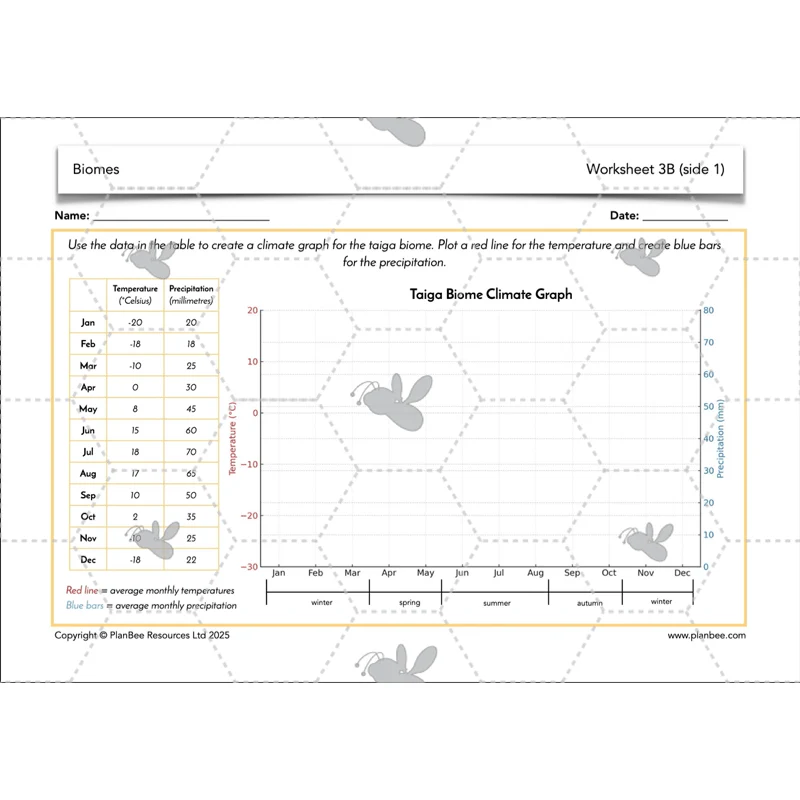
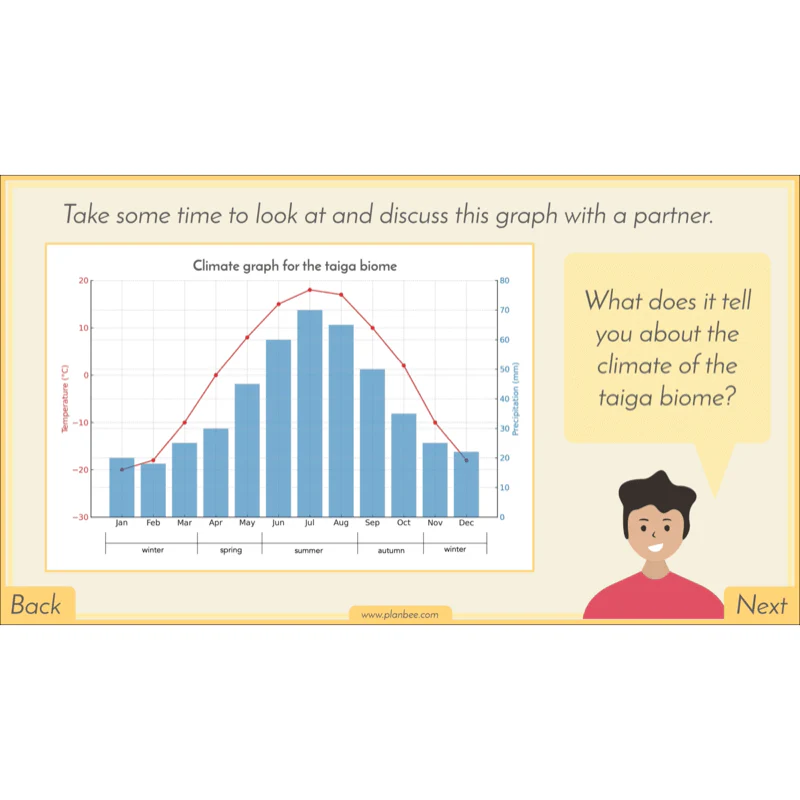
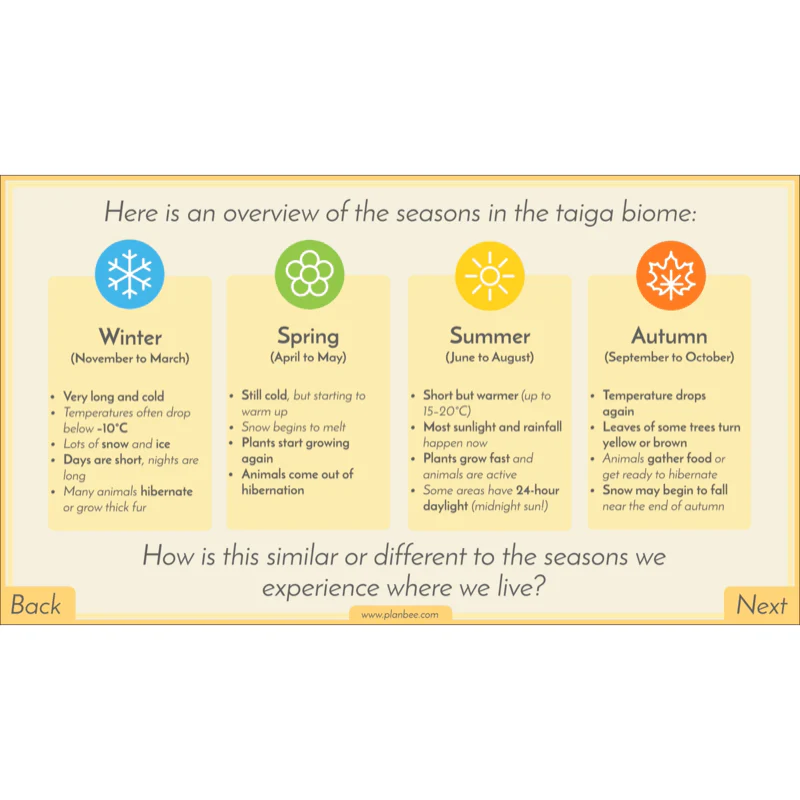
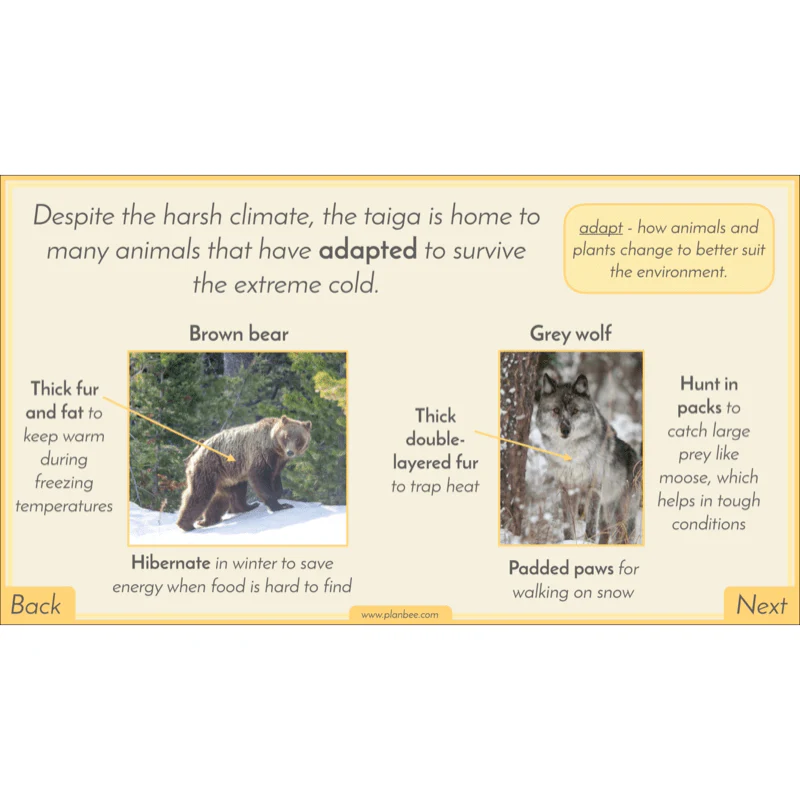
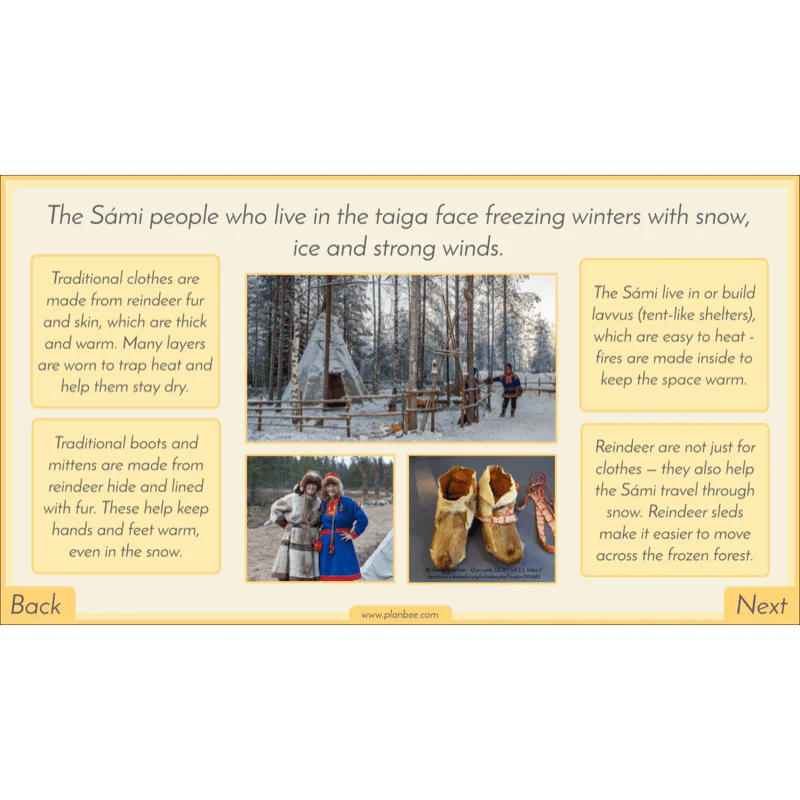
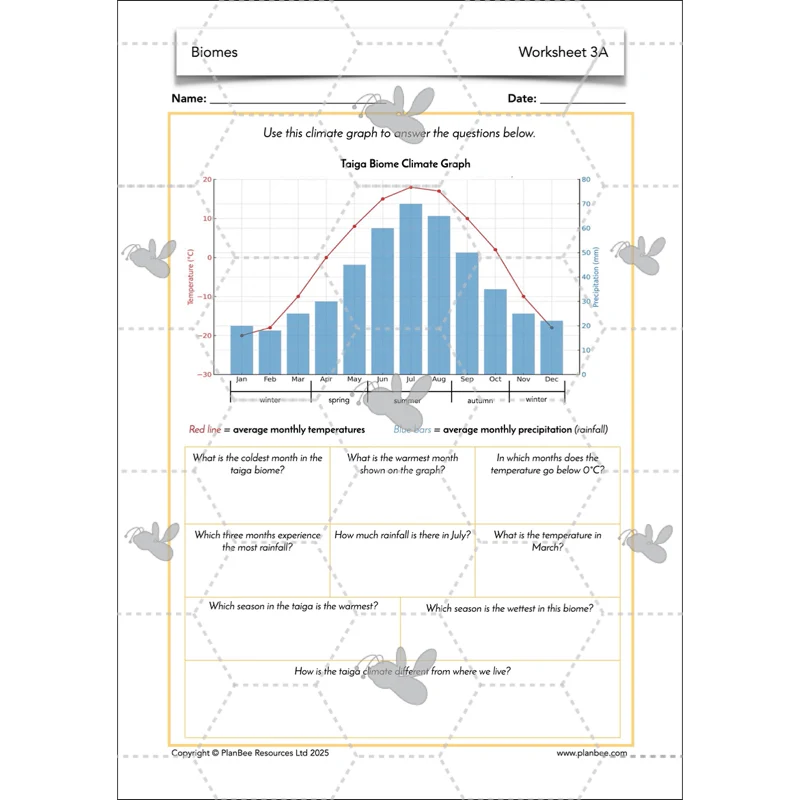
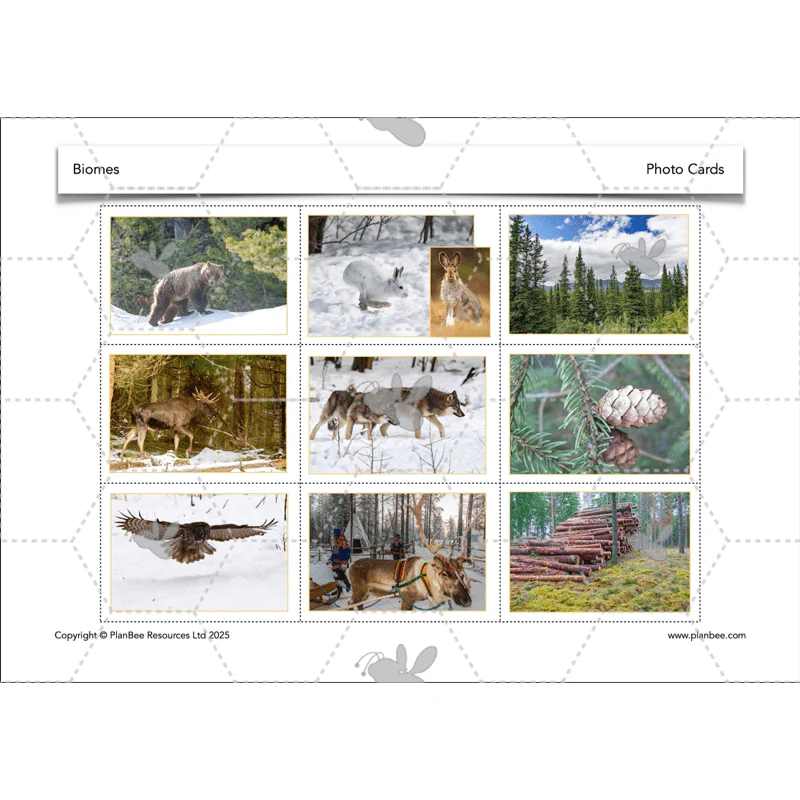
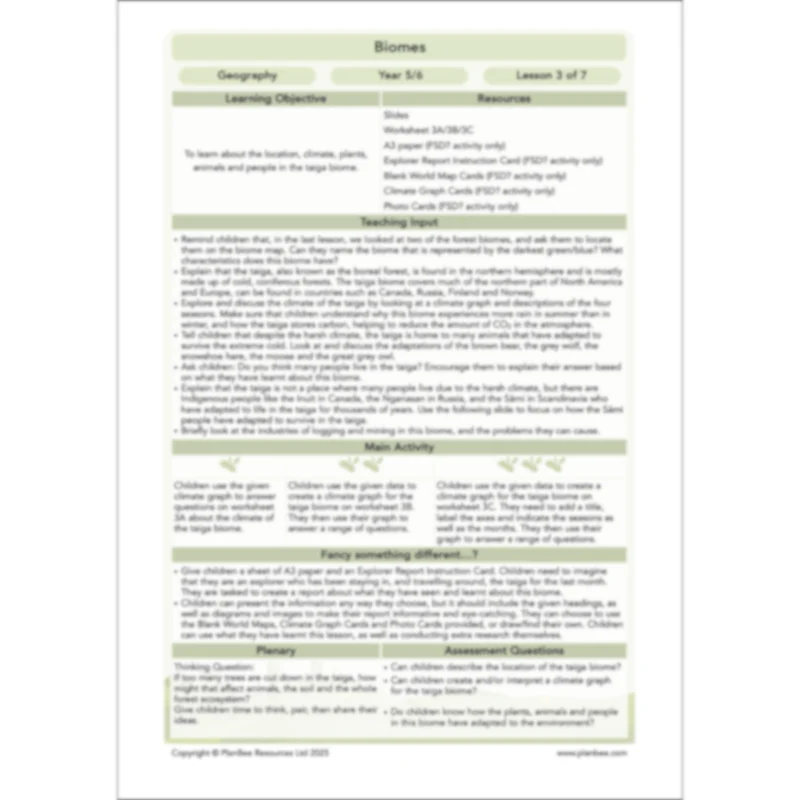
In this lesson, children will focus on the taiga biome. As a class, they will explore the location of this biome using maps, find out about the weather using climate graphs, and learn how some of the animals and people who live there have adapted to survive.
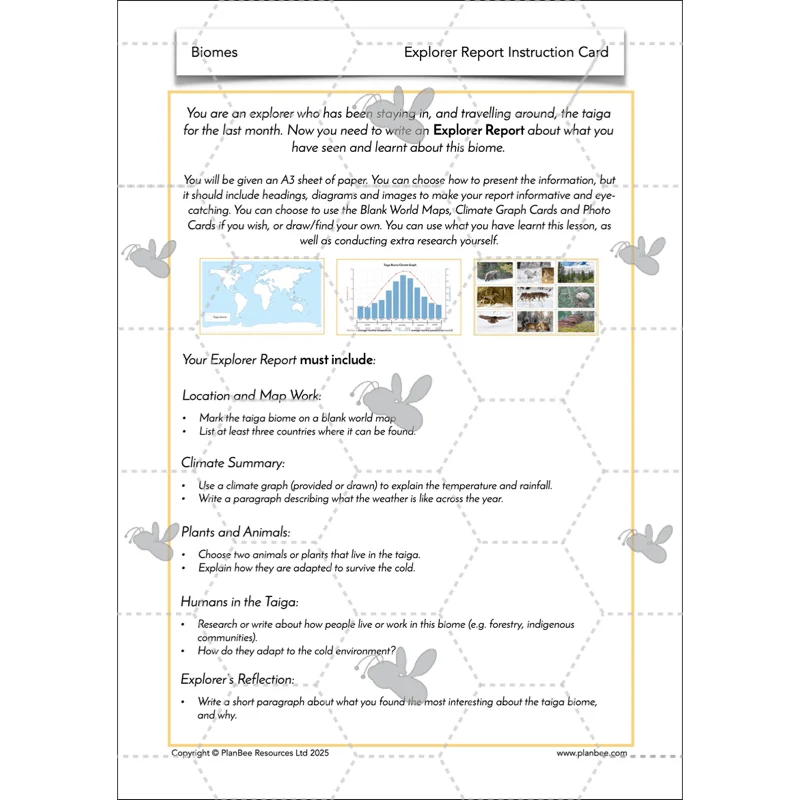
In their independent activities, children will use their knowledge and skills to create and interpret their own climate graphs. In the alternative activity, your class imagine that they are an explorer who has been travelling around the taiga for the last month. They are tasked to create a report, including diagrams and pictures, about what they have seen and learnt about this biome.
A detailed plan, a set of informative PDF slides, printable resources and activity ideas are all included in this ready-to-teach Biomes KS2 lesson pack.
What's included:
- Lesson plan
- Slides
- Activity ideas
- Differentiated worksheets
- Explorer Report Instruction Card
- Blank World Map Cards
- Climate Graph Cards
- Photo Cards
Desert Biome
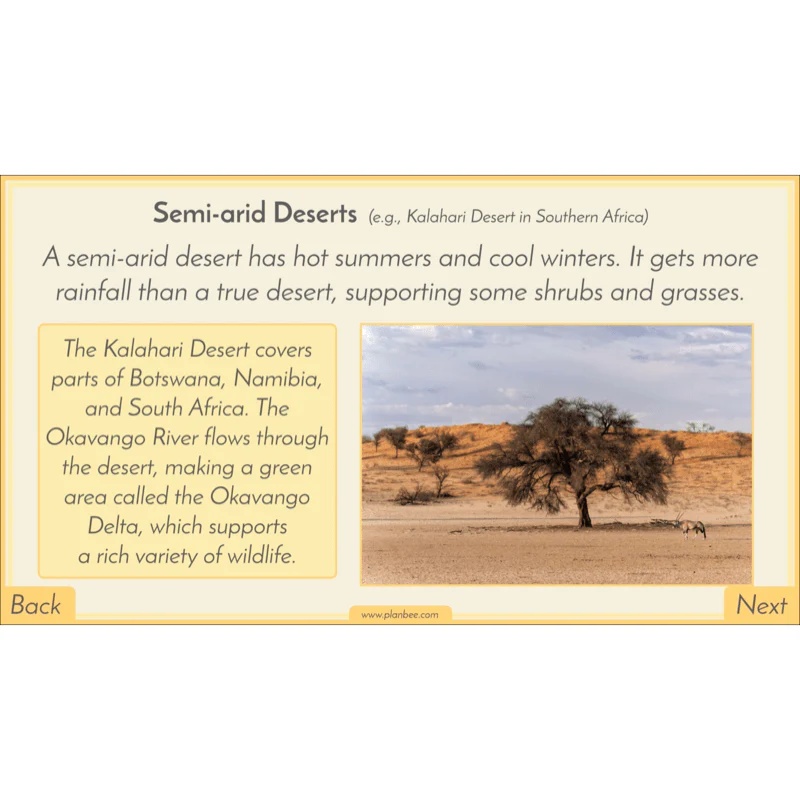
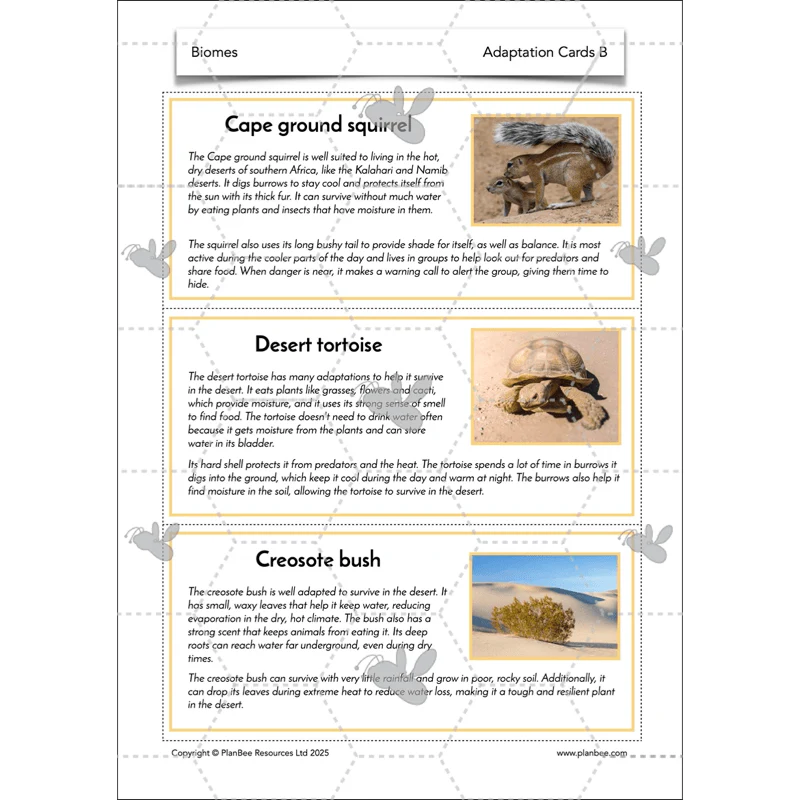
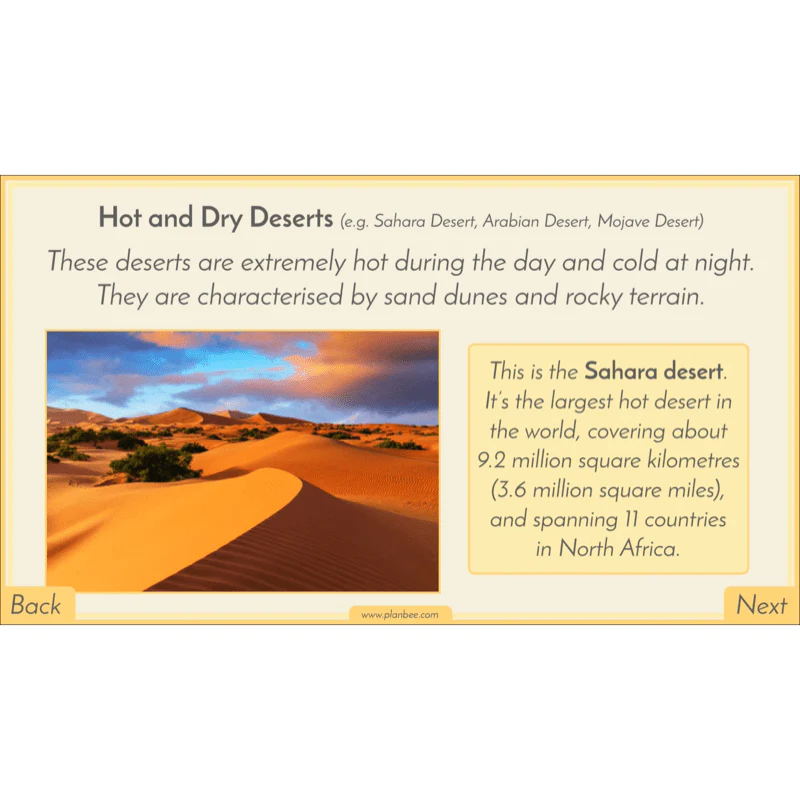
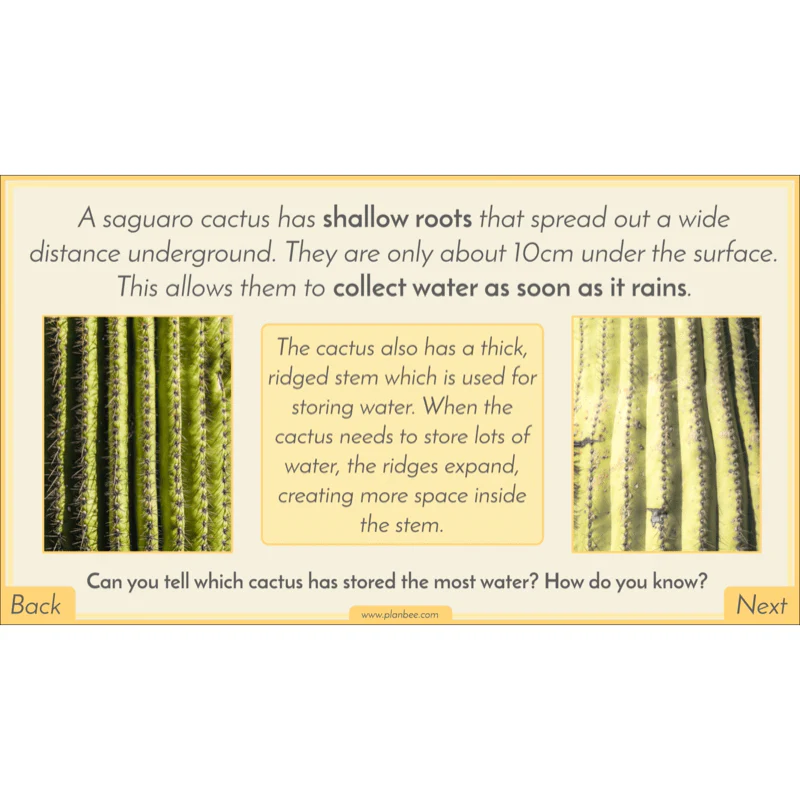
The desert biome is the focus of this lesson. After recapping on the location and general characteristics of deserts, children will briefly look at the different types of deserts across the world.
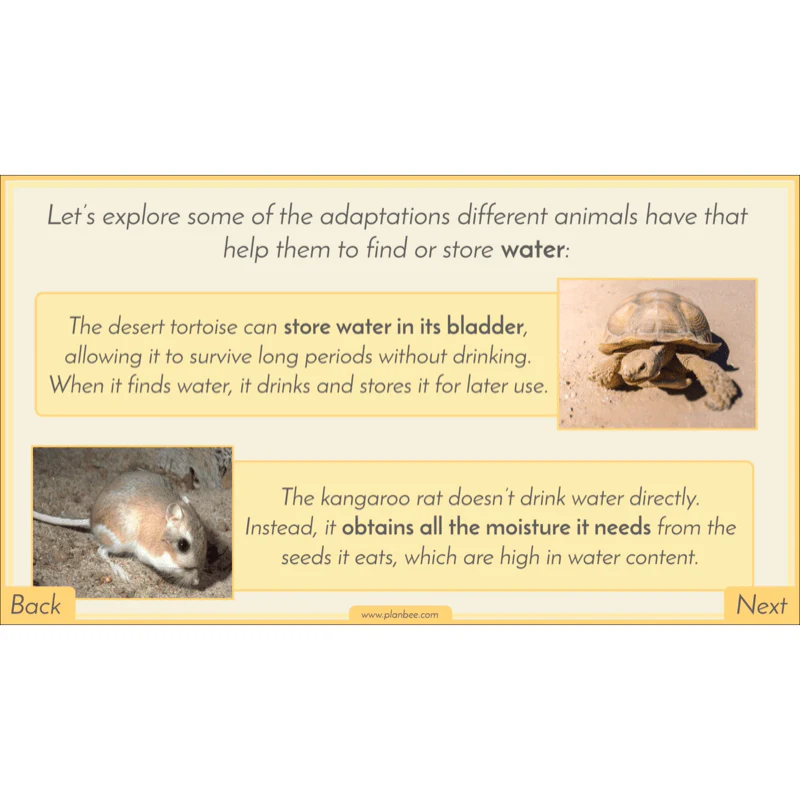
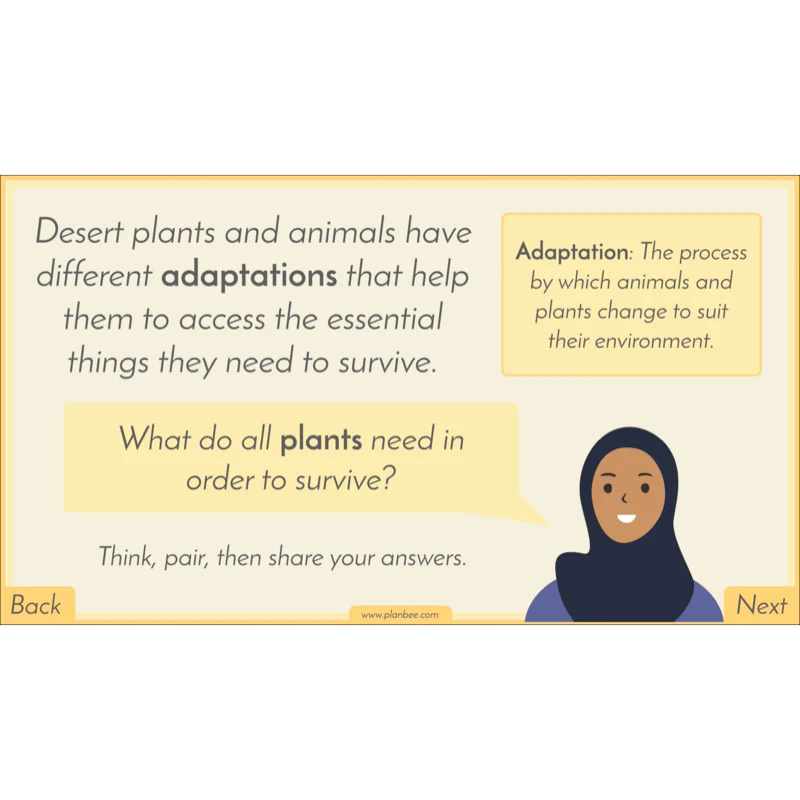
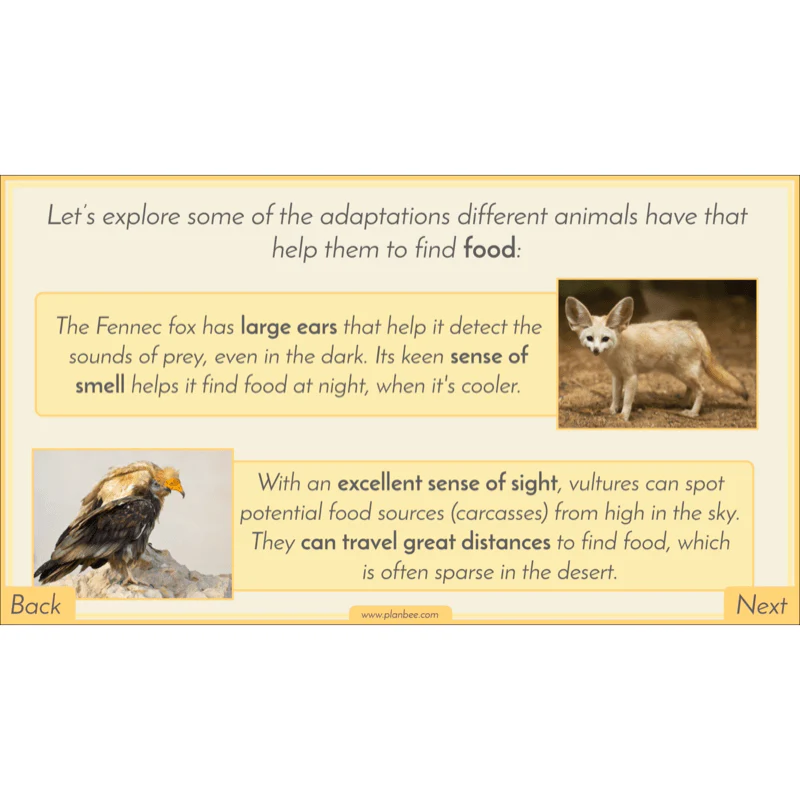
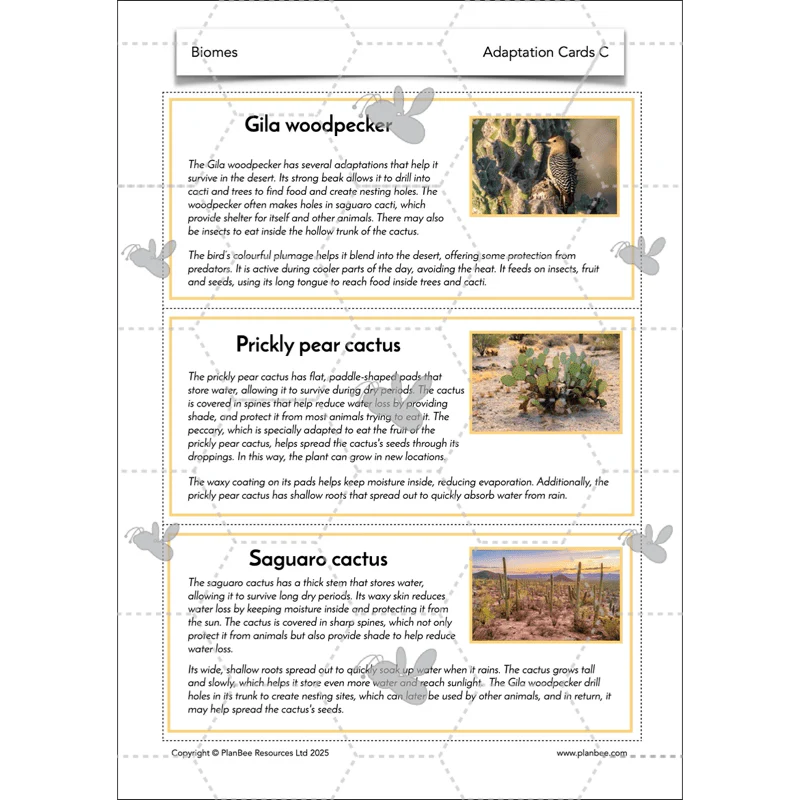
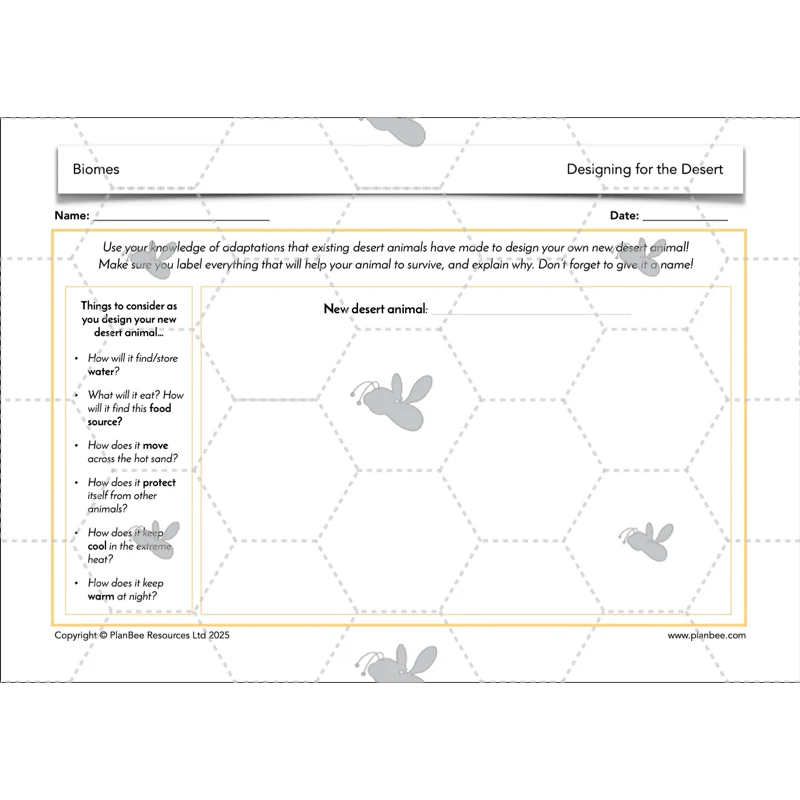
First as a class, and then through their independent activities, children will explore how both animals and plants have adapted to survive in this harsh environment. In the alternative activity, children are challenged to use what they have learnt about adaptation to ‘design’ a new desert animal.
This ready-to-teach Desert Biome KS2 lesson pack includes everything you need: a detailed plan, a set of informative PDF slides, activity ideas and printable resources.
What's included:
- Lesson plan
- Slides
- Activity ideas
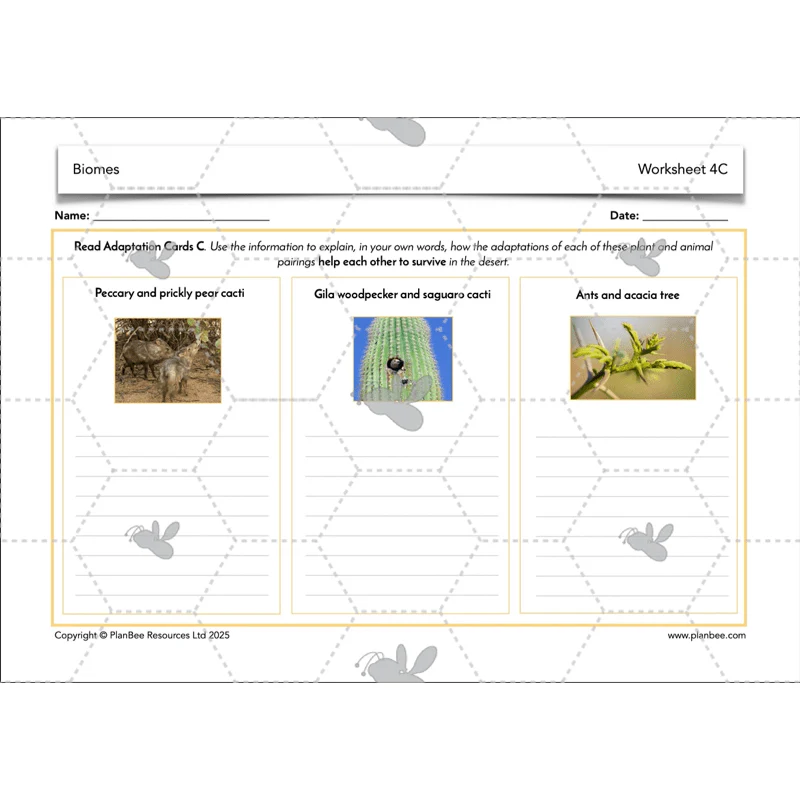
- Differentiated worksheets
- Adaptation Cards
- Photo Cards
- Designing for the Desert sheet
Grassland Biome
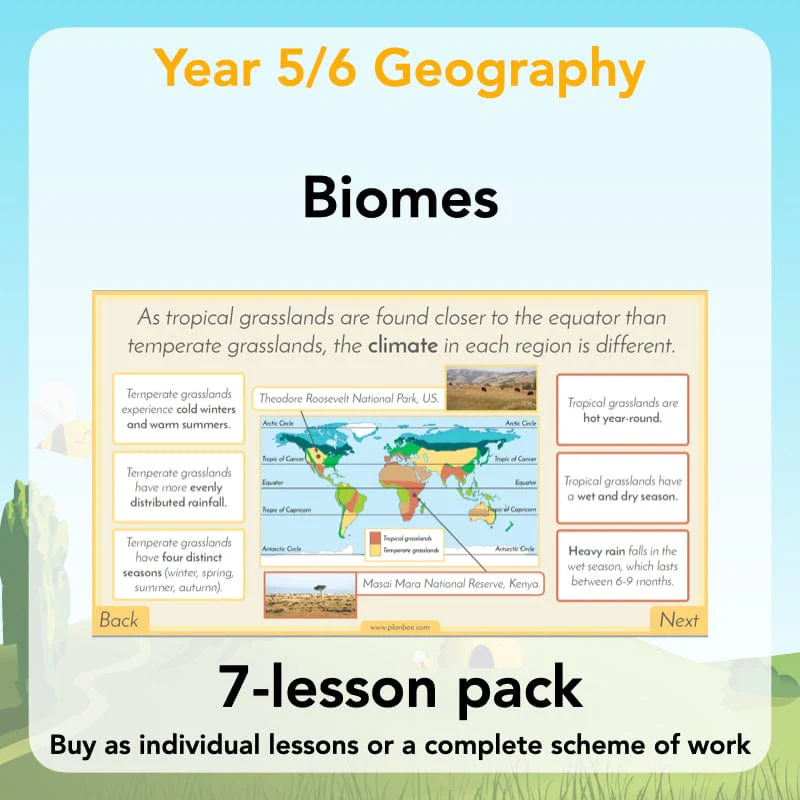
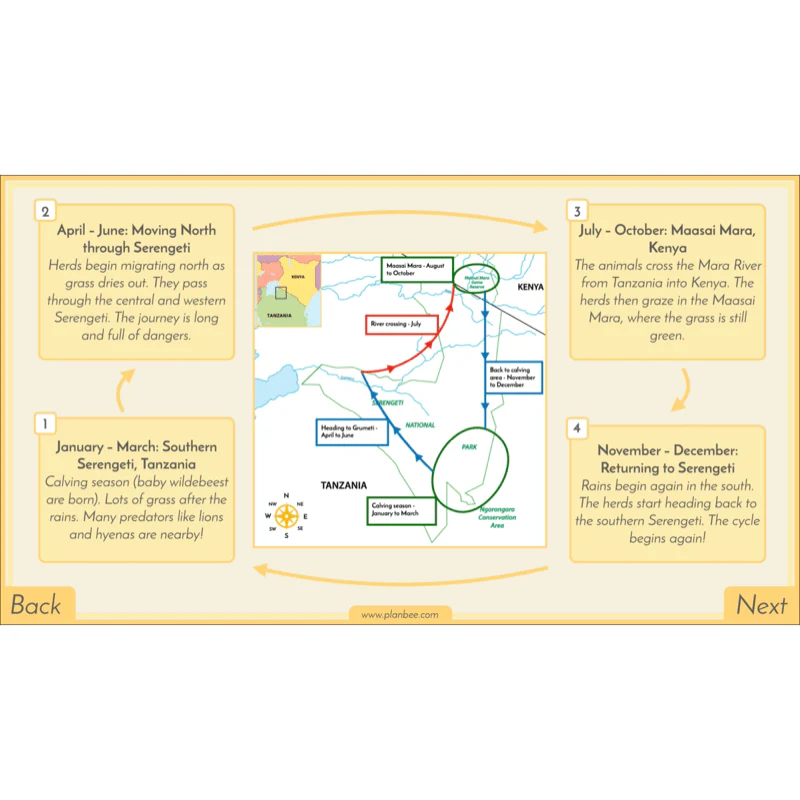
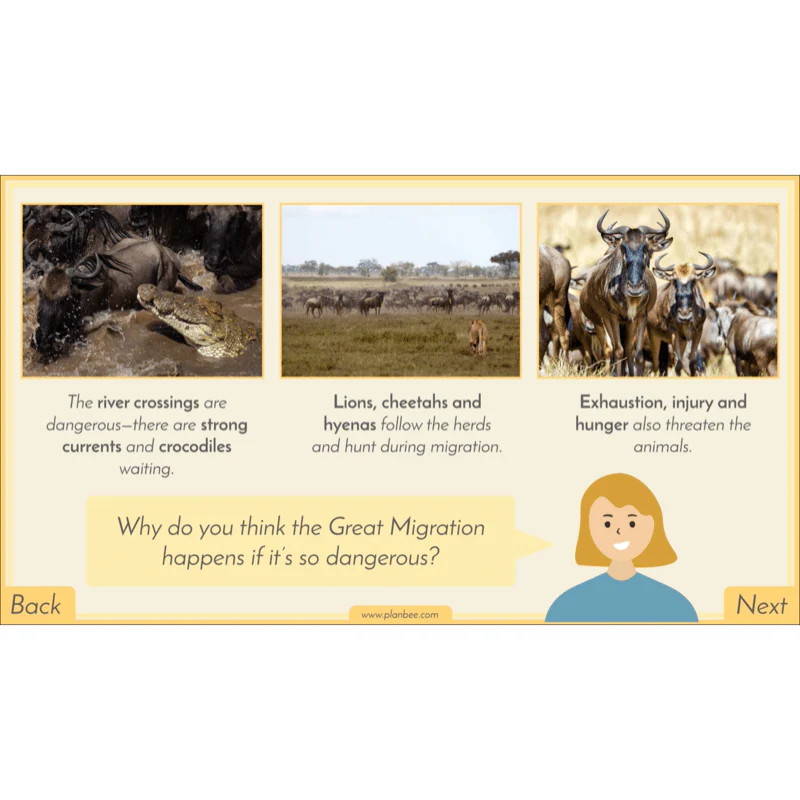
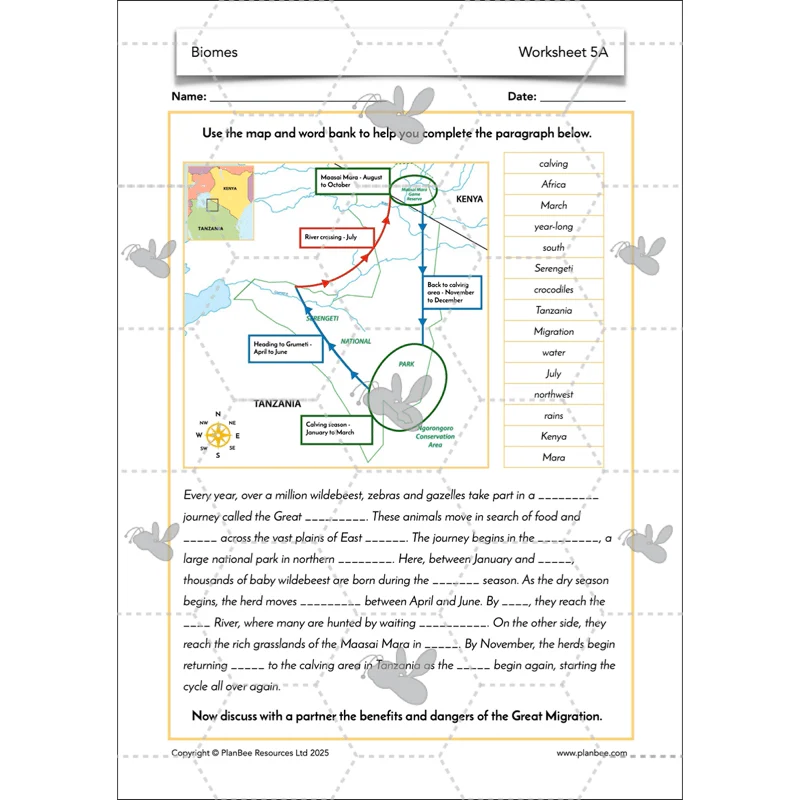
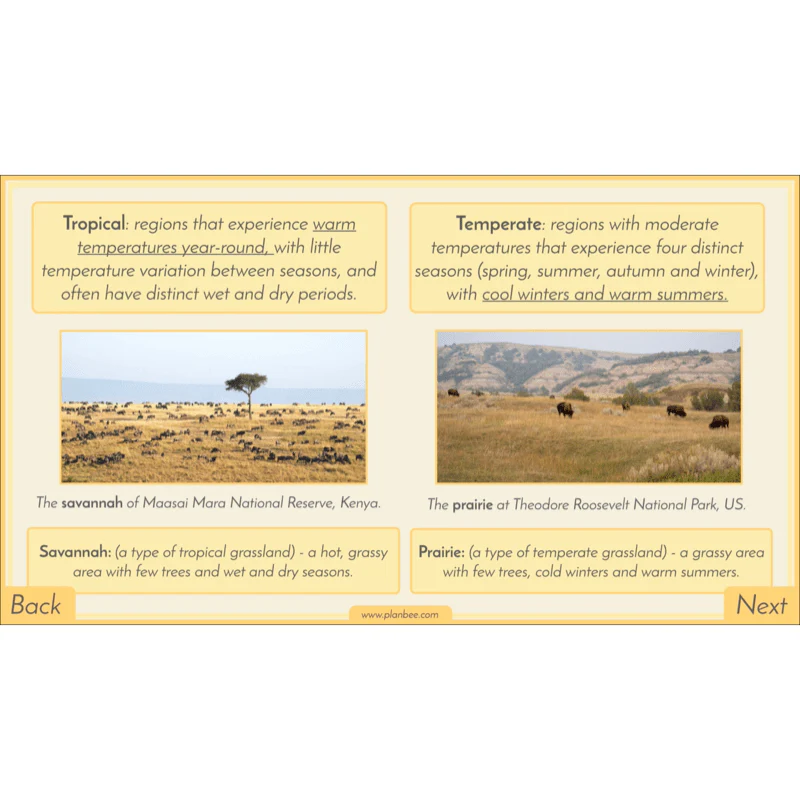
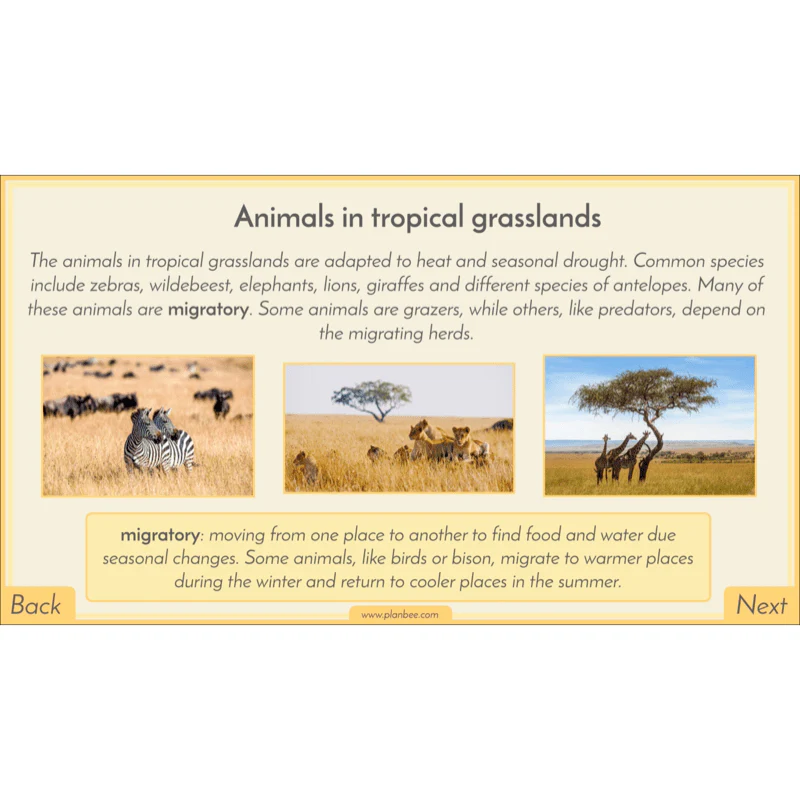
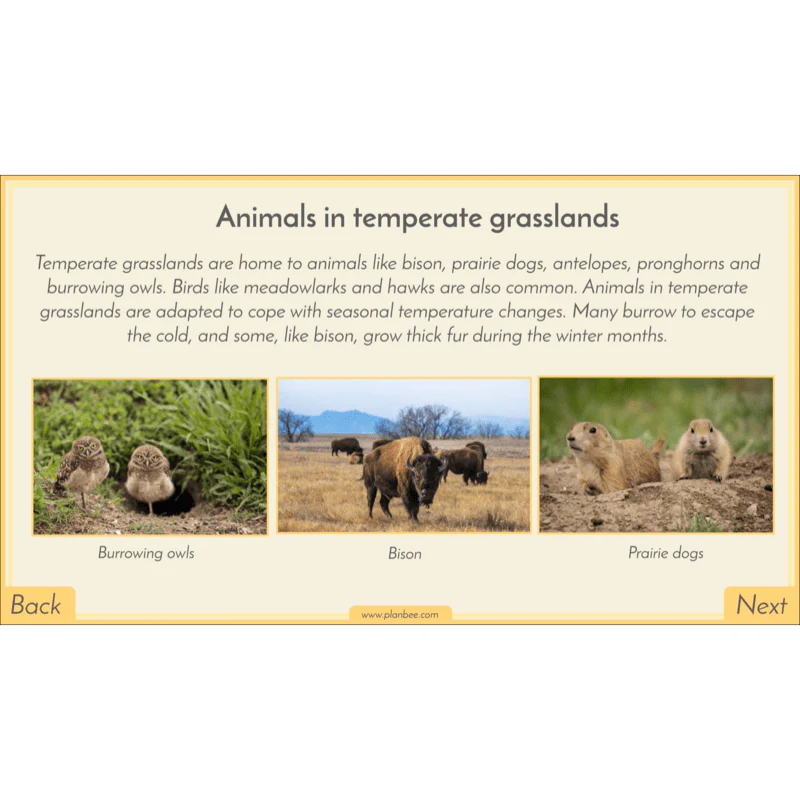
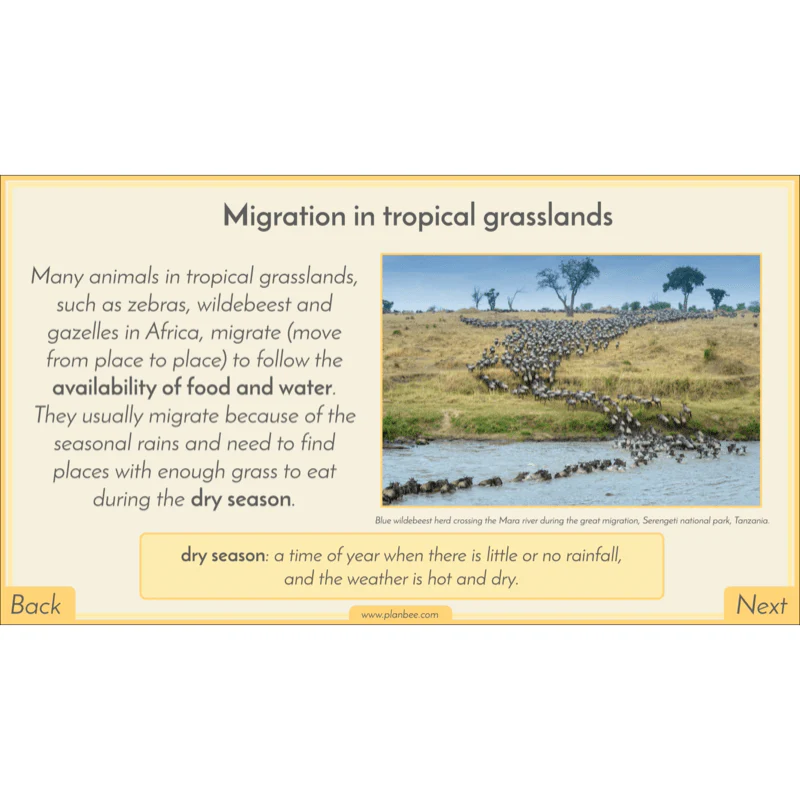
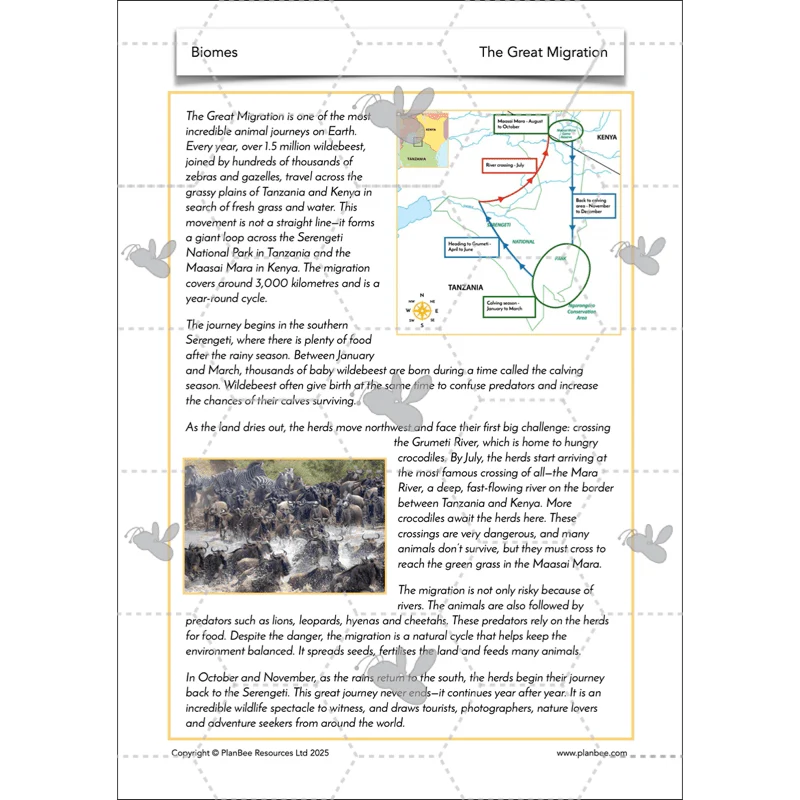
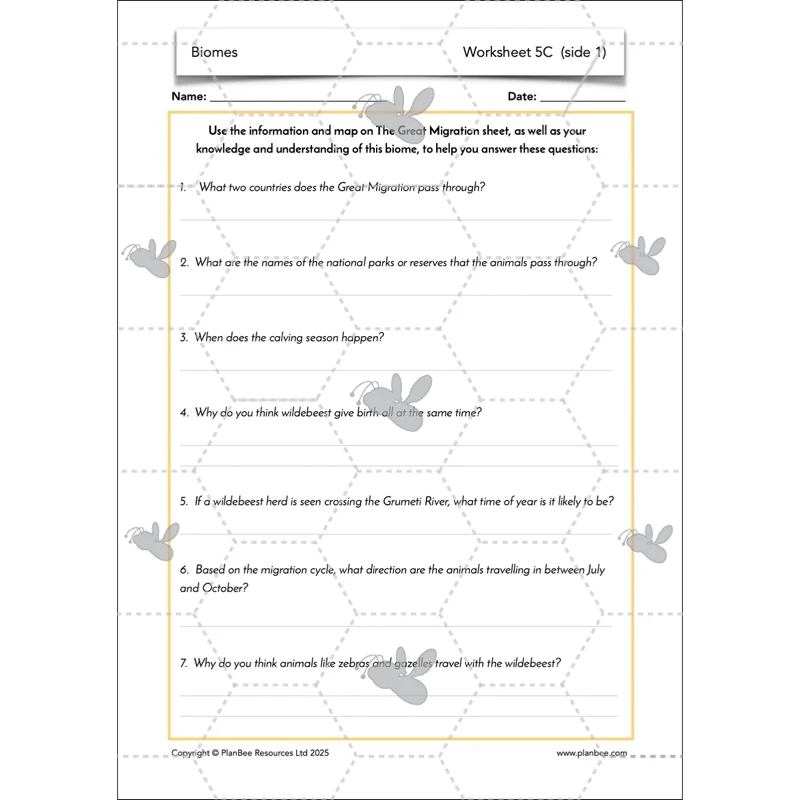
In this lesson, children will first find out about, and compare and contrast, the two types of grasslands: tropical and temperate, before focusing on the events of, and the reasoning behind, The Great Migration of animals in East Africa.
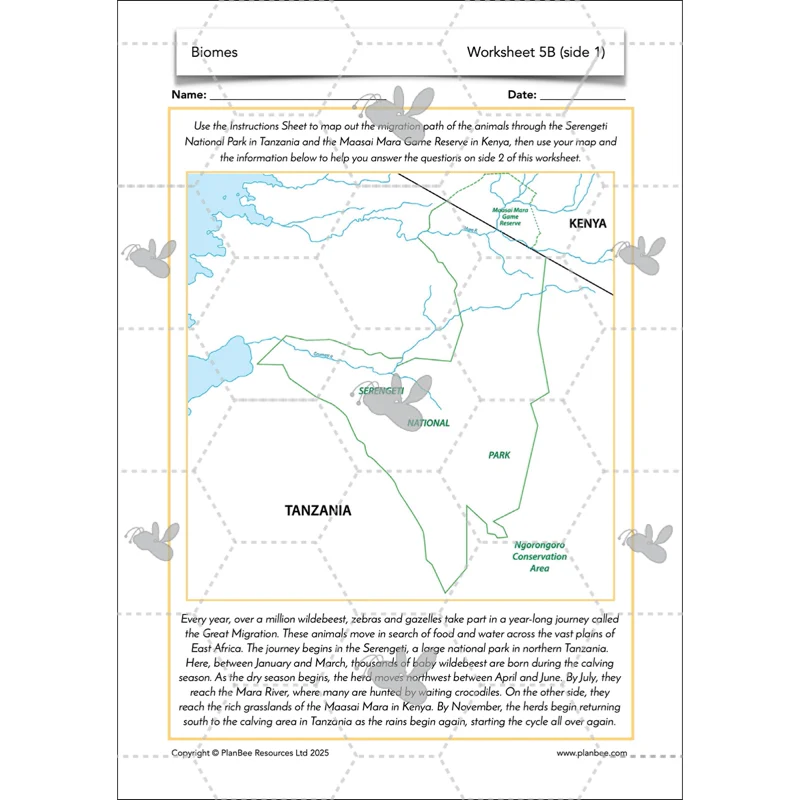
In their independent activities, children will use given information to read or create maps and answer a variety of questions about this incredible natural phenomenon. The alternative activity provides thought-provoking discussion cards which aim to encourage a more in depth exploration of different aspects of The Great Migration.
A detailed plan, a set of informative PDF slides, printable resources and activity ideas are all included in this ready-to-teach Grassland Biome KS2 lesson pack.
What's included:
- Lesson plan
- Slides
- Activity ideas
- Differentiated worksheets
- Instructions Sheet
- The Great Migration Sheet
- Discussion Cards
Tundra Biome
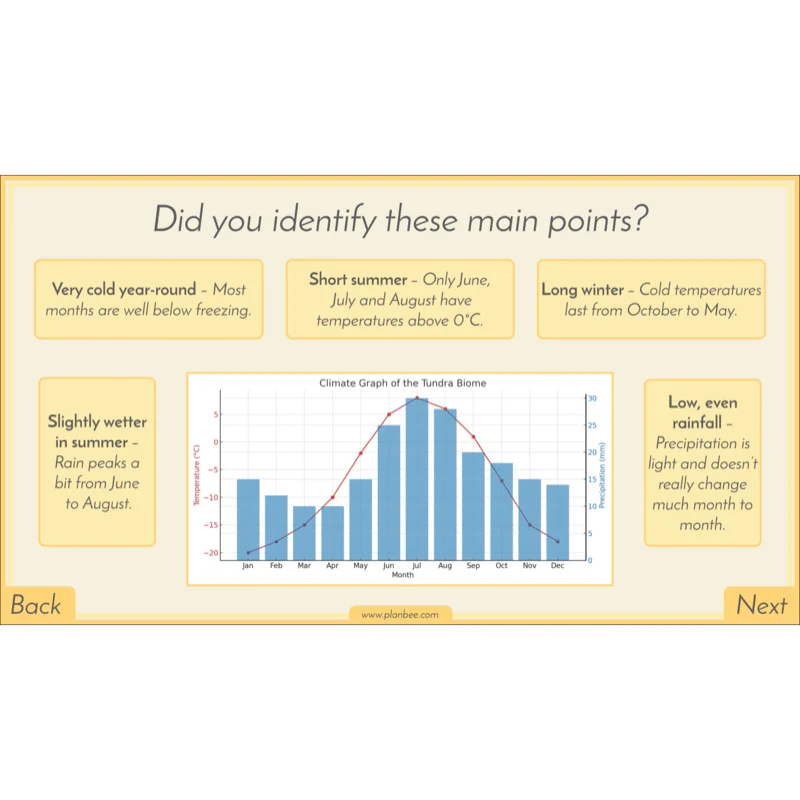
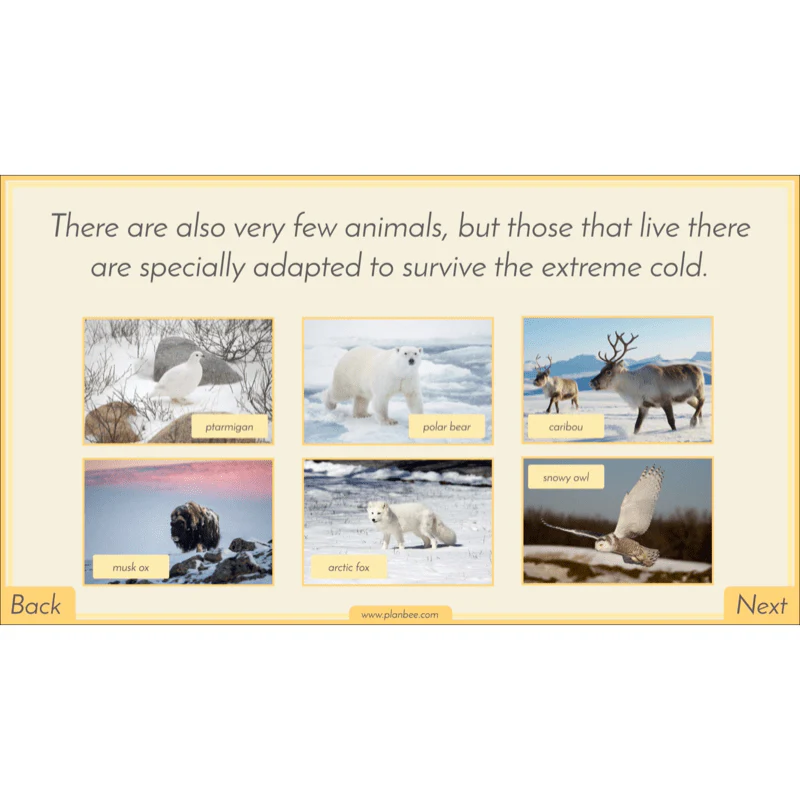
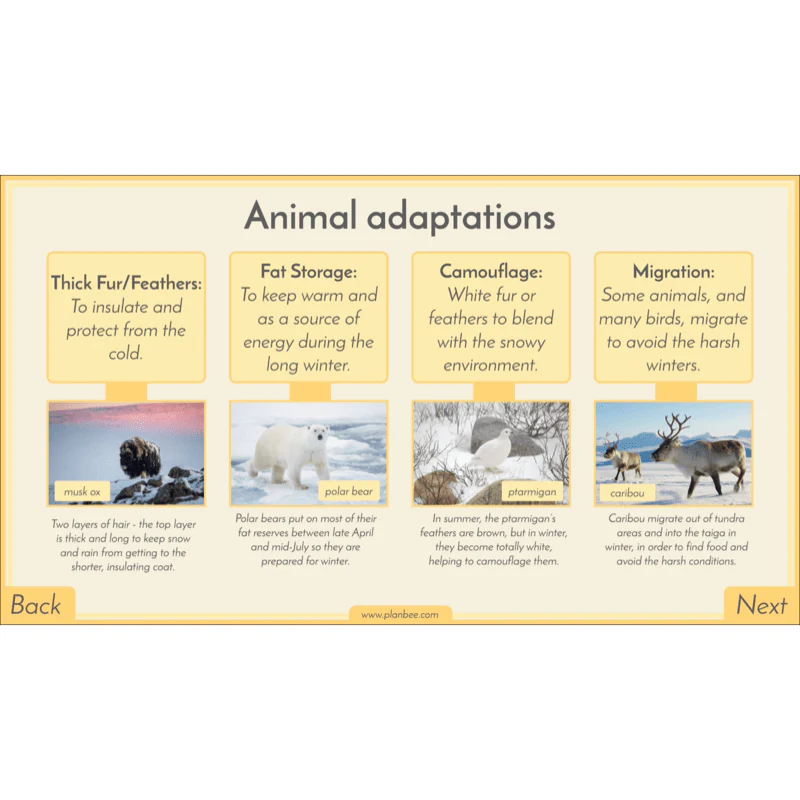
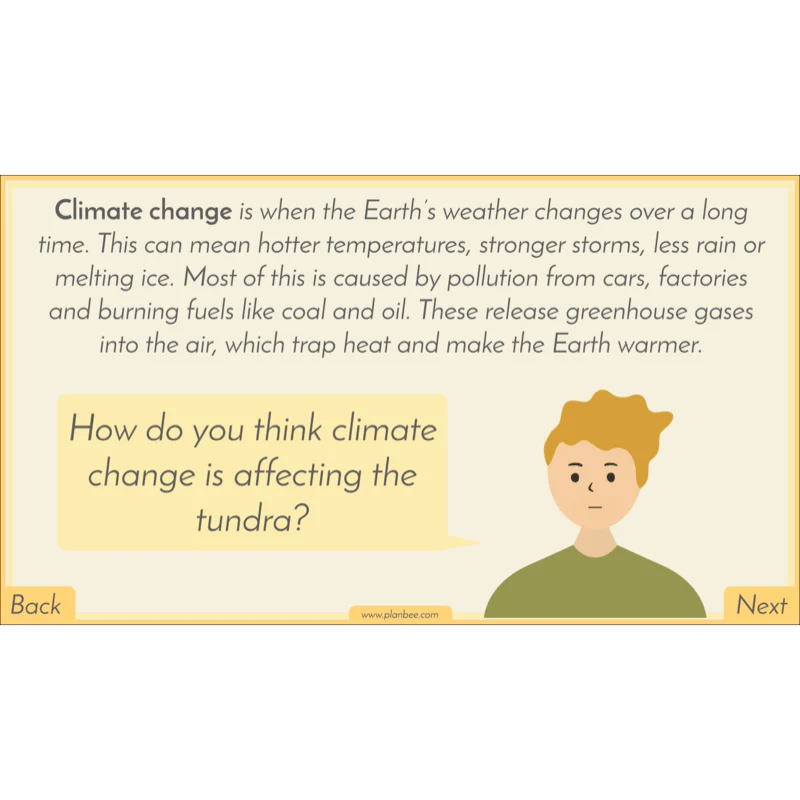
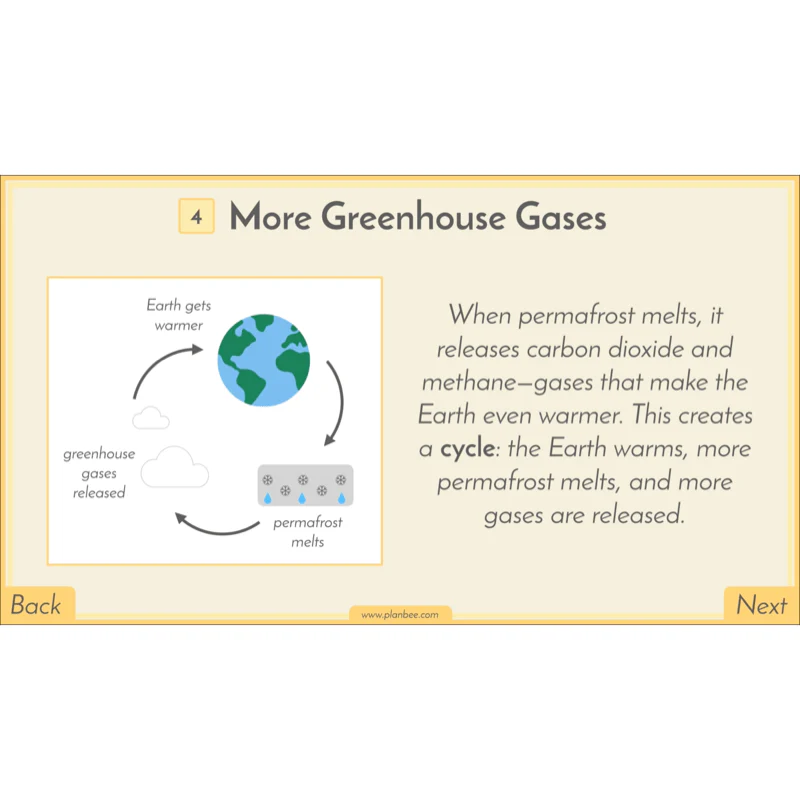
This lesson focuses on the coldest biome - the tundra. As a class, children will first look at the general characteristics of this biome, including the climate, and the plant and animal life, and how they are adapted to survive in these harsh conditions, before moving on to the impact that climate change is having on this biome, and consequently, the Earth.
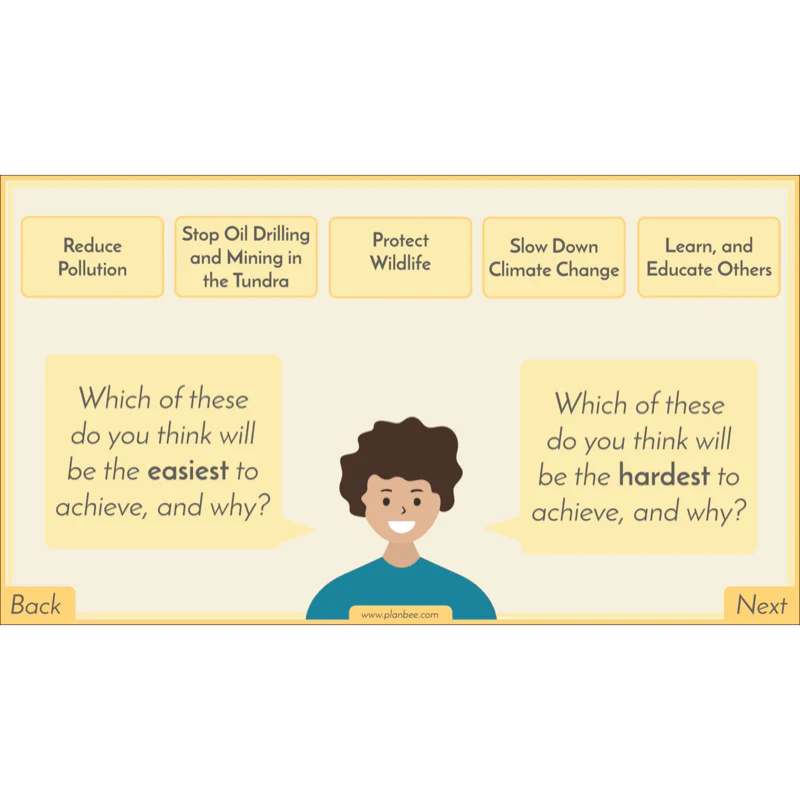
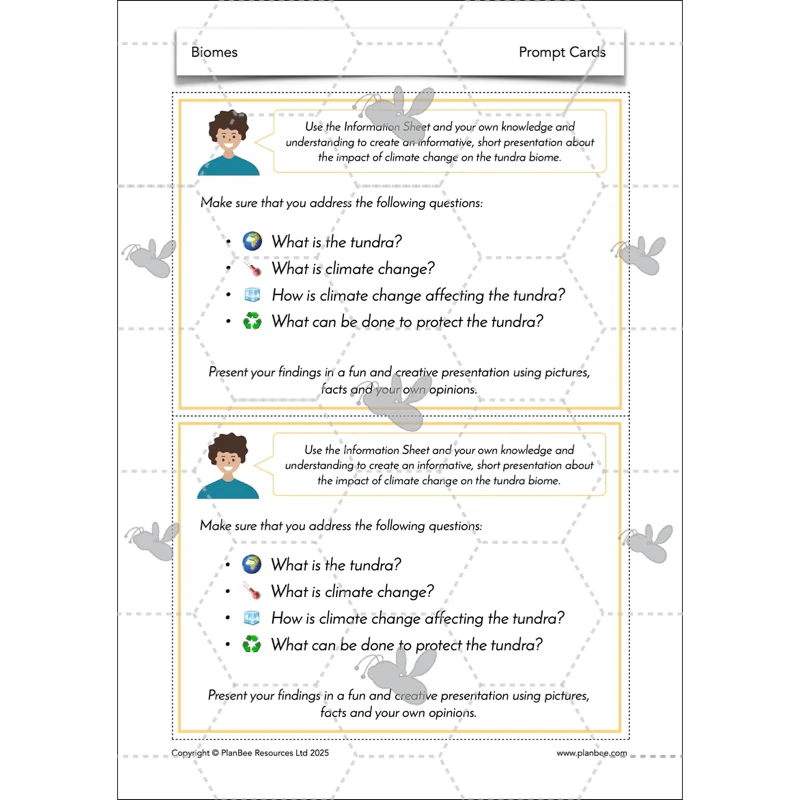
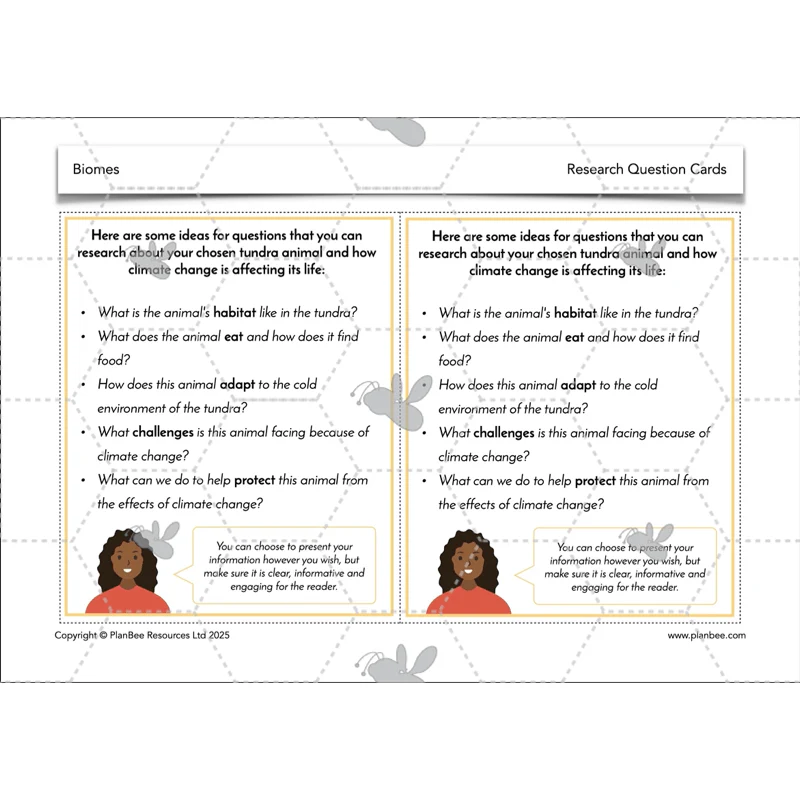
In their independent activities, children are tasked with creating posters, leaflets and presentations which explain and highlight the effect of climate change on the tundra, as well as what we can do to help protect this biome.
This ready-to-teach Tundra Biome KS2 lesson pack includes everything you need: a detailed plan, a set of informative PDF slides, activity ideas and printable resources.
What's included:
- Lesson plan
- Slides
- Activity ideas
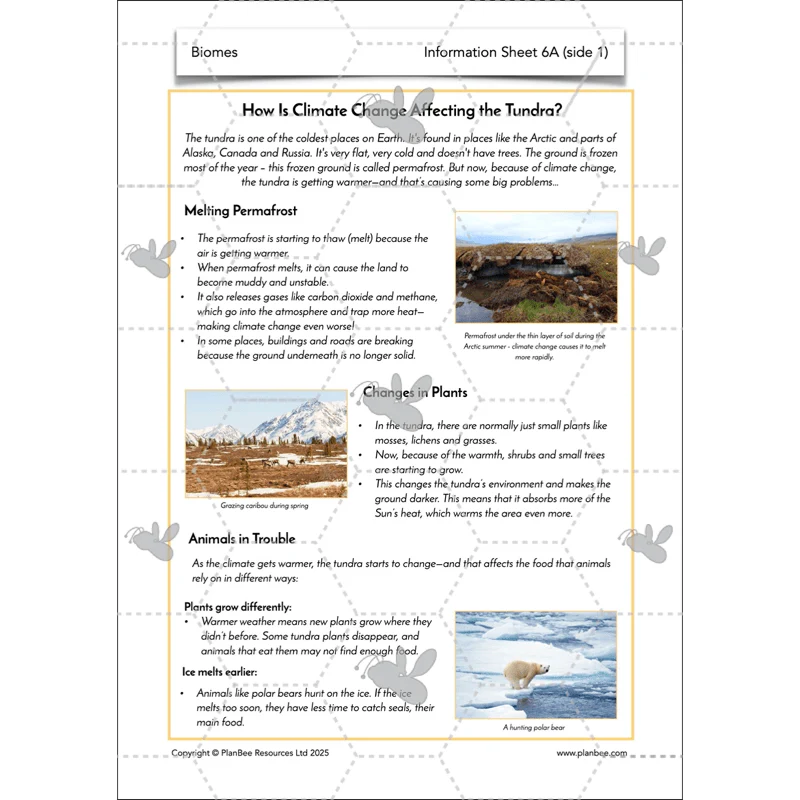
- Information Sheets
- Prompt Cards
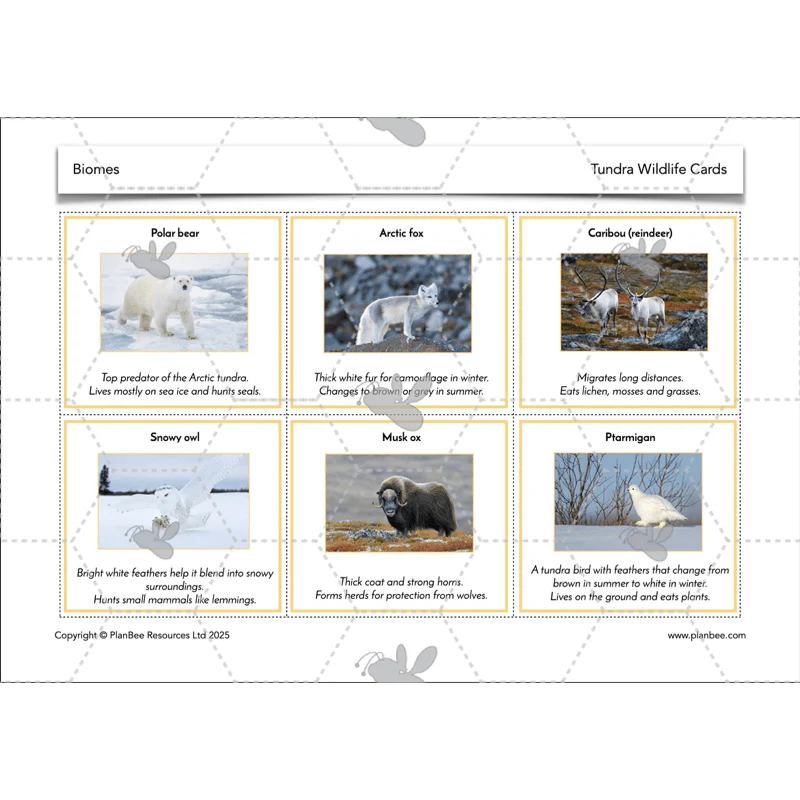
- Tundra Wildlife Cards
- Research Question Cards
Comparing and Consolidating
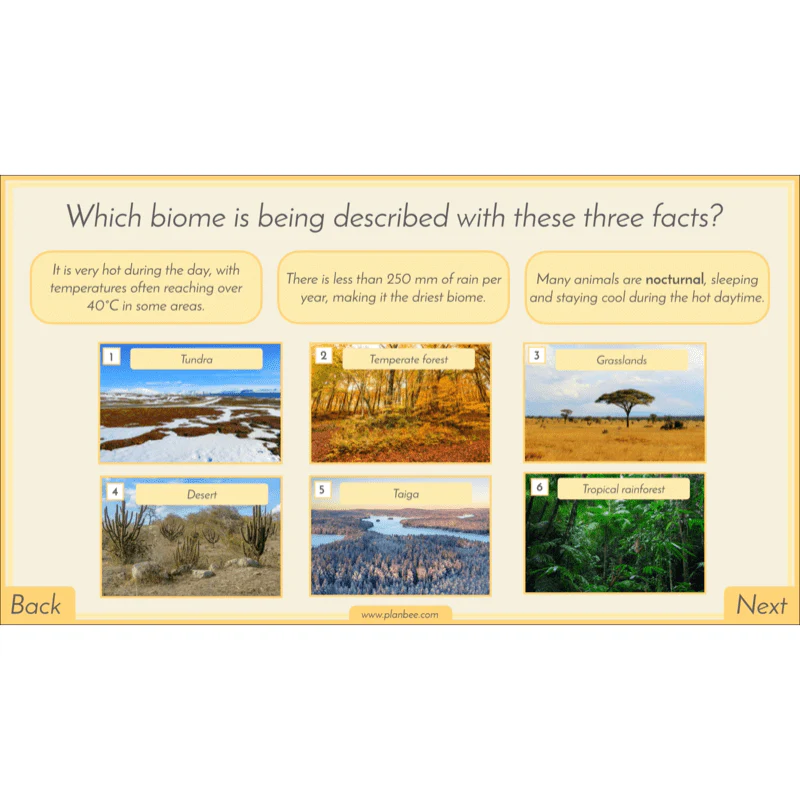
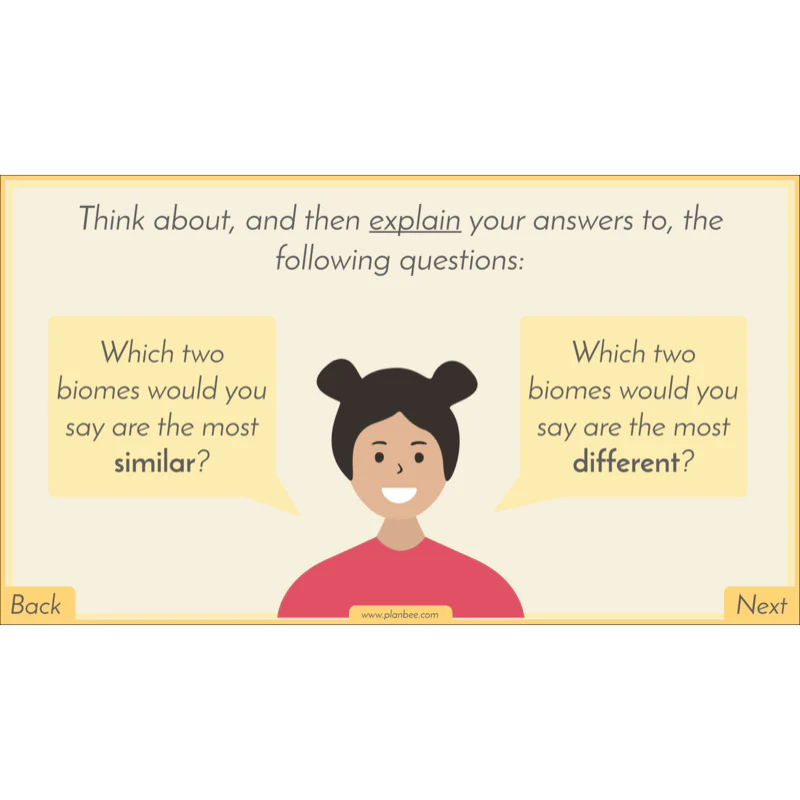
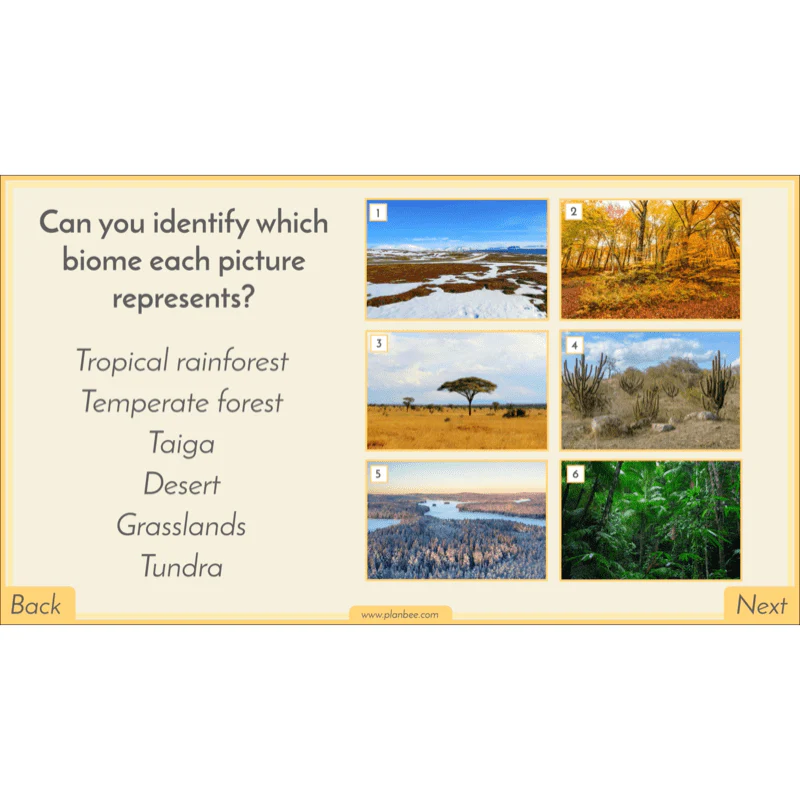
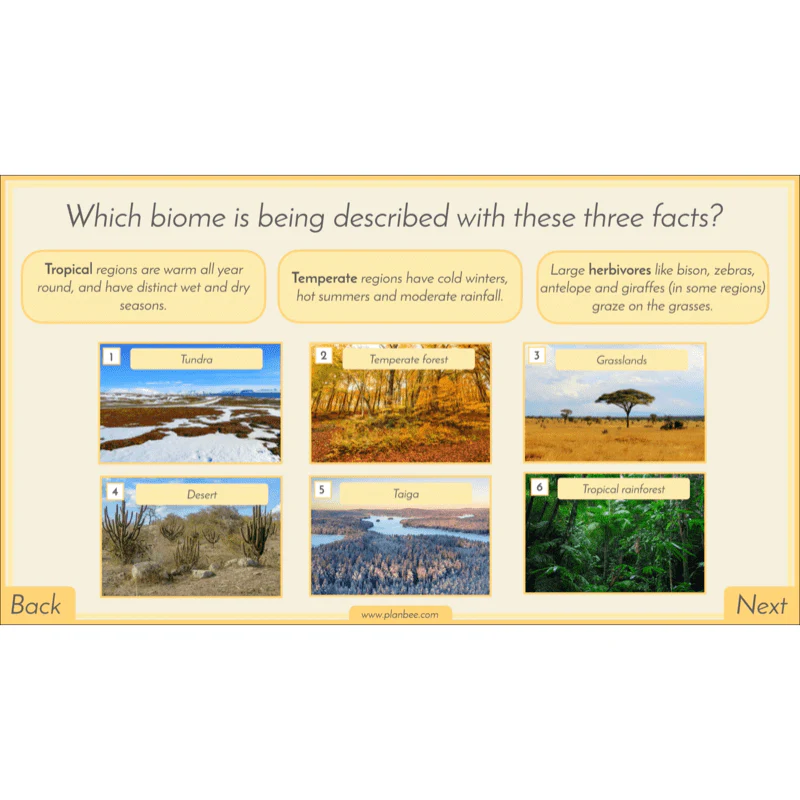
In this final lesson, children will first recap on their understanding of the six main biomes that have been explored in the previous lessons. They are asked to identify biomes given their characteristics, and discuss how the biomes are similar to and different from one another.
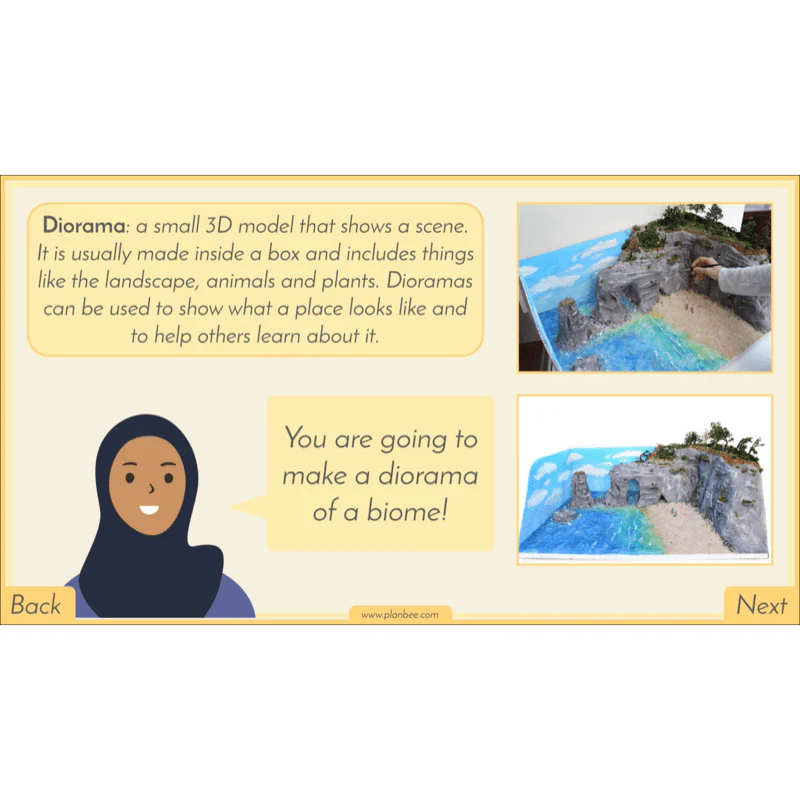
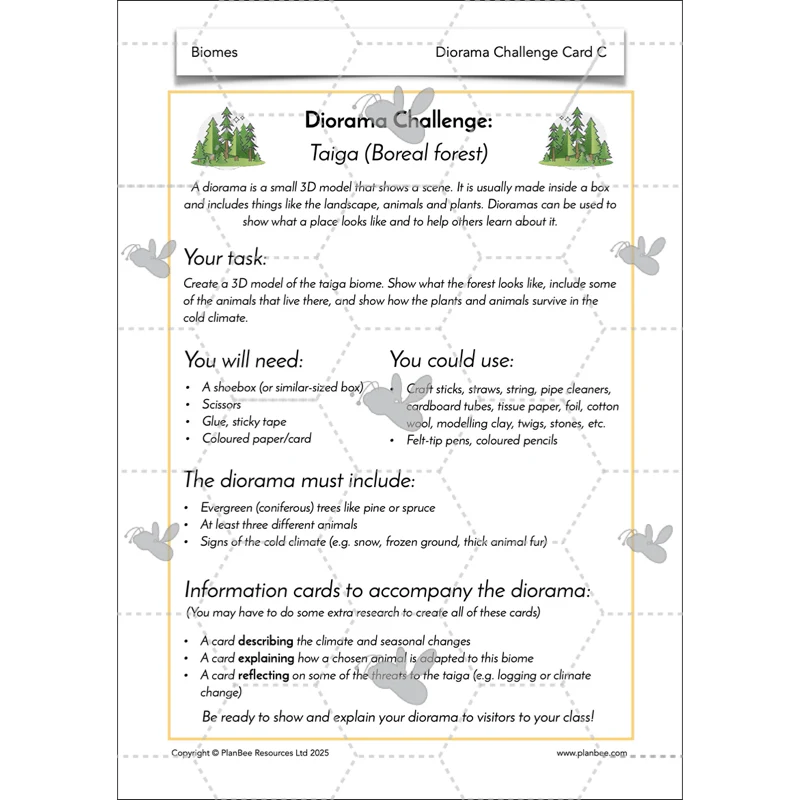
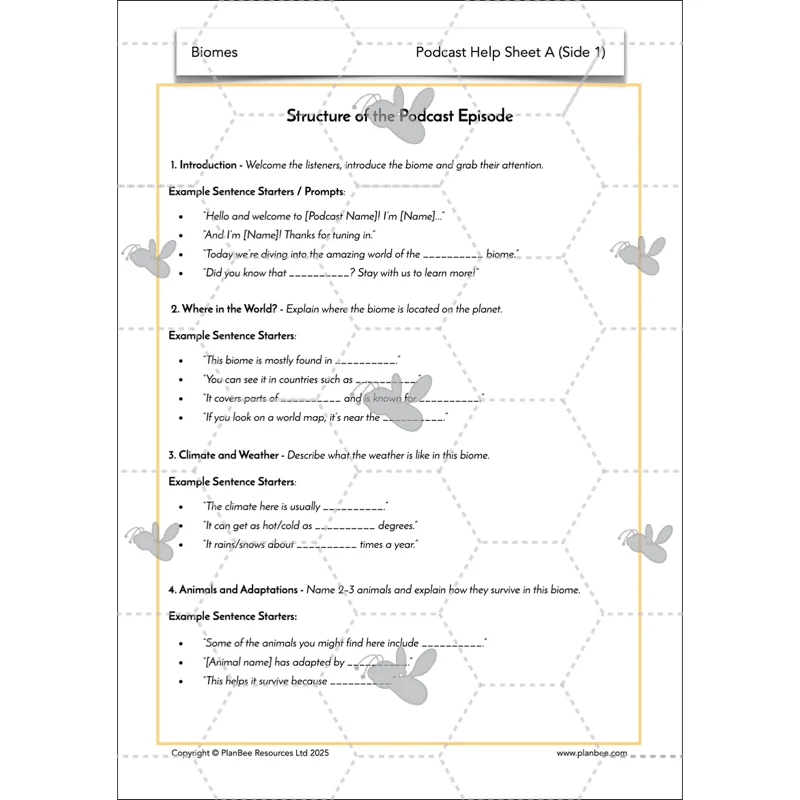
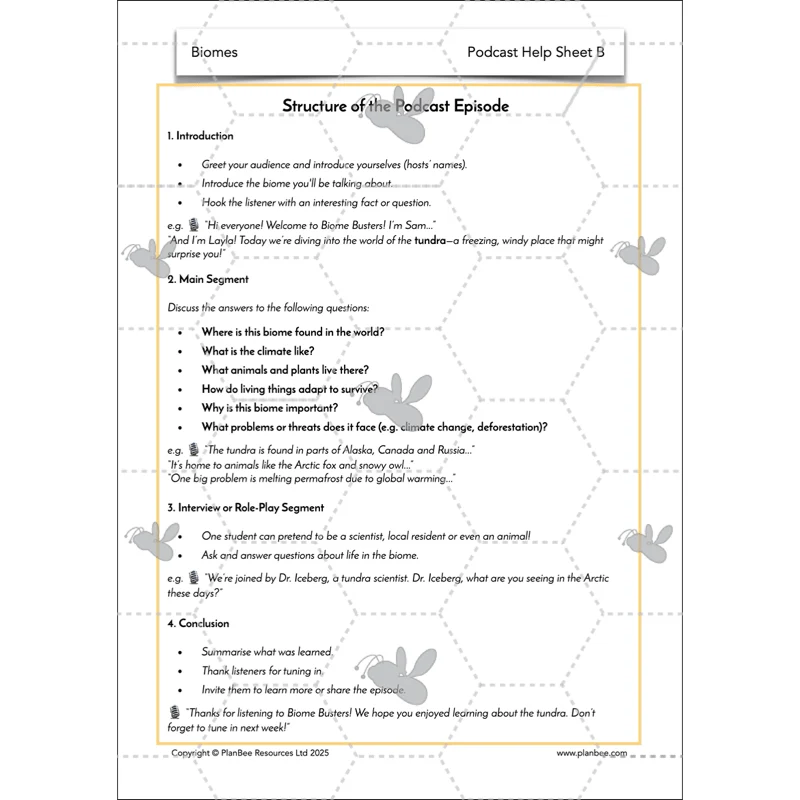
In their independent activities, children are challenged to apply their knowledge and work in groups to create either a diorama of, or a podcast about, their chosen biome.
A detailed plan, a set of informative PDF slides, printable resources and activity ideas are all included in this ready-to-teach Biomes KS2 lesson pack.
What's included:
- Lesson plan
- Slides
- Activity ideas
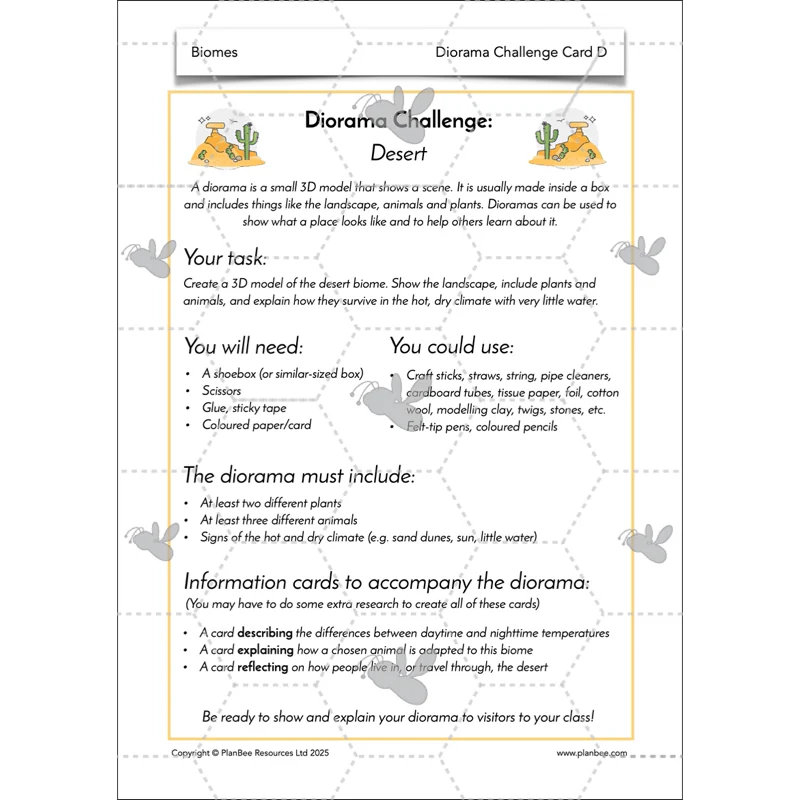
- Diorama Challenge Cards
- Podcast Help Sheets
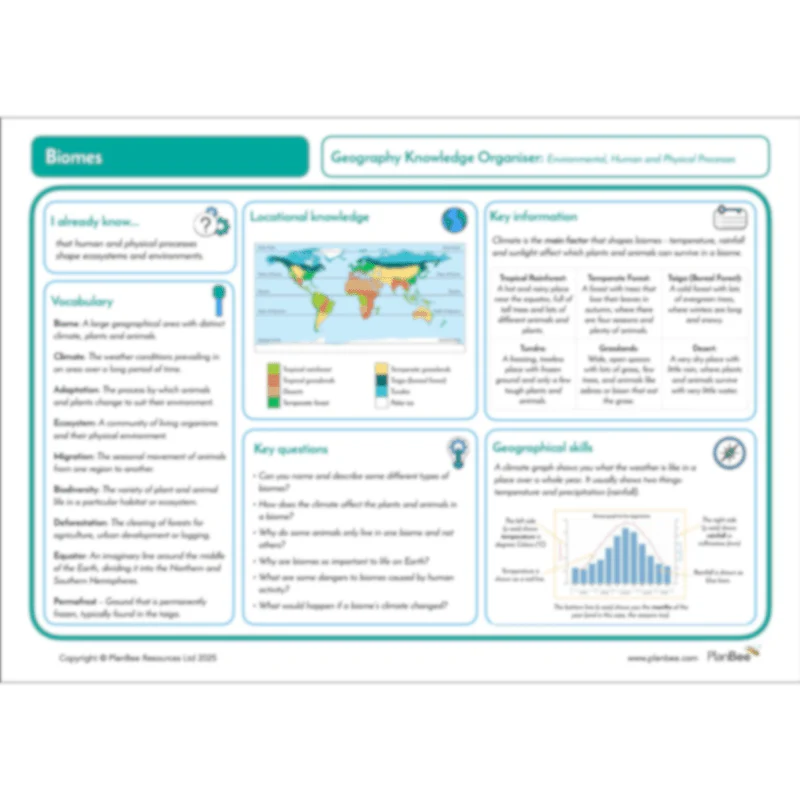
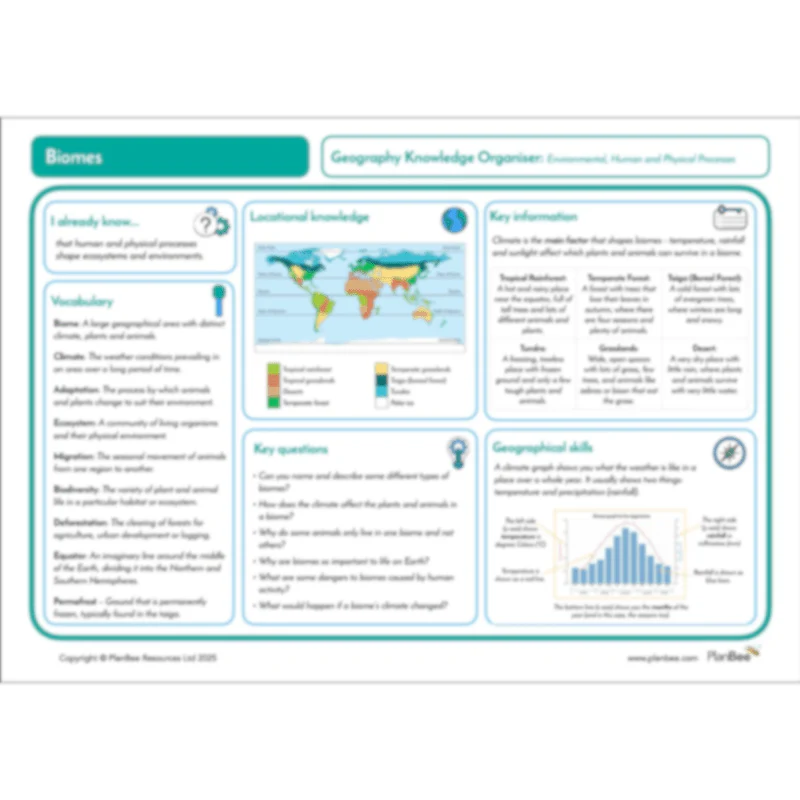
This Year 5/6 Geography Knowledge Organiser has been created to complement our Geography Environmental, Human and Physical Processes strand. It is designed to support your children’s understanding of key vocabulary linked to this scheme of work. Key questions and relevant geographical skills have been identified to encourage children to apply their knowledge around this topic.
Original: $1.99
-50%$1.99
$1.00More Images
Biomes
Over the course of seven engaging lessons, your class will find out about the diverse range of ecosytems on our planet by exploring six of the main biomes: tropical rainforest, temperate forest, taiga, desert, grasslands and tundra.
Children explore six of the world's main biomes, learning about their locations, climates, unique plants and animals and human impact. Through a mix of class discussions, map work, climate graphs and creative activities like quizzes, Venn diagrams, posters and dioramas, they investigate how organisms adapt to their environments and how climate change affects fragile biomes like the tundra. The unit ends with a review of all biomes, encouraging children to compare them and demonstrate their understanding through collaborative projects. Each lesson pack comes complete with a detailed plan, an engaging and informative set of PDF slides for the teaching input, as well as a range of printable resources to support your class with their independent learning.
Looking for LKS2 Geography lessons on biomes? You might like our In the Desert Y3/4 scheme, or our The Rainforest Biome Y3/4 scheme!
Definition and Location
In this first lesson, children will explore the locations of some of the world’s main biomes, and find out about their distinctive characteristics, including their climates and the unique plants and animals that inhabit each of them.
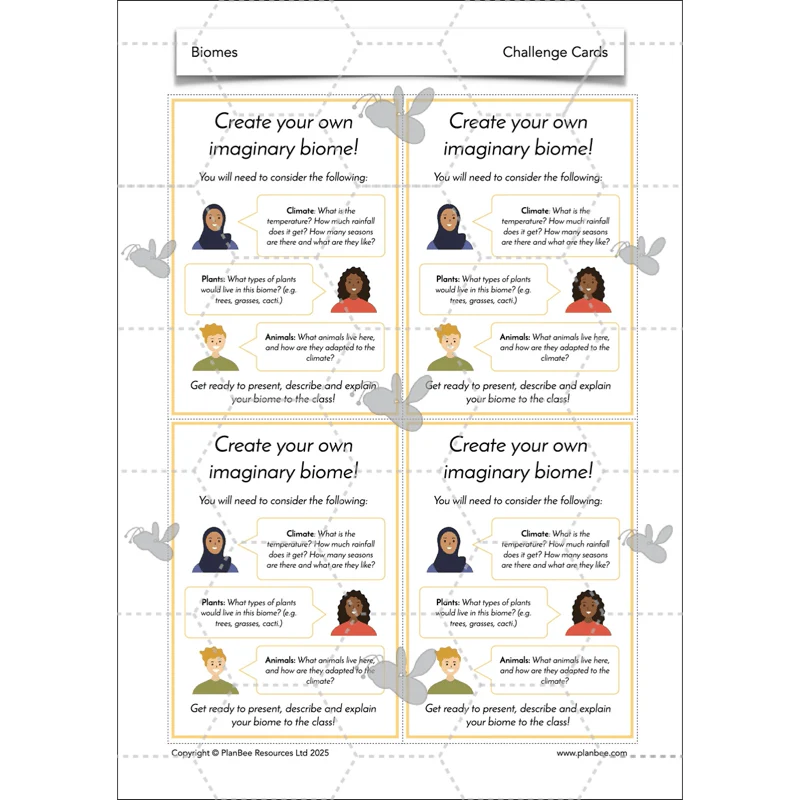
During their independent activities, children will identify the world’s biomes on a map and use their knowledge of each one’s characteristics to write facts and answer questions. In the alternative activity, children are challenged to work in groups to create their own imaginary biome, considering the climate it will have, as well as how the plants and animals there are adapted to their habitat.
This ready-to-teach Biomes KS2 lesson pack includes everything you need: a detailed plan, a set of informative PDF slides, activity ideas and printable resources.
What's included:
- Lesson plan
- Slides
- Activity ideas
- Differentiated worksheets
- Biomes Information Sheet
- Challenge Cards
Tropical Rainforests and Temperate Forests
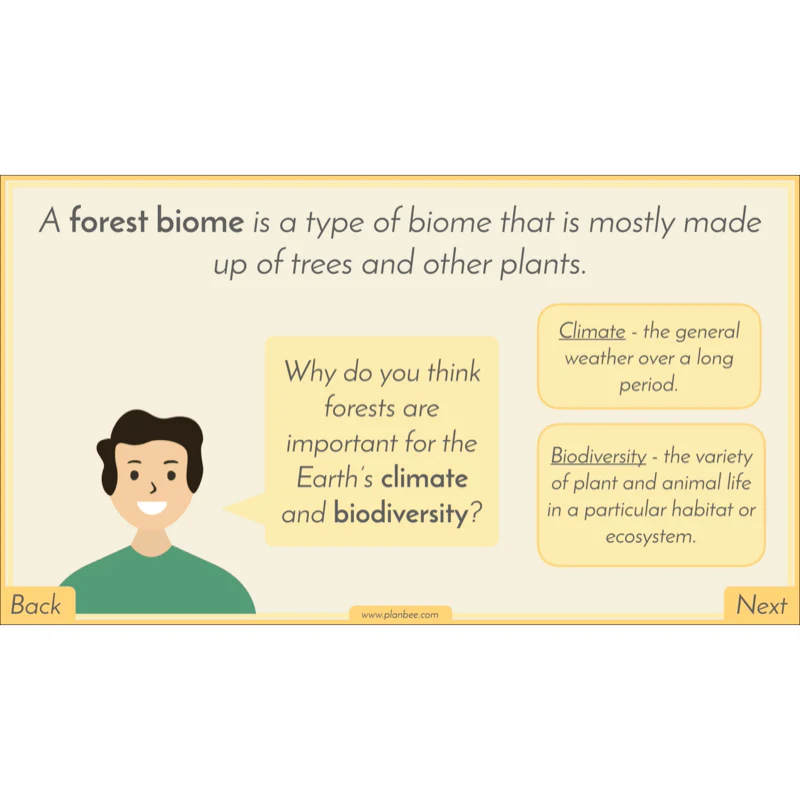
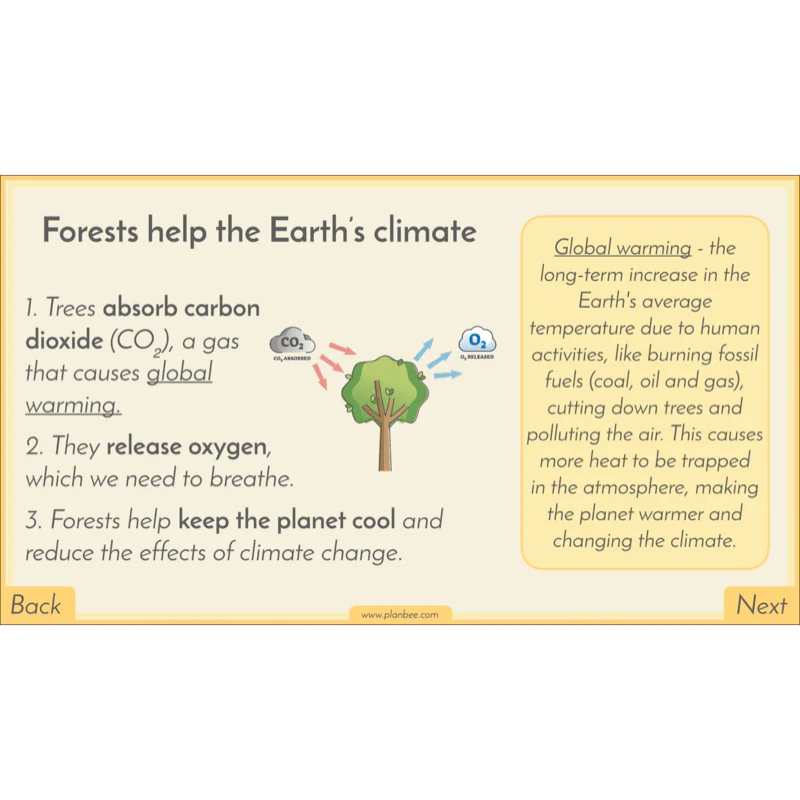
After finding out why forest biomes are important for the Earth’s climate and biodiversity, children will focus in on the characteristics of tropical rainforests and temperate forests, looking at their location, climate, vegetation, animals and human impact.
In their independent activities, children use the knowledge gained during the teaching input as well as information sheets to compare and contrast the two forest biomes using Venn diagrams, writing comparative sentences and creating quizzes.
This Forest Biomes KS2 lesson pack includes an easy-to-follow plan, a set of engaging PDF slides for the teaching input, fun activity ideas and a range of printable resources.
What's included:
- Lesson plan
- Slides
- Activity ideas
- Differentiated worksheets
- Forest Biome Cards
- Venn Diagram
- Tropical Rainforest Information Sheet
- Temperate Forest Information Sheet
- Quiz Maker Instruction Card
- Quiz Template
Taiga Biome
In this lesson, children will focus on the taiga biome. As a class, they will explore the location of this biome using maps, find out about the weather using climate graphs, and learn how some of the animals and people who live there have adapted to survive.
In their independent activities, children will use their knowledge and skills to create and interpret their own climate graphs. In the alternative activity, your class imagine that they are an explorer who has been travelling around the taiga for the last month. They are tasked to create a report, including diagrams and pictures, about what they have seen and learnt about this biome.
A detailed plan, a set of informative PDF slides, printable resources and activity ideas are all included in this ready-to-teach Biomes KS2 lesson pack.
What's included:
- Lesson plan
- Slides
- Activity ideas
- Differentiated worksheets
- Explorer Report Instruction Card
- Blank World Map Cards
- Climate Graph Cards
- Photo Cards
Desert Biome
The desert biome is the focus of this lesson. After recapping on the location and general characteristics of deserts, children will briefly look at the different types of deserts across the world.
First as a class, and then through their independent activities, children will explore how both animals and plants have adapted to survive in this harsh environment. In the alternative activity, children are challenged to use what they have learnt about adaptation to ‘design’ a new desert animal.
This ready-to-teach Desert Biome KS2 lesson pack includes everything you need: a detailed plan, a set of informative PDF slides, activity ideas and printable resources.
What's included:
- Lesson plan
- Slides
- Activity ideas
- Differentiated worksheets
- Adaptation Cards
- Photo Cards
- Designing for the Desert sheet
Grassland Biome
In this lesson, children will first find out about, and compare and contrast, the two types of grasslands: tropical and temperate, before focusing on the events of, and the reasoning behind, The Great Migration of animals in East Africa.
In their independent activities, children will use given information to read or create maps and answer a variety of questions about this incredible natural phenomenon. The alternative activity provides thought-provoking discussion cards which aim to encourage a more in depth exploration of different aspects of The Great Migration.
A detailed plan, a set of informative PDF slides, printable resources and activity ideas are all included in this ready-to-teach Grassland Biome KS2 lesson pack.
What's included:
- Lesson plan
- Slides
- Activity ideas
- Differentiated worksheets
- Instructions Sheet
- The Great Migration Sheet
- Discussion Cards
Tundra Biome
This lesson focuses on the coldest biome - the tundra. As a class, children will first look at the general characteristics of this biome, including the climate, and the plant and animal life, and how they are adapted to survive in these harsh conditions, before moving on to the impact that climate change is having on this biome, and consequently, the Earth.
In their independent activities, children are tasked with creating posters, leaflets and presentations which explain and highlight the effect of climate change on the tundra, as well as what we can do to help protect this biome.
This ready-to-teach Tundra Biome KS2 lesson pack includes everything you need: a detailed plan, a set of informative PDF slides, activity ideas and printable resources.
What's included:
- Lesson plan
- Slides
- Activity ideas
- Information Sheets
- Prompt Cards
- Tundra Wildlife Cards
- Research Question Cards
Comparing and Consolidating
In this final lesson, children will first recap on their understanding of the six main biomes that have been explored in the previous lessons. They are asked to identify biomes given their characteristics, and discuss how the biomes are similar to and different from one another.
In their independent activities, children are challenged to apply their knowledge and work in groups to create either a diorama of, or a podcast about, their chosen biome.
A detailed plan, a set of informative PDF slides, printable resources and activity ideas are all included in this ready-to-teach Biomes KS2 lesson pack.
What's included:
- Lesson plan
- Slides
- Activity ideas
- Diorama Challenge Cards
- Podcast Help Sheets
This Year 5/6 Geography Knowledge Organiser has been created to complement our Geography Environmental, Human and Physical Processes strand. It is designed to support your children’s understanding of key vocabulary linked to this scheme of work. Key questions and relevant geographical skills have been identified to encourage children to apply their knowledge around this topic.
Product Information
Product Information
Shipping & Returns
Shipping & Returns
Description
Over the course of seven engaging lessons, your class will find out about the diverse range of ecosytems on our planet by exploring six of the main biomes: tropical rainforest, temperate forest, taiga, desert, grasslands and tundra.
Children explore six of the world's main biomes, learning about their locations, climates, unique plants and animals and human impact. Through a mix of class discussions, map work, climate graphs and creative activities like quizzes, Venn diagrams, posters and dioramas, they investigate how organisms adapt to their environments and how climate change affects fragile biomes like the tundra. The unit ends with a review of all biomes, encouraging children to compare them and demonstrate their understanding through collaborative projects. Each lesson pack comes complete with a detailed plan, an engaging and informative set of PDF slides for the teaching input, as well as a range of printable resources to support your class with their independent learning.
Looking for LKS2 Geography lessons on biomes? You might like our In the Desert Y3/4 scheme, or our The Rainforest Biome Y3/4 scheme!
Definition and Location
In this first lesson, children will explore the locations of some of the world’s main biomes, and find out about their distinctive characteristics, including their climates and the unique plants and animals that inhabit each of them.
During their independent activities, children will identify the world’s biomes on a map and use their knowledge of each one’s characteristics to write facts and answer questions. In the alternative activity, children are challenged to work in groups to create their own imaginary biome, considering the climate it will have, as well as how the plants and animals there are adapted to their habitat.
This ready-to-teach Biomes KS2 lesson pack includes everything you need: a detailed plan, a set of informative PDF slides, activity ideas and printable resources.
What's included:
- Lesson plan
- Slides
- Activity ideas
- Differentiated worksheets
- Biomes Information Sheet
- Challenge Cards
Tropical Rainforests and Temperate Forests
After finding out why forest biomes are important for the Earth’s climate and biodiversity, children will focus in on the characteristics of tropical rainforests and temperate forests, looking at their location, climate, vegetation, animals and human impact.
In their independent activities, children use the knowledge gained during the teaching input as well as information sheets to compare and contrast the two forest biomes using Venn diagrams, writing comparative sentences and creating quizzes.
This Forest Biomes KS2 lesson pack includes an easy-to-follow plan, a set of engaging PDF slides for the teaching input, fun activity ideas and a range of printable resources.
What's included:
- Lesson plan
- Slides
- Activity ideas
- Differentiated worksheets
- Forest Biome Cards
- Venn Diagram
- Tropical Rainforest Information Sheet
- Temperate Forest Information Sheet
- Quiz Maker Instruction Card
- Quiz Template
Taiga Biome
In this lesson, children will focus on the taiga biome. As a class, they will explore the location of this biome using maps, find out about the weather using climate graphs, and learn how some of the animals and people who live there have adapted to survive.
In their independent activities, children will use their knowledge and skills to create and interpret their own climate graphs. In the alternative activity, your class imagine that they are an explorer who has been travelling around the taiga for the last month. They are tasked to create a report, including diagrams and pictures, about what they have seen and learnt about this biome.
A detailed plan, a set of informative PDF slides, printable resources and activity ideas are all included in this ready-to-teach Biomes KS2 lesson pack.
What's included:
- Lesson plan
- Slides
- Activity ideas
- Differentiated worksheets
- Explorer Report Instruction Card
- Blank World Map Cards
- Climate Graph Cards
- Photo Cards
Desert Biome
The desert biome is the focus of this lesson. After recapping on the location and general characteristics of deserts, children will briefly look at the different types of deserts across the world.
First as a class, and then through their independent activities, children will explore how both animals and plants have adapted to survive in this harsh environment. In the alternative activity, children are challenged to use what they have learnt about adaptation to ‘design’ a new desert animal.
This ready-to-teach Desert Biome KS2 lesson pack includes everything you need: a detailed plan, a set of informative PDF slides, activity ideas and printable resources.
What's included:
- Lesson plan
- Slides
- Activity ideas
- Differentiated worksheets
- Adaptation Cards
- Photo Cards
- Designing for the Desert sheet
Grassland Biome
In this lesson, children will first find out about, and compare and contrast, the two types of grasslands: tropical and temperate, before focusing on the events of, and the reasoning behind, The Great Migration of animals in East Africa.
In their independent activities, children will use given information to read or create maps and answer a variety of questions about this incredible natural phenomenon. The alternative activity provides thought-provoking discussion cards which aim to encourage a more in depth exploration of different aspects of The Great Migration.
A detailed plan, a set of informative PDF slides, printable resources and activity ideas are all included in this ready-to-teach Grassland Biome KS2 lesson pack.
What's included:
- Lesson plan
- Slides
- Activity ideas
- Differentiated worksheets
- Instructions Sheet
- The Great Migration Sheet
- Discussion Cards
Tundra Biome
This lesson focuses on the coldest biome - the tundra. As a class, children will first look at the general characteristics of this biome, including the climate, and the plant and animal life, and how they are adapted to survive in these harsh conditions, before moving on to the impact that climate change is having on this biome, and consequently, the Earth.
In their independent activities, children are tasked with creating posters, leaflets and presentations which explain and highlight the effect of climate change on the tundra, as well as what we can do to help protect this biome.
This ready-to-teach Tundra Biome KS2 lesson pack includes everything you need: a detailed plan, a set of informative PDF slides, activity ideas and printable resources.
What's included:
- Lesson plan
- Slides
- Activity ideas
- Information Sheets
- Prompt Cards
- Tundra Wildlife Cards
- Research Question Cards
Comparing and Consolidating
In this final lesson, children will first recap on their understanding of the six main biomes that have been explored in the previous lessons. They are asked to identify biomes given their characteristics, and discuss how the biomes are similar to and different from one another.
In their independent activities, children are challenged to apply their knowledge and work in groups to create either a diorama of, or a podcast about, their chosen biome.
A detailed plan, a set of informative PDF slides, printable resources and activity ideas are all included in this ready-to-teach Biomes KS2 lesson pack.
What's included:
- Lesson plan
- Slides
- Activity ideas
- Diorama Challenge Cards
- Podcast Help Sheets
This Year 5/6 Geography Knowledge Organiser has been created to complement our Geography Environmental, Human and Physical Processes strand. It is designed to support your children’s understanding of key vocabulary linked to this scheme of work. Key questions and relevant geographical skills have been identified to encourage children to apply their knowledge around this topic.