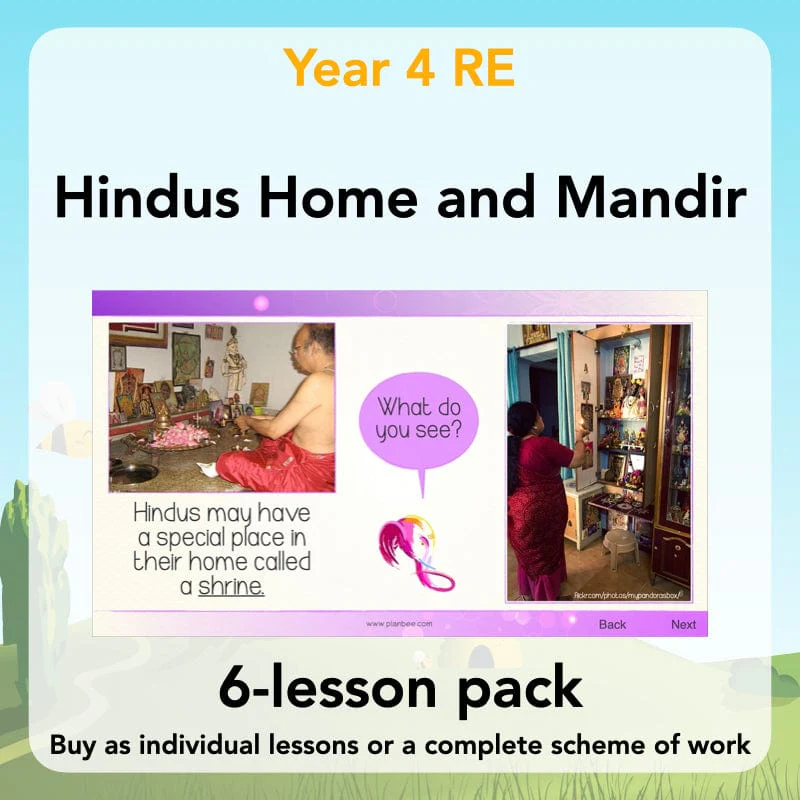
Hindus Home and Mandir
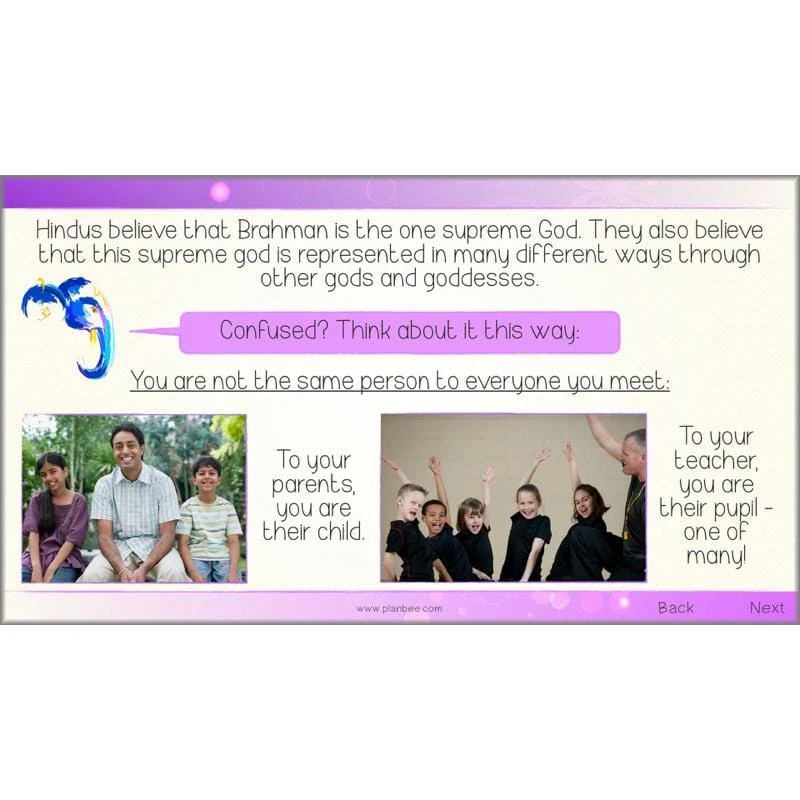
Where do Hindus worship? These enjoyable RE lessons for Year 4 Key Stage 2 children answer this question and many others about Hinduism and its practices. During the included activities, children will explore some central Hindu beliefs and discover ways in which they are reflected in Hindu worship both at home and in the mandir. Pupils will have the opportunity to learn about the aum symbol and what it represents, find out about some of the characteristics of Hindu gods and goddesses, explore shrines and how they are used in worship, and much more.
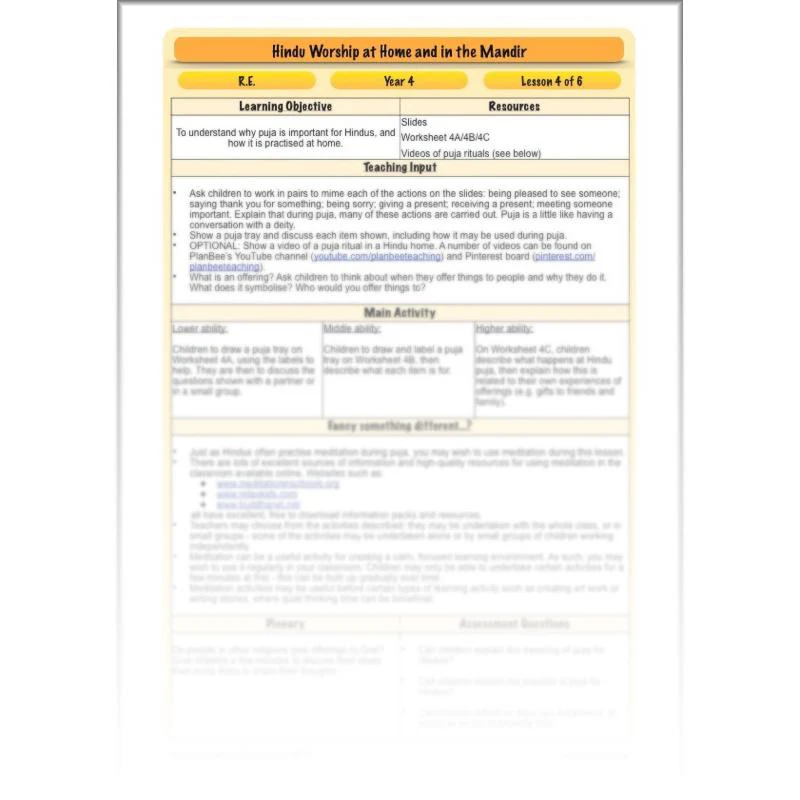
Each lesson includes a detailed Hinduism lesson plan with a choice of differentiated learning activities, a high-resolution slide show presentation and a range of printable resources including Hindu shrine worksheets and Hindu worship activity cards. There’s even a collection of images and videos on PlanBee’s YouTube and Pinterest boards which you can be used to support children’s learning and to study Hindu worship in even greater detail.
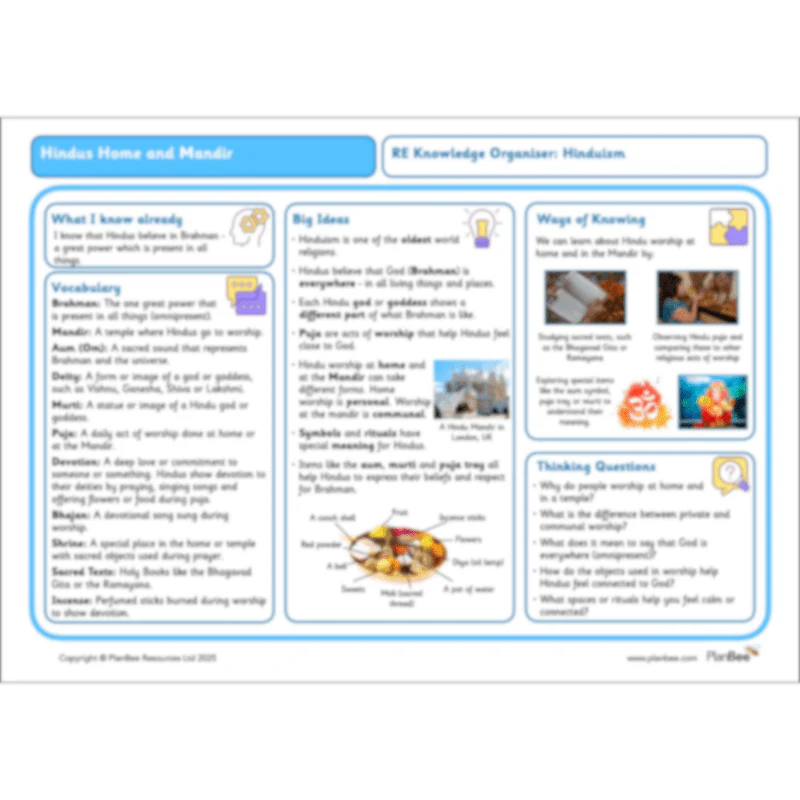
A Knowledge Organiser is available to support the learning in this scheme. It is included in the Complete Series download or can be purchased individually.
The Aum Symbol
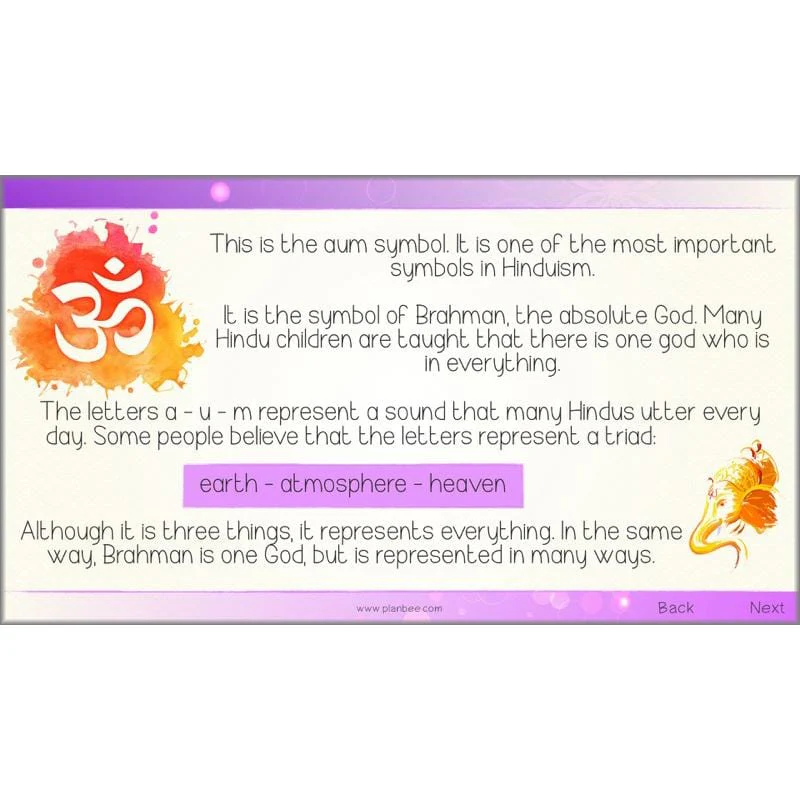
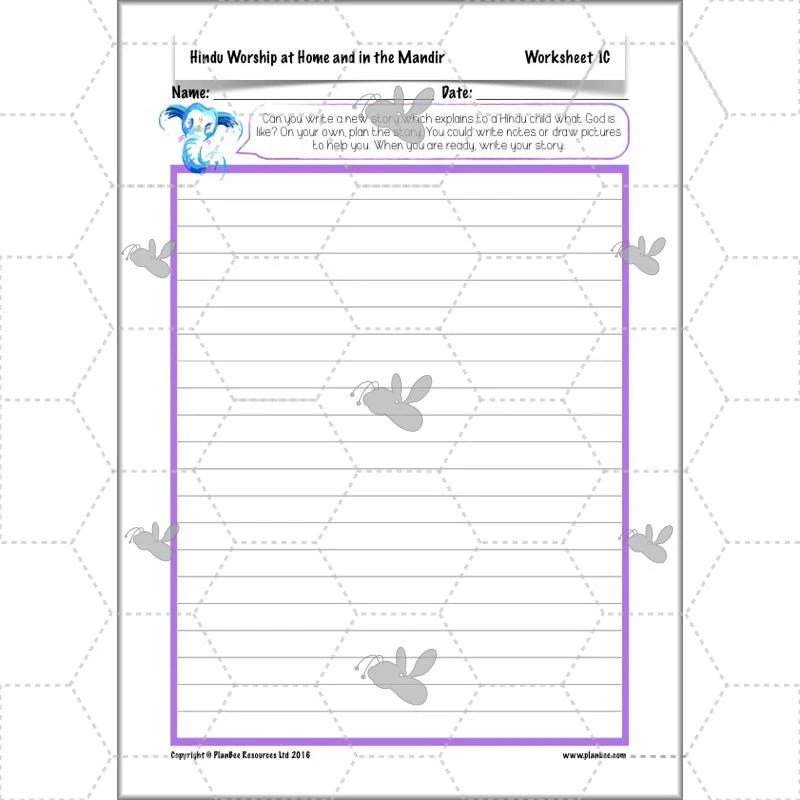
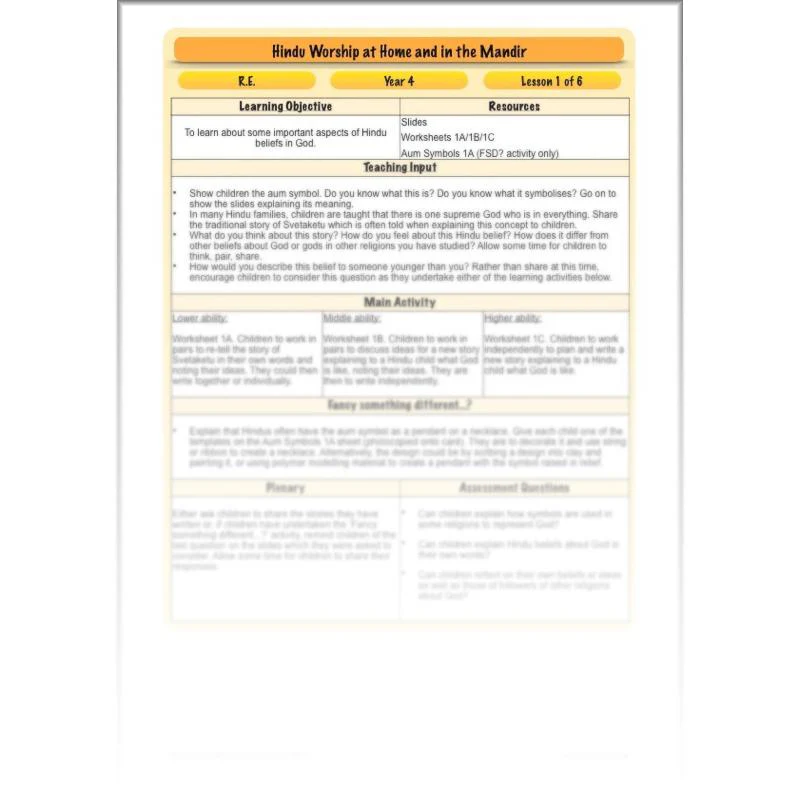
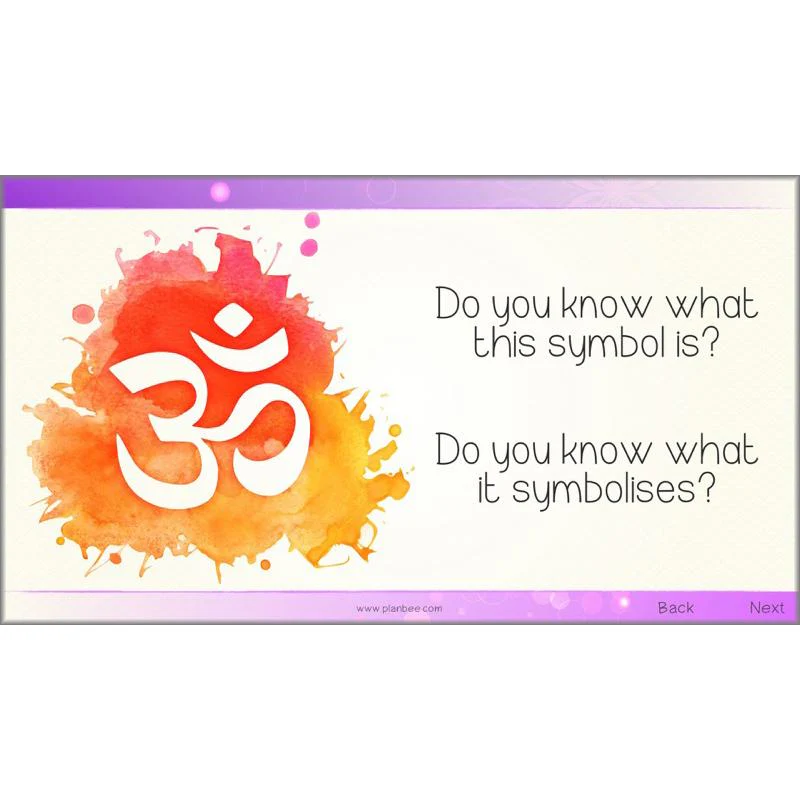
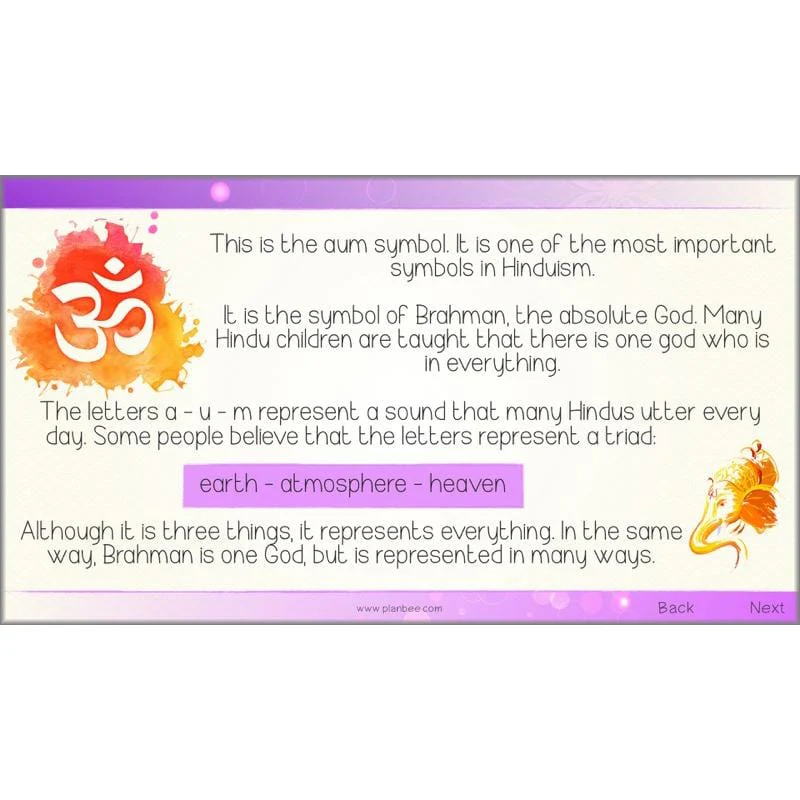
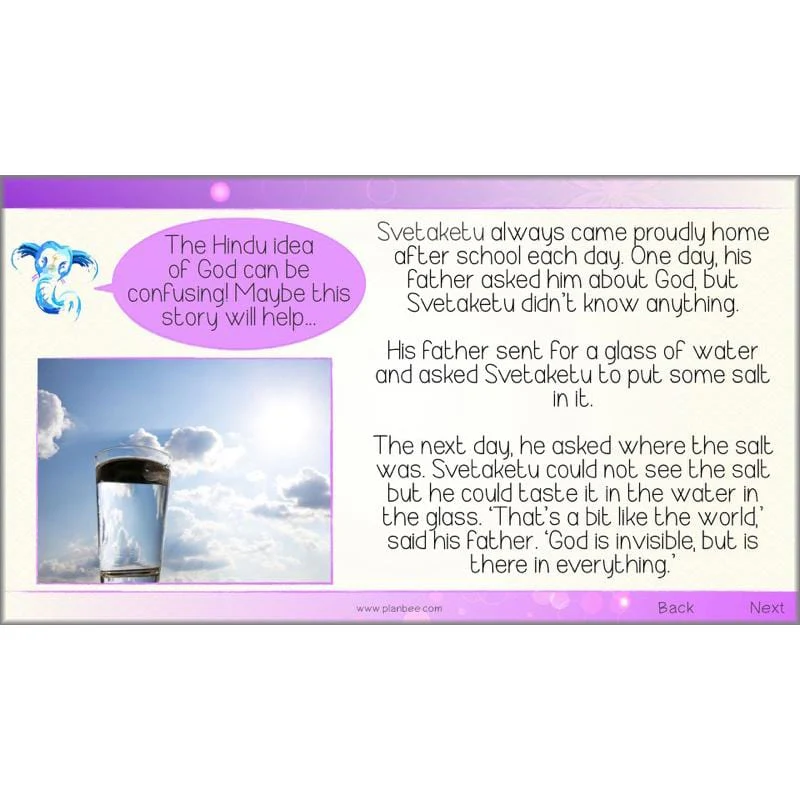
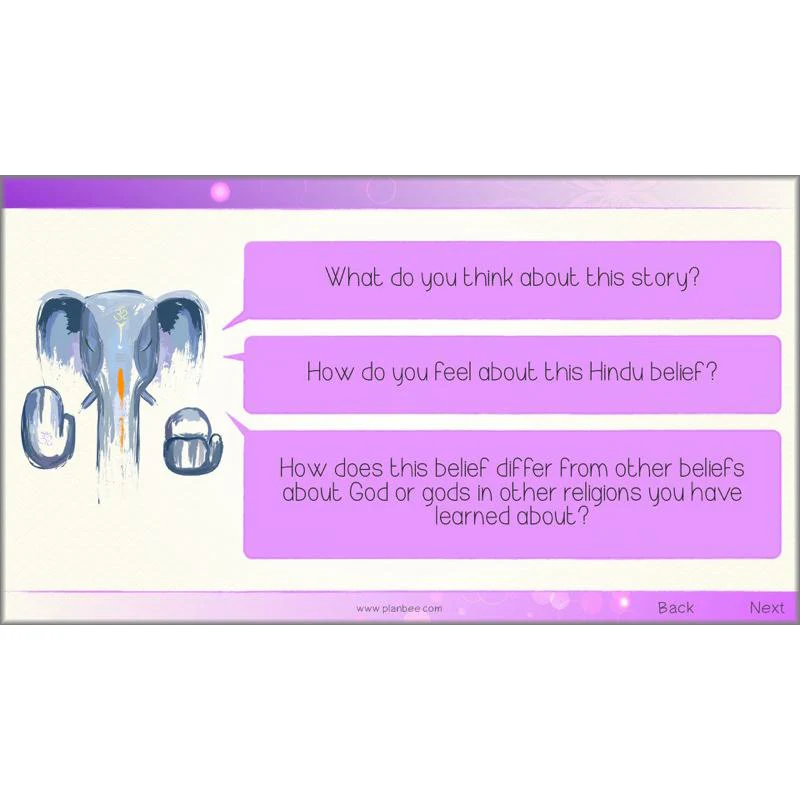
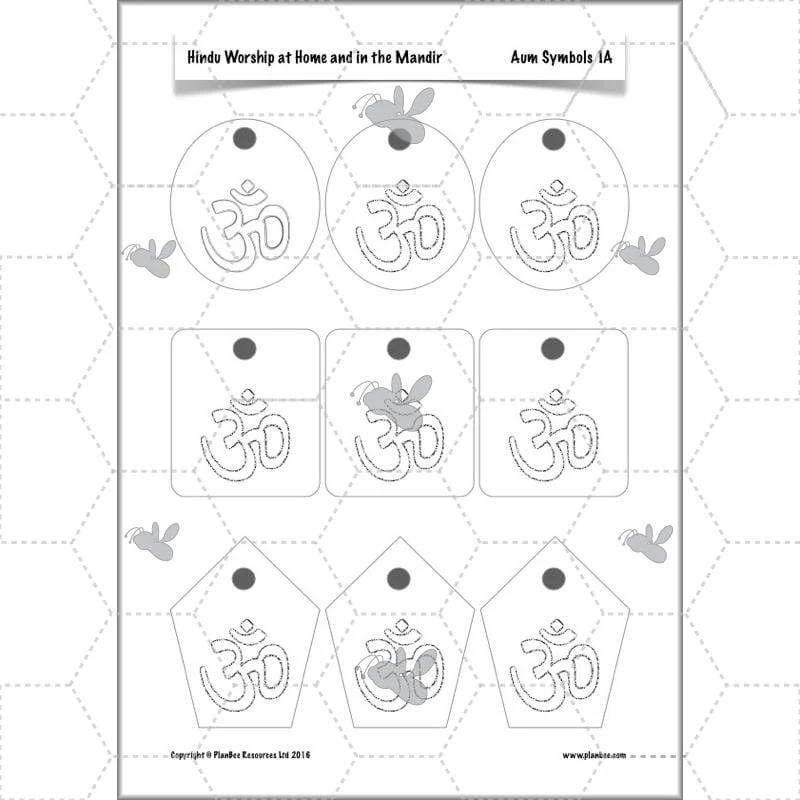
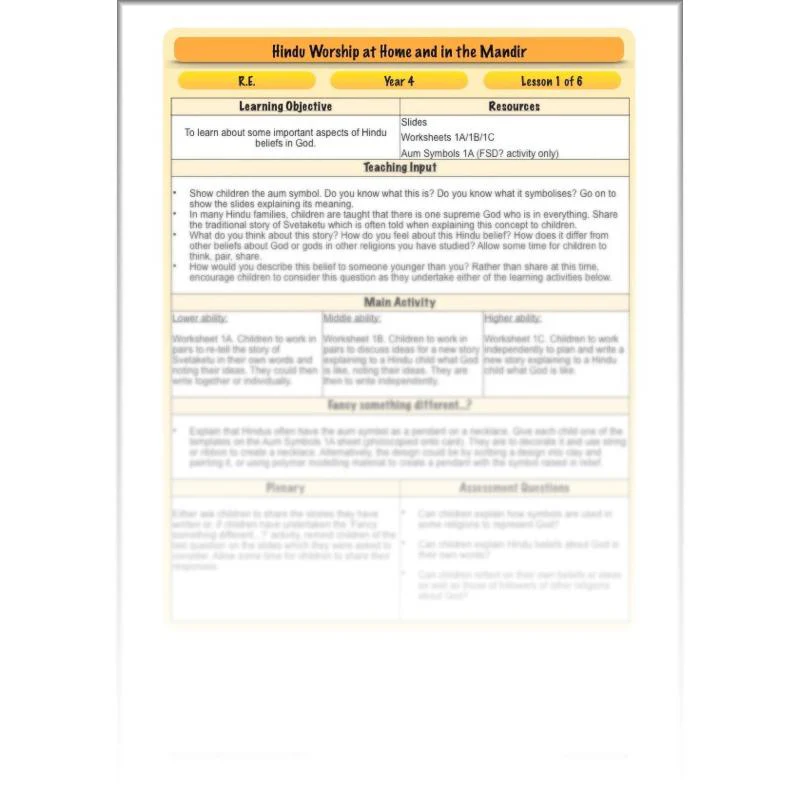
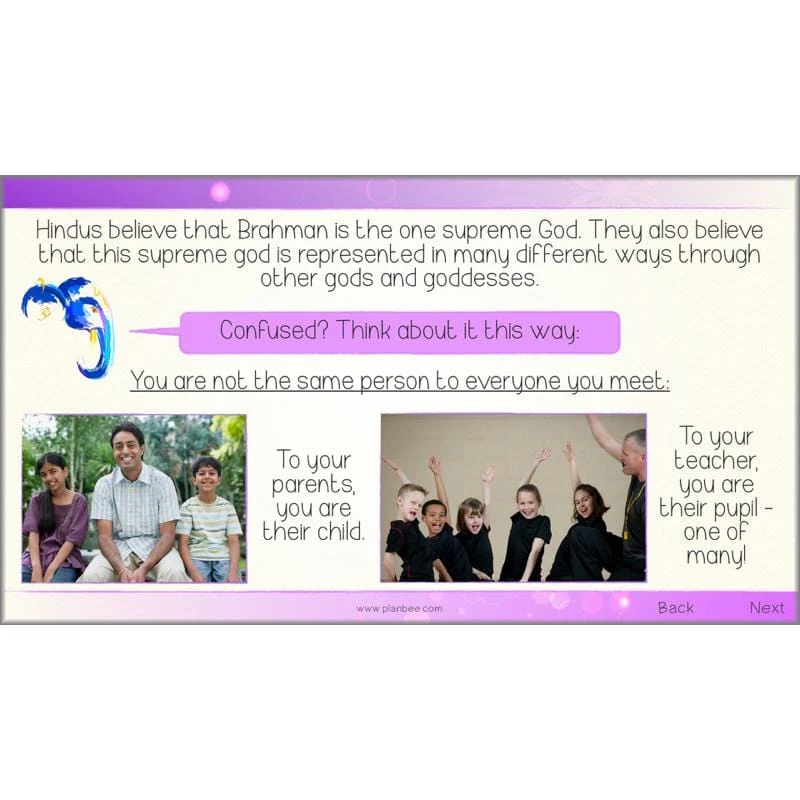
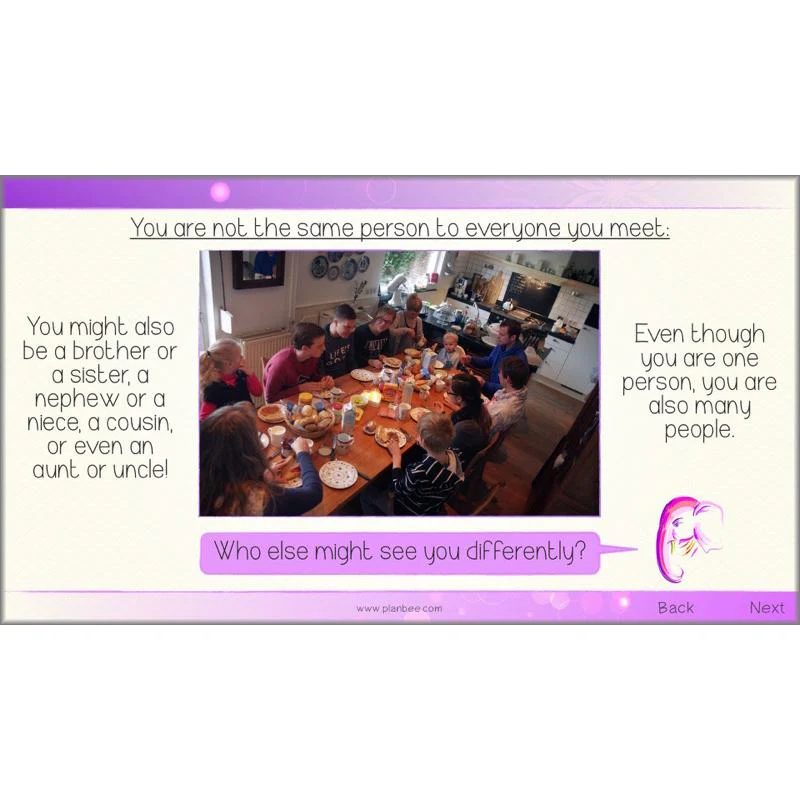
This first lesson explains what the Hindu aum symbol is and how it symbolises central Hindu beliefs about God, using a story to help illustrate the ideas.
What's included:
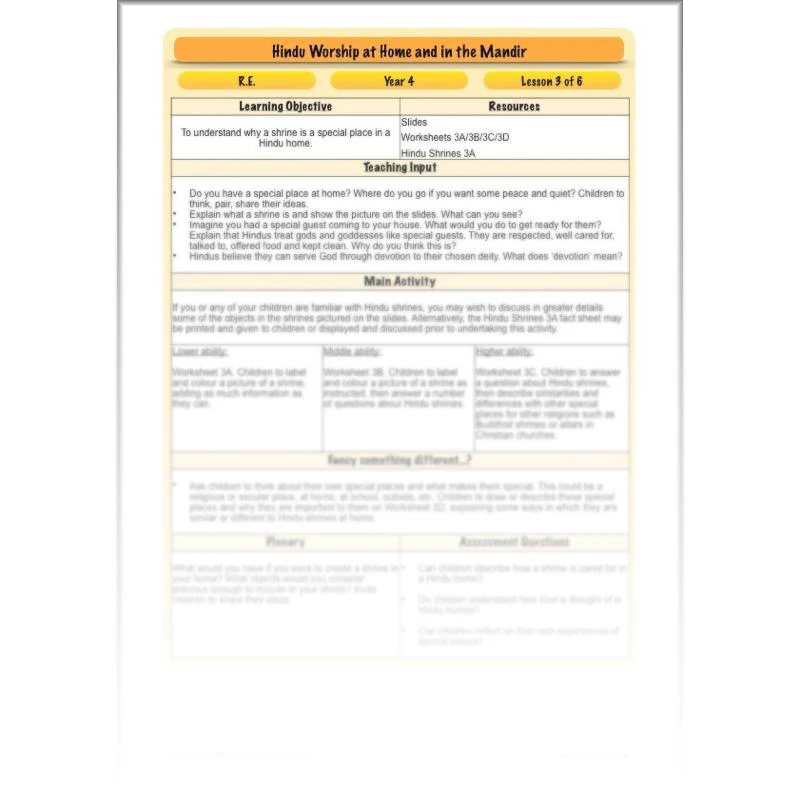
- Lesson plan
- Slides
- Activity ideas
- Differentiated worksheets
- Aum symbols worksheet
Hindu Gods KS2
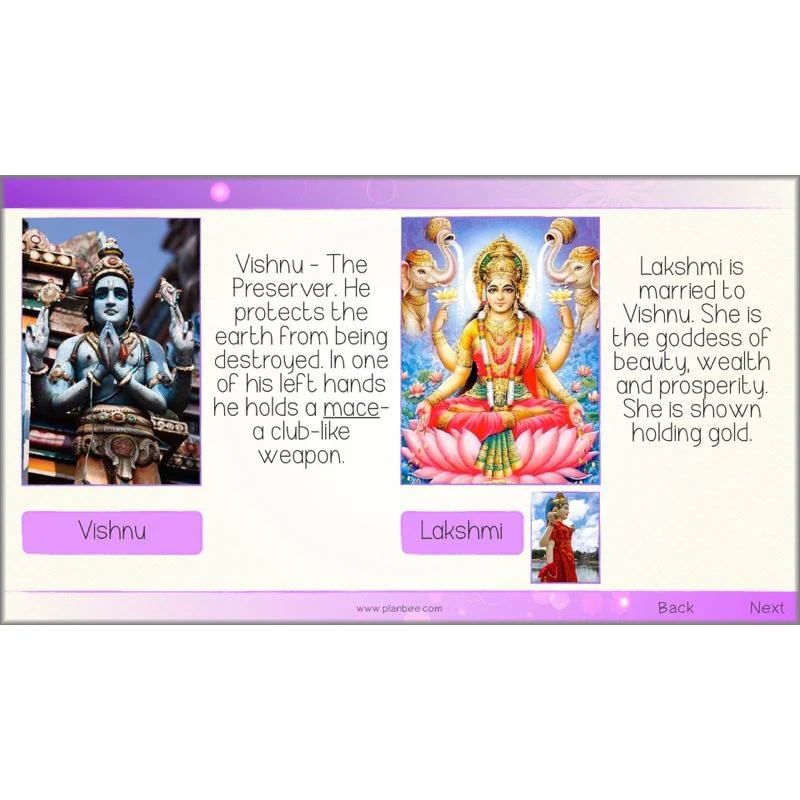
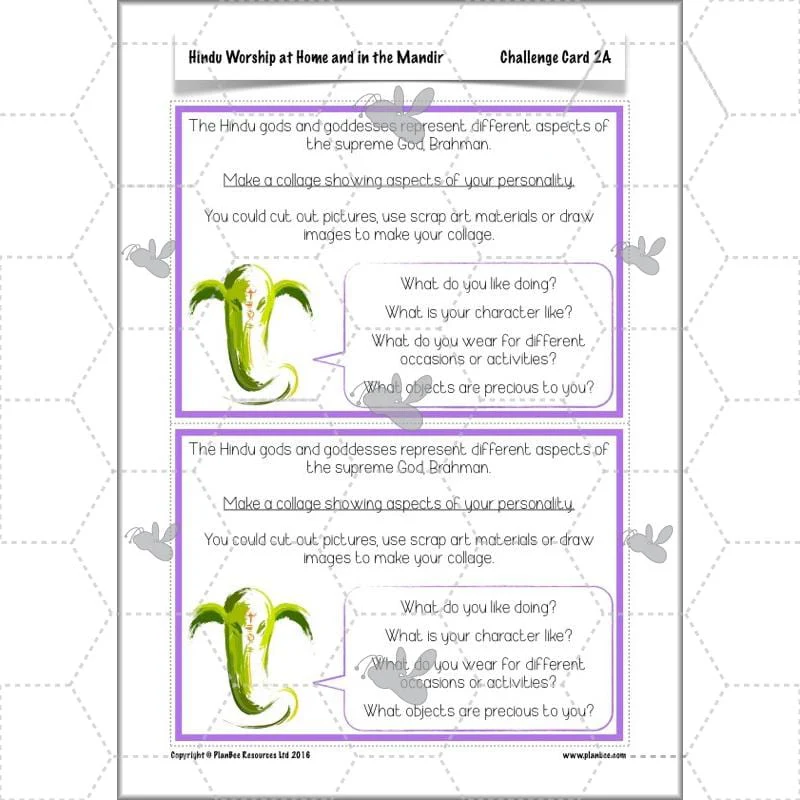
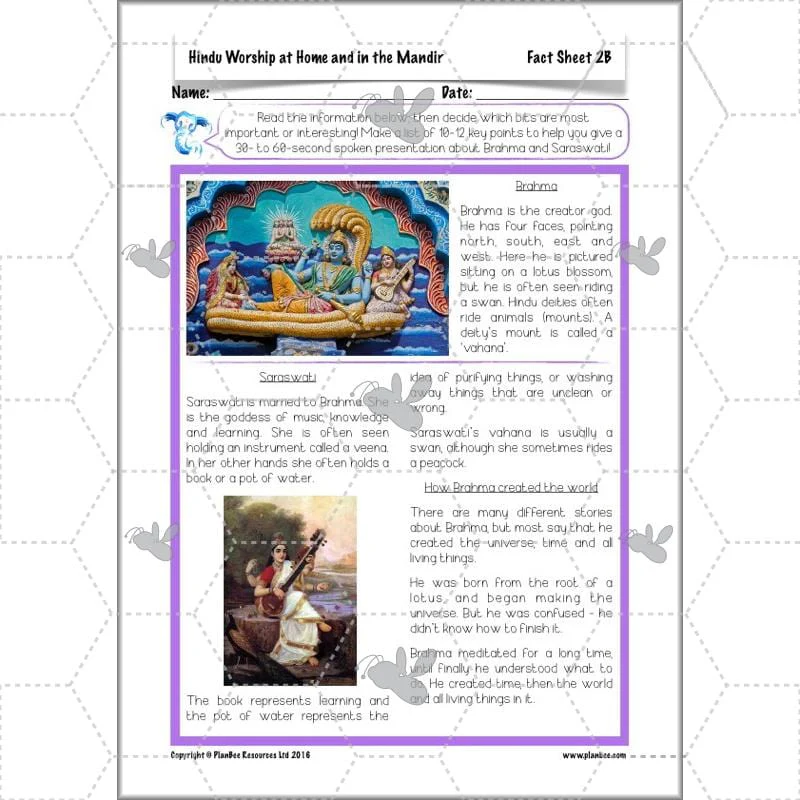
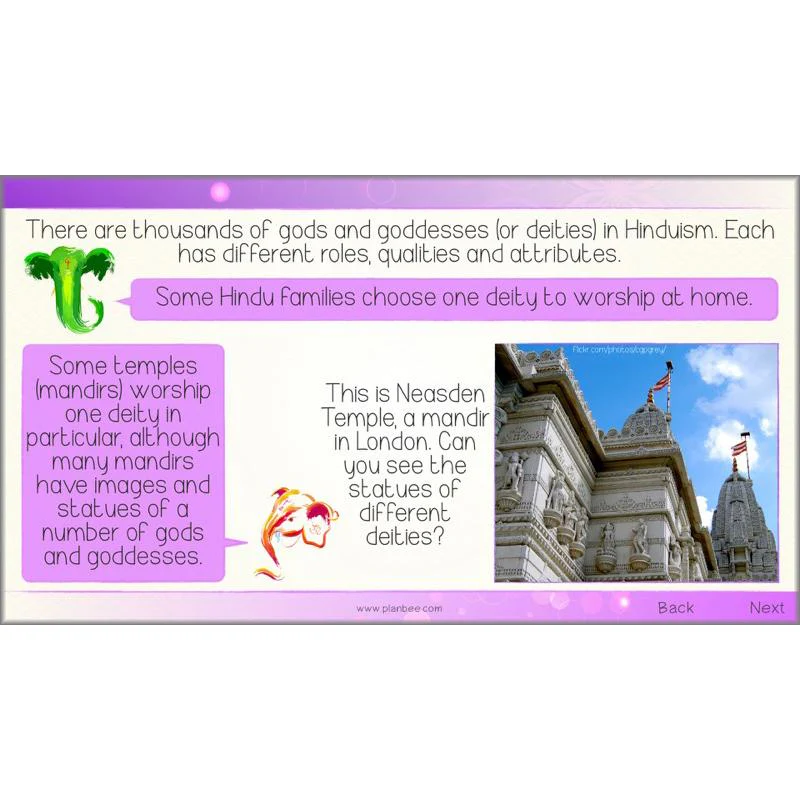
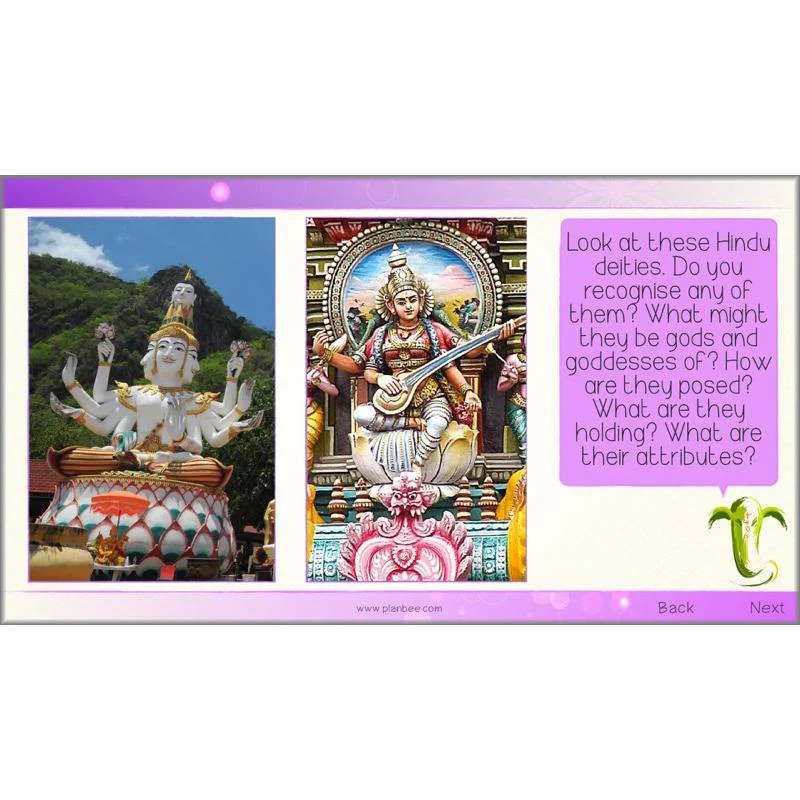
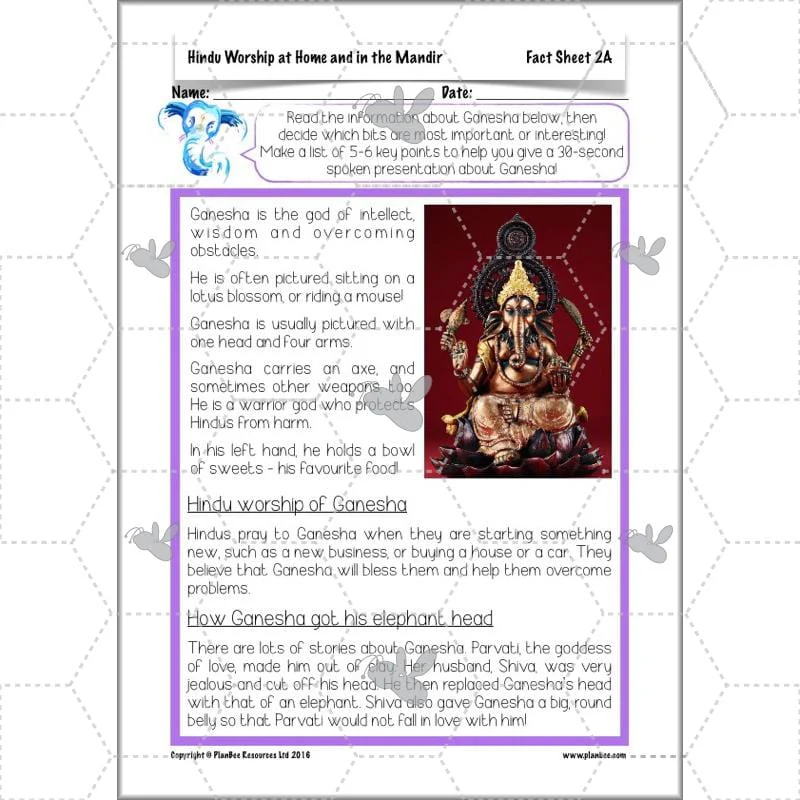
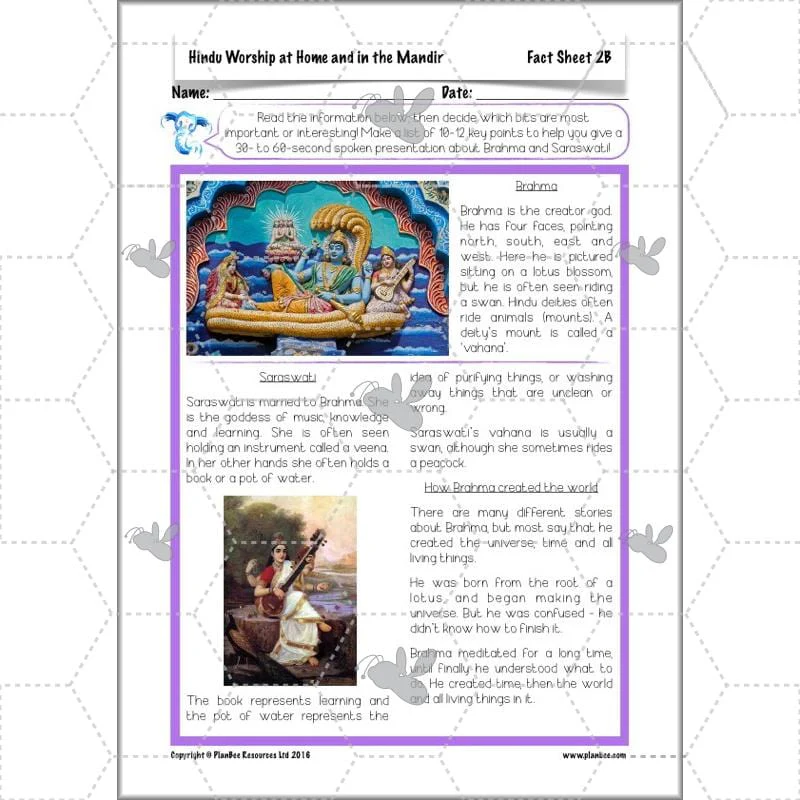
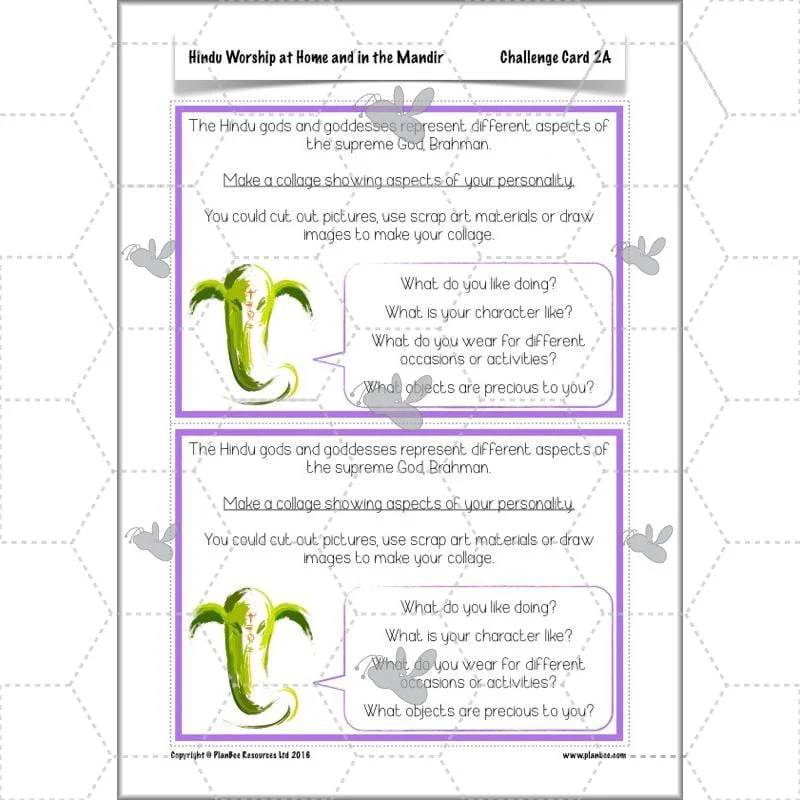
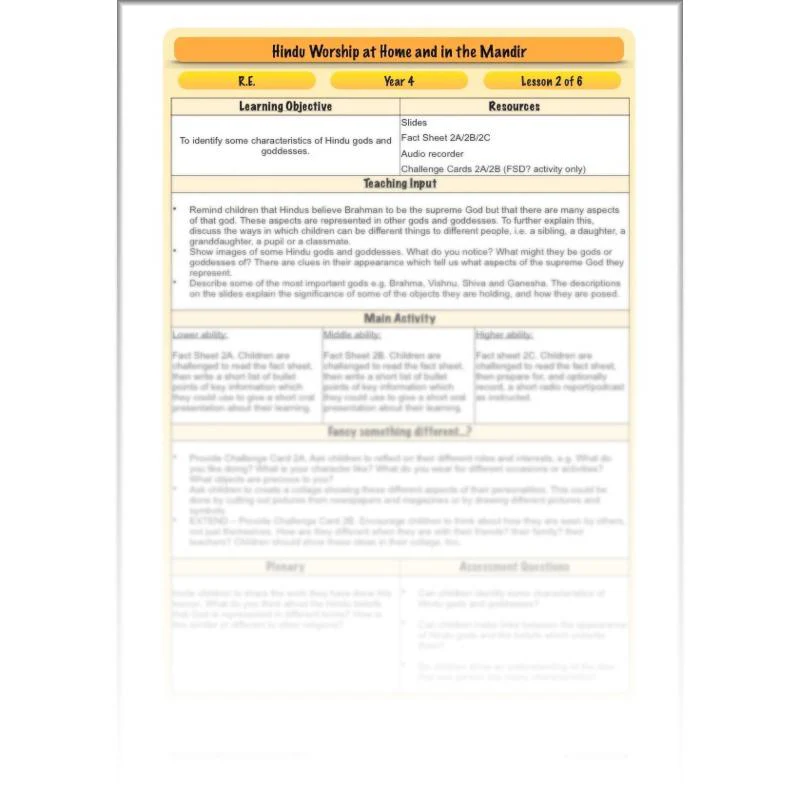
Learn all about a number of Hindu gods and goddesses and the aspects of Hindu belief they each represent. Using the detailed, differentiated resources included, children may then go on to prepare a presentation about what they have learned, or produce a collage using a range of materials.
What's included:
- Lesson plan
- Slides
- Activity ideas
- Fact Sheets
- Challenge Cards
Special Shrines
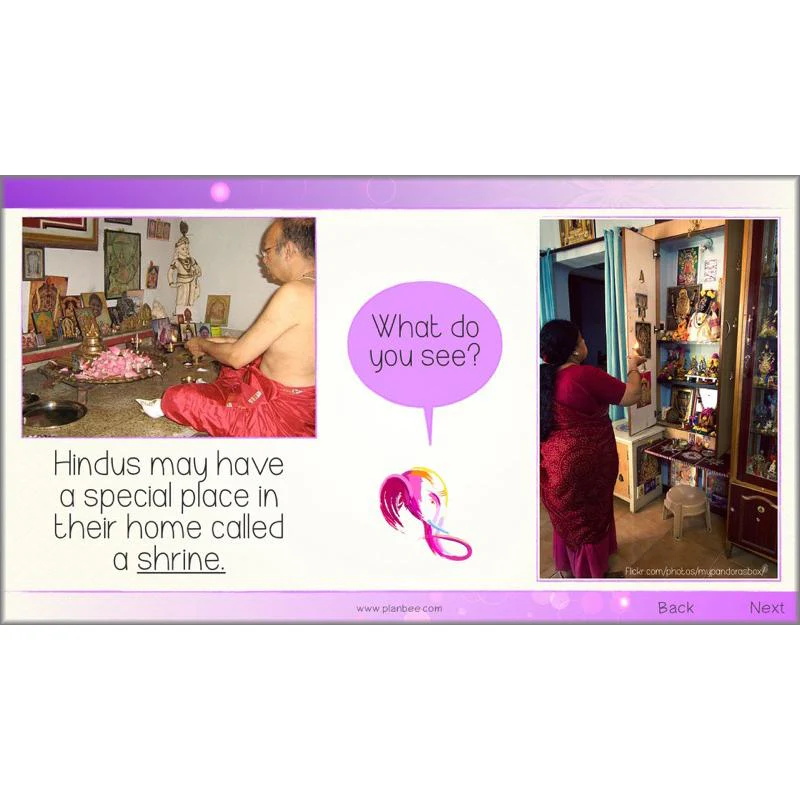
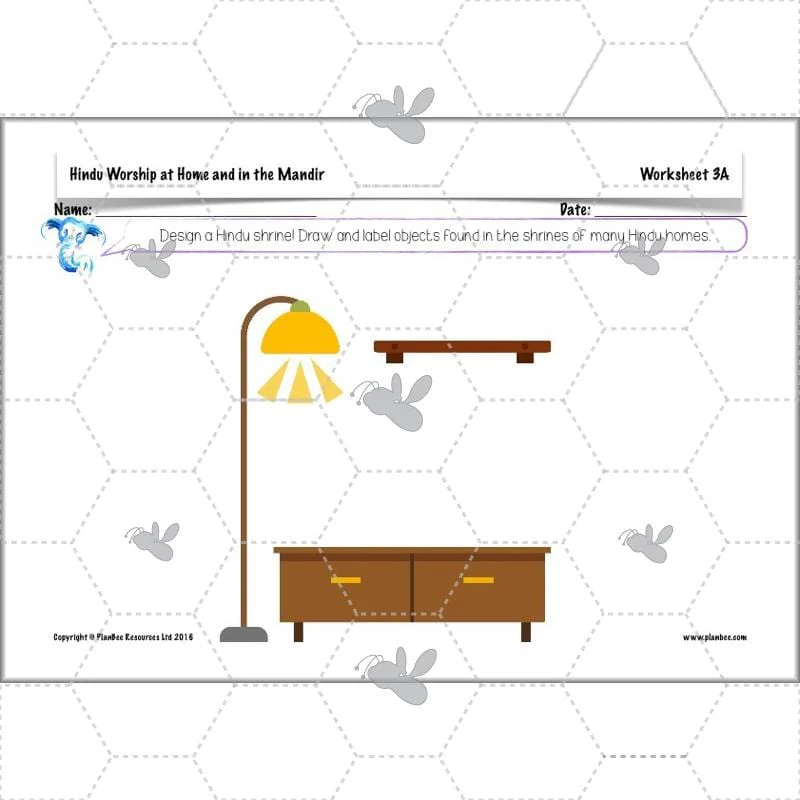
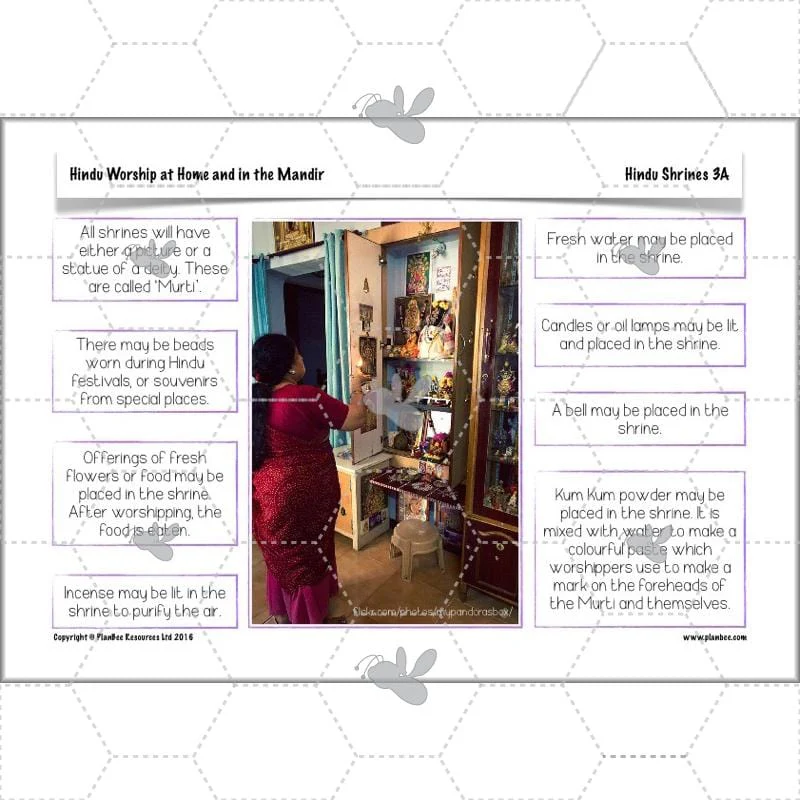
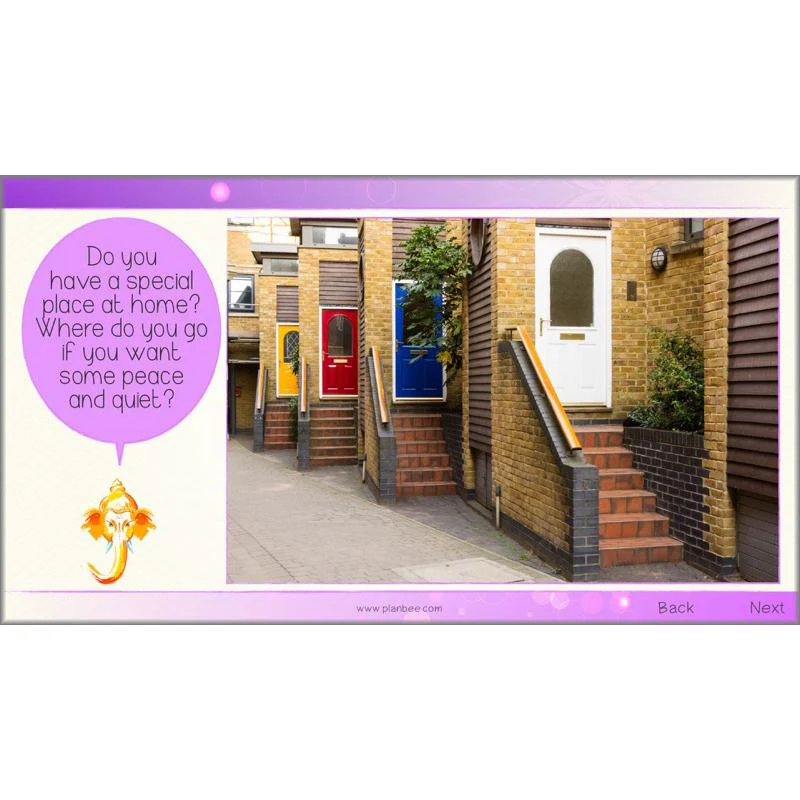
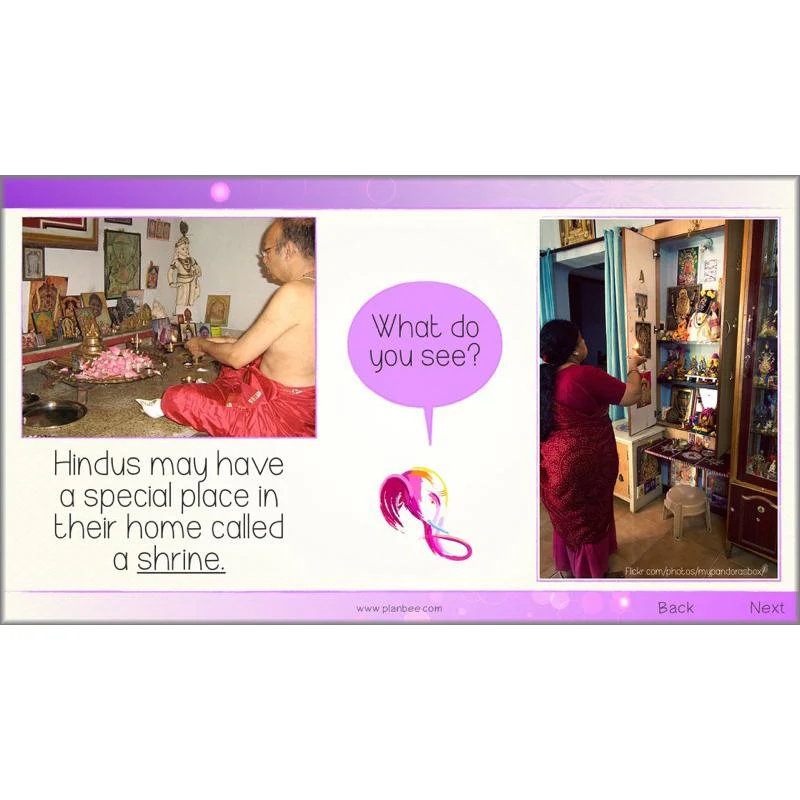
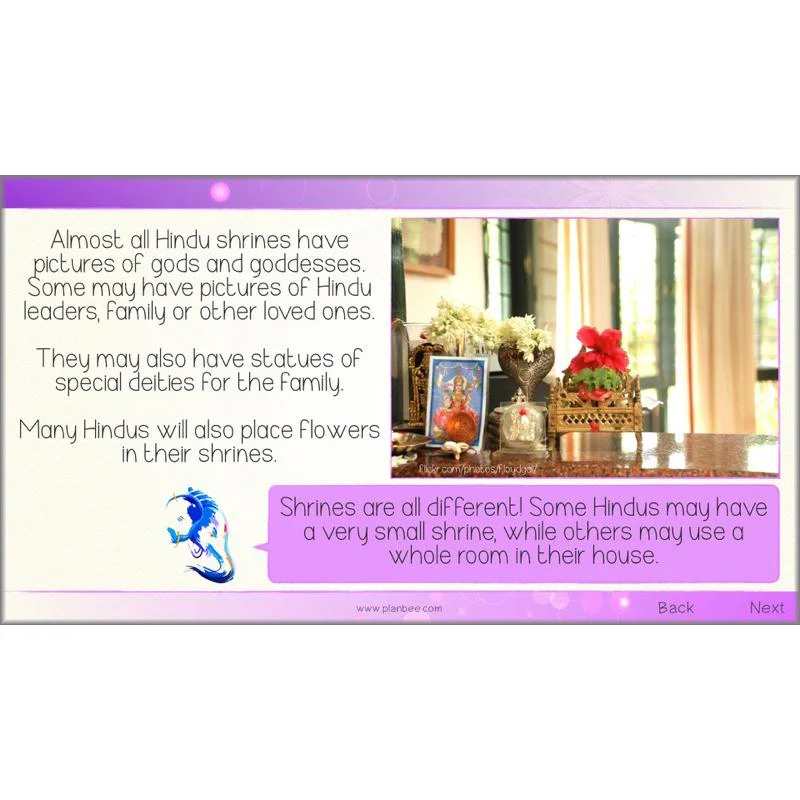
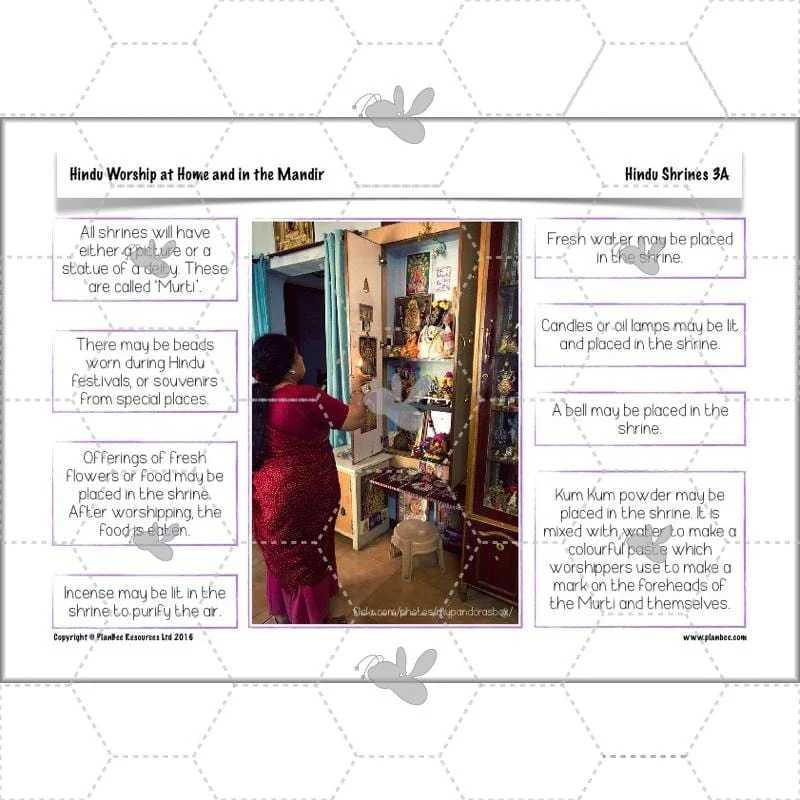
Everyone has a special place they like to go for peace and quiet. This lesson explains why a shrine is that place for Hindus and how shrines are used in worship.
What's included:
- Lesson plan
- Slides
- Activity ideas
- Differentiated worksheets
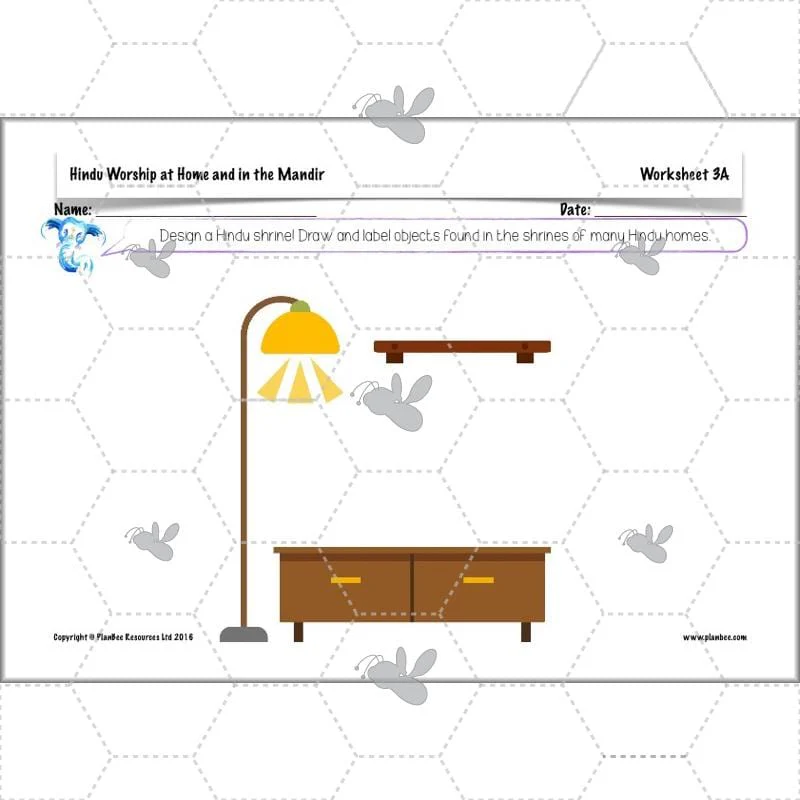
- Hindu shrine KS2 worksheet
Puja Tray KS2
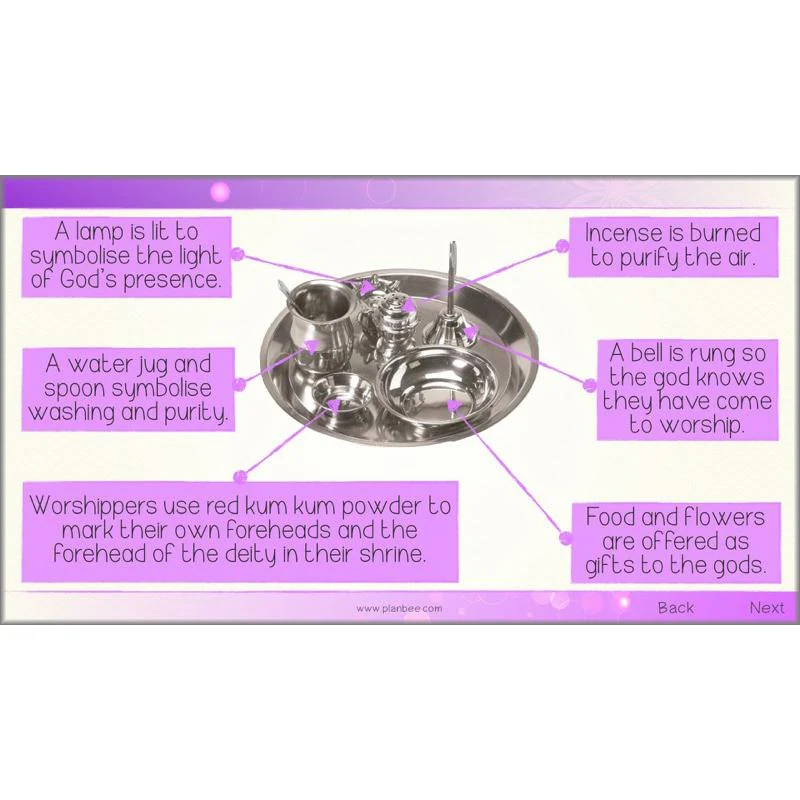
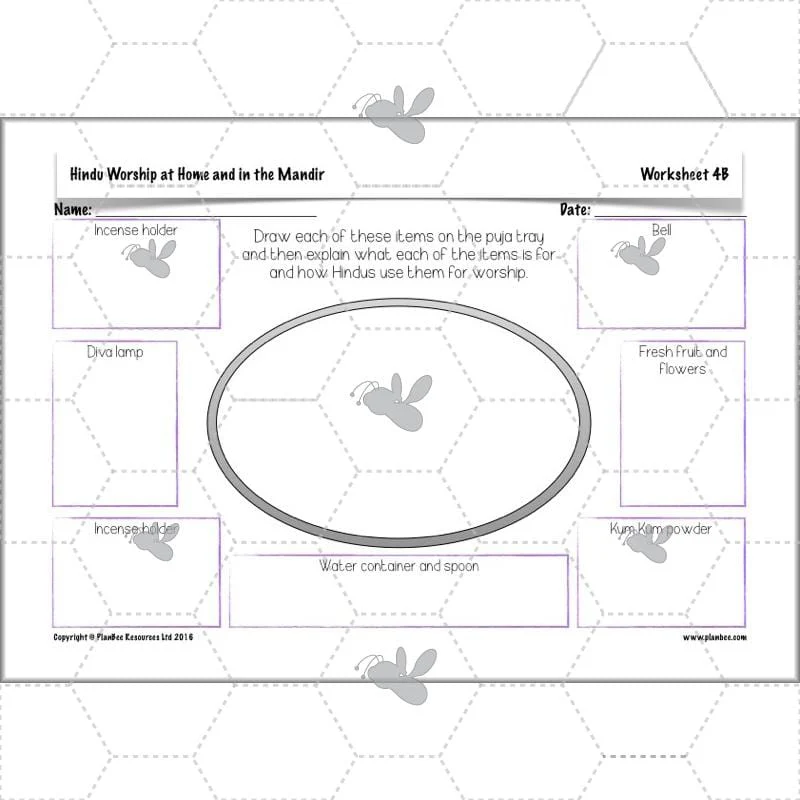
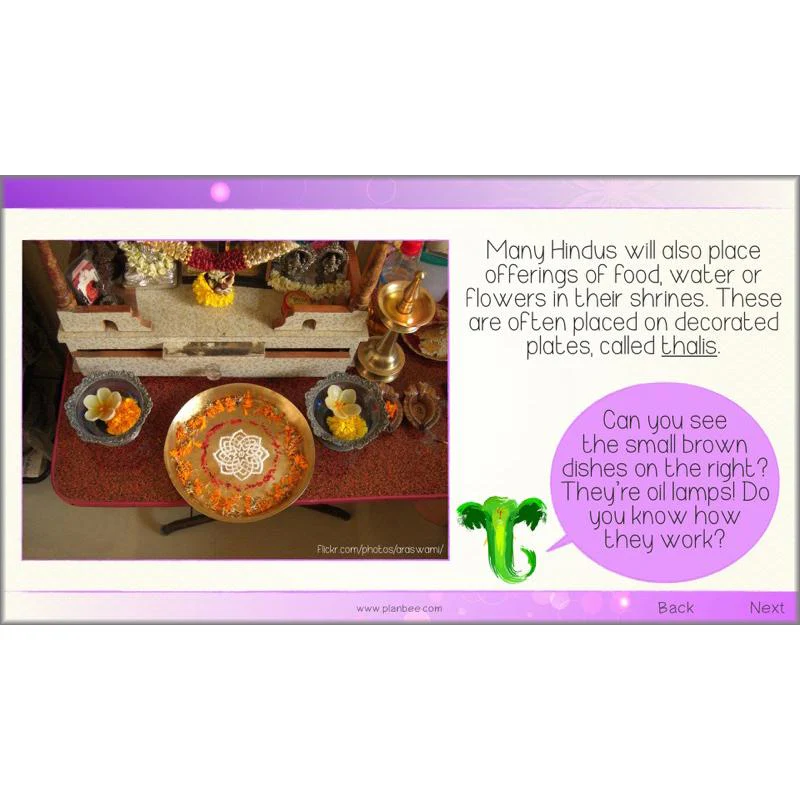
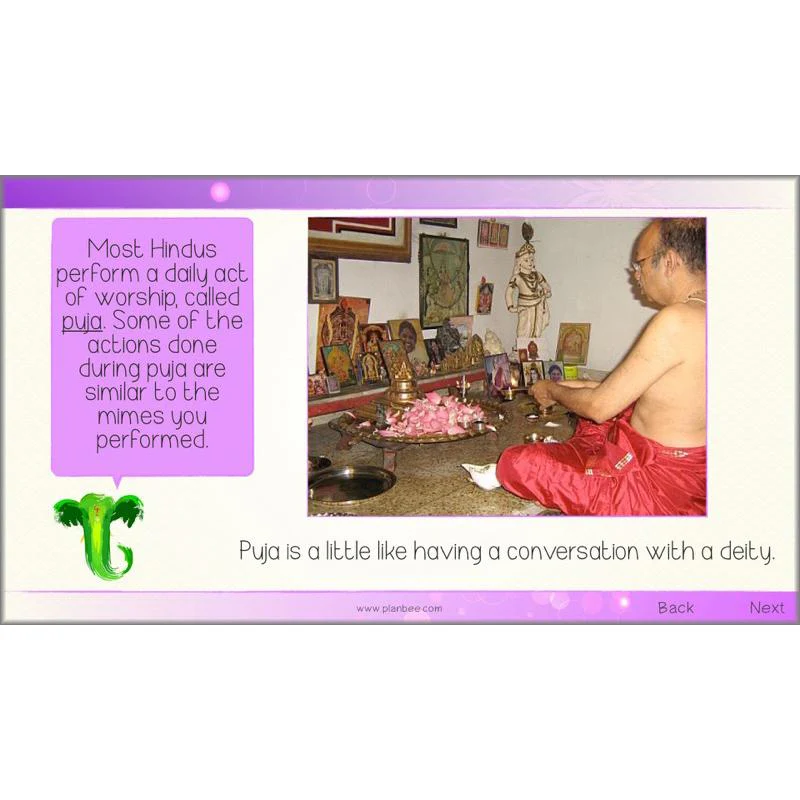
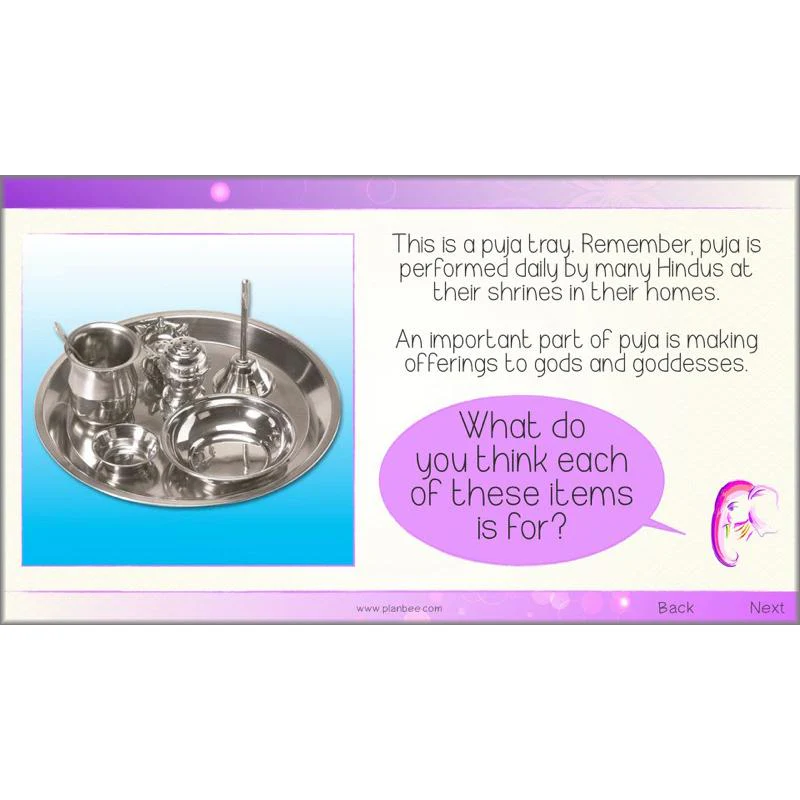
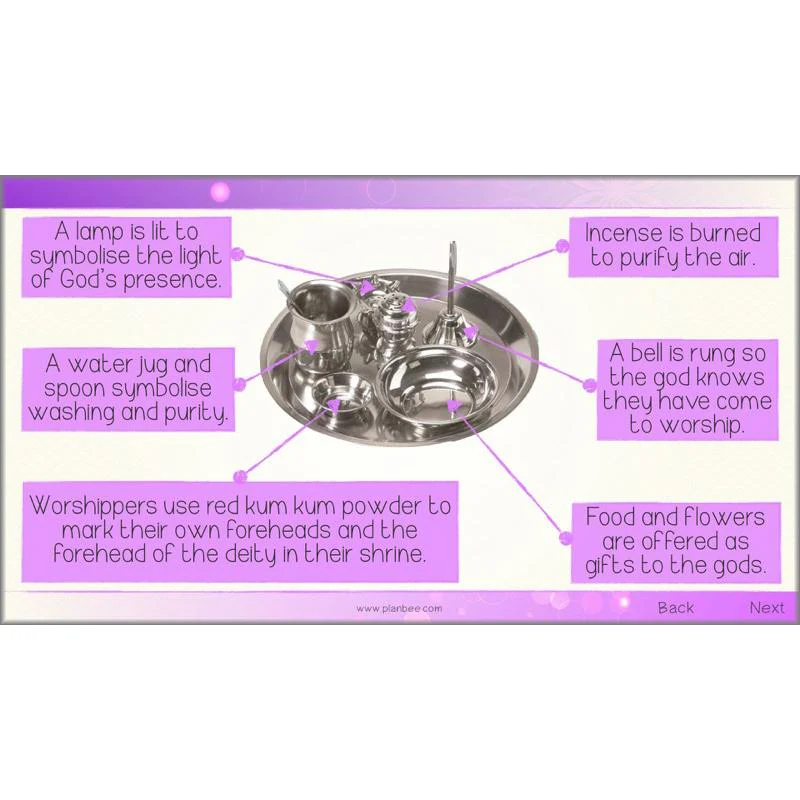
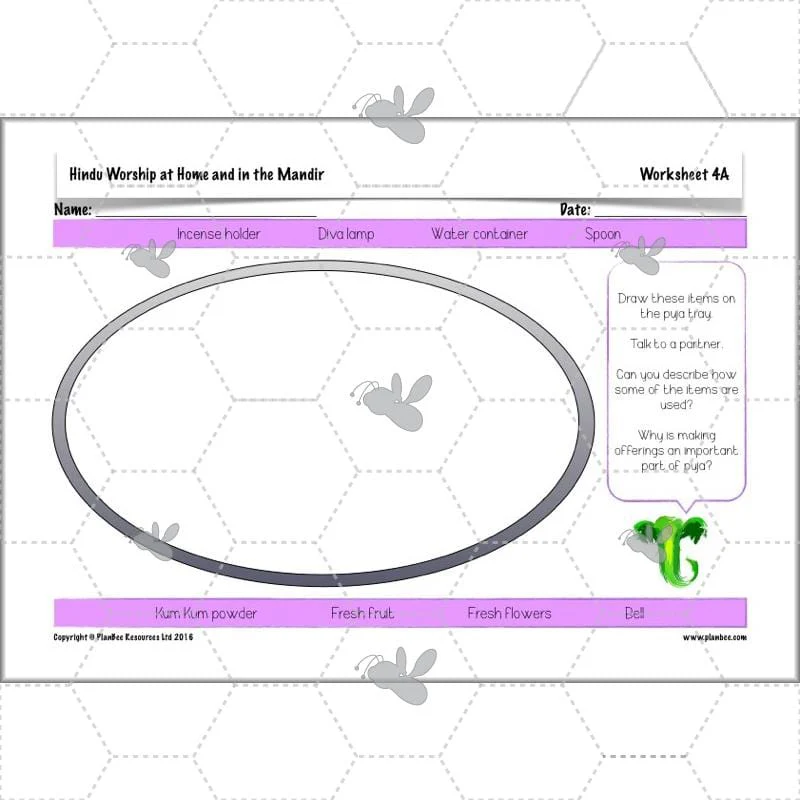
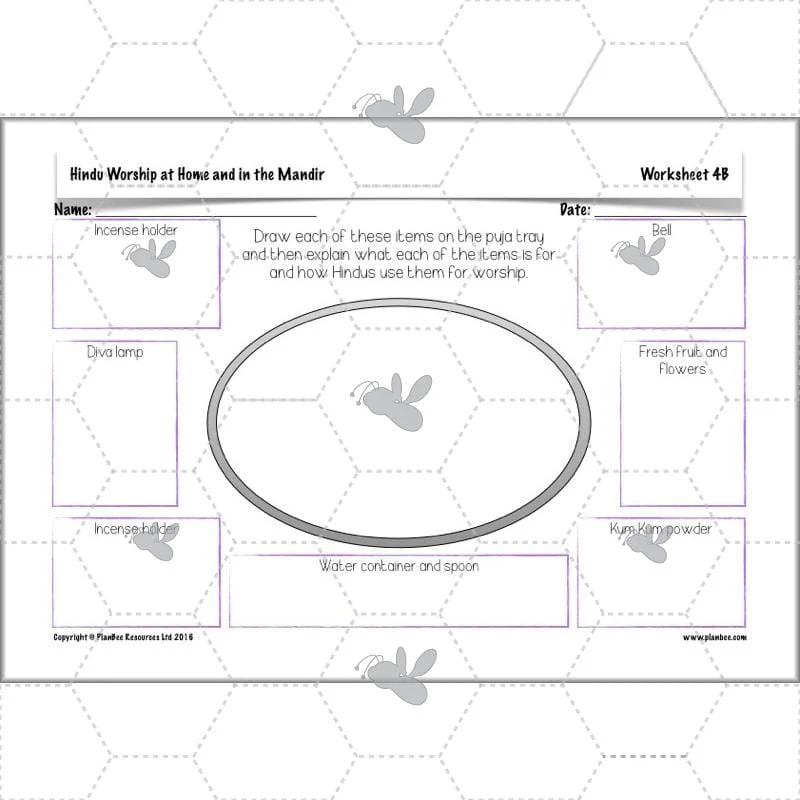
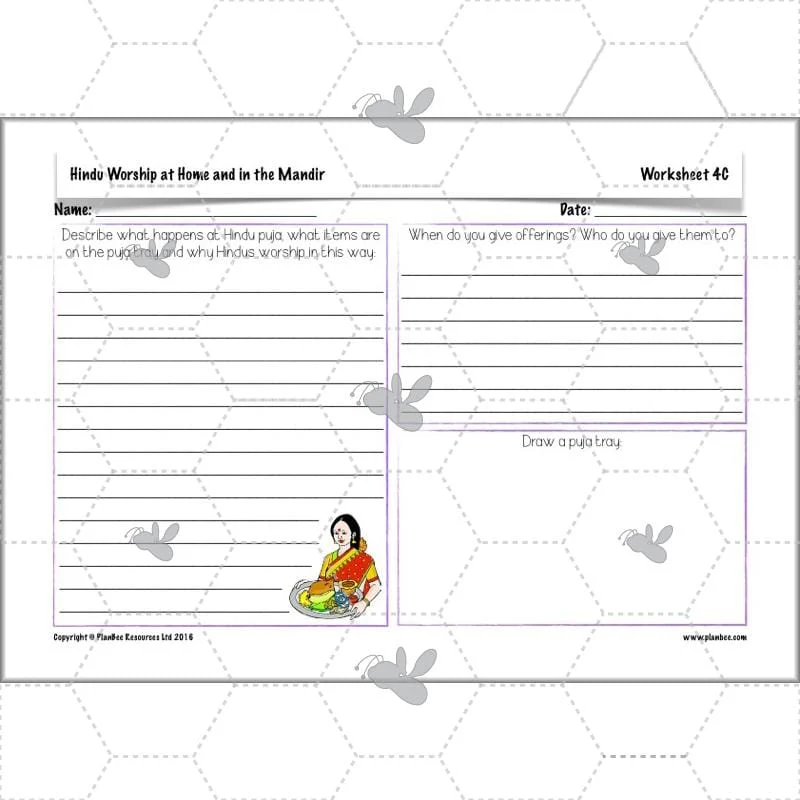
This lesson looks at offerings in Hinduism, particularly puja. It examines the items on the puja tray and gives your class the chance to discuss why each item is an important part of worship.
What's included:
- Lesson plan
- Slides
- Activity ideas
- Differentiated worksheets
At the Mandir
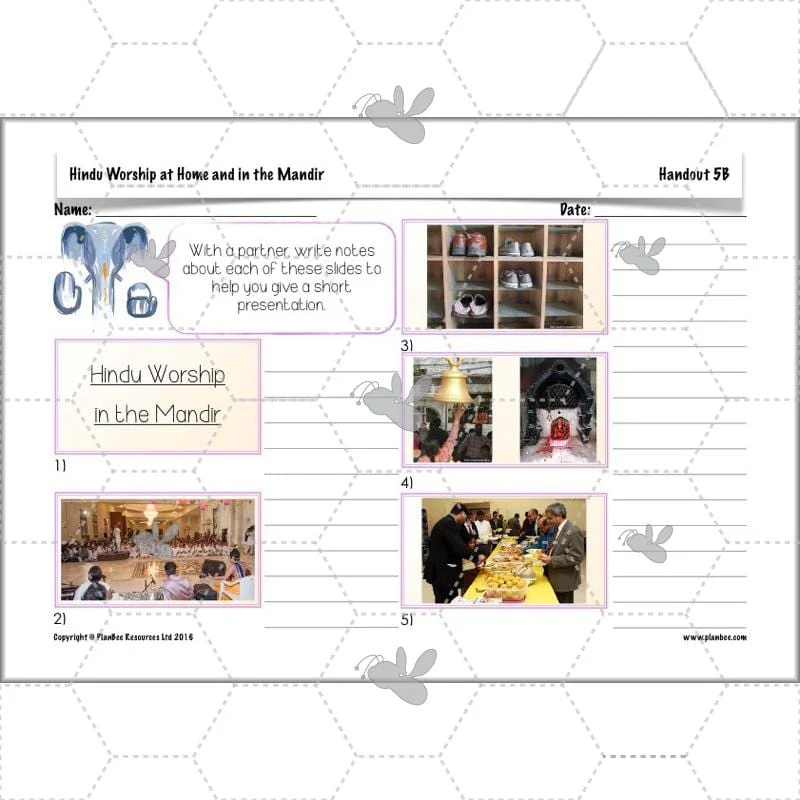
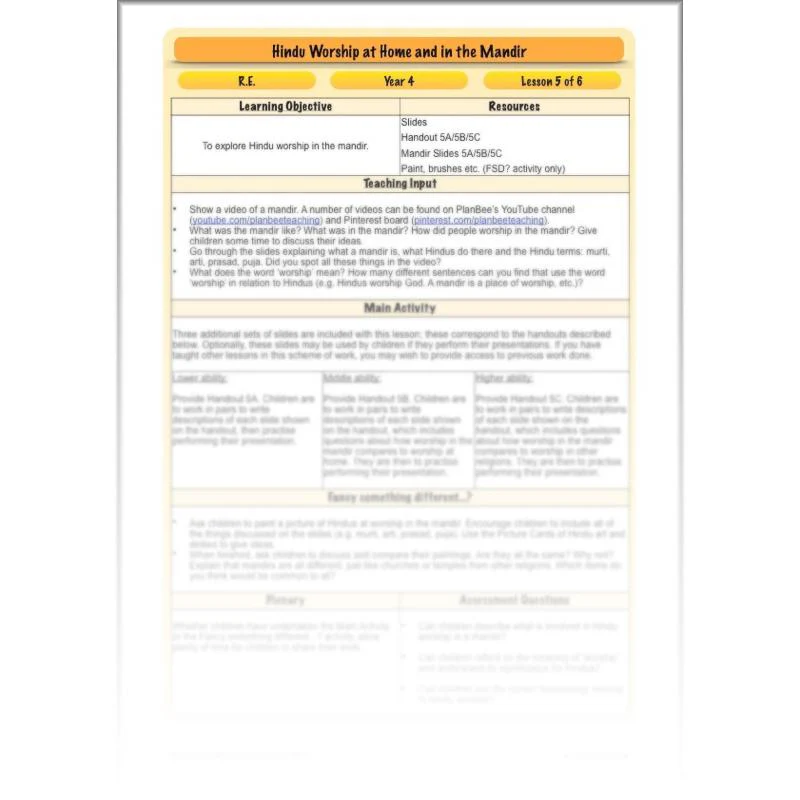
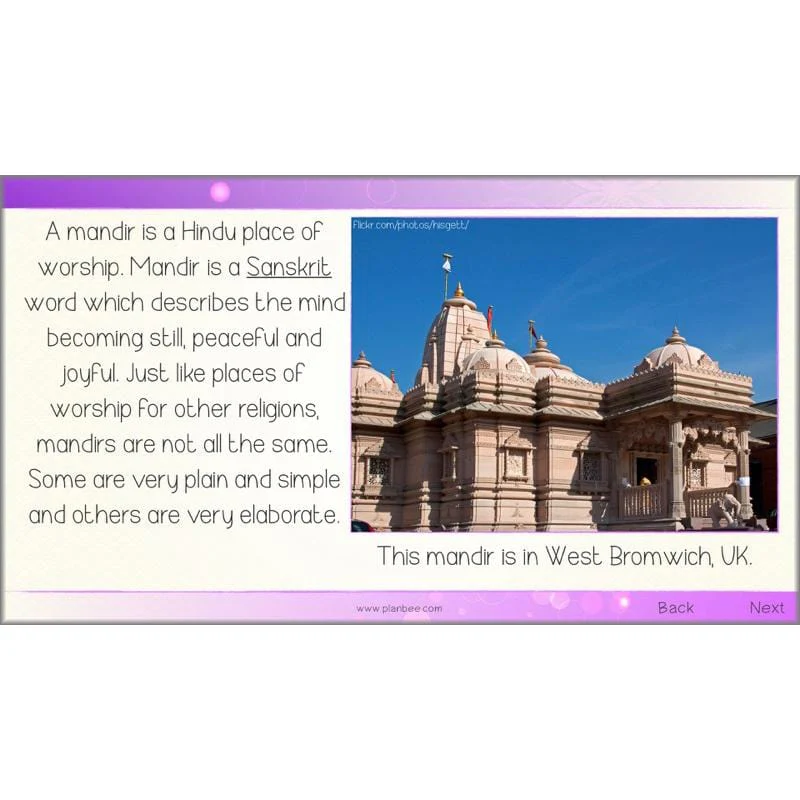
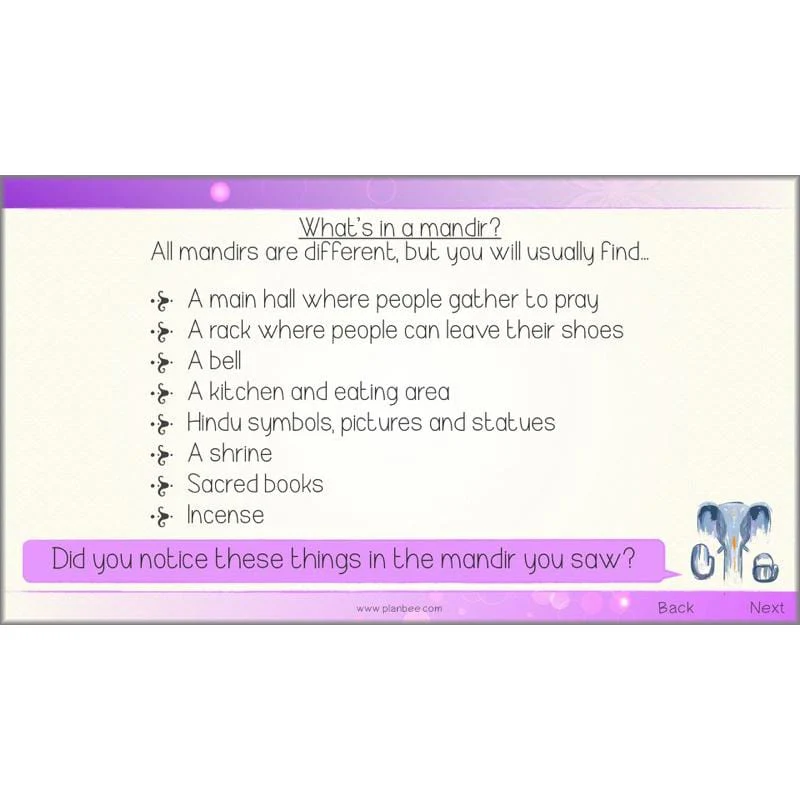
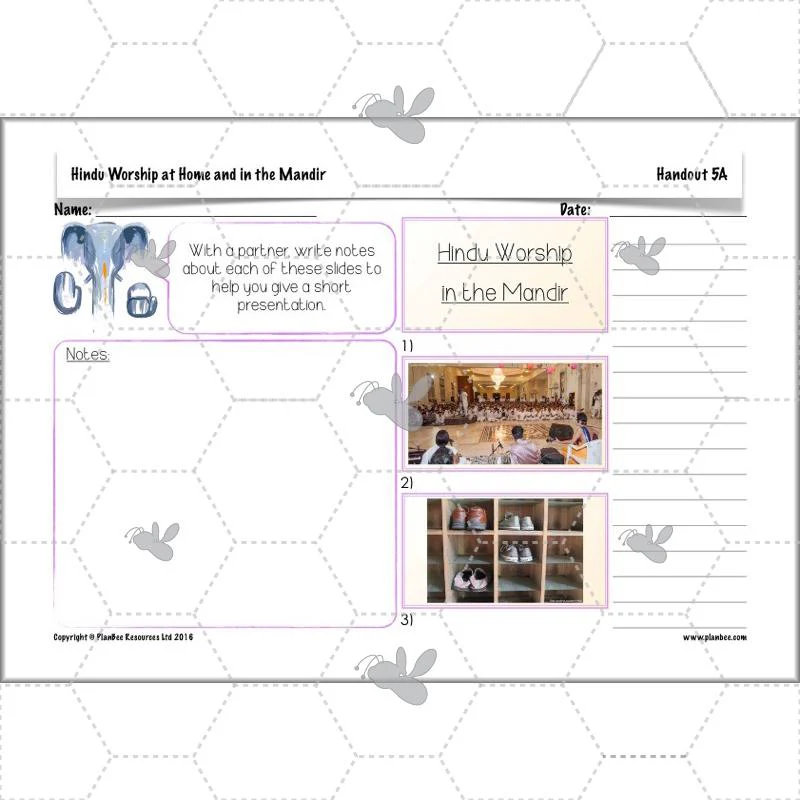
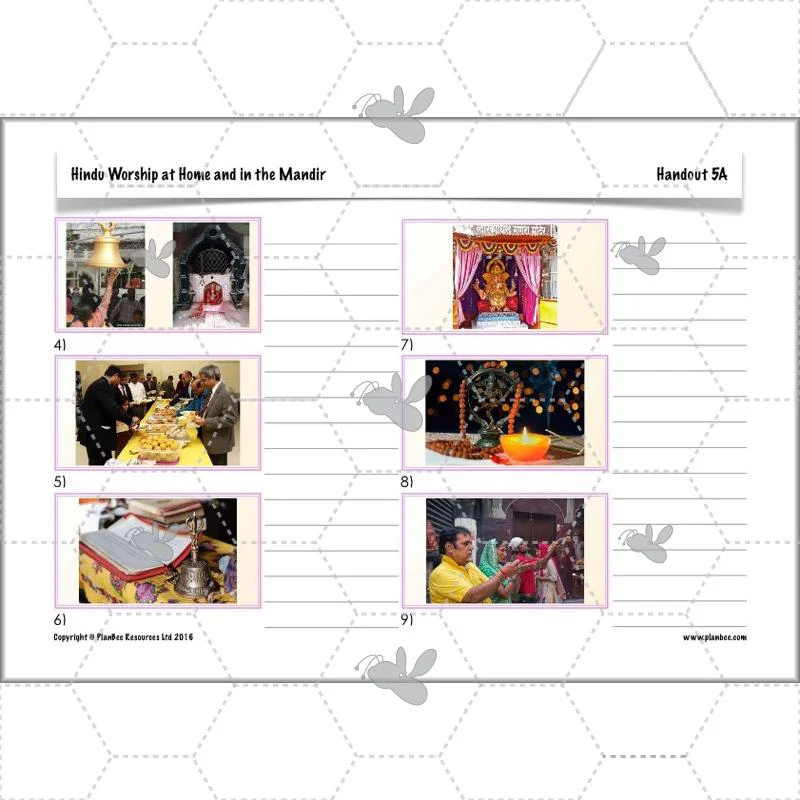
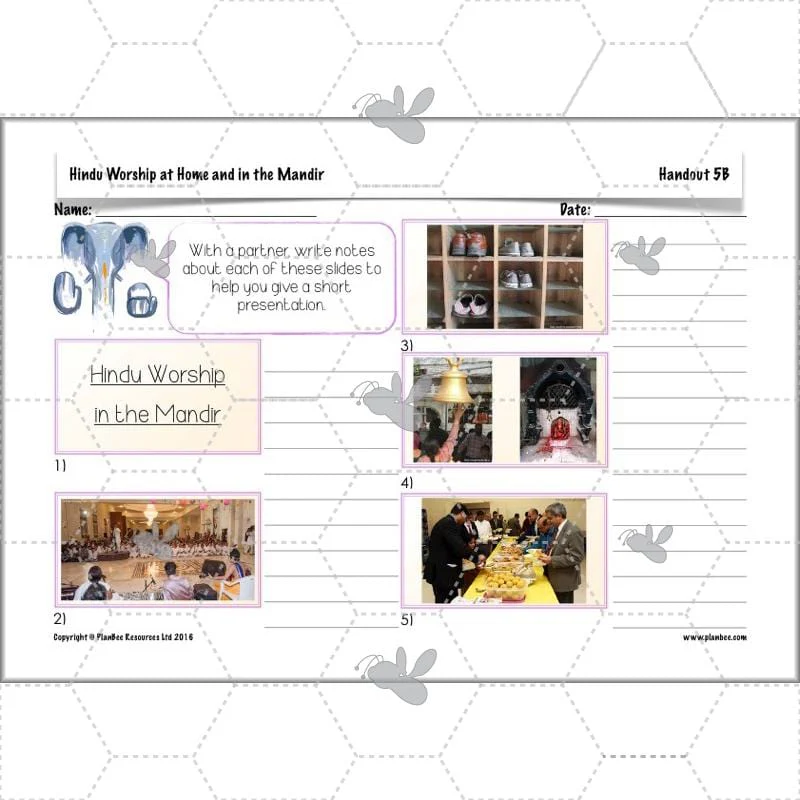
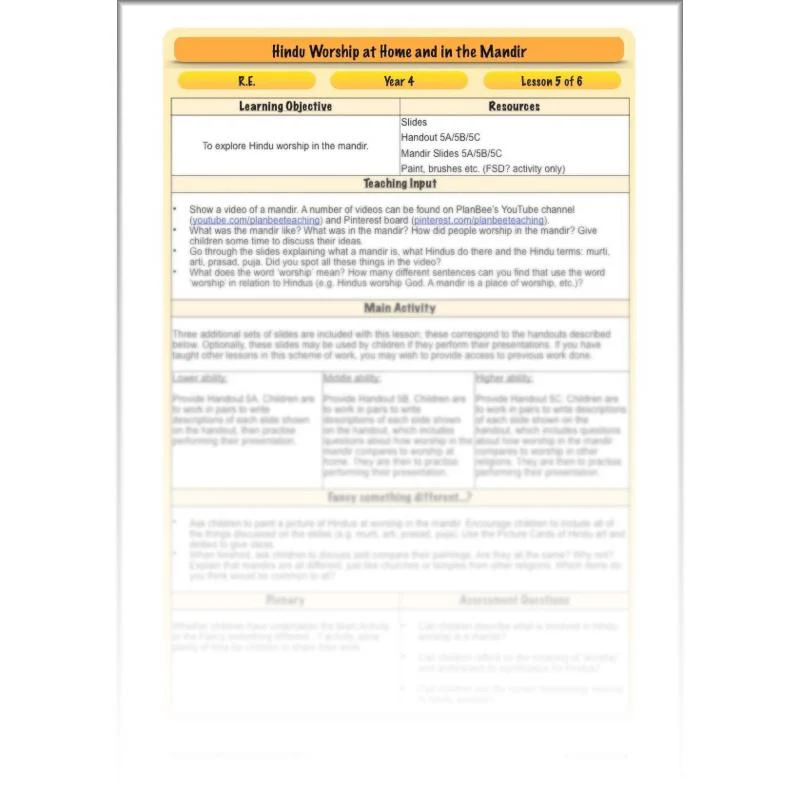
As well as praying at home, where do Hindus worship? Step into the mandir and explore how Hindus worship in these Hindu temples. This lesson introduces your class to some technical terms relating to Hindu worship at the mandir.
What's included:
- Lesson plan
- Slides
- Activity ideas
- Handout
- Mandir slides
A Summary
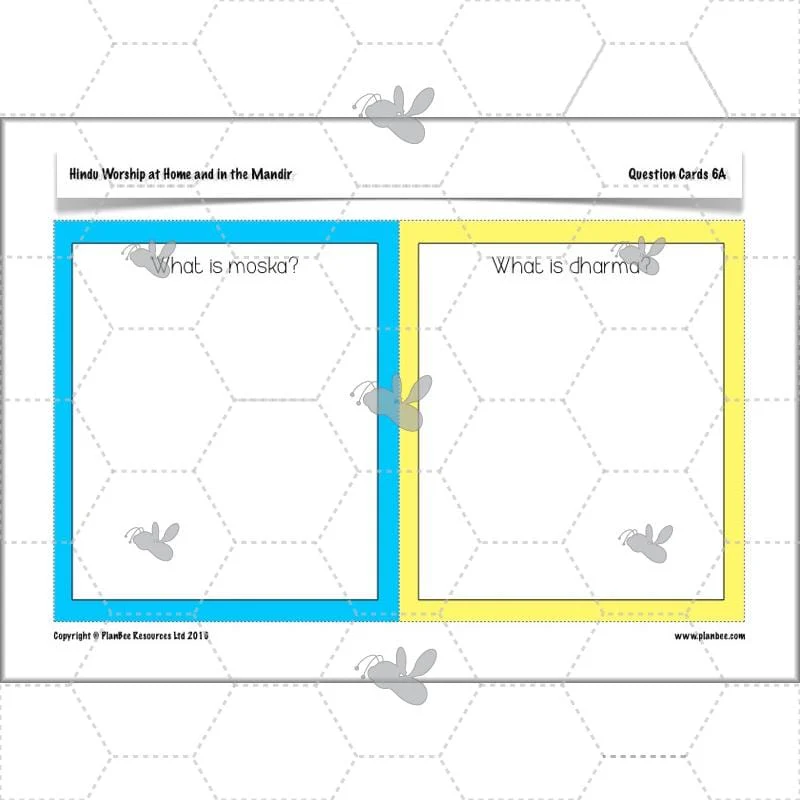
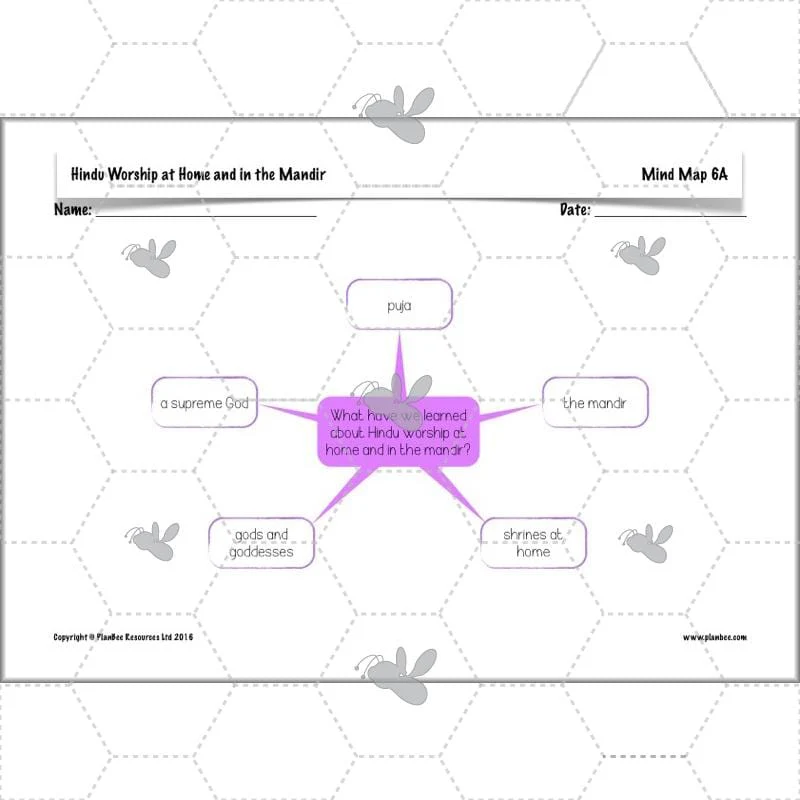
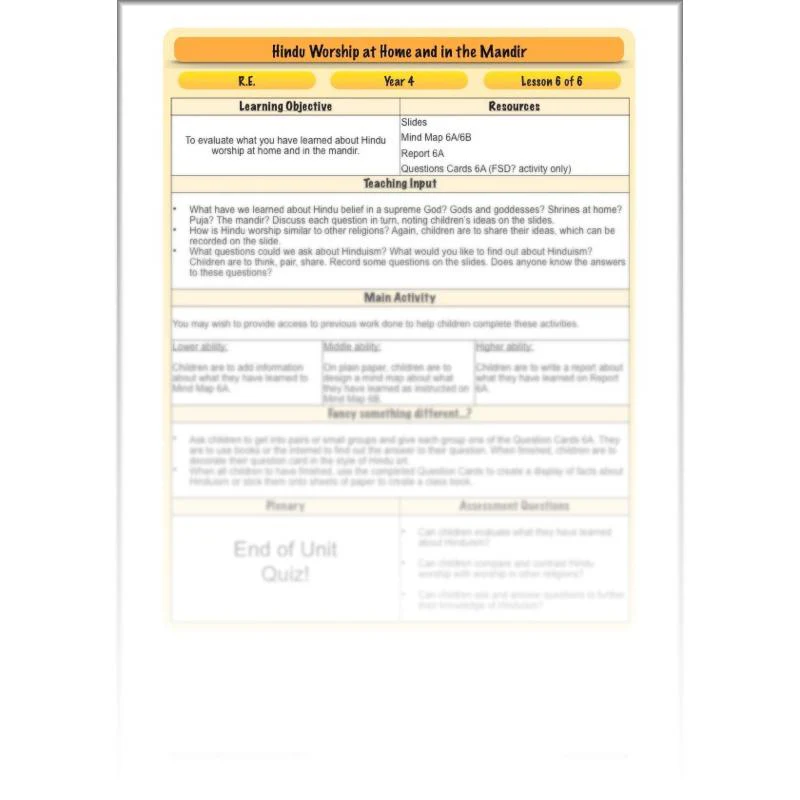
This final lesson gives your class the chance to reflect on everything they have learnt throughout these Hinduism worship lessons, and to find out the answers to any questions they still have about prayer, shrines and worship.
What's included:
- Lesson plan
- Slides
- Activity ideas
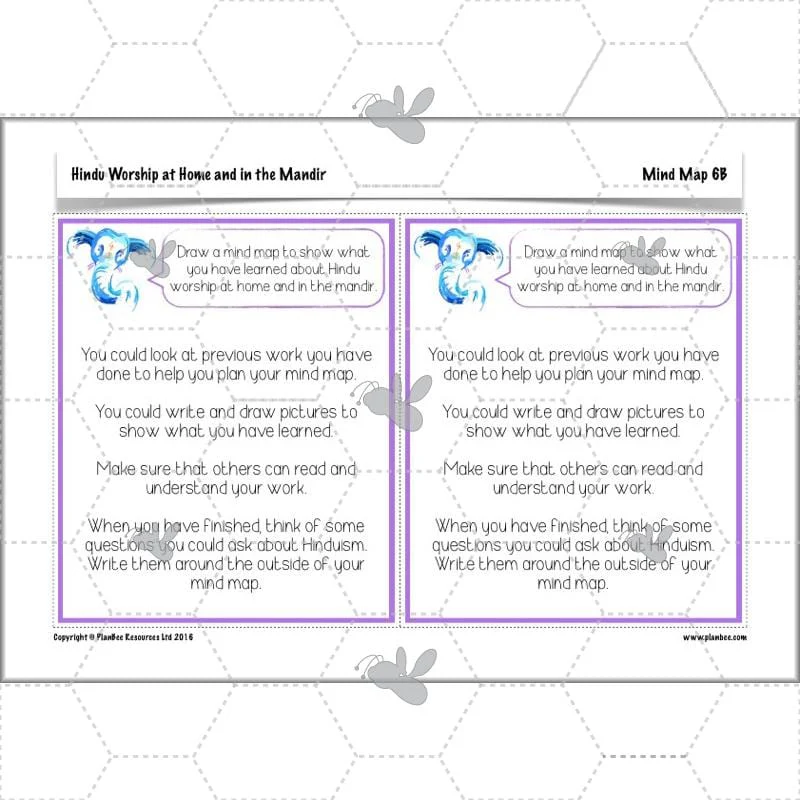
- Mind maps
- Report planner
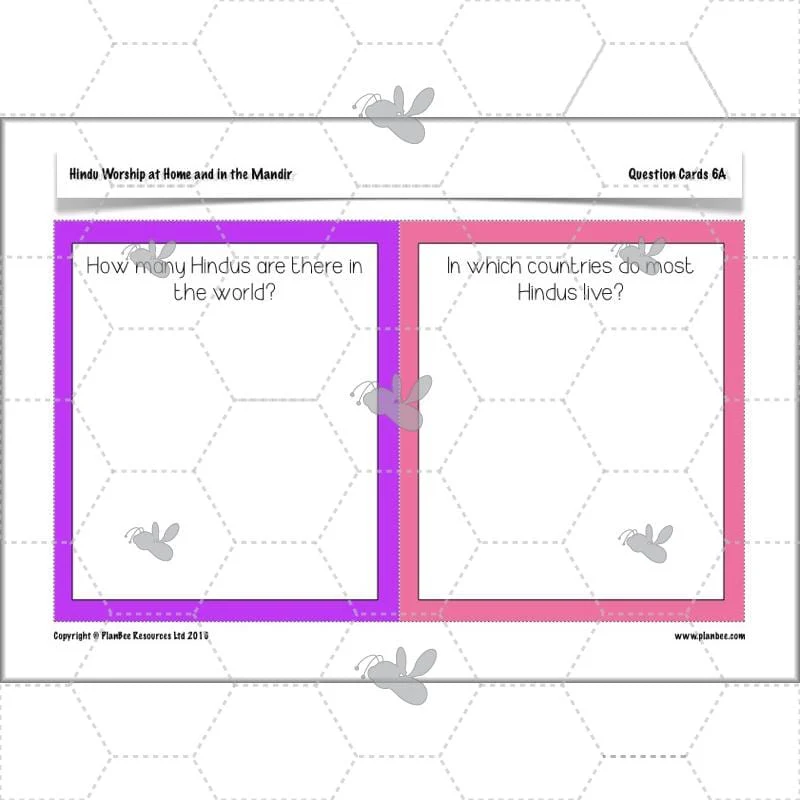
- Question Cards
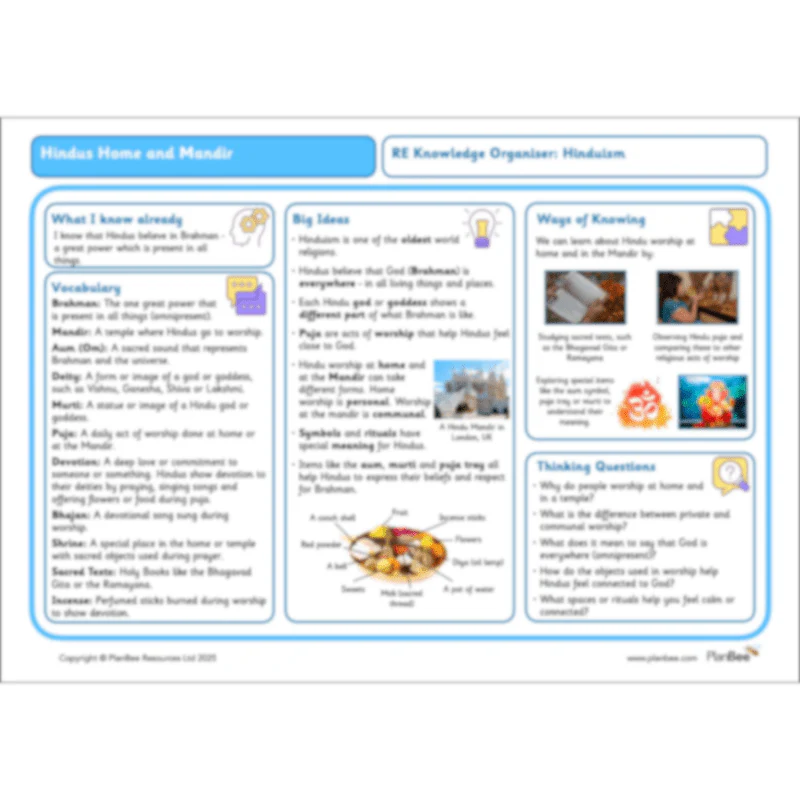
This Year 4 RE Knowledge Organiser has been created to complement the study of the Hinduism strand within our RE and worldviews resource offer. It is designed to support your children's understanding of key vocabulary and big ideas covered in this scheme of work, while signposting prior learning. Children are also encouraged to reflect on 'Ways of Knowing' about religion and worldviews, and to think deeply about the topic through the 'Thinking Questions' provided.
Original: $1.99
-50%$1.99
$1.00More Images

Hindus Home and Mandir
Where do Hindus worship? These enjoyable RE lessons for Year 4 Key Stage 2 children answer this question and many others about Hinduism and its practices. During the included activities, children will explore some central Hindu beliefs and discover ways in which they are reflected in Hindu worship both at home and in the mandir. Pupils will have the opportunity to learn about the aum symbol and what it represents, find out about some of the characteristics of Hindu gods and goddesses, explore shrines and how they are used in worship, and much more.
Each lesson includes a detailed Hinduism lesson plan with a choice of differentiated learning activities, a high-resolution slide show presentation and a range of printable resources including Hindu shrine worksheets and Hindu worship activity cards. There’s even a collection of images and videos on PlanBee’s YouTube and Pinterest boards which you can be used to support children’s learning and to study Hindu worship in even greater detail.
A Knowledge Organiser is available to support the learning in this scheme. It is included in the Complete Series download or can be purchased individually.
The Aum Symbol
This first lesson explains what the Hindu aum symbol is and how it symbolises central Hindu beliefs about God, using a story to help illustrate the ideas.
What's included:
- Lesson plan
- Slides
- Activity ideas
- Differentiated worksheets
- Aum symbols worksheet
Hindu Gods KS2
Learn all about a number of Hindu gods and goddesses and the aspects of Hindu belief they each represent. Using the detailed, differentiated resources included, children may then go on to prepare a presentation about what they have learned, or produce a collage using a range of materials.
What's included:
- Lesson plan
- Slides
- Activity ideas
- Fact Sheets
- Challenge Cards
Special Shrines
Everyone has a special place they like to go for peace and quiet. This lesson explains why a shrine is that place for Hindus and how shrines are used in worship.
What's included:
- Lesson plan
- Slides
- Activity ideas
- Differentiated worksheets
- Hindu shrine KS2 worksheet
Puja Tray KS2
This lesson looks at offerings in Hinduism, particularly puja. It examines the items on the puja tray and gives your class the chance to discuss why each item is an important part of worship.
What's included:
- Lesson plan
- Slides
- Activity ideas
- Differentiated worksheets
At the Mandir
As well as praying at home, where do Hindus worship? Step into the mandir and explore how Hindus worship in these Hindu temples. This lesson introduces your class to some technical terms relating to Hindu worship at the mandir.
What's included:
- Lesson plan
- Slides
- Activity ideas
- Handout
- Mandir slides
A Summary
This final lesson gives your class the chance to reflect on everything they have learnt throughout these Hinduism worship lessons, and to find out the answers to any questions they still have about prayer, shrines and worship.
What's included:
- Lesson plan
- Slides
- Activity ideas
- Mind maps
- Report planner
- Question Cards
This Year 4 RE Knowledge Organiser has been created to complement the study of the Hinduism strand within our RE and worldviews resource offer. It is designed to support your children's understanding of key vocabulary and big ideas covered in this scheme of work, while signposting prior learning. Children are also encouraged to reflect on 'Ways of Knowing' about religion and worldviews, and to think deeply about the topic through the 'Thinking Questions' provided.
Product Information
Product Information
Shipping & Returns
Shipping & Returns
Description
Where do Hindus worship? These enjoyable RE lessons for Year 4 Key Stage 2 children answer this question and many others about Hinduism and its practices. During the included activities, children will explore some central Hindu beliefs and discover ways in which they are reflected in Hindu worship both at home and in the mandir. Pupils will have the opportunity to learn about the aum symbol and what it represents, find out about some of the characteristics of Hindu gods and goddesses, explore shrines and how they are used in worship, and much more.
Each lesson includes a detailed Hinduism lesson plan with a choice of differentiated learning activities, a high-resolution slide show presentation and a range of printable resources including Hindu shrine worksheets and Hindu worship activity cards. There’s even a collection of images and videos on PlanBee’s YouTube and Pinterest boards which you can be used to support children’s learning and to study Hindu worship in even greater detail.
A Knowledge Organiser is available to support the learning in this scheme. It is included in the Complete Series download or can be purchased individually.
The Aum Symbol
This first lesson explains what the Hindu aum symbol is and how it symbolises central Hindu beliefs about God, using a story to help illustrate the ideas.
What's included:
- Lesson plan
- Slides
- Activity ideas
- Differentiated worksheets
- Aum symbols worksheet
Hindu Gods KS2
Learn all about a number of Hindu gods and goddesses and the aspects of Hindu belief they each represent. Using the detailed, differentiated resources included, children may then go on to prepare a presentation about what they have learned, or produce a collage using a range of materials.
What's included:
- Lesson plan
- Slides
- Activity ideas
- Fact Sheets
- Challenge Cards
Special Shrines
Everyone has a special place they like to go for peace and quiet. This lesson explains why a shrine is that place for Hindus and how shrines are used in worship.
What's included:
- Lesson plan
- Slides
- Activity ideas
- Differentiated worksheets
- Hindu shrine KS2 worksheet
Puja Tray KS2
This lesson looks at offerings in Hinduism, particularly puja. It examines the items on the puja tray and gives your class the chance to discuss why each item is an important part of worship.
What's included:
- Lesson plan
- Slides
- Activity ideas
- Differentiated worksheets
At the Mandir
As well as praying at home, where do Hindus worship? Step into the mandir and explore how Hindus worship in these Hindu temples. This lesson introduces your class to some technical terms relating to Hindu worship at the mandir.
What's included:
- Lesson plan
- Slides
- Activity ideas
- Handout
- Mandir slides
A Summary
This final lesson gives your class the chance to reflect on everything they have learnt throughout these Hinduism worship lessons, and to find out the answers to any questions they still have about prayer, shrines and worship.
What's included:
- Lesson plan
- Slides
- Activity ideas
- Mind maps
- Report planner
- Question Cards
This Year 4 RE Knowledge Organiser has been created to complement the study of the Hinduism strand within our RE and worldviews resource offer. It is designed to support your children's understanding of key vocabulary and big ideas covered in this scheme of work, while signposting prior learning. Children are also encouraged to reflect on 'Ways of Knowing' about religion and worldviews, and to think deeply about the topic through the 'Thinking Questions' provided.