Partition Addition
Not only does this KS2 'Partition Addition' scheme of work teach your Year 3 class how to partition two- and three-digit numbers, but it also teaches them to use partitioning as an easy way to solve addition problems. They will learn how to use the decomposition and expanded methods to solve addition problems in a variety of fun and engaging way, using the inverse to check the accuracy of their work.
With lesson plans, informative slides, differentiated worksheets and many other useful resources, these 'Partition Addition' lessons contain everything you need to teach your class about partitioning and addition and how they two can be linked.
Using Partitioning
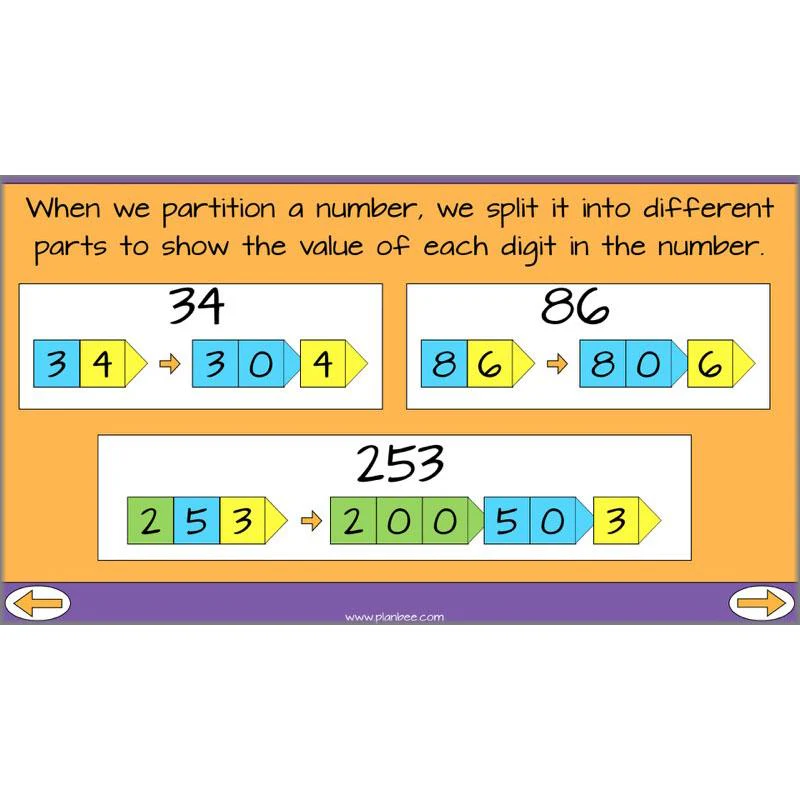
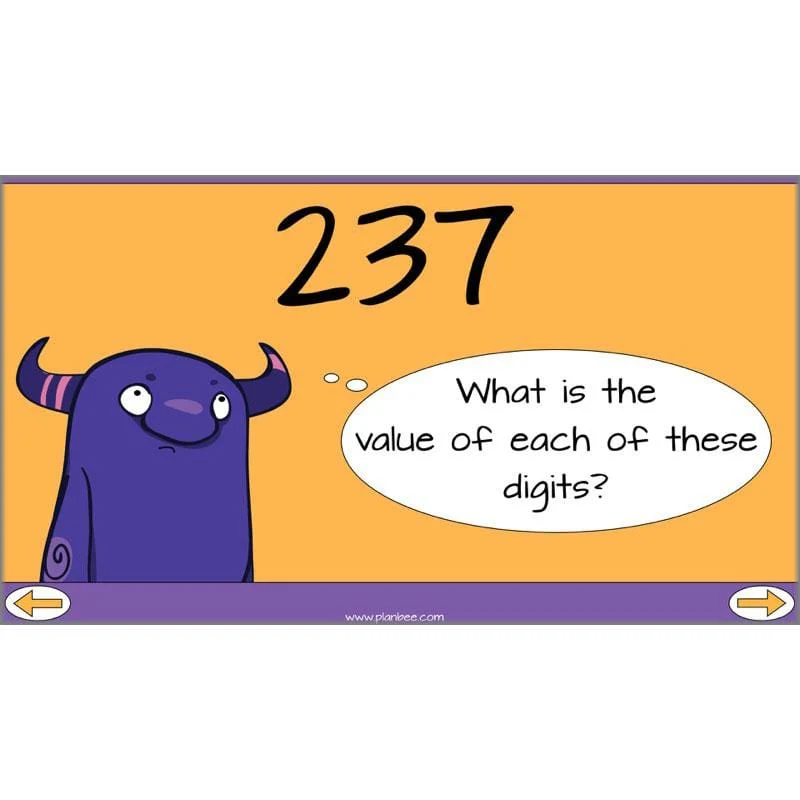
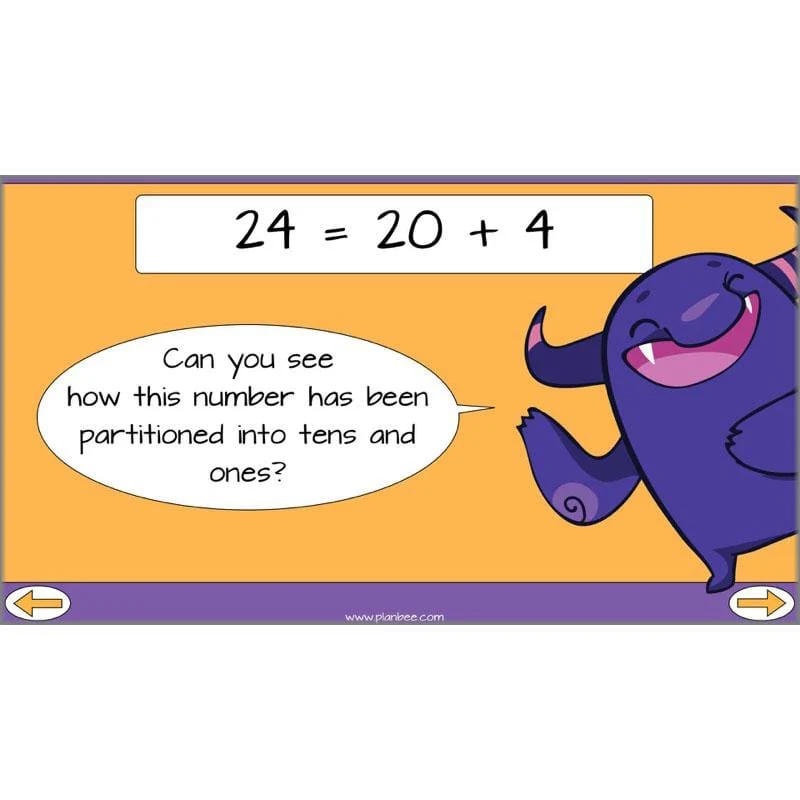
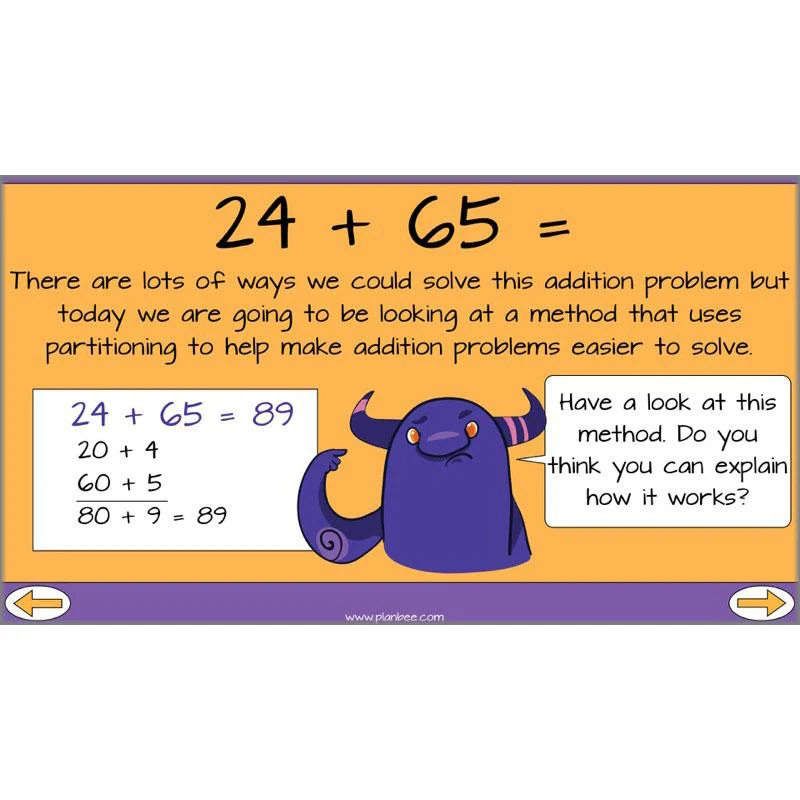
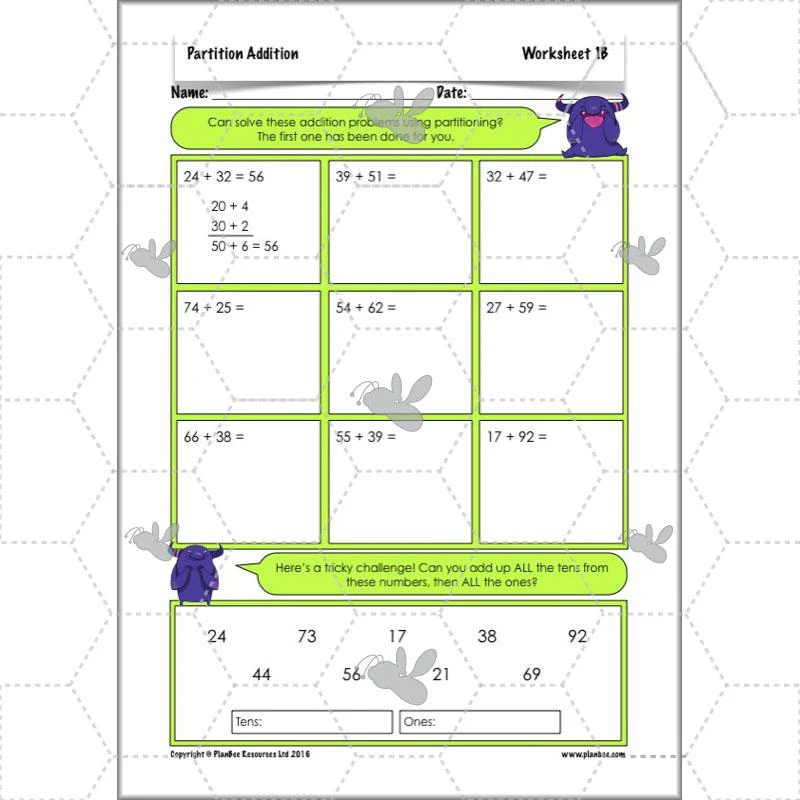
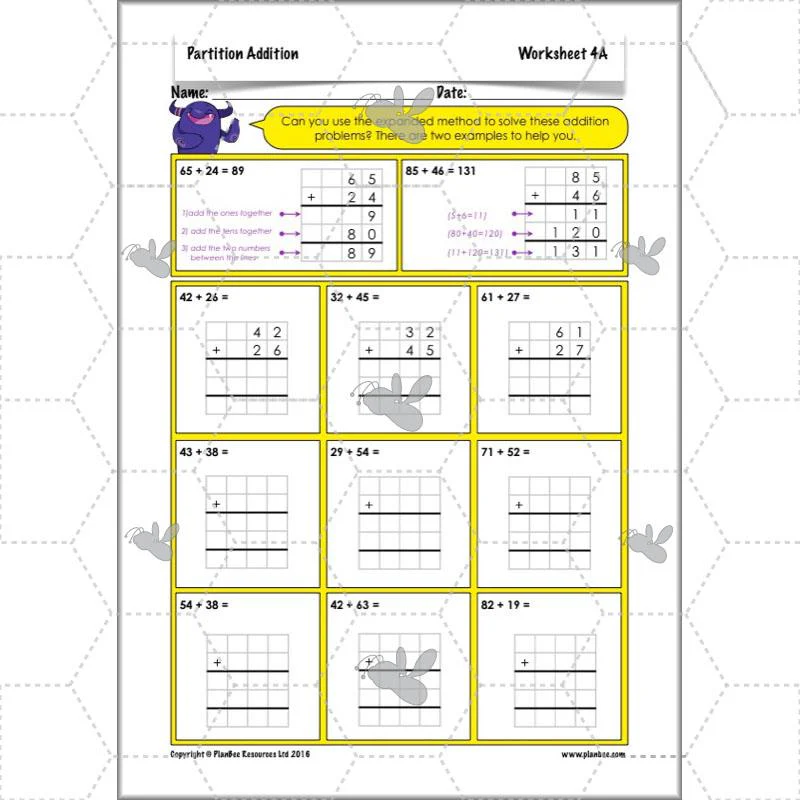
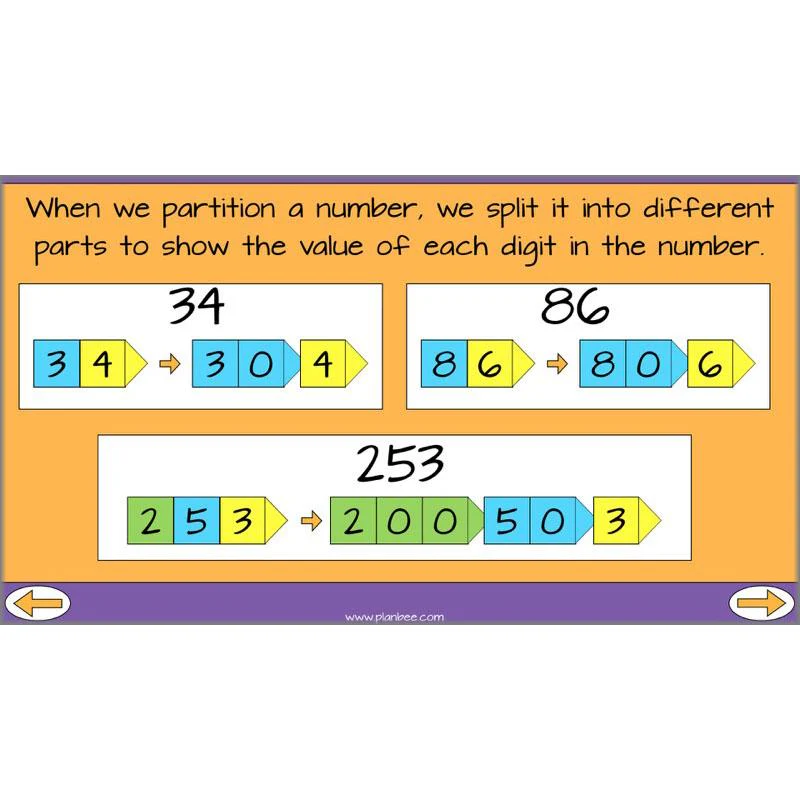
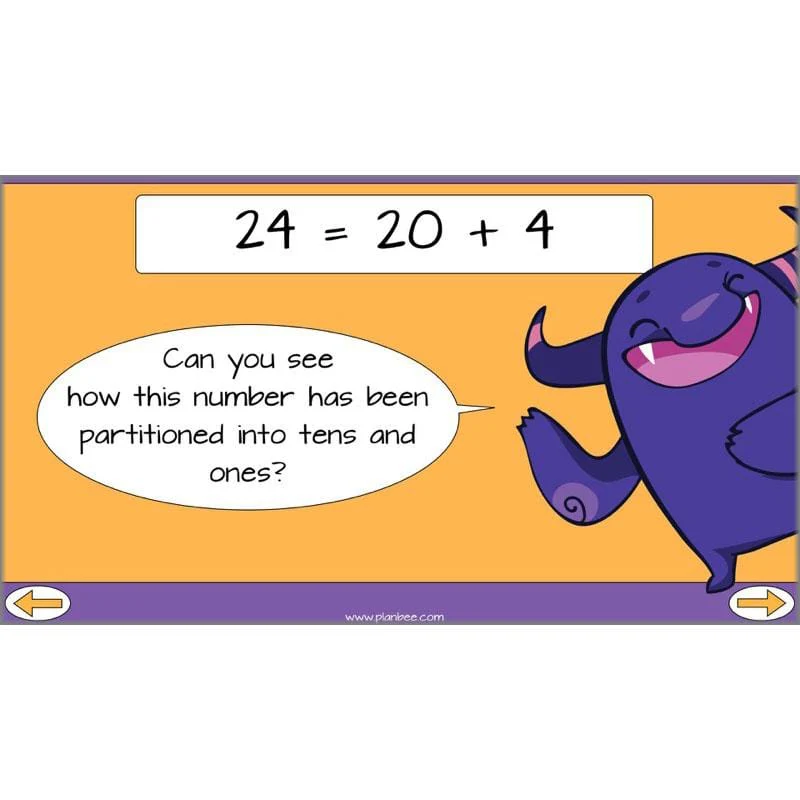
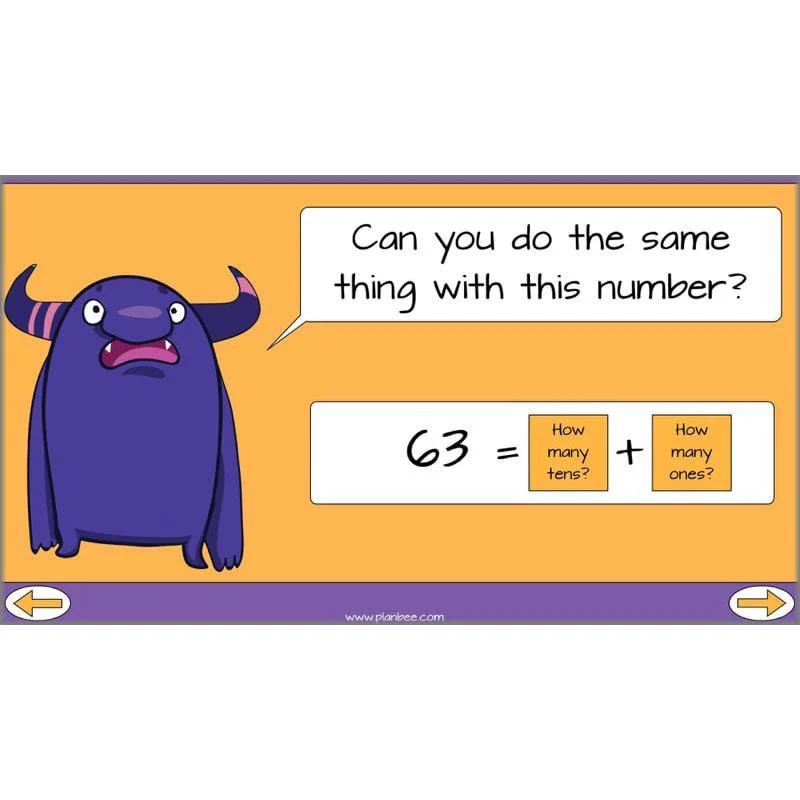
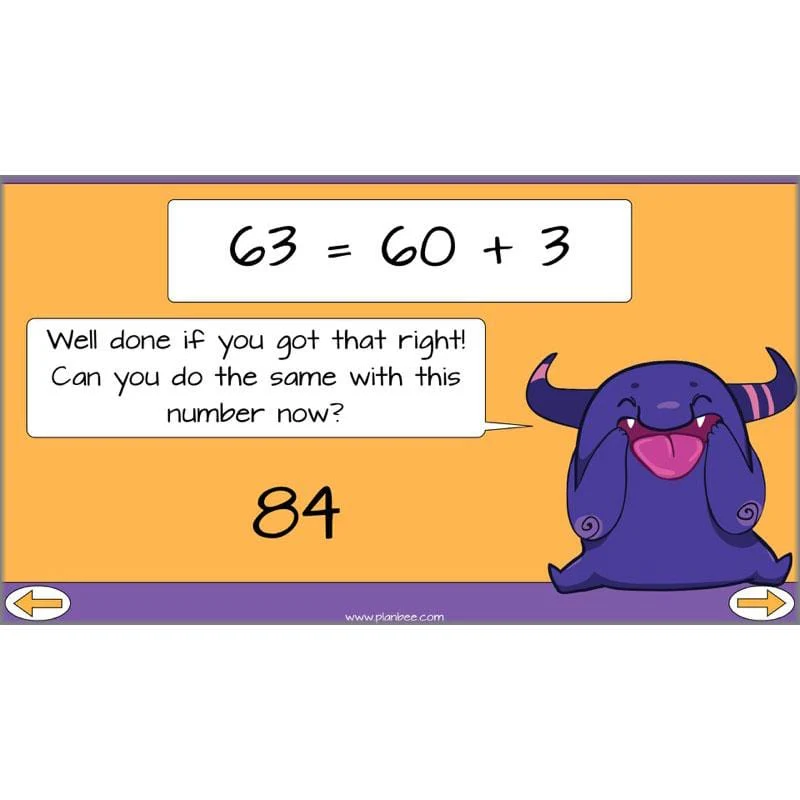
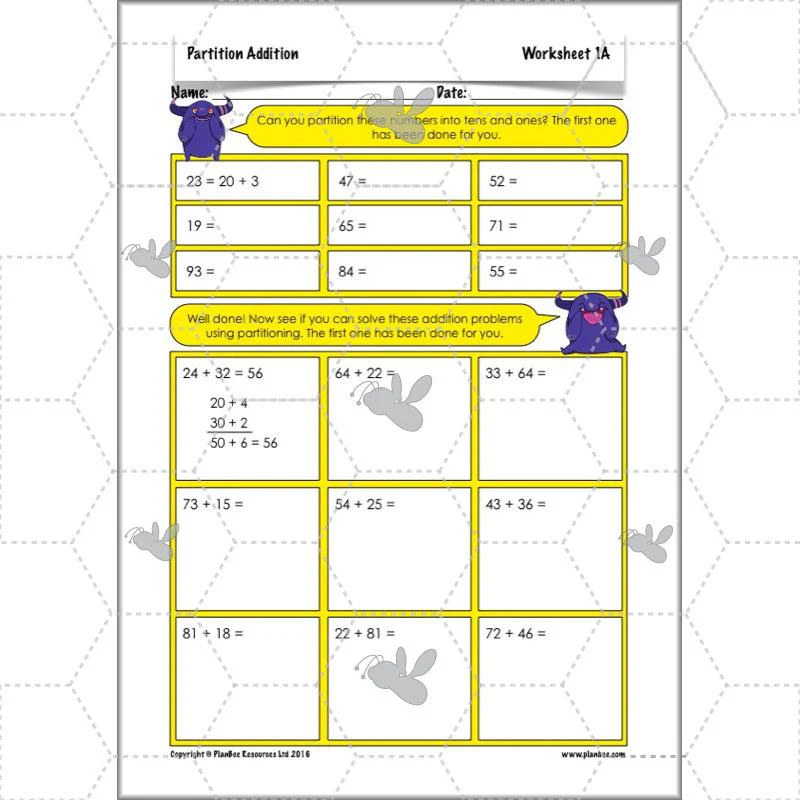
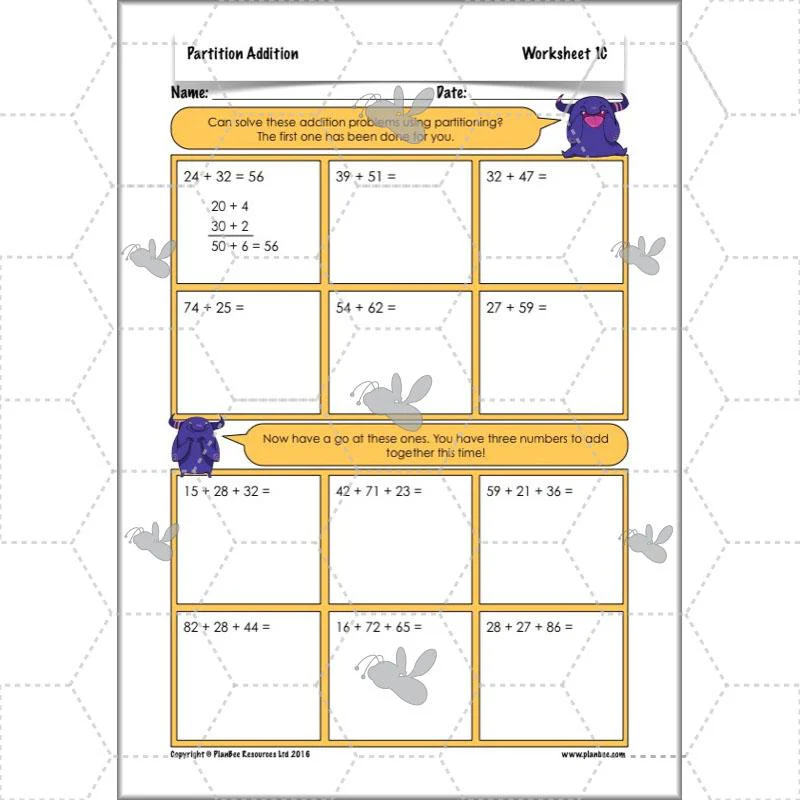
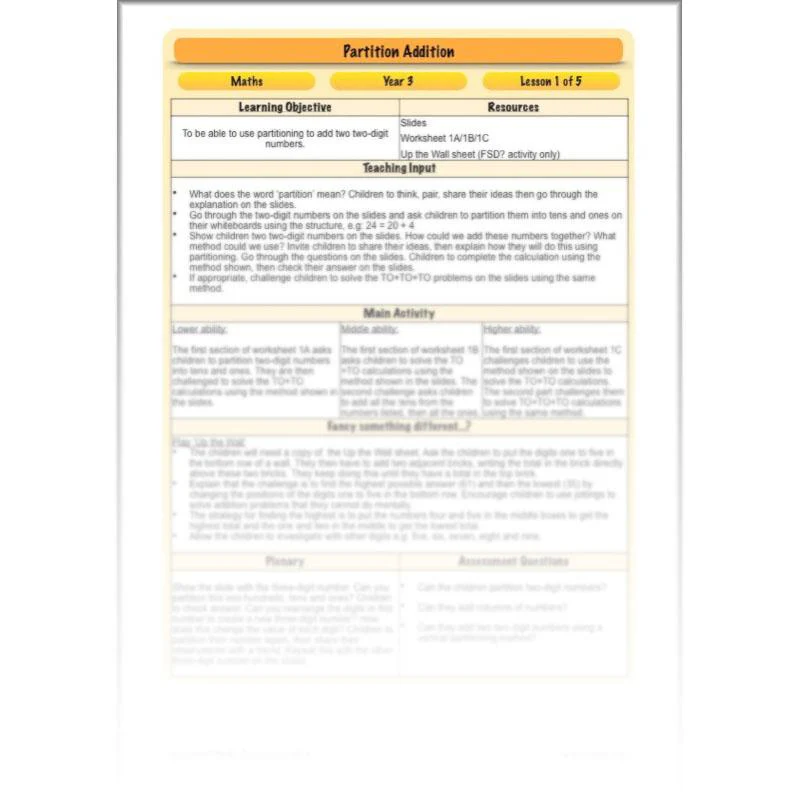
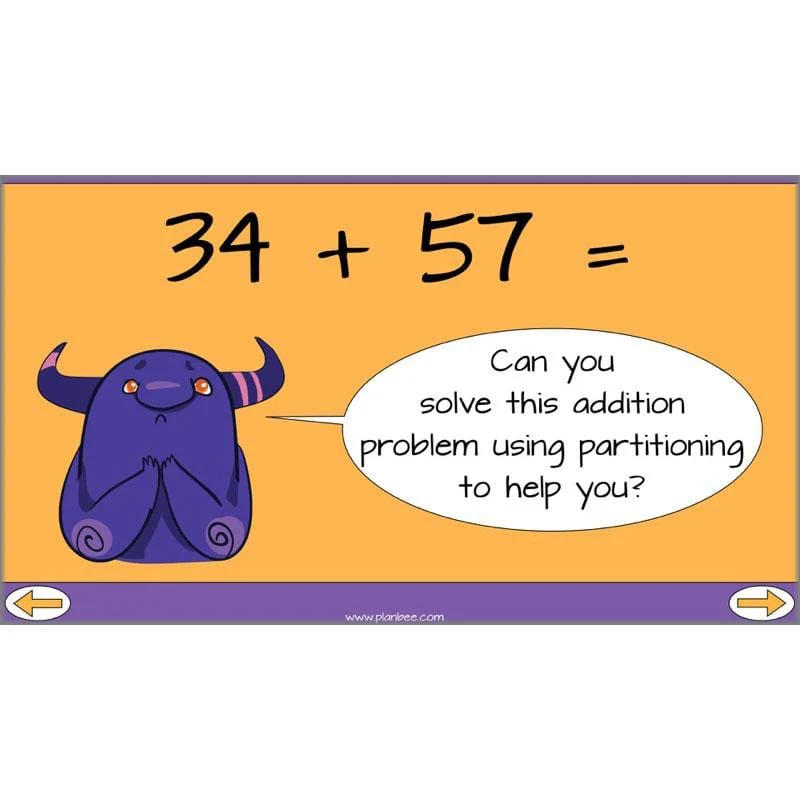
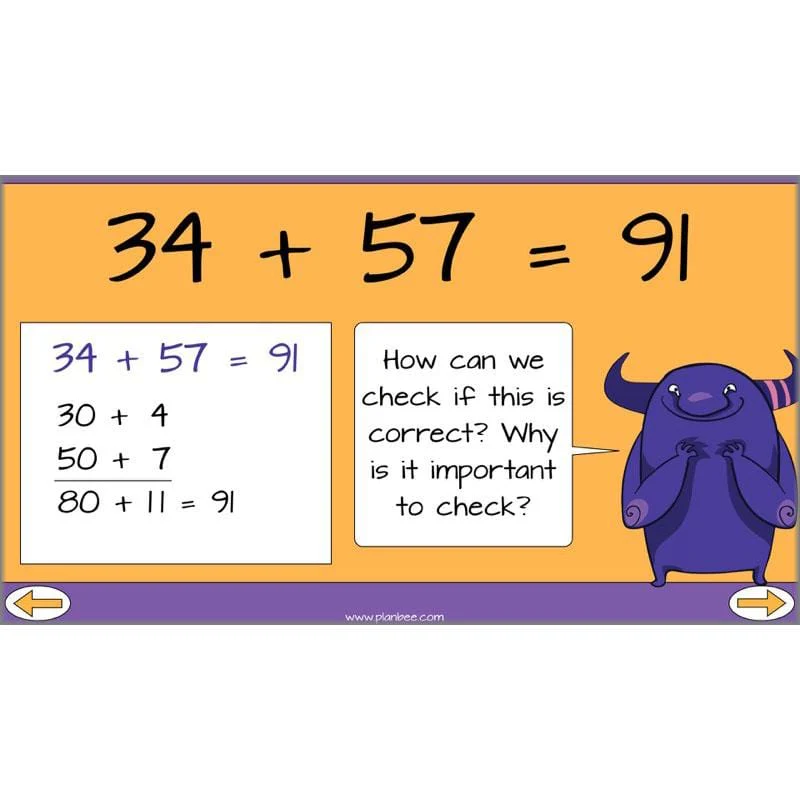
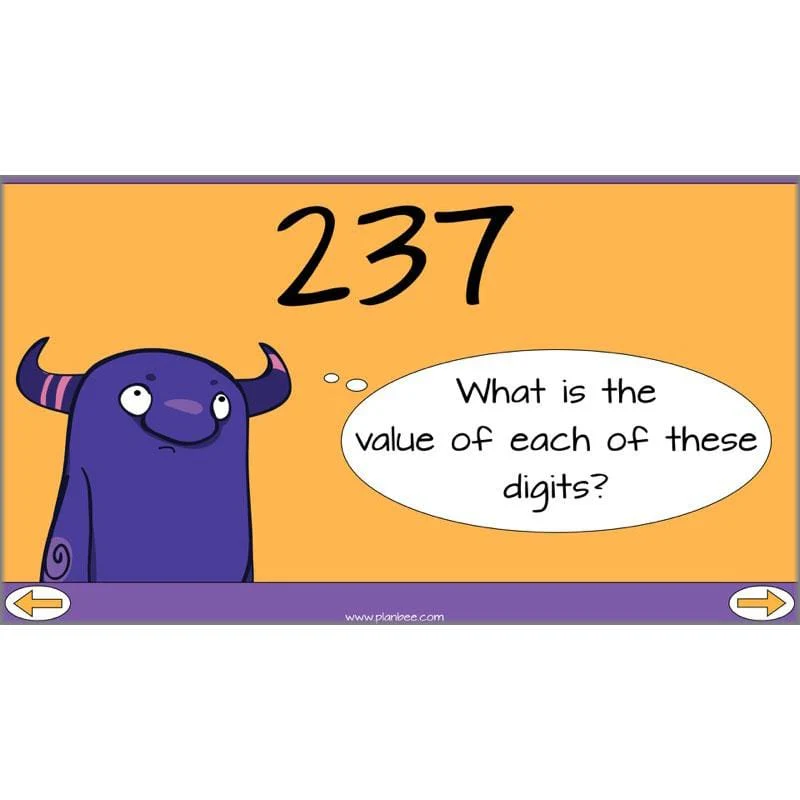
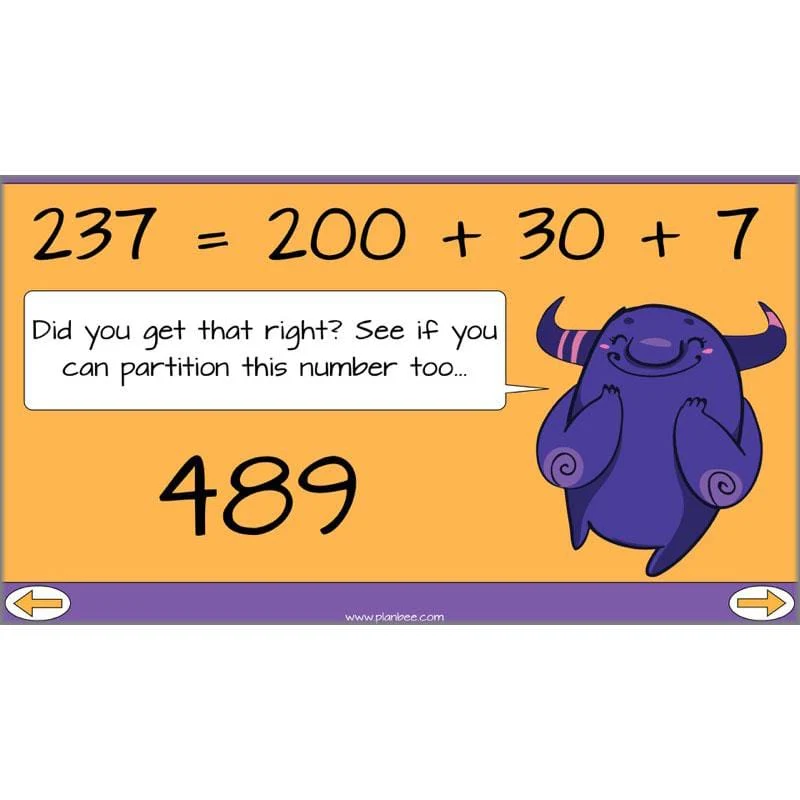
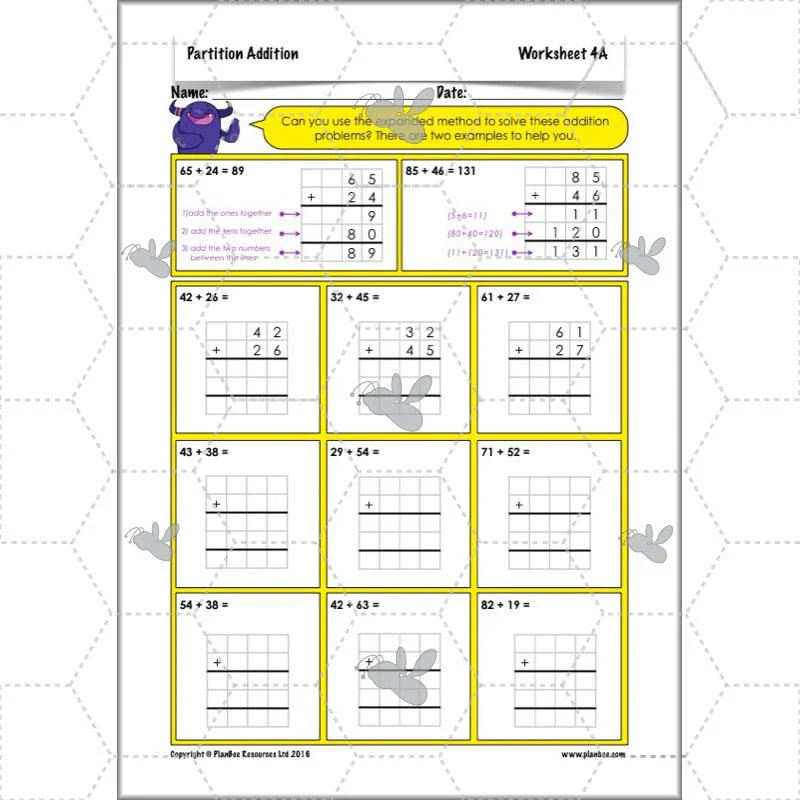
The first lesson in this series starts of by recapping how to partition a number into tens and ones, before moving on to how partitioning can help when adding two or three two-digits numbers together. The slides provide clear examples of how to do this to give your class plenty of practise, before putting this into action for themselves during the main activities.
What's included:
- Lesson plan
- Slides
- Activity ideas
- Differentiated worksheets
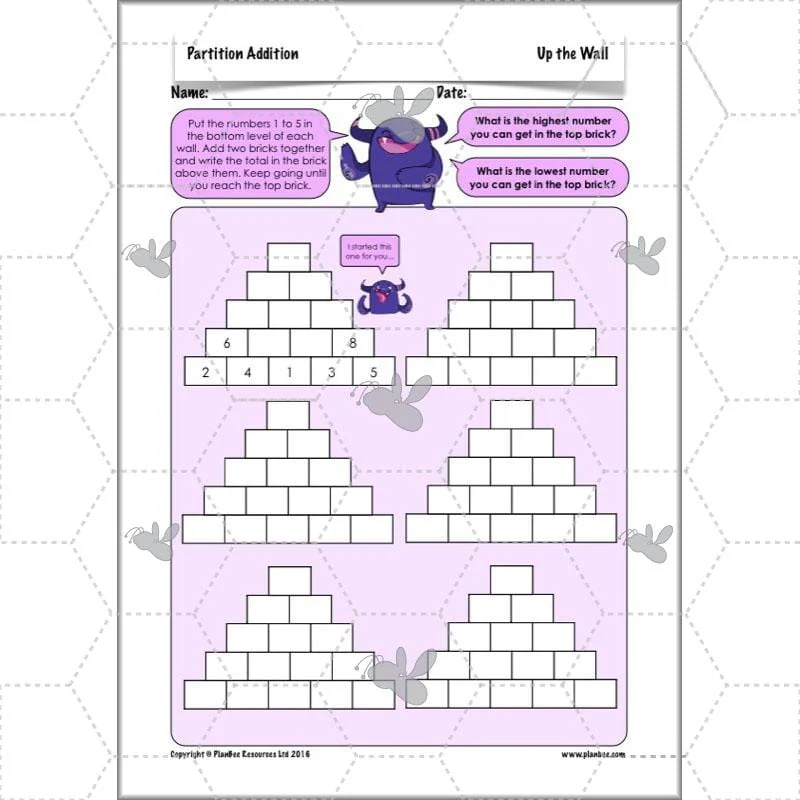
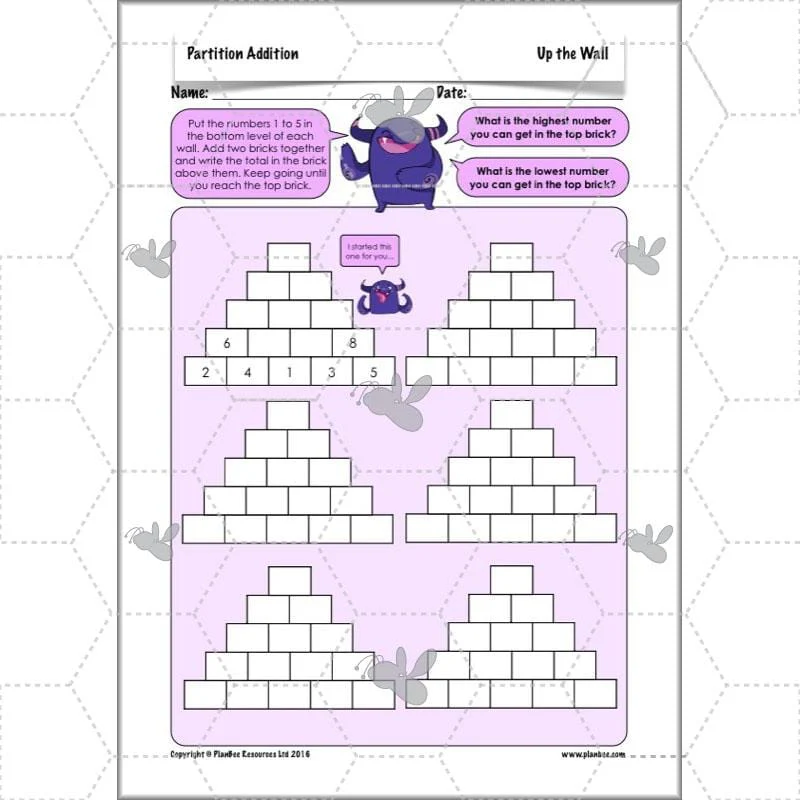
- Up the Wall' sheet
Checking with the inverse
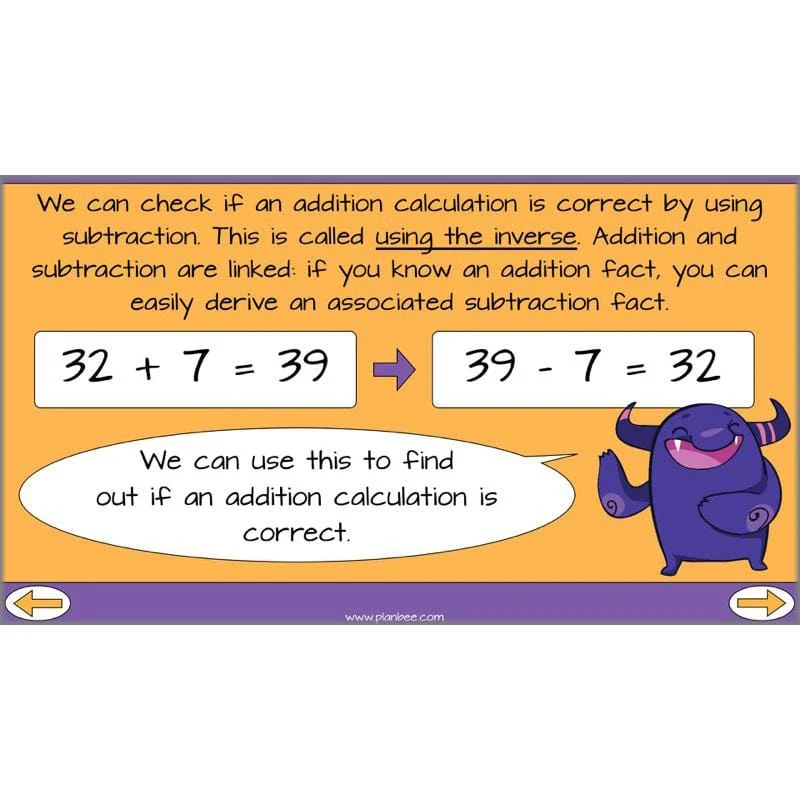
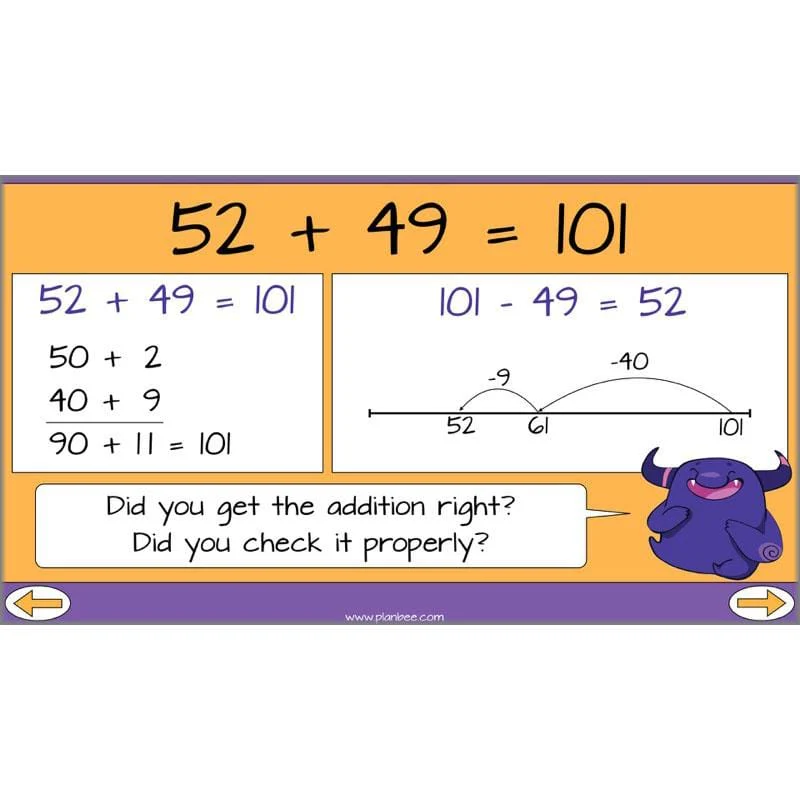
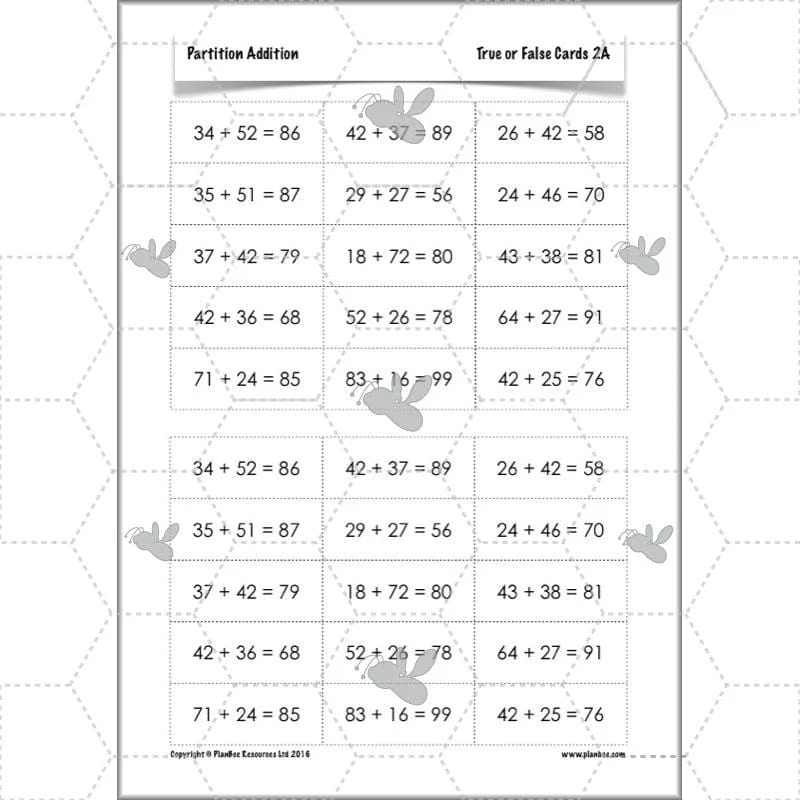
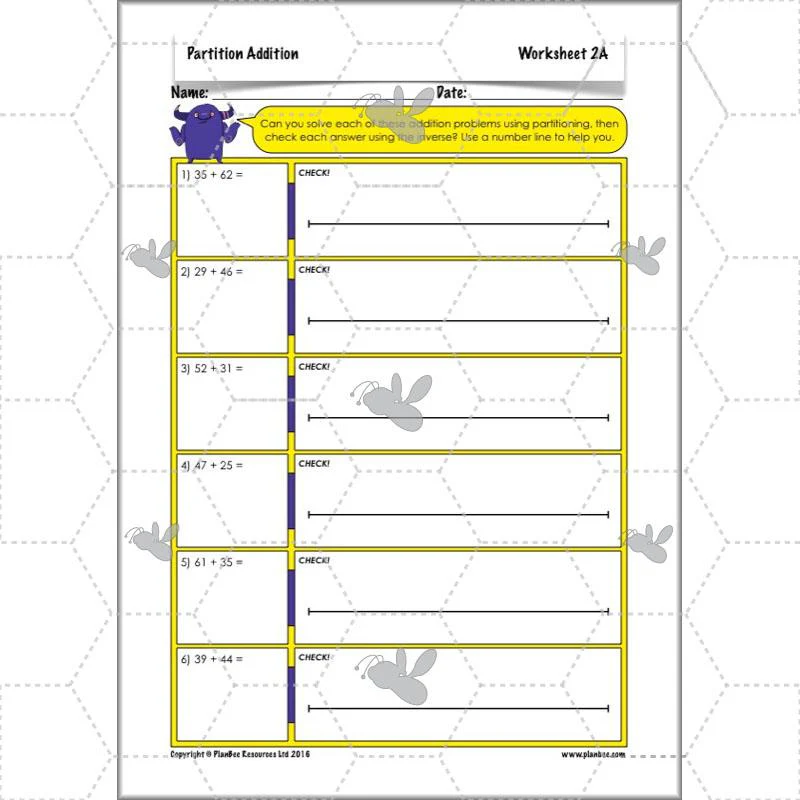
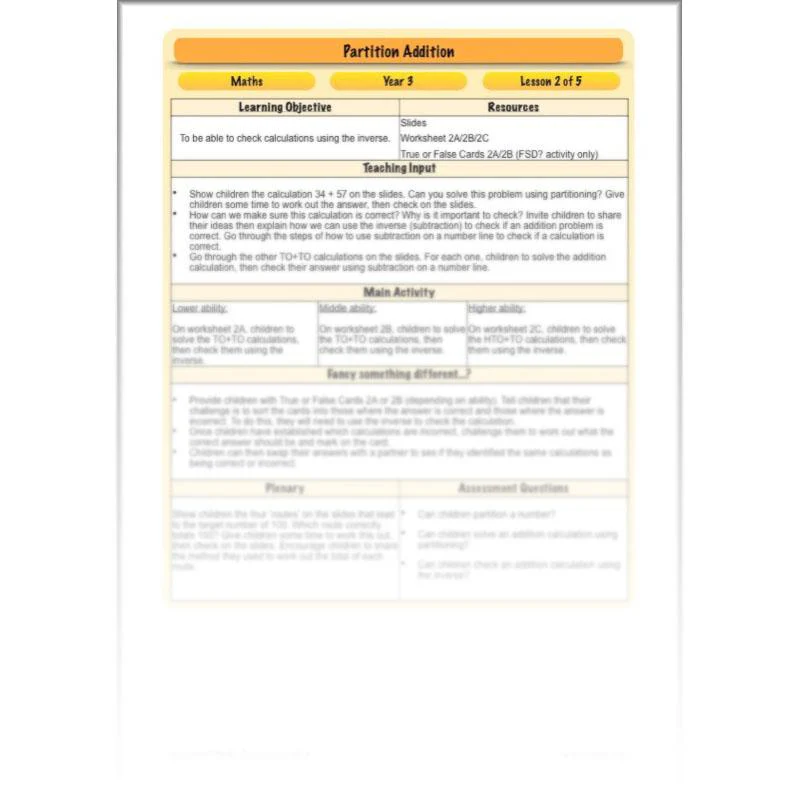
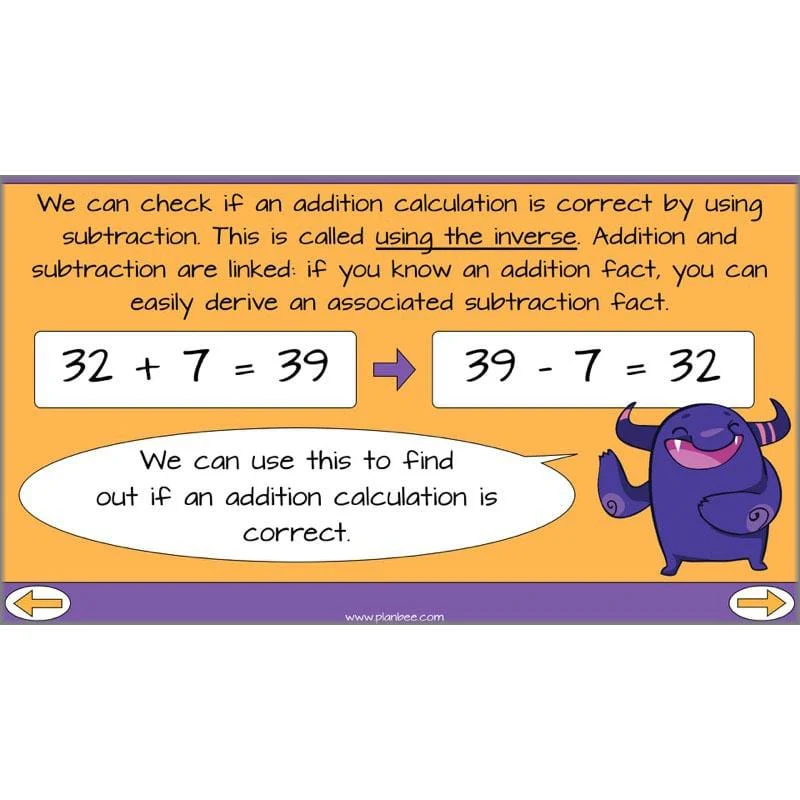
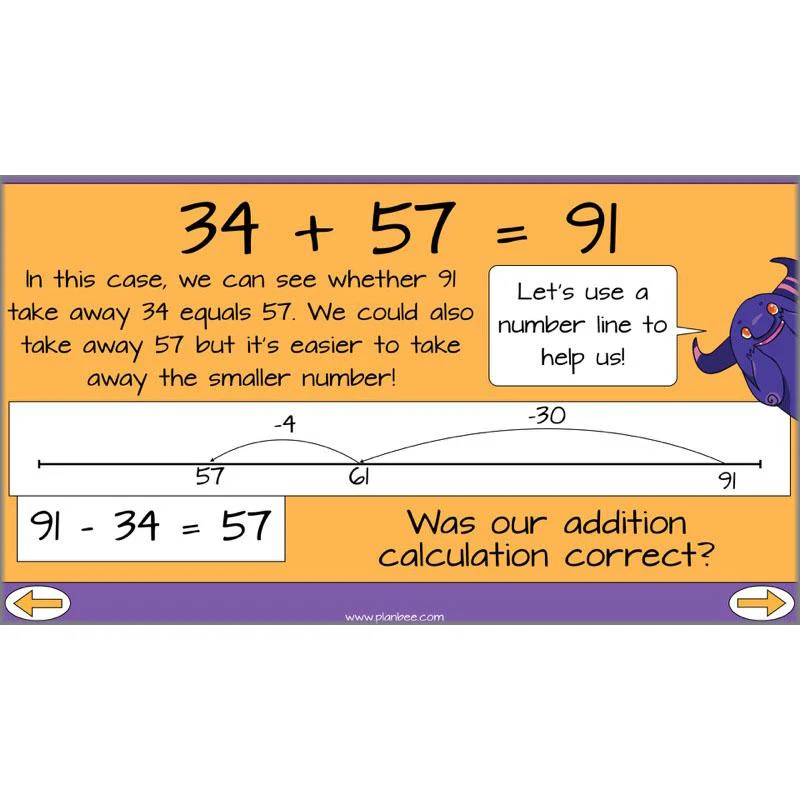
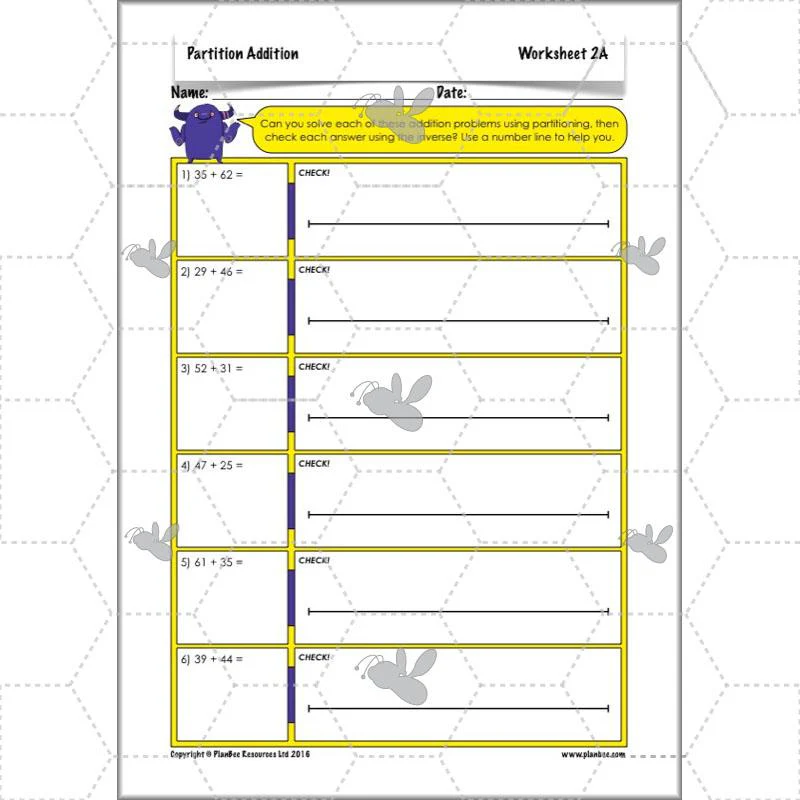
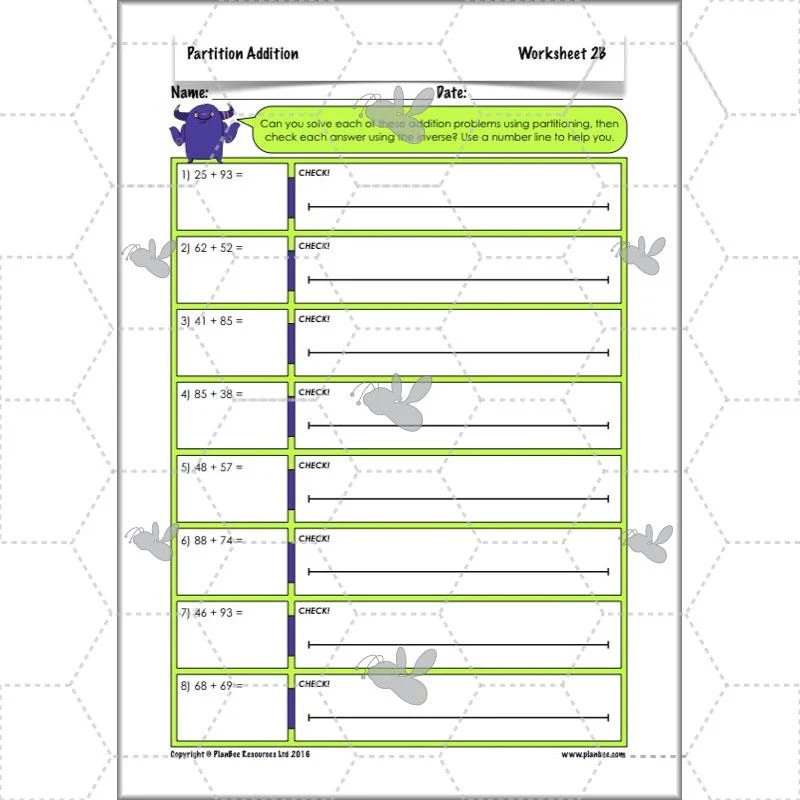
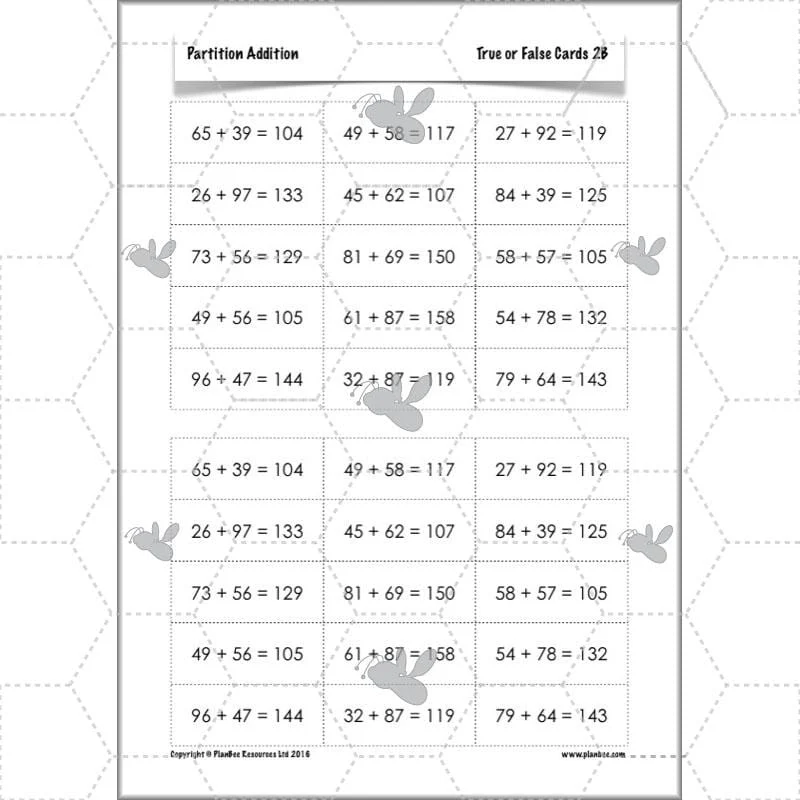
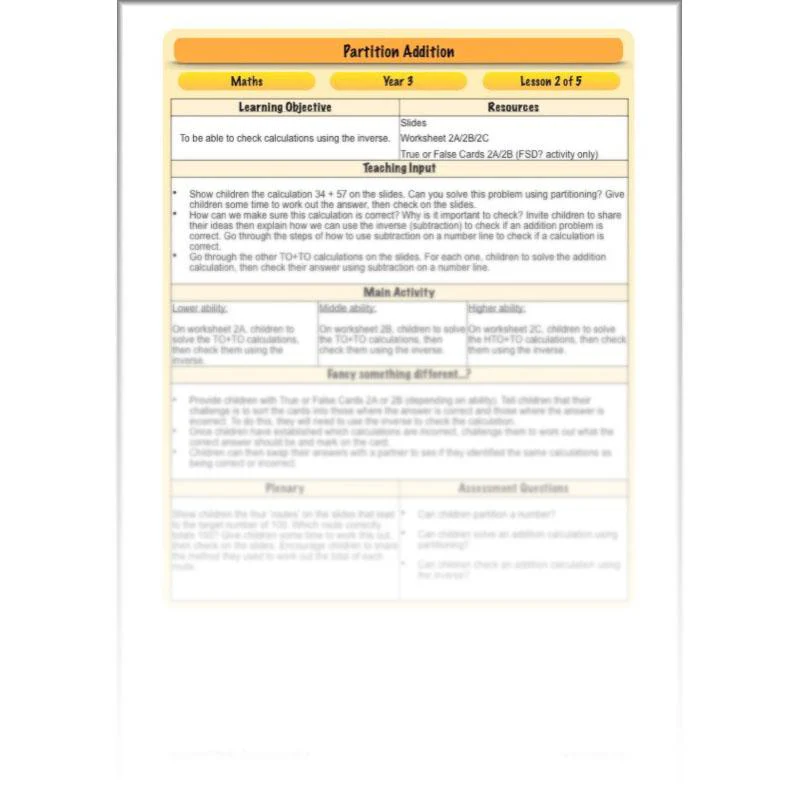
After going back through an example of how to use partitioning to solve addition problems, your class will be challenged to work out how they can check their calculations using subtraction on a number line. Giving many chances to check calculations as a class, including those with errors to spot, the slides will prepare them for their independent learning. They can solve and check some calculations of their own, or check whether given calculations are correct.
What's included:
- Lesson plan
- Slides
- Activity ideas
- Differentiated worksheets
- True or false cards
Adding Hundreds
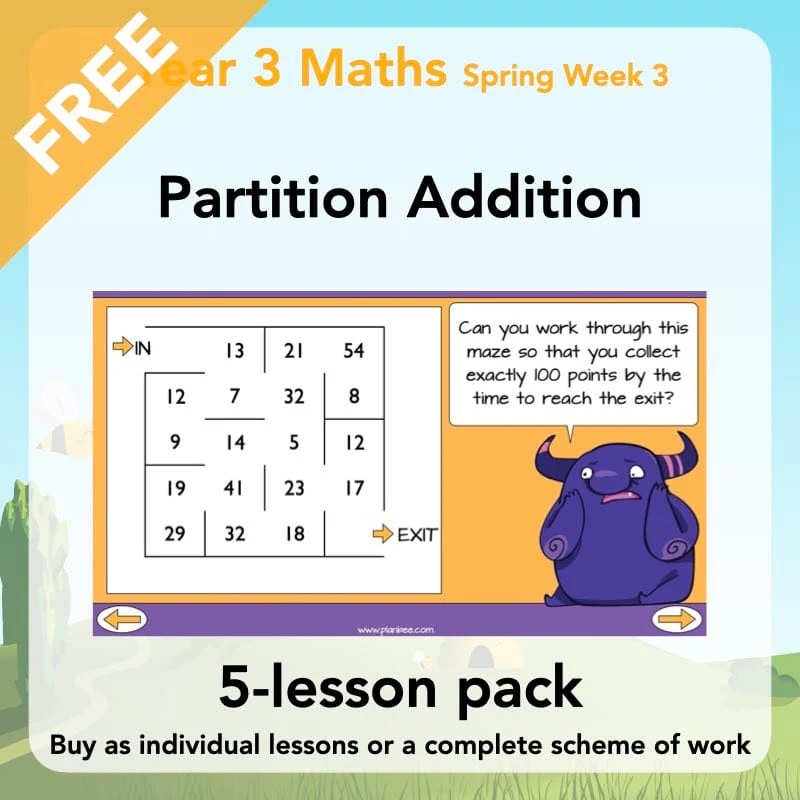
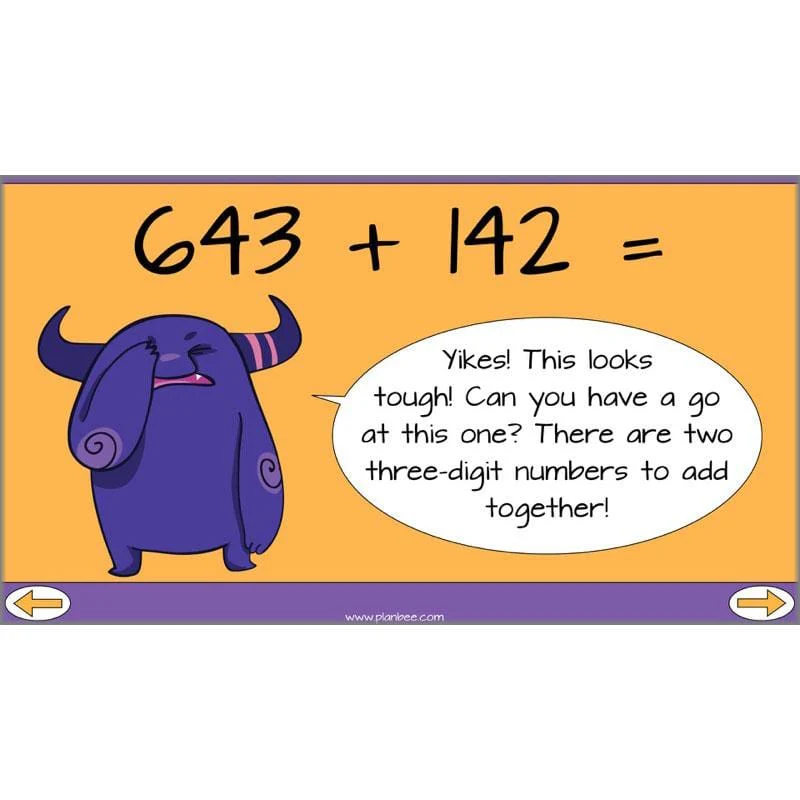
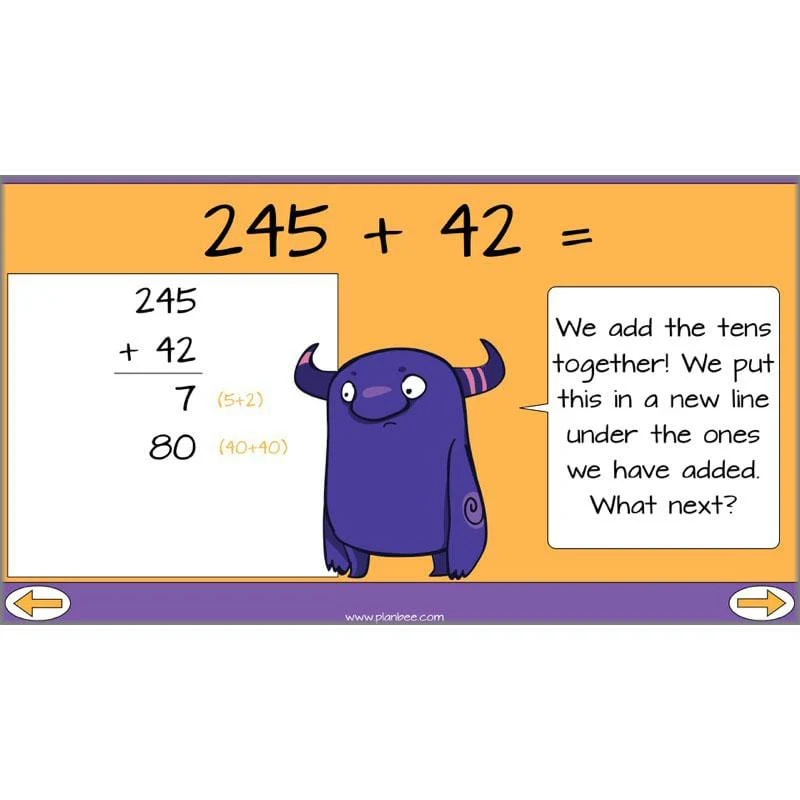
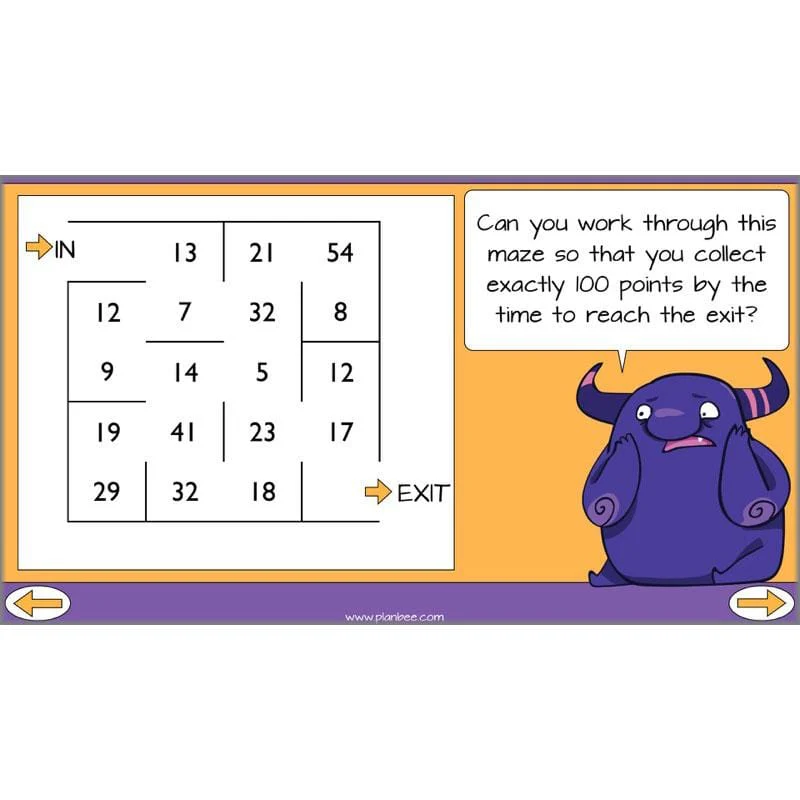
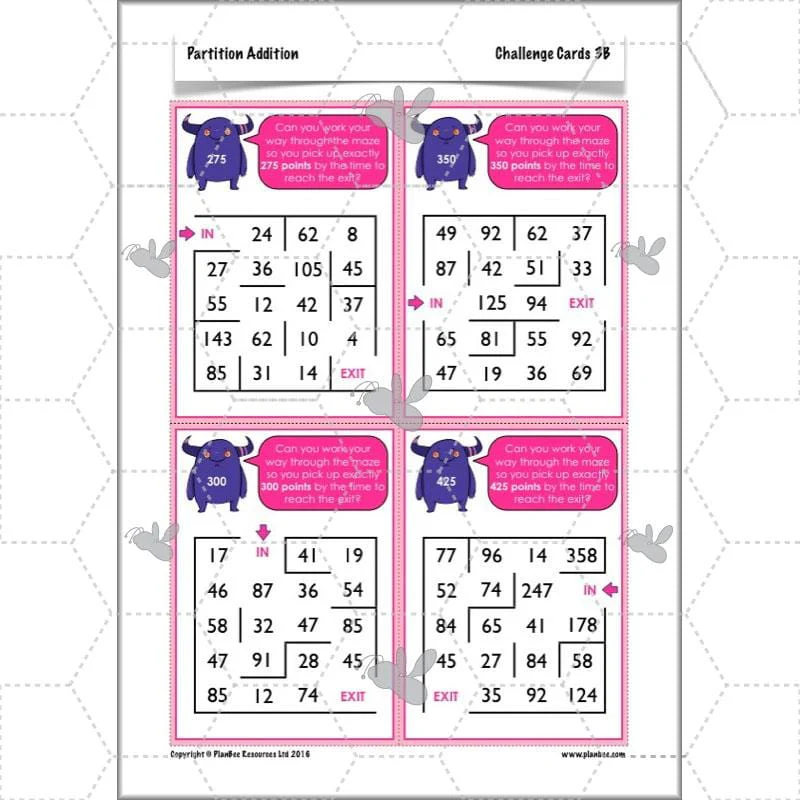
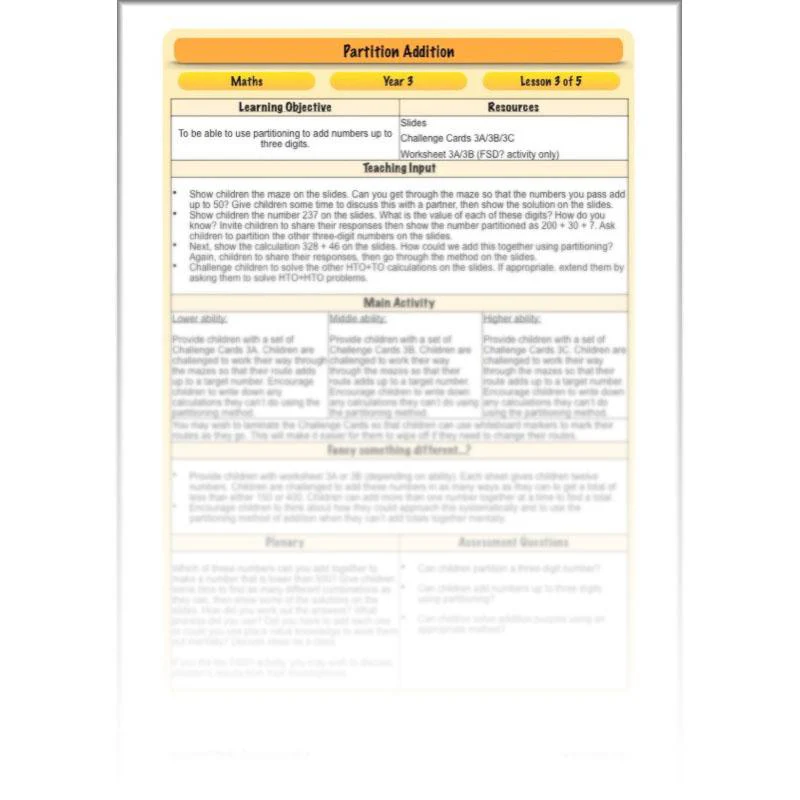
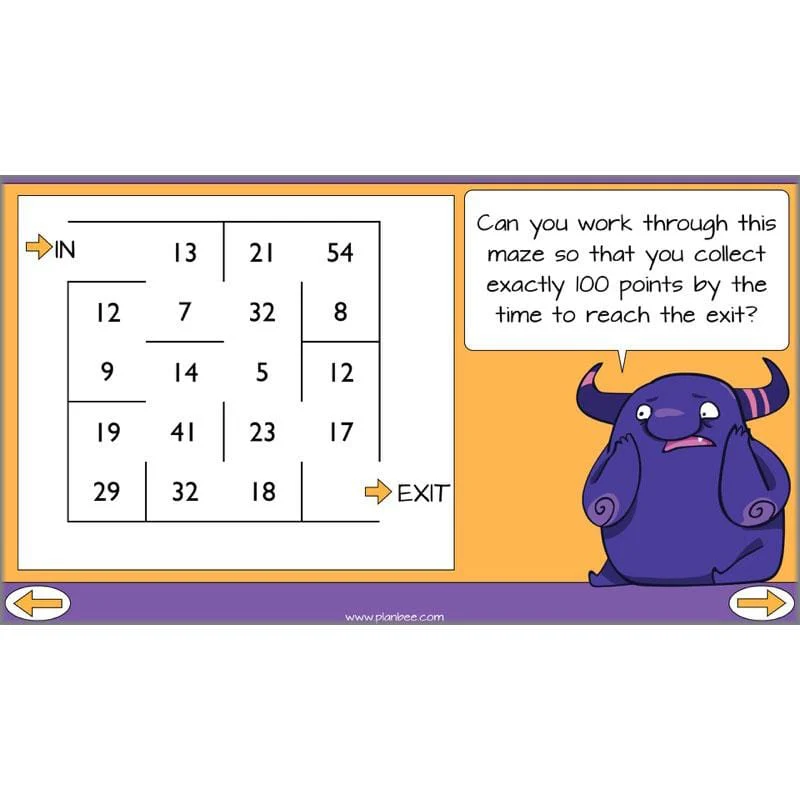
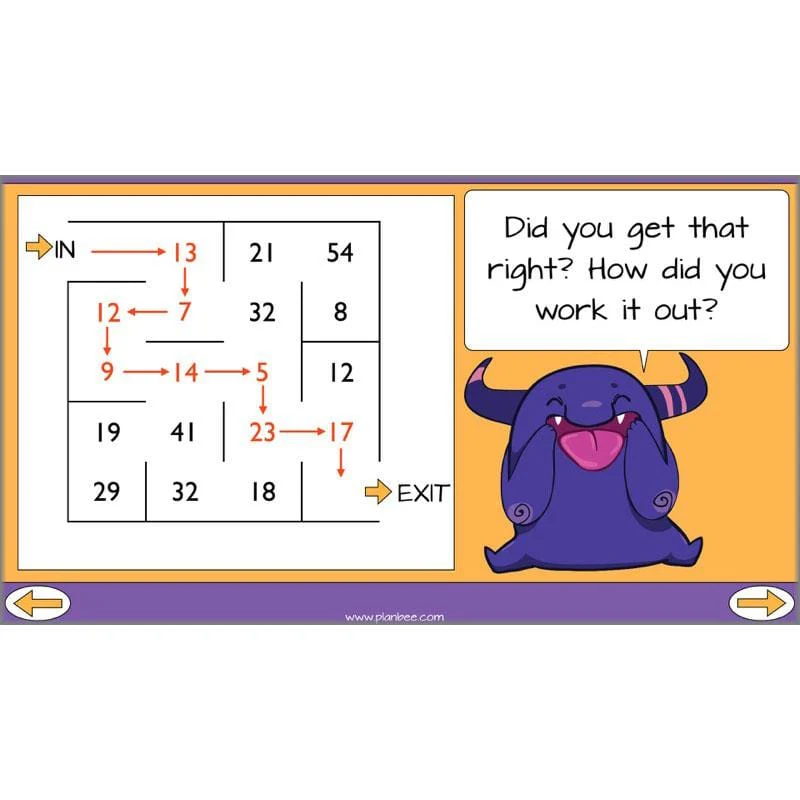
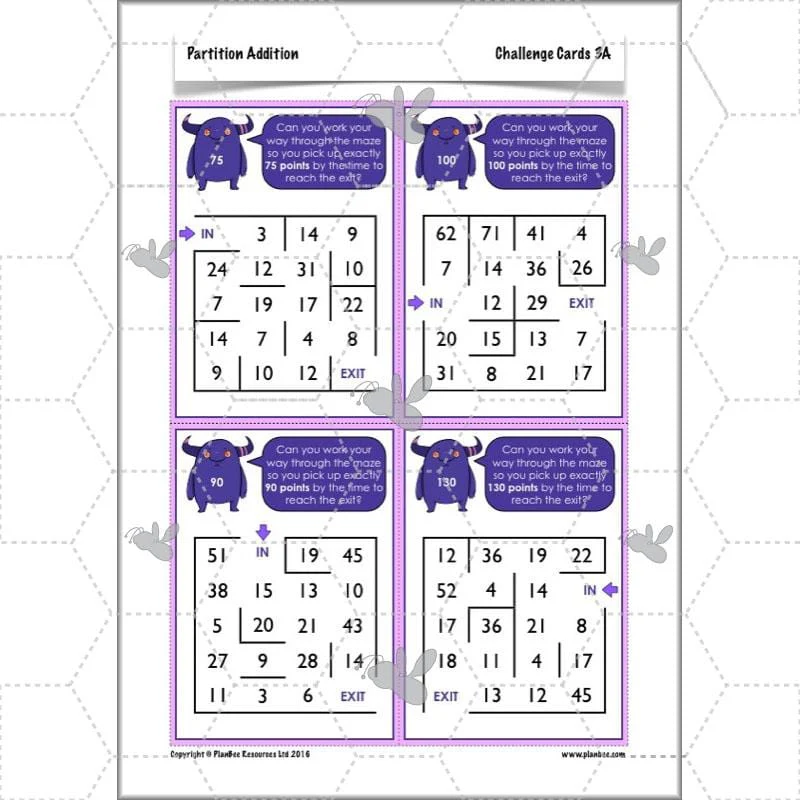
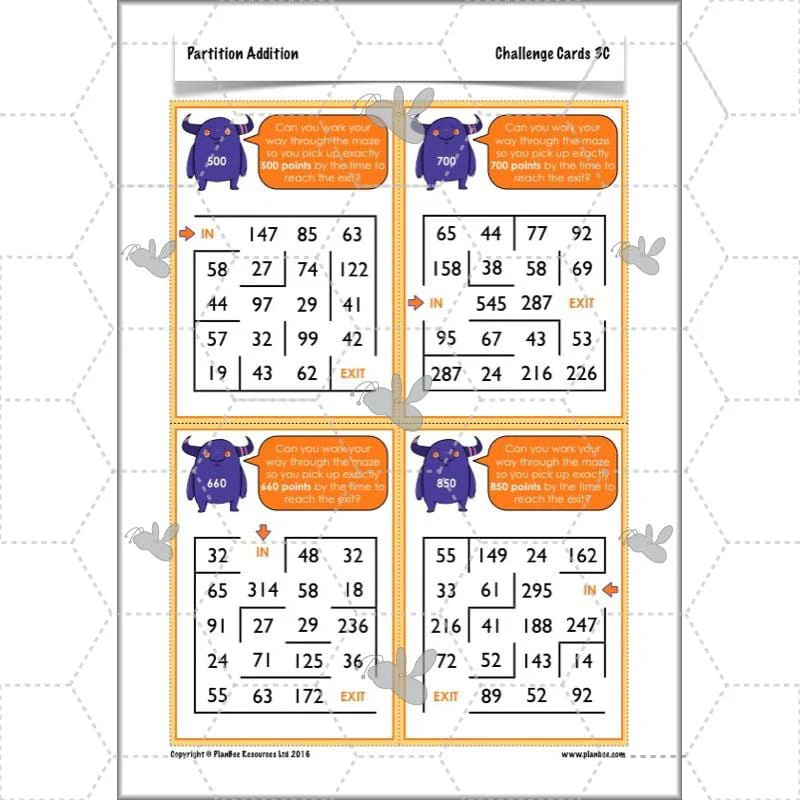
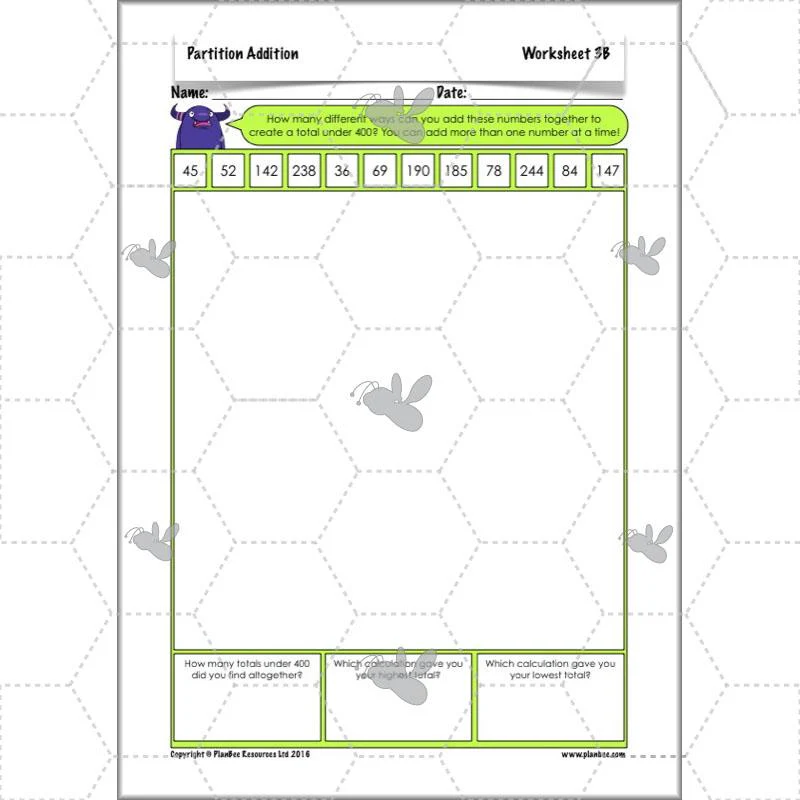
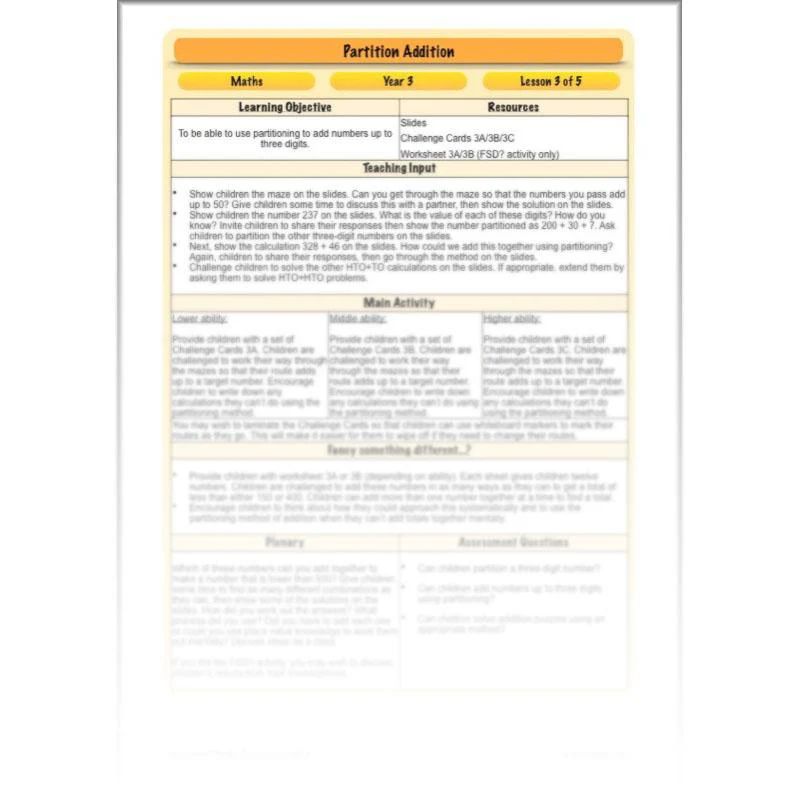
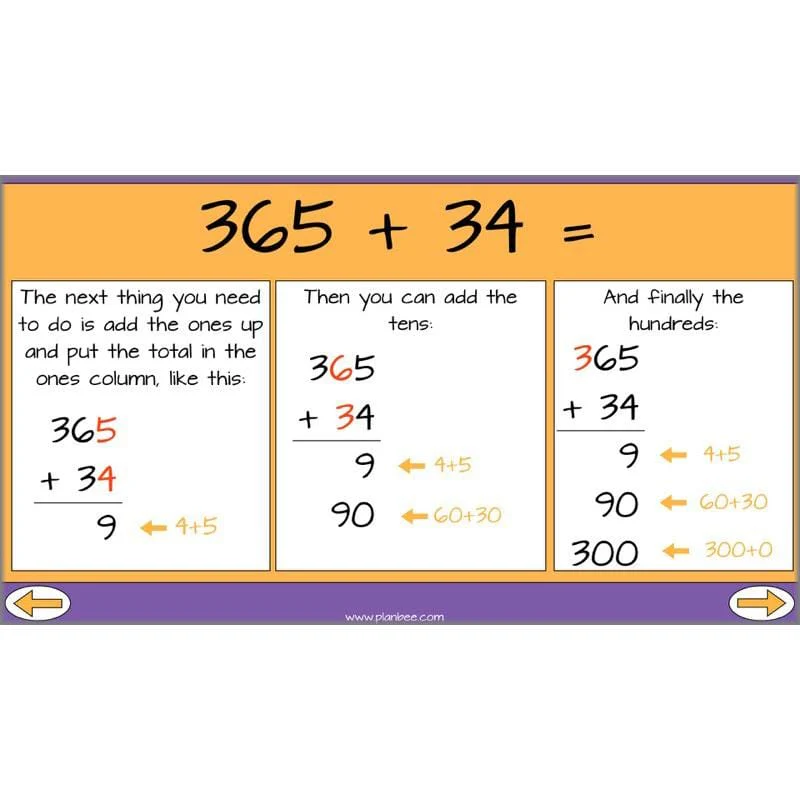
Now that your class are dab-hands at adding two two-digit numbers together, they will be challenged to add three-digit numbers together. The slides show how to use the vertical partitioning method they are already familiar to solve such calculations. The independent learning activities then give children the chance to work their way through a maze of numbers to reach a target number, or to add different numbers together to reach a target.
What's included:
- Lesson plan
- Slides
- Activity ideas
- Differentiated worksheets
- Challenge cards
The Expanded Method
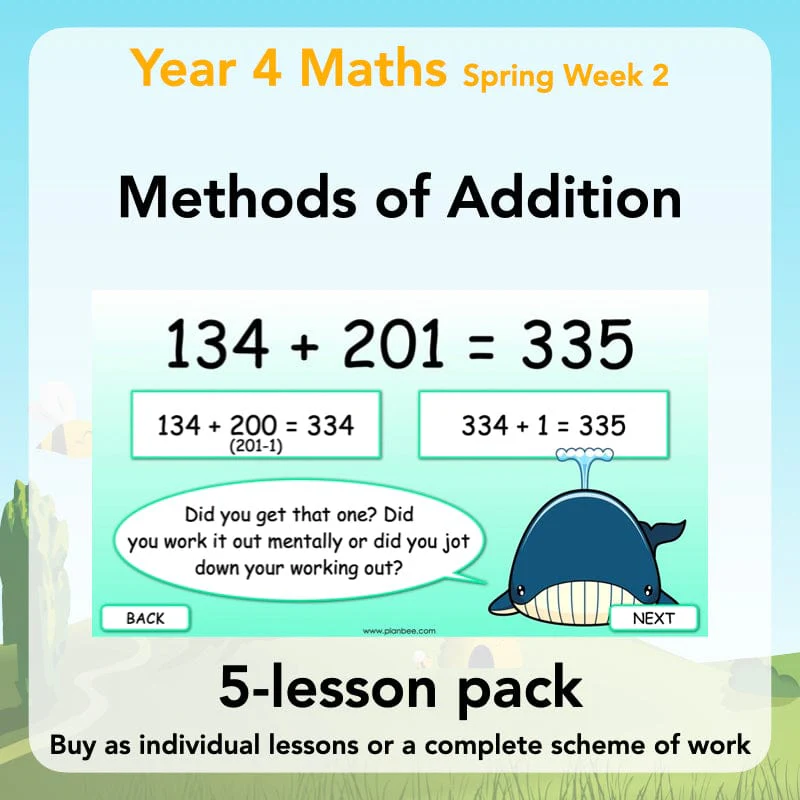
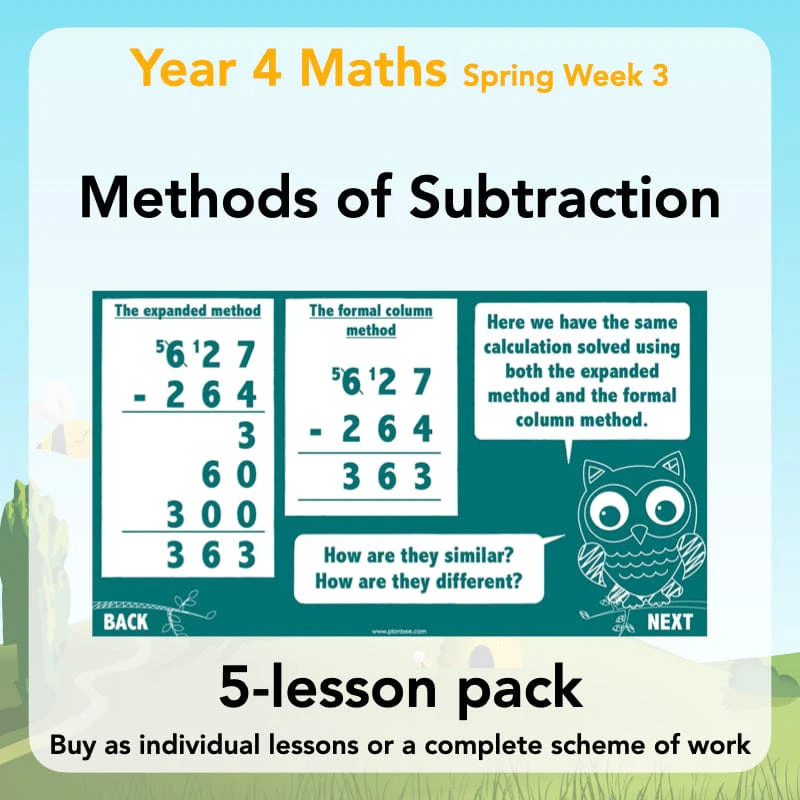
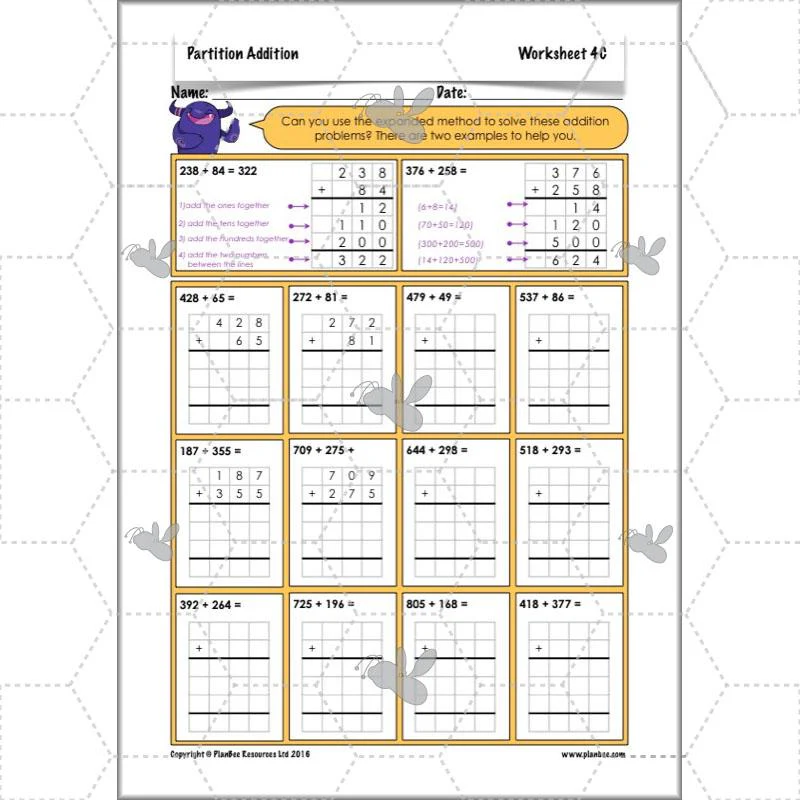
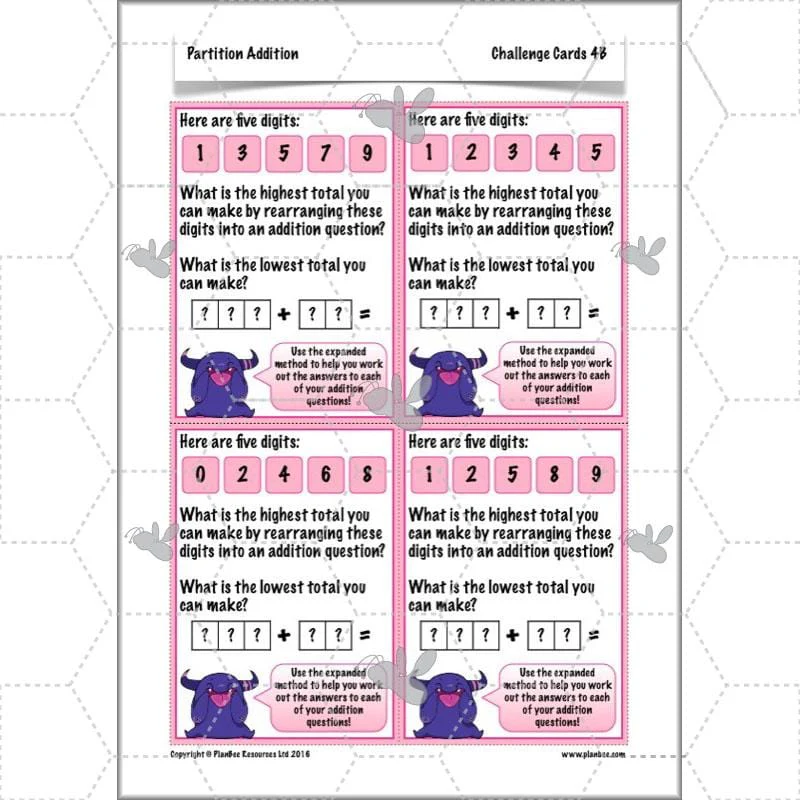
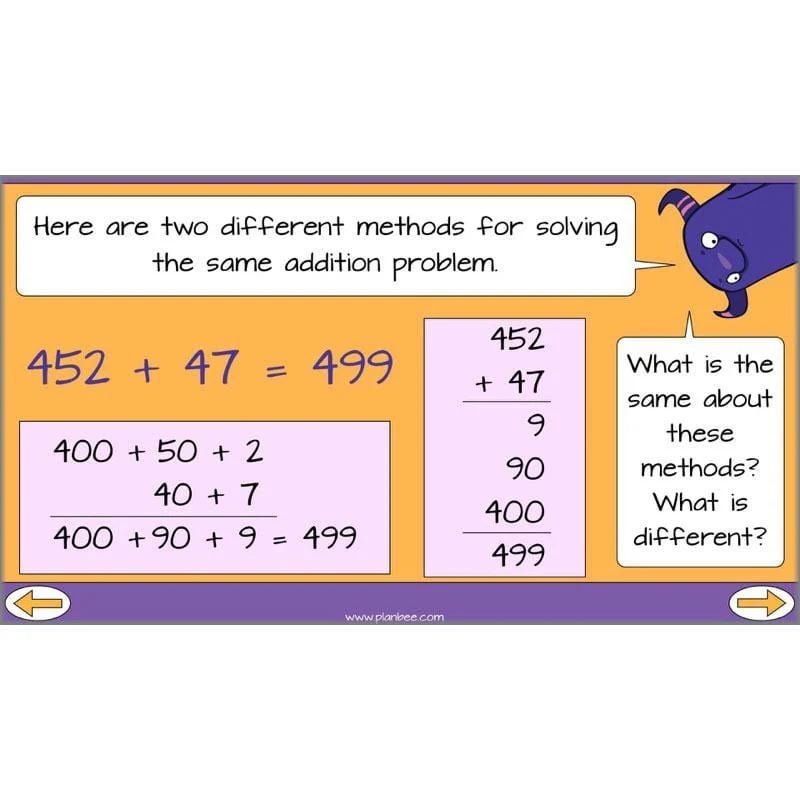
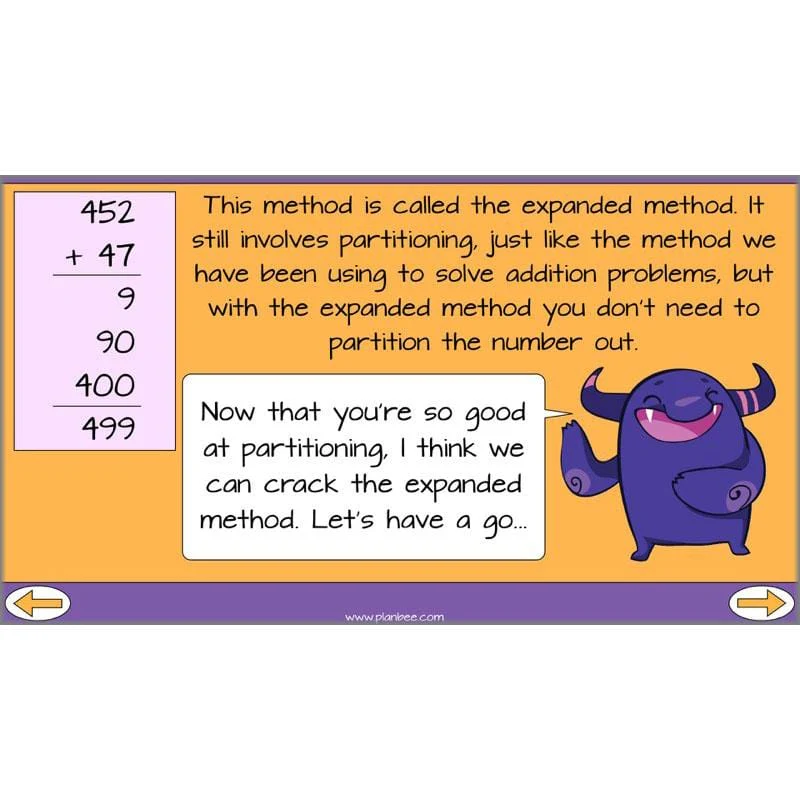
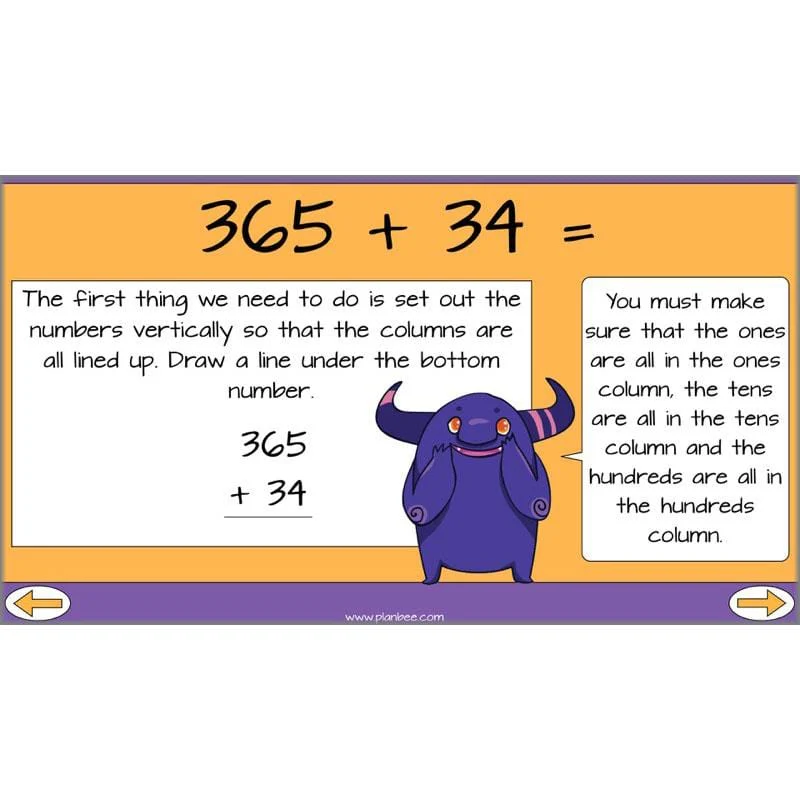
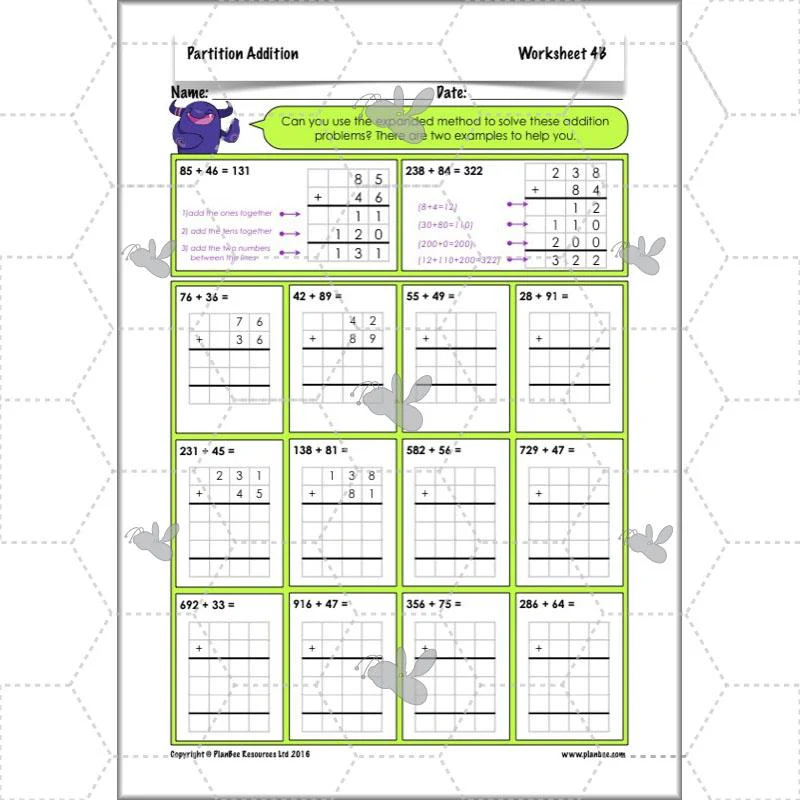
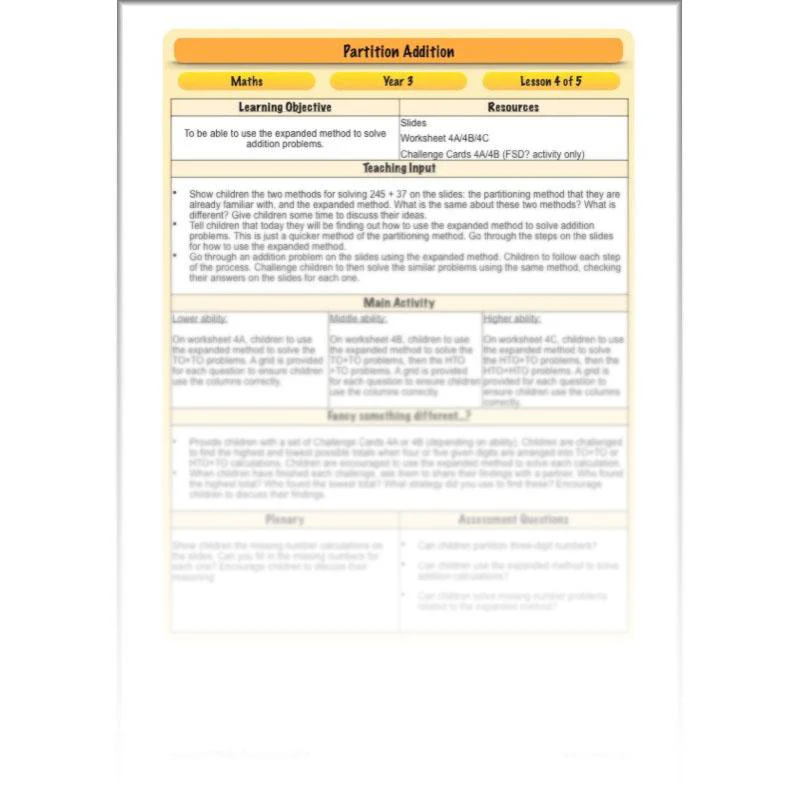
This lesson leads them from the informal vertical partitioning method to the expanded addition method. Starting with adding a two-digit number to a three-digit number, they will then extend to adding two three-digit numbers using this method. The main activity allows them to practise this method, and there is an alternative differentiated investigation for those who feel up to the challenge!
What's included:
- Lesson plan
- Slides
- Activity ideas
- Differentiated worksheets
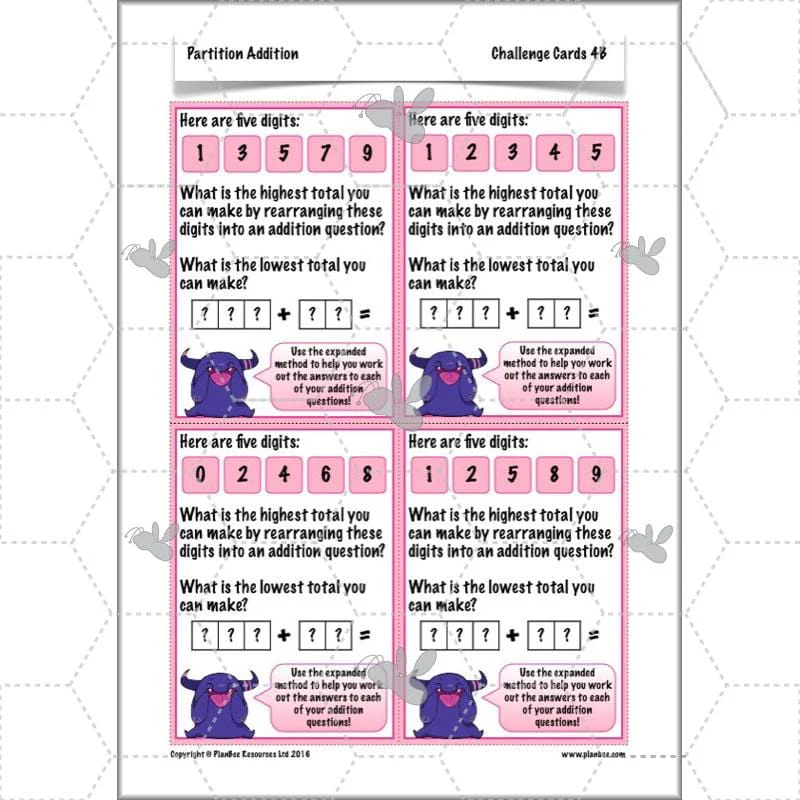
- Challenge cards
Choosing Methods
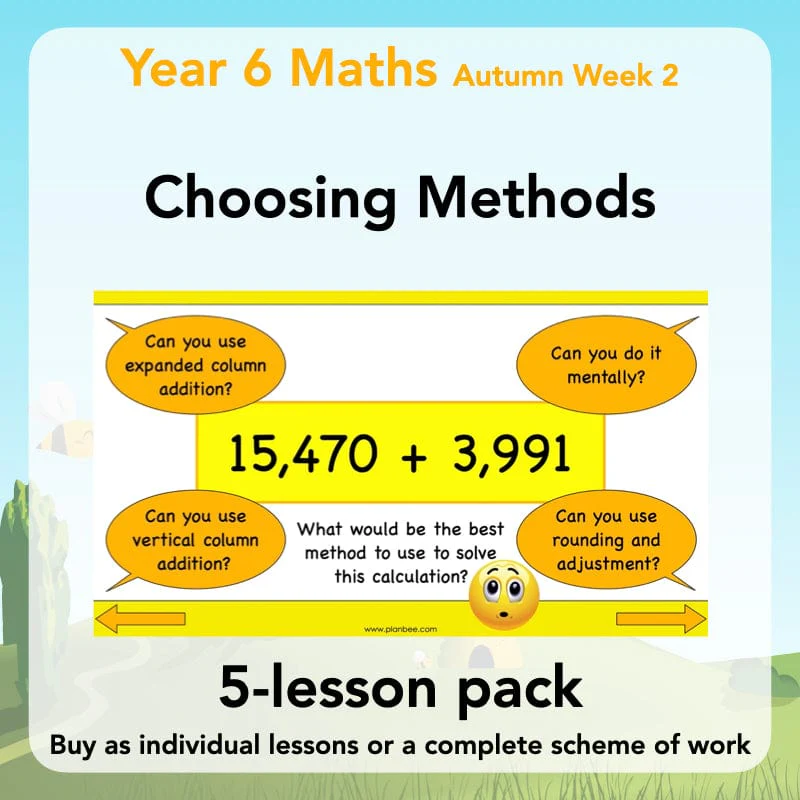
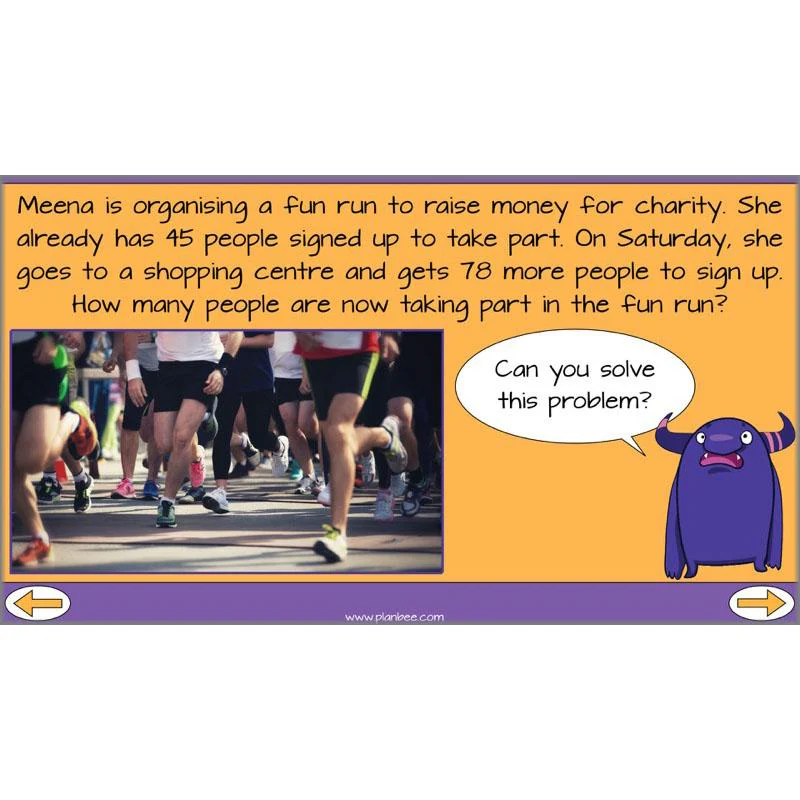
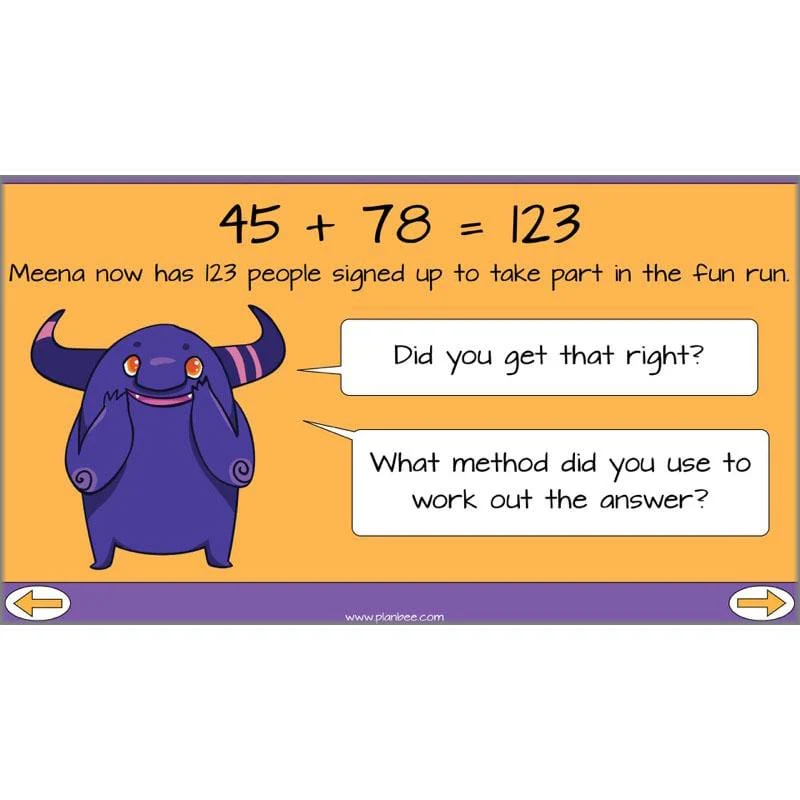
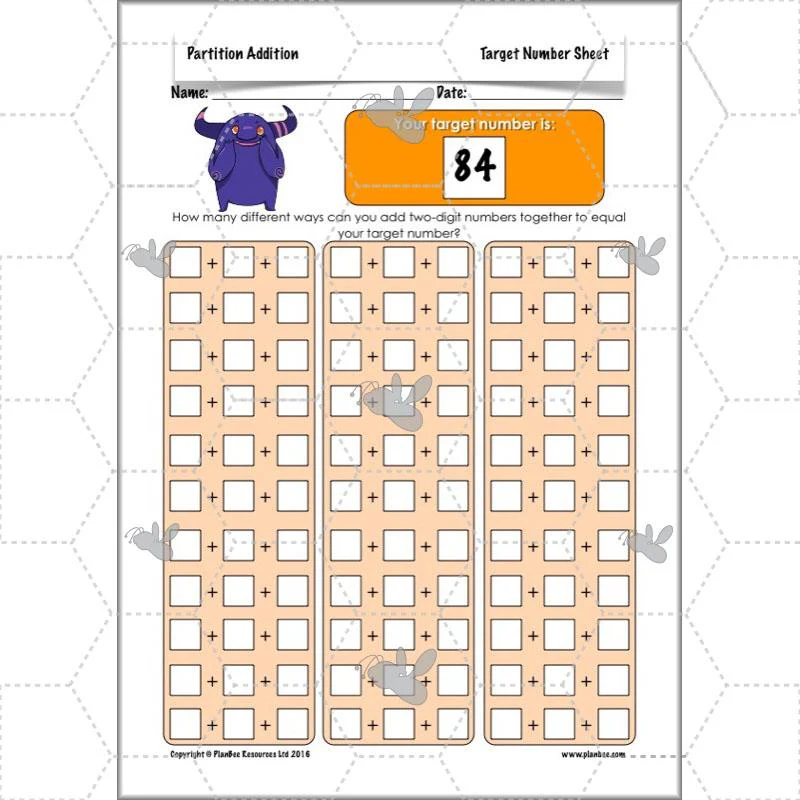
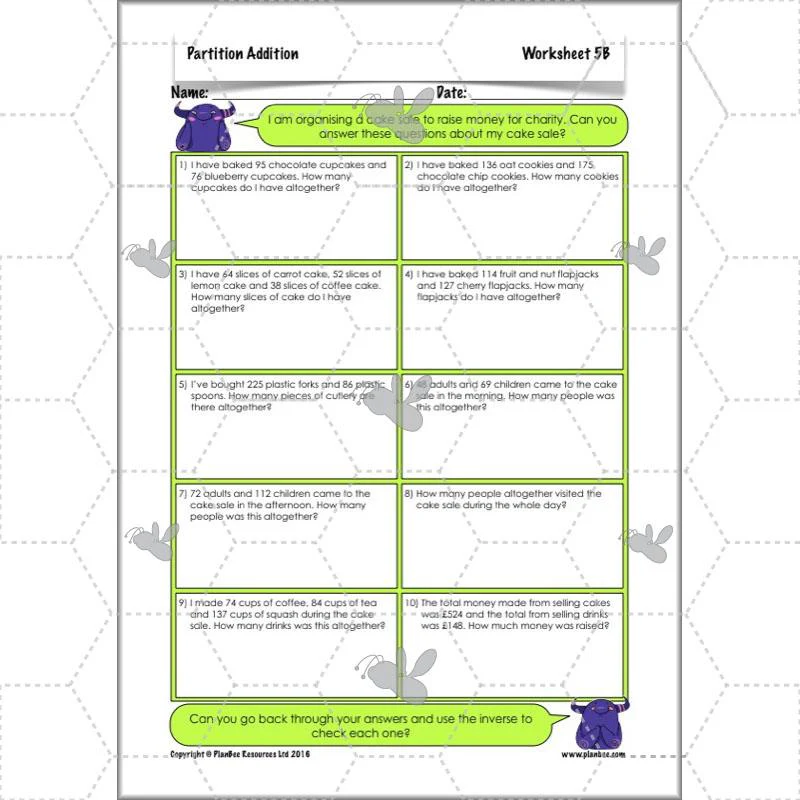
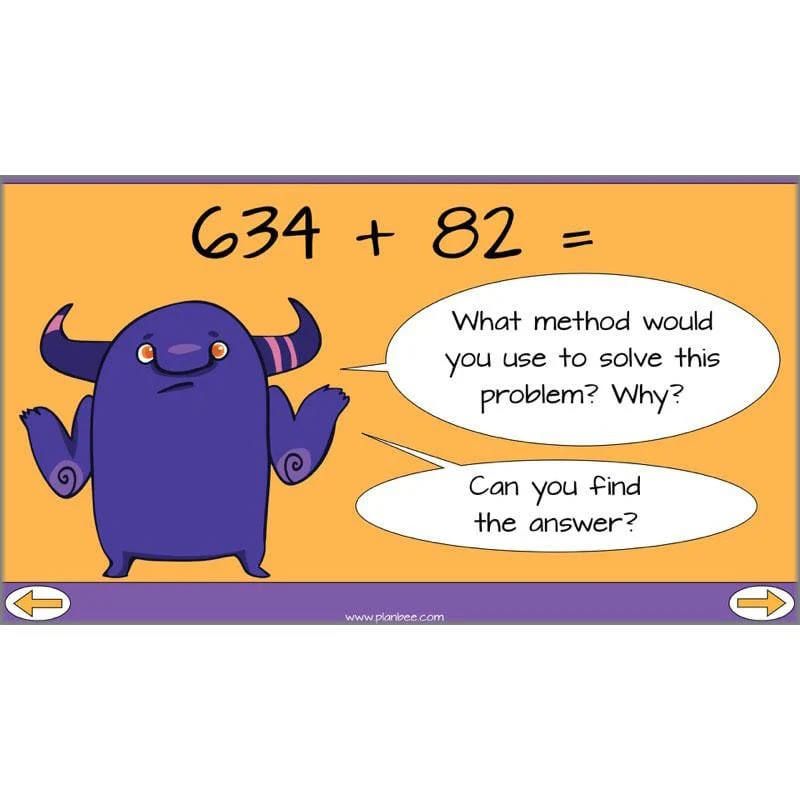
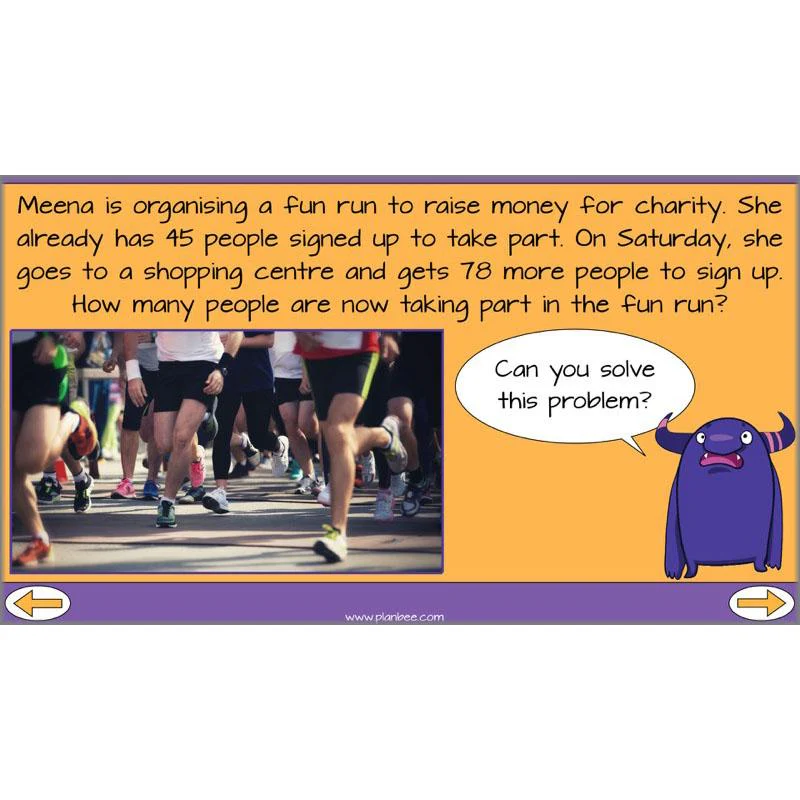
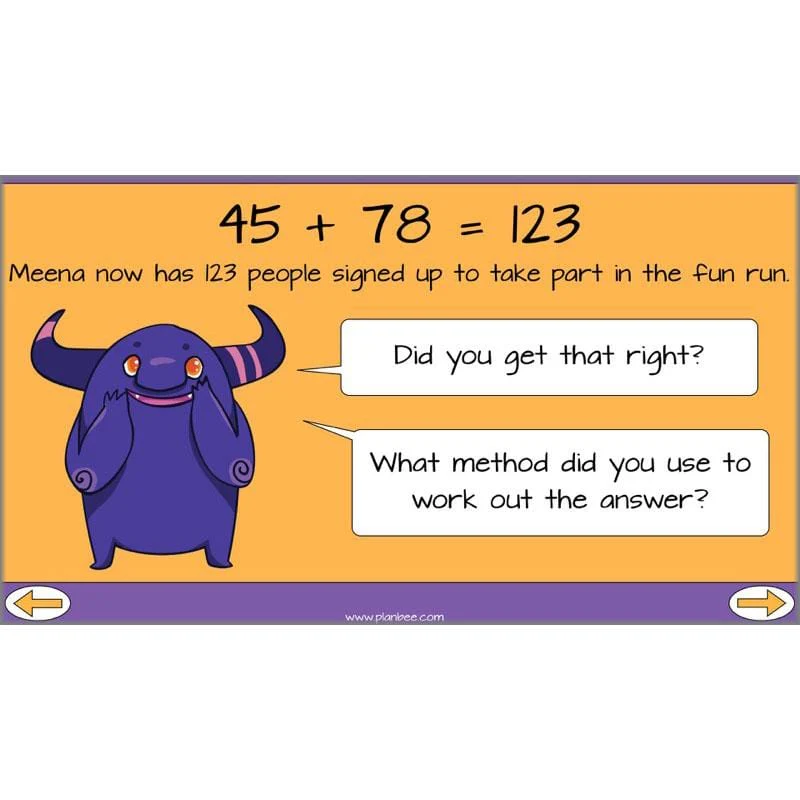
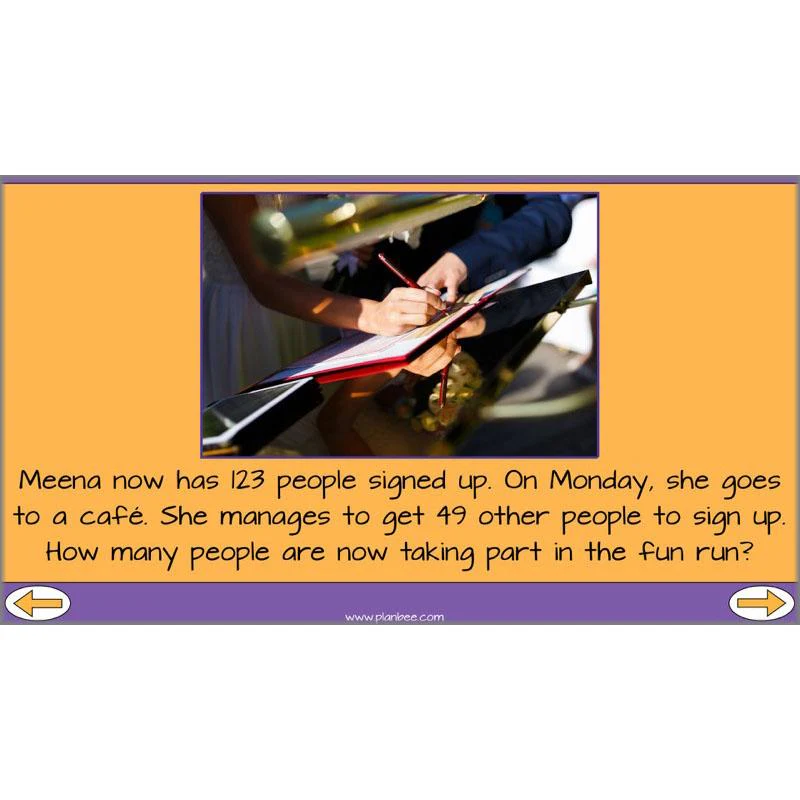
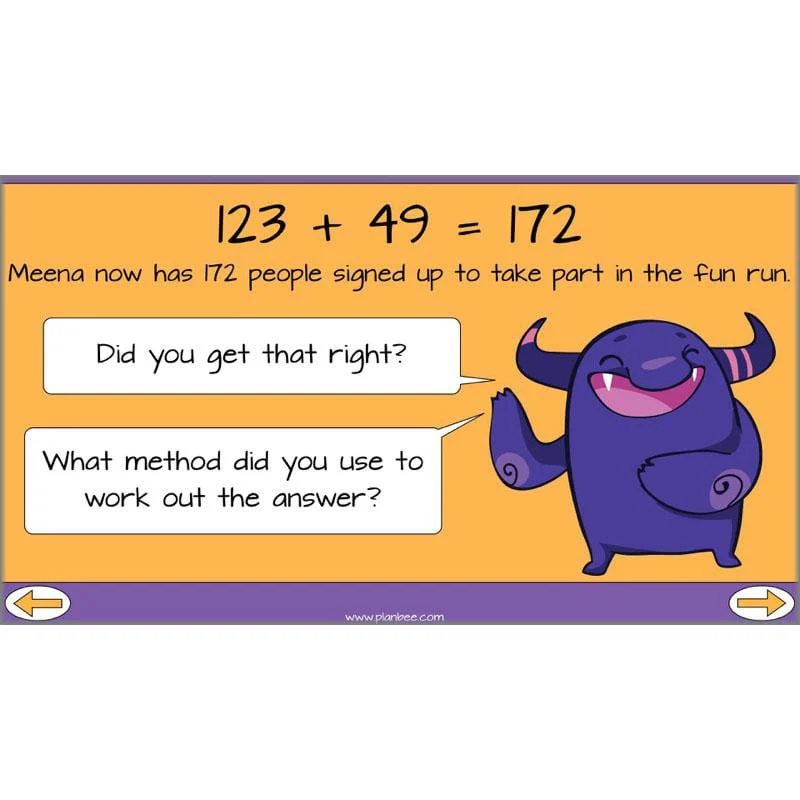
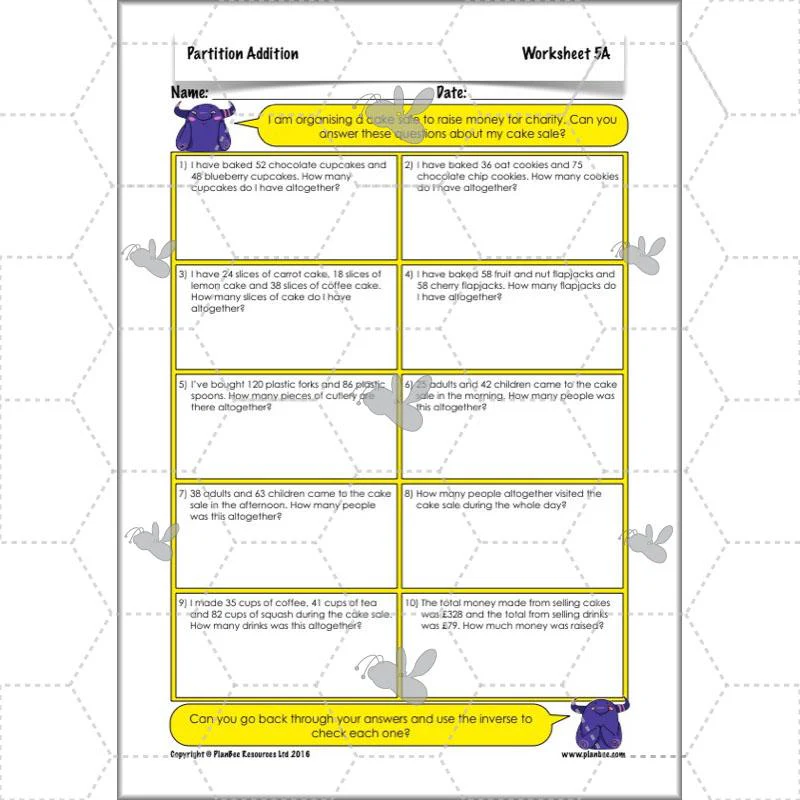
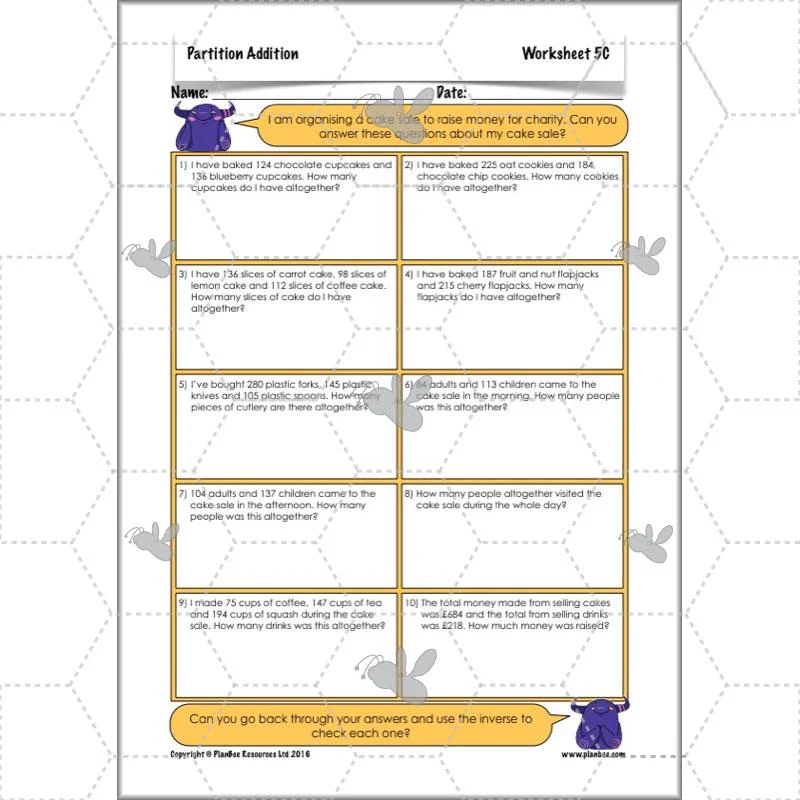
The final lesson in this series consolidates all the strategies and methods the children have used over the last few lesson and gives them the opportunity to choose which method would be best to use for solving a variety of addition problems. The slides go through some word problems to solve as a class, in preparation for solving some problems independently.
What's included:
- Lesson plan
- Slides
- Activity ideas
- Differentiated worksheets
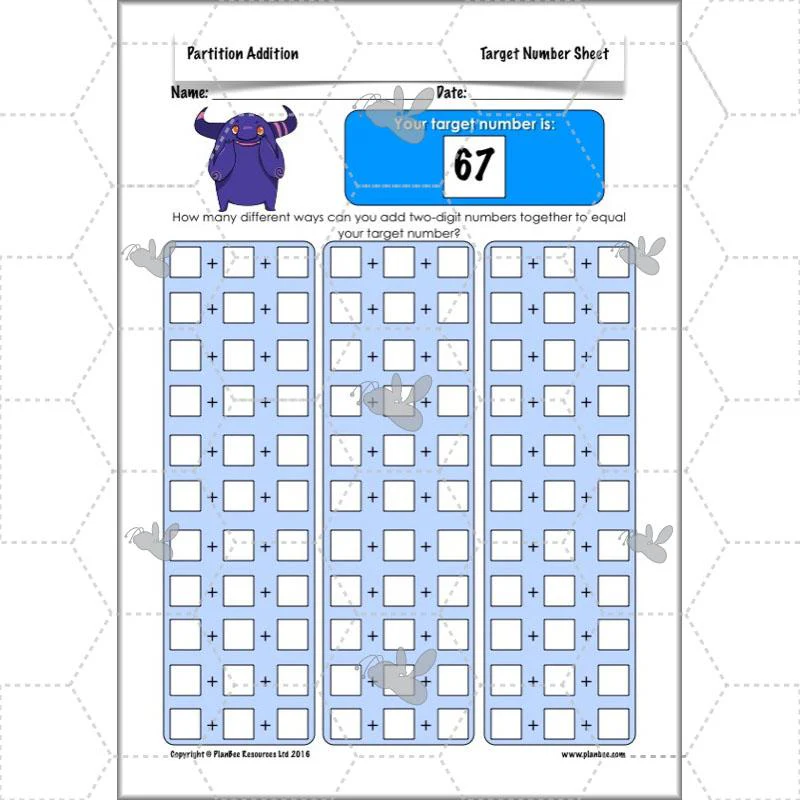
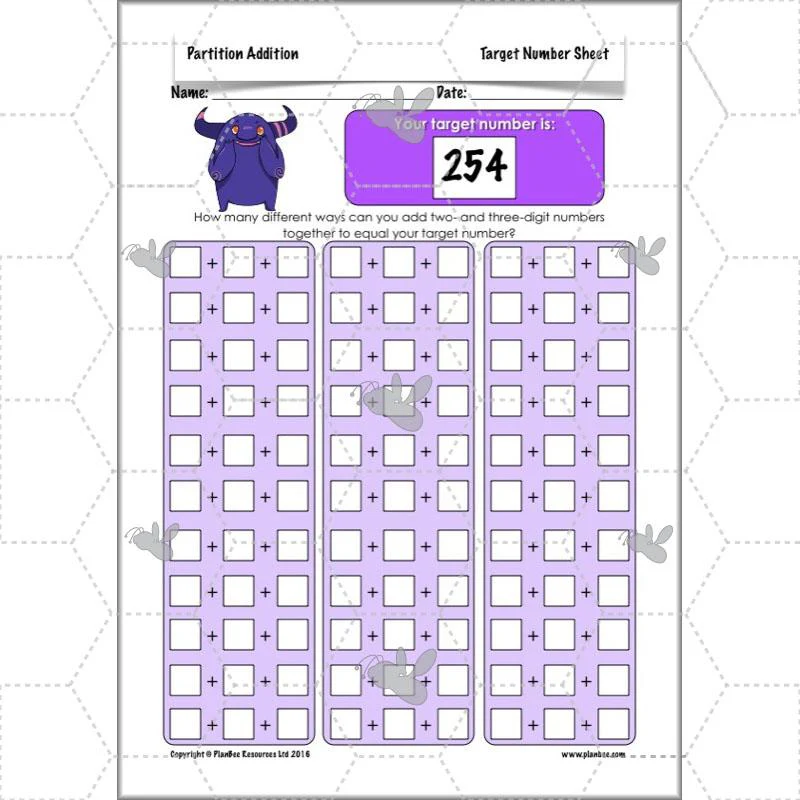
- Target number sheets
More Images
Partition Addition
Not only does this KS2 'Partition Addition' scheme of work teach your Year 3 class how to partition two- and three-digit numbers, but it also teaches them to use partitioning as an easy way to solve addition problems. They will learn how to use the decomposition and expanded methods to solve addition problems in a variety of fun and engaging way, using the inverse to check the accuracy of their work.
With lesson plans, informative slides, differentiated worksheets and many other useful resources, these 'Partition Addition' lessons contain everything you need to teach your class about partitioning and addition and how they two can be linked.
Using Partitioning
The first lesson in this series starts of by recapping how to partition a number into tens and ones, before moving on to how partitioning can help when adding two or three two-digits numbers together. The slides provide clear examples of how to do this to give your class plenty of practise, before putting this into action for themselves during the main activities.
What's included:
- Lesson plan
- Slides
- Activity ideas
- Differentiated worksheets
- Up the Wall' sheet
Checking with the inverse
After going back through an example of how to use partitioning to solve addition problems, your class will be challenged to work out how they can check their calculations using subtraction on a number line. Giving many chances to check calculations as a class, including those with errors to spot, the slides will prepare them for their independent learning. They can solve and check some calculations of their own, or check whether given calculations are correct.
What's included:
- Lesson plan
- Slides
- Activity ideas
- Differentiated worksheets
- True or false cards
Adding Hundreds
Now that your class are dab-hands at adding two two-digit numbers together, they will be challenged to add three-digit numbers together. The slides show how to use the vertical partitioning method they are already familiar to solve such calculations. The independent learning activities then give children the chance to work their way through a maze of numbers to reach a target number, or to add different numbers together to reach a target.
What's included:
- Lesson plan
- Slides
- Activity ideas
- Differentiated worksheets
- Challenge cards
The Expanded Method
This lesson leads them from the informal vertical partitioning method to the expanded addition method. Starting with adding a two-digit number to a three-digit number, they will then extend to adding two three-digit numbers using this method. The main activity allows them to practise this method, and there is an alternative differentiated investigation for those who feel up to the challenge!
What's included:
- Lesson plan
- Slides
- Activity ideas
- Differentiated worksheets
- Challenge cards
Choosing Methods
The final lesson in this series consolidates all the strategies and methods the children have used over the last few lesson and gives them the opportunity to choose which method would be best to use for solving a variety of addition problems. The slides go through some word problems to solve as a class, in preparation for solving some problems independently.
What's included:
- Lesson plan
- Slides
- Activity ideas
- Differentiated worksheets
- Target number sheets
Product Information
Product Information
Shipping & Returns
Shipping & Returns
Description
Not only does this KS2 'Partition Addition' scheme of work teach your Year 3 class how to partition two- and three-digit numbers, but it also teaches them to use partitioning as an easy way to solve addition problems. They will learn how to use the decomposition and expanded methods to solve addition problems in a variety of fun and engaging way, using the inverse to check the accuracy of their work.
With lesson plans, informative slides, differentiated worksheets and many other useful resources, these 'Partition Addition' lessons contain everything you need to teach your class about partitioning and addition and how they two can be linked.
Using Partitioning
The first lesson in this series starts of by recapping how to partition a number into tens and ones, before moving on to how partitioning can help when adding two or three two-digits numbers together. The slides provide clear examples of how to do this to give your class plenty of practise, before putting this into action for themselves during the main activities.
What's included:
- Lesson plan
- Slides
- Activity ideas
- Differentiated worksheets
- Up the Wall' sheet
Checking with the inverse
After going back through an example of how to use partitioning to solve addition problems, your class will be challenged to work out how they can check their calculations using subtraction on a number line. Giving many chances to check calculations as a class, including those with errors to spot, the slides will prepare them for their independent learning. They can solve and check some calculations of their own, or check whether given calculations are correct.
What's included:
- Lesson plan
- Slides
- Activity ideas
- Differentiated worksheets
- True or false cards
Adding Hundreds
Now that your class are dab-hands at adding two two-digit numbers together, they will be challenged to add three-digit numbers together. The slides show how to use the vertical partitioning method they are already familiar to solve such calculations. The independent learning activities then give children the chance to work their way through a maze of numbers to reach a target number, or to add different numbers together to reach a target.
What's included:
- Lesson plan
- Slides
- Activity ideas
- Differentiated worksheets
- Challenge cards
The Expanded Method
This lesson leads them from the informal vertical partitioning method to the expanded addition method. Starting with adding a two-digit number to a three-digit number, they will then extend to adding two three-digit numbers using this method. The main activity allows them to practise this method, and there is an alternative differentiated investigation for those who feel up to the challenge!
What's included:
- Lesson plan
- Slides
- Activity ideas
- Differentiated worksheets
- Challenge cards
Choosing Methods
The final lesson in this series consolidates all the strategies and methods the children have used over the last few lesson and gives them the opportunity to choose which method would be best to use for solving a variety of addition problems. The slides go through some word problems to solve as a class, in preparation for solving some problems independently.
What's included:
- Lesson plan
- Slides
- Activity ideas
- Differentiated worksheets
- Target number sheets