People and Places
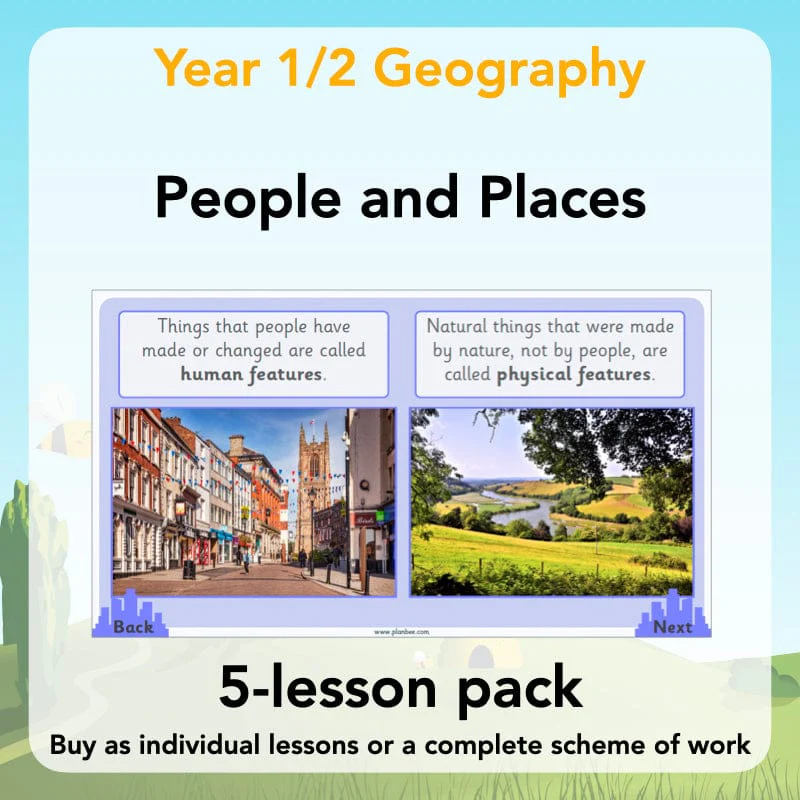
Over five engaging lessons, your class will explore what makes different places special by learning about human and physical features. Children discover the difference between natural and human-made features, develop confidence identifying them in real places, and learn how maps and symbols help us represent the world. The unit ends with pupils comparing two different places, using geographical vocabulary to describe similarities and differences.
Each ready-to-teach lesson pack includes a detailed plan, clear and engaging PDF slides for the teaching input, and a variety of printable resources to support both independent and collaborative learning.
A Knowledge Organiser is available to support the learning in this scheme. It is included in the Complete Series download or can be purchased individually.
Lesson 1: Natural or man-made?
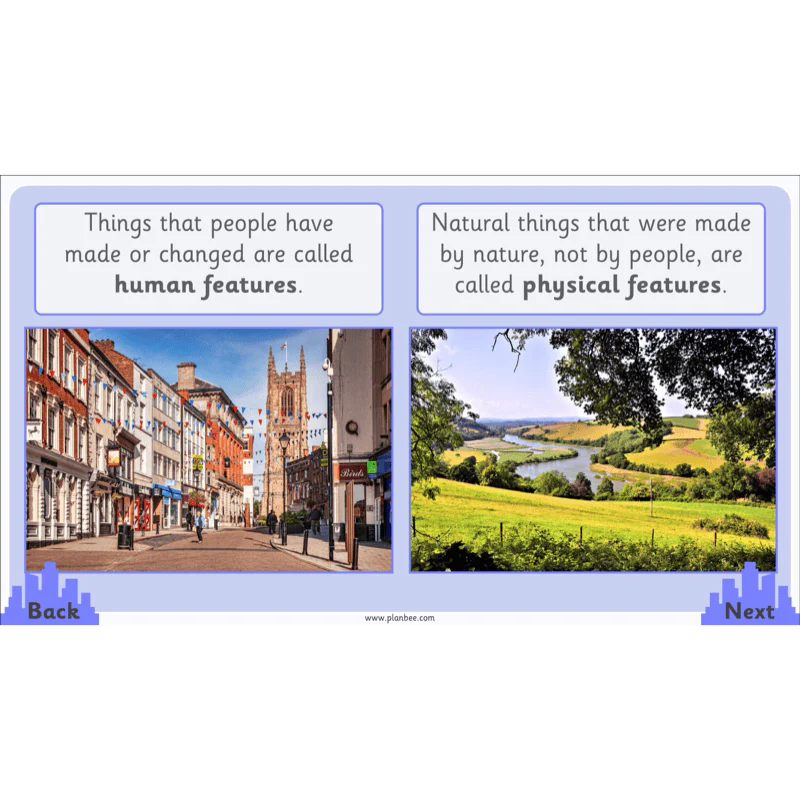
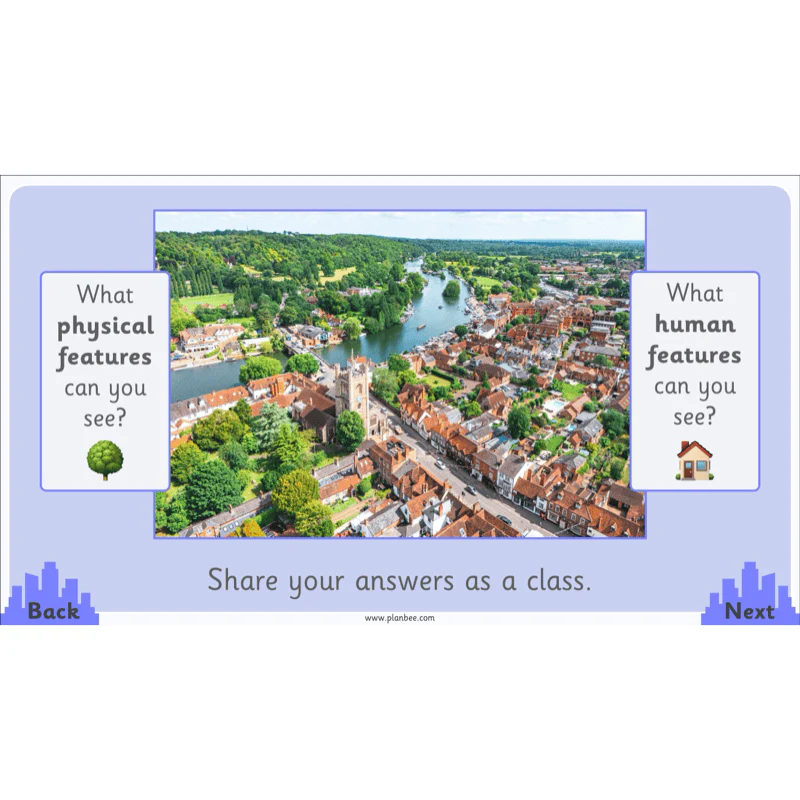
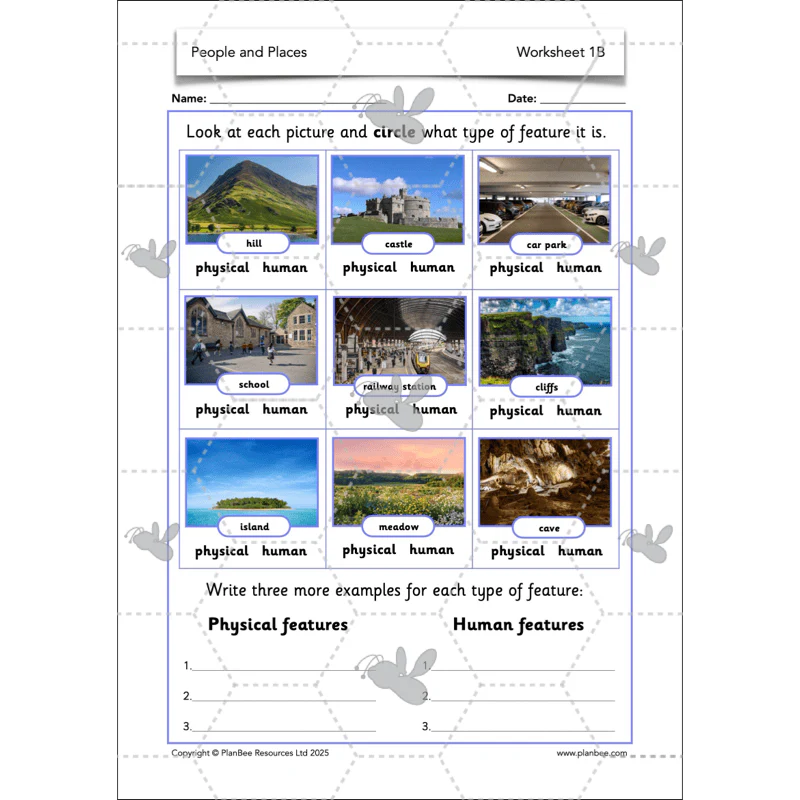
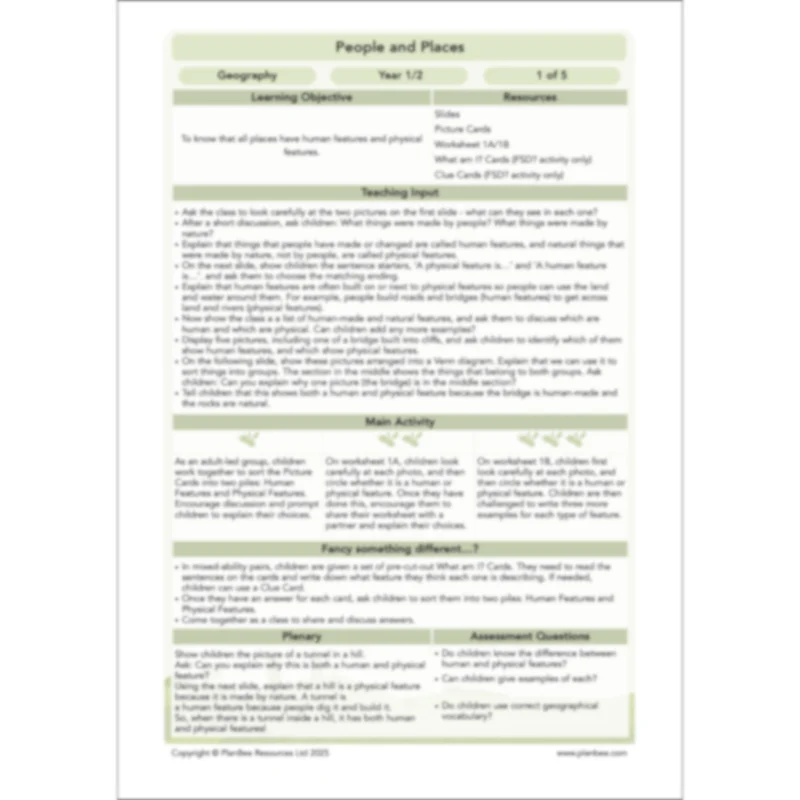
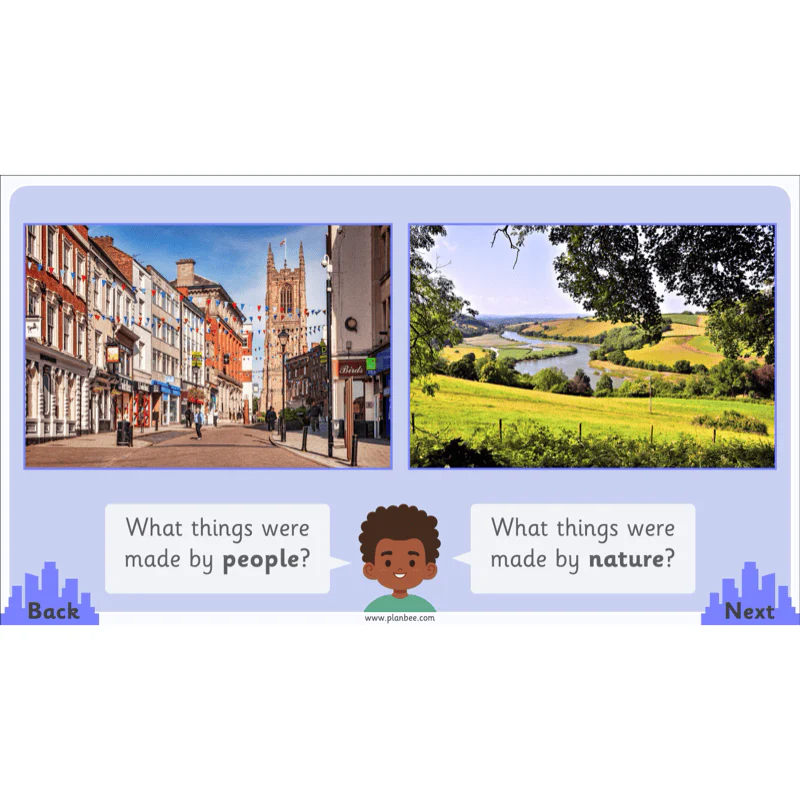
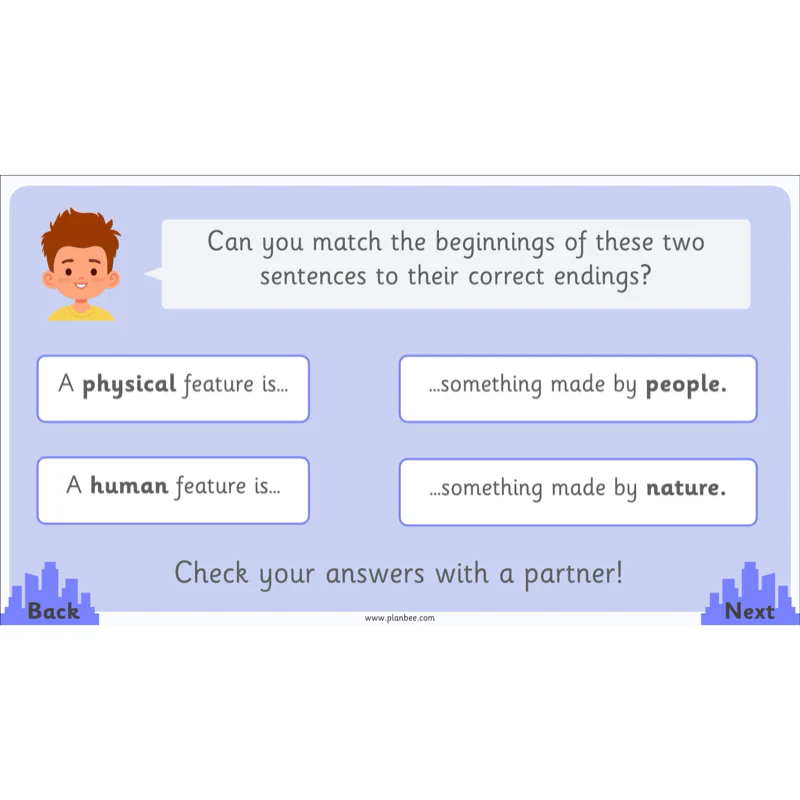
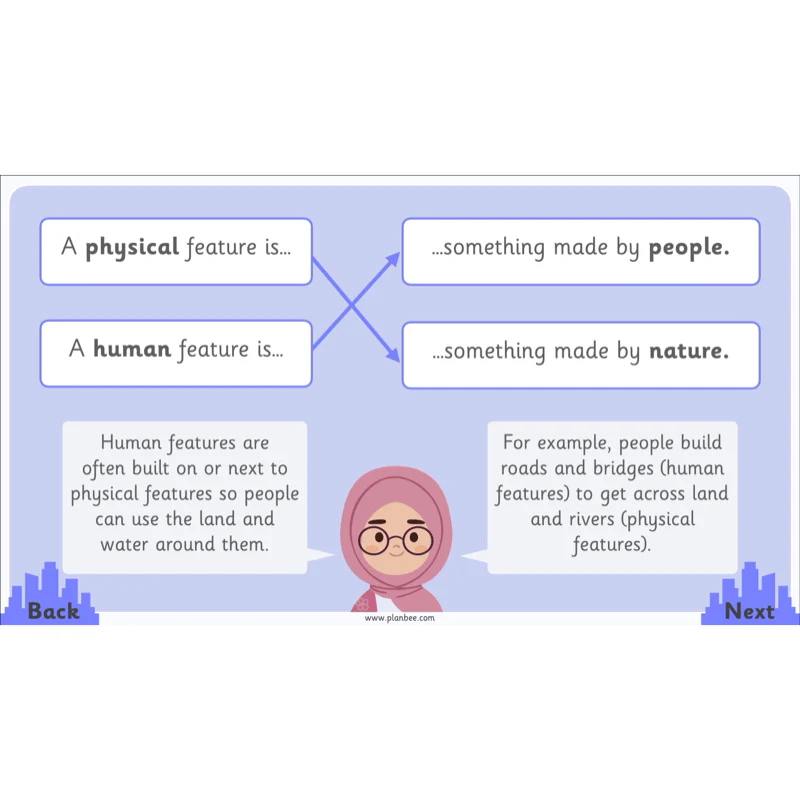
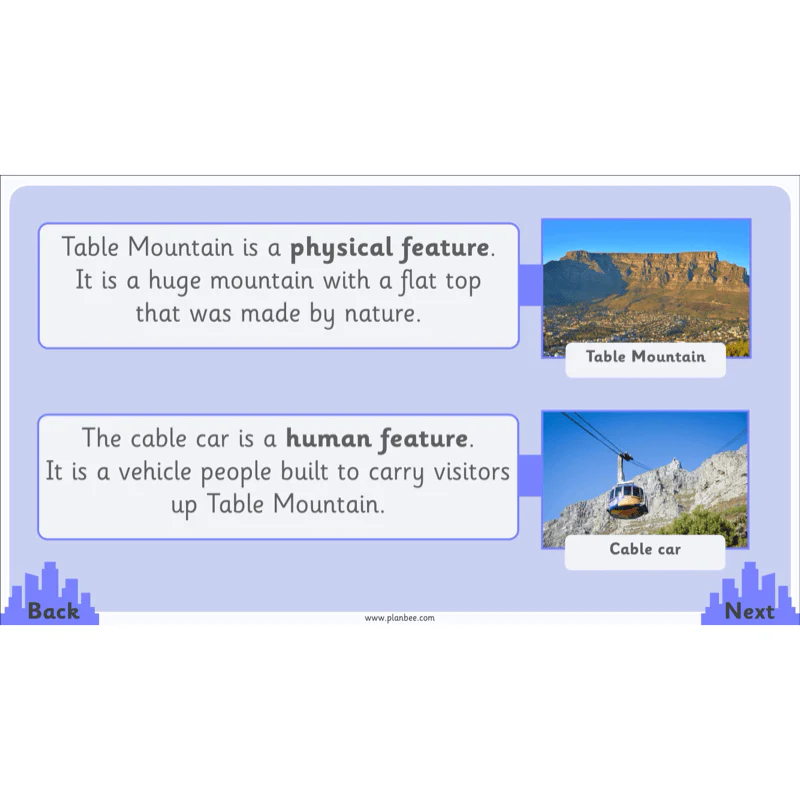
In this first lesson, children will explore the difference between human and physical features by studying pictures, discussing what they can see, and identifying which things are made by people and which are made by nature.
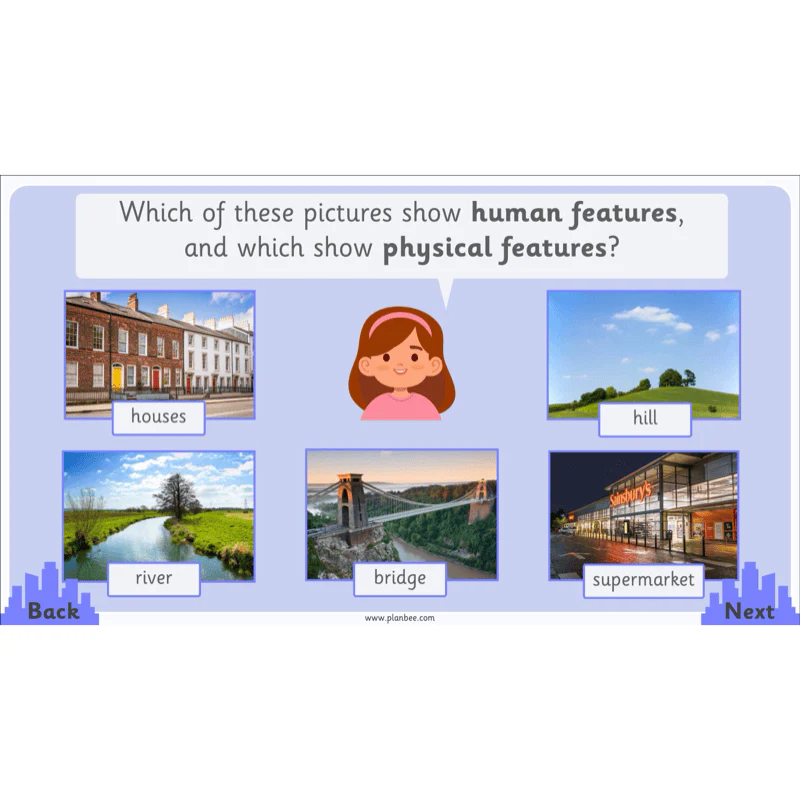
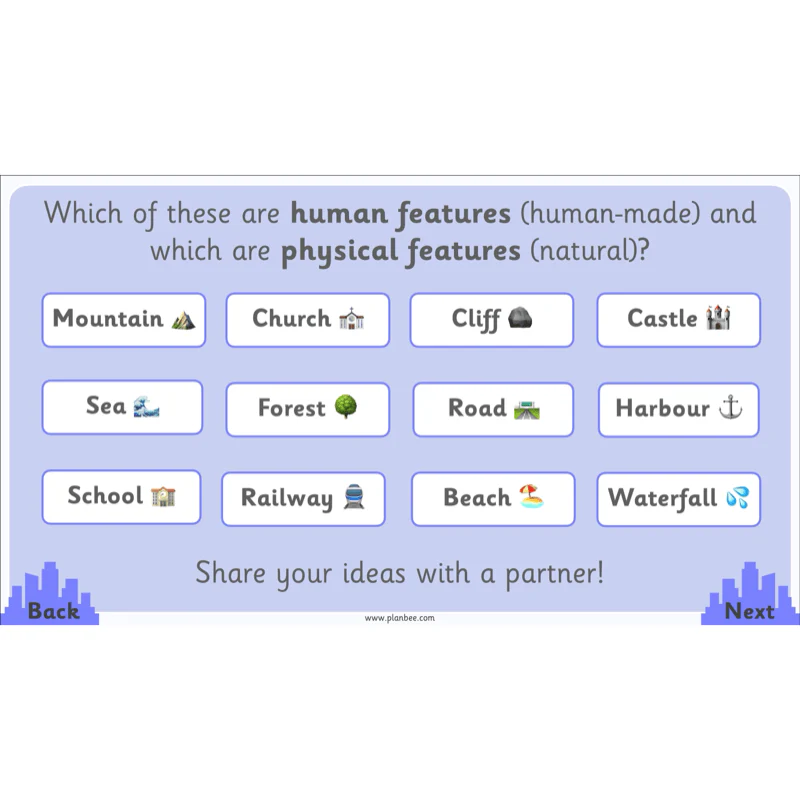
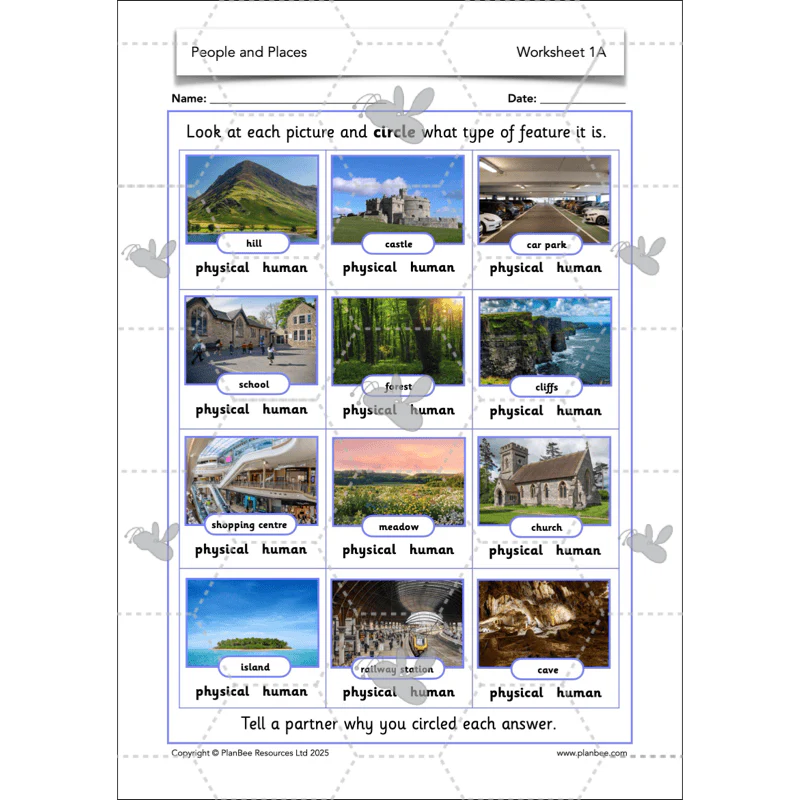
Children will then complete independent activities where they sort and identify pictures of different features, deciding whether each one is a human feature or a physical feature, and explaining their choices.
This ready-to-teach lesson pack includes a detailed plan, a set of informative PDF slides, differentiated activity ideas and printable resources to support your class in their independent learning.
What's included:
- Lesson plan
- Slides
- Activity ideas
- Differentiated worksheets
- Picture Cards
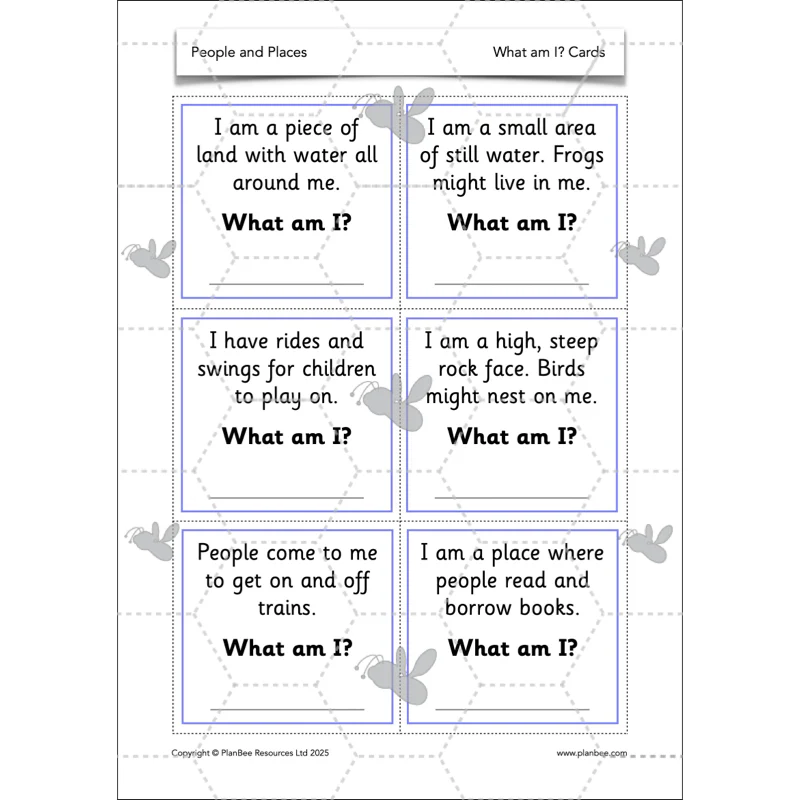
- What am I? Cards
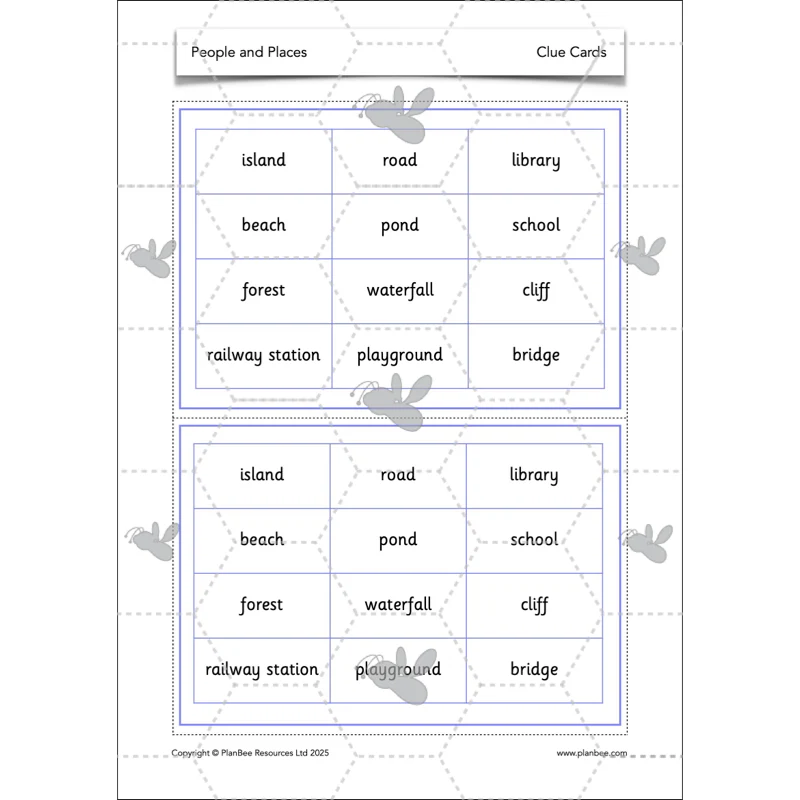
- Clue Cards
Lesson 2: Human Features
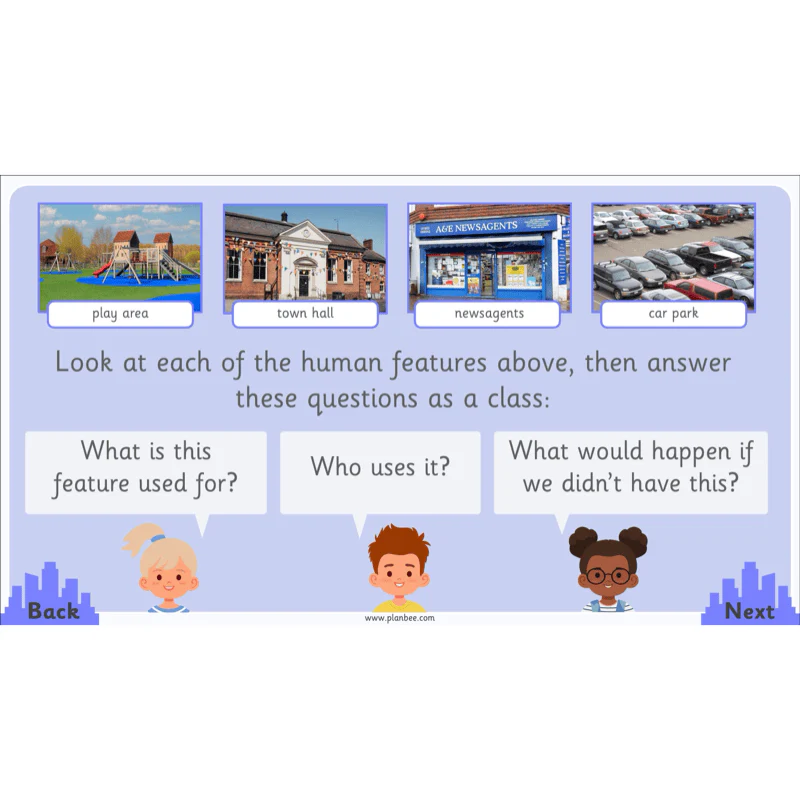
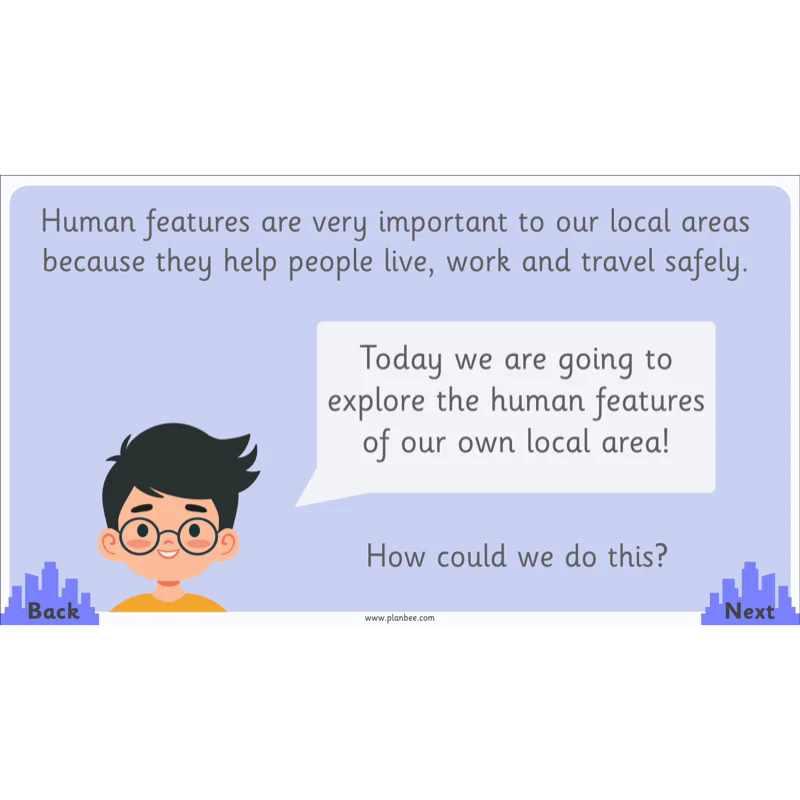
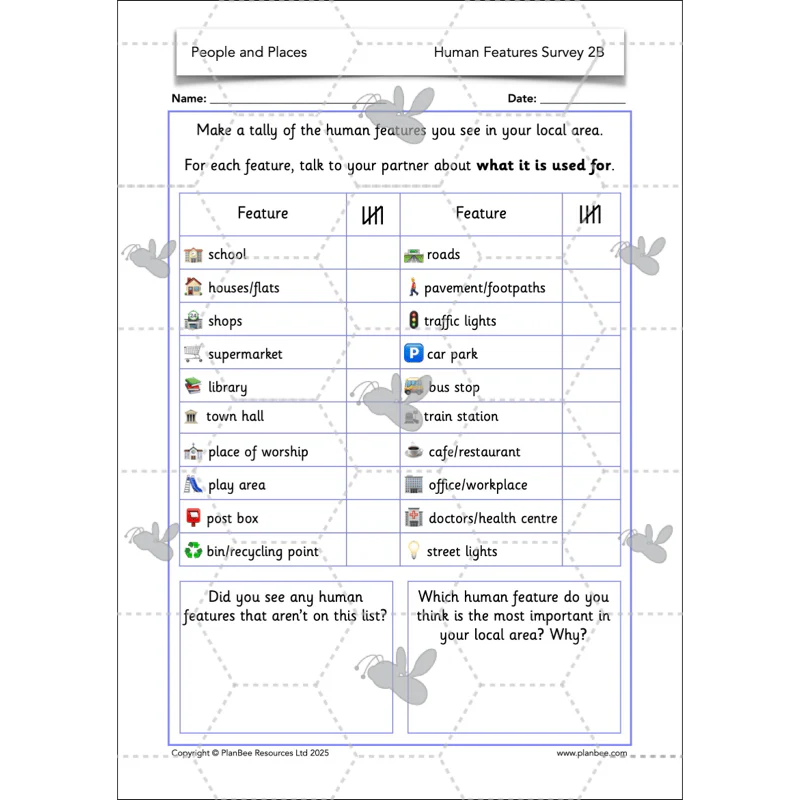
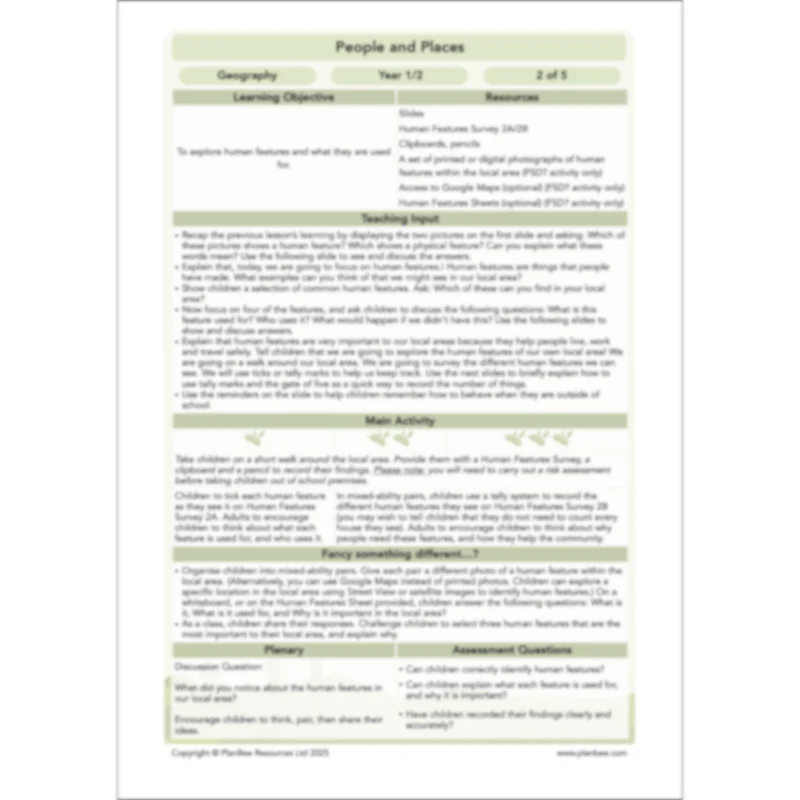
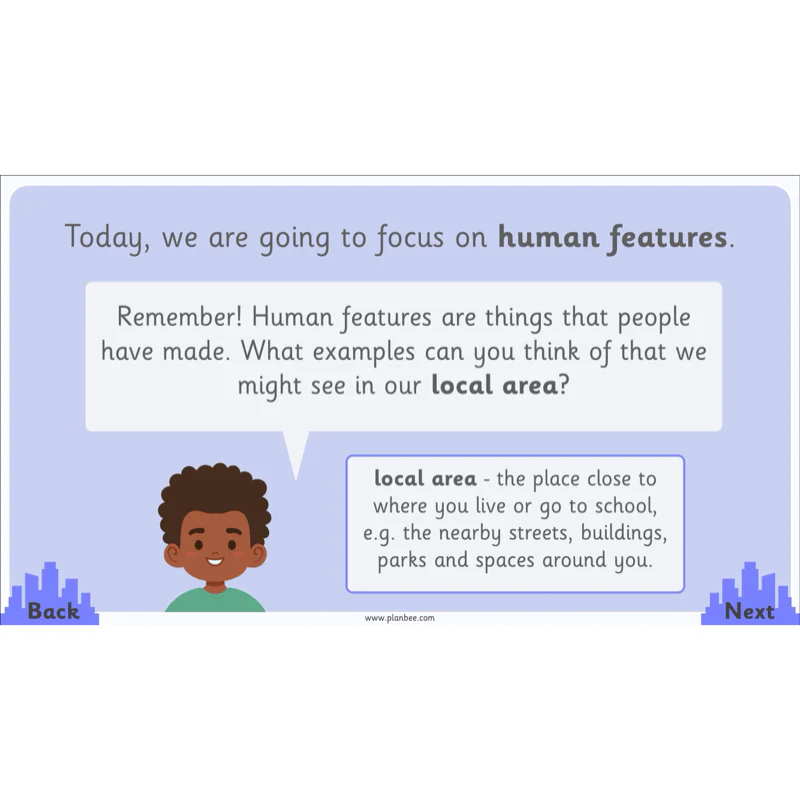
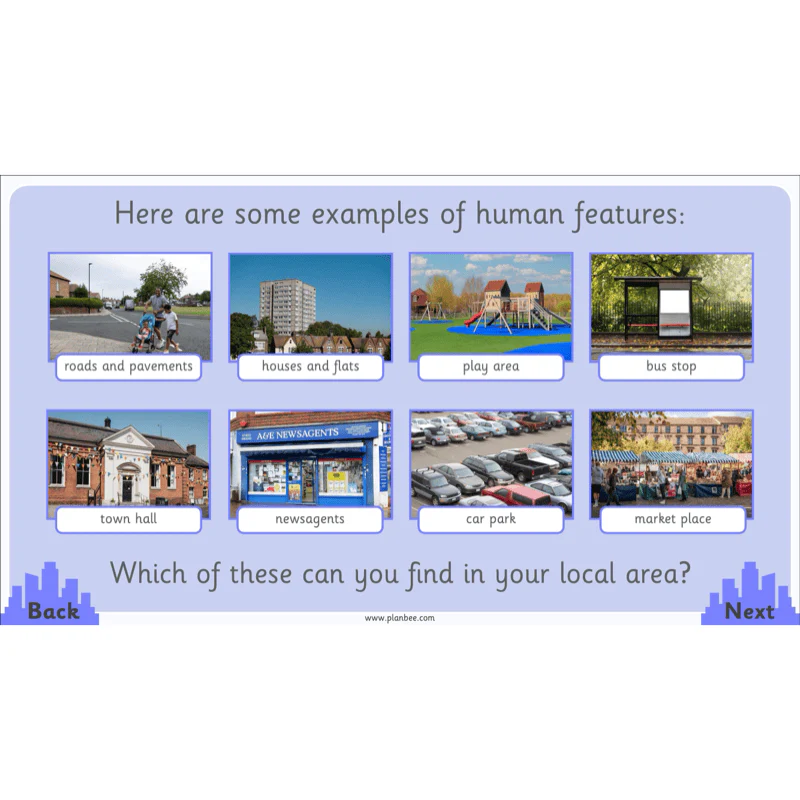
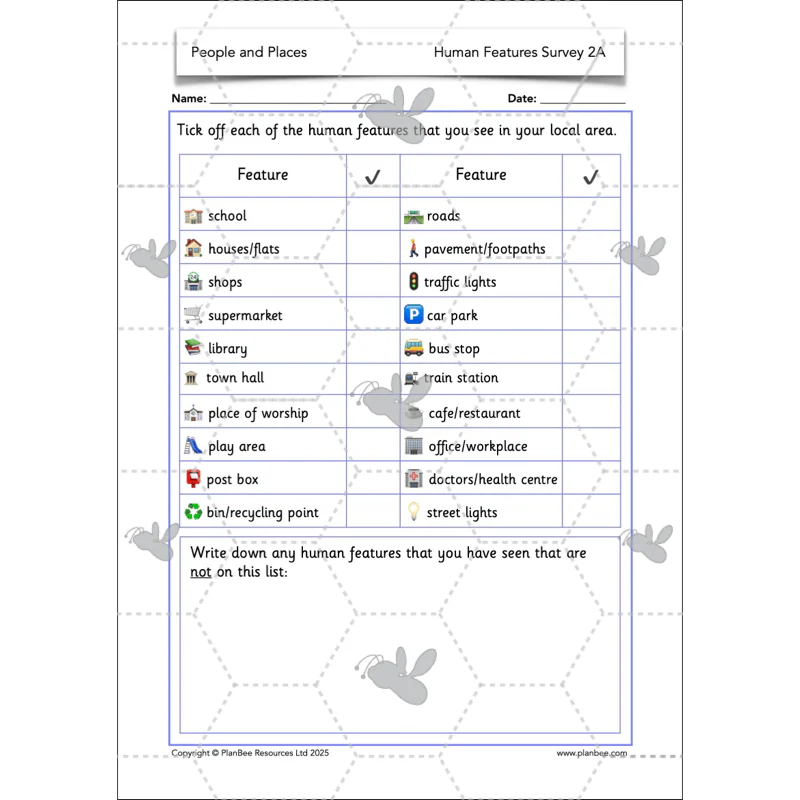
In this lesson, children will focus on human features, discussing examples they might see in the local area, and exploring what these features are used for, who uses them, and why they are important.
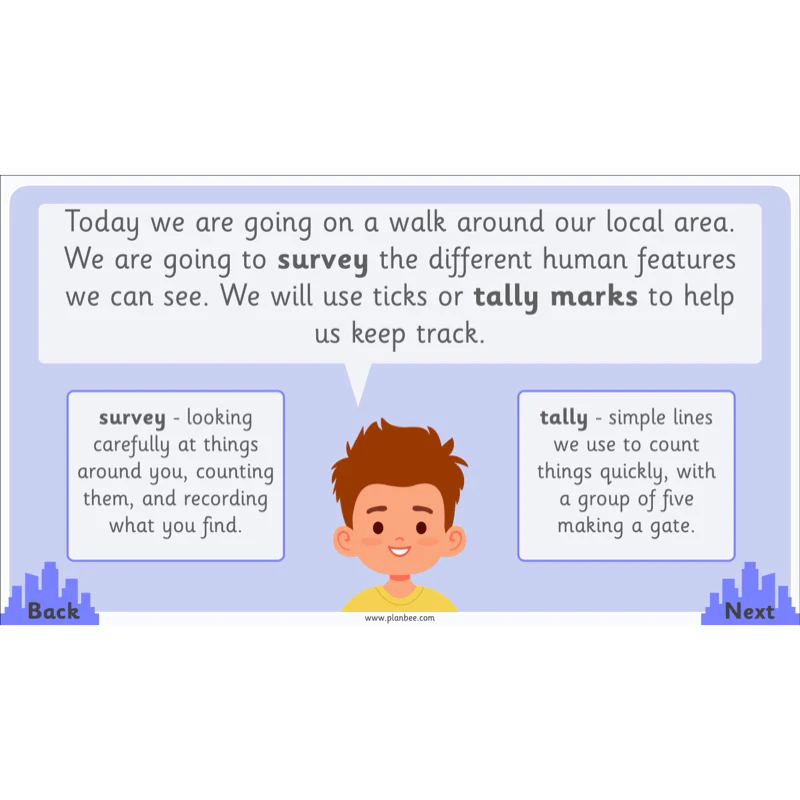
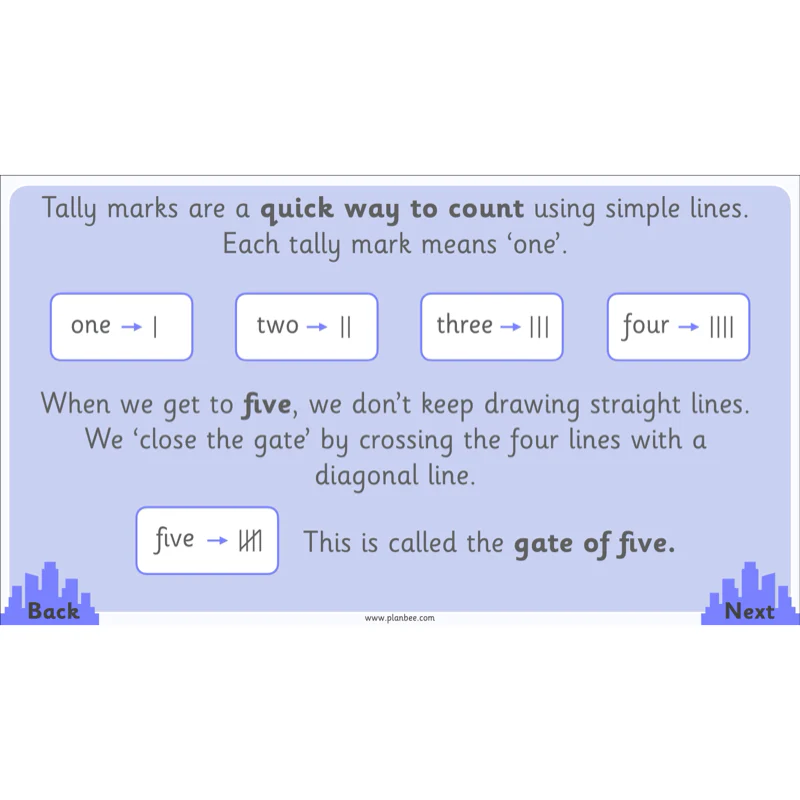
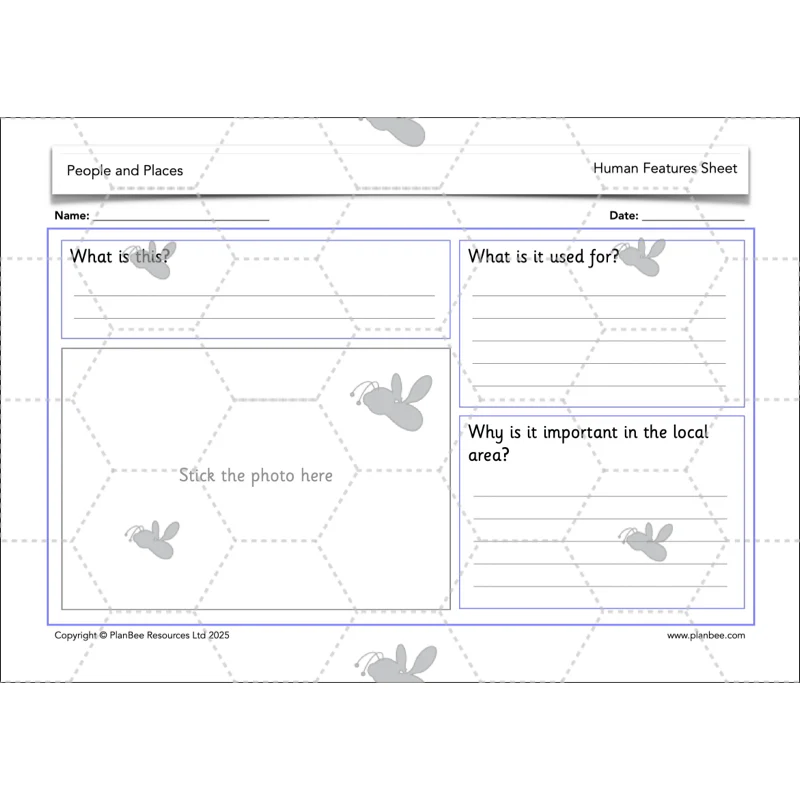
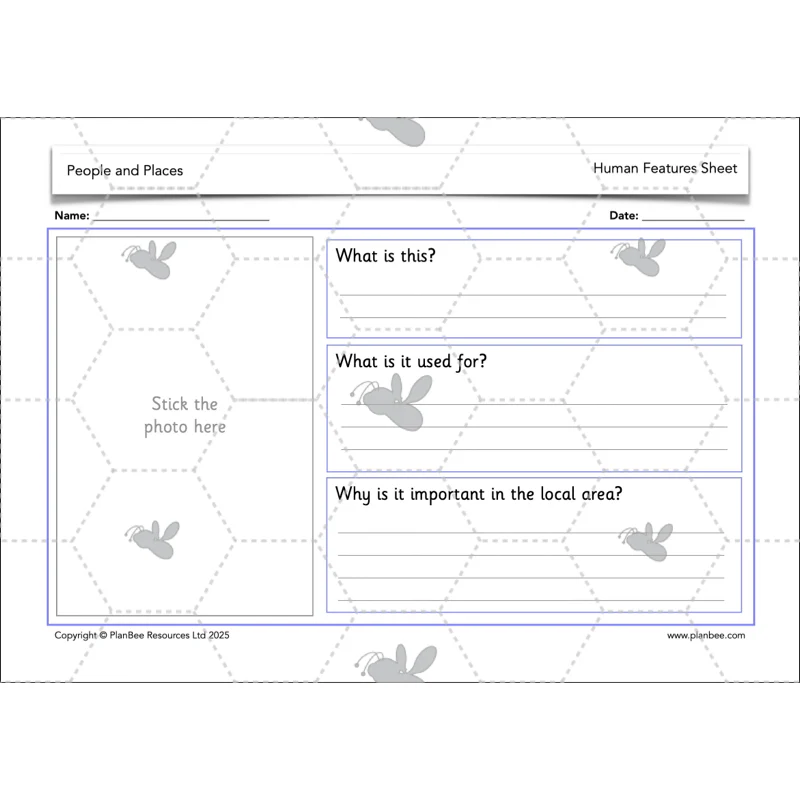
As a class, children will go on a short walk around the local area and record what different human features they can see. In the alternative activity, they look at and answer questions about photographs of local human features.
This ready-to-use lesson pack provides a detailed plan, engaging PDF slides, differentiated activity ideas and a range of printable resources to support children as they work independently.
What's included:
- Lesson plan
- Slides
- Activity ideas
- Human Features Surveys
- Human Features Sheets
Lesson 3: Physical Features
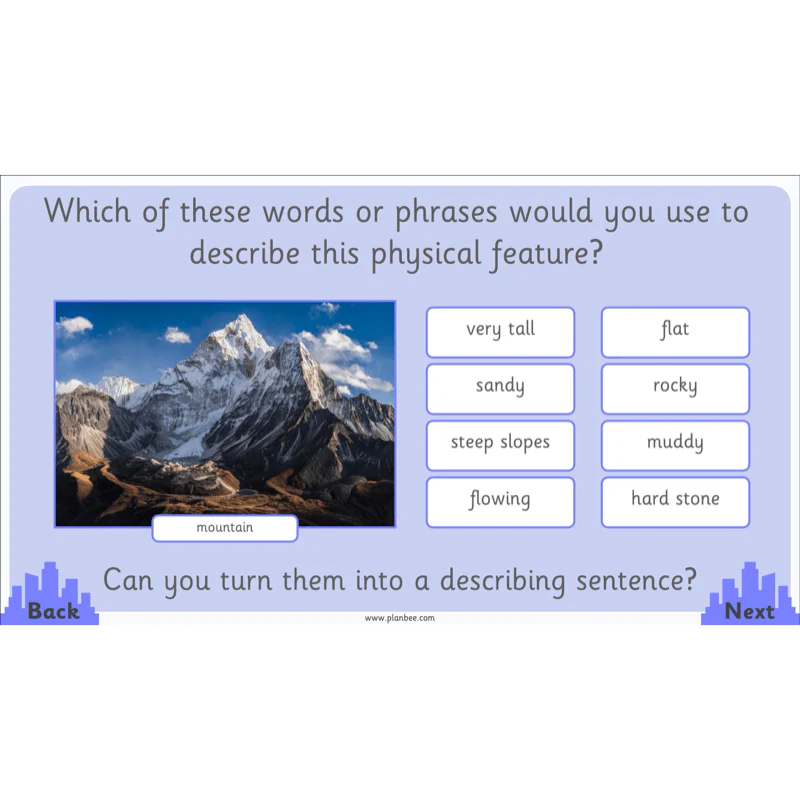
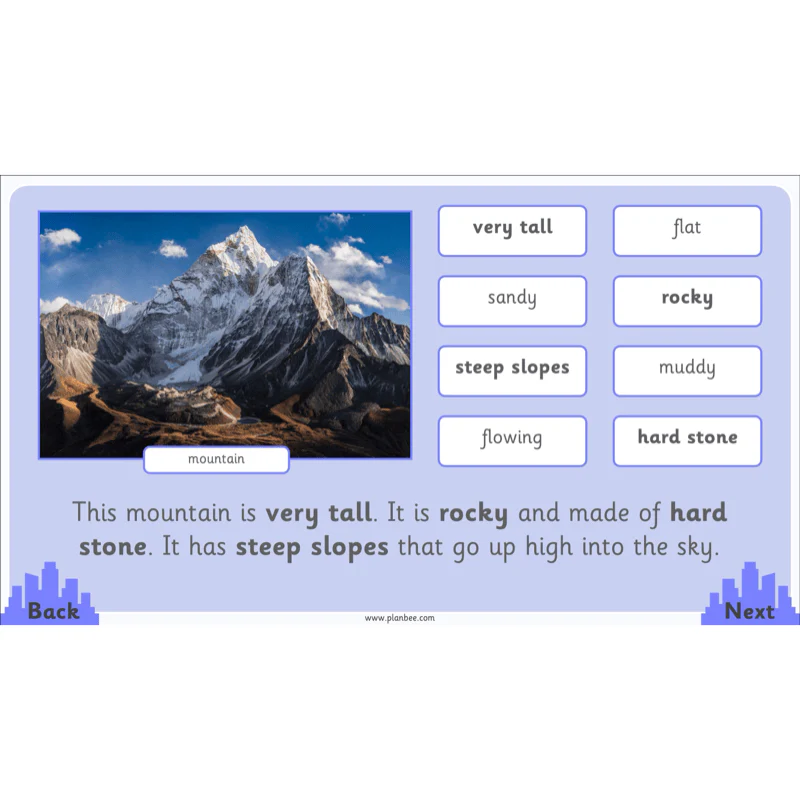
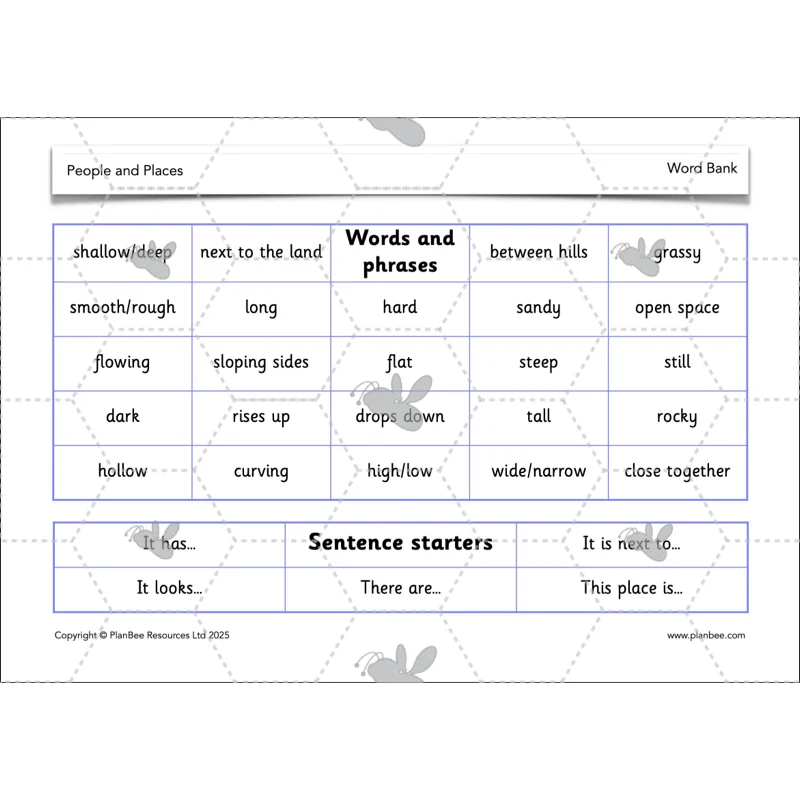
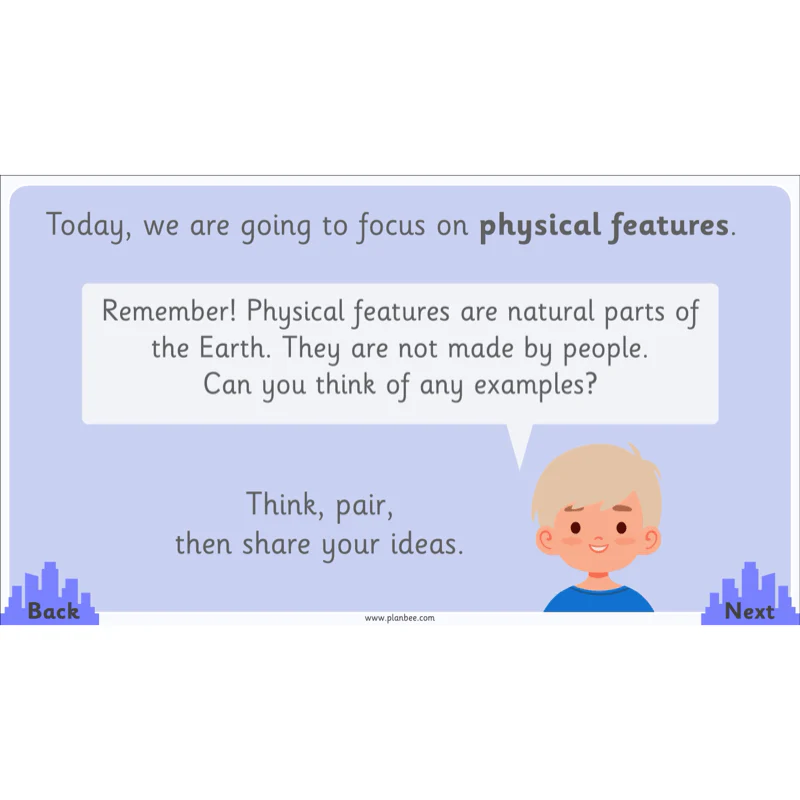
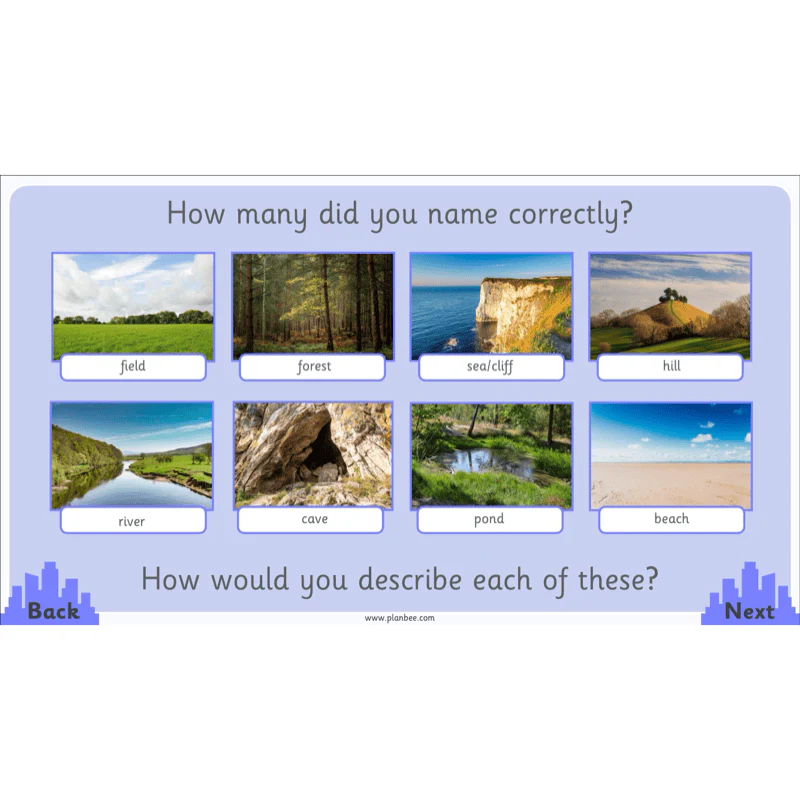
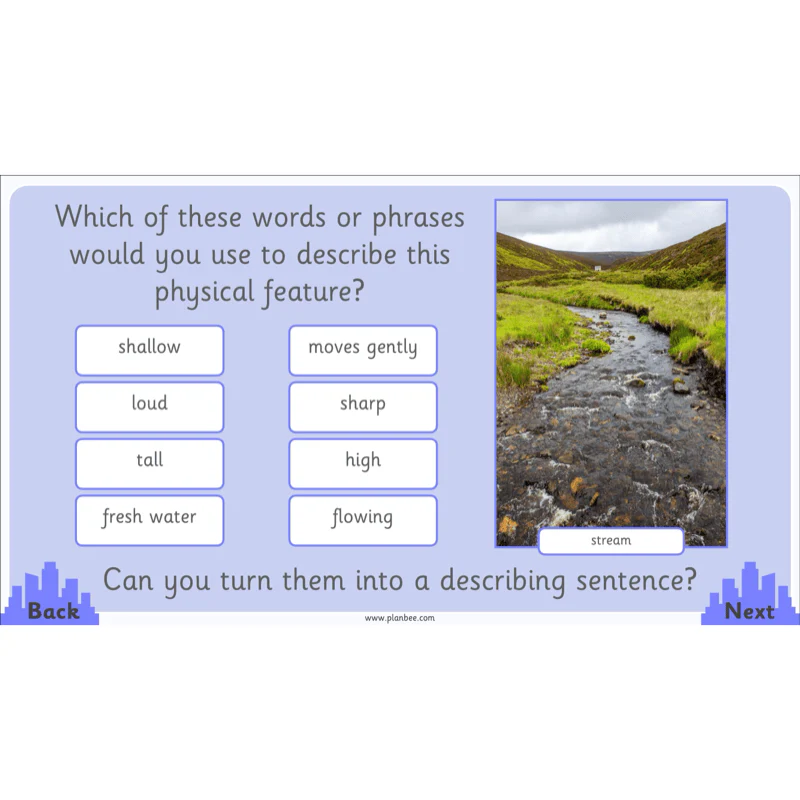
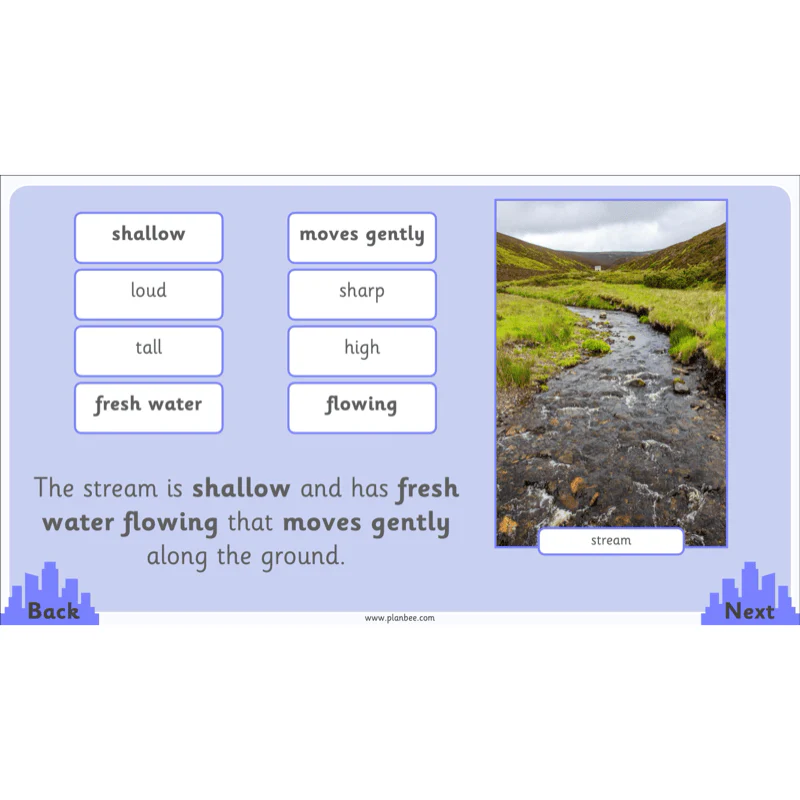
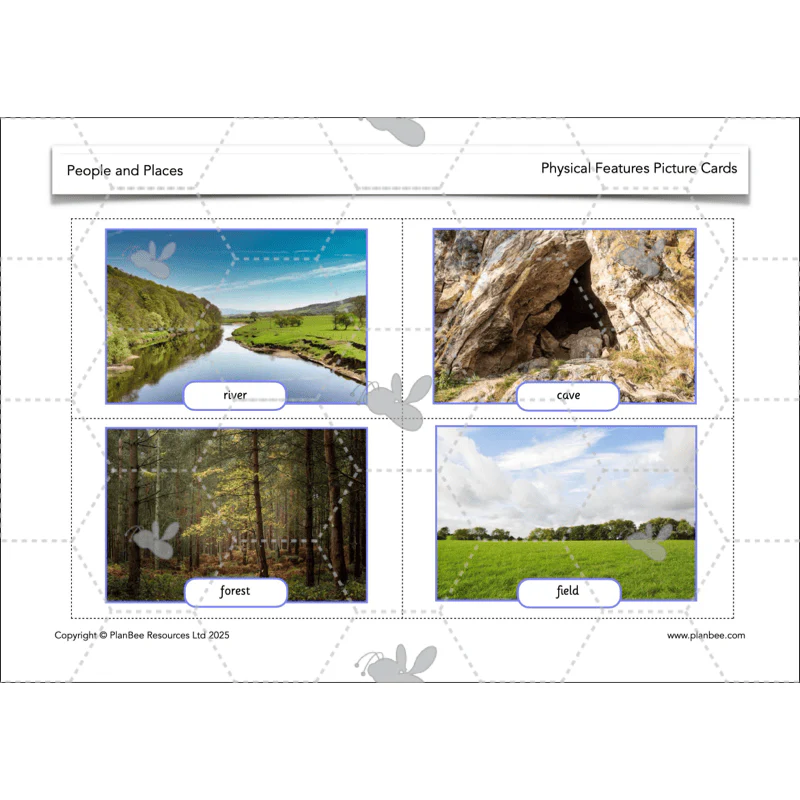
This lesson focuses on physical features. As a class, they are asked to name several physical features, and then talk about the words they would use to describe them.
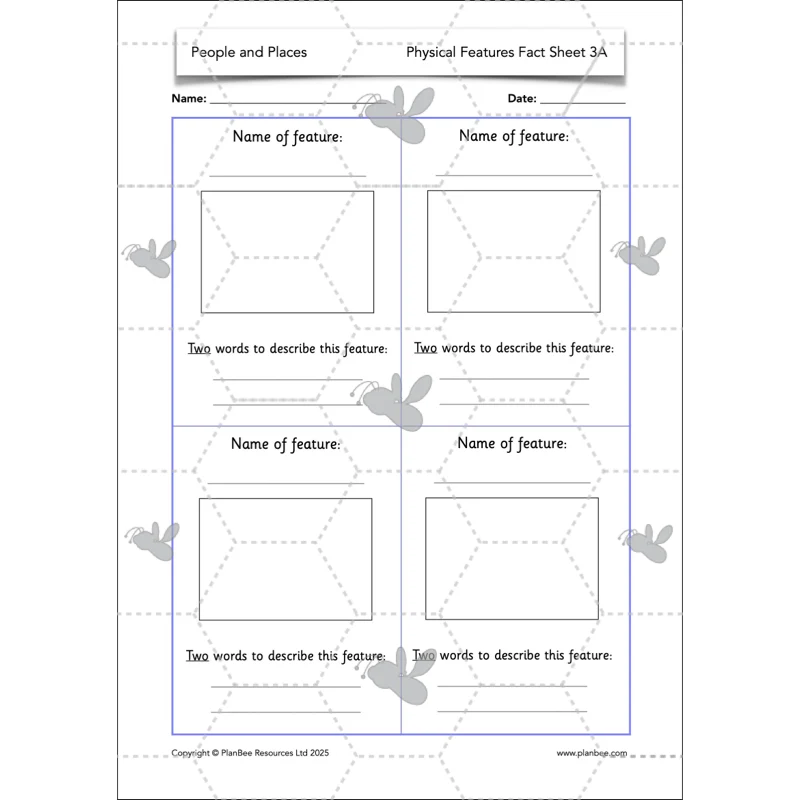
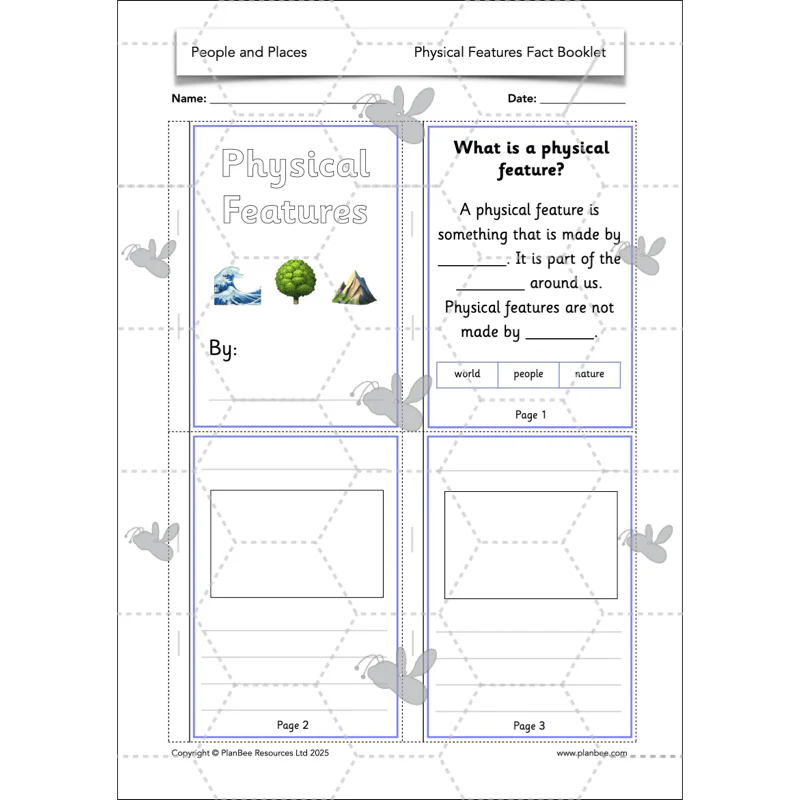
In their independent activities, children create fact sheets or booklets about different physical features. In the alternative activity, children take it in turns to describe a physical feature and their partner guesses which feature it is.
This downloadable lesson pack includes an easy-to-follow plan, a set of engaging PDF slides, differentiated activity ideas and printable resources to support your class in their independent learning.
What's included:
- Lesson plan
- Slides
- Activity ideas
- Physical Features Fact Sheet
- Physical Features Fact Booklet
- Word Bank
- Physical Features Picture Cards
Lesson 4: Aerial Photographs and Maps
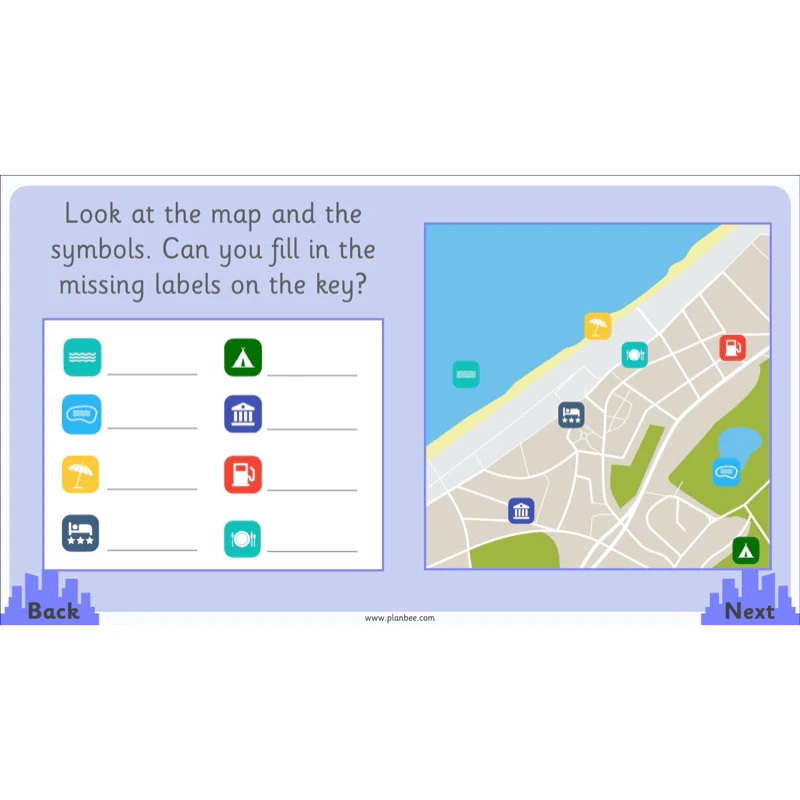
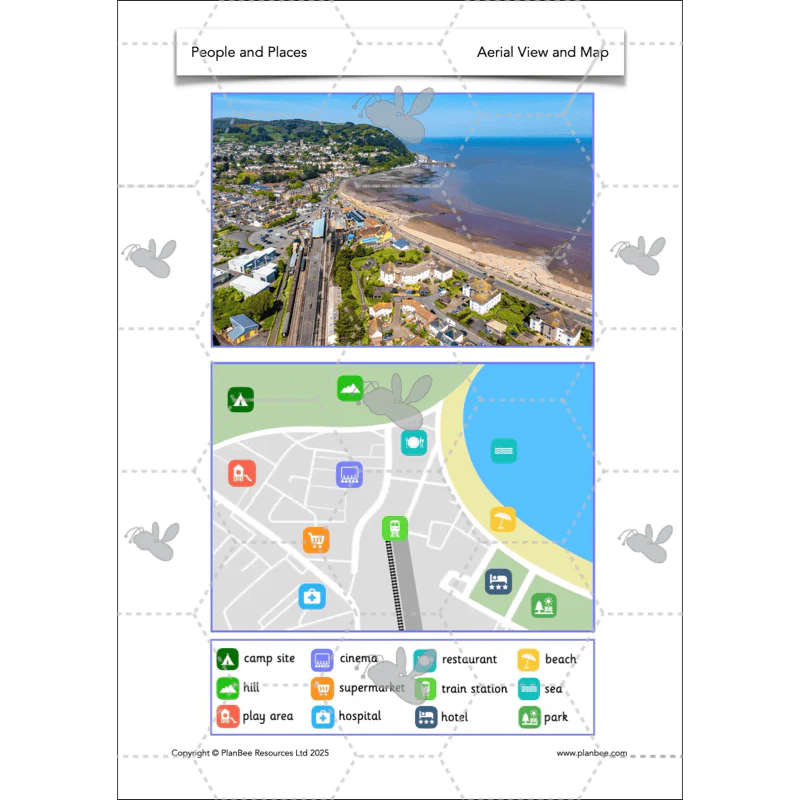
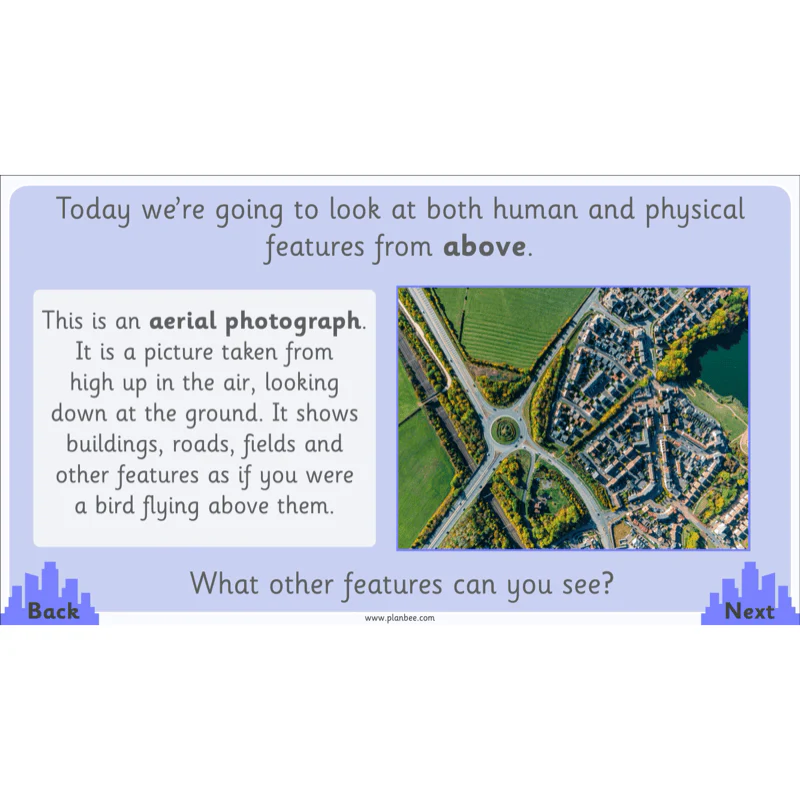
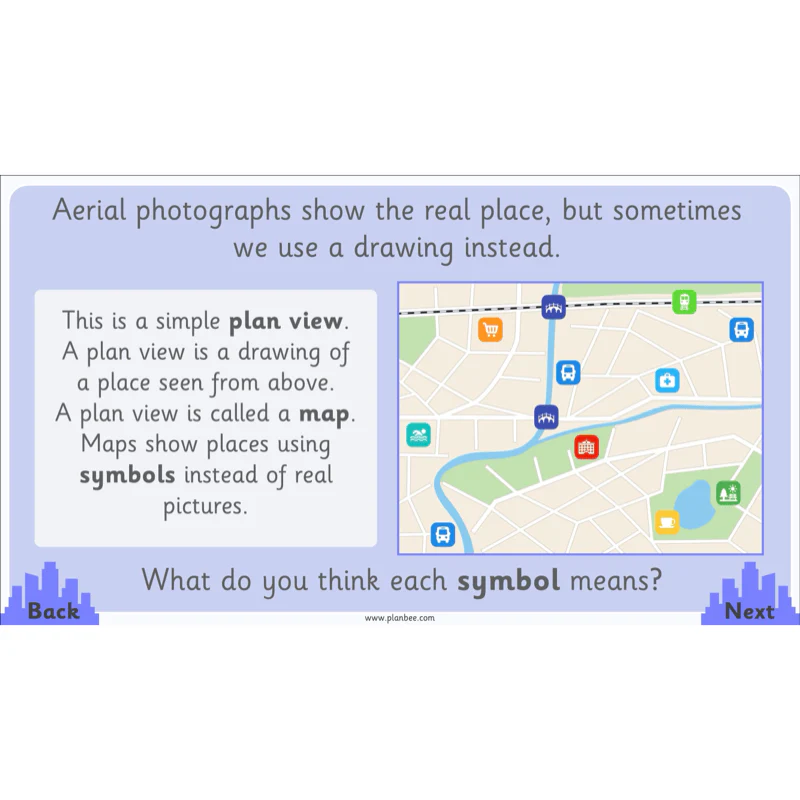
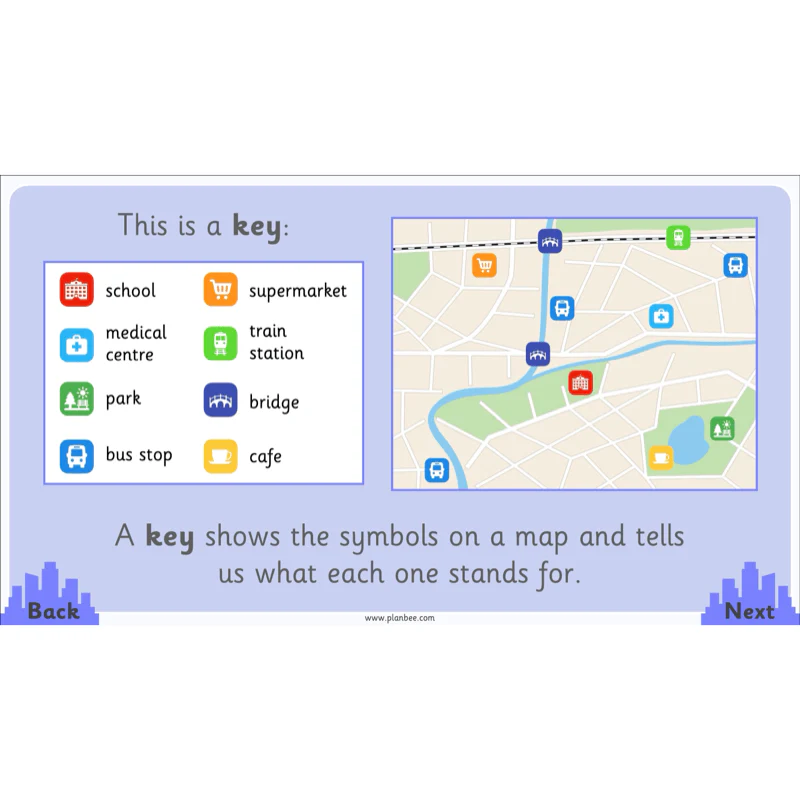
This lesson focuses on using aerial photographs and maps to identify human and physical features. Children start by looking at aerial photographs and talking about the features they can see from above. They are then shown plan views and maps, and learn that maps use symbols and a key to represent real places.
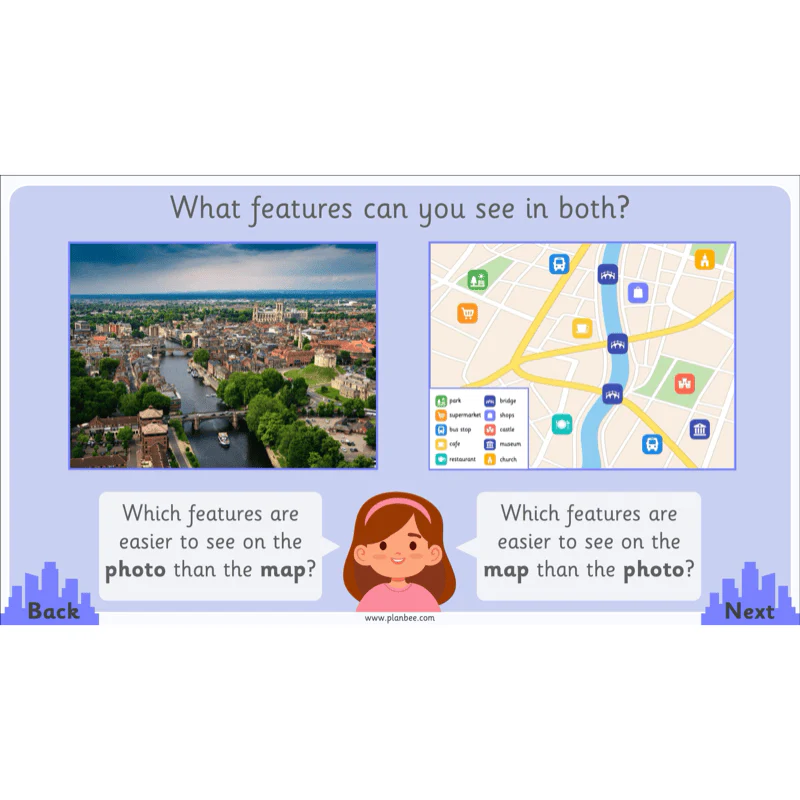
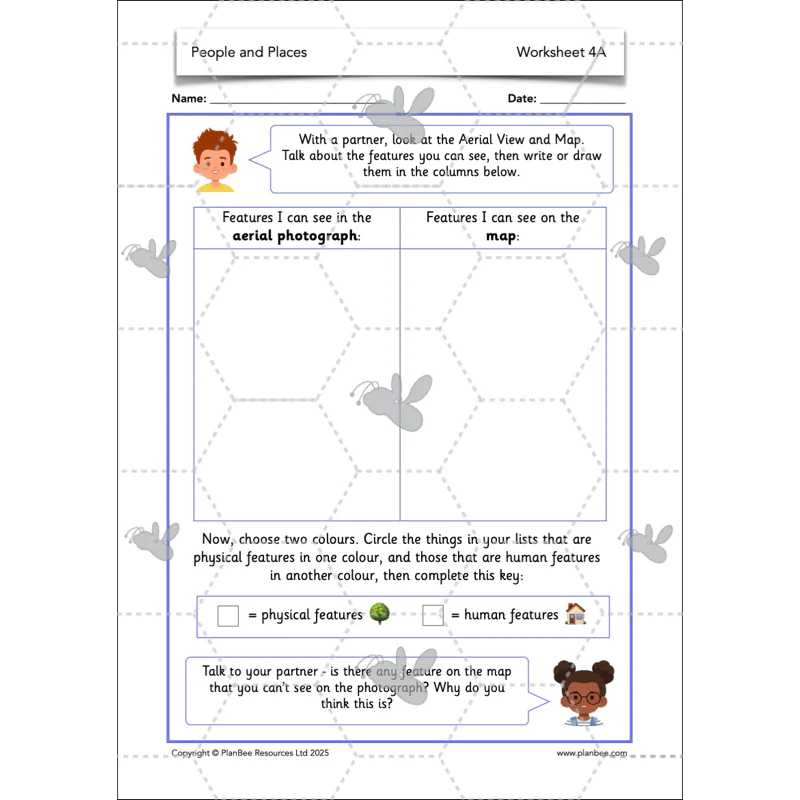
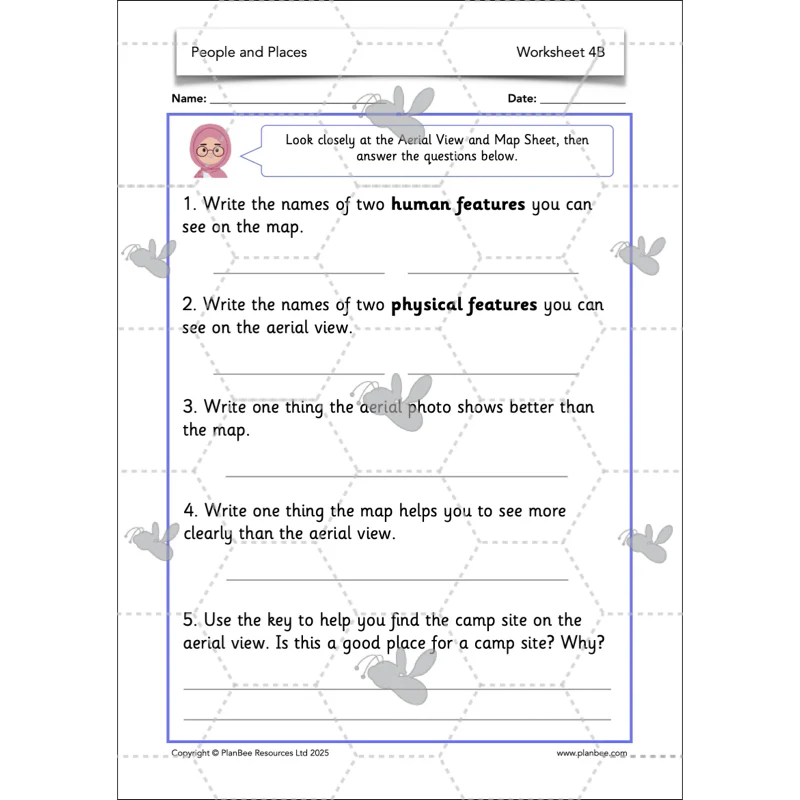
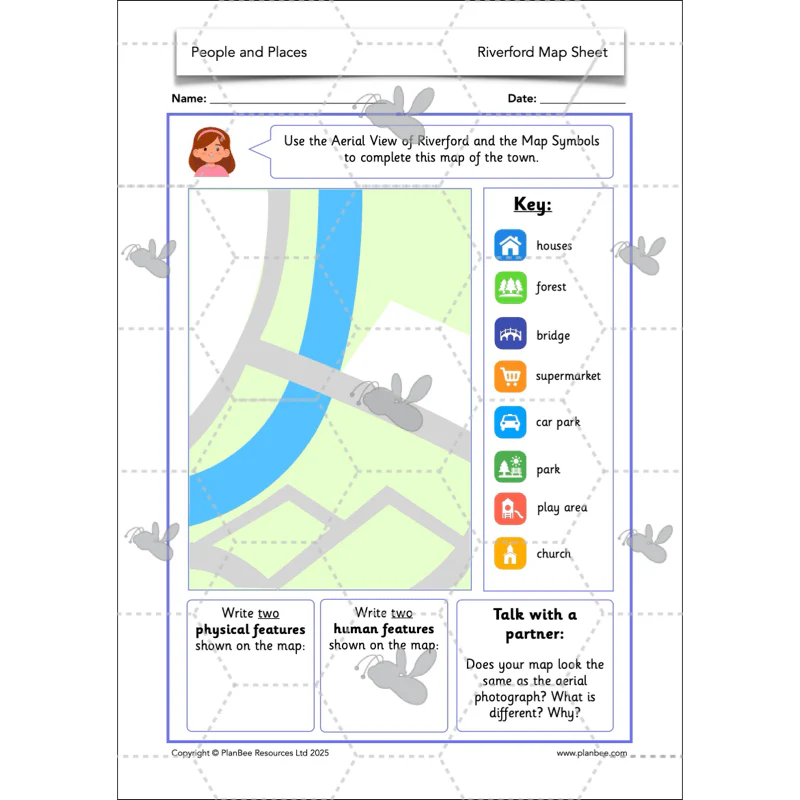
In their independent activities, children compare an aerial photograph with a map of the same place. In the alternative activity, they use an aerial view to add the correct symbols to a map.
This ready-made lesson pack includes a clear lesson plan, interactive PDF slides, differentiated activity options and a selection of printable resources to support children as they work on their own.
What's included:
- Lesson plan
- Slides
- Activity ideas
- Differentiated worksheets
- Aerial View of Riverford
- Riverford Map Sheet
- Map Symbols
Lesson 5: Comparing Cities
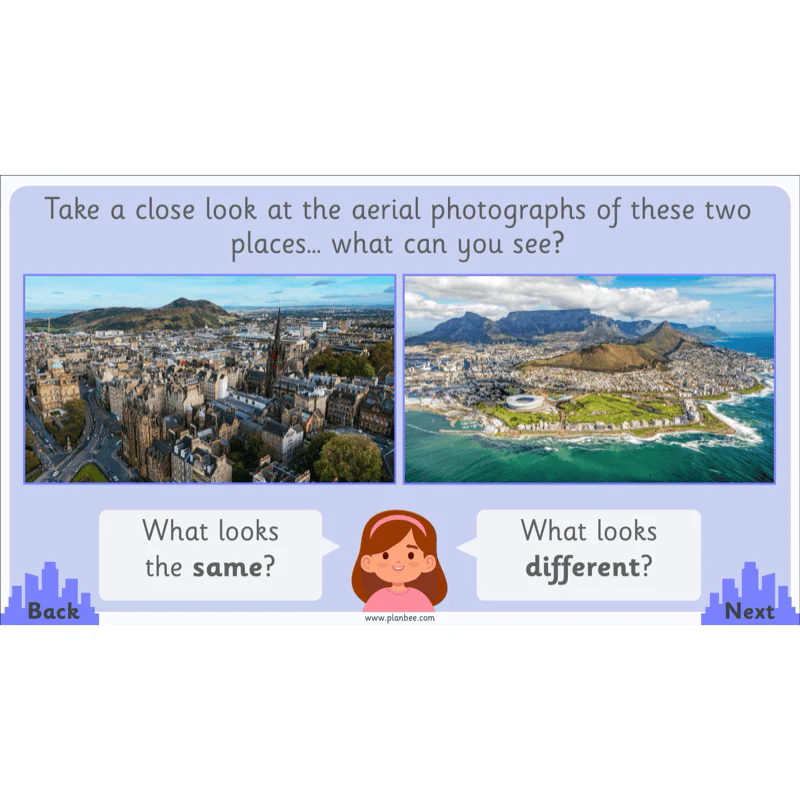
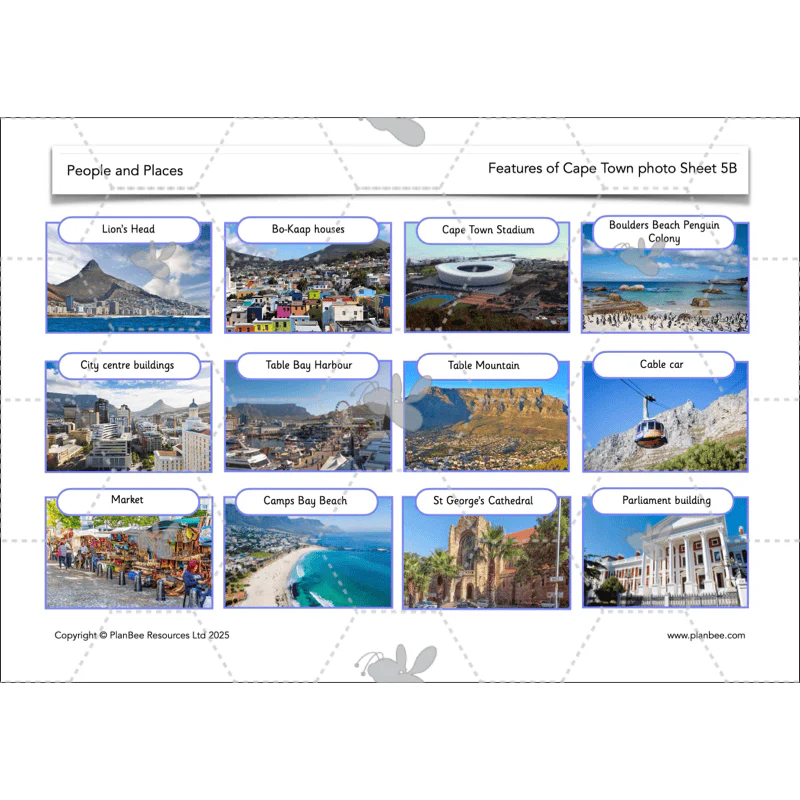
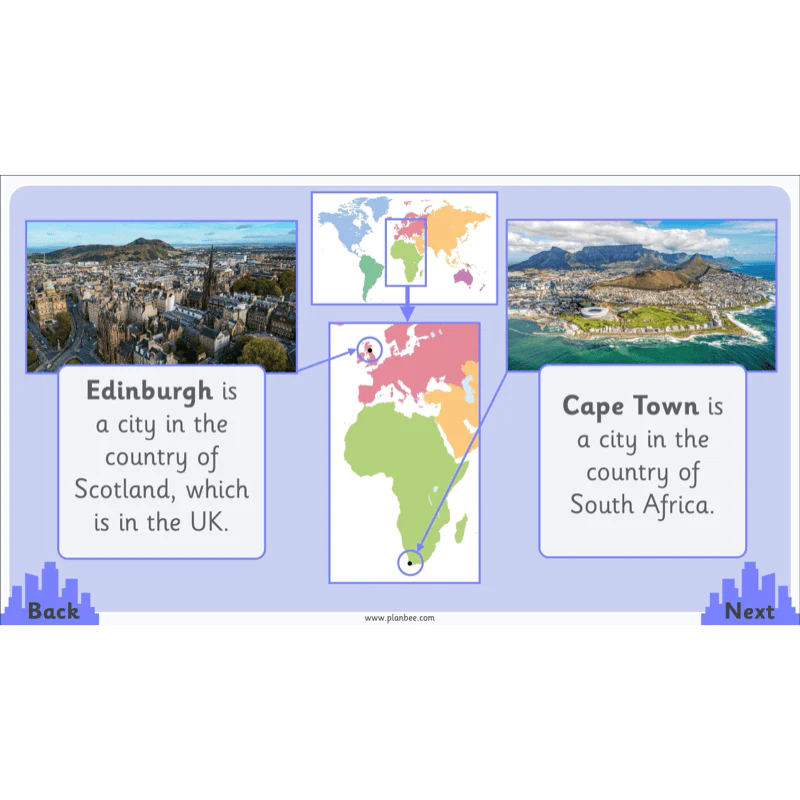
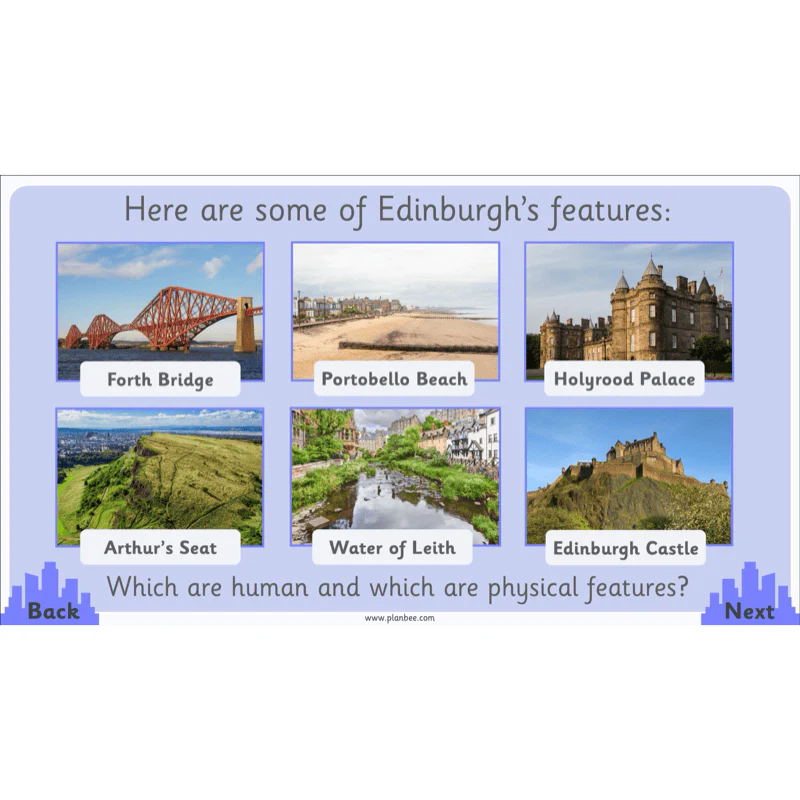
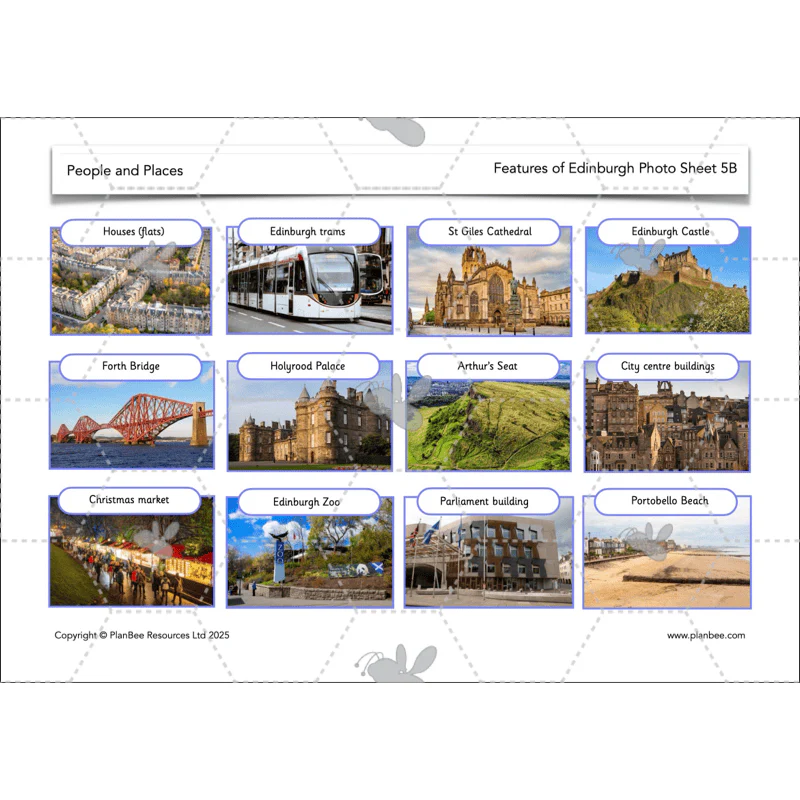
In this final lesson, children explore Edinburgh and Cape Town through photographs that show their human and physical features.
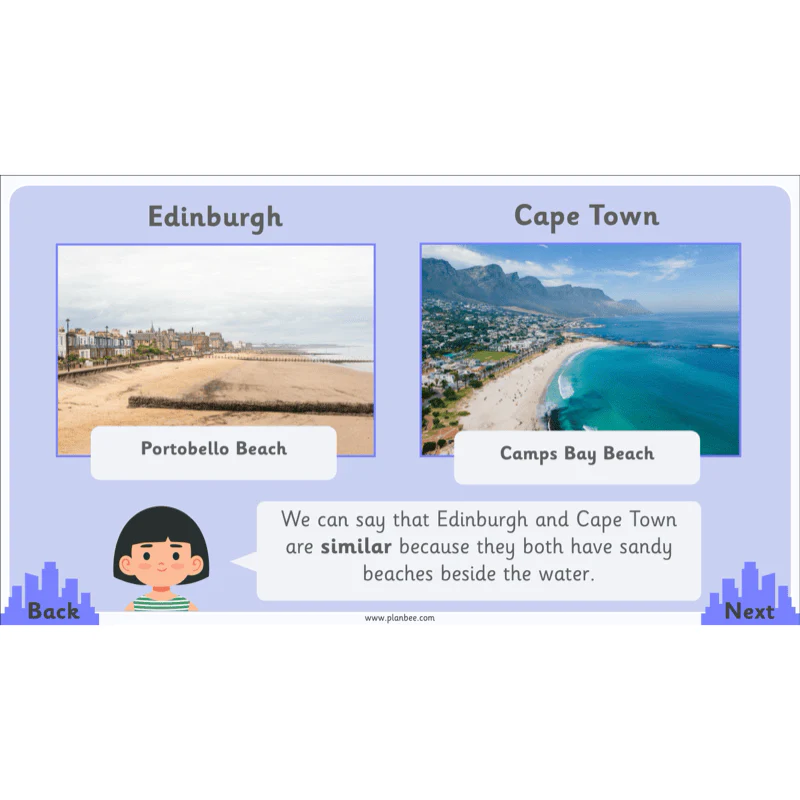
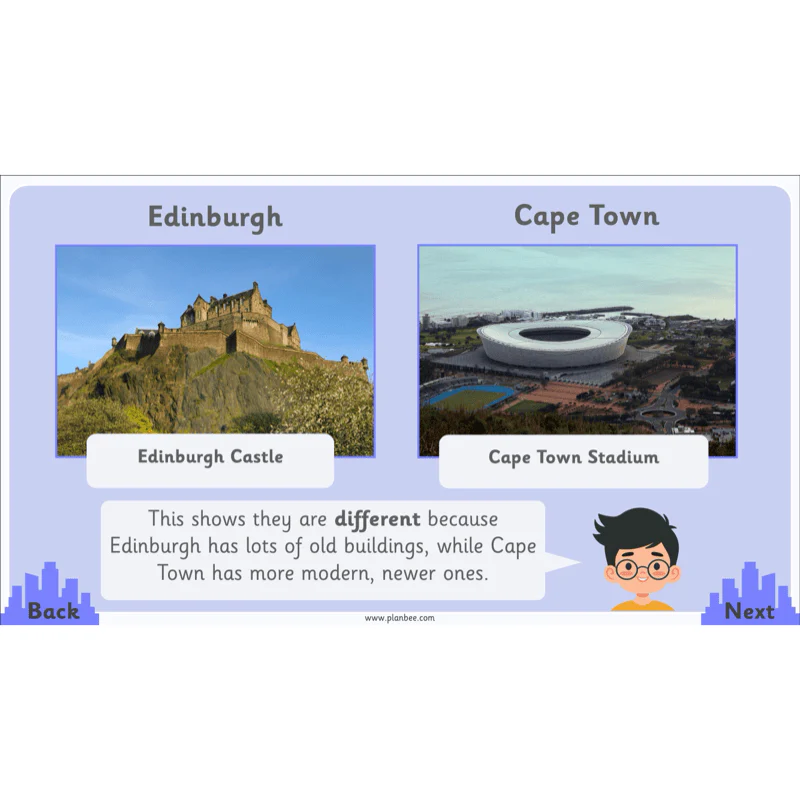
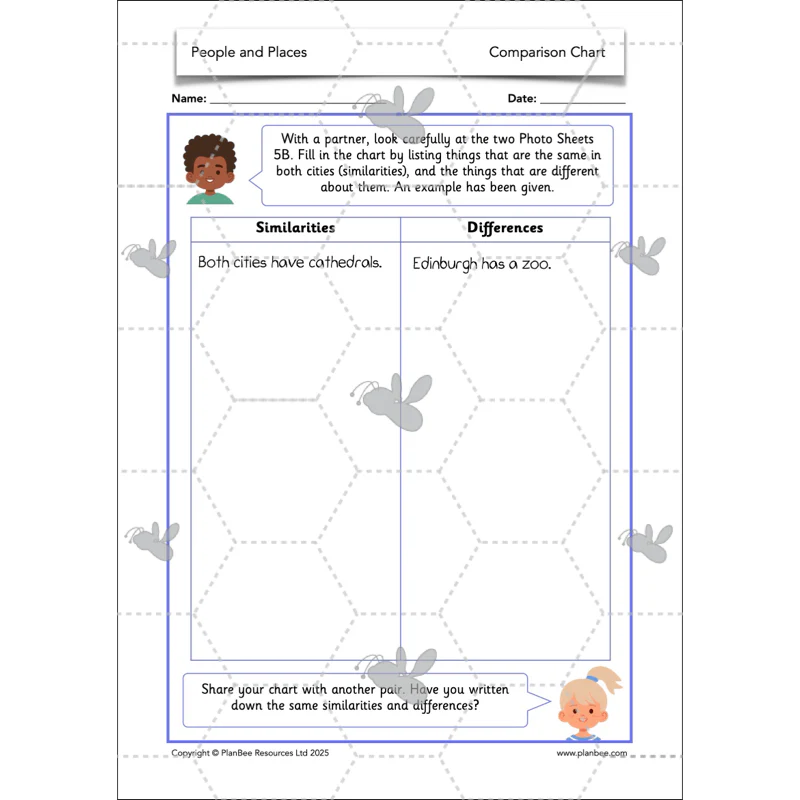
After locating both cities on a world map, children identify key features in each place and compare them, noticing simple similarities and differences. In their independent work, children answer comparison questions or complete charts to show how the two cities are alike and how they differ.
This downloadable lesson pack provides a clear, structured plan, engaging PDF slides, differentiated activity options, and a range of printable resources to support your class during independent work.
What's included:
- Lesson plan
- Slides
- Activity ideas
- Features of Edinburgh Photo Sheets
- Features of Cape Town Photo Sheets
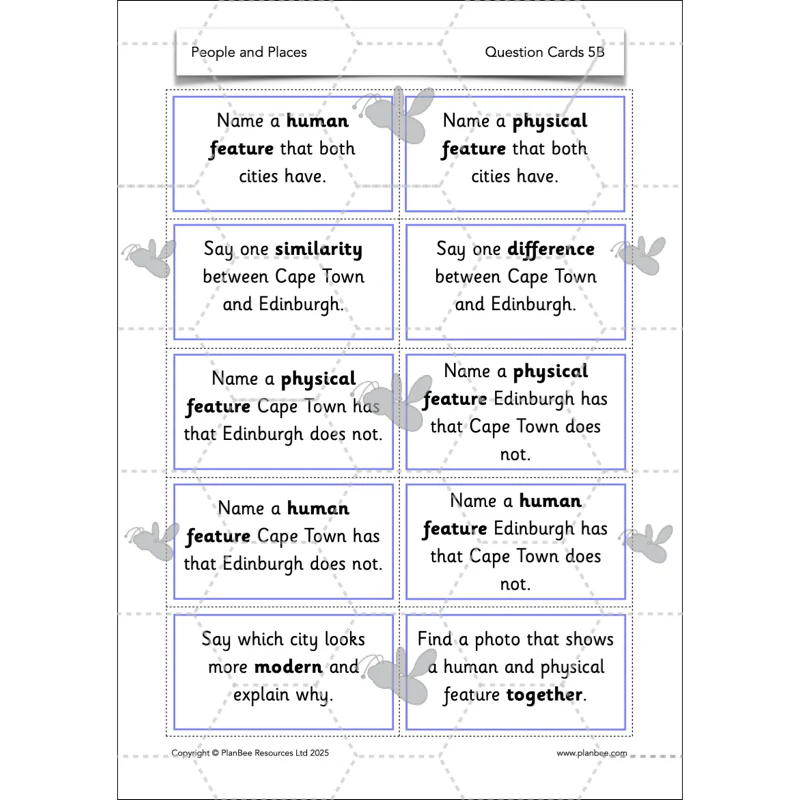
- Question Cards
- Comparison Chart
People and Places: Knowledge Organiser
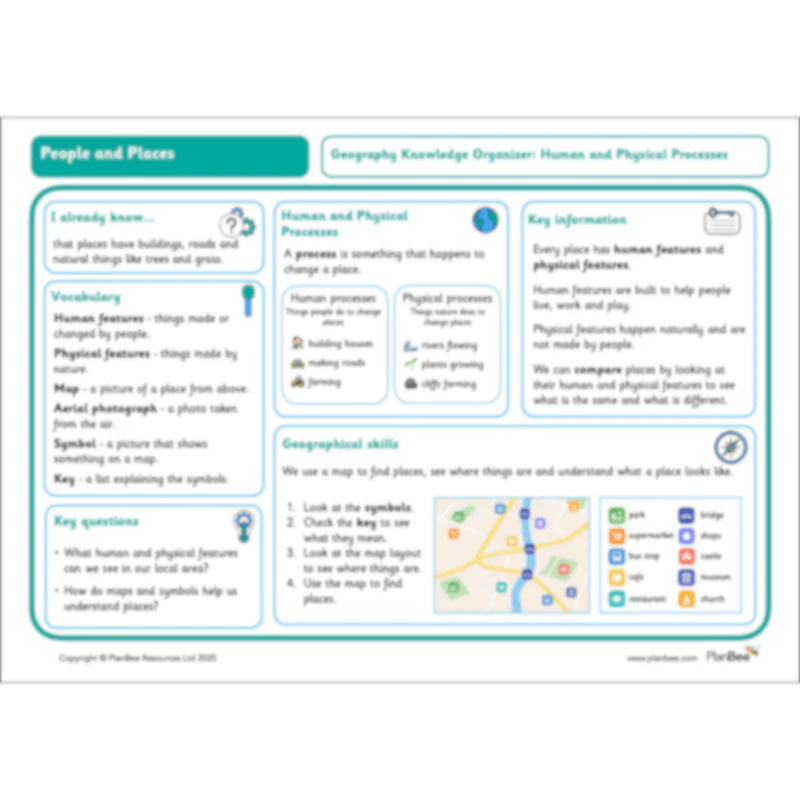
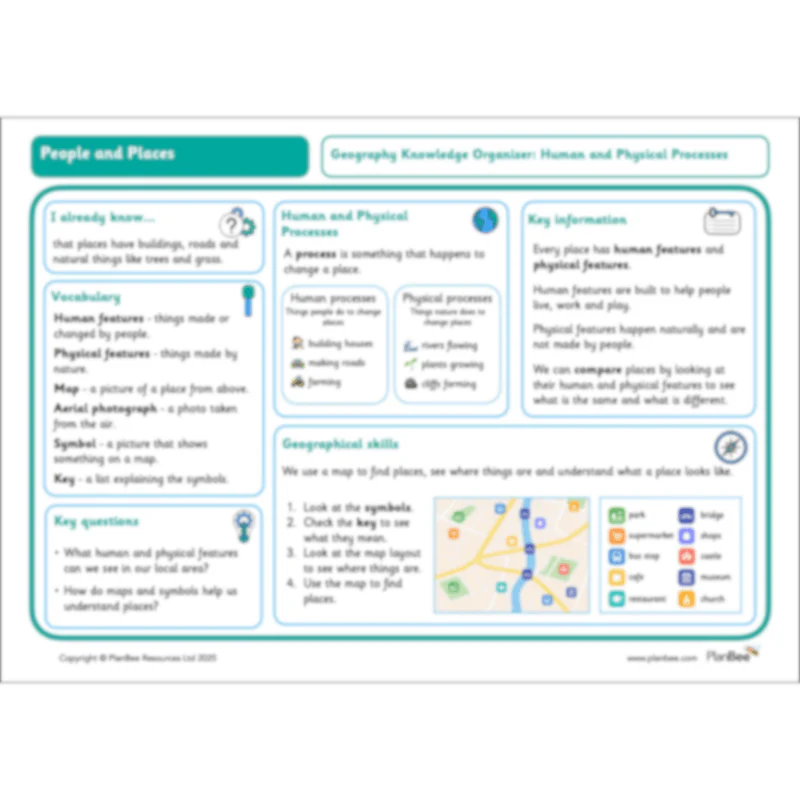
This Year 1/2 Geography Knowledge Organiser has been created to complement our Human and Physical Geography strands. It is designed to support your children’s understanding of key vocabulary linked to this scheme of work. Key questions and relevant geographical skills have been identified to encourage children to apply their knowledge around this topic.
Original: $1.99
-50%$1.99
$1.00More Images
People and Places
Over five engaging lessons, your class will explore what makes different places special by learning about human and physical features. Children discover the difference between natural and human-made features, develop confidence identifying them in real places, and learn how maps and symbols help us represent the world. The unit ends with pupils comparing two different places, using geographical vocabulary to describe similarities and differences.
Each ready-to-teach lesson pack includes a detailed plan, clear and engaging PDF slides for the teaching input, and a variety of printable resources to support both independent and collaborative learning.
A Knowledge Organiser is available to support the learning in this scheme. It is included in the Complete Series download or can be purchased individually.
Lesson 1: Natural or man-made?
In this first lesson, children will explore the difference between human and physical features by studying pictures, discussing what they can see, and identifying which things are made by people and which are made by nature.
Children will then complete independent activities where they sort and identify pictures of different features, deciding whether each one is a human feature or a physical feature, and explaining their choices.
This ready-to-teach lesson pack includes a detailed plan, a set of informative PDF slides, differentiated activity ideas and printable resources to support your class in their independent learning.
What's included:
- Lesson plan
- Slides
- Activity ideas
- Differentiated worksheets
- Picture Cards
- What am I? Cards
- Clue Cards
Lesson 2: Human Features
In this lesson, children will focus on human features, discussing examples they might see in the local area, and exploring what these features are used for, who uses them, and why they are important.
As a class, children will go on a short walk around the local area and record what different human features they can see. In the alternative activity, they look at and answer questions about photographs of local human features.
This ready-to-use lesson pack provides a detailed plan, engaging PDF slides, differentiated activity ideas and a range of printable resources to support children as they work independently.
What's included:
- Lesson plan
- Slides
- Activity ideas
- Human Features Surveys
- Human Features Sheets
Lesson 3: Physical Features
This lesson focuses on physical features. As a class, they are asked to name several physical features, and then talk about the words they would use to describe them.
In their independent activities, children create fact sheets or booklets about different physical features. In the alternative activity, children take it in turns to describe a physical feature and their partner guesses which feature it is.
This downloadable lesson pack includes an easy-to-follow plan, a set of engaging PDF slides, differentiated activity ideas and printable resources to support your class in their independent learning.
What's included:
- Lesson plan
- Slides
- Activity ideas
- Physical Features Fact Sheet
- Physical Features Fact Booklet
- Word Bank
- Physical Features Picture Cards
Lesson 4: Aerial Photographs and Maps
This lesson focuses on using aerial photographs and maps to identify human and physical features. Children start by looking at aerial photographs and talking about the features they can see from above. They are then shown plan views and maps, and learn that maps use symbols and a key to represent real places.
In their independent activities, children compare an aerial photograph with a map of the same place. In the alternative activity, they use an aerial view to add the correct symbols to a map.
This ready-made lesson pack includes a clear lesson plan, interactive PDF slides, differentiated activity options and a selection of printable resources to support children as they work on their own.
What's included:
- Lesson plan
- Slides
- Activity ideas
- Differentiated worksheets
- Aerial View of Riverford
- Riverford Map Sheet
- Map Symbols
Lesson 5: Comparing Cities
In this final lesson, children explore Edinburgh and Cape Town through photographs that show their human and physical features.
After locating both cities on a world map, children identify key features in each place and compare them, noticing simple similarities and differences. In their independent work, children answer comparison questions or complete charts to show how the two cities are alike and how they differ.
This downloadable lesson pack provides a clear, structured plan, engaging PDF slides, differentiated activity options, and a range of printable resources to support your class during independent work.
What's included:
- Lesson plan
- Slides
- Activity ideas
- Features of Edinburgh Photo Sheets
- Features of Cape Town Photo Sheets
- Question Cards
- Comparison Chart
People and Places: Knowledge Organiser
This Year 1/2 Geography Knowledge Organiser has been created to complement our Human and Physical Geography strands. It is designed to support your children’s understanding of key vocabulary linked to this scheme of work. Key questions and relevant geographical skills have been identified to encourage children to apply their knowledge around this topic.
Product Information
Product Information
Shipping & Returns
Shipping & Returns
Description
Over five engaging lessons, your class will explore what makes different places special by learning about human and physical features. Children discover the difference between natural and human-made features, develop confidence identifying them in real places, and learn how maps and symbols help us represent the world. The unit ends with pupils comparing two different places, using geographical vocabulary to describe similarities and differences.
Each ready-to-teach lesson pack includes a detailed plan, clear and engaging PDF slides for the teaching input, and a variety of printable resources to support both independent and collaborative learning.
A Knowledge Organiser is available to support the learning in this scheme. It is included in the Complete Series download or can be purchased individually.
Lesson 1: Natural or man-made?
In this first lesson, children will explore the difference between human and physical features by studying pictures, discussing what they can see, and identifying which things are made by people and which are made by nature.
Children will then complete independent activities where they sort and identify pictures of different features, deciding whether each one is a human feature or a physical feature, and explaining their choices.
This ready-to-teach lesson pack includes a detailed plan, a set of informative PDF slides, differentiated activity ideas and printable resources to support your class in their independent learning.
What's included:
- Lesson plan
- Slides
- Activity ideas
- Differentiated worksheets
- Picture Cards
- What am I? Cards
- Clue Cards
Lesson 2: Human Features
In this lesson, children will focus on human features, discussing examples they might see in the local area, and exploring what these features are used for, who uses them, and why they are important.
As a class, children will go on a short walk around the local area and record what different human features they can see. In the alternative activity, they look at and answer questions about photographs of local human features.
This ready-to-use lesson pack provides a detailed plan, engaging PDF slides, differentiated activity ideas and a range of printable resources to support children as they work independently.
What's included:
- Lesson plan
- Slides
- Activity ideas
- Human Features Surveys
- Human Features Sheets
Lesson 3: Physical Features
This lesson focuses on physical features. As a class, they are asked to name several physical features, and then talk about the words they would use to describe them.
In their independent activities, children create fact sheets or booklets about different physical features. In the alternative activity, children take it in turns to describe a physical feature and their partner guesses which feature it is.
This downloadable lesson pack includes an easy-to-follow plan, a set of engaging PDF slides, differentiated activity ideas and printable resources to support your class in their independent learning.
What's included:
- Lesson plan
- Slides
- Activity ideas
- Physical Features Fact Sheet
- Physical Features Fact Booklet
- Word Bank
- Physical Features Picture Cards
Lesson 4: Aerial Photographs and Maps
This lesson focuses on using aerial photographs and maps to identify human and physical features. Children start by looking at aerial photographs and talking about the features they can see from above. They are then shown plan views and maps, and learn that maps use symbols and a key to represent real places.
In their independent activities, children compare an aerial photograph with a map of the same place. In the alternative activity, they use an aerial view to add the correct symbols to a map.
This ready-made lesson pack includes a clear lesson plan, interactive PDF slides, differentiated activity options and a selection of printable resources to support children as they work on their own.
What's included:
- Lesson plan
- Slides
- Activity ideas
- Differentiated worksheets
- Aerial View of Riverford
- Riverford Map Sheet
- Map Symbols
Lesson 5: Comparing Cities
In this final lesson, children explore Edinburgh and Cape Town through photographs that show their human and physical features.
After locating both cities on a world map, children identify key features in each place and compare them, noticing simple similarities and differences. In their independent work, children answer comparison questions or complete charts to show how the two cities are alike and how they differ.
This downloadable lesson pack provides a clear, structured plan, engaging PDF slides, differentiated activity options, and a range of printable resources to support your class during independent work.
What's included:
- Lesson plan
- Slides
- Activity ideas
- Features of Edinburgh Photo Sheets
- Features of Cape Town Photo Sheets
- Question Cards
- Comparison Chart
People and Places: Knowledge Organiser
This Year 1/2 Geography Knowledge Organiser has been created to complement our Human and Physical Geography strands. It is designed to support your children’s understanding of key vocabulary linked to this scheme of work. Key questions and relevant geographical skills have been identified to encourage children to apply their knowledge around this topic.