Sikh Worship and Community
Take a look at the ways in which Sikhs worship privately and as a community, at home and in the gurdwara.
This complete series of five Sikhism lessons for upper KS2 is ideal to build on your pupils' existing understanding of this major world religion. Focusing on worship and beliefs, your class will find out how Sikhs remind themselves of the guiding principles of Sikhism, their commitment to their faith, and the role of Sikhs within their own, and wider, communities.
This scheme of work includes detailed lesson planning, Sikhism worksheets, slides with images and information about Sikhism and its places of worship and a range of differentiated learning activities.
A Knowledge Organiser is included within the complete series download, or can be purchased separately.
What do Sikhs believe?
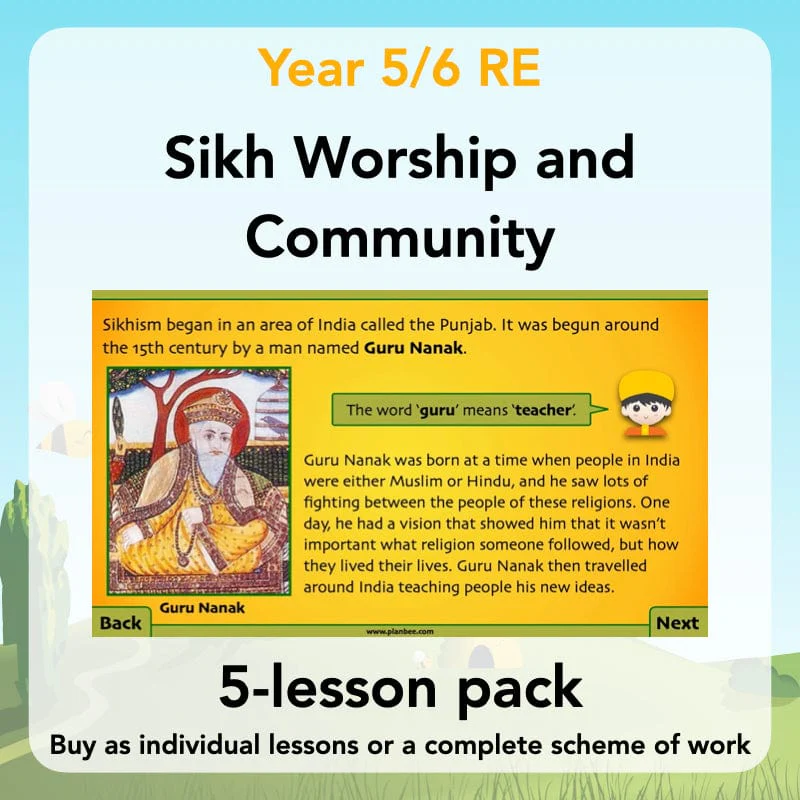
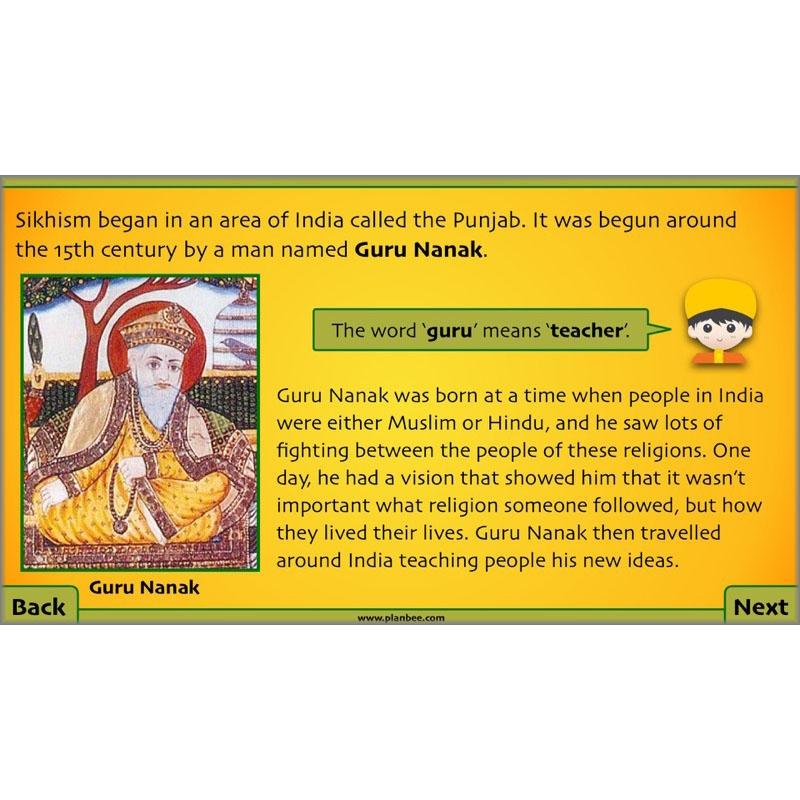
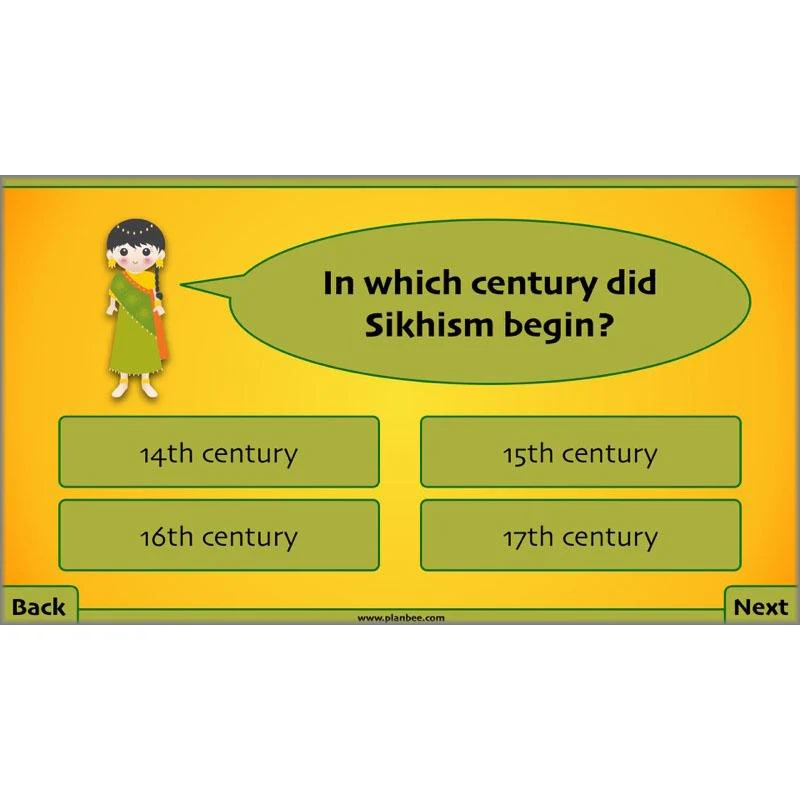
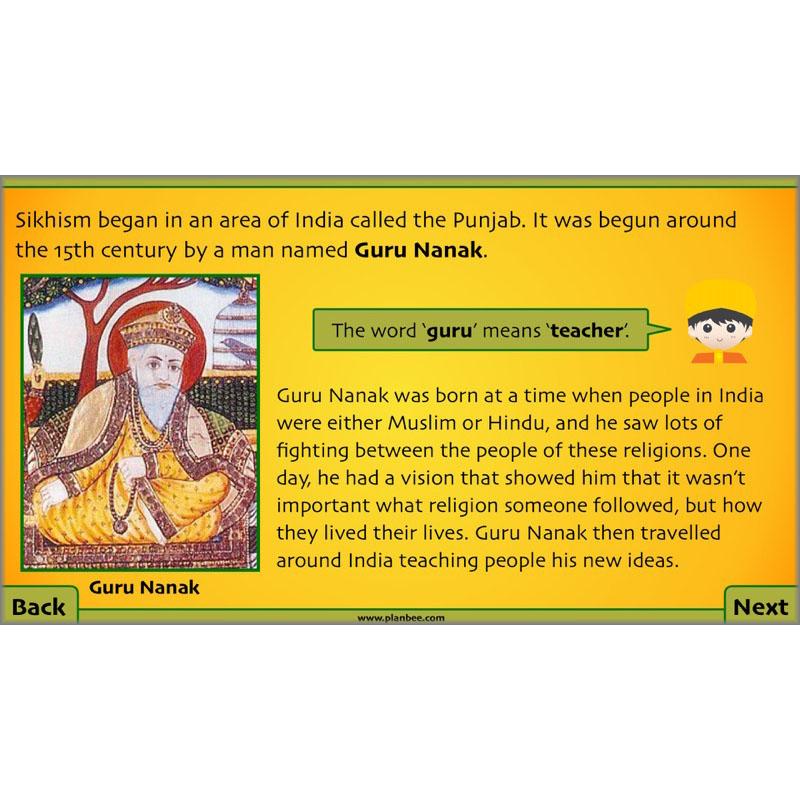
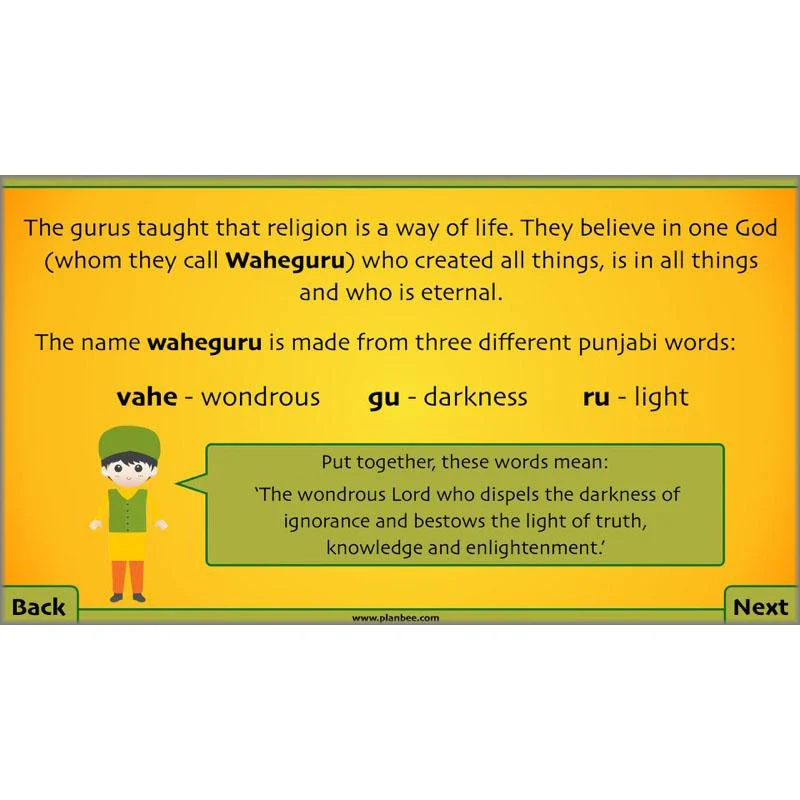
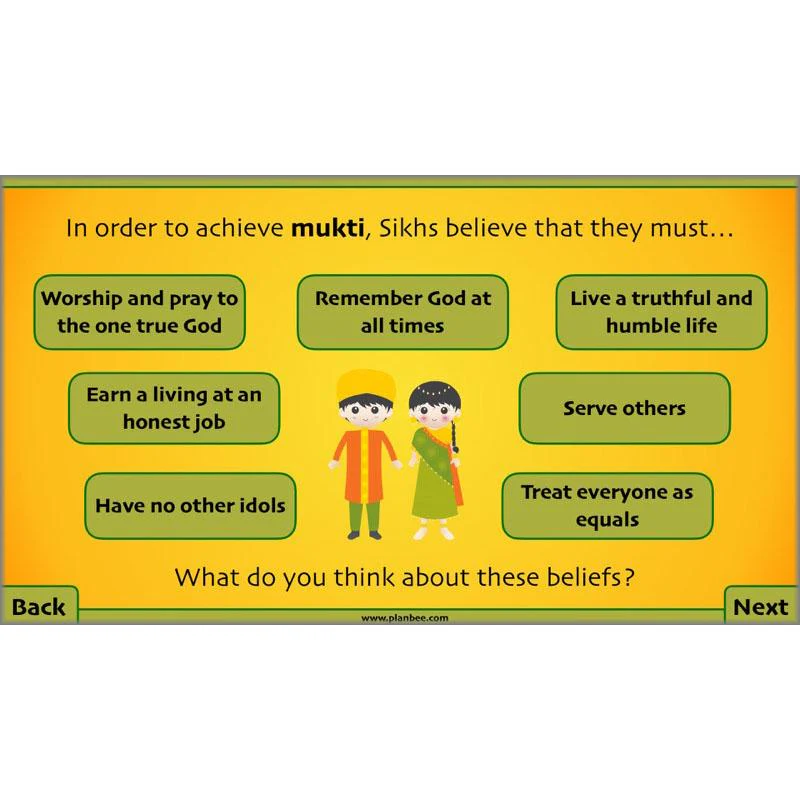
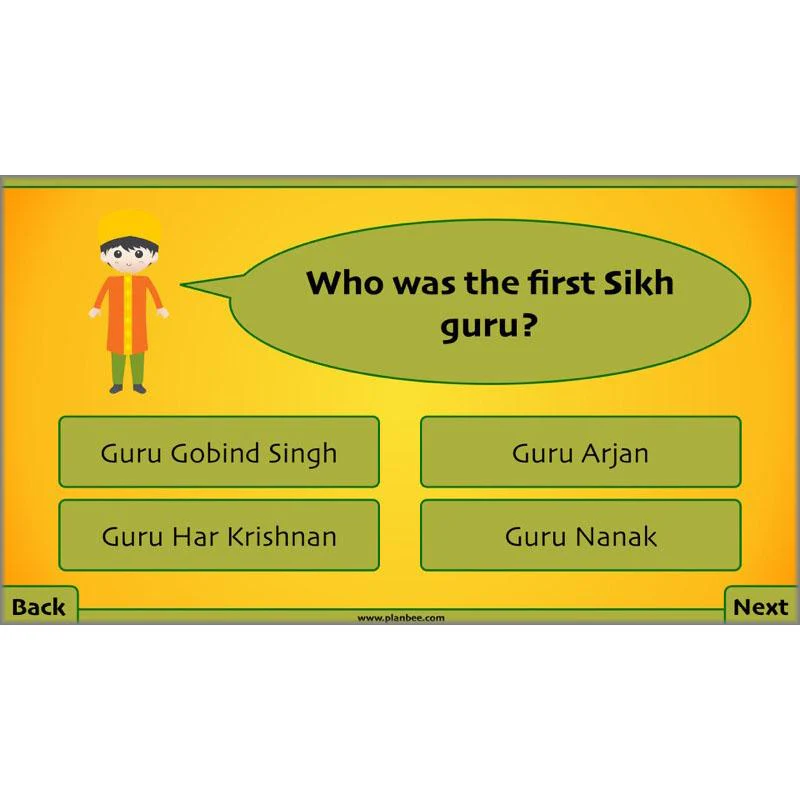
Remind children of the origins of Sikhism and give them an overview of Sikh beliefs, including the origins of the religion and its founders, Guru Nanak and the other ten Gurus.
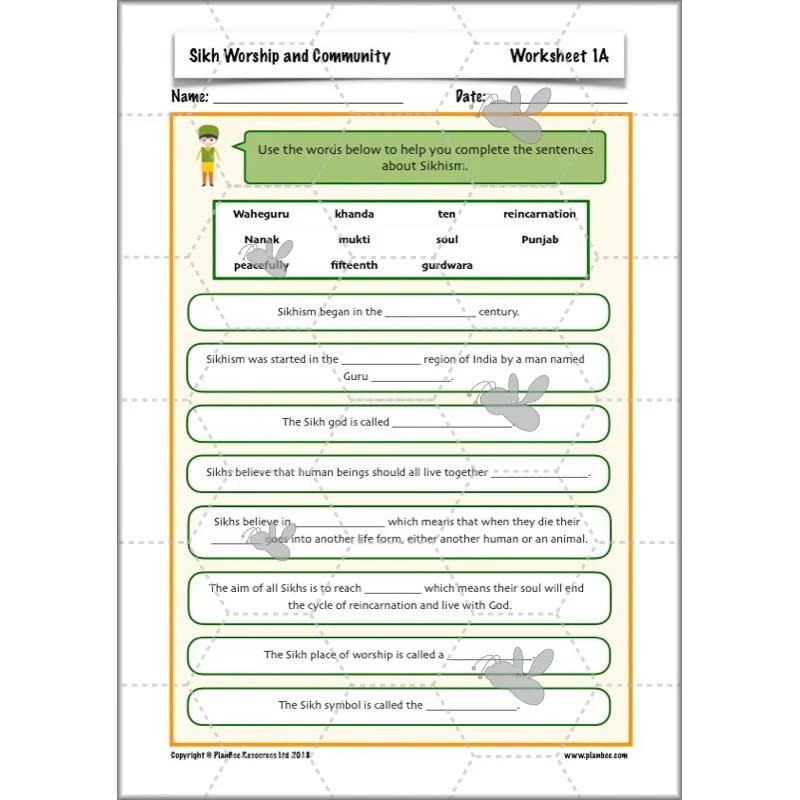
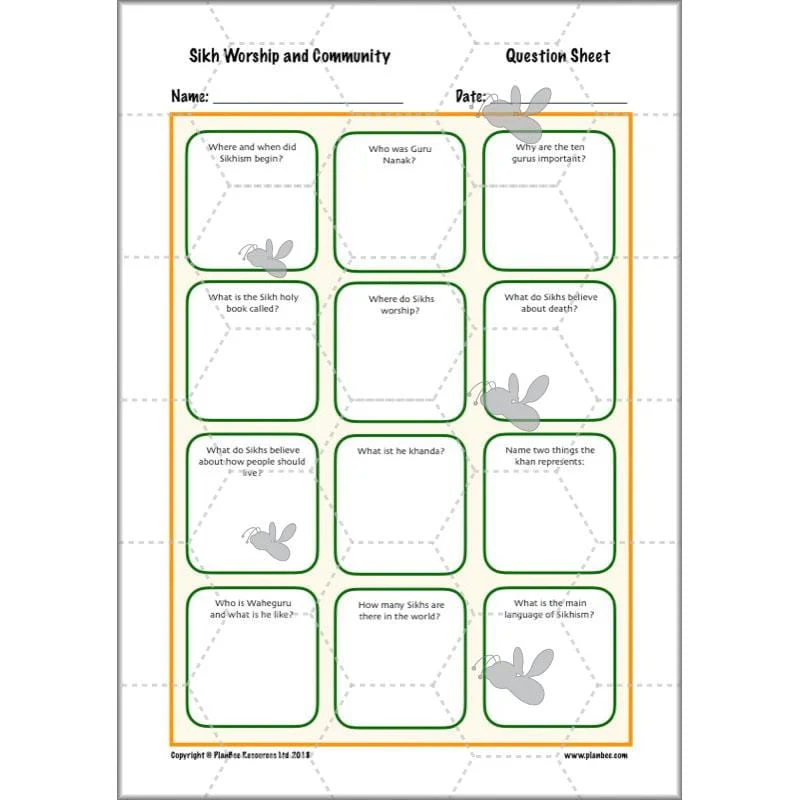
This is the first lesson of five in 'Sikh Worship and Community' – and it's ideal for reminding children of the basics about Sikhism and its principles. With the included slides, worksheets and activities, children will learn all about Guru Nanak and the nine other gurus who founded and shaped the Sikh religion. They'll also be reminded of some of the core principles of Sikhism and the ways in which Sikhs worship.
What's included:
- Lesson plan
- Slides
- Activity ideas
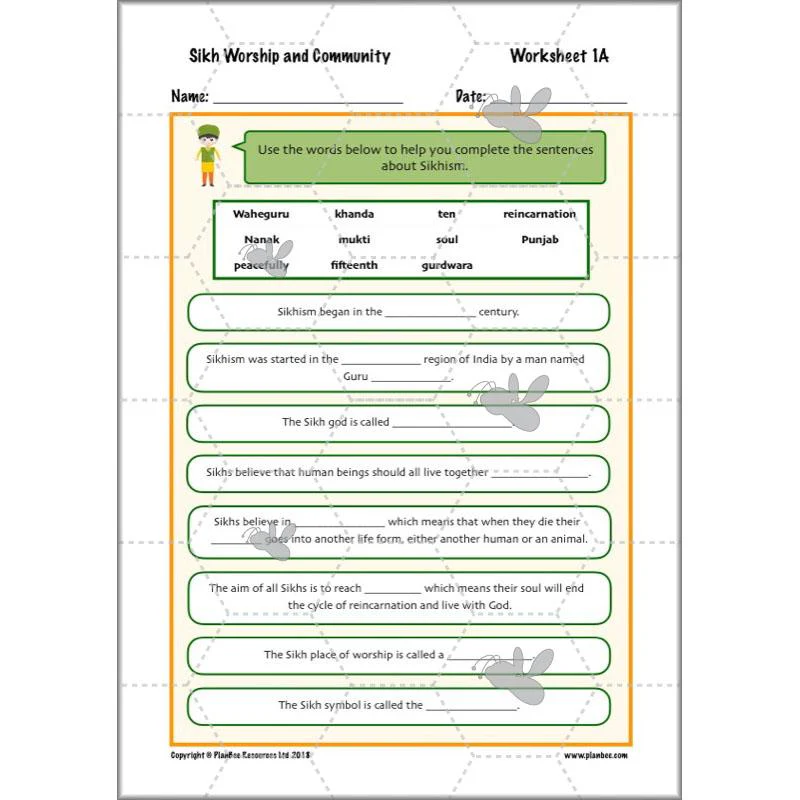
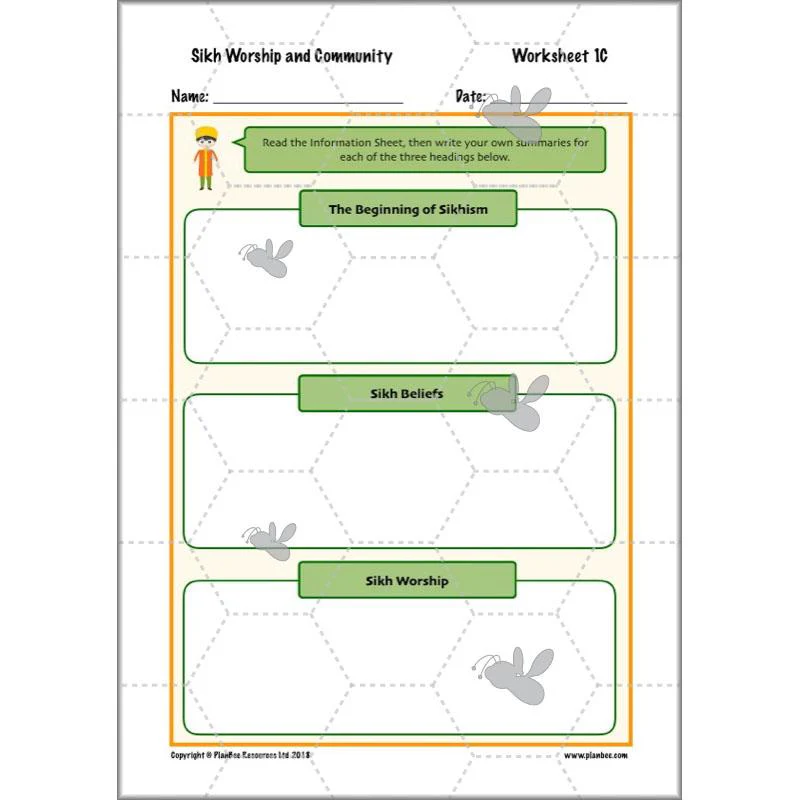
- Differentiated worksheets
- Information sheet
- Fact cards
- Question cards
Prayers and Symbols
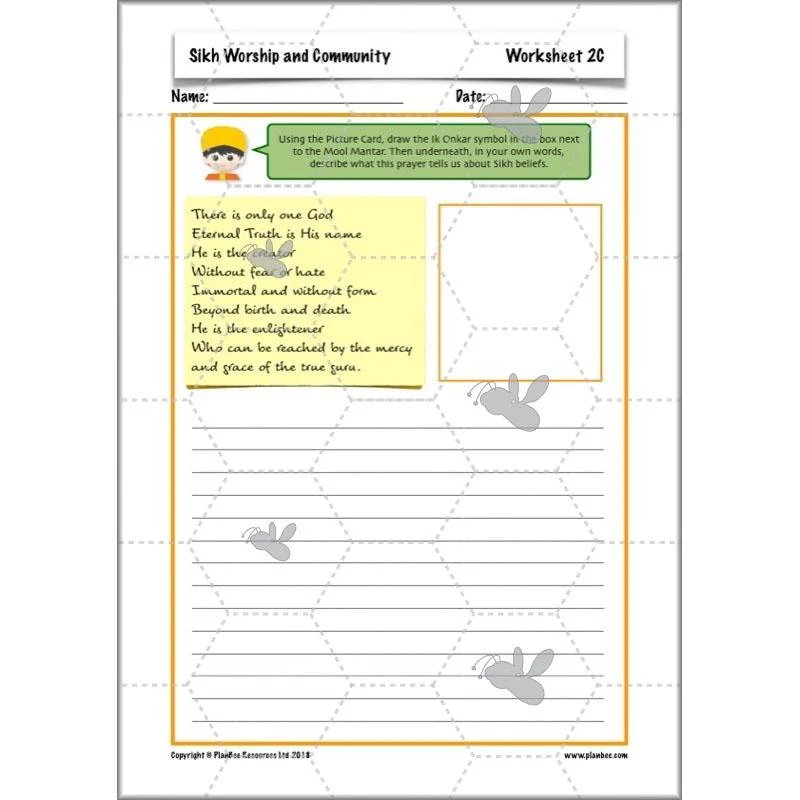
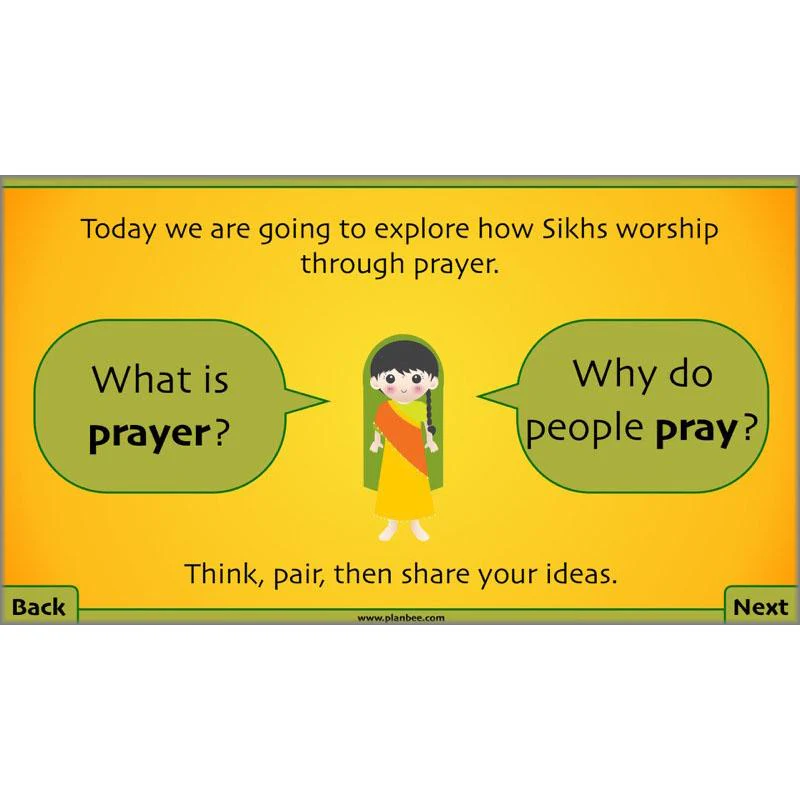
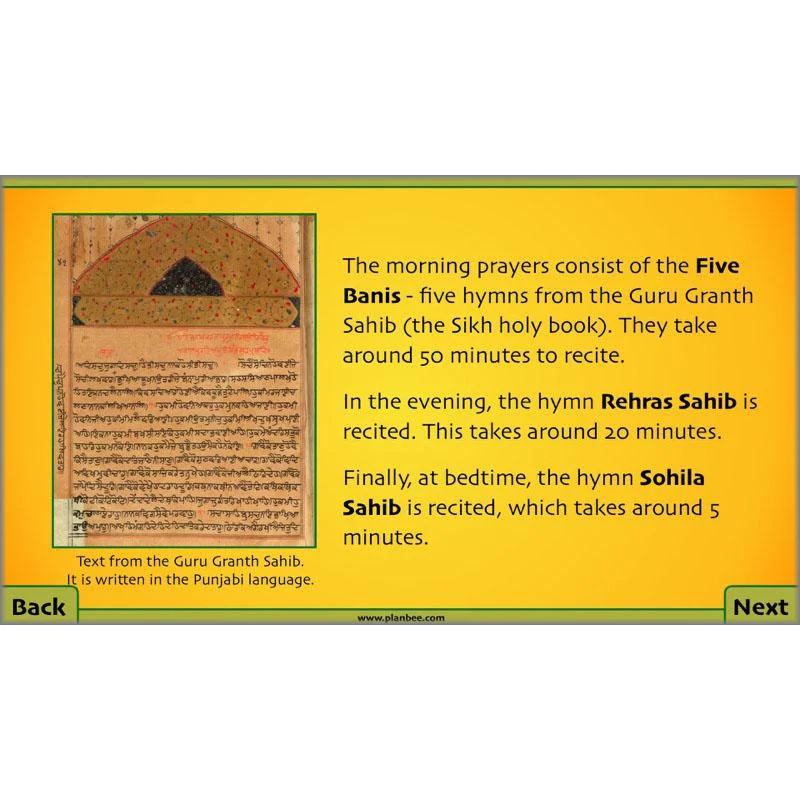
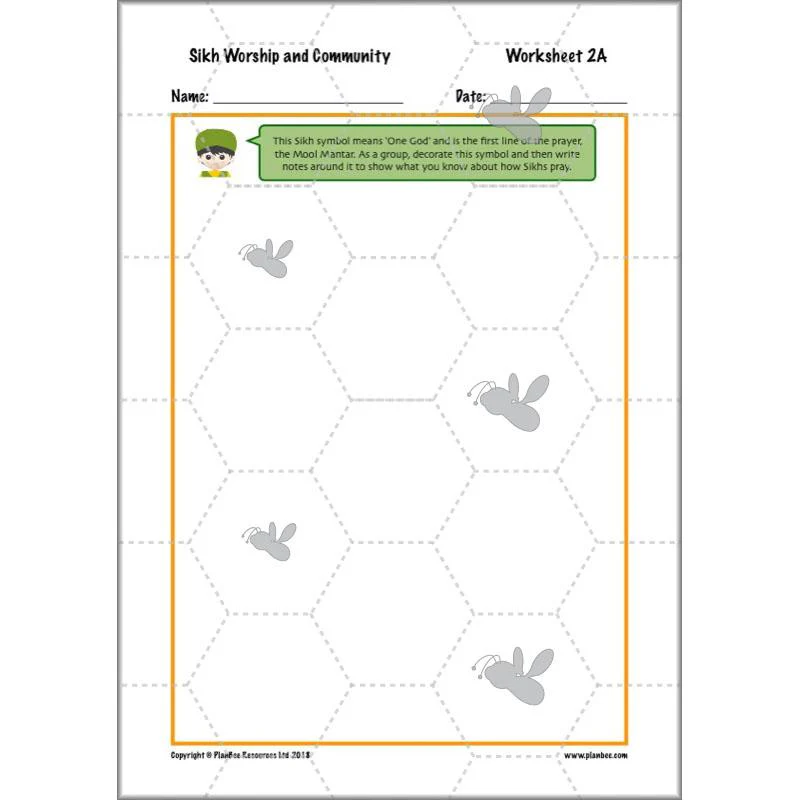
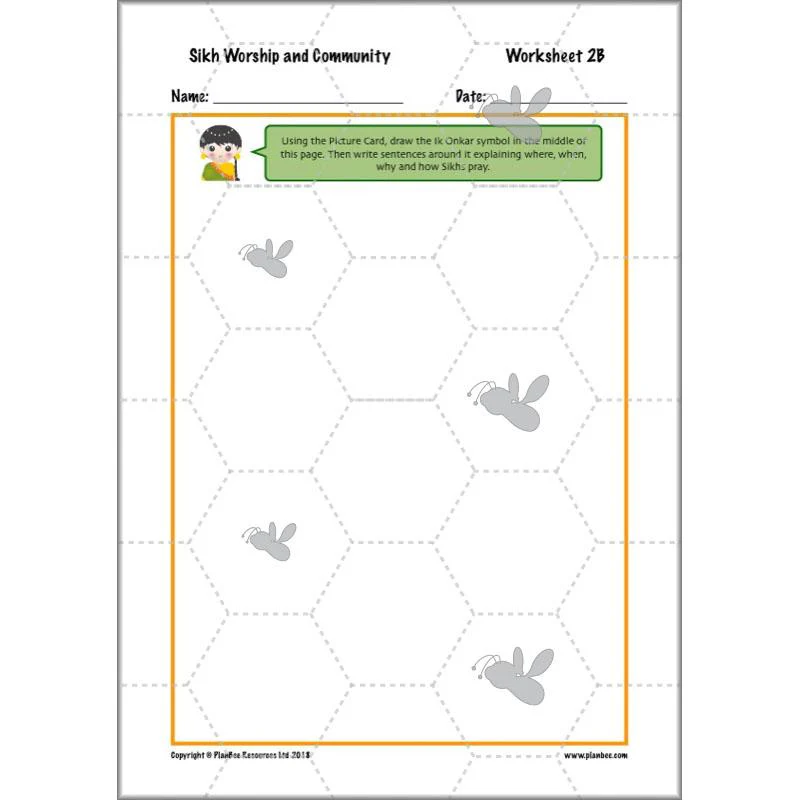
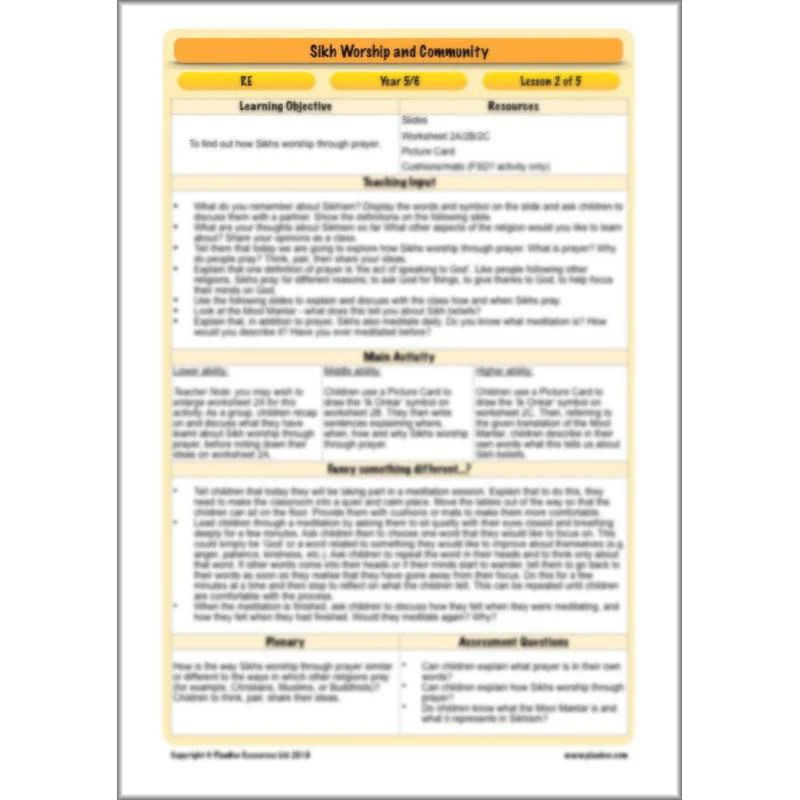
In this lesson, children will think about what prayer is before looking at some of the ways in which Sikhs pray. You'll introduce them to the Mool Mantar (or Mool Mantra) and the importance of the Ik Onkar symbol for 'one God'. They'll go on to find out about a Sikh's daily prayer schedule, including morning and evening prayer, and describe the meaning of the Mool Mantra in their own words.
What's included:
- Lesson plan
- Slides
- Activity ideas
- Differentiated worksheets
- Picture cards
Ceremony, Community and Brotherhood
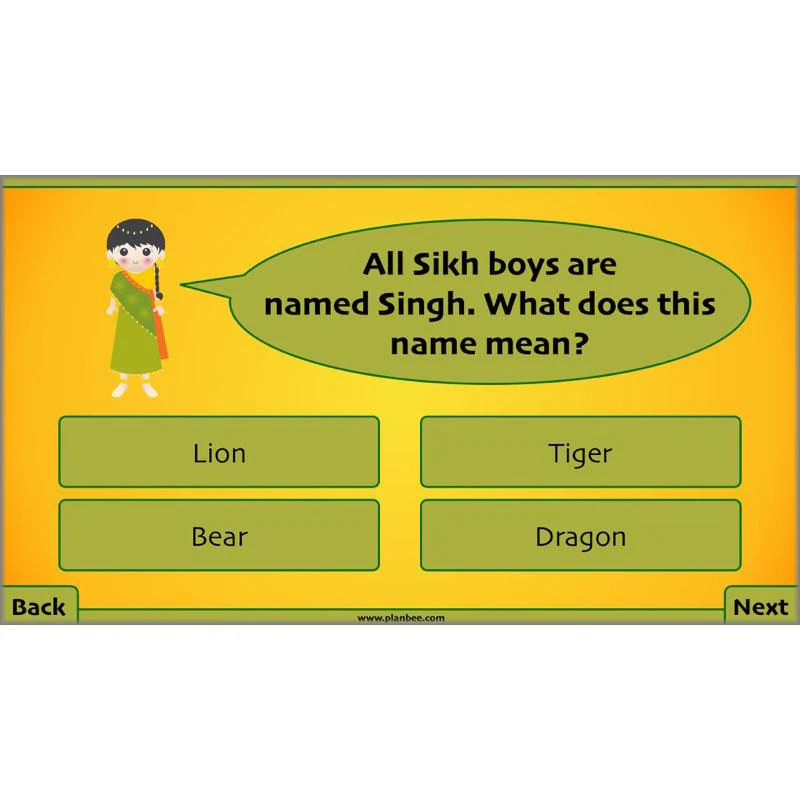
Learn all about the Sikh ceremonies of Naam Karan and Amrit, where Sikh children are named, and some go on to join the brotherhood of the Khalsa.
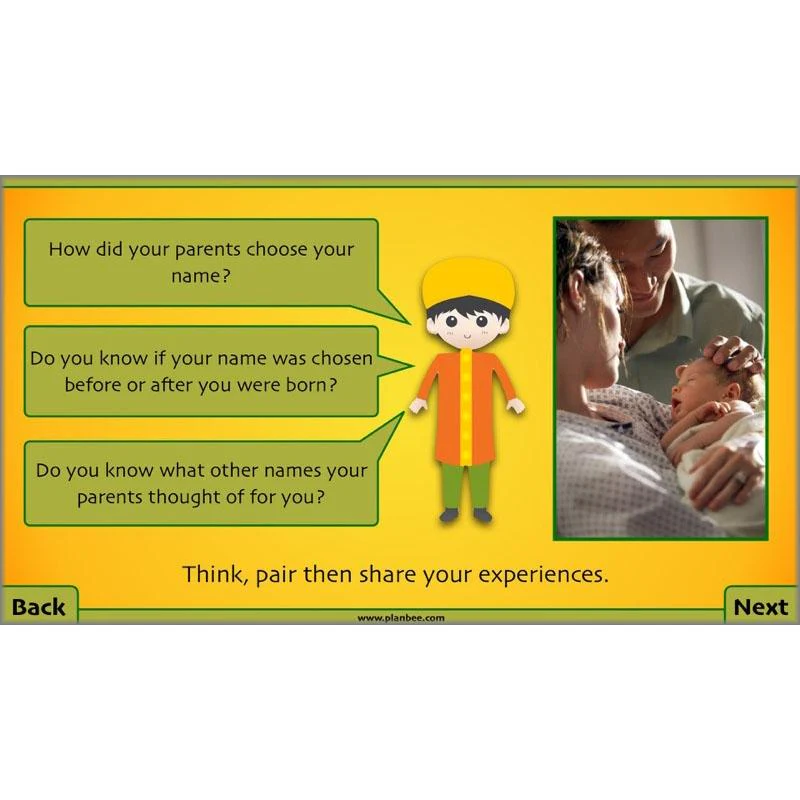
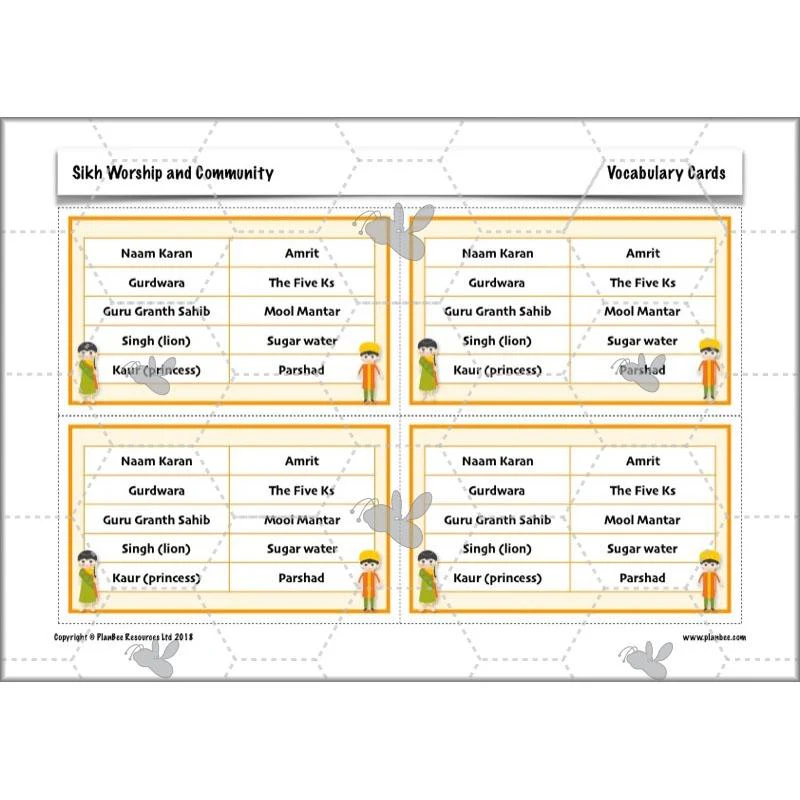
This lesson, the third of five in the 'Sikh Worship and Community' RE scheme of work for upper KS2, focuses on two important rites of passage in Sikhism: the Naam Karan 'baptismal' ceremony where children are named, and the Amrit ceremony some Sikhs undertake to become members of the Khalsa.
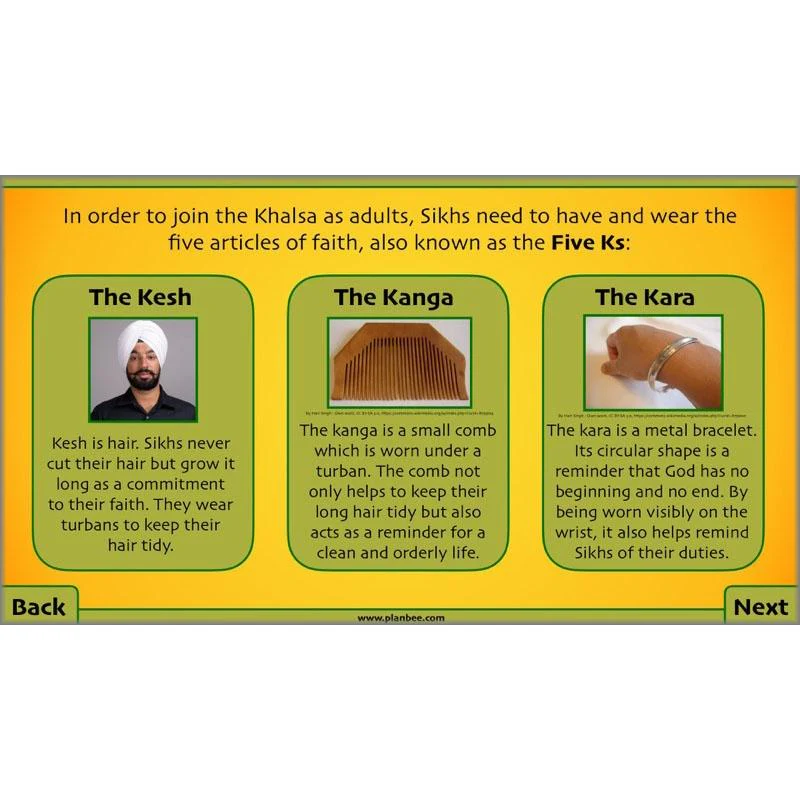
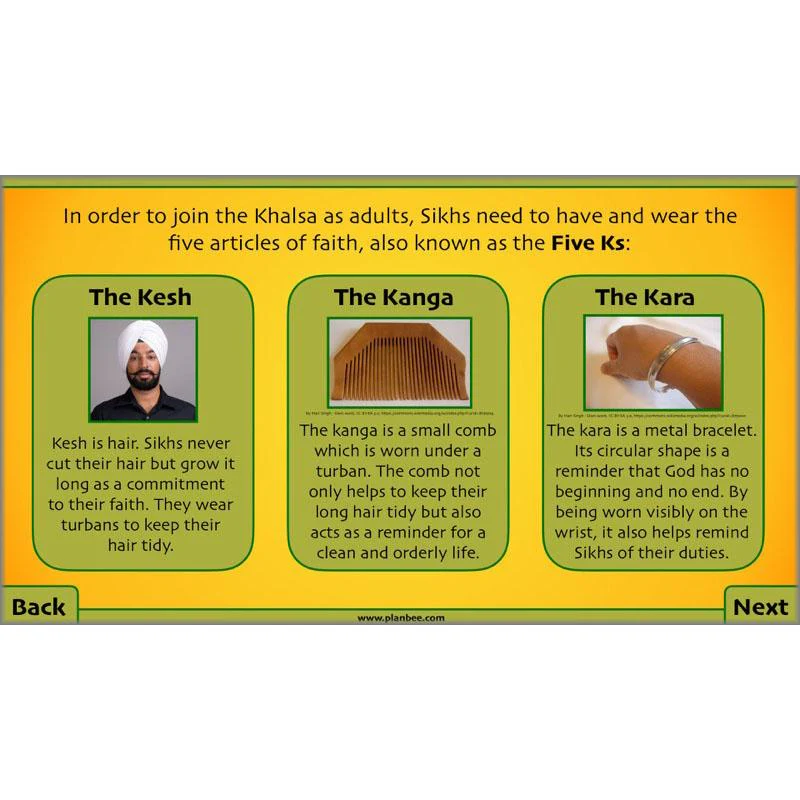
Children will go on take an in-depth look at the five articles of faith worn by these Sikhs, and learn about the story of how the brotherhood of the Khalsa began.
What's included:
- Lesson plan
- Slides
- Activity ideas
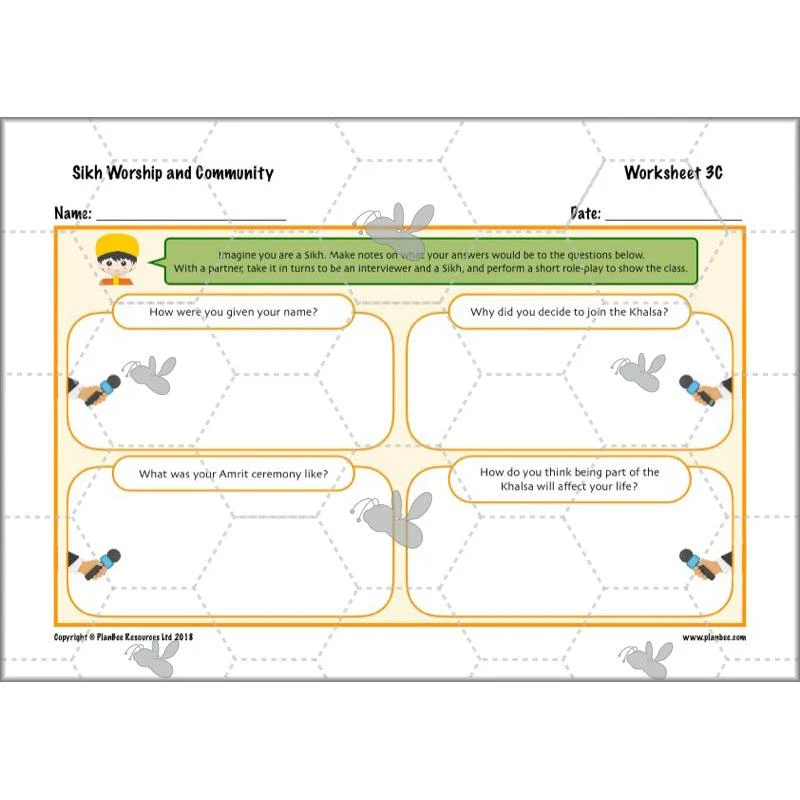
- Differentiated worksheets
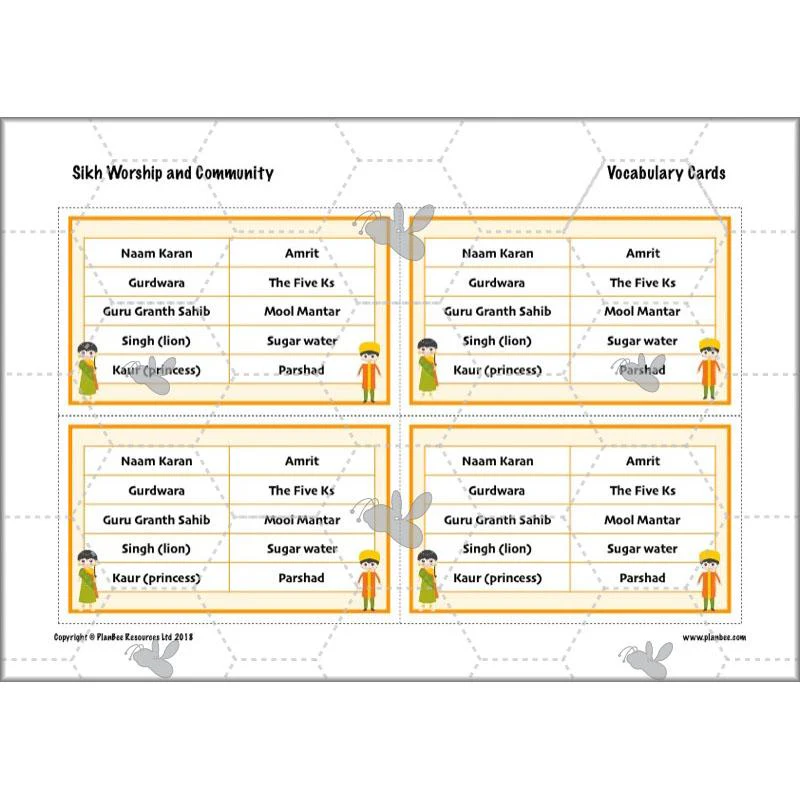
- Vocabulary Cards
- Story sheet
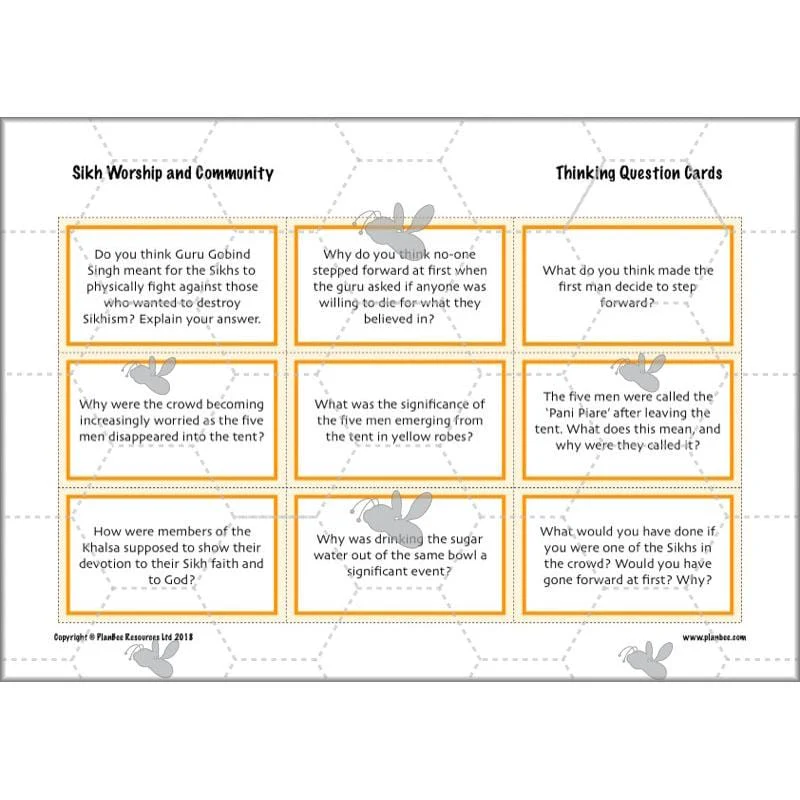
- Thinking Question Cards
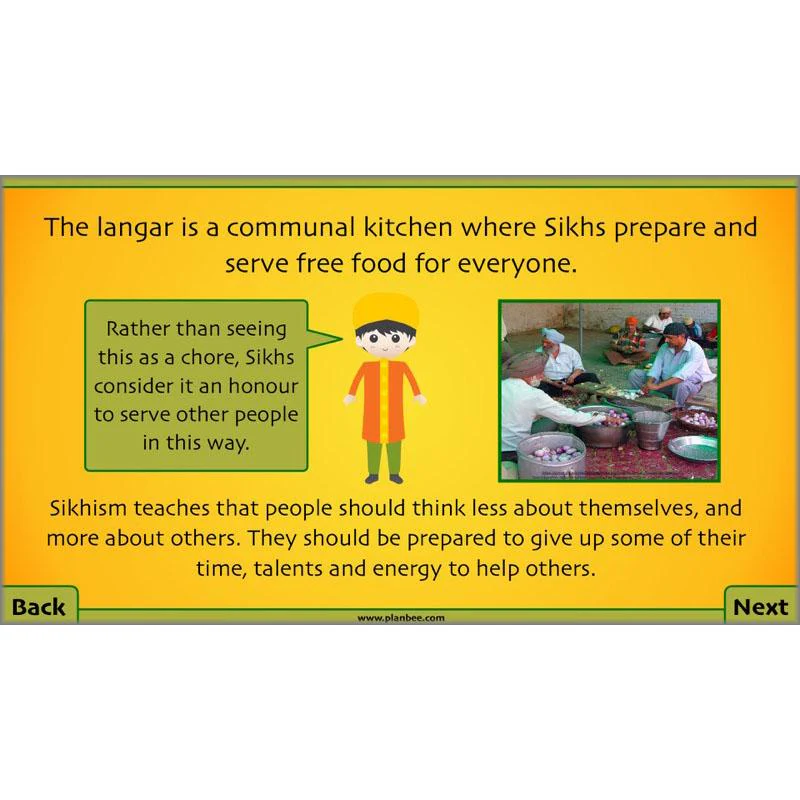
The Langar
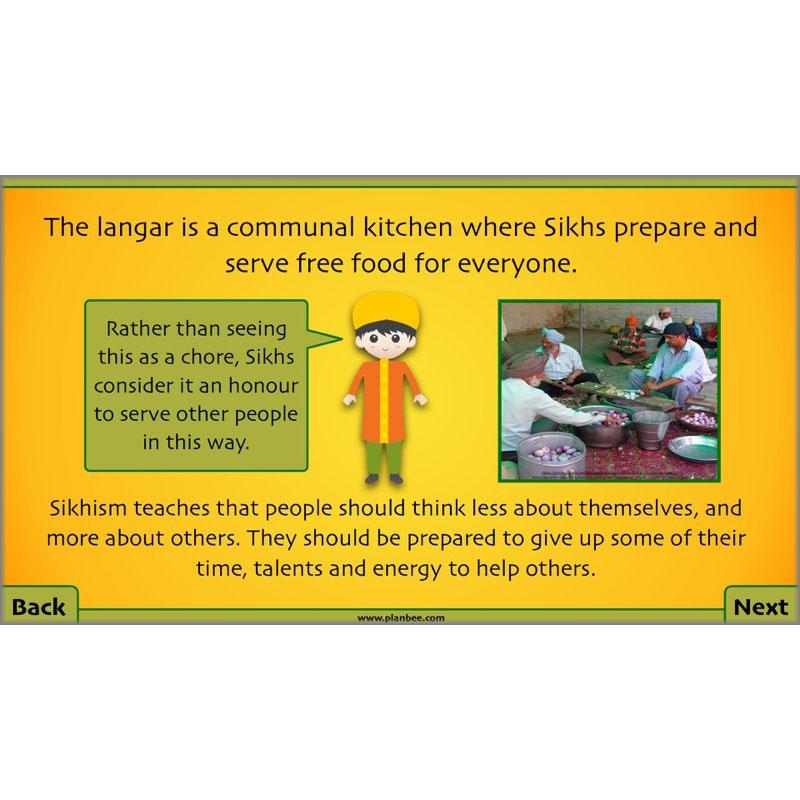
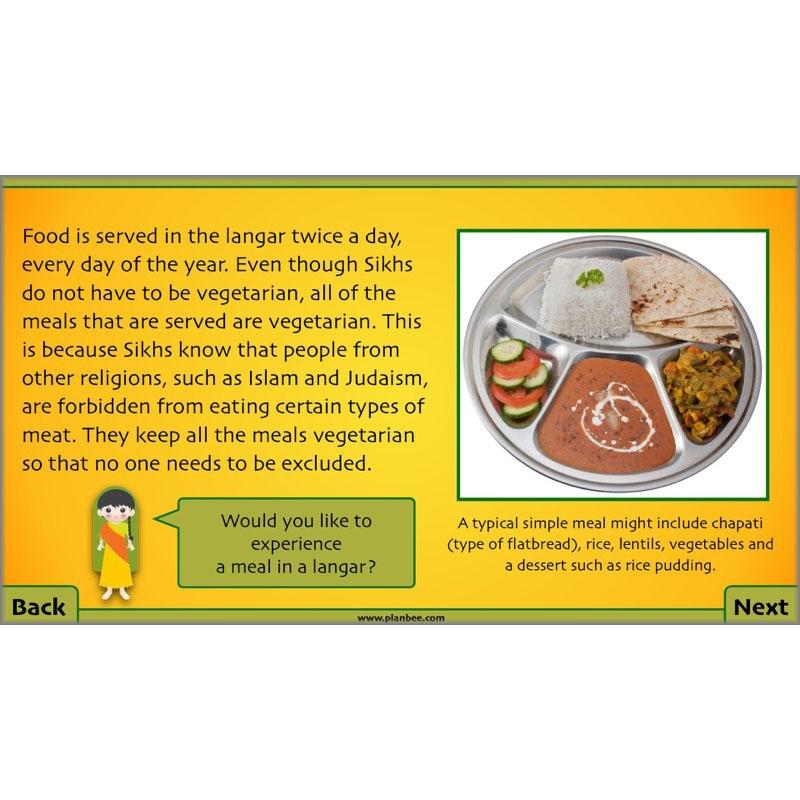
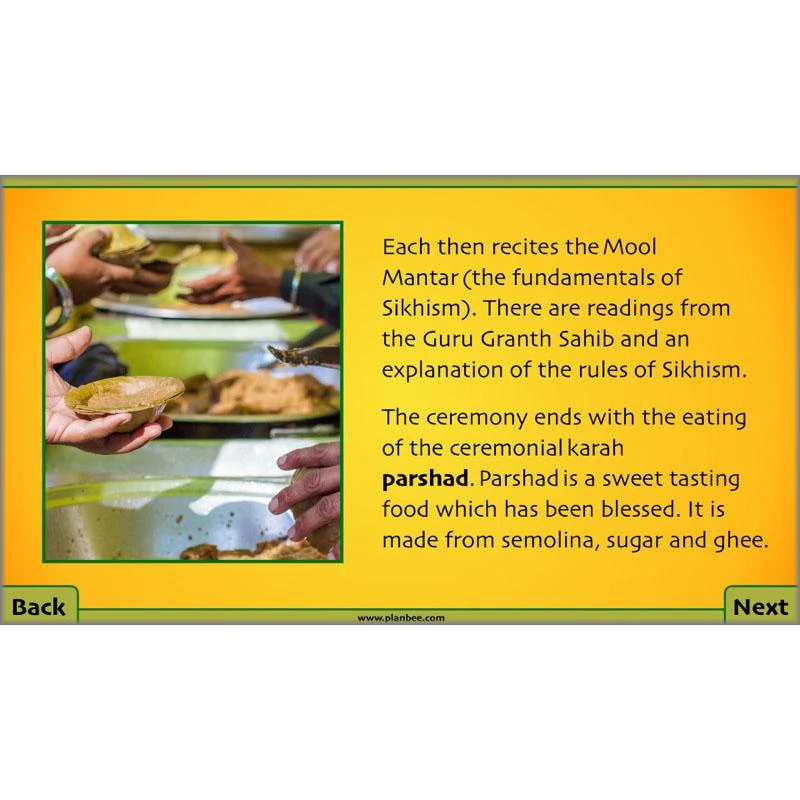
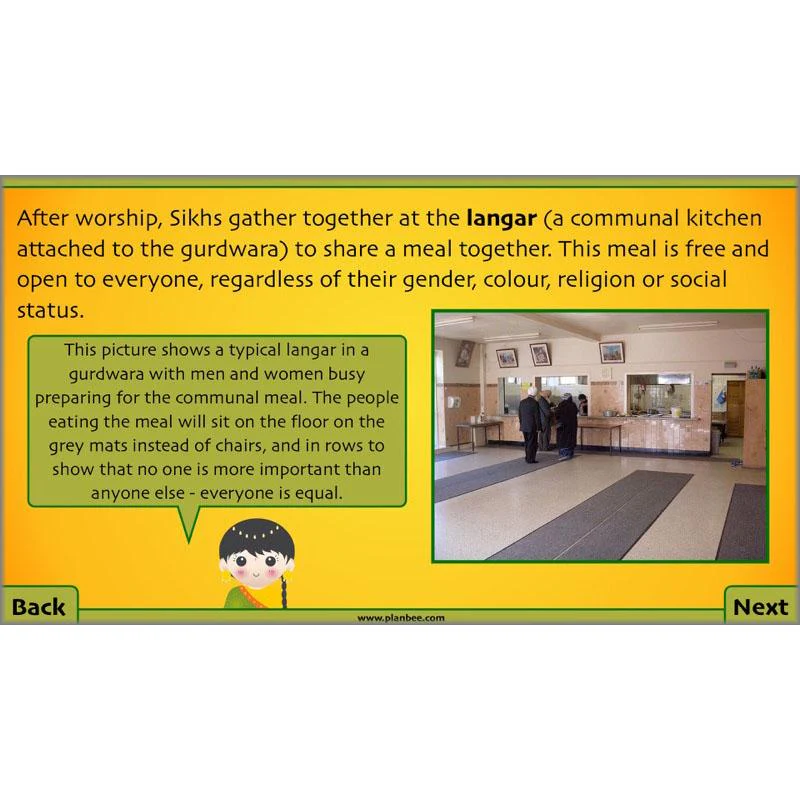
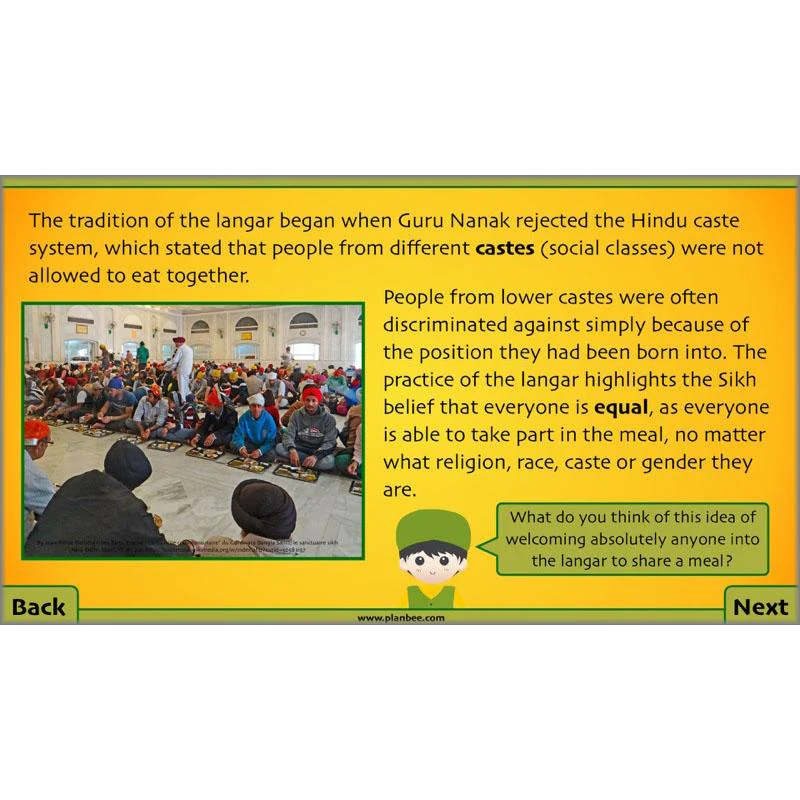
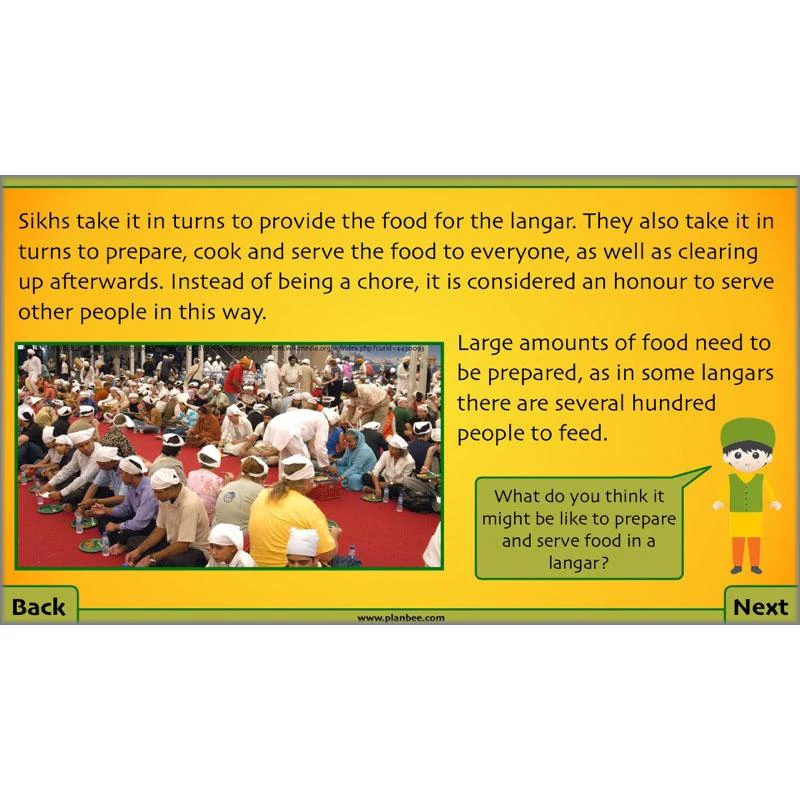
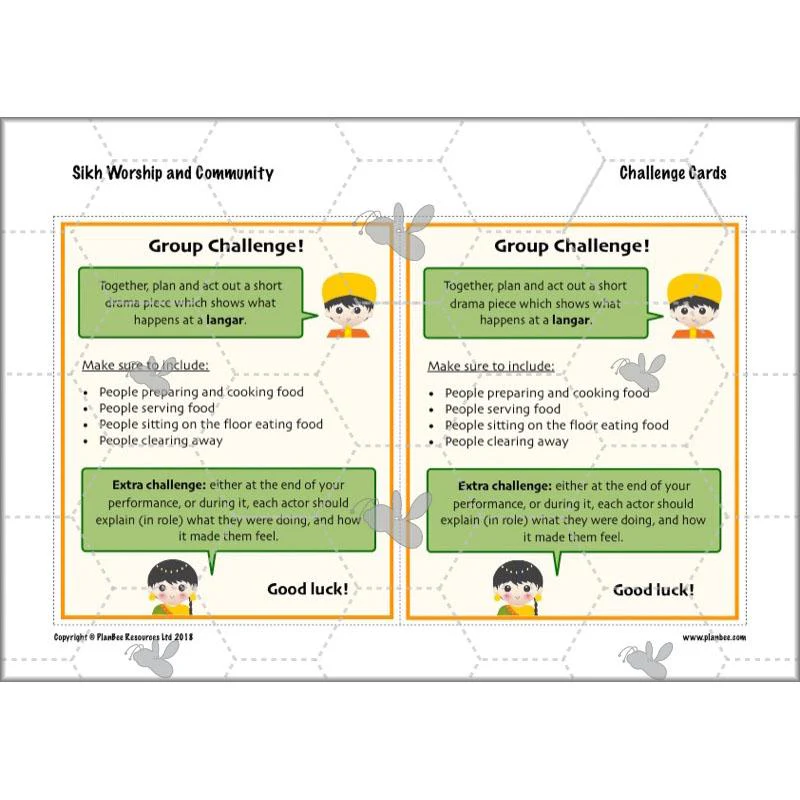
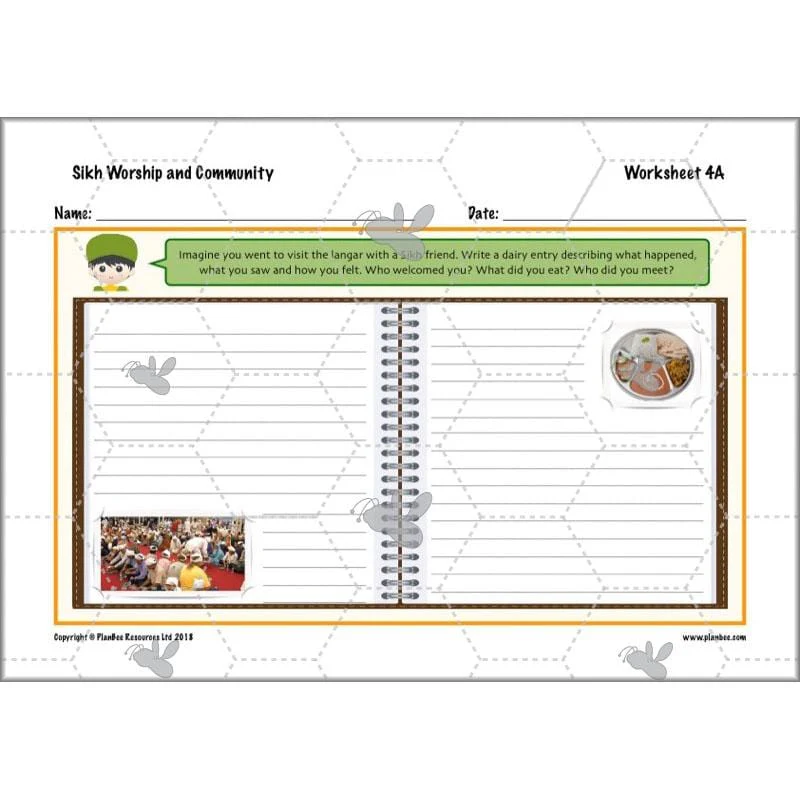
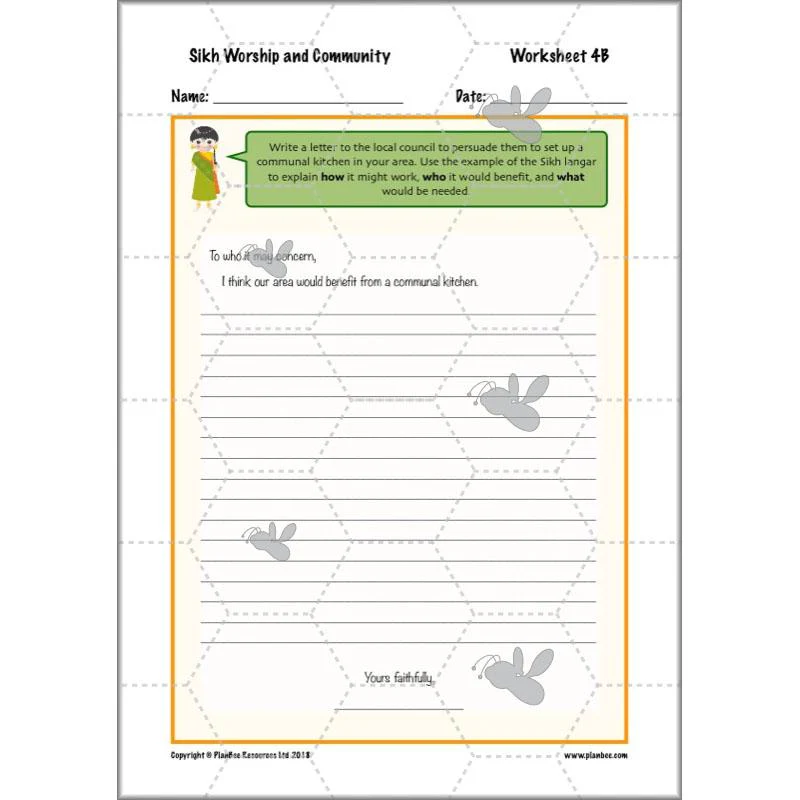
Find out all about the tradition of the Sikh langar, and how Sikhs share a meal with anyone who wishes to share it with them after worship at the gurdwara.
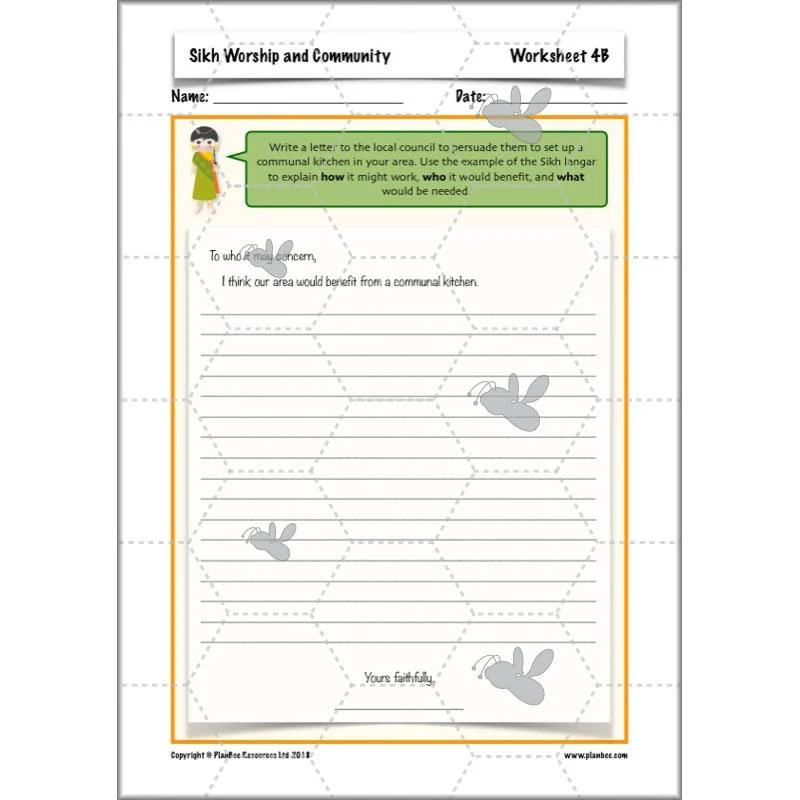
Challenge your KS2 children to think about equality and sharing as they learn about this Sikh custom. This is the fourth of five lessons in the 'Sikh Worship and Community' RE scheme of work for Year 5 and Year 6. It can be taught as a standalone lesson, but it's even better when taught in sequence as part of the complete series.
What's included:
- Lesson plan
- Slides
- Activity ideas
- Challenge Cards
- Differentiated worksheets
Sewa
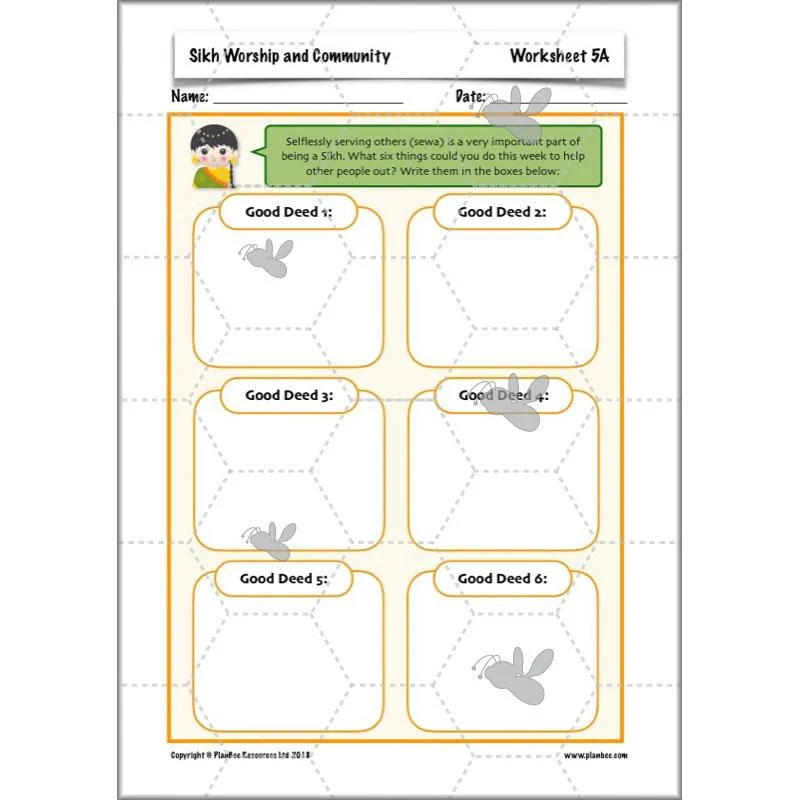
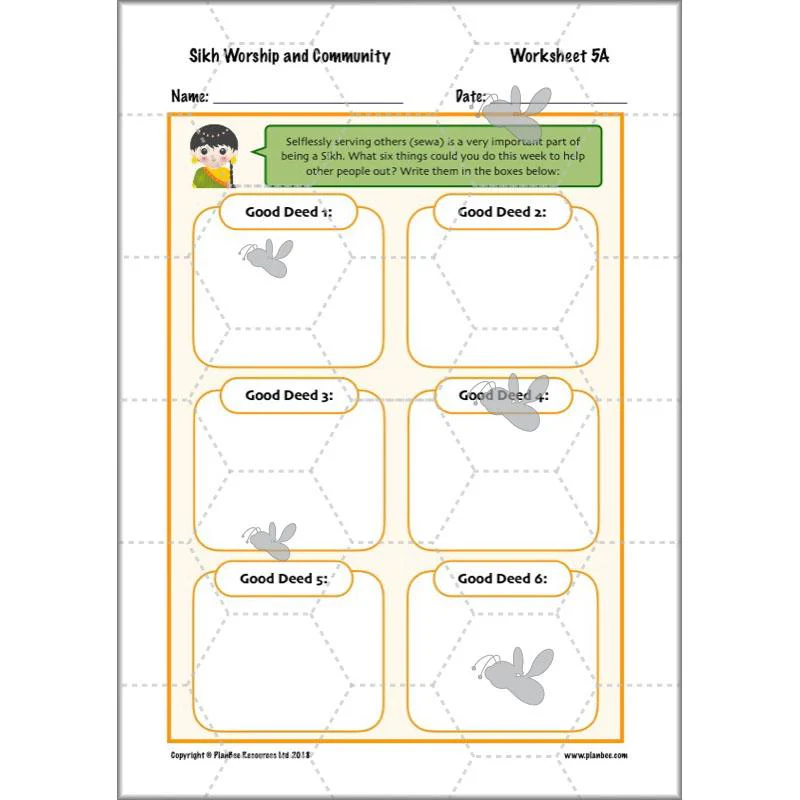
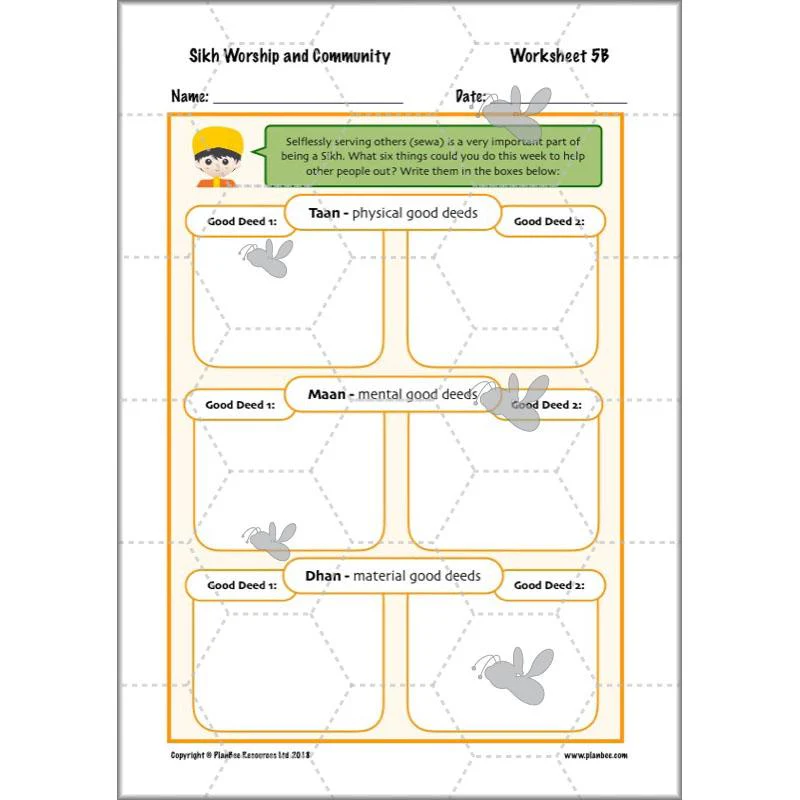
In Sikhism, service to others is considered an act of worship. Learn all about the practice of Sewa in Sikhism and challenge your pupils to consider how they might do some good deeds of their own!
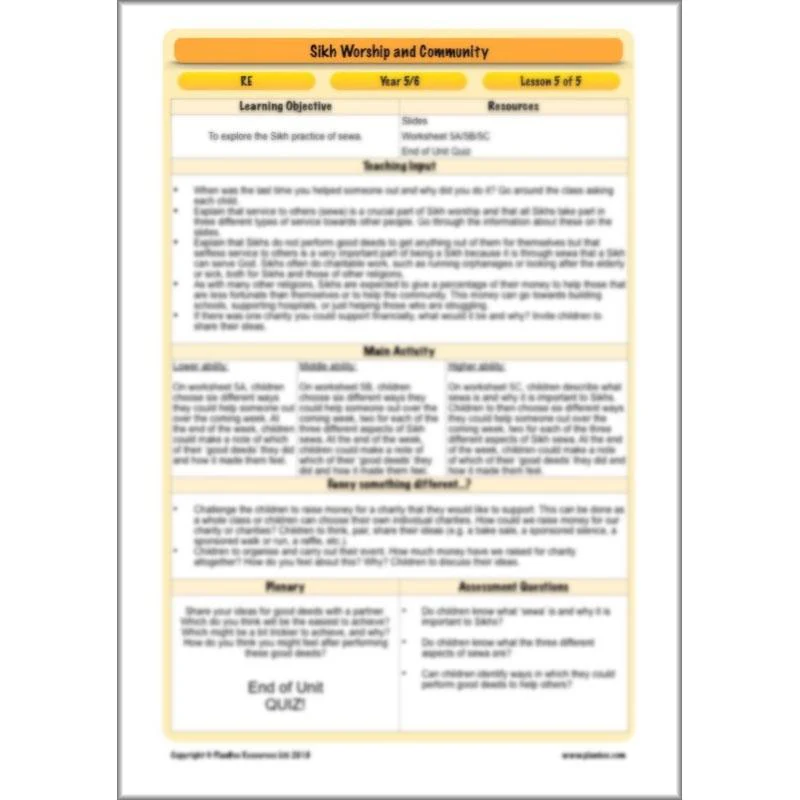
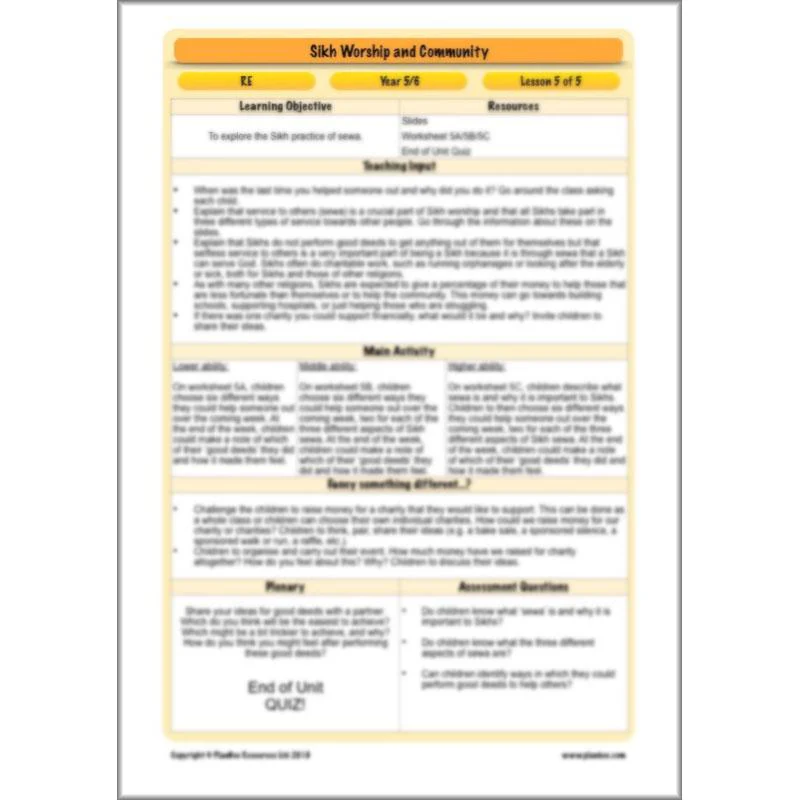
This is the fifth and final lesson in the 'Sikh Worship and Community' scheme of work for upper KS2. It can be taught as a standalone lesson, or in sequence after the other lessons in this unit. It includes Sikhism worksheets and an optional end of unit quiz.
What's included:
- Lesson plan
- Slides
- Activity ideas
- Differentiated worksheets
- End of unit quiz
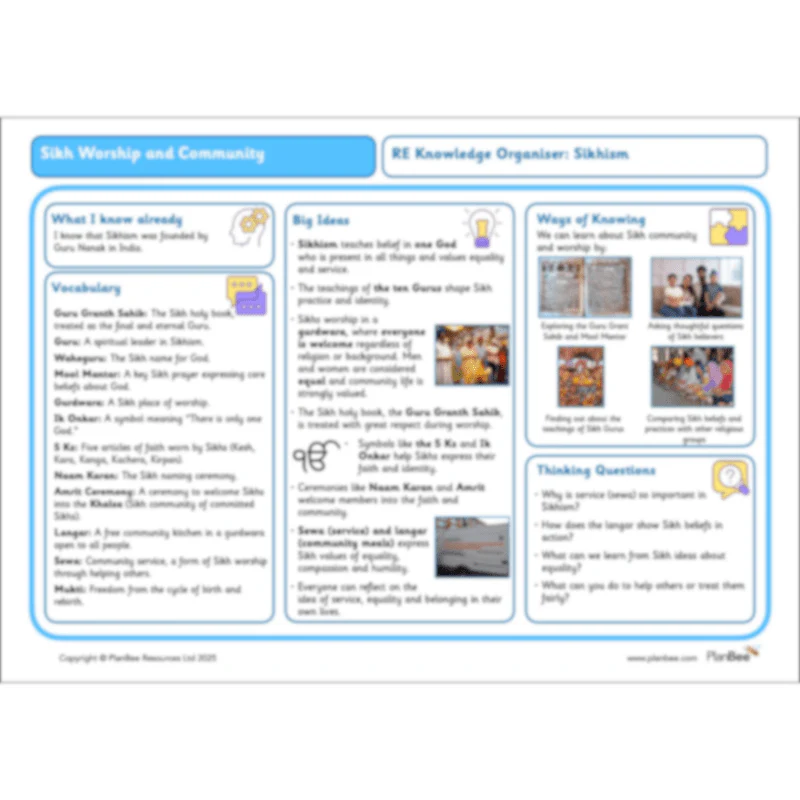
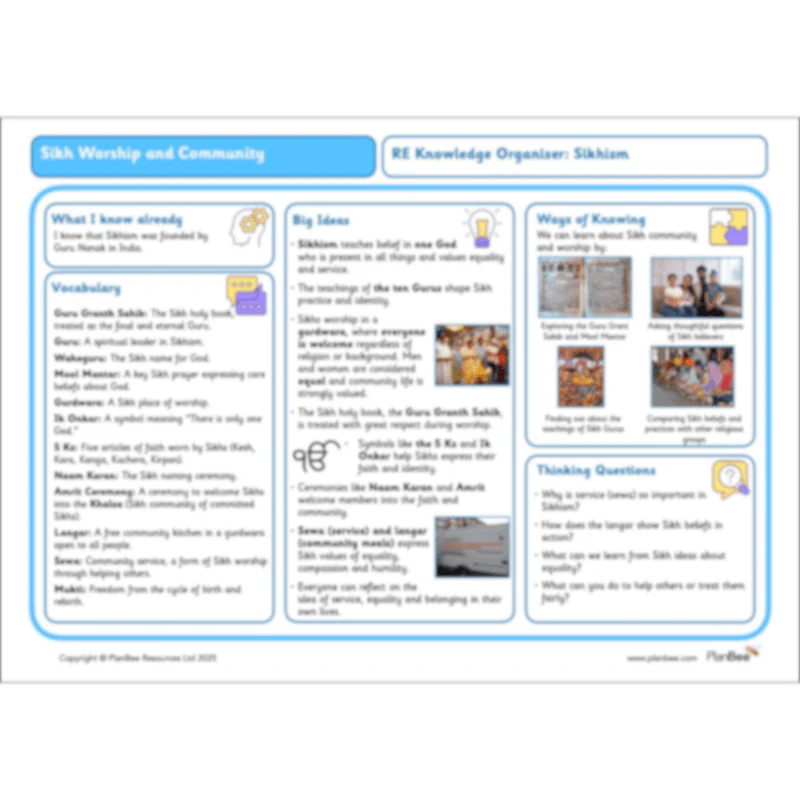
This Year 5/6 RE Knowledge Organiser has been created to complement the study of the Sikhism strand within our RE and worldviews resource offer. It is designed to support your children's understanding of key vocabulary and big ideas covered in this scheme of work, while signposting prior learning. Children are also encouraged to reflect on 'Ways of Knowing' about religion and worldviews, and to think deeply about the topic through the 'Thinking Questions' provided.
Original: $1.99
-50%$1.99
$1.00More Images










Sikh Worship and Community
Take a look at the ways in which Sikhs worship privately and as a community, at home and in the gurdwara.
This complete series of five Sikhism lessons for upper KS2 is ideal to build on your pupils' existing understanding of this major world religion. Focusing on worship and beliefs, your class will find out how Sikhs remind themselves of the guiding principles of Sikhism, their commitment to their faith, and the role of Sikhs within their own, and wider, communities.
This scheme of work includes detailed lesson planning, Sikhism worksheets, slides with images and information about Sikhism and its places of worship and a range of differentiated learning activities.
A Knowledge Organiser is included within the complete series download, or can be purchased separately.
What do Sikhs believe?
Remind children of the origins of Sikhism and give them an overview of Sikh beliefs, including the origins of the religion and its founders, Guru Nanak and the other ten Gurus.
This is the first lesson of five in 'Sikh Worship and Community' – and it's ideal for reminding children of the basics about Sikhism and its principles. With the included slides, worksheets and activities, children will learn all about Guru Nanak and the nine other gurus who founded and shaped the Sikh religion. They'll also be reminded of some of the core principles of Sikhism and the ways in which Sikhs worship.
What's included:
- Lesson plan
- Slides
- Activity ideas
- Differentiated worksheets
- Information sheet
- Fact cards
- Question cards
Prayers and Symbols
In this lesson, children will think about what prayer is before looking at some of the ways in which Sikhs pray. You'll introduce them to the Mool Mantar (or Mool Mantra) and the importance of the Ik Onkar symbol for 'one God'. They'll go on to find out about a Sikh's daily prayer schedule, including morning and evening prayer, and describe the meaning of the Mool Mantra in their own words.
What's included:
- Lesson plan
- Slides
- Activity ideas
- Differentiated worksheets
- Picture cards
Ceremony, Community and Brotherhood
Learn all about the Sikh ceremonies of Naam Karan and Amrit, where Sikh children are named, and some go on to join the brotherhood of the Khalsa.
This lesson, the third of five in the 'Sikh Worship and Community' RE scheme of work for upper KS2, focuses on two important rites of passage in Sikhism: the Naam Karan 'baptismal' ceremony where children are named, and the Amrit ceremony some Sikhs undertake to become members of the Khalsa.
Children will go on take an in-depth look at the five articles of faith worn by these Sikhs, and learn about the story of how the brotherhood of the Khalsa began.
What's included:
- Lesson plan
- Slides
- Activity ideas
- Differentiated worksheets
- Vocabulary Cards
- Story sheet
- Thinking Question Cards
The Langar
Find out all about the tradition of the Sikh langar, and how Sikhs share a meal with anyone who wishes to share it with them after worship at the gurdwara.
Challenge your KS2 children to think about equality and sharing as they learn about this Sikh custom. This is the fourth of five lessons in the 'Sikh Worship and Community' RE scheme of work for Year 5 and Year 6. It can be taught as a standalone lesson, but it's even better when taught in sequence as part of the complete series.
What's included:
- Lesson plan
- Slides
- Activity ideas
- Challenge Cards
- Differentiated worksheets
Sewa
In Sikhism, service to others is considered an act of worship. Learn all about the practice of Sewa in Sikhism and challenge your pupils to consider how they might do some good deeds of their own!
This is the fifth and final lesson in the 'Sikh Worship and Community' scheme of work for upper KS2. It can be taught as a standalone lesson, or in sequence after the other lessons in this unit. It includes Sikhism worksheets and an optional end of unit quiz.
What's included:
- Lesson plan
- Slides
- Activity ideas
- Differentiated worksheets
- End of unit quiz
This Year 5/6 RE Knowledge Organiser has been created to complement the study of the Sikhism strand within our RE and worldviews resource offer. It is designed to support your children's understanding of key vocabulary and big ideas covered in this scheme of work, while signposting prior learning. Children are also encouraged to reflect on 'Ways of Knowing' about religion and worldviews, and to think deeply about the topic through the 'Thinking Questions' provided.
Product Information
Product Information
Shipping & Returns
Shipping & Returns
Description
Take a look at the ways in which Sikhs worship privately and as a community, at home and in the gurdwara.
This complete series of five Sikhism lessons for upper KS2 is ideal to build on your pupils' existing understanding of this major world religion. Focusing on worship and beliefs, your class will find out how Sikhs remind themselves of the guiding principles of Sikhism, their commitment to their faith, and the role of Sikhs within their own, and wider, communities.
This scheme of work includes detailed lesson planning, Sikhism worksheets, slides with images and information about Sikhism and its places of worship and a range of differentiated learning activities.
A Knowledge Organiser is included within the complete series download, or can be purchased separately.
What do Sikhs believe?
Remind children of the origins of Sikhism and give them an overview of Sikh beliefs, including the origins of the religion and its founders, Guru Nanak and the other ten Gurus.
This is the first lesson of five in 'Sikh Worship and Community' – and it's ideal for reminding children of the basics about Sikhism and its principles. With the included slides, worksheets and activities, children will learn all about Guru Nanak and the nine other gurus who founded and shaped the Sikh religion. They'll also be reminded of some of the core principles of Sikhism and the ways in which Sikhs worship.
What's included:
- Lesson plan
- Slides
- Activity ideas
- Differentiated worksheets
- Information sheet
- Fact cards
- Question cards
Prayers and Symbols
In this lesson, children will think about what prayer is before looking at some of the ways in which Sikhs pray. You'll introduce them to the Mool Mantar (or Mool Mantra) and the importance of the Ik Onkar symbol for 'one God'. They'll go on to find out about a Sikh's daily prayer schedule, including morning and evening prayer, and describe the meaning of the Mool Mantra in their own words.
What's included:
- Lesson plan
- Slides
- Activity ideas
- Differentiated worksheets
- Picture cards
Ceremony, Community and Brotherhood
Learn all about the Sikh ceremonies of Naam Karan and Amrit, where Sikh children are named, and some go on to join the brotherhood of the Khalsa.
This lesson, the third of five in the 'Sikh Worship and Community' RE scheme of work for upper KS2, focuses on two important rites of passage in Sikhism: the Naam Karan 'baptismal' ceremony where children are named, and the Amrit ceremony some Sikhs undertake to become members of the Khalsa.
Children will go on take an in-depth look at the five articles of faith worn by these Sikhs, and learn about the story of how the brotherhood of the Khalsa began.
What's included:
- Lesson plan
- Slides
- Activity ideas
- Differentiated worksheets
- Vocabulary Cards
- Story sheet
- Thinking Question Cards
The Langar
Find out all about the tradition of the Sikh langar, and how Sikhs share a meal with anyone who wishes to share it with them after worship at the gurdwara.
Challenge your KS2 children to think about equality and sharing as they learn about this Sikh custom. This is the fourth of five lessons in the 'Sikh Worship and Community' RE scheme of work for Year 5 and Year 6. It can be taught as a standalone lesson, but it's even better when taught in sequence as part of the complete series.
What's included:
- Lesson plan
- Slides
- Activity ideas
- Challenge Cards
- Differentiated worksheets
Sewa
In Sikhism, service to others is considered an act of worship. Learn all about the practice of Sewa in Sikhism and challenge your pupils to consider how they might do some good deeds of their own!
This is the fifth and final lesson in the 'Sikh Worship and Community' scheme of work for upper KS2. It can be taught as a standalone lesson, or in sequence after the other lessons in this unit. It includes Sikhism worksheets and an optional end of unit quiz.
What's included:
- Lesson plan
- Slides
- Activity ideas
- Differentiated worksheets
- End of unit quiz
This Year 5/6 RE Knowledge Organiser has been created to complement the study of the Sikhism strand within our RE and worldviews resource offer. It is designed to support your children's understanding of key vocabulary and big ideas covered in this scheme of work, while signposting prior learning. Children are also encouraged to reflect on 'Ways of Knowing' about religion and worldviews, and to think deeply about the topic through the 'Thinking Questions' provided.