The Butterfly Lion: Balanced Arguments
Save up to 30% on this scheme of work by creating your own Mix and Match Amazing Africa or World War 1 Topic Bundle – perfect if you're looking for a cross-curricular approach to your teaching!
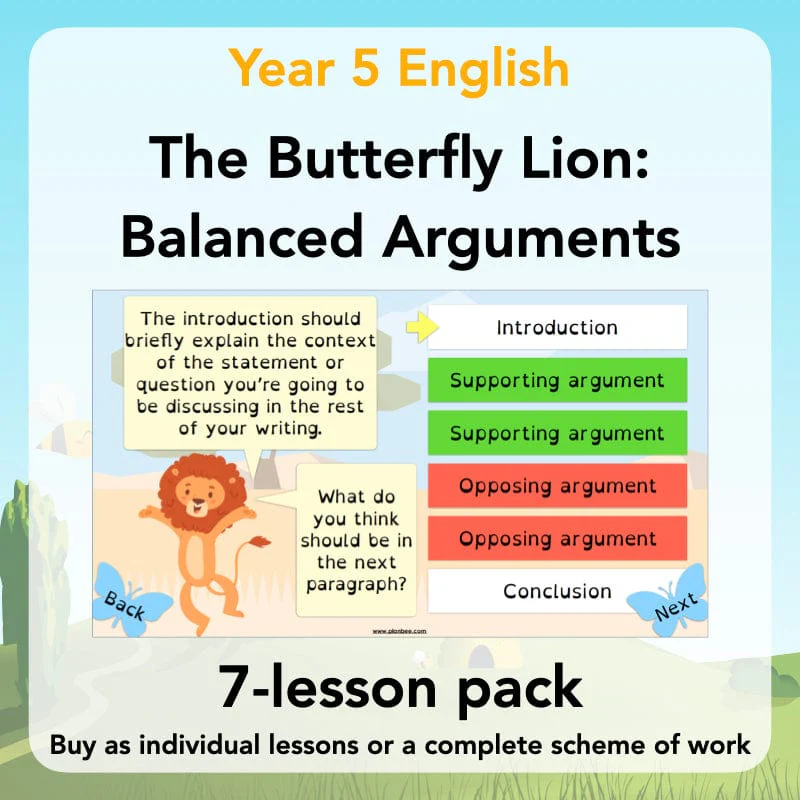
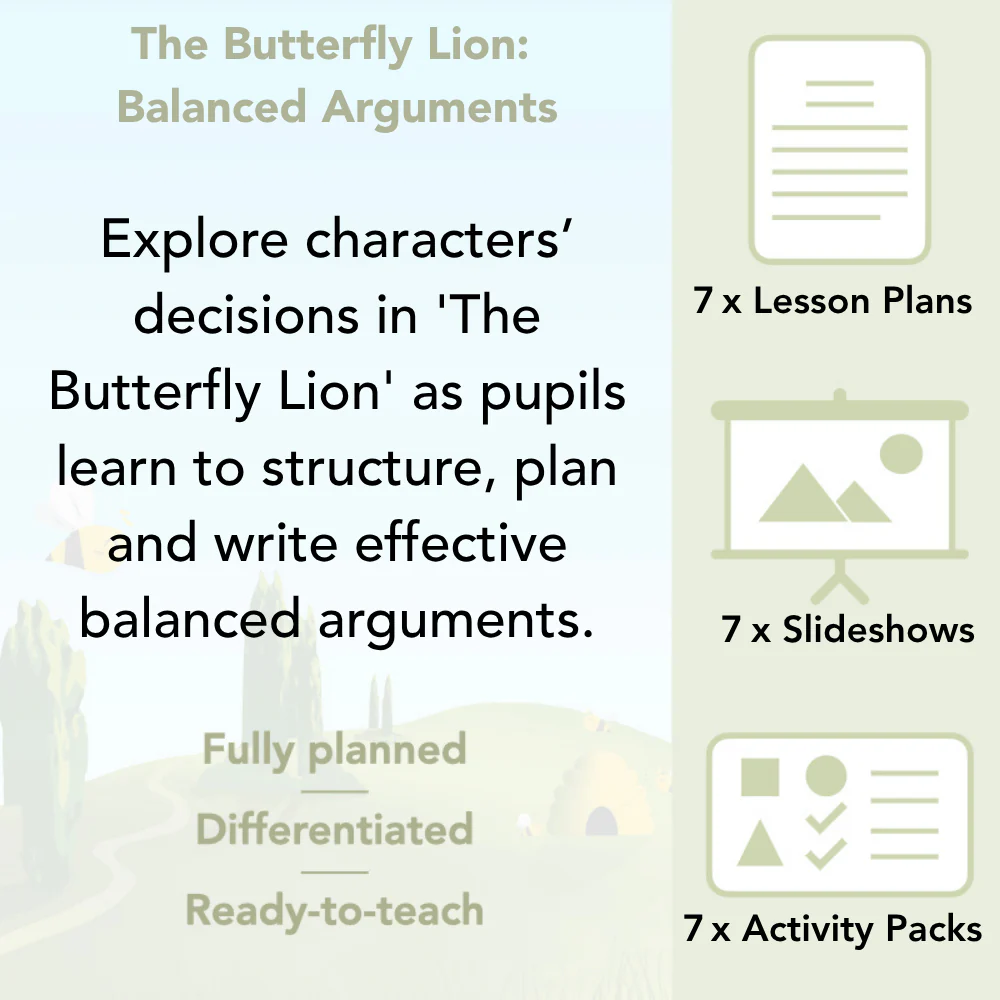
This Balanced Argument KS2 planning pack begins your class's exploration of the powerful and emotional story of Michael Morpurgo’s ‘The Butterfly Lion’.
Teacher Note: These lessons will need the class to have read up to Chapter Six - ‘The Frenchman’ and no further. The less the children know about the rest of the story, the more effective their writing will be.
Your class will empathise with, and explore, the key characters’ thoughts and opinions on an important turning point in the story and allow the children to express their own opinion on how the story should or might progress. Discuss and investigate the features of a balanced argument and the effect of using a formal tone on the reader. Explore the use of cohesive devices in the children’s writing as they investigate what makes an effective balanced argument and encourage them to use these features in their own attempts at this genre.
This seven-lesson scheme of work includes the lesson slides, plans and resources to teach your children how to write effective balanced arguments alongside a classic story. It is necessary to have at least a class copy of ‘The Butterfly Lion’ by Michael Morpurgo to teach this scheme of work.
Features
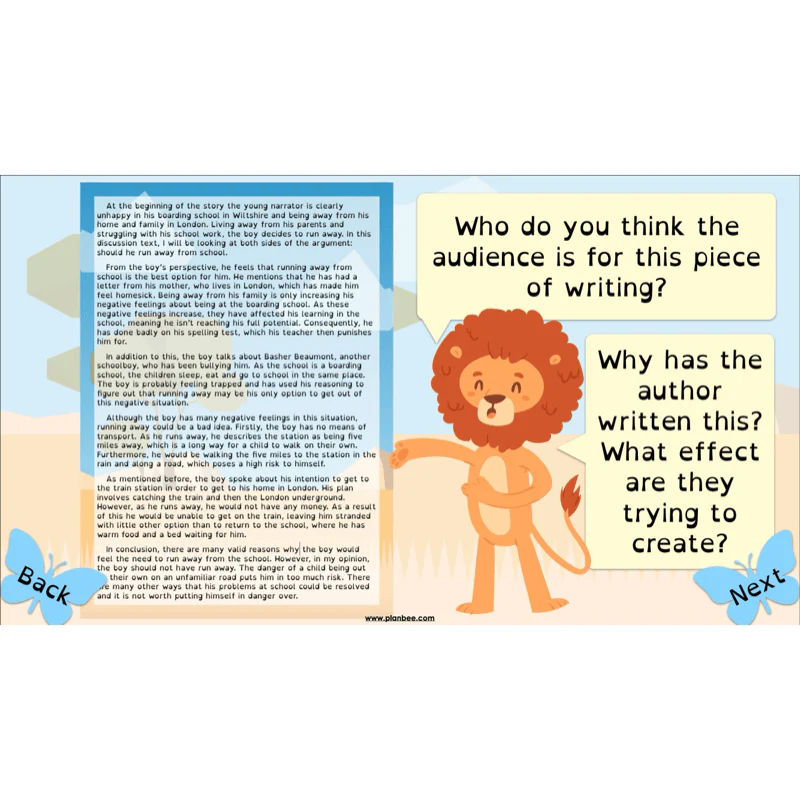
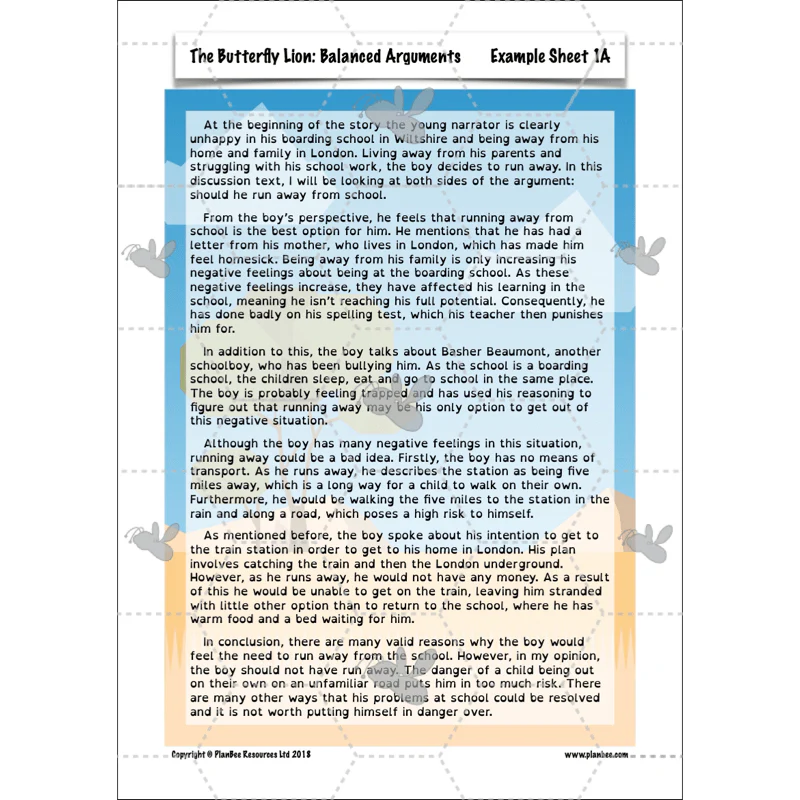
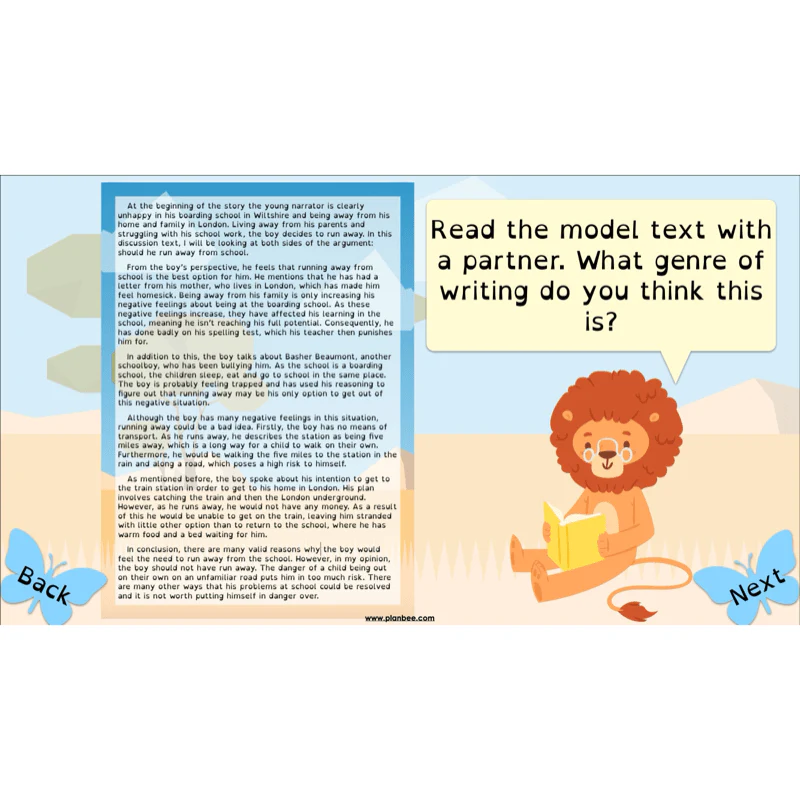
The first lesson in this balanced arguments KS2 planning pack offers your Year 5 class the opportunity to explore and discuss examples of balanced arguments which are included in the accompanying printable resources for this lesson.
Your class will be on the lookout for effective features of a balanced argument and discuss why the author has chosen to use the different features that they find. Extend the children's thinking further using the included teaching input slides as you begin to draw out how the writing might affect the reader and what the purpose of this genre of writing might be.
A detailed plan, a set of informative and engaging PDF slides, differentiated activity ideas and printable resources are all included in this ready-to-teach pack.
What's included:
- Lesson plan
- Slides
- Activity ideas
- Differentiated worksheets
- Model text
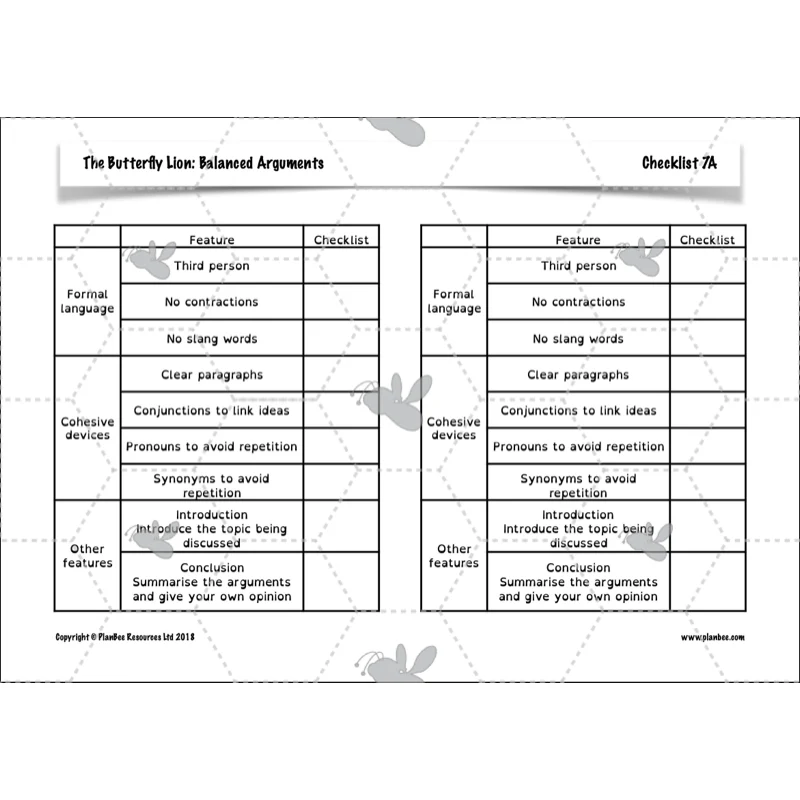
- Checklist
- Teacher notes
Characters' Thoughts and Feelings
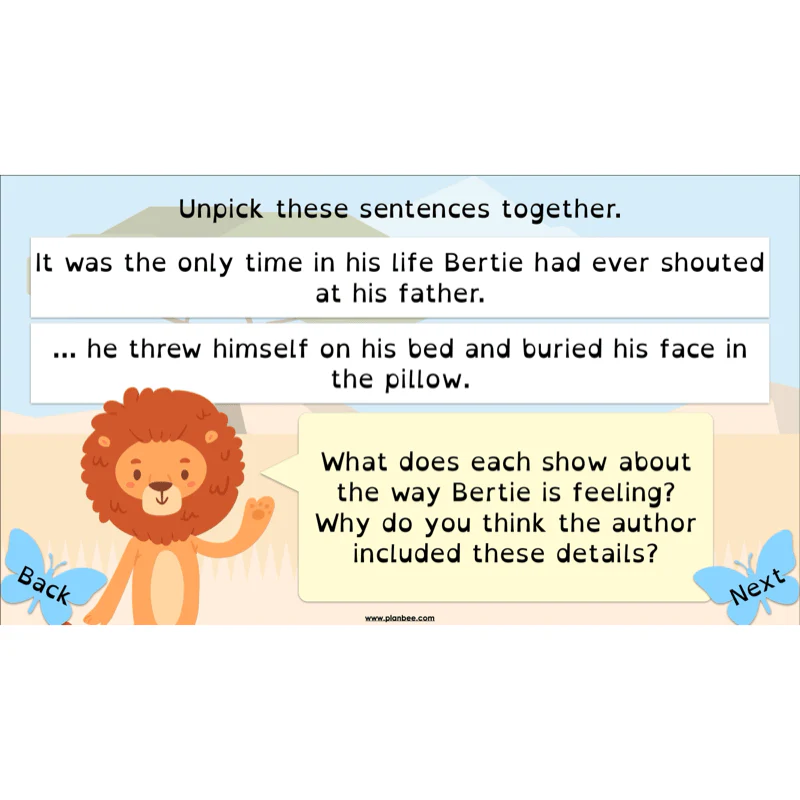
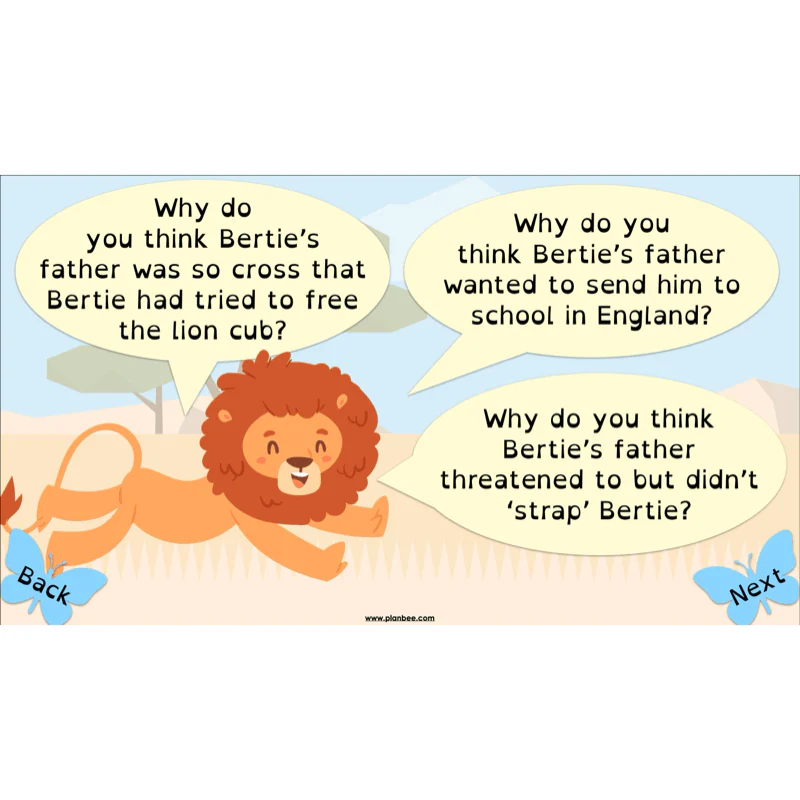
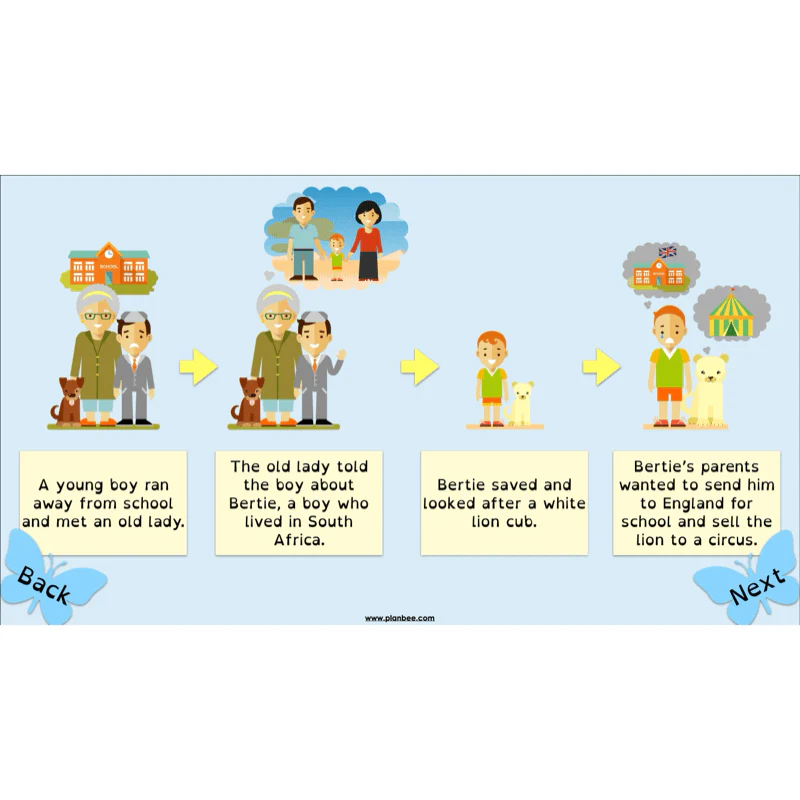
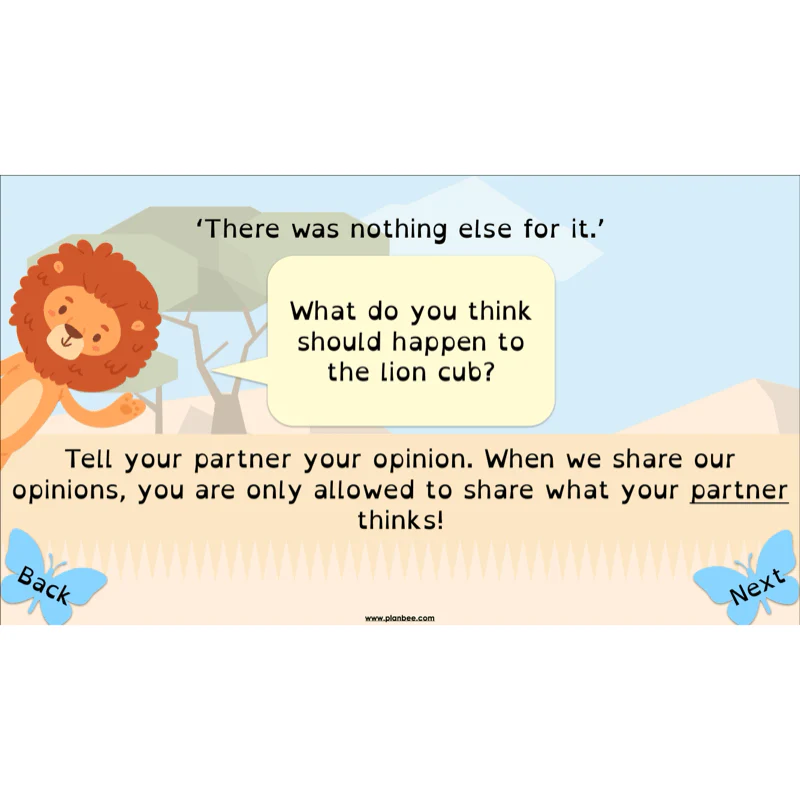
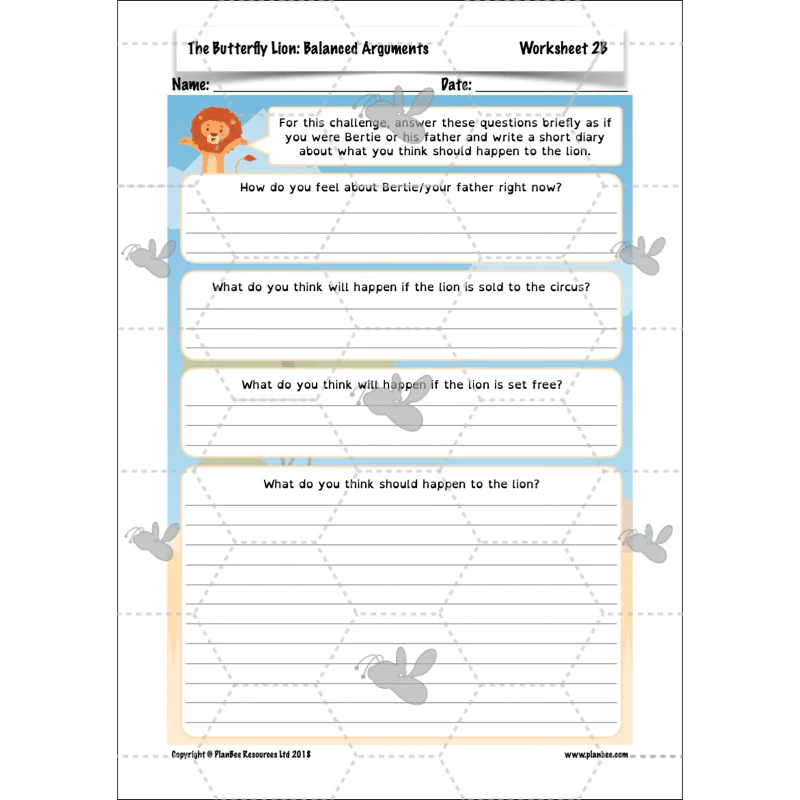
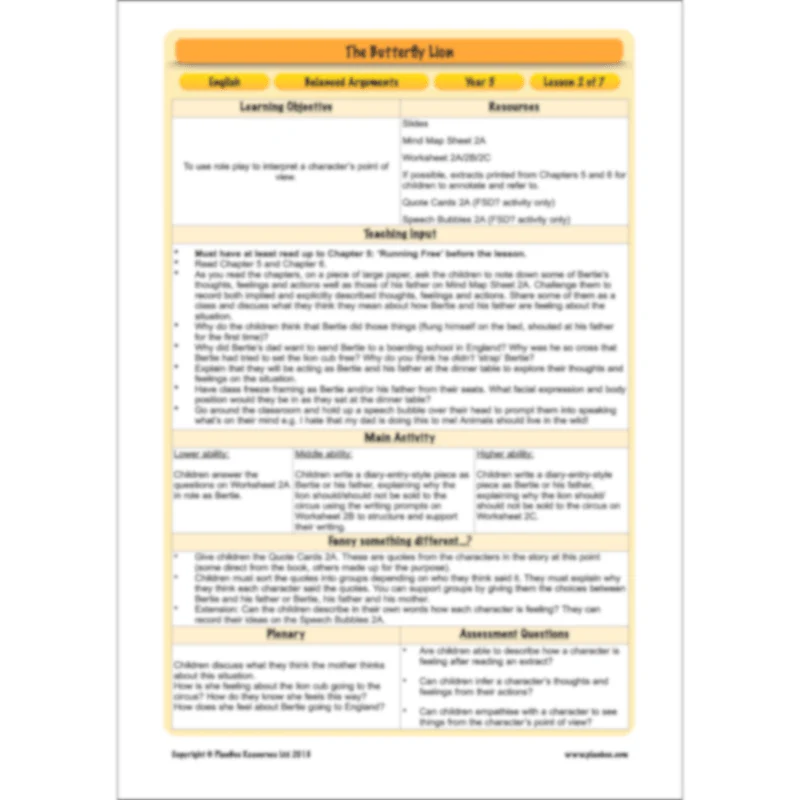
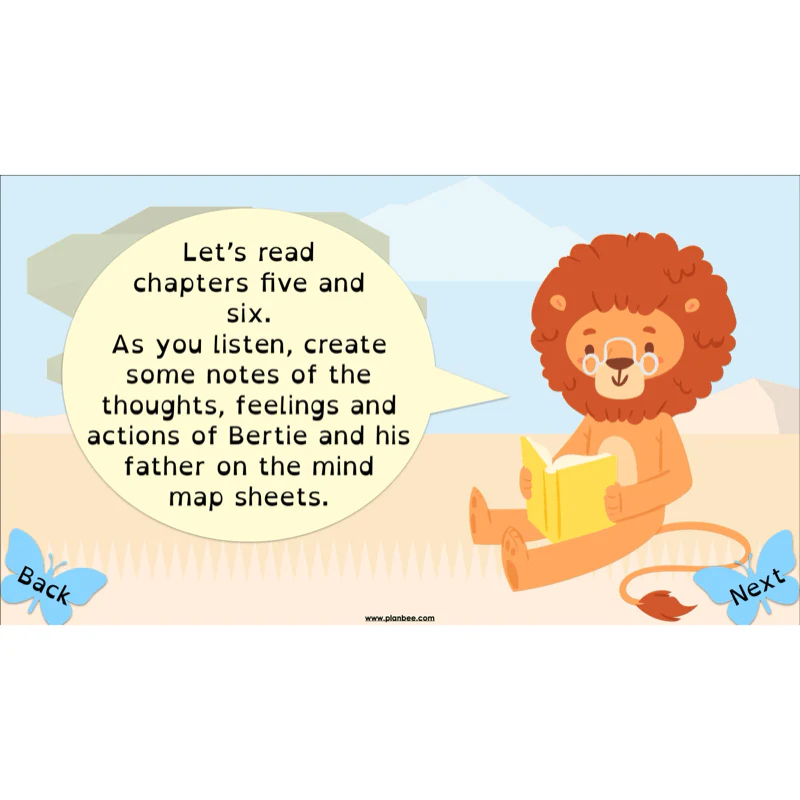
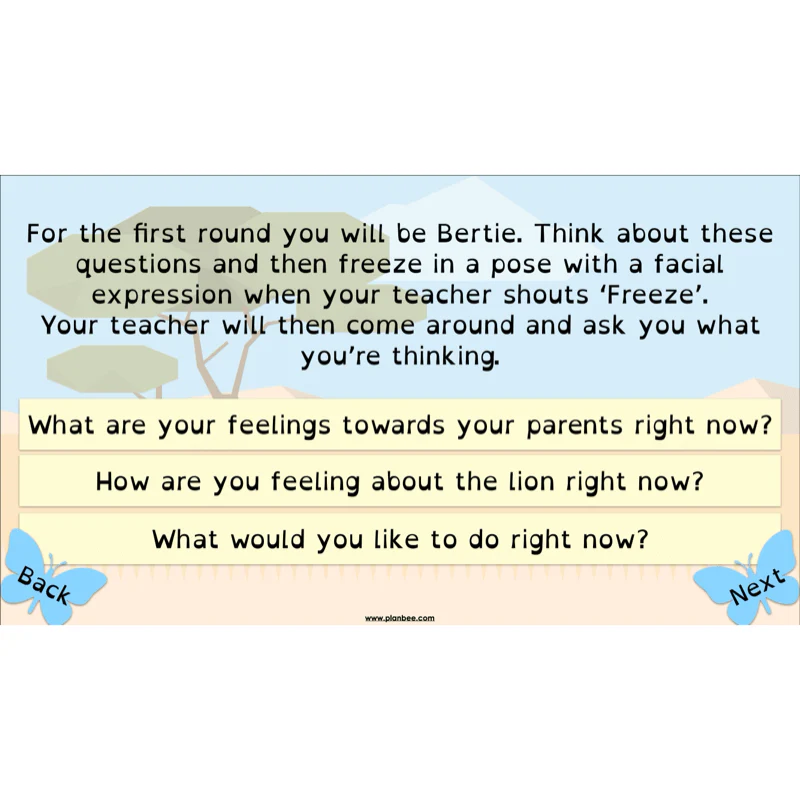
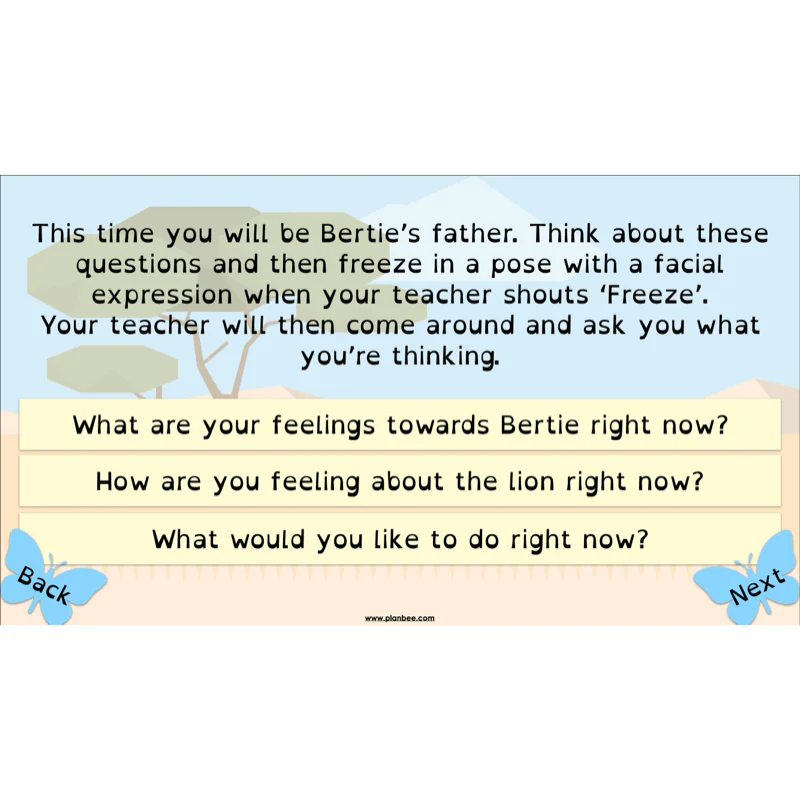
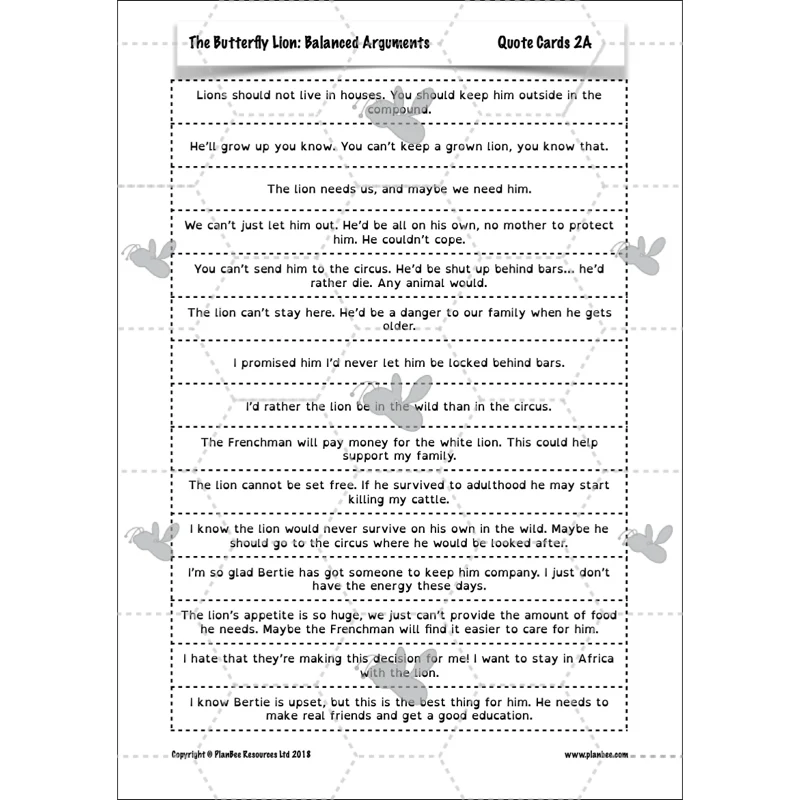
Read up to the critical moment in the story where Bertie and his family have to make a decision about the lion cub. Use the teaching input slides to inspire discussions about the characters’ thoughts and feelings in the situation and the reasons behind the actions described by the author.
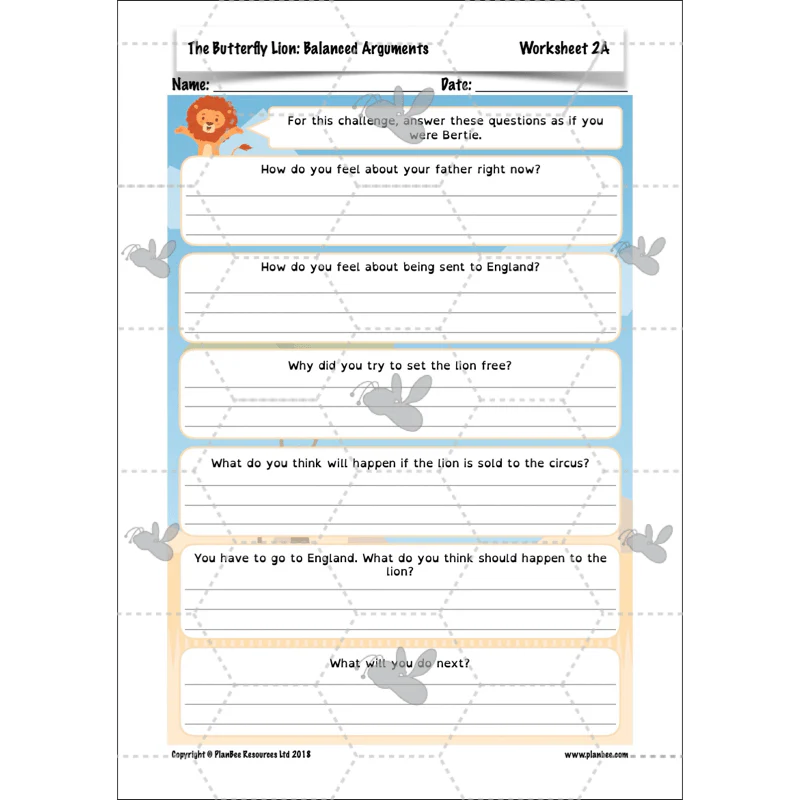
Your class are then challenged to look at the same situation from the point of view of different characters through role-play and challenge them to continue exploring this by writing in role as one of the characters.
This ready-to-teach pack includes a comprehensive plan, engaging PDF slides, differentiated activities, and printable resources to support your lesson delivery.
What's included:
- Lesson plan
- Slides
- Activity ideas
- Mind map sheet
- Differentiated worksheets
- Quote cards
- Speech bubbles
Cohesive Devices
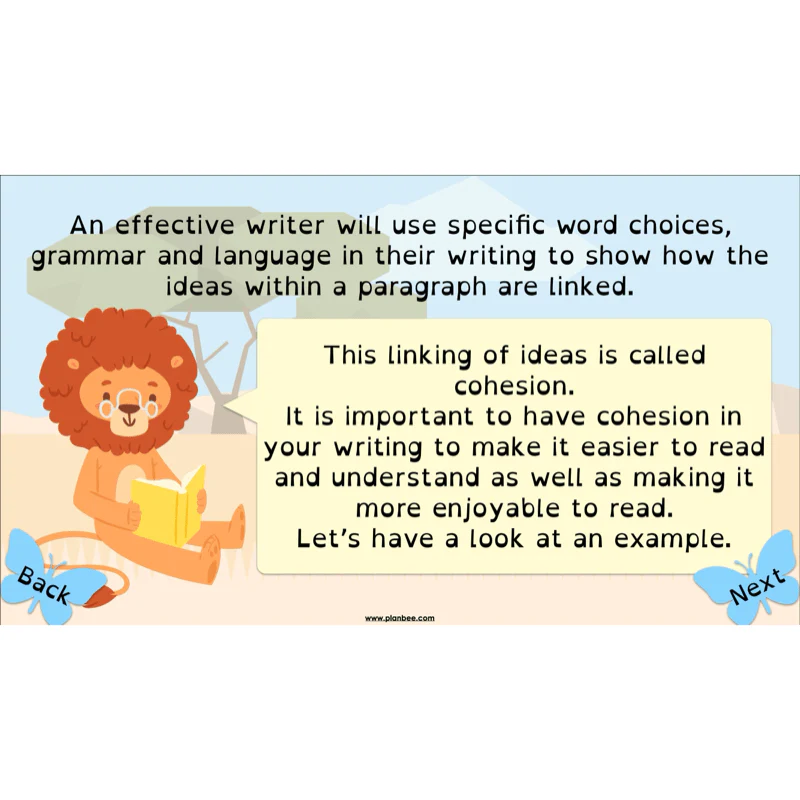
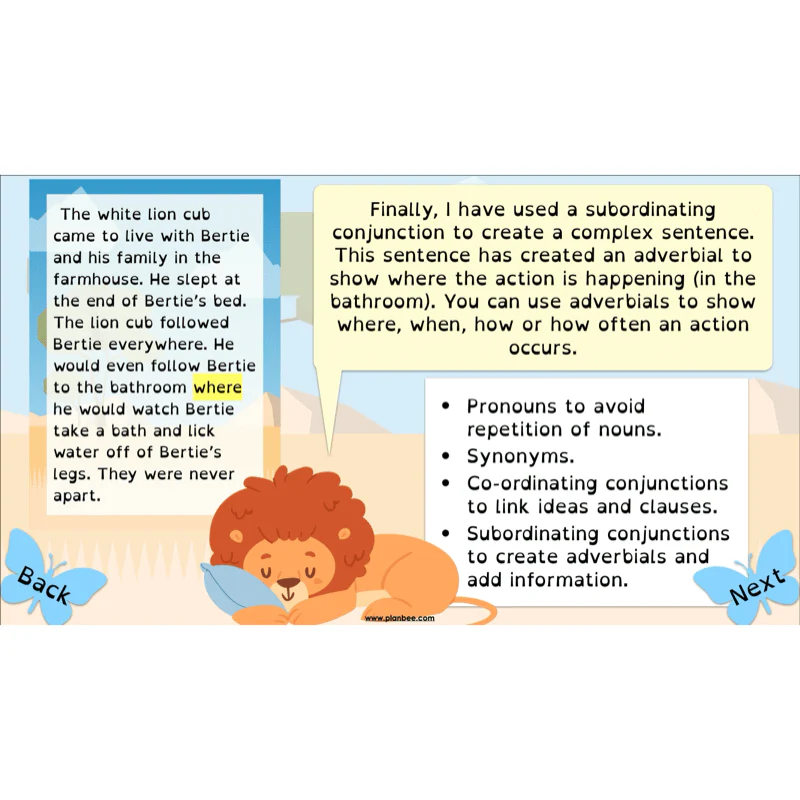
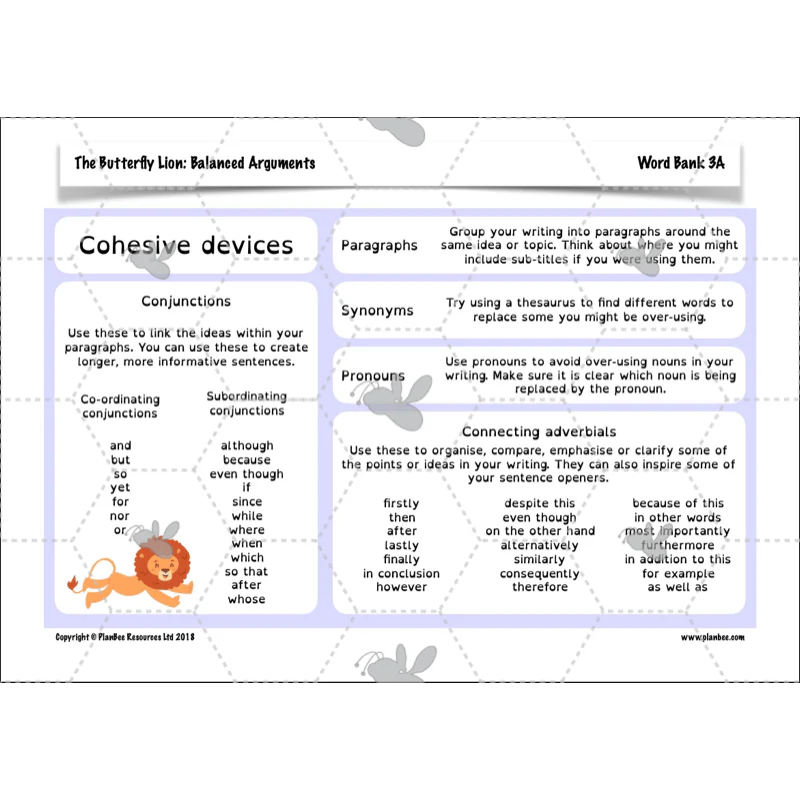
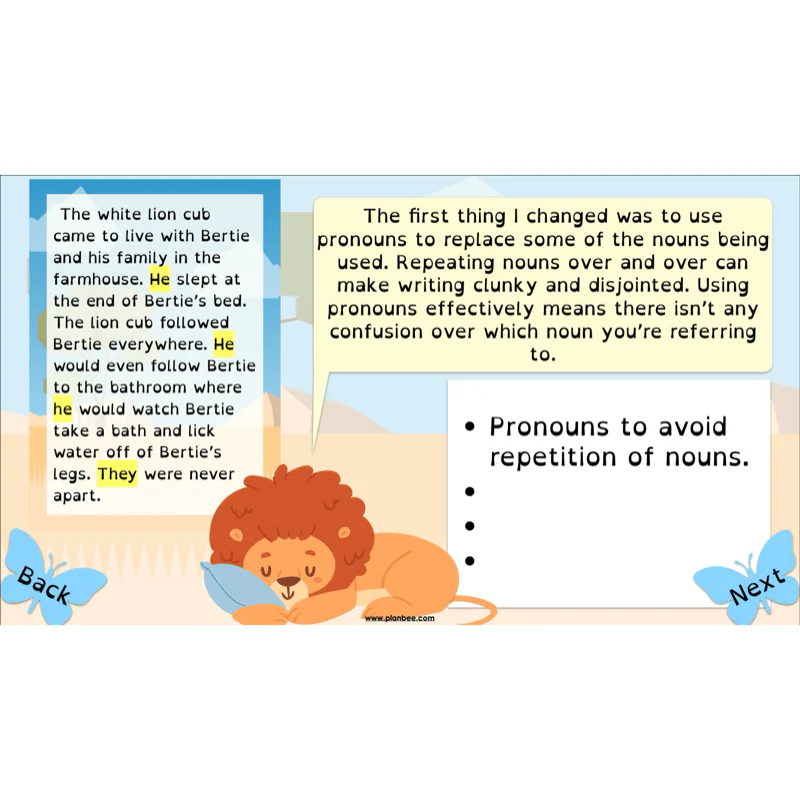
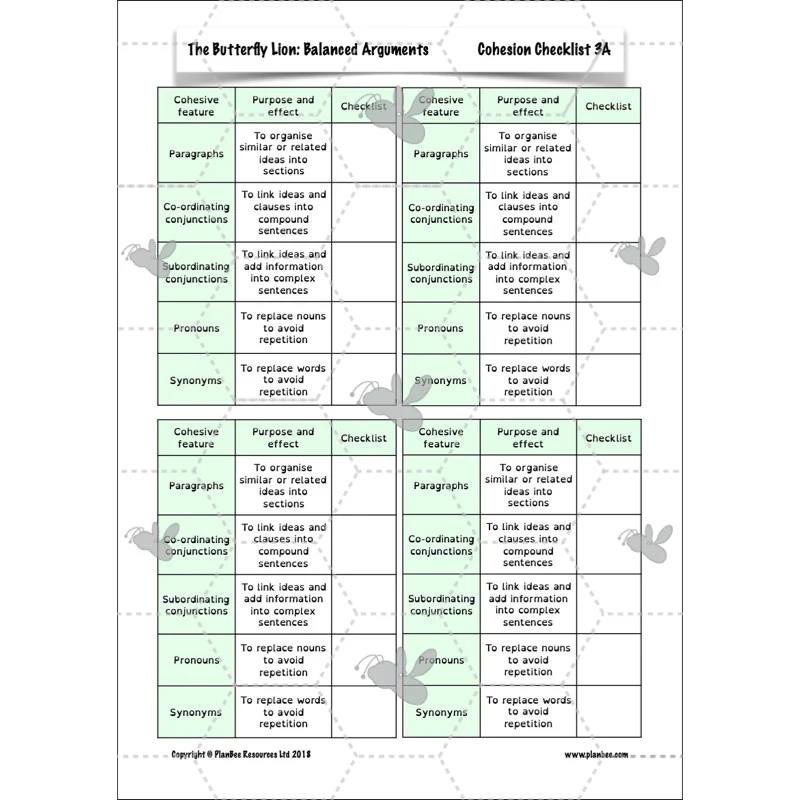
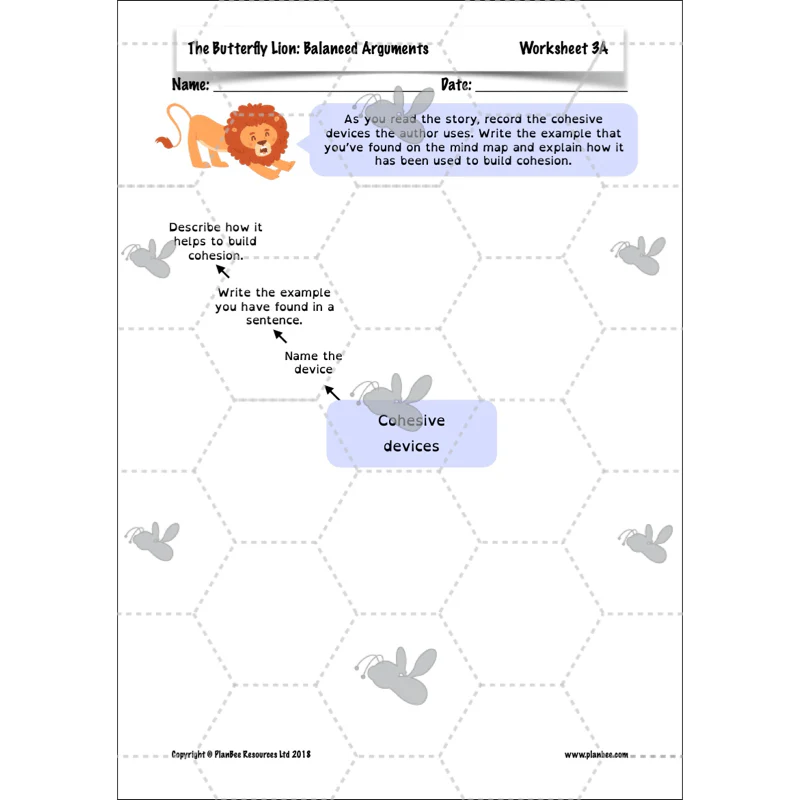
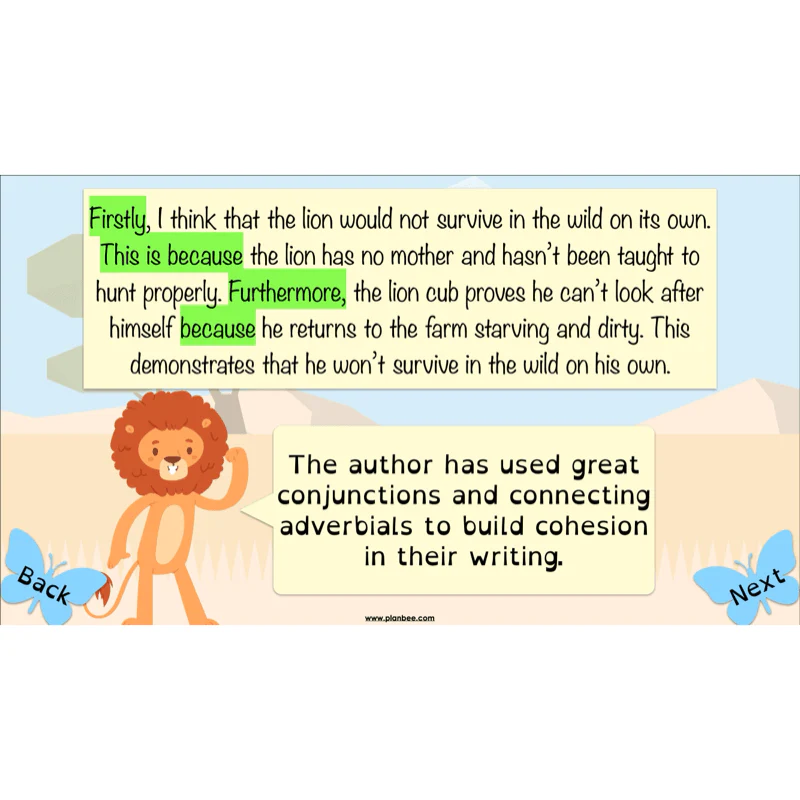
Use this cohesive device KS2 lesson plan with accompanying slides and printable resources to help teach your class to identify different types of cohesive devices and how we can use them to improve paragraph cohesion.
During the teaching input, read a piece of writing which has deliberately left out devices that aid cohesion and discuss how this affects the reader. Challenge your Year 5 class to spot and discuss why a piece of disjointed writing is less effective than one which uses cohesive devices to help the writing hang together and link ideas within and across paragraphs. The pre-prepared paragraphs and cohesive devices checklists in the accompanying resources give your KS2 class the perfect opportunity to use cohesive devices or identify where they have been used.
Within this pack, you'll find a detailed teaching plan, informative PDF slides, a range of differentiated activities, and handy printable resources, all ready for use.
What's included:
- Lesson plan
- Slides
- Activity ideas
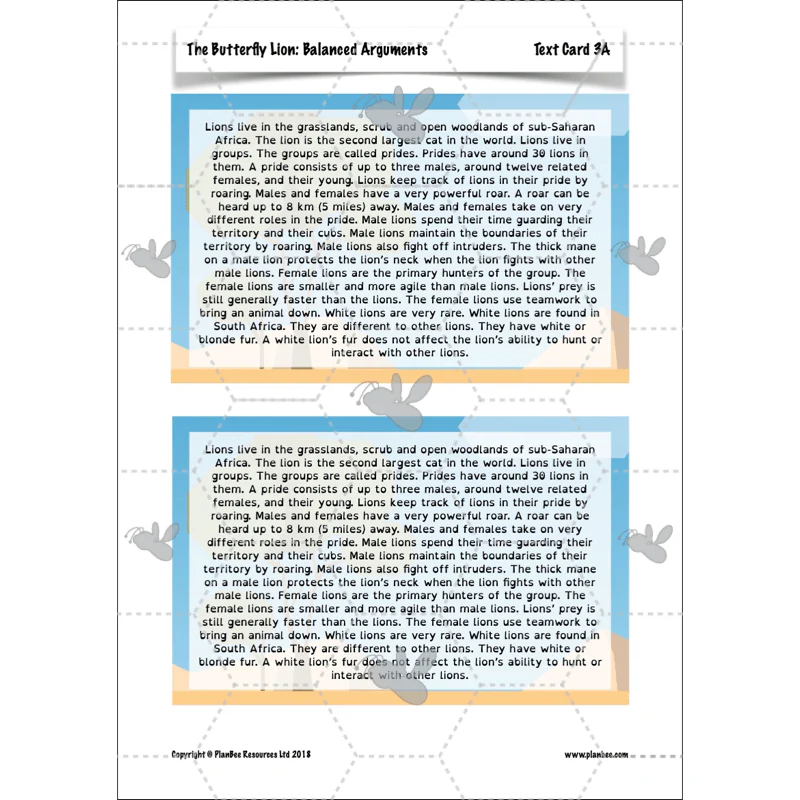
- Text card
- Word bank
- Cohesion checklist
- Fact card
- Worksheet
Using Cohesive Devices
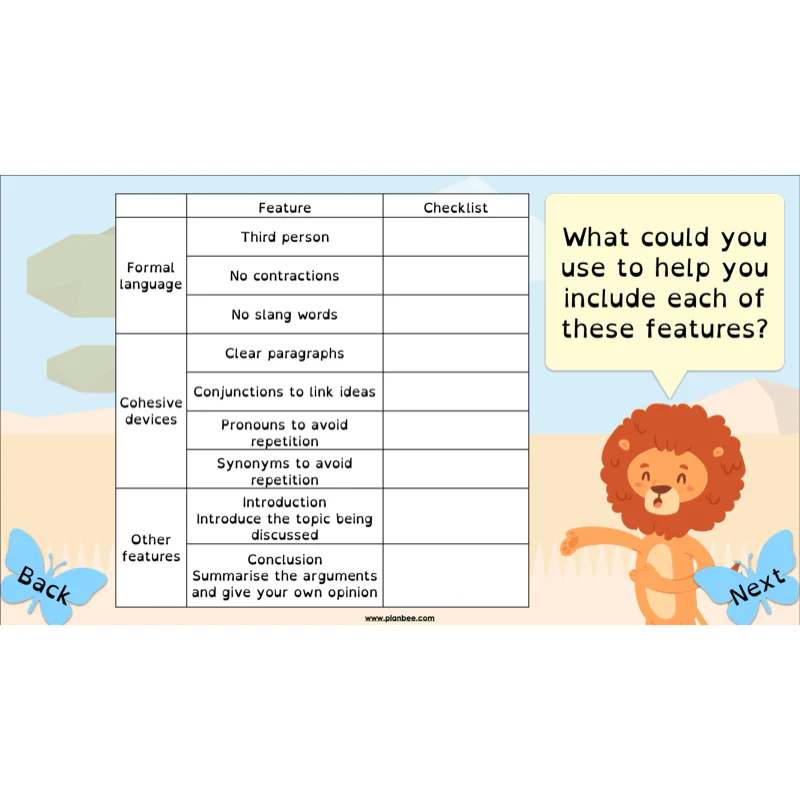
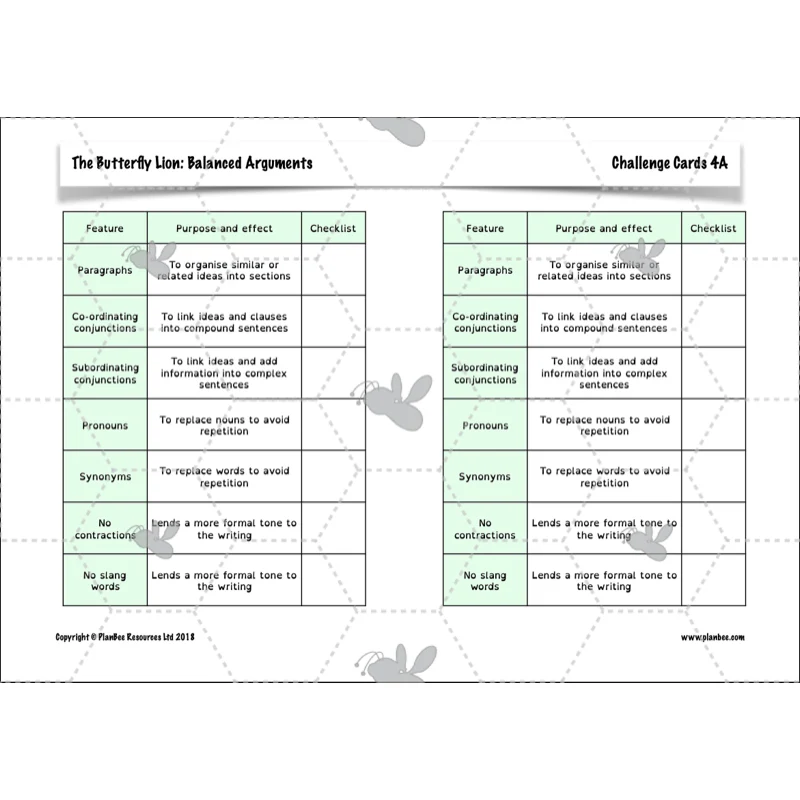
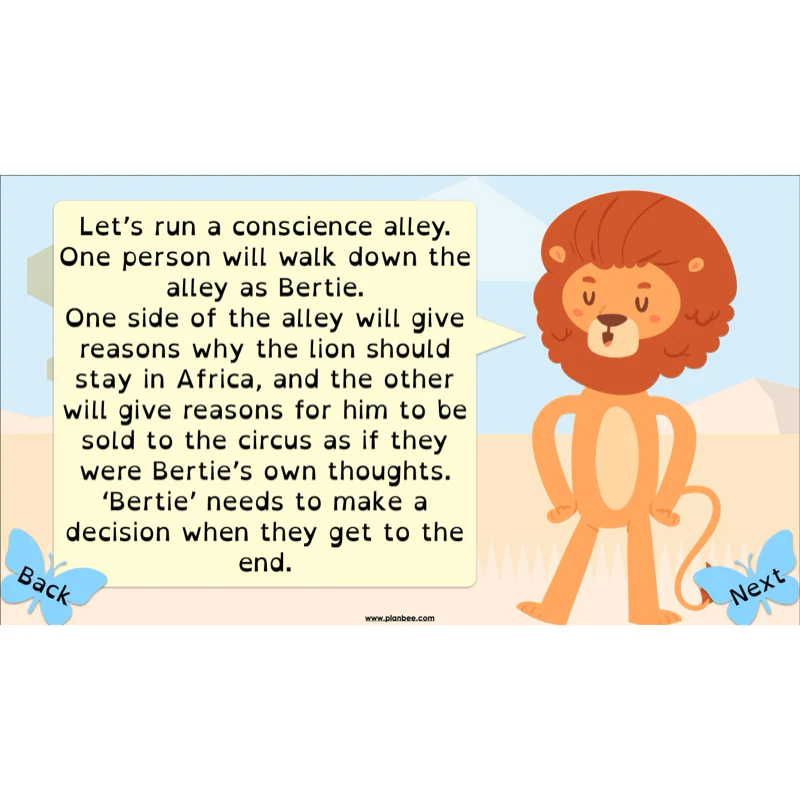
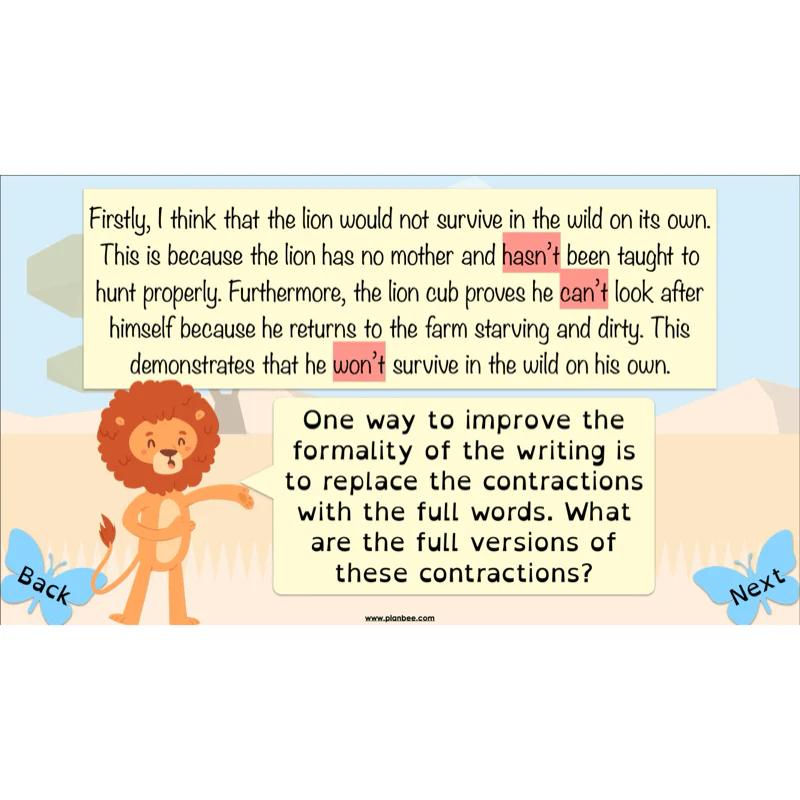
These cohesive devices KS2 lesson plan draws on the previous lesson's learning on the types of cohesive devices which can be used to improve paragraph cohesion. The children will explore a decision that Bertie has to make in the story of The Butterfly Lion and discuss their opinions on the decision using conscience alley. They will then use these discussions to begin expressing their own opinions cohesively using formal language.
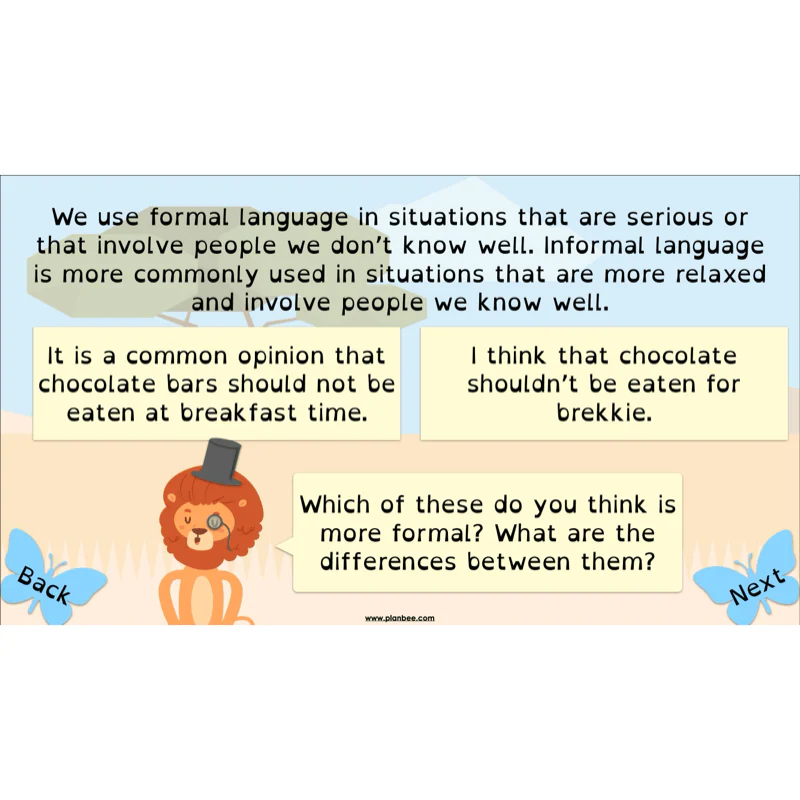
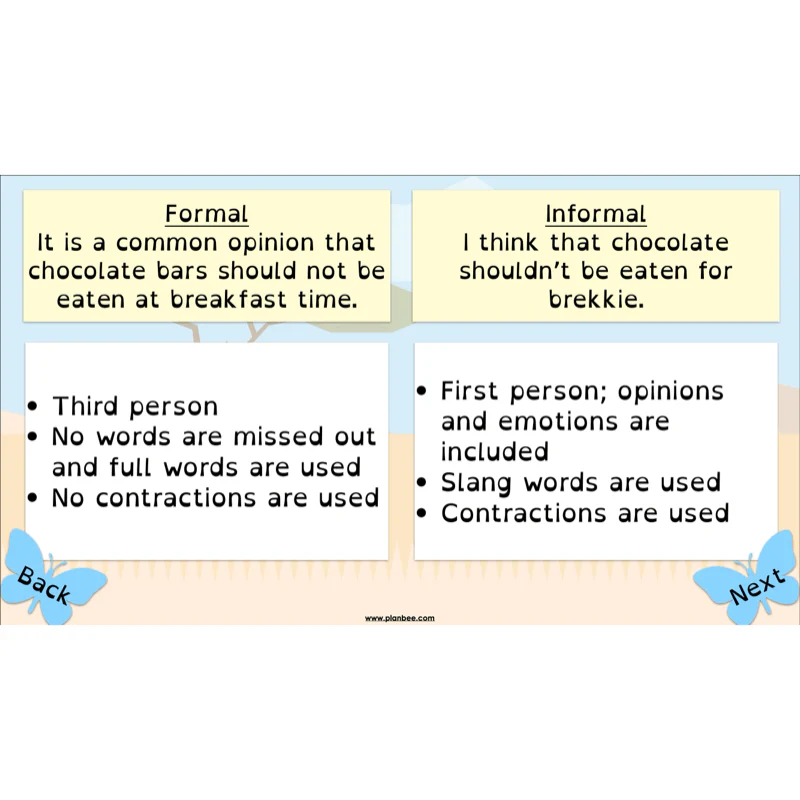
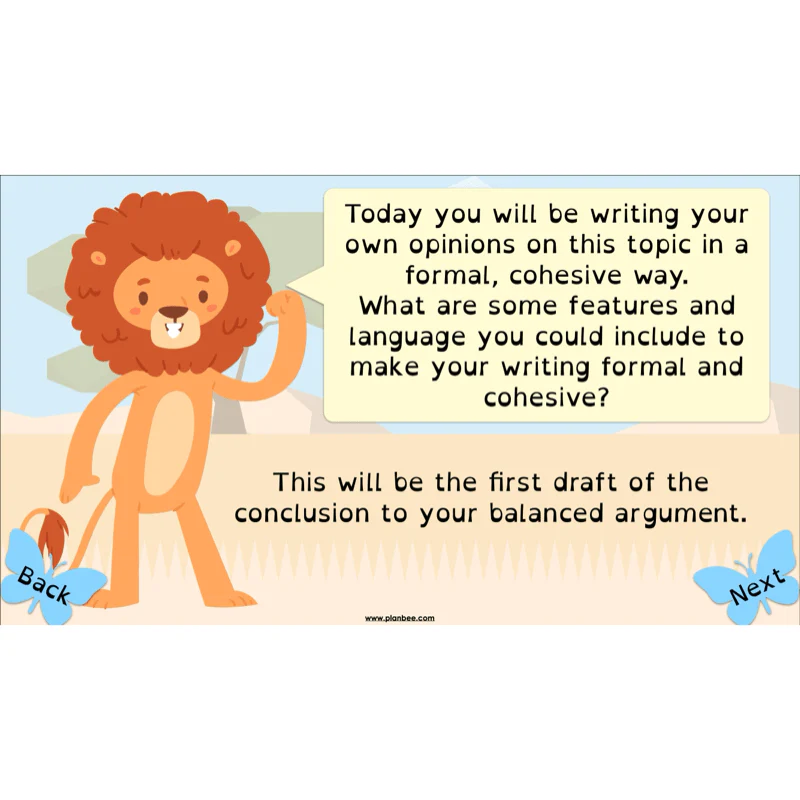
The lesson input slides included with this pack help to guide the children's discussions and understanding of formal language features and cohesive devices. Your Year 5 class is then encouraged to create the first draft of their concluding paragraph, expressing their own opinion on the decision Bertie has to make.
Included in this pack are a thorough lesson plan, informative PDF slides, activities tailored to different learning levels, and printable resources to enhance your teaching.
What's included:
- Lesson plan
- Slides
- Activity ideas
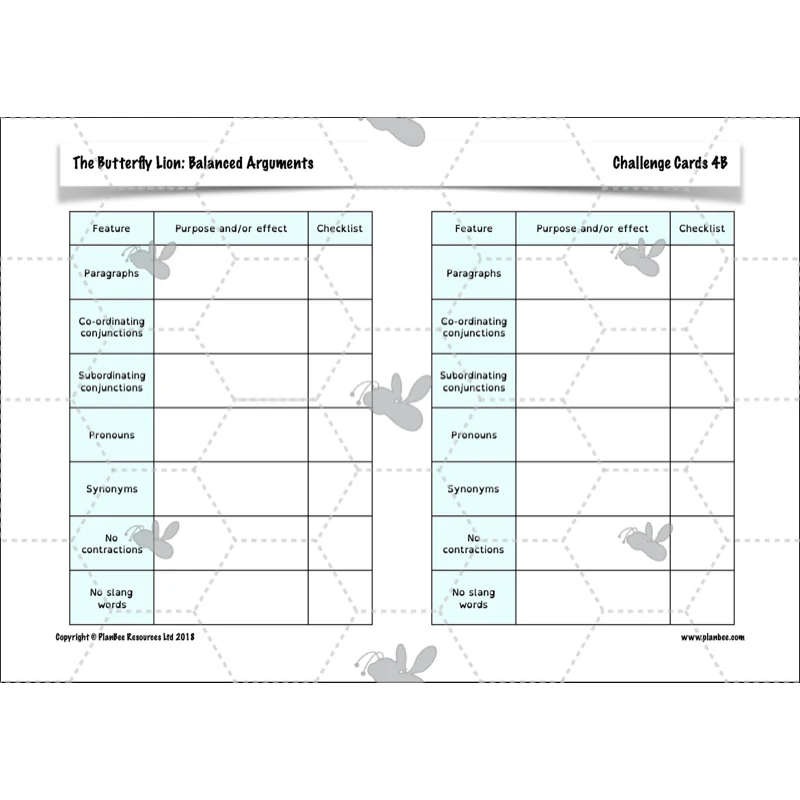
- Challenge cards
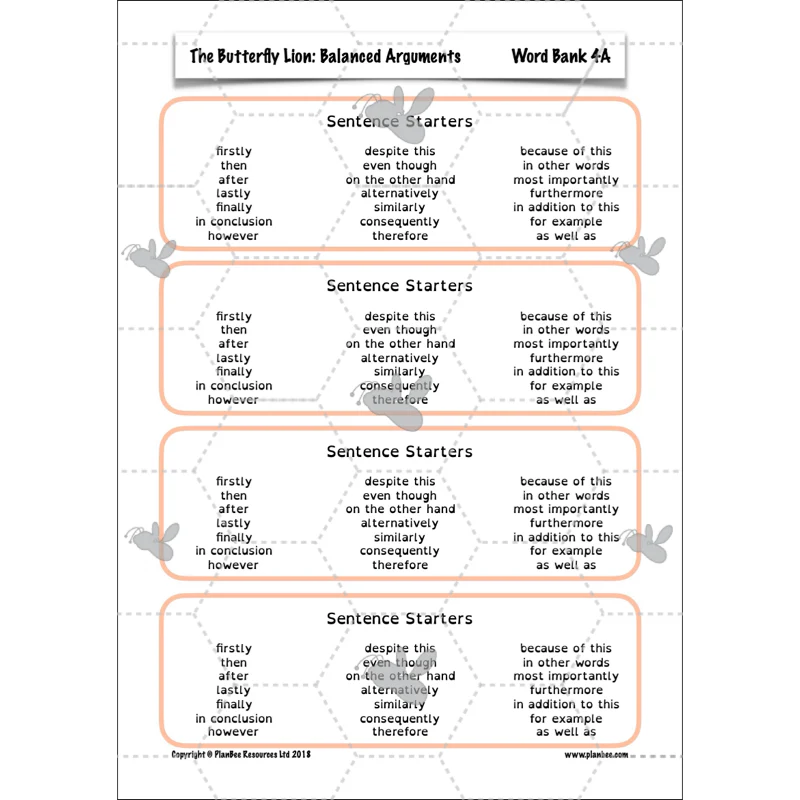
- Word bank
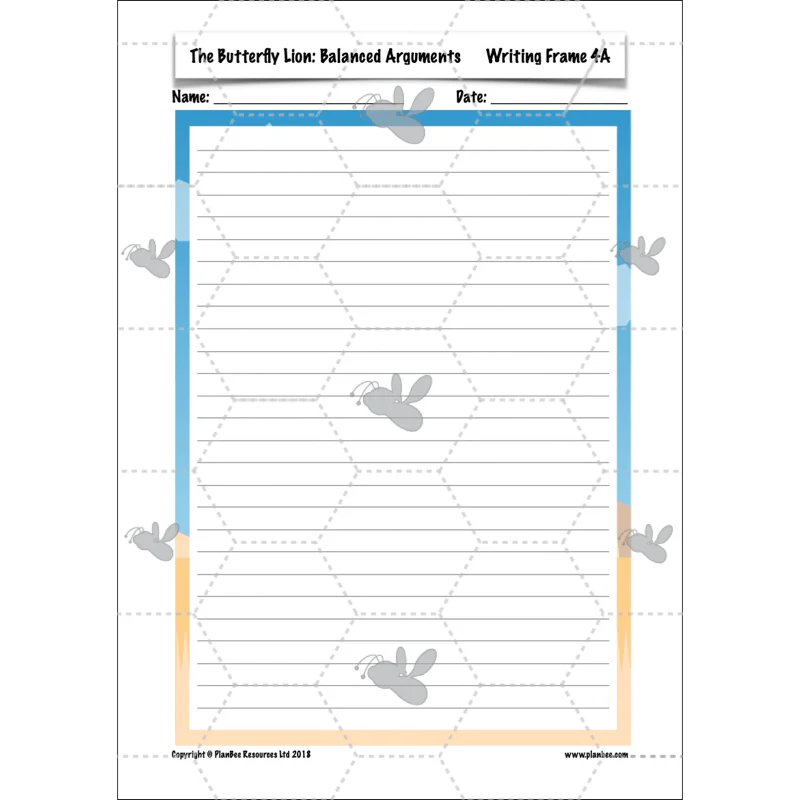
- Writing frame
Planning a Balanced Argument
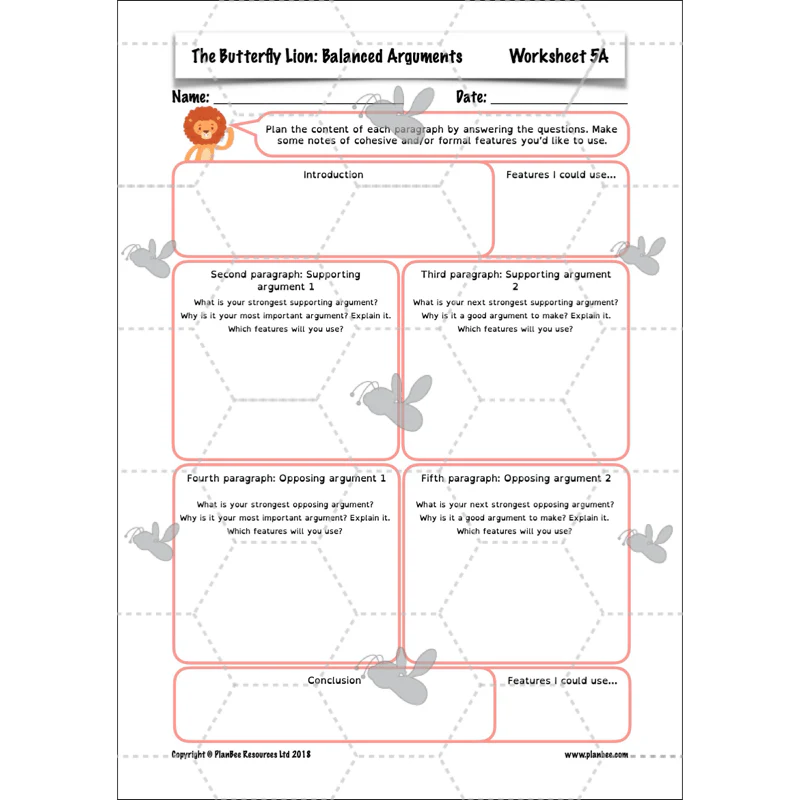
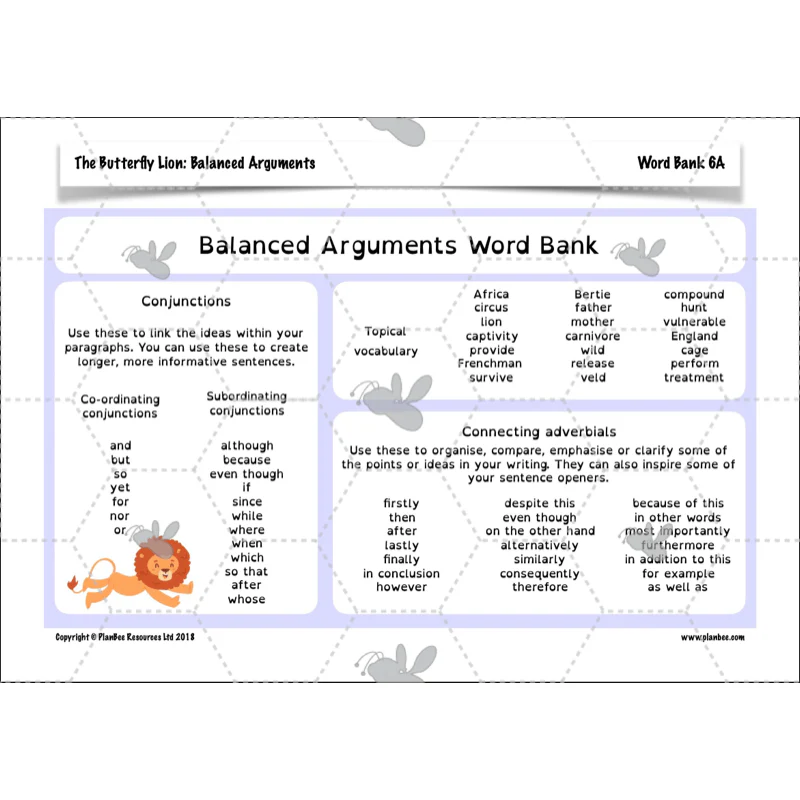
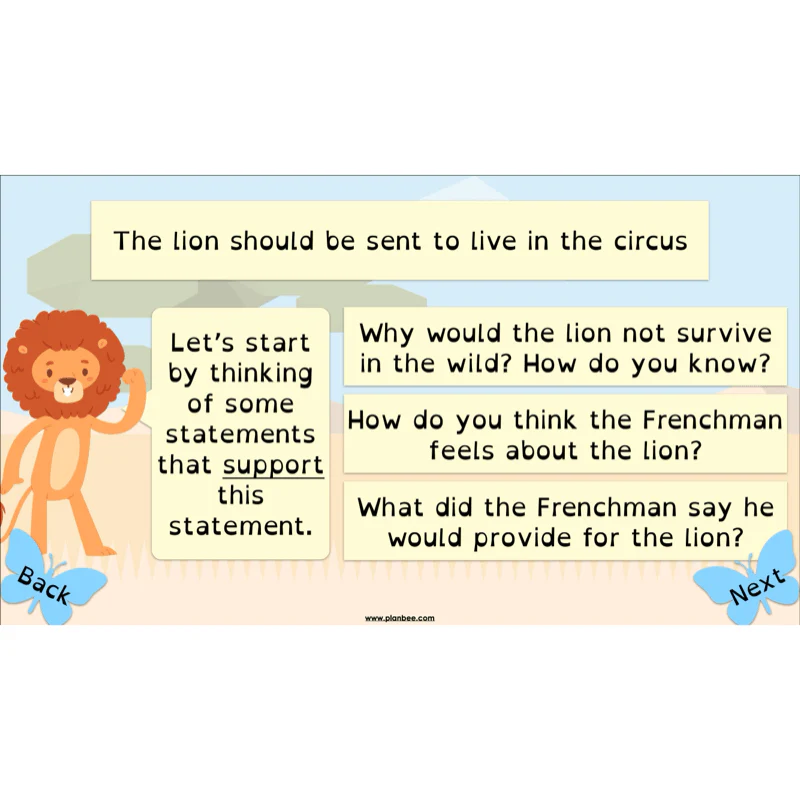
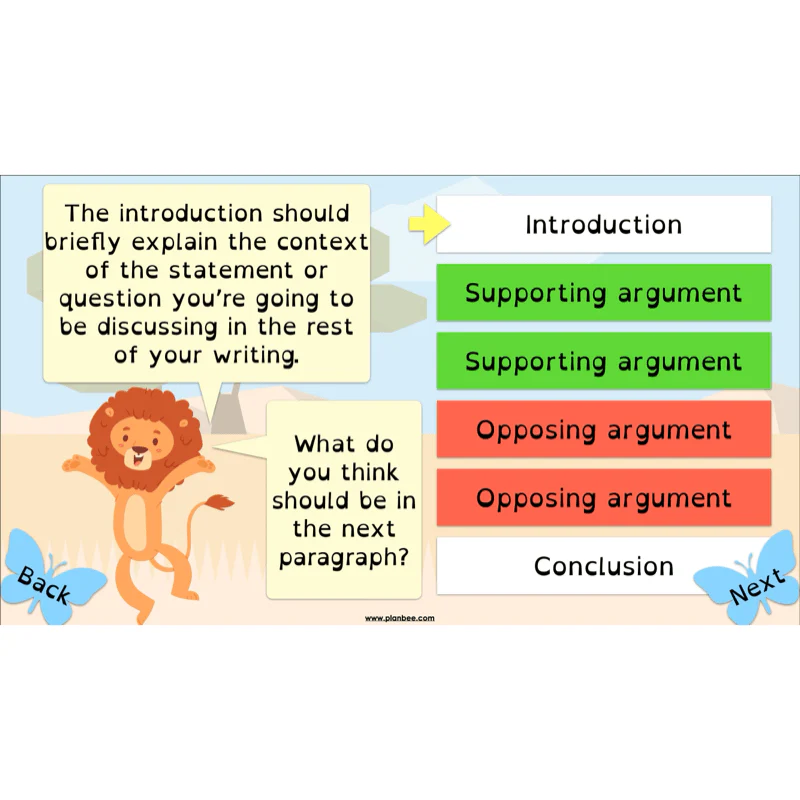
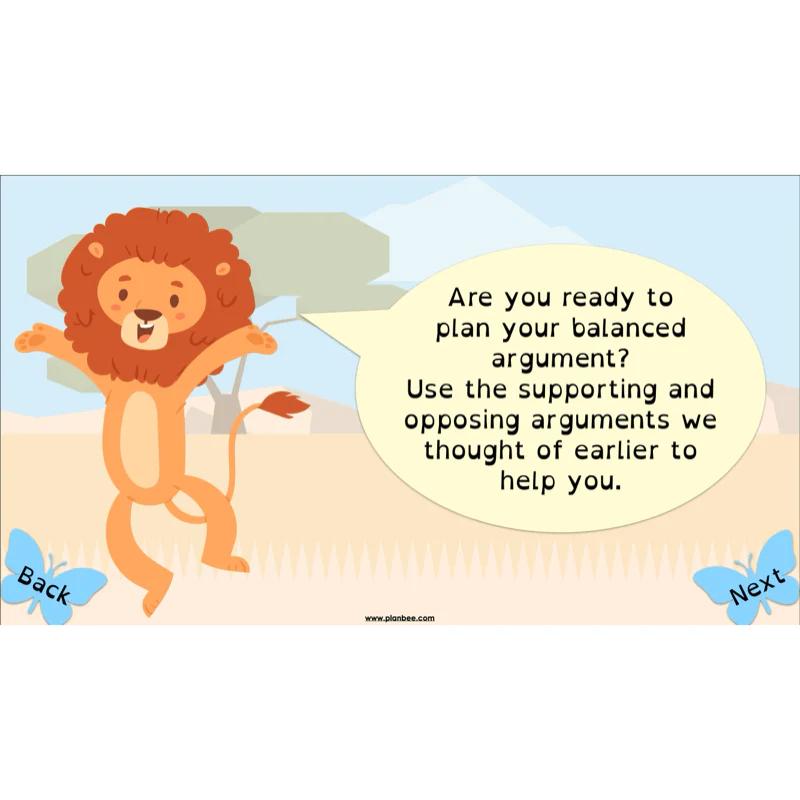
The fifth lesson in this Butterfly Lion planning pack encourages your Year 5 class to generate and discuss some of the ideas and content for their balanced argument.
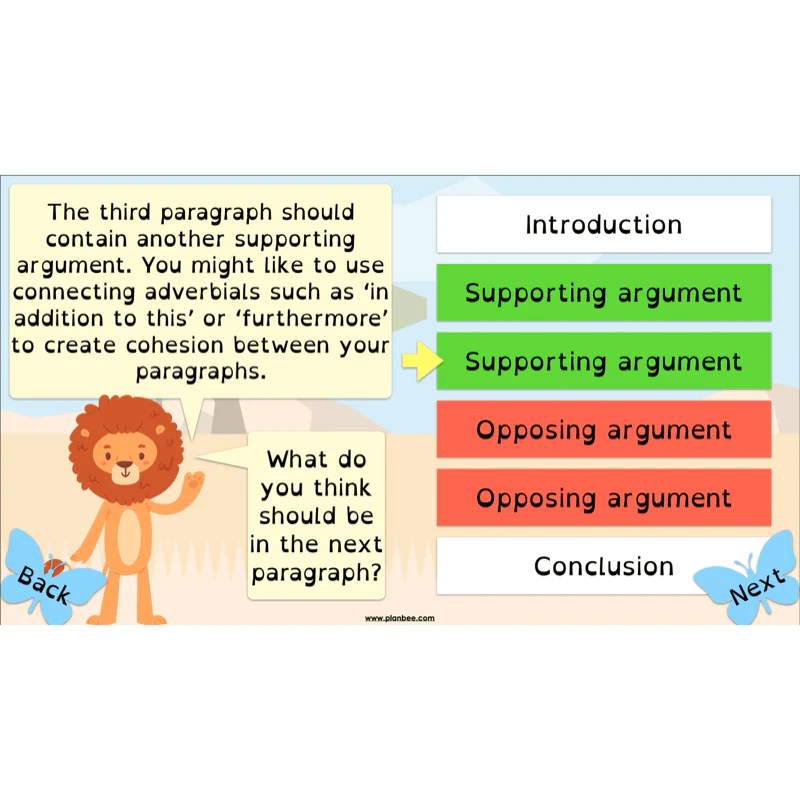
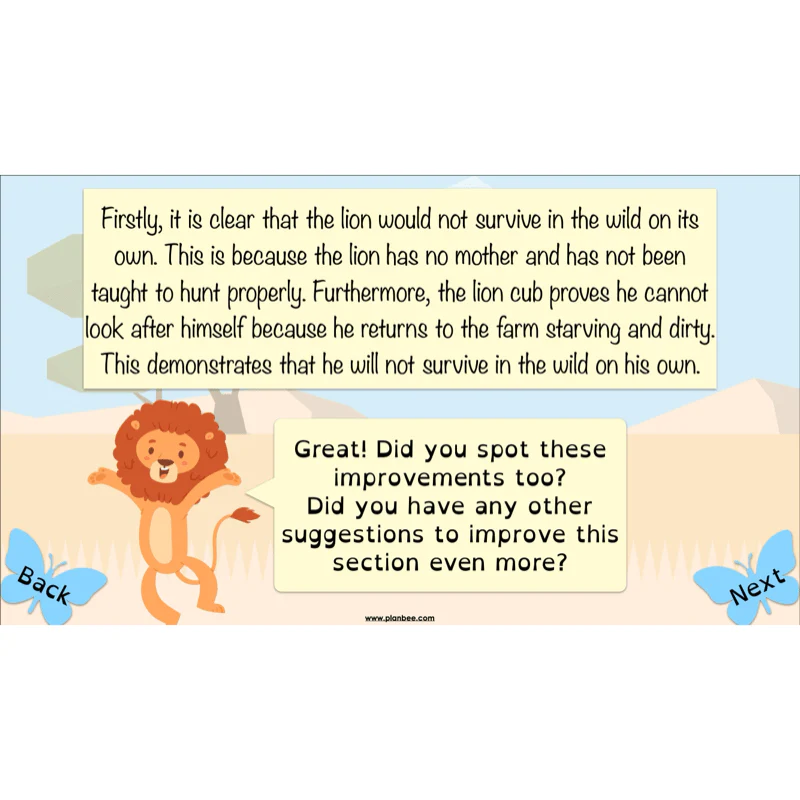
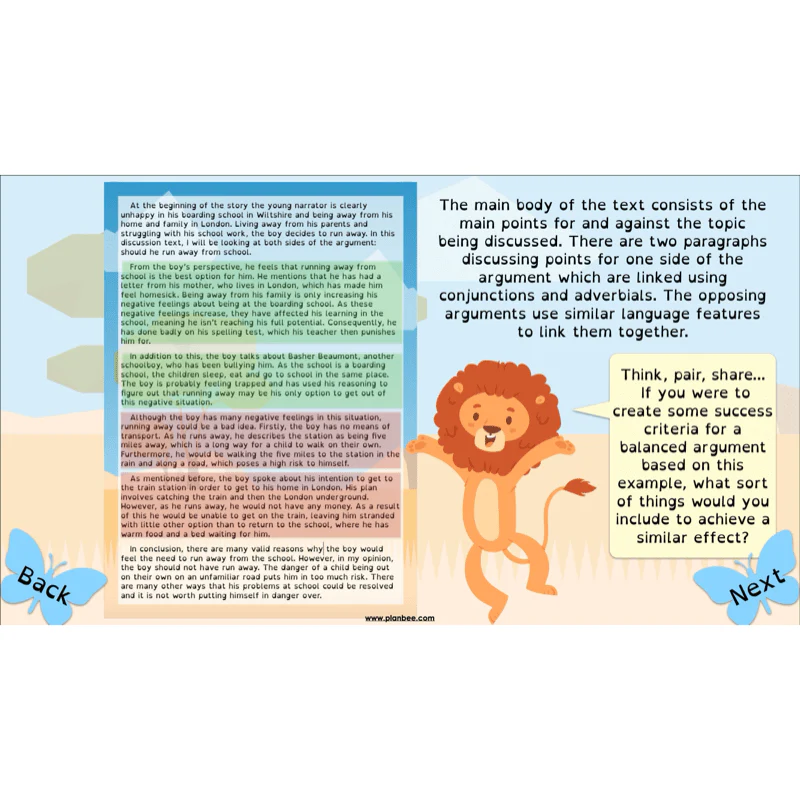
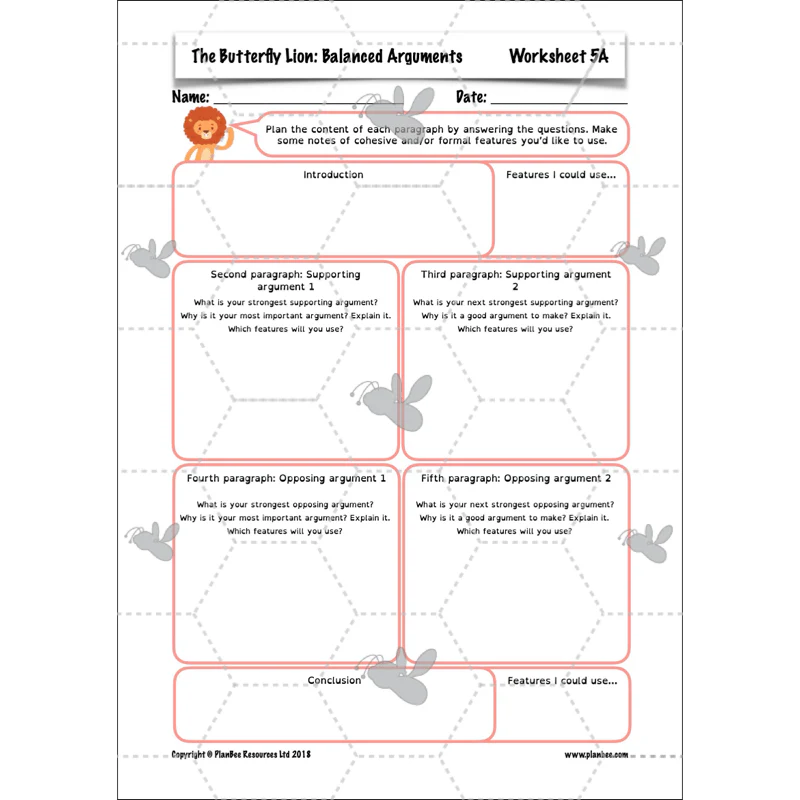
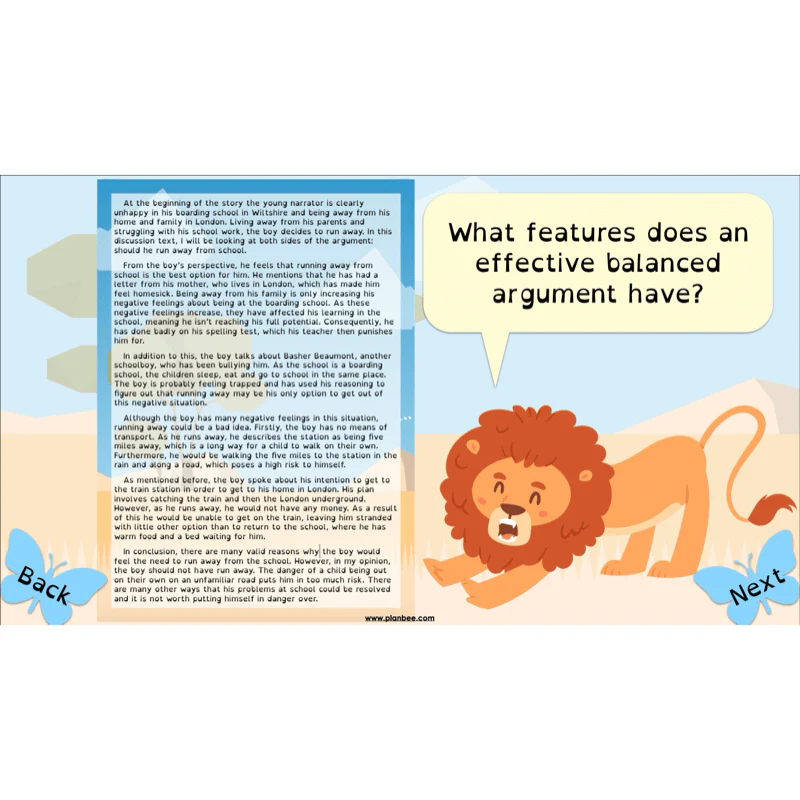
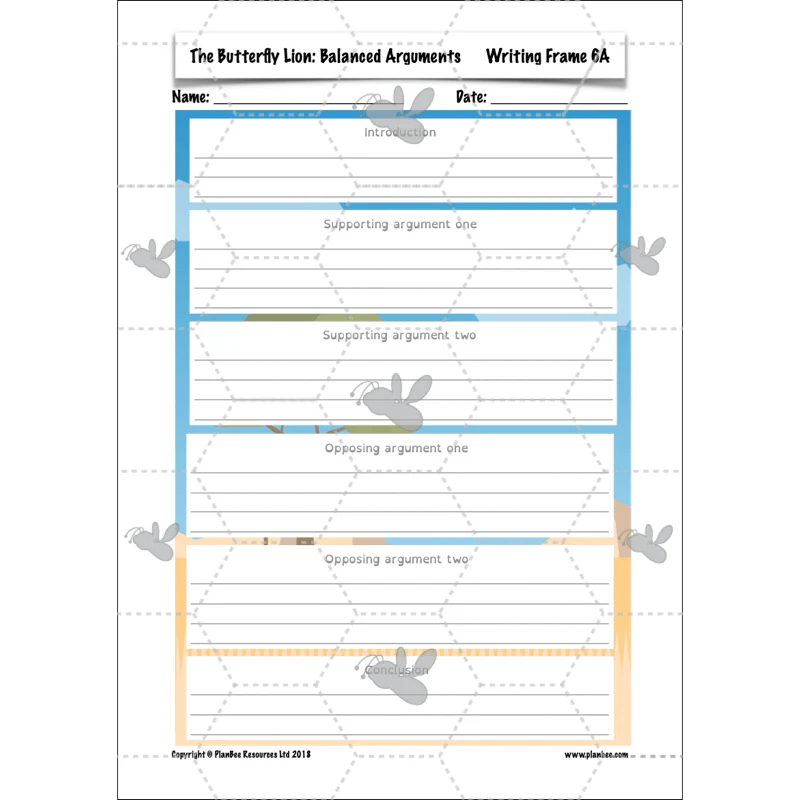
Using the included slides, investigate the structure of a balanced argument with your class to box up and organise the ideas for their final draft. The questions provided on the slides will also encourage the children to think clearly about the two different sides of the argument make decisions about how they will include them in their writing next lesson.
The accompanying plan and resources provide you with different ways in which to support your class in generating their own ideas and organising them into coherent paragraphs.
What's included:
- Lesson plan
- Slides
- Activity ideas
- Differentiated worksheets
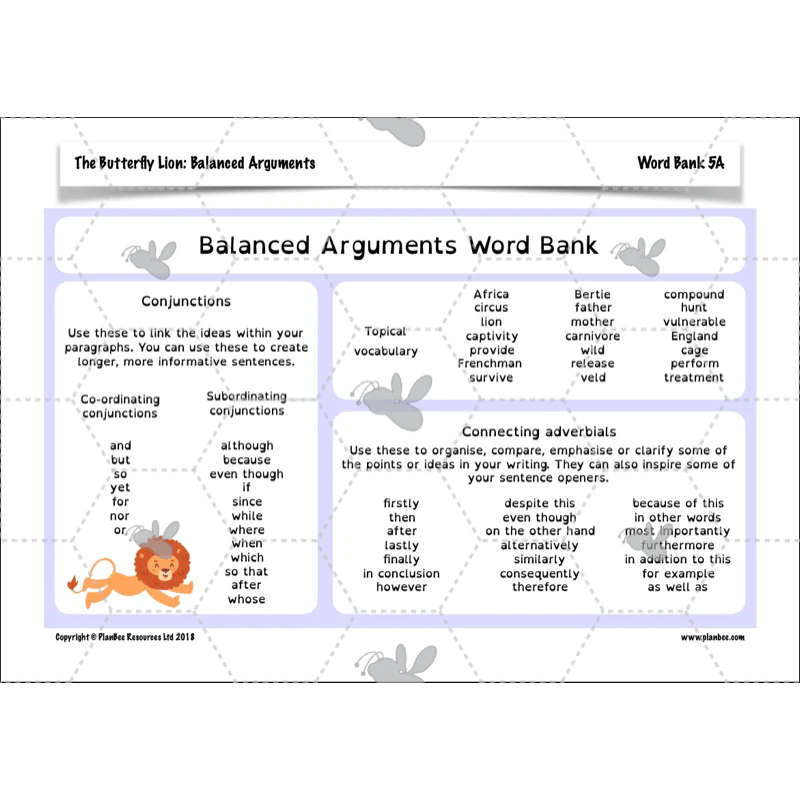
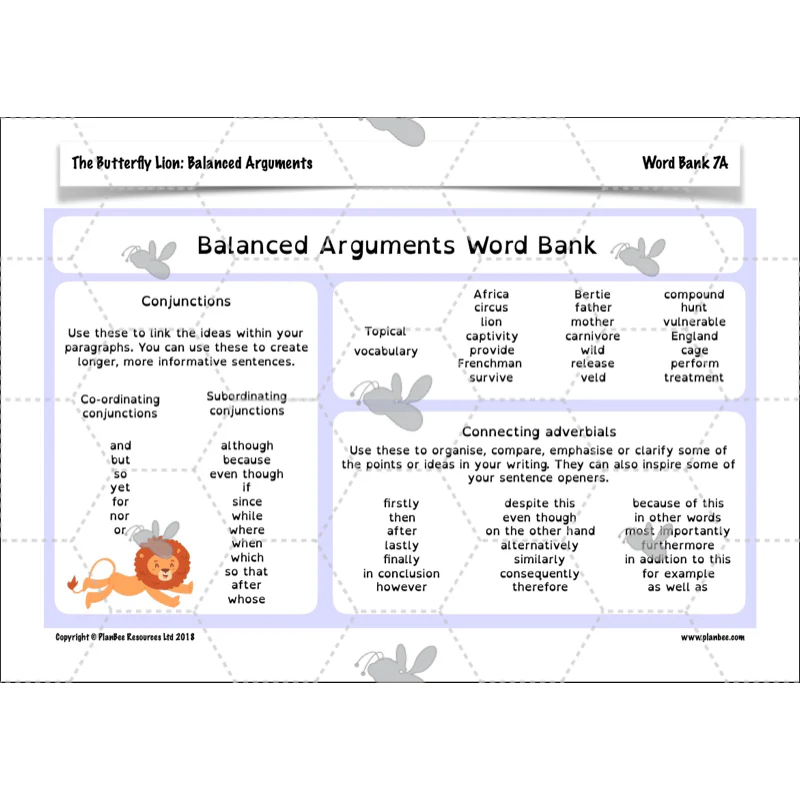
- Word bank
Writing a Balanced Argument
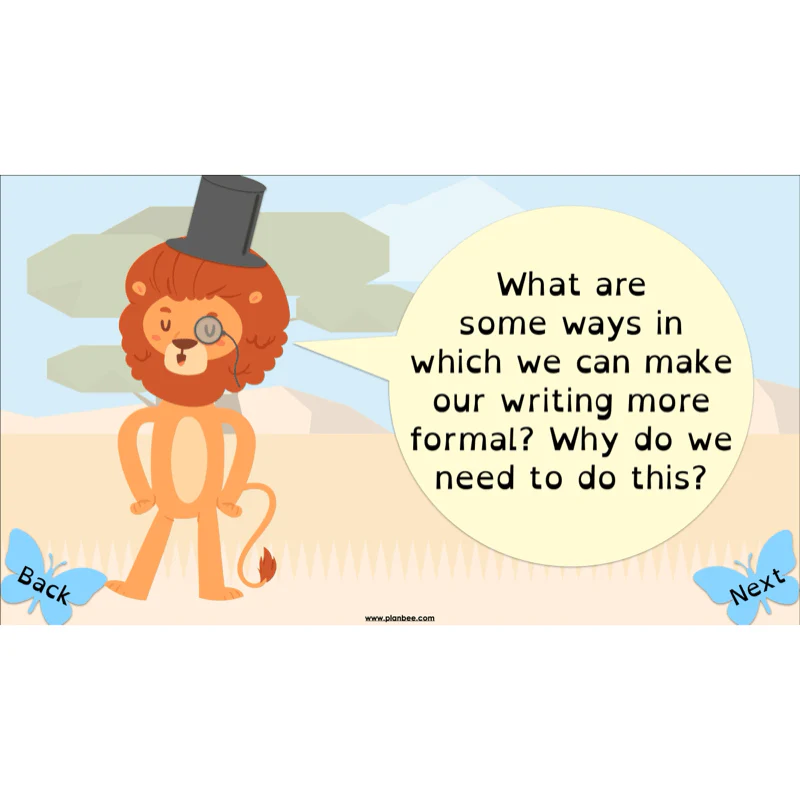
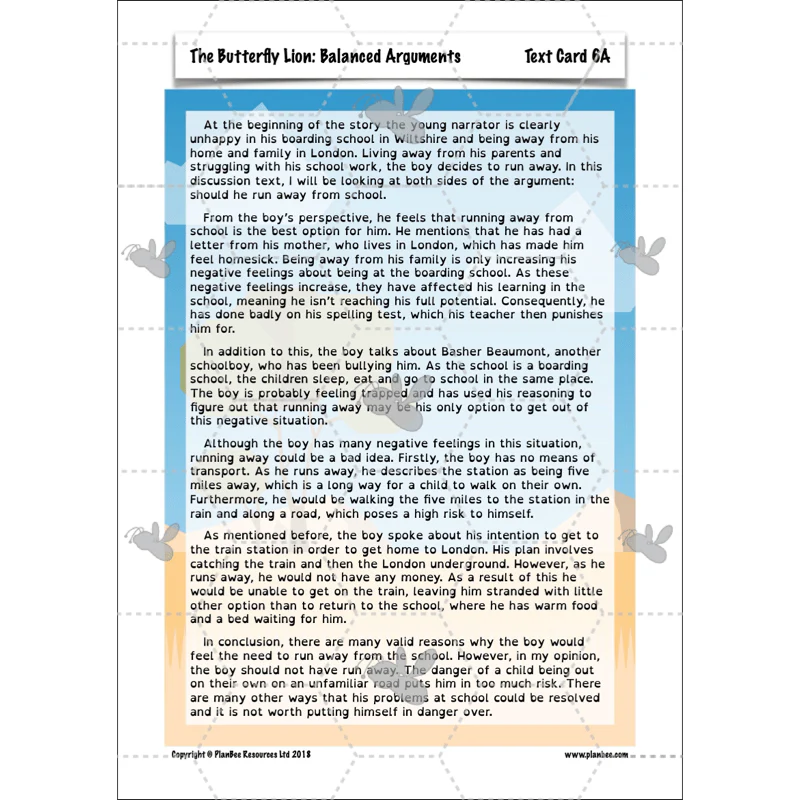
Use the examples of balanced arguments to inspire your class in their own attempts at this genre of writing. Your Year 5 class will use their learning and understanding of the different features of a balanced argument to create a formal, cohesive and effective discussion text.
This writing a balanced argument KS2 lesson plan comes with teaching input slides as well as printable resources which you can use to support and extend your class's use of the different features in a balanced argument.
What's included:
- Lesson plan
- Slides
- Activity ideas
- Text card
- Word bank
- Writing frame
Editing and Improving
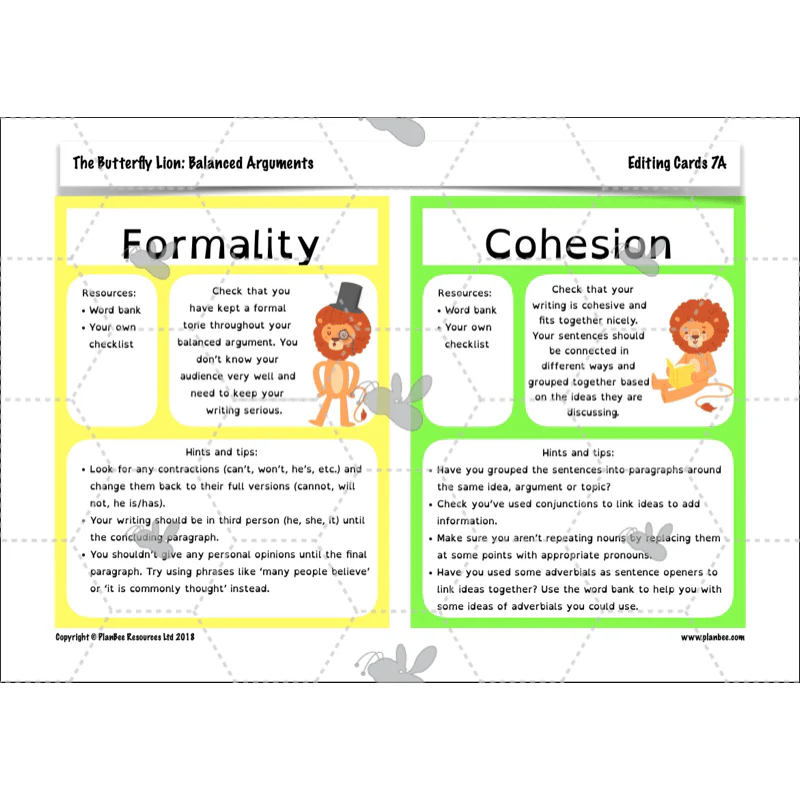
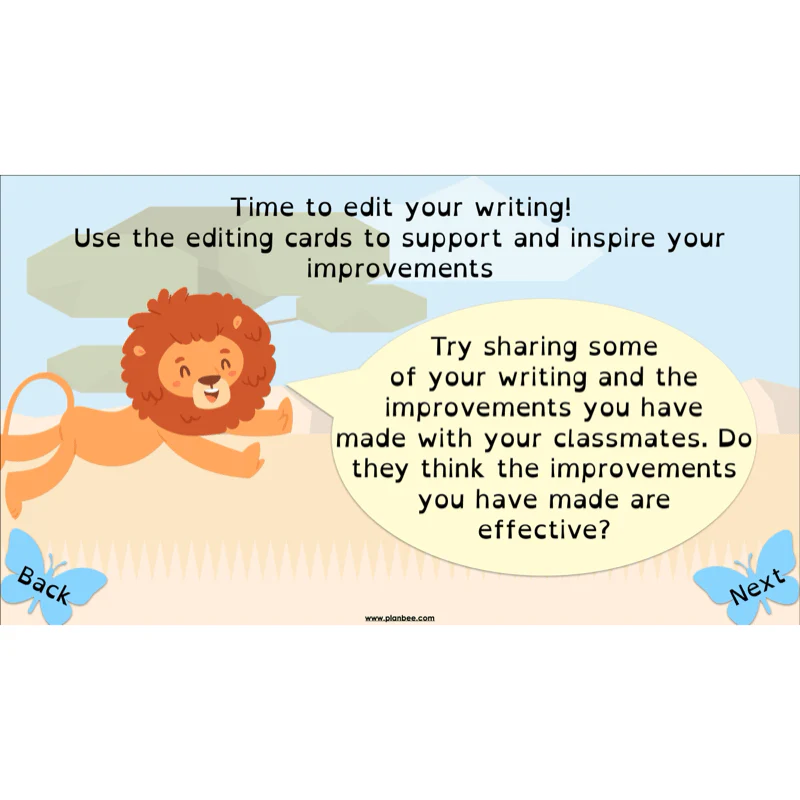
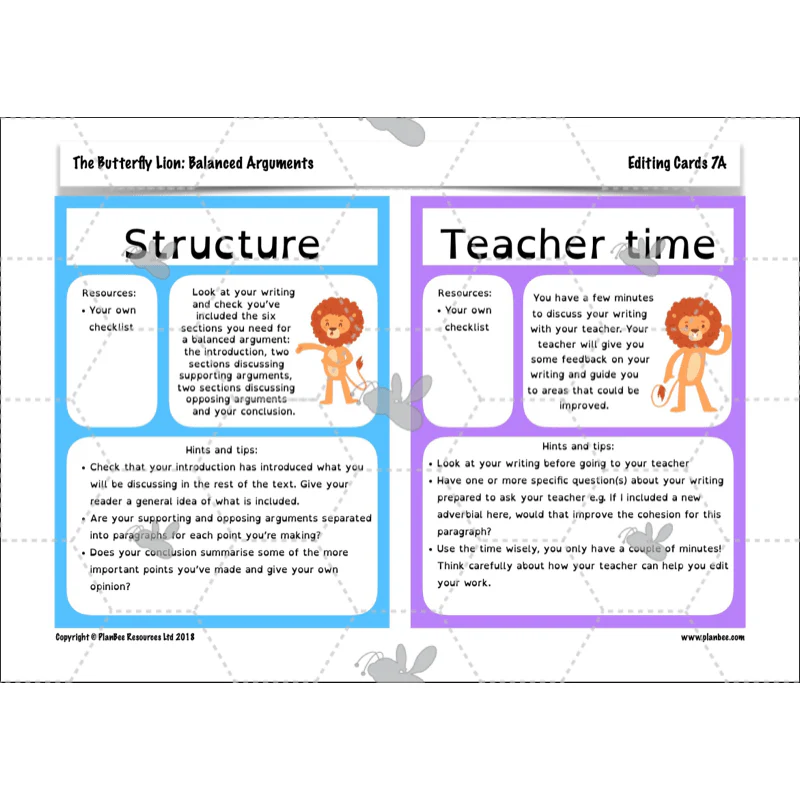
This Editing Writing KS2 lesson plan, teaching input slides and printable resources to guide and encourage your class to reflect on their writing and chosen areas on which to build and improve. Using the provided editing station cards, challenge your Year 5 to work independently to find areas of their writing to improve in different ways, including searching for spelling and punctuation errors as well as specific features of a balanced argument.
This ready-to-teach pack includes a comprehensive plan, engaging PDF slides, differentiated activities, and printable resources to support your lesson delivery.
What's included:
- Lesson plan
- Slides
- Activity ideas
- Editing cards
- Checklist
- Word bank
Original: $3.49
-70%$3.49
$1.05More Images

















The Butterfly Lion: Balanced Arguments
Save up to 30% on this scheme of work by creating your own Mix and Match Amazing Africa or World War 1 Topic Bundle – perfect if you're looking for a cross-curricular approach to your teaching!
This Balanced Argument KS2 planning pack begins your class's exploration of the powerful and emotional story of Michael Morpurgo’s ‘The Butterfly Lion’.
Teacher Note: These lessons will need the class to have read up to Chapter Six - ‘The Frenchman’ and no further. The less the children know about the rest of the story, the more effective their writing will be.
Your class will empathise with, and explore, the key characters’ thoughts and opinions on an important turning point in the story and allow the children to express their own opinion on how the story should or might progress. Discuss and investigate the features of a balanced argument and the effect of using a formal tone on the reader. Explore the use of cohesive devices in the children’s writing as they investigate what makes an effective balanced argument and encourage them to use these features in their own attempts at this genre.
This seven-lesson scheme of work includes the lesson slides, plans and resources to teach your children how to write effective balanced arguments alongside a classic story. It is necessary to have at least a class copy of ‘The Butterfly Lion’ by Michael Morpurgo to teach this scheme of work.
Features
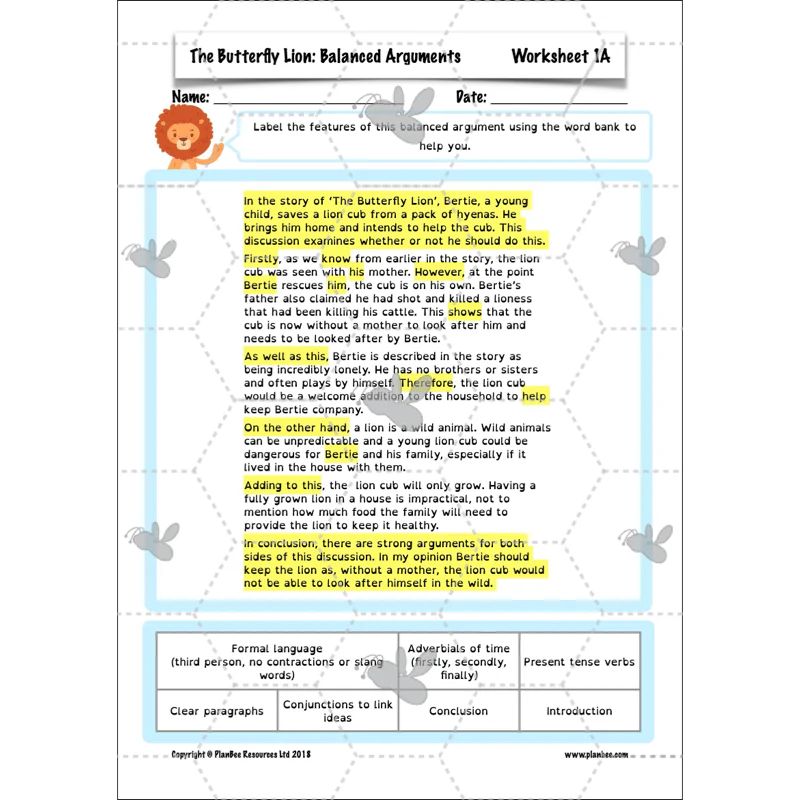
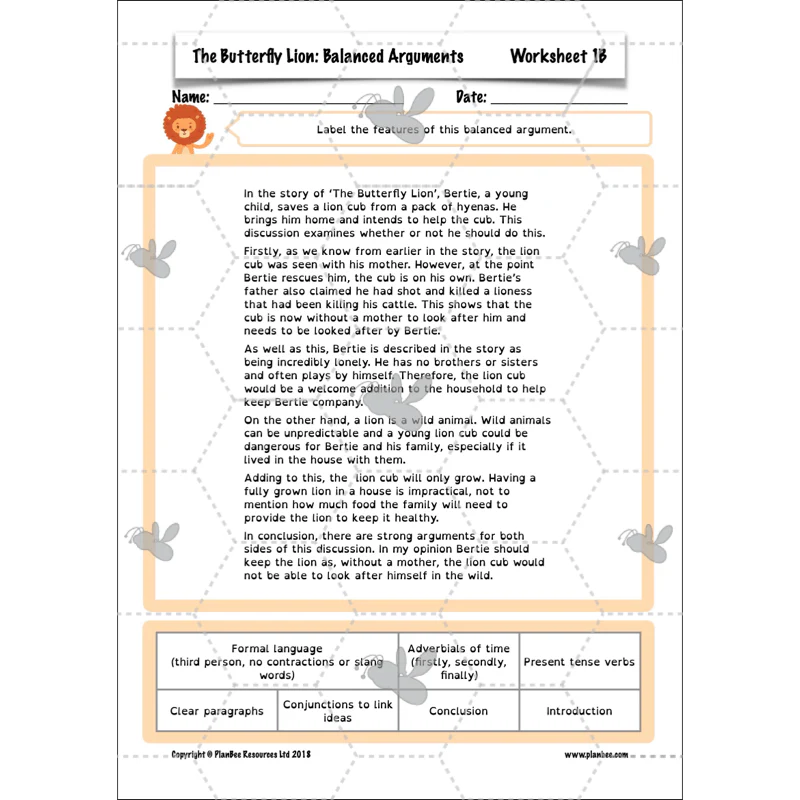
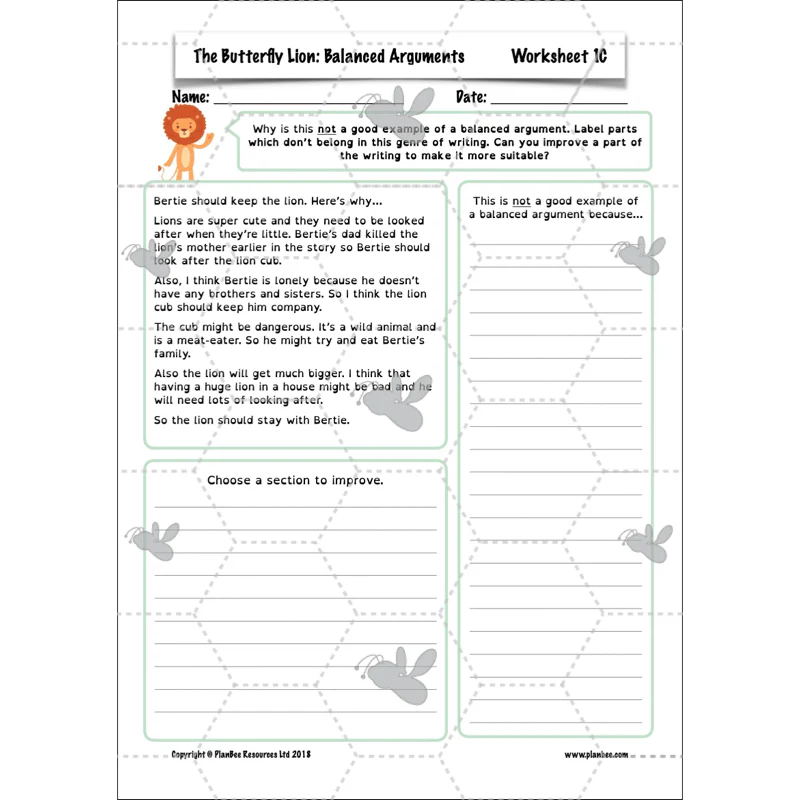
The first lesson in this balanced arguments KS2 planning pack offers your Year 5 class the opportunity to explore and discuss examples of balanced arguments which are included in the accompanying printable resources for this lesson.
Your class will be on the lookout for effective features of a balanced argument and discuss why the author has chosen to use the different features that they find. Extend the children's thinking further using the included teaching input slides as you begin to draw out how the writing might affect the reader and what the purpose of this genre of writing might be.
A detailed plan, a set of informative and engaging PDF slides, differentiated activity ideas and printable resources are all included in this ready-to-teach pack.
What's included:
- Lesson plan
- Slides
- Activity ideas
- Differentiated worksheets
- Model text
- Checklist
- Teacher notes
Characters' Thoughts and Feelings
Read up to the critical moment in the story where Bertie and his family have to make a decision about the lion cub. Use the teaching input slides to inspire discussions about the characters’ thoughts and feelings in the situation and the reasons behind the actions described by the author.
Your class are then challenged to look at the same situation from the point of view of different characters through role-play and challenge them to continue exploring this by writing in role as one of the characters.
This ready-to-teach pack includes a comprehensive plan, engaging PDF slides, differentiated activities, and printable resources to support your lesson delivery.
What's included:
- Lesson plan
- Slides
- Activity ideas
- Mind map sheet
- Differentiated worksheets
- Quote cards
- Speech bubbles
Cohesive Devices
Use this cohesive device KS2 lesson plan with accompanying slides and printable resources to help teach your class to identify different types of cohesive devices and how we can use them to improve paragraph cohesion.
During the teaching input, read a piece of writing which has deliberately left out devices that aid cohesion and discuss how this affects the reader. Challenge your Year 5 class to spot and discuss why a piece of disjointed writing is less effective than one which uses cohesive devices to help the writing hang together and link ideas within and across paragraphs. The pre-prepared paragraphs and cohesive devices checklists in the accompanying resources give your KS2 class the perfect opportunity to use cohesive devices or identify where they have been used.
Within this pack, you'll find a detailed teaching plan, informative PDF slides, a range of differentiated activities, and handy printable resources, all ready for use.
What's included:
- Lesson plan
- Slides
- Activity ideas
- Text card
- Word bank
- Cohesion checklist
- Fact card
- Worksheet
Using Cohesive Devices
These cohesive devices KS2 lesson plan draws on the previous lesson's learning on the types of cohesive devices which can be used to improve paragraph cohesion. The children will explore a decision that Bertie has to make in the story of The Butterfly Lion and discuss their opinions on the decision using conscience alley. They will then use these discussions to begin expressing their own opinions cohesively using formal language.
The lesson input slides included with this pack help to guide the children's discussions and understanding of formal language features and cohesive devices. Your Year 5 class is then encouraged to create the first draft of their concluding paragraph, expressing their own opinion on the decision Bertie has to make.
Included in this pack are a thorough lesson plan, informative PDF slides, activities tailored to different learning levels, and printable resources to enhance your teaching.
What's included:
- Lesson plan
- Slides
- Activity ideas
- Challenge cards
- Word bank
- Writing frame
Planning a Balanced Argument
The fifth lesson in this Butterfly Lion planning pack encourages your Year 5 class to generate and discuss some of the ideas and content for their balanced argument.
Using the included slides, investigate the structure of a balanced argument with your class to box up and organise the ideas for their final draft. The questions provided on the slides will also encourage the children to think clearly about the two different sides of the argument make decisions about how they will include them in their writing next lesson.
The accompanying plan and resources provide you with different ways in which to support your class in generating their own ideas and organising them into coherent paragraphs.
What's included:
- Lesson plan
- Slides
- Activity ideas
- Differentiated worksheets
- Word bank
Writing a Balanced Argument
Use the examples of balanced arguments to inspire your class in their own attempts at this genre of writing. Your Year 5 class will use their learning and understanding of the different features of a balanced argument to create a formal, cohesive and effective discussion text.
This writing a balanced argument KS2 lesson plan comes with teaching input slides as well as printable resources which you can use to support and extend your class's use of the different features in a balanced argument.
What's included:
- Lesson plan
- Slides
- Activity ideas
- Text card
- Word bank
- Writing frame
Editing and Improving
This Editing Writing KS2 lesson plan, teaching input slides and printable resources to guide and encourage your class to reflect on their writing and chosen areas on which to build and improve. Using the provided editing station cards, challenge your Year 5 to work independently to find areas of their writing to improve in different ways, including searching for spelling and punctuation errors as well as specific features of a balanced argument.
This ready-to-teach pack includes a comprehensive plan, engaging PDF slides, differentiated activities, and printable resources to support your lesson delivery.
What's included:
- Lesson plan
- Slides
- Activity ideas
- Editing cards
- Checklist
- Word bank
Product Information
Product Information
Shipping & Returns
Shipping & Returns
Description
Save up to 30% on this scheme of work by creating your own Mix and Match Amazing Africa or World War 1 Topic Bundle – perfect if you're looking for a cross-curricular approach to your teaching!
This Balanced Argument KS2 planning pack begins your class's exploration of the powerful and emotional story of Michael Morpurgo’s ‘The Butterfly Lion’.
Teacher Note: These lessons will need the class to have read up to Chapter Six - ‘The Frenchman’ and no further. The less the children know about the rest of the story, the more effective their writing will be.
Your class will empathise with, and explore, the key characters’ thoughts and opinions on an important turning point in the story and allow the children to express their own opinion on how the story should or might progress. Discuss and investigate the features of a balanced argument and the effect of using a formal tone on the reader. Explore the use of cohesive devices in the children’s writing as they investigate what makes an effective balanced argument and encourage them to use these features in their own attempts at this genre.
This seven-lesson scheme of work includes the lesson slides, plans and resources to teach your children how to write effective balanced arguments alongside a classic story. It is necessary to have at least a class copy of ‘The Butterfly Lion’ by Michael Morpurgo to teach this scheme of work.
Features
The first lesson in this balanced arguments KS2 planning pack offers your Year 5 class the opportunity to explore and discuss examples of balanced arguments which are included in the accompanying printable resources for this lesson.
Your class will be on the lookout for effective features of a balanced argument and discuss why the author has chosen to use the different features that they find. Extend the children's thinking further using the included teaching input slides as you begin to draw out how the writing might affect the reader and what the purpose of this genre of writing might be.
A detailed plan, a set of informative and engaging PDF slides, differentiated activity ideas and printable resources are all included in this ready-to-teach pack.
What's included:
- Lesson plan
- Slides
- Activity ideas
- Differentiated worksheets
- Model text
- Checklist
- Teacher notes
Characters' Thoughts and Feelings
Read up to the critical moment in the story where Bertie and his family have to make a decision about the lion cub. Use the teaching input slides to inspire discussions about the characters’ thoughts and feelings in the situation and the reasons behind the actions described by the author.
Your class are then challenged to look at the same situation from the point of view of different characters through role-play and challenge them to continue exploring this by writing in role as one of the characters.
This ready-to-teach pack includes a comprehensive plan, engaging PDF slides, differentiated activities, and printable resources to support your lesson delivery.
What's included:
- Lesson plan
- Slides
- Activity ideas
- Mind map sheet
- Differentiated worksheets
- Quote cards
- Speech bubbles
Cohesive Devices
Use this cohesive device KS2 lesson plan with accompanying slides and printable resources to help teach your class to identify different types of cohesive devices and how we can use them to improve paragraph cohesion.
During the teaching input, read a piece of writing which has deliberately left out devices that aid cohesion and discuss how this affects the reader. Challenge your Year 5 class to spot and discuss why a piece of disjointed writing is less effective than one which uses cohesive devices to help the writing hang together and link ideas within and across paragraphs. The pre-prepared paragraphs and cohesive devices checklists in the accompanying resources give your KS2 class the perfect opportunity to use cohesive devices or identify where they have been used.
Within this pack, you'll find a detailed teaching plan, informative PDF slides, a range of differentiated activities, and handy printable resources, all ready for use.
What's included:
- Lesson plan
- Slides
- Activity ideas
- Text card
- Word bank
- Cohesion checklist
- Fact card
- Worksheet
Using Cohesive Devices
These cohesive devices KS2 lesson plan draws on the previous lesson's learning on the types of cohesive devices which can be used to improve paragraph cohesion. The children will explore a decision that Bertie has to make in the story of The Butterfly Lion and discuss their opinions on the decision using conscience alley. They will then use these discussions to begin expressing their own opinions cohesively using formal language.
The lesson input slides included with this pack help to guide the children's discussions and understanding of formal language features and cohesive devices. Your Year 5 class is then encouraged to create the first draft of their concluding paragraph, expressing their own opinion on the decision Bertie has to make.
Included in this pack are a thorough lesson plan, informative PDF slides, activities tailored to different learning levels, and printable resources to enhance your teaching.
What's included:
- Lesson plan
- Slides
- Activity ideas
- Challenge cards
- Word bank
- Writing frame
Planning a Balanced Argument
The fifth lesson in this Butterfly Lion planning pack encourages your Year 5 class to generate and discuss some of the ideas and content for their balanced argument.
Using the included slides, investigate the structure of a balanced argument with your class to box up and organise the ideas for their final draft. The questions provided on the slides will also encourage the children to think clearly about the two different sides of the argument make decisions about how they will include them in their writing next lesson.
The accompanying plan and resources provide you with different ways in which to support your class in generating their own ideas and organising them into coherent paragraphs.
What's included:
- Lesson plan
- Slides
- Activity ideas
- Differentiated worksheets
- Word bank
Writing a Balanced Argument
Use the examples of balanced arguments to inspire your class in their own attempts at this genre of writing. Your Year 5 class will use their learning and understanding of the different features of a balanced argument to create a formal, cohesive and effective discussion text.
This writing a balanced argument KS2 lesson plan comes with teaching input slides as well as printable resources which you can use to support and extend your class's use of the different features in a balanced argument.
What's included:
- Lesson plan
- Slides
- Activity ideas
- Text card
- Word bank
- Writing frame
Editing and Improving
This Editing Writing KS2 lesson plan, teaching input slides and printable resources to guide and encourage your class to reflect on their writing and chosen areas on which to build and improve. Using the provided editing station cards, challenge your Year 5 to work independently to find areas of their writing to improve in different ways, including searching for spelling and punctuation errors as well as specific features of a balanced argument.
This ready-to-teach pack includes a comprehensive plan, engaging PDF slides, differentiated activities, and printable resources to support your lesson delivery.
What's included:
- Lesson plan
- Slides
- Activity ideas
- Editing cards
- Checklist
- Word bank