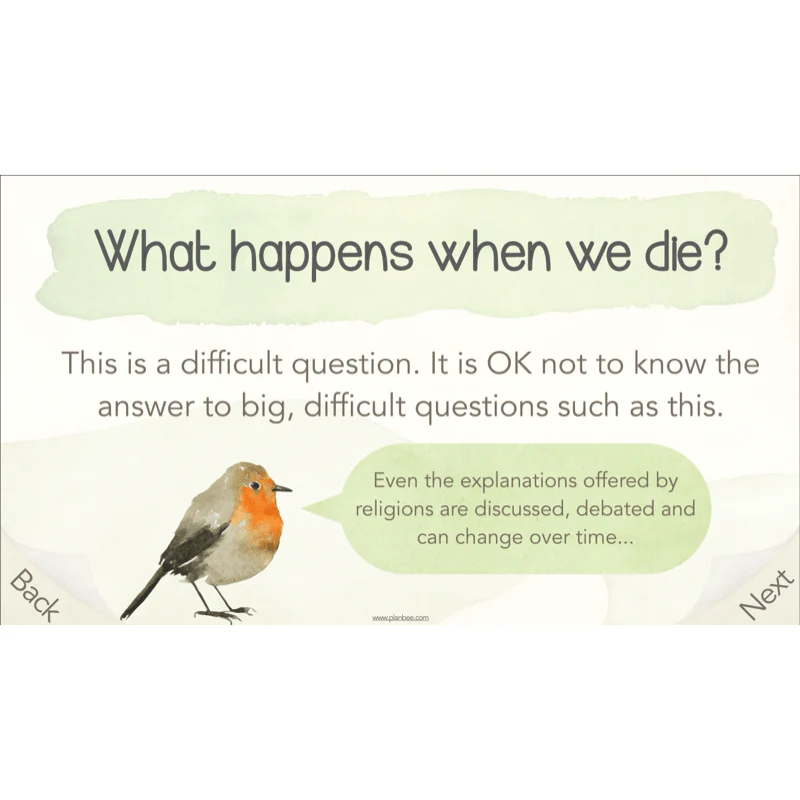
What happens when we die?
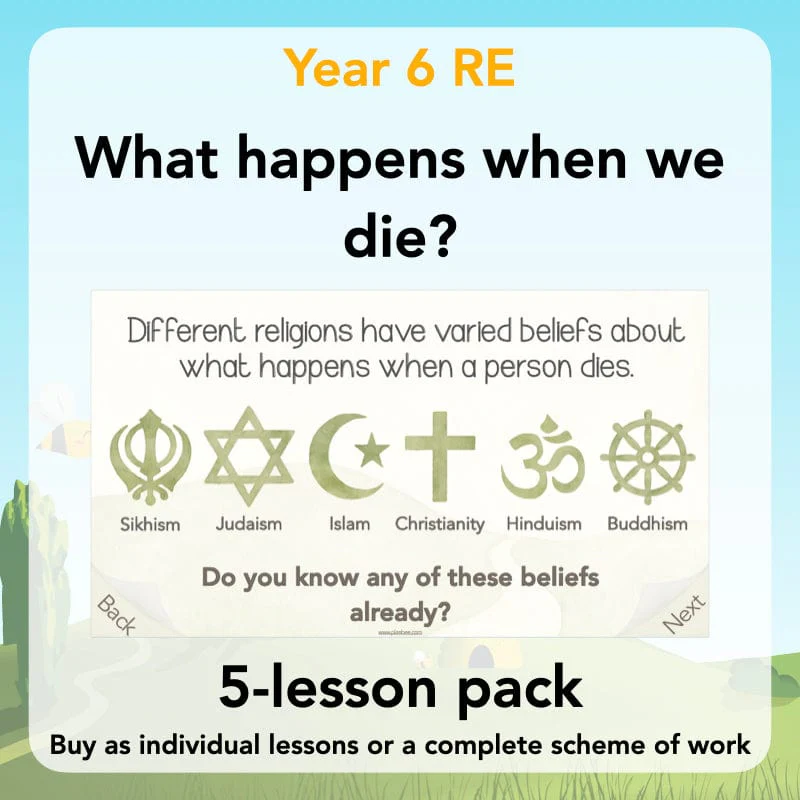
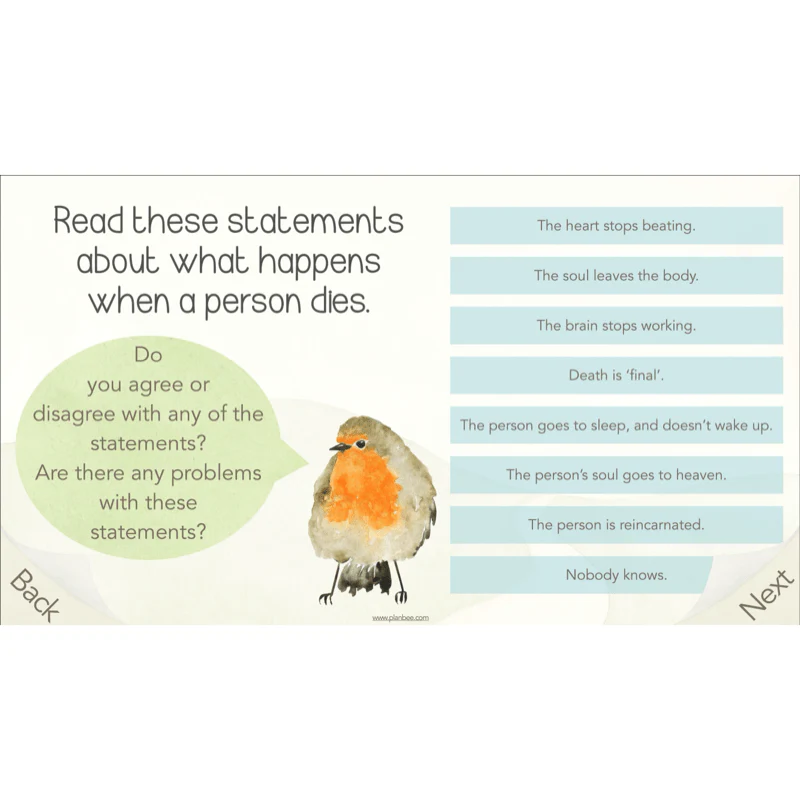
These plans, slides, worksheets and other resources for Year 6 children explain the ideas and beliefs of religious and non-religious groups about what happens when a person dies. Coping with loss, comforting others, expressing feelings and finding help are covered over the five lessons, with opportunities for children to reflect on their own ideas, share their views and consider the beliefs, thoughts and feelings of others.
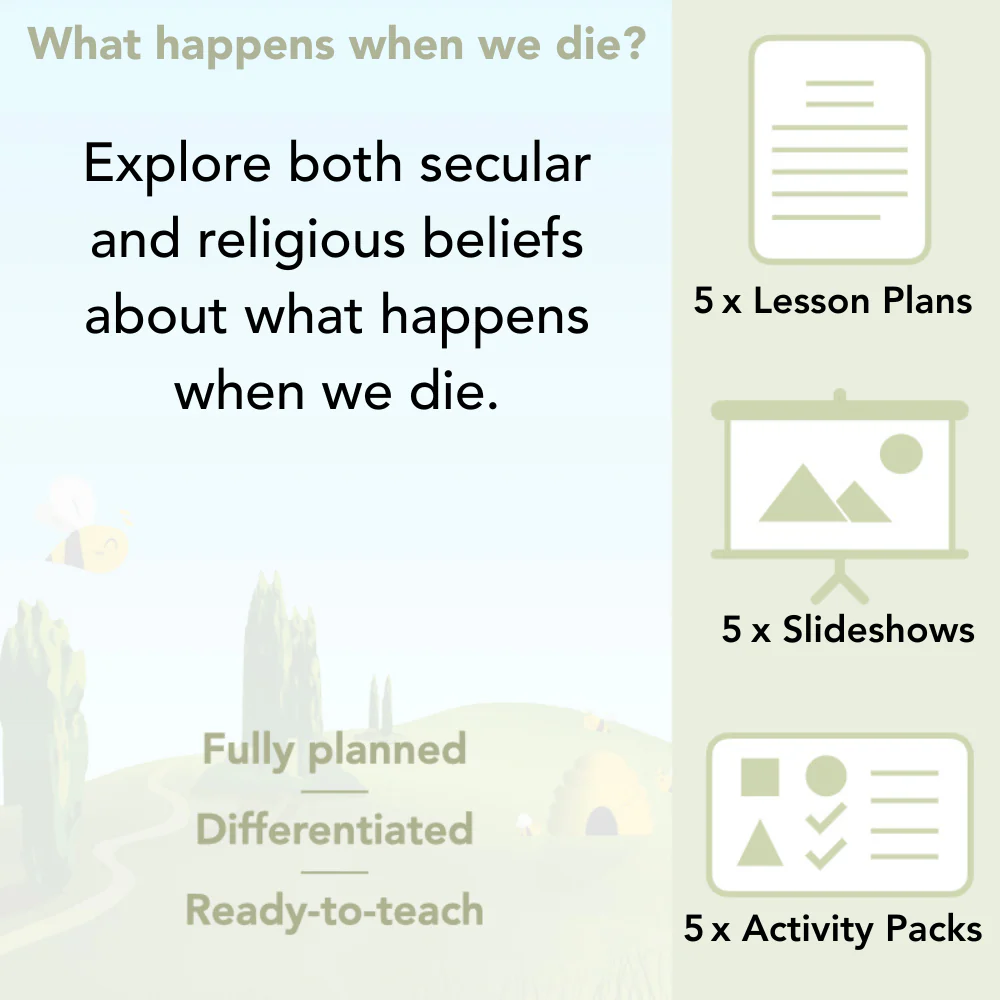
This lesson pack comes complete with detailed planning, slides for teaching input and differentiated resources.
A Knowledge Organiser is available to support the learning in this scheme. It is included in the Complete Series download or can be purchased individually.
Loss
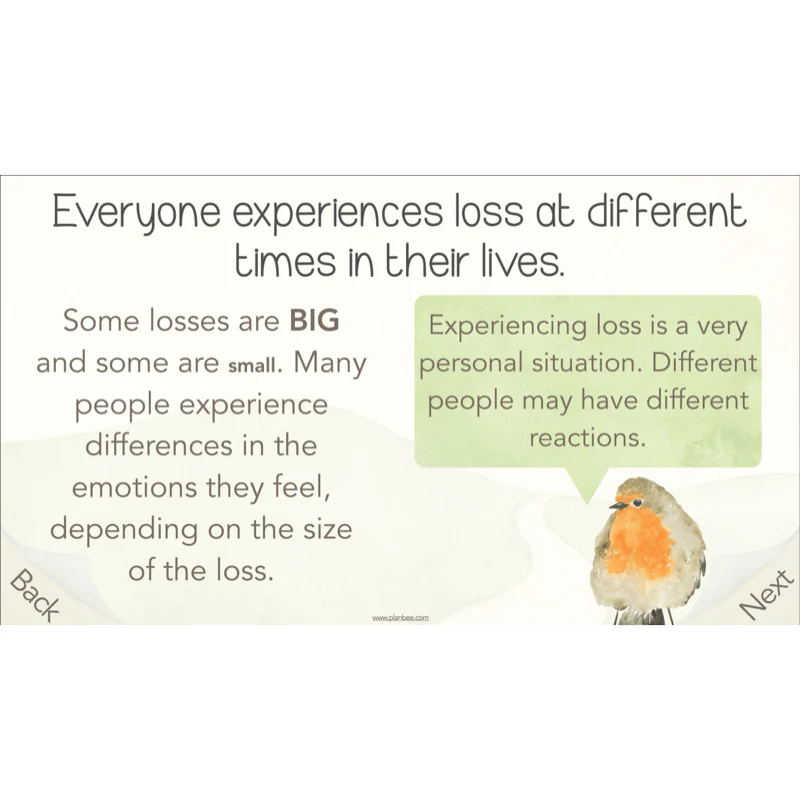
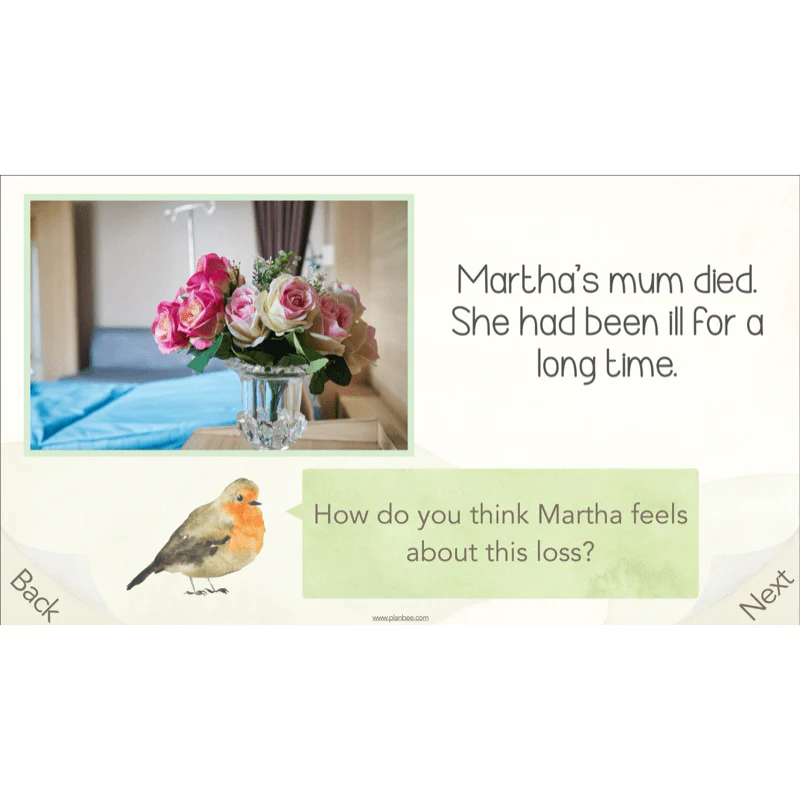
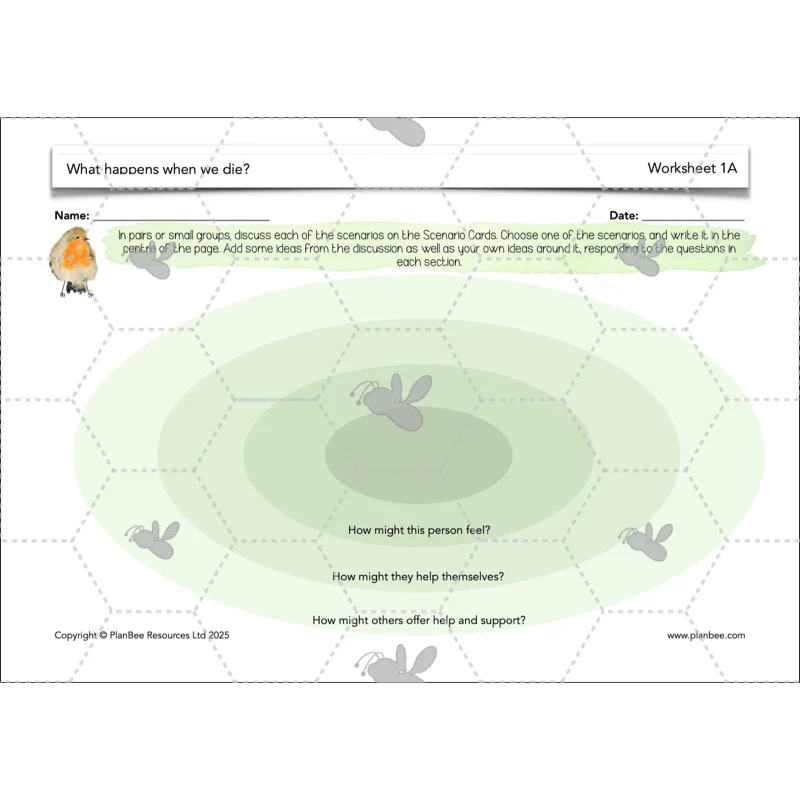
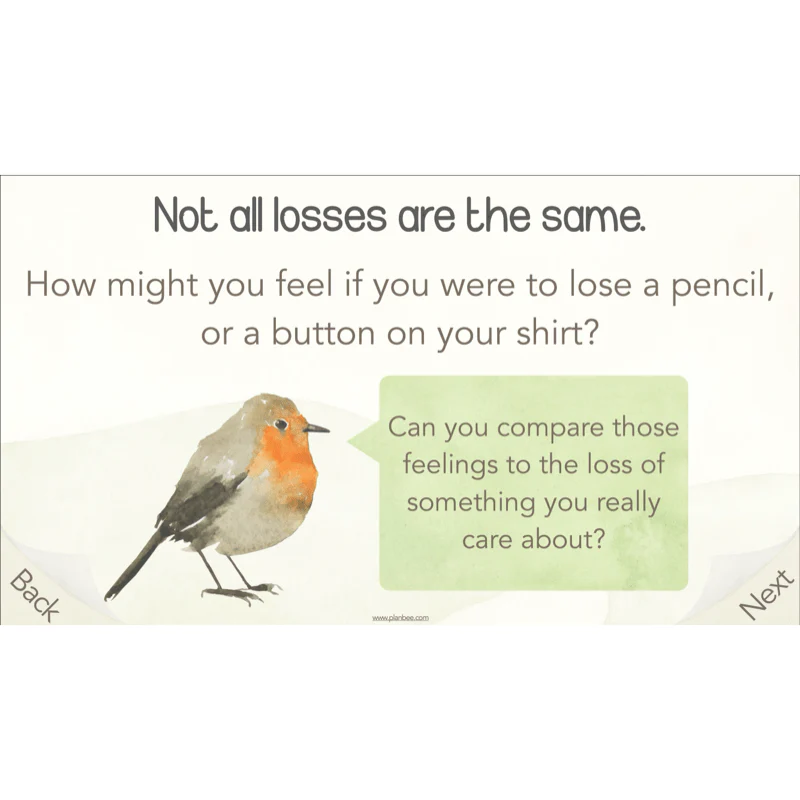
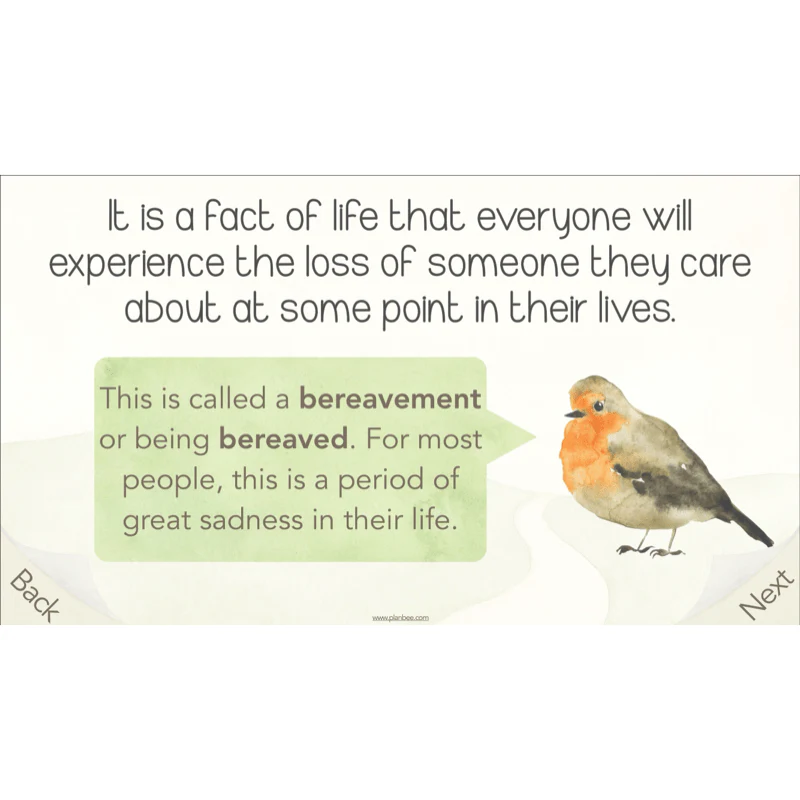
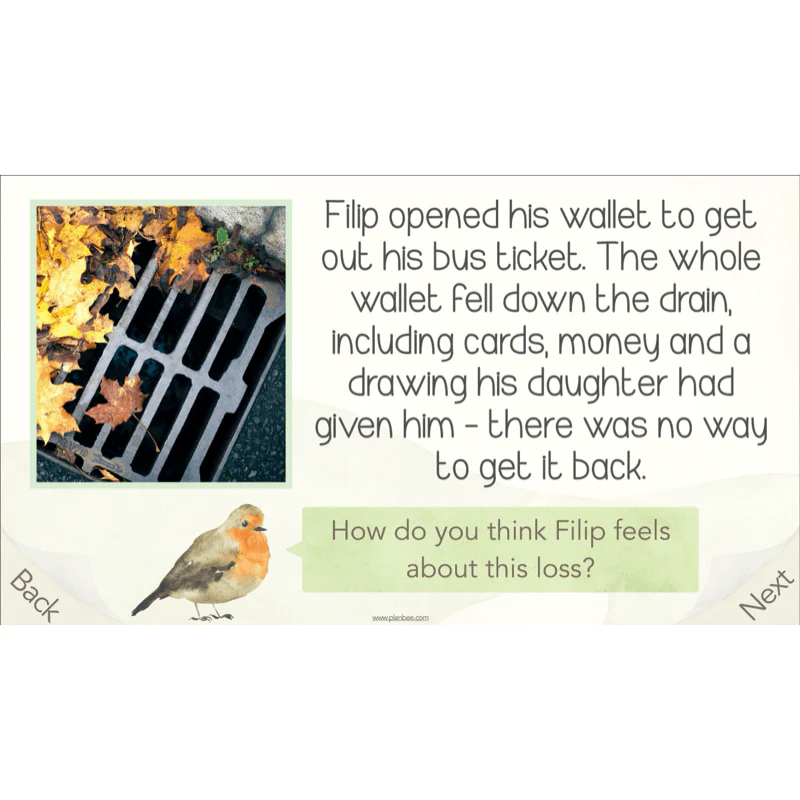
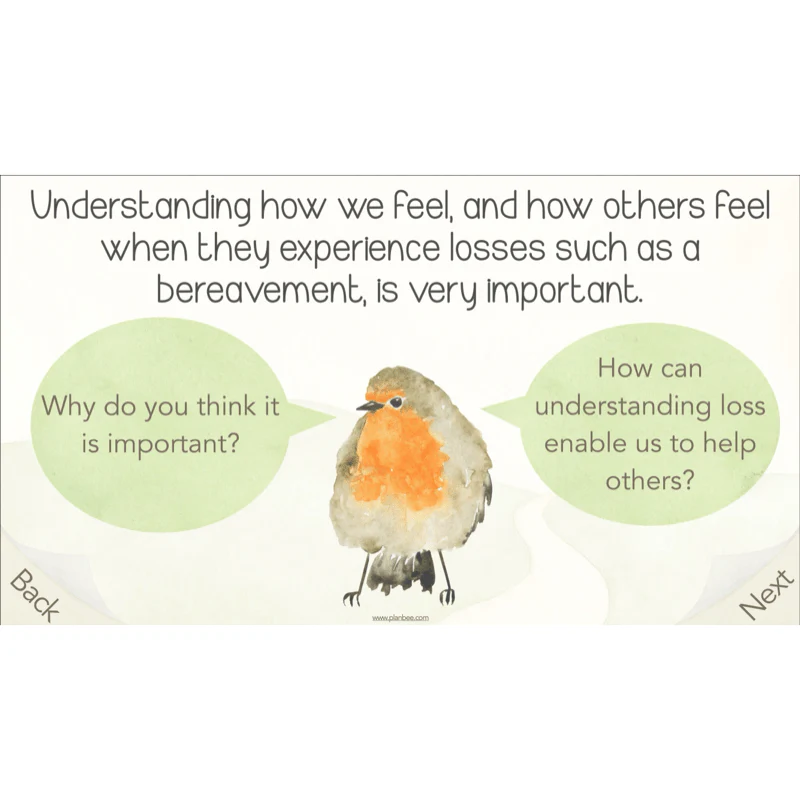
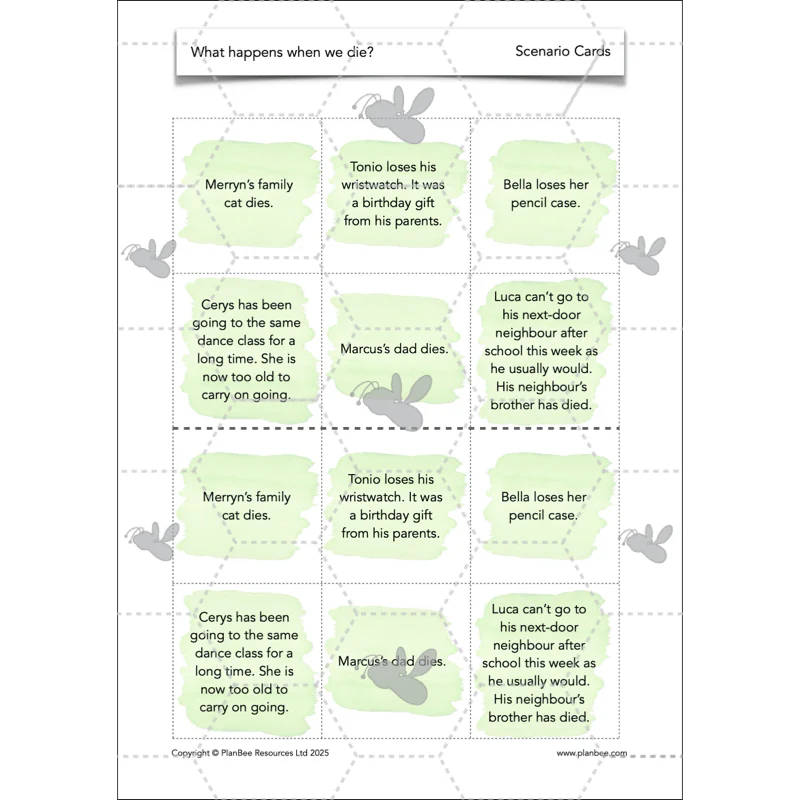
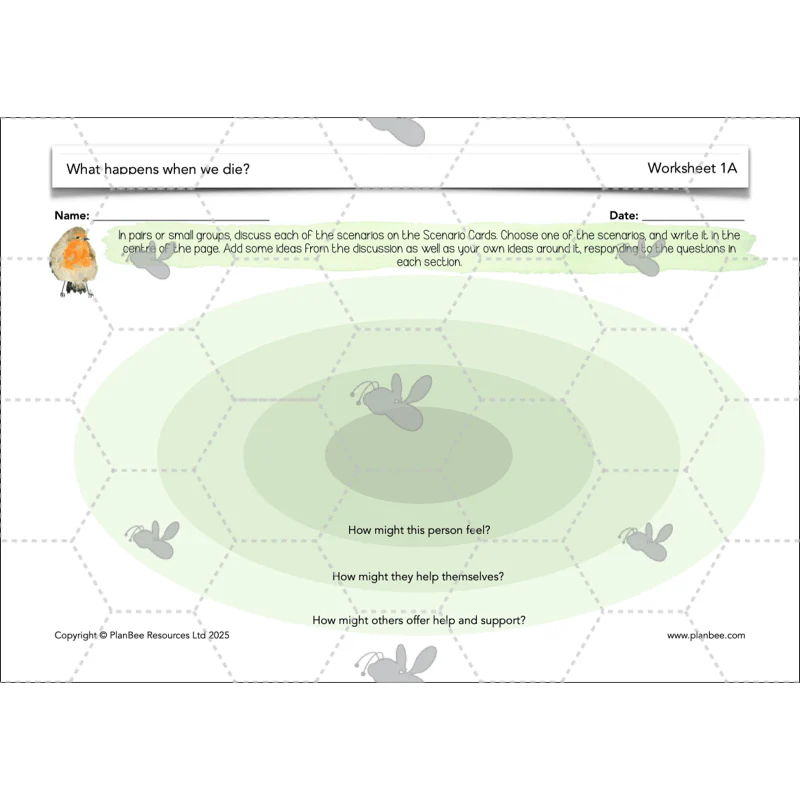
Children will consider how they feel when they lose something as well as ways in which those feelings might differ depending upon the degree of loss. They will go on to discuss ways in which someone experiencing a loss might be helped and supported.
What's included:
- Lesson plan
- Slides
- Activity ideas
- Worksheet
- Scenario cards
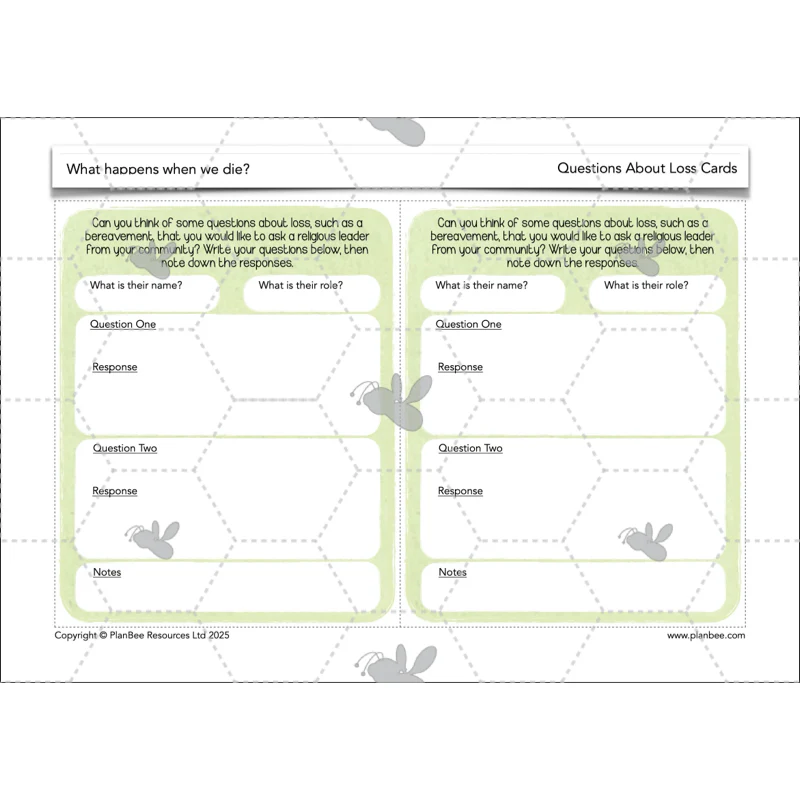
- Questions about loss sheet
Rituals
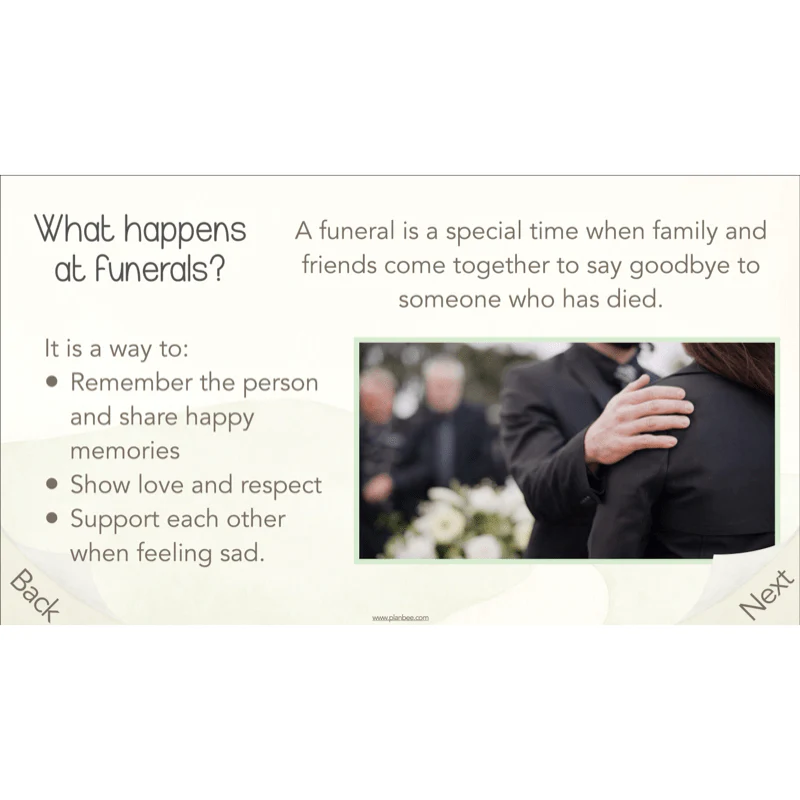
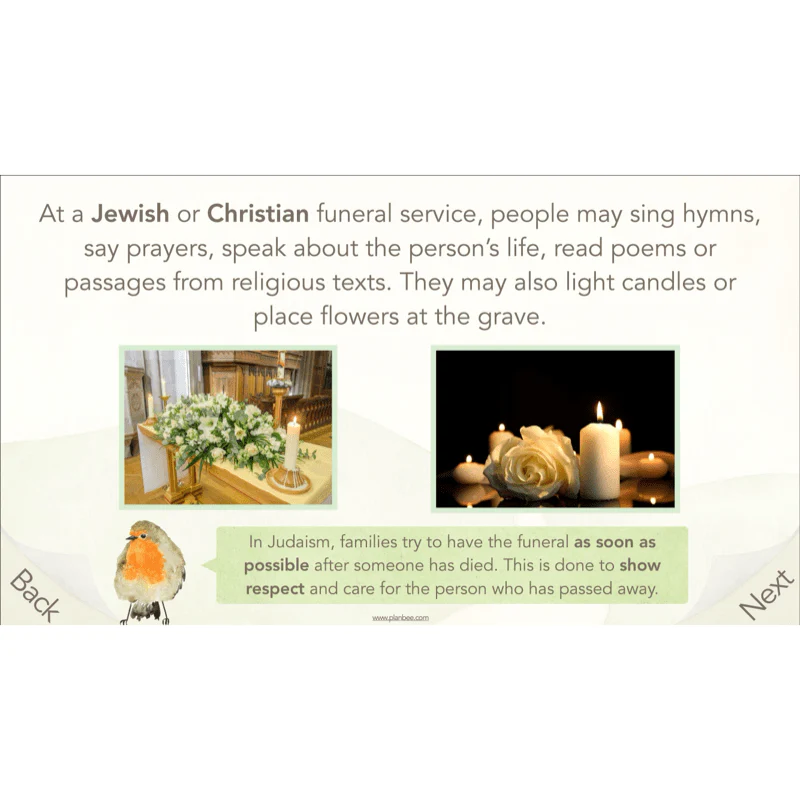
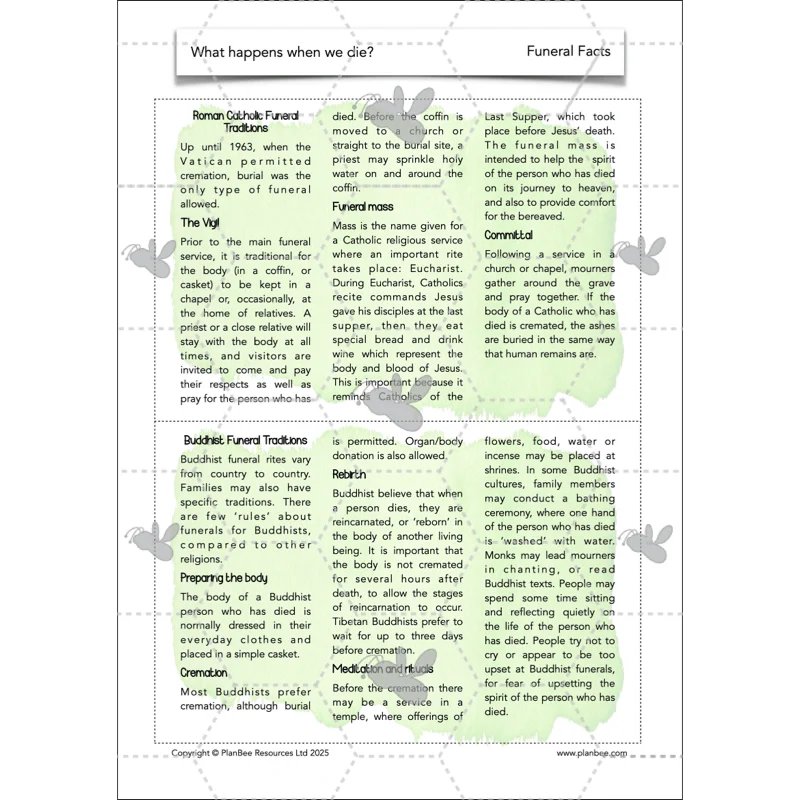
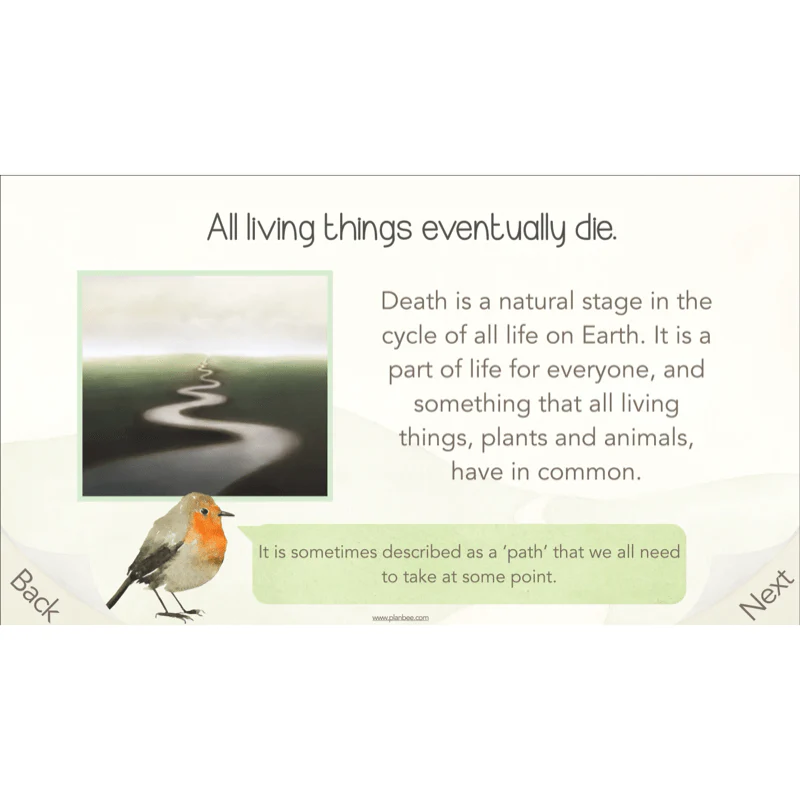
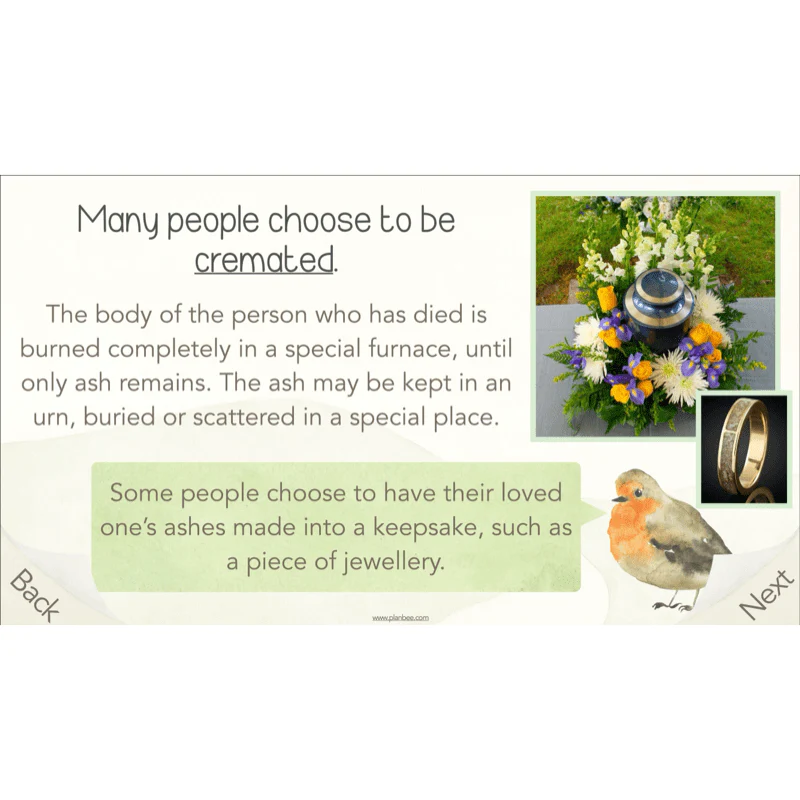
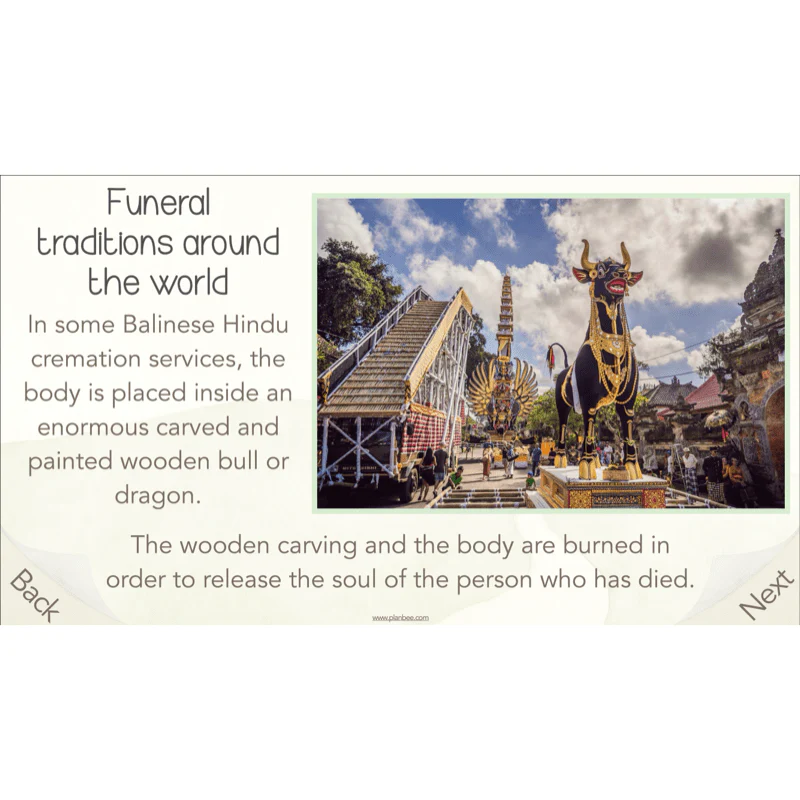
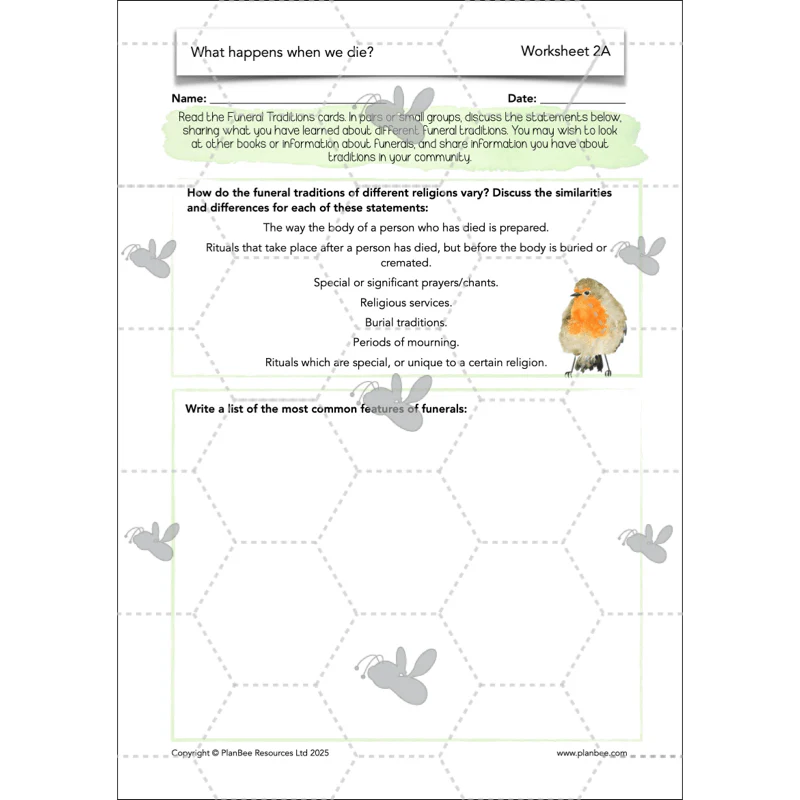
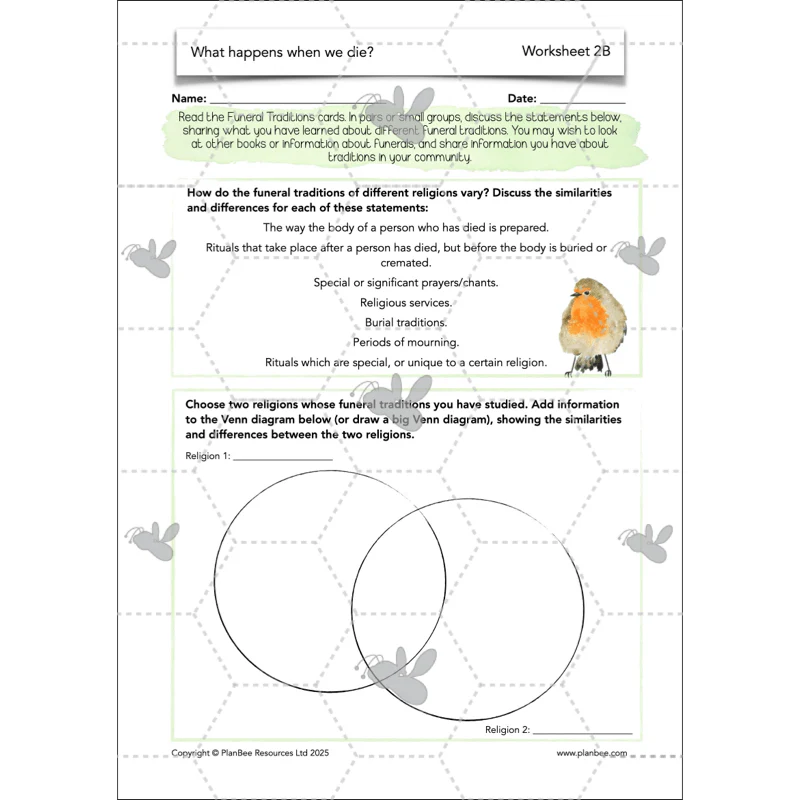
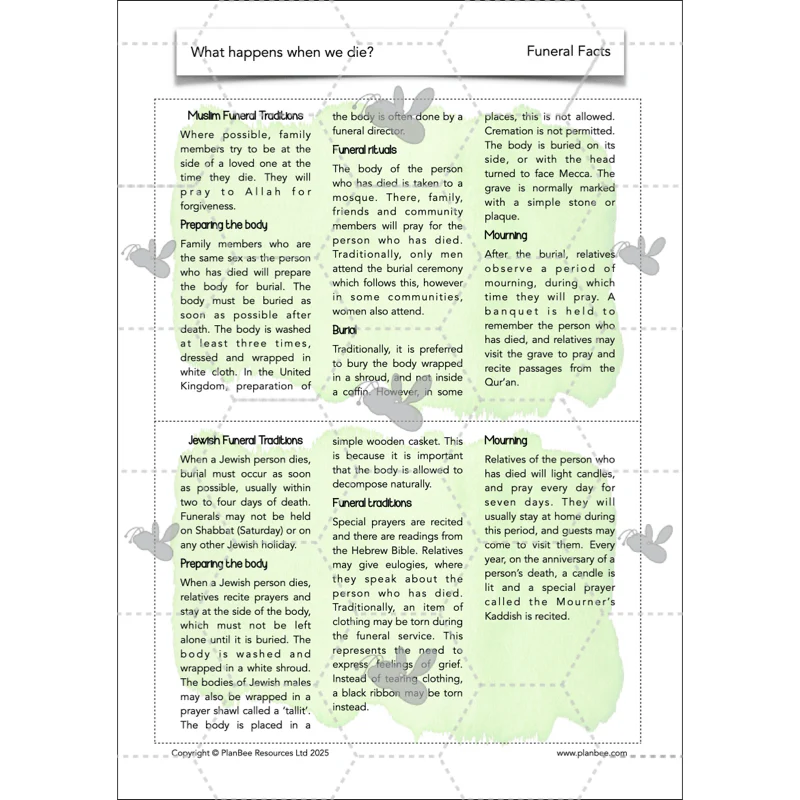
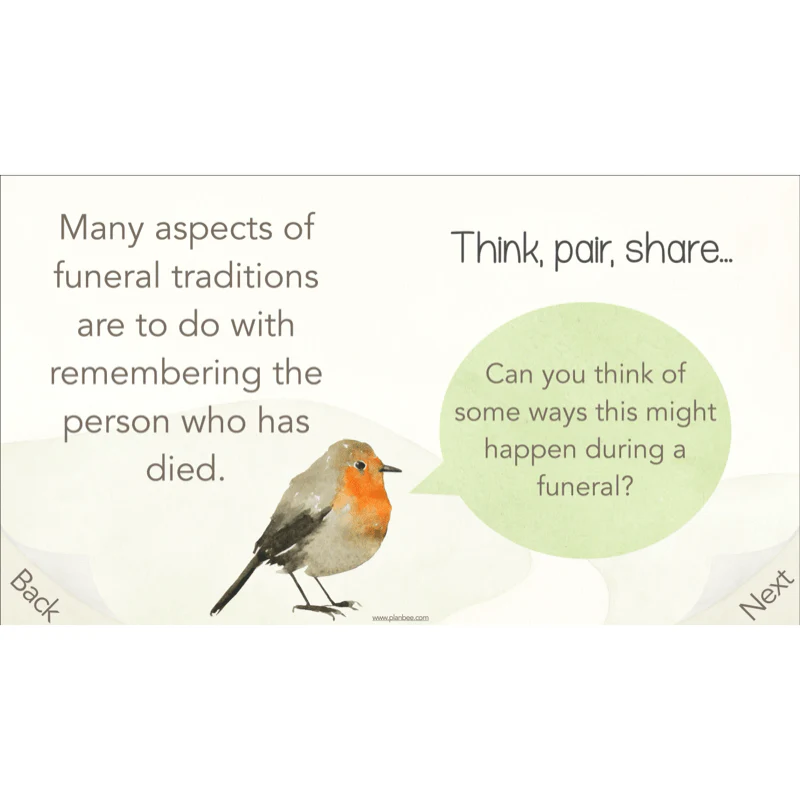
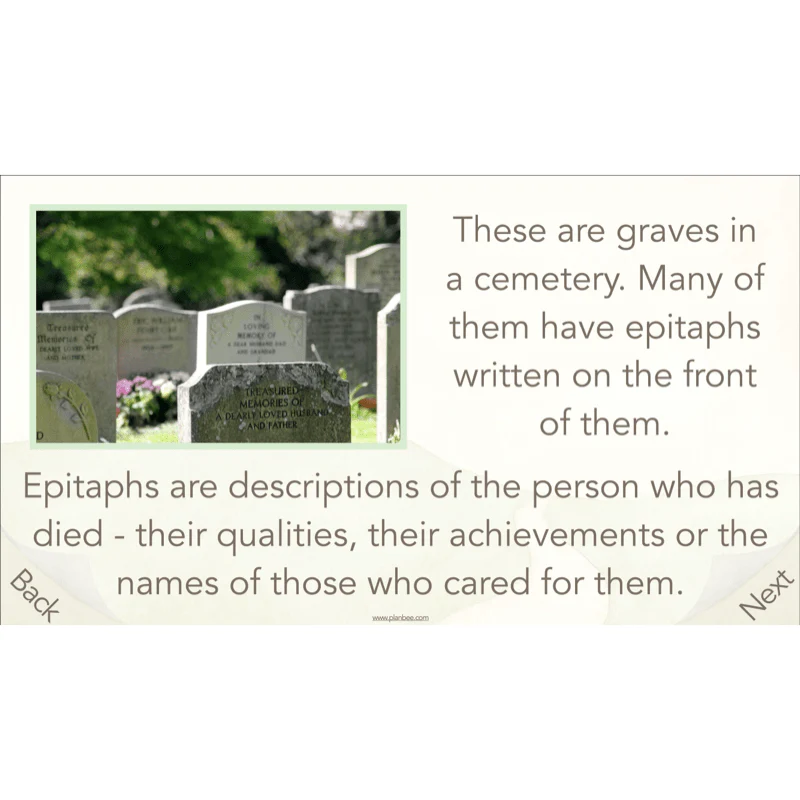
In this lesson, children will learn about what actually happens to the body when a person dies, then go on to explore some funeral rites and traditions in different religions and communities.
What's included:
- Lesson plan
- Slides
- Activity ideas
- Worksheets
- Funeral fact cards
- Funeral traditions sheets
Big Questions
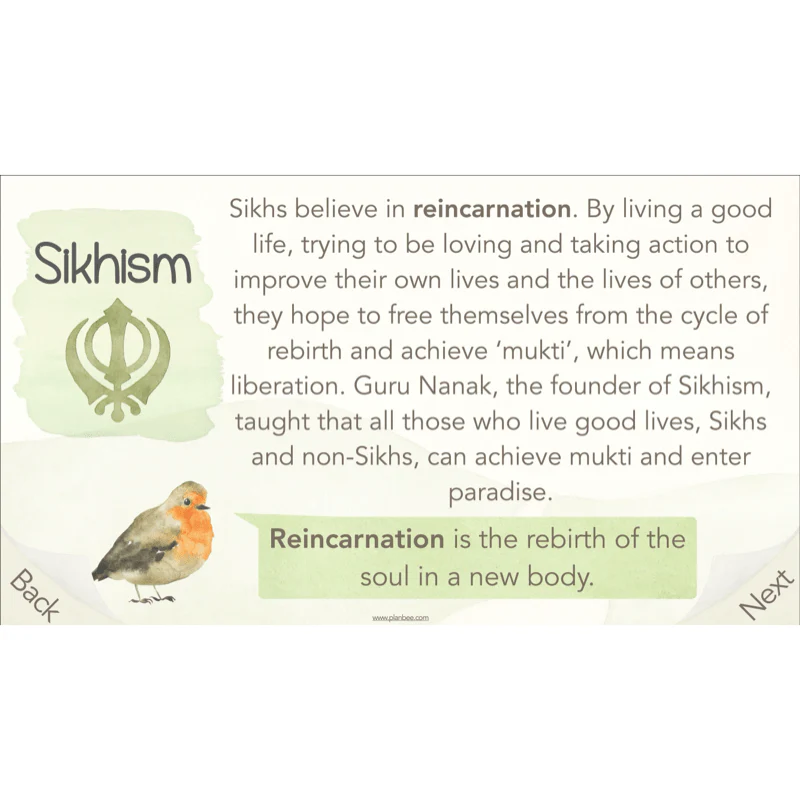
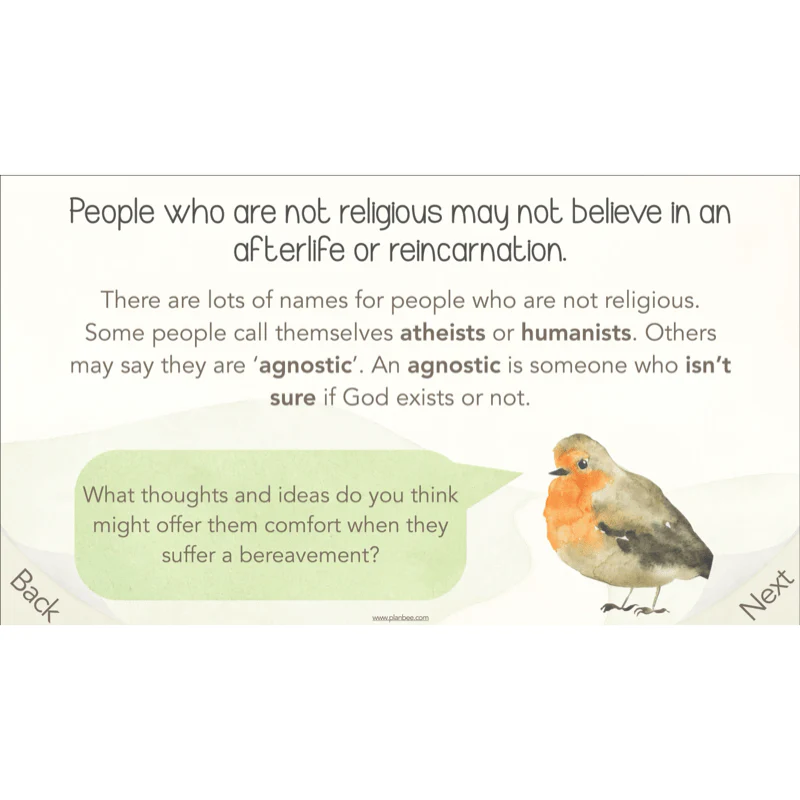
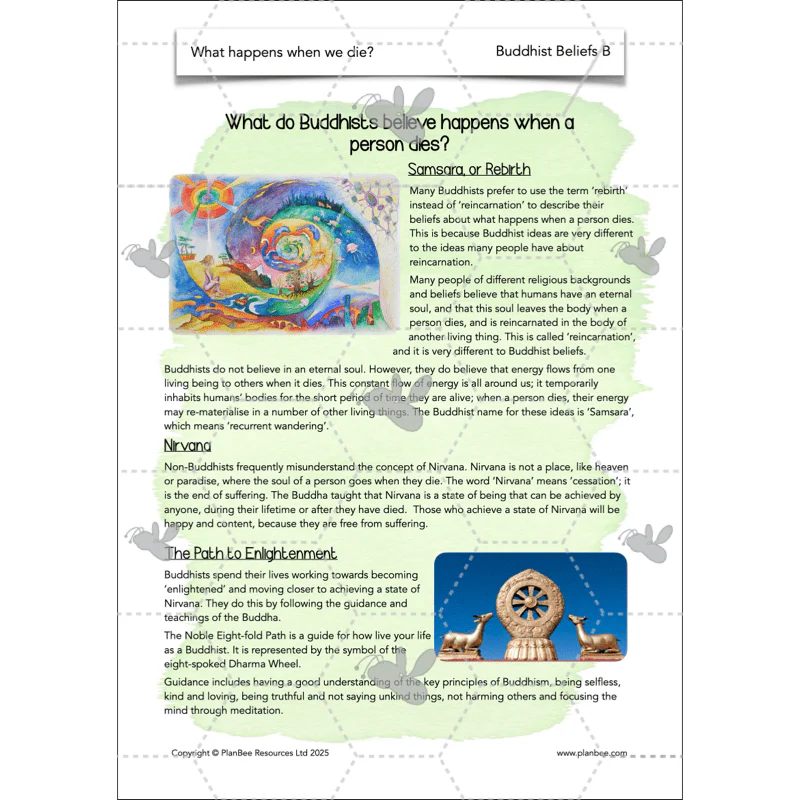
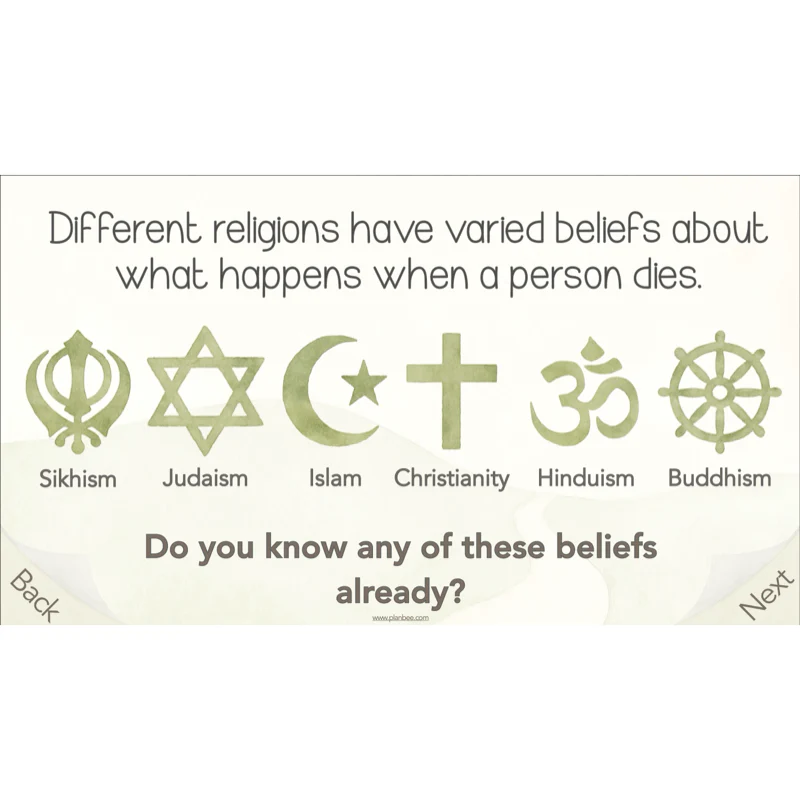
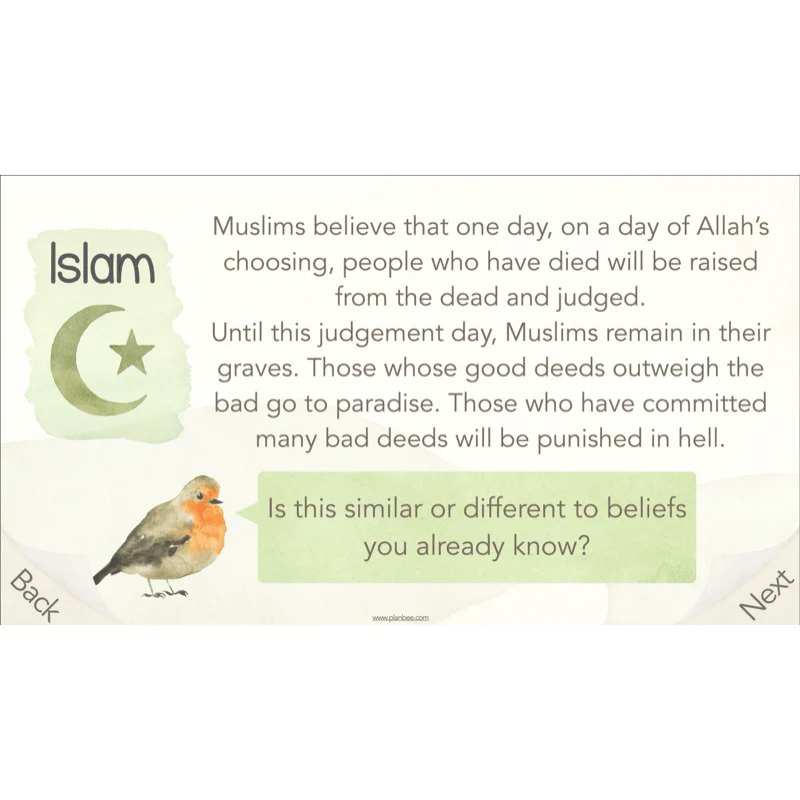
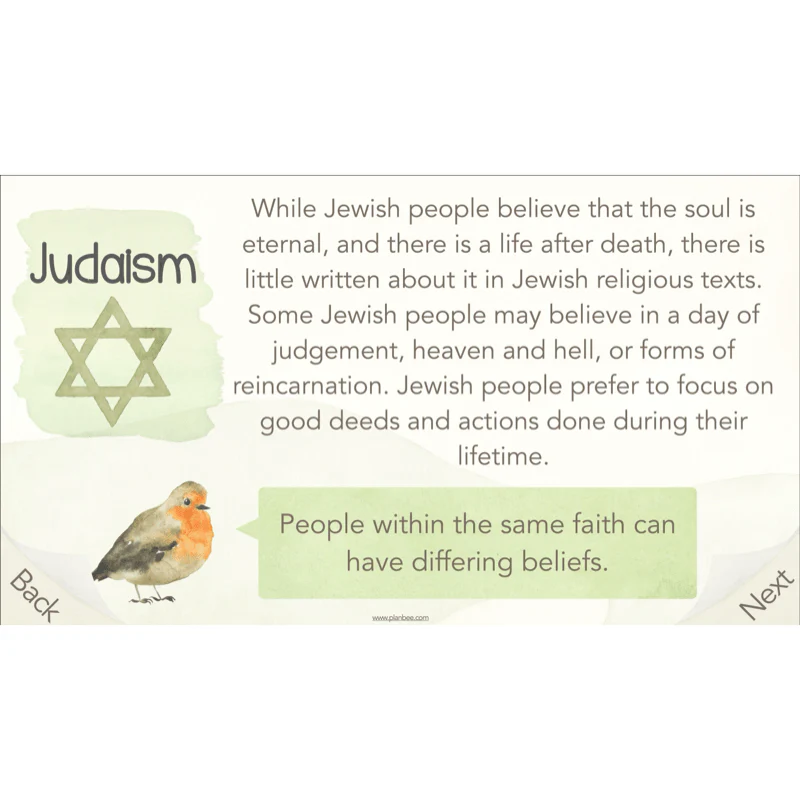
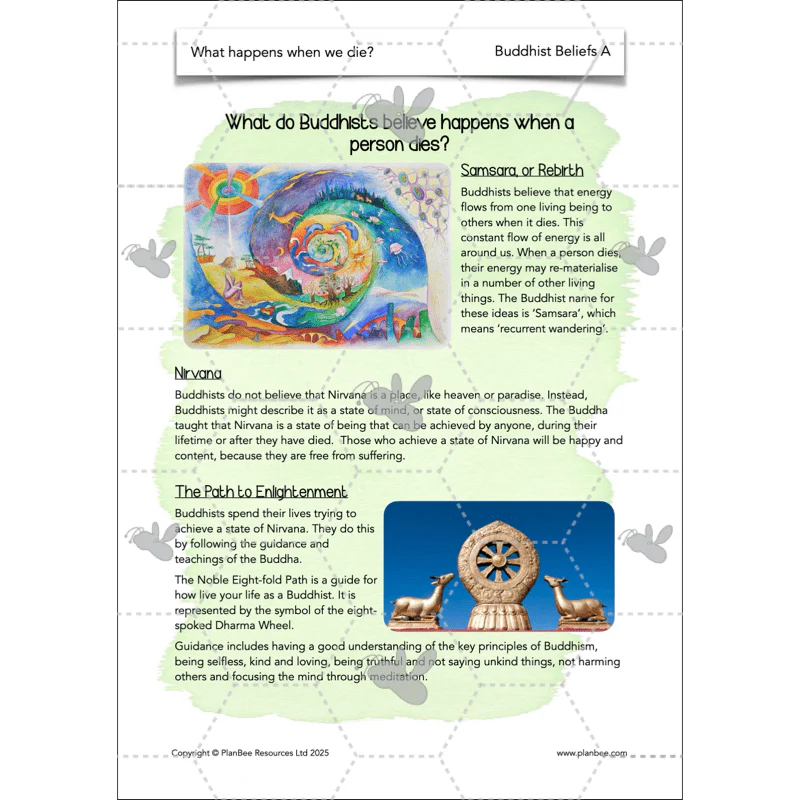
Children will learn about the beliefs of some religions with regard to what happens when a person dies, as well as having the opportunity to share their own beliefs, prior knowledge and experiences as members of religious or non-religious groups and communities.
What's included:
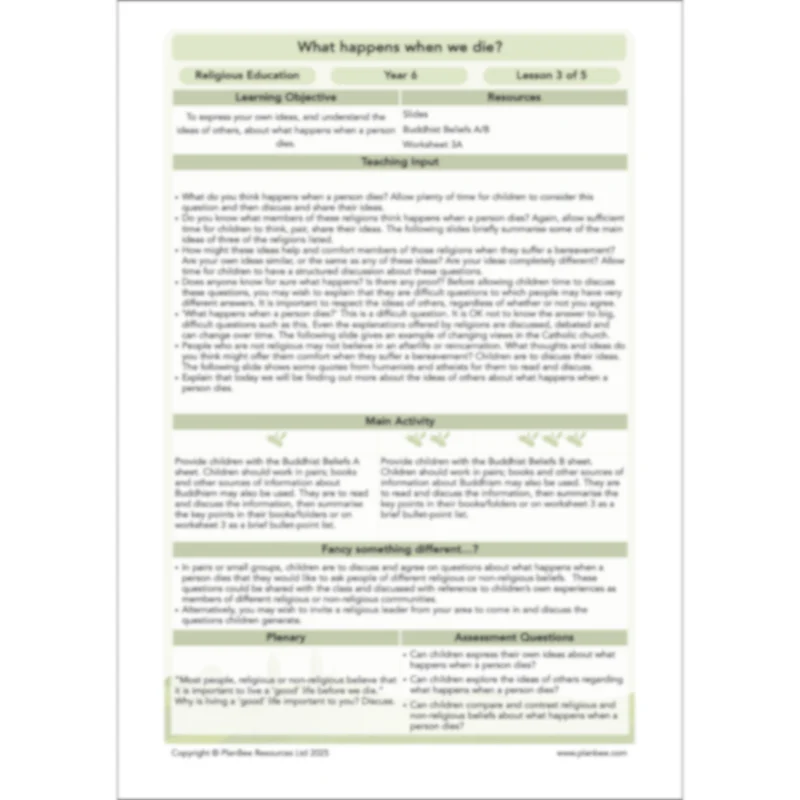
- Lesson plan
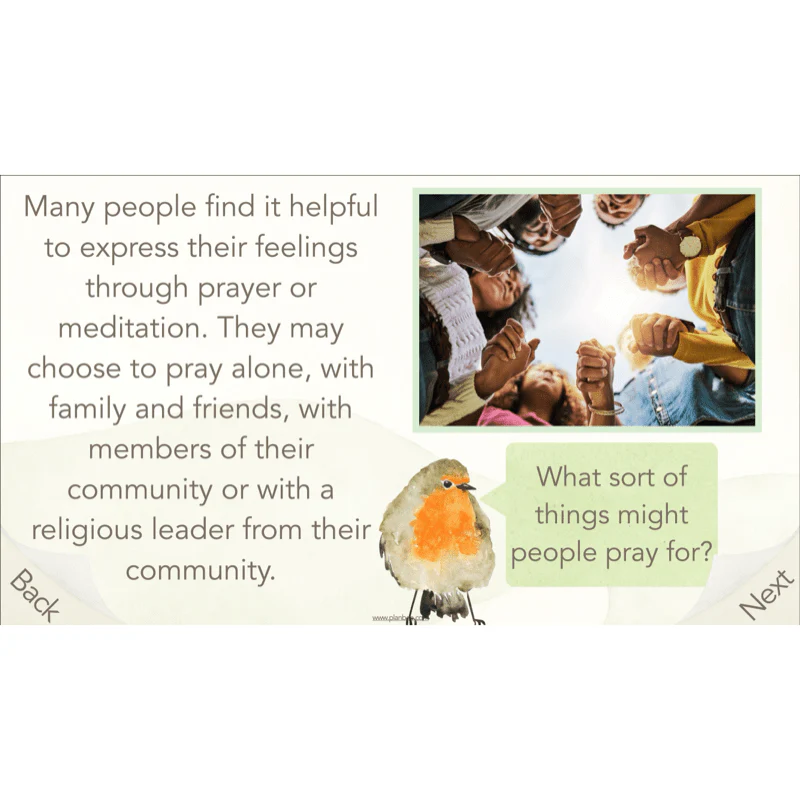
- Slides
- Activity ideas
- Buddhist beliefs fact sheets
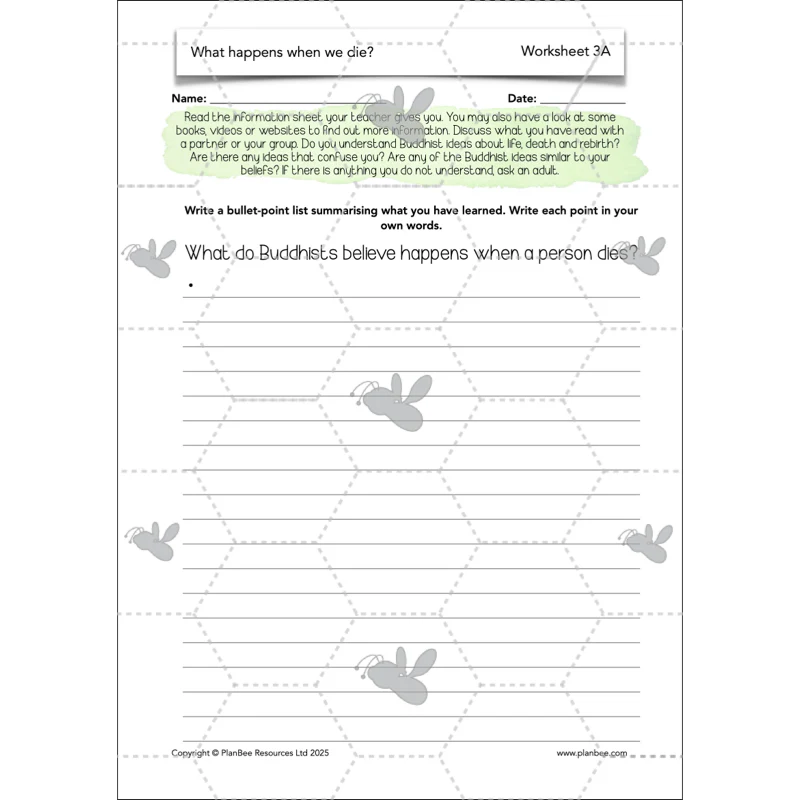
- Worksheet
Expressing Feelings
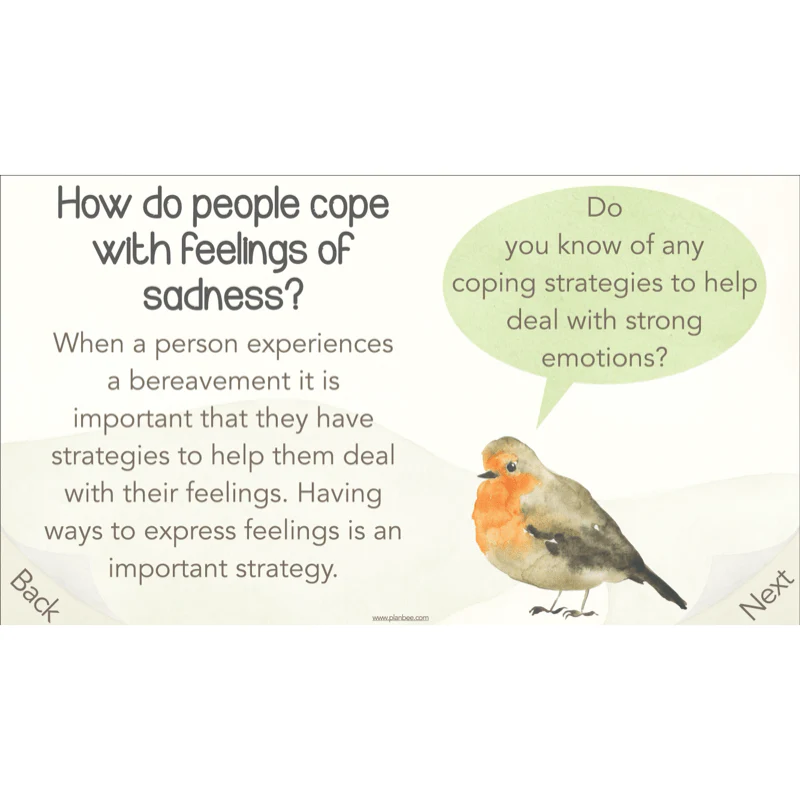
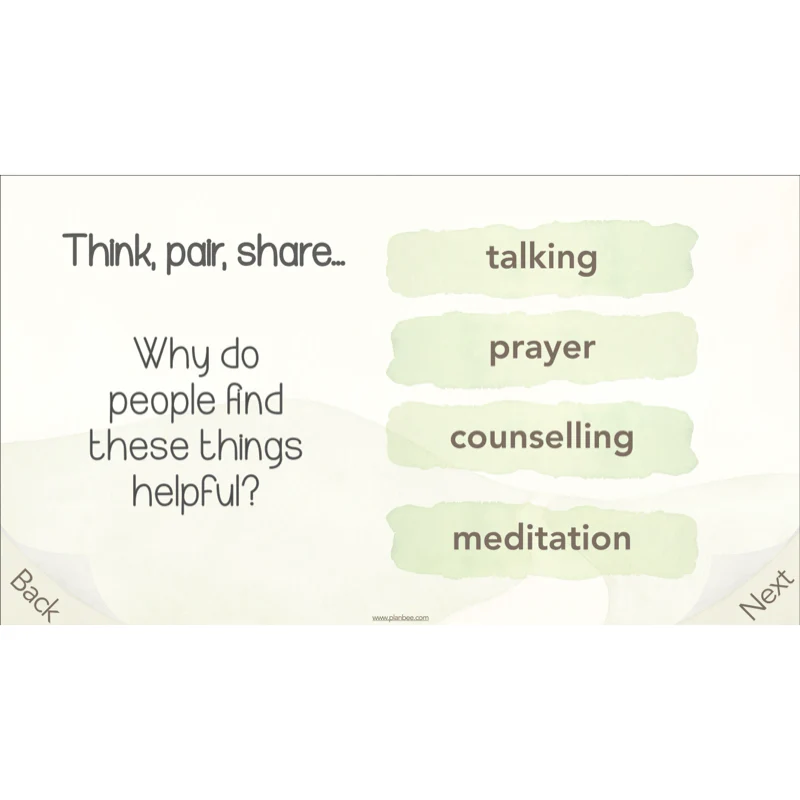
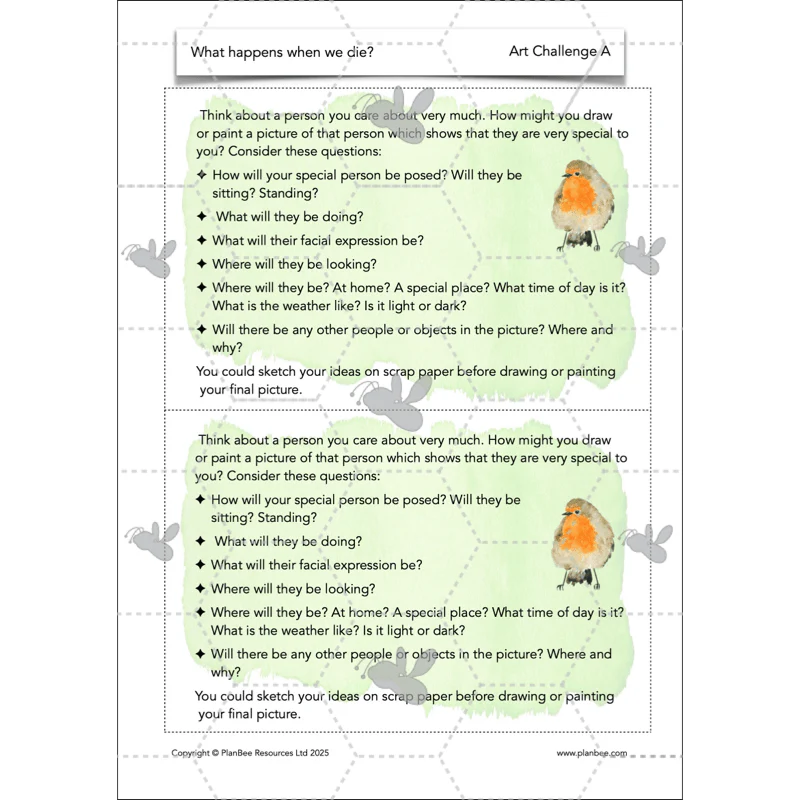
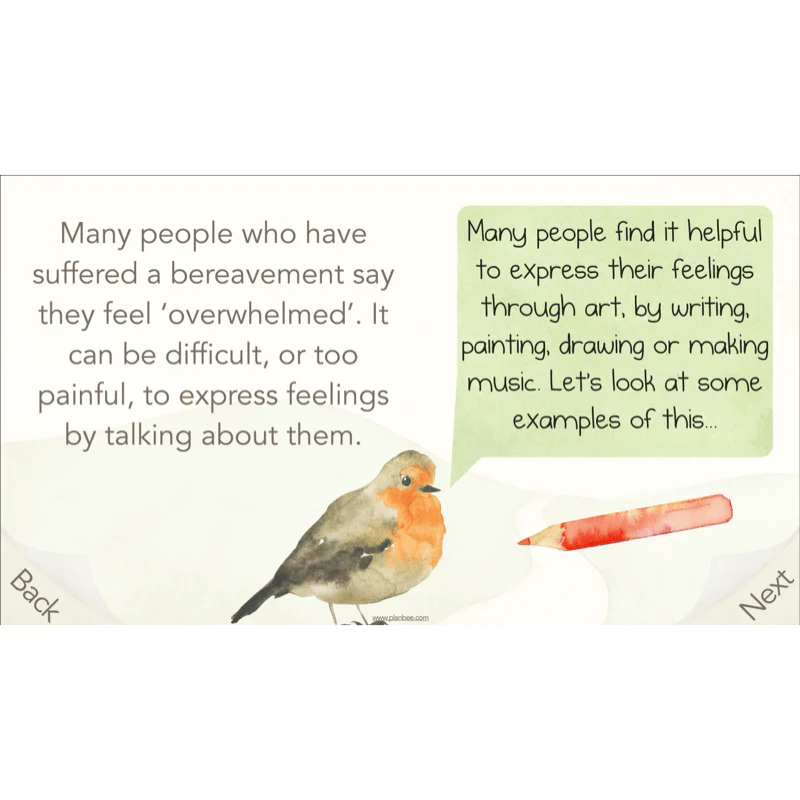
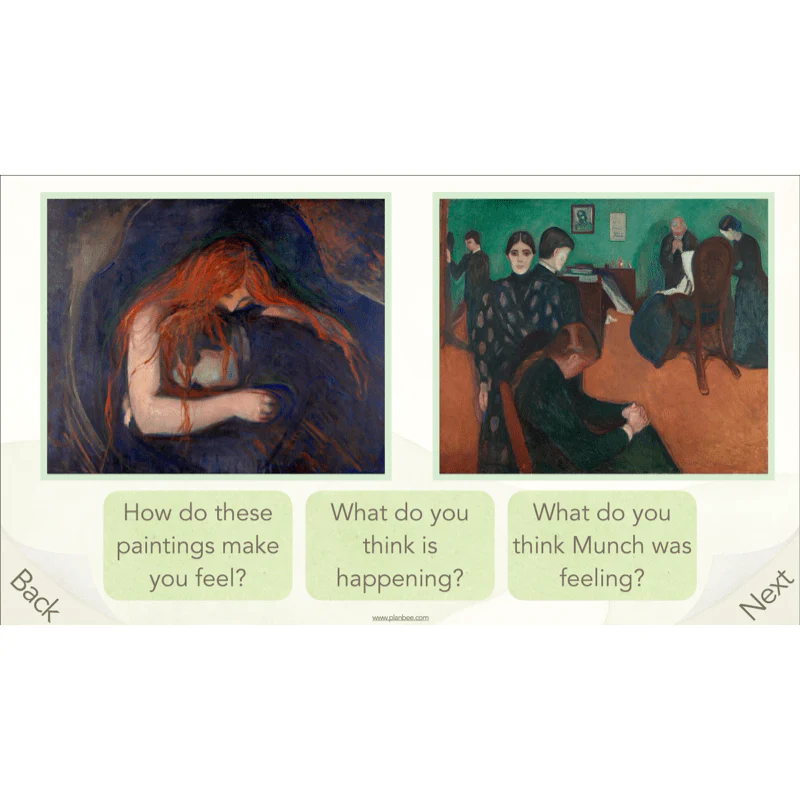
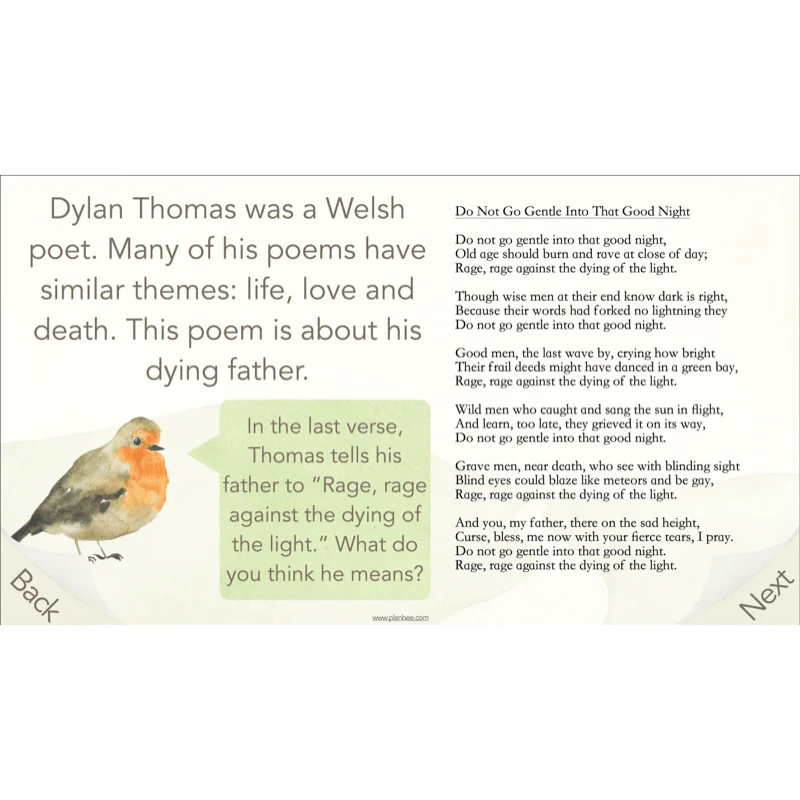
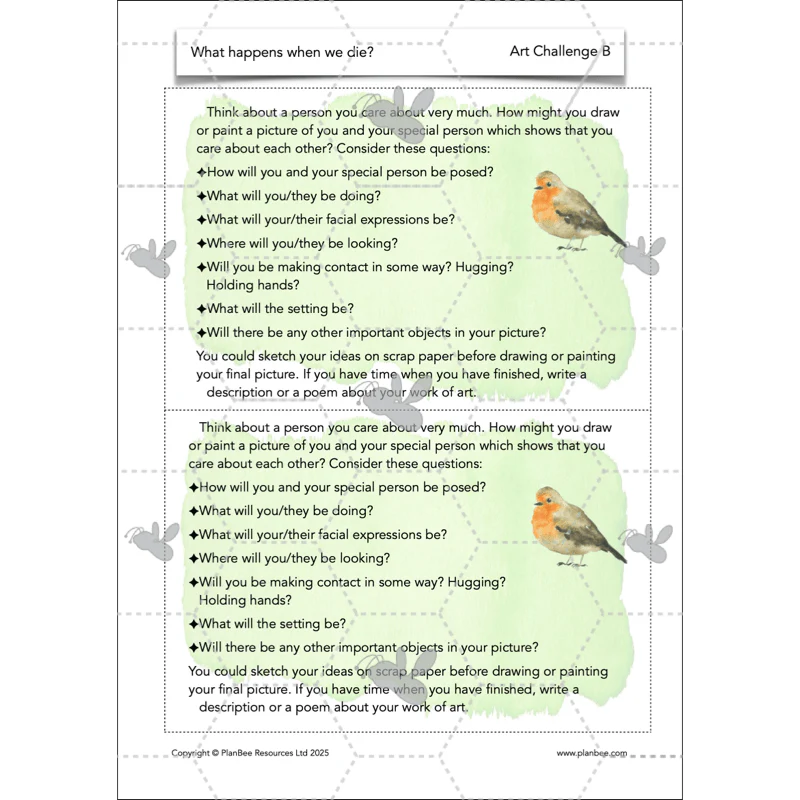
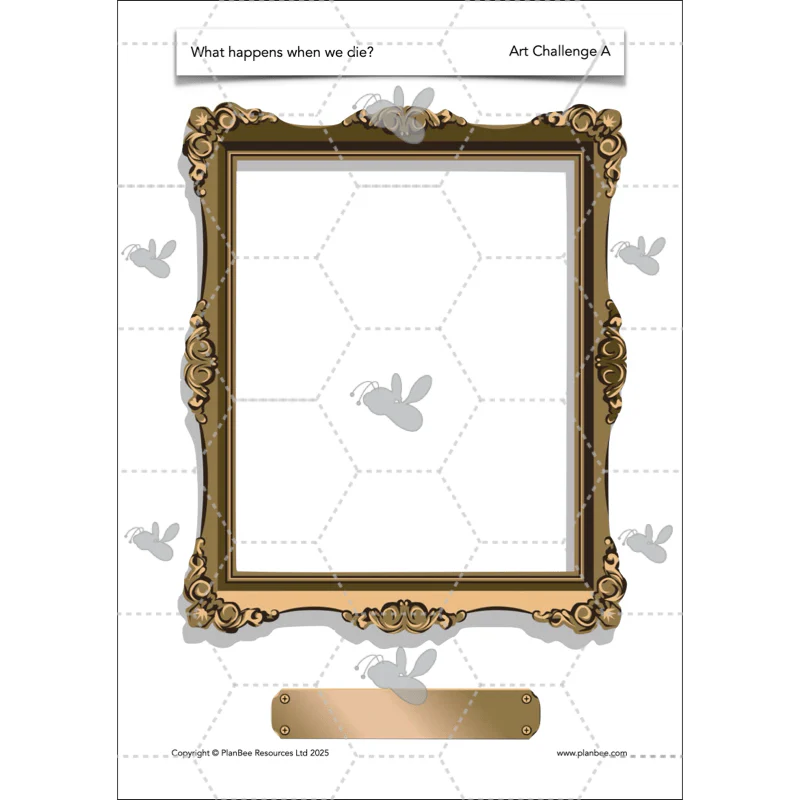
In this lesson, children will learn about some of the ways people can express their feelings when suffering a bereavement, including expressing feelings through art. The lesson plan includes a choice of art activities where children will have the opportunity to express themselves.
What's included:
- Lesson plan
- Slides
- Activity ideas
- Art challenge cards
- Picture frame sheet
Remembering
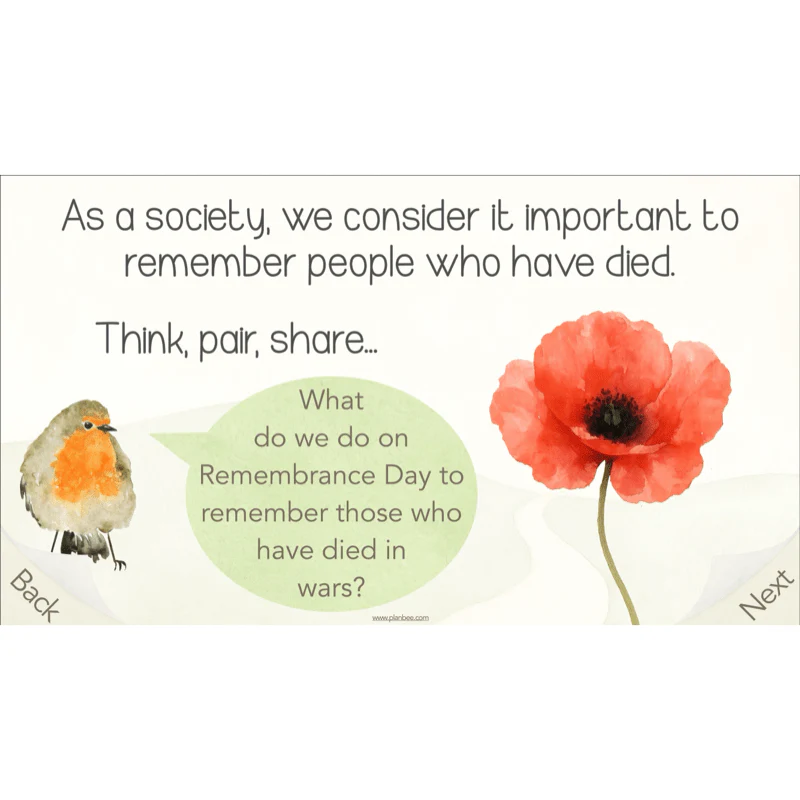
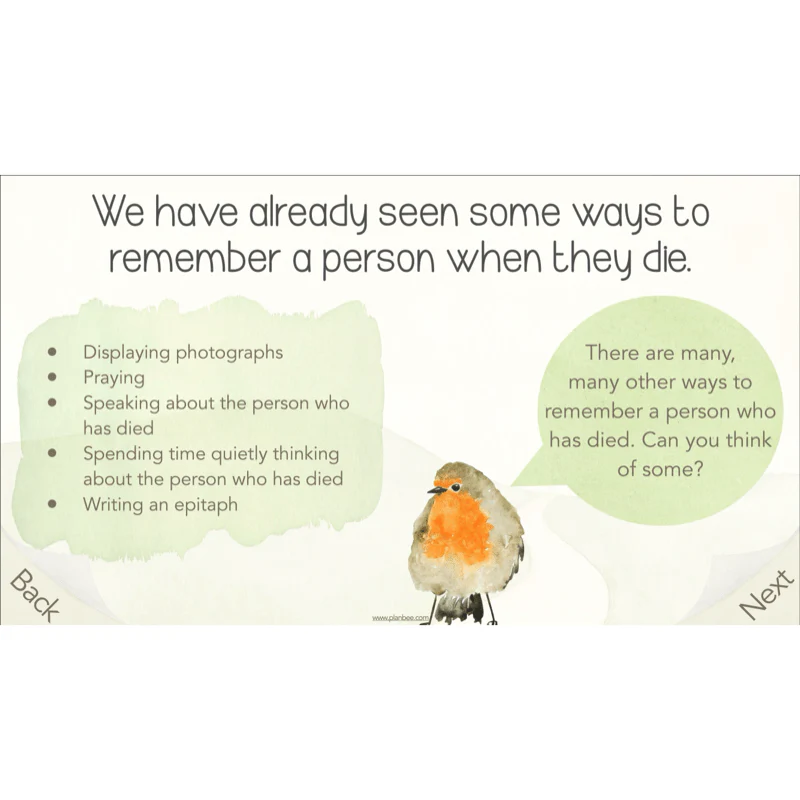
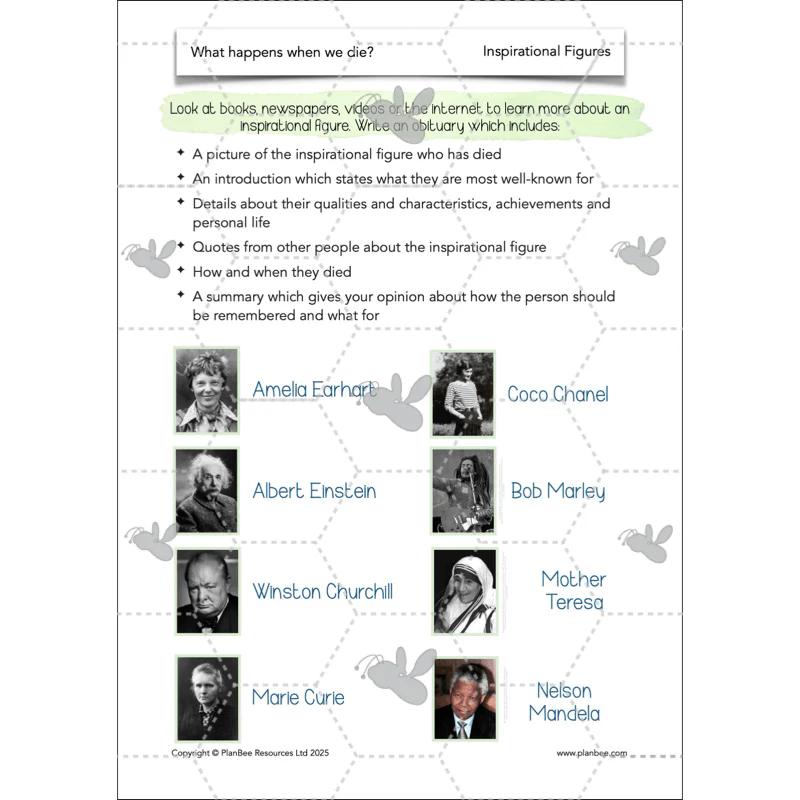
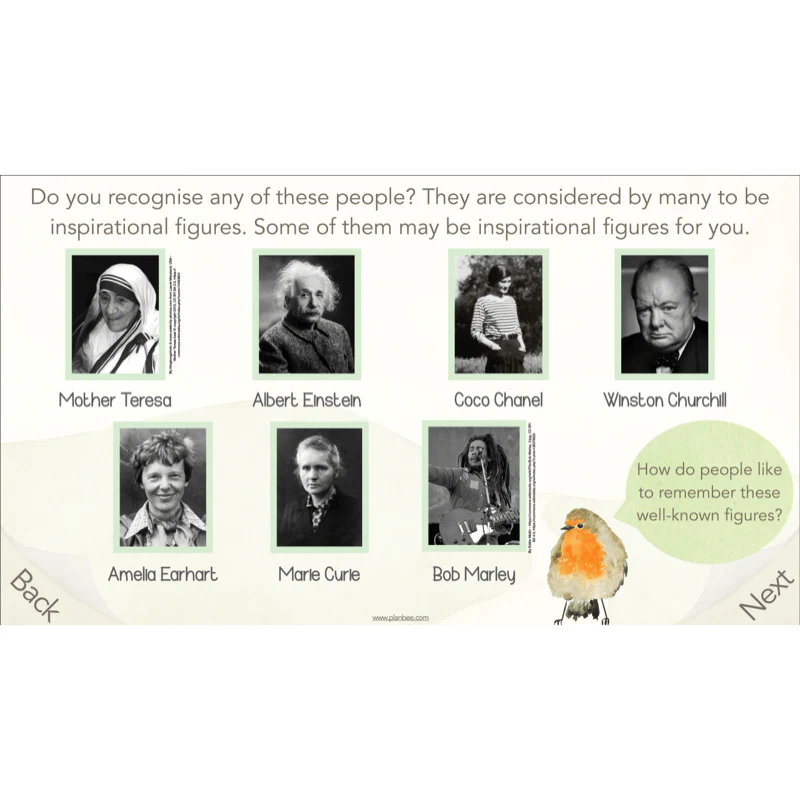
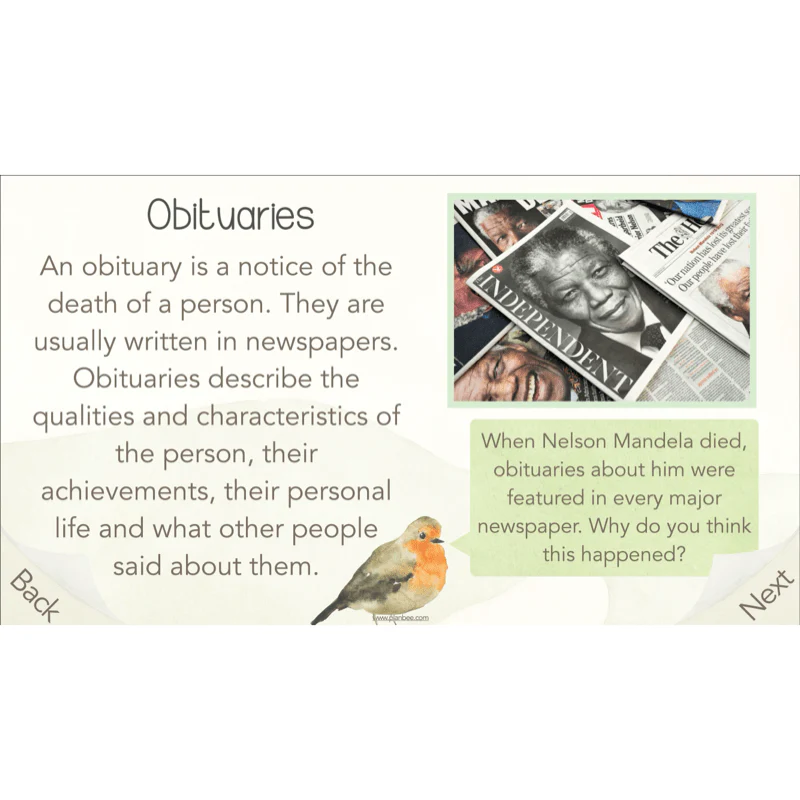
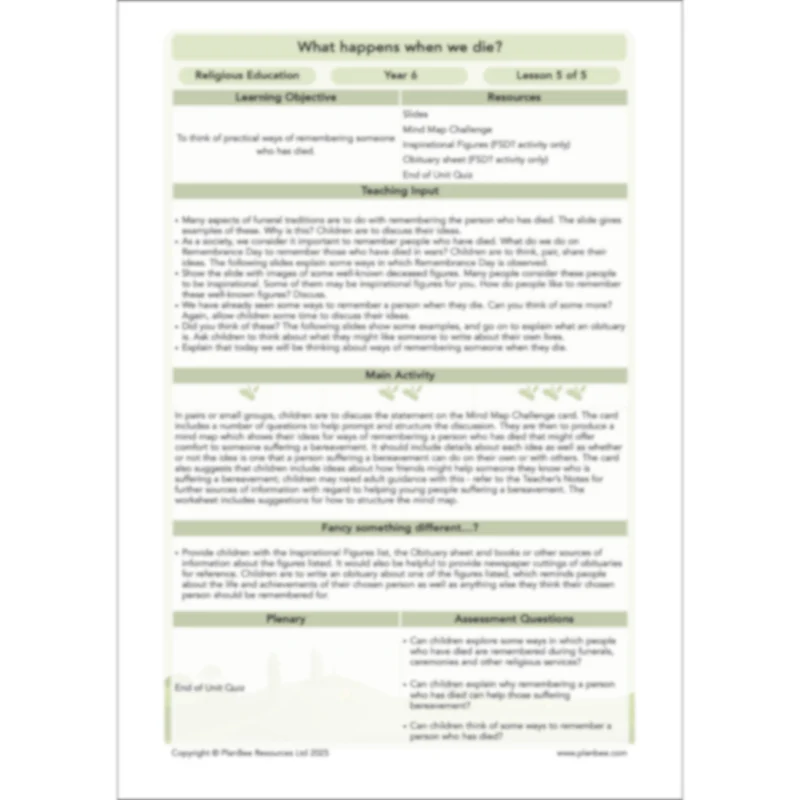
Children will consider how funeral rituals and memorial services help people to remember someone who has died, before going on to consider other ways of remembering a person which would help comfort loved ones suffering a bereavement. They will also learn about some of the ways in which inspirational figures are remembered.
What's included:
- Lesson plan
- Slides
- Activity ideas
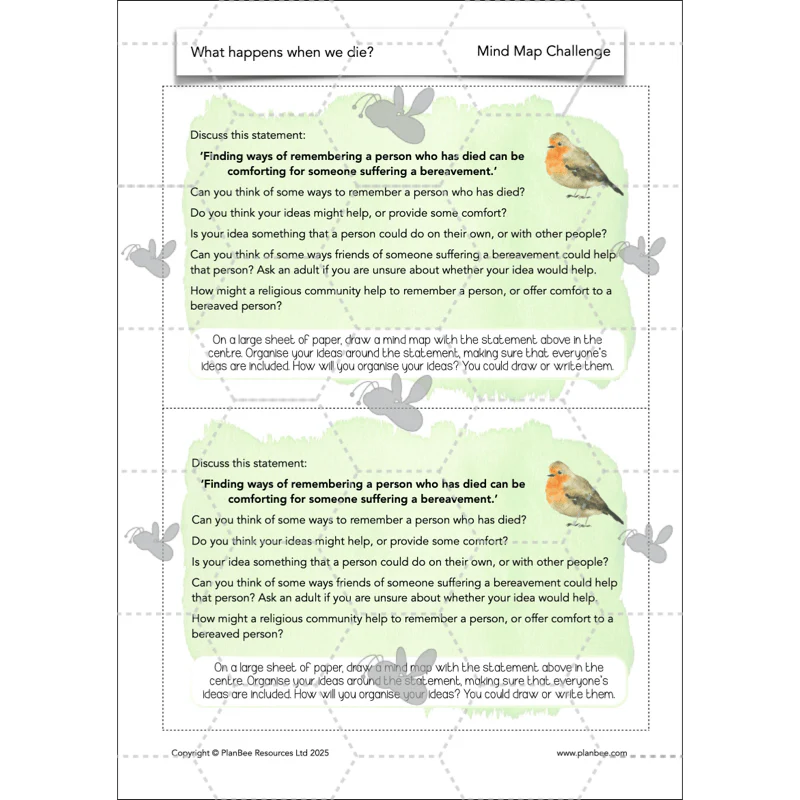
- Mind map challenge card
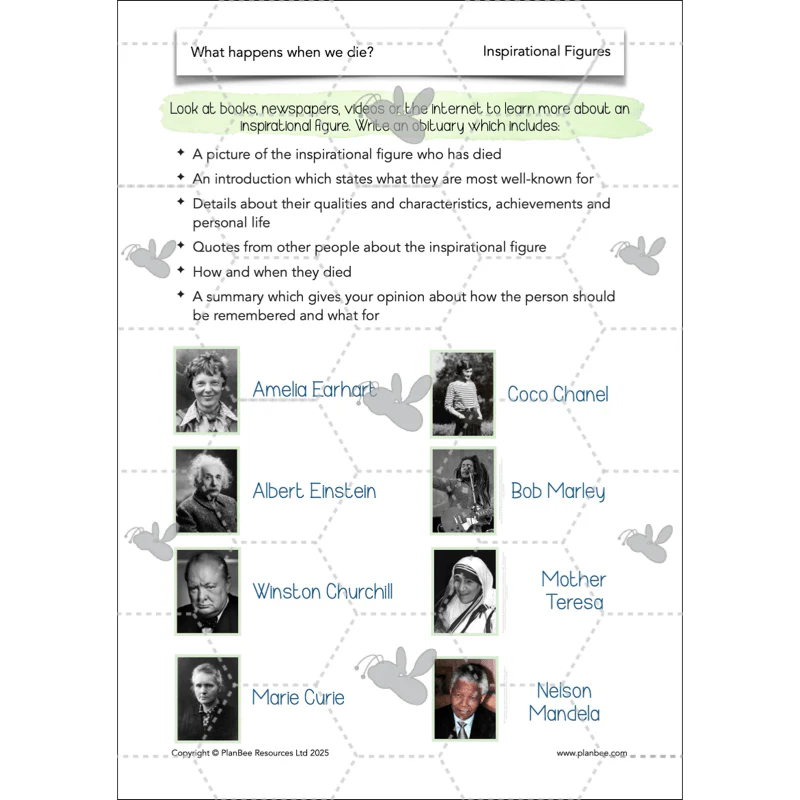
- Inspirational figures sheet
- Obituary sheet
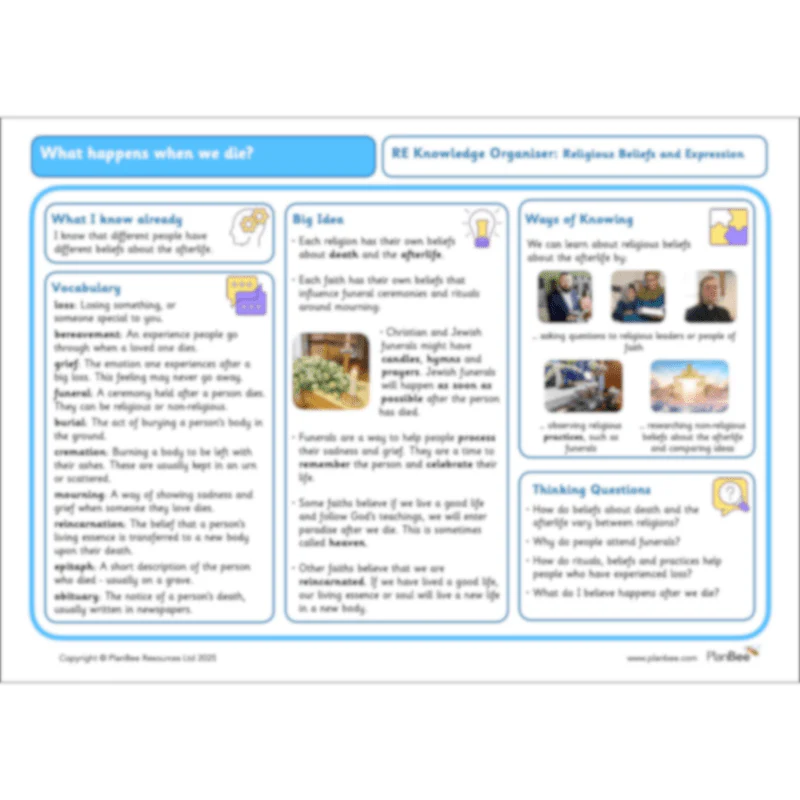
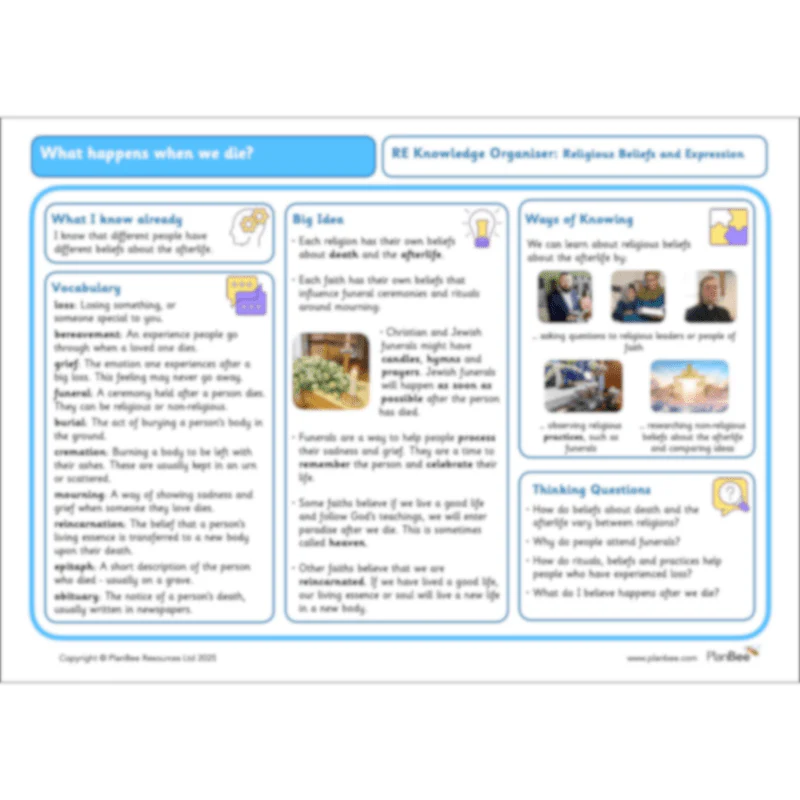
This Year 6 RE Knowledge Organiser has been created to complement the study of the Worldviews, Beliefs and Values strand within our RE and worldviews resource offer. It is designed to support your children's understanding of key vocabulary and big ideas covered in this scheme of work, while signposting prior learning. Children are also encouraged to reflect on 'Ways of Knowing' about religion and worldviews, and to think deeply about the topic through the 'Thinking Questions' provided.
Original: $1.99
-50%$1.99
$1.00More Images
What happens when we die?
These plans, slides, worksheets and other resources for Year 6 children explain the ideas and beliefs of religious and non-religious groups about what happens when a person dies. Coping with loss, comforting others, expressing feelings and finding help are covered over the five lessons, with opportunities for children to reflect on their own ideas, share their views and consider the beliefs, thoughts and feelings of others.
This lesson pack comes complete with detailed planning, slides for teaching input and differentiated resources.
A Knowledge Organiser is available to support the learning in this scheme. It is included in the Complete Series download or can be purchased individually.
Loss
Children will consider how they feel when they lose something as well as ways in which those feelings might differ depending upon the degree of loss. They will go on to discuss ways in which someone experiencing a loss might be helped and supported.
What's included:
- Lesson plan
- Slides
- Activity ideas
- Worksheet
- Scenario cards
- Questions about loss sheet
Rituals
In this lesson, children will learn about what actually happens to the body when a person dies, then go on to explore some funeral rites and traditions in different religions and communities.
What's included:
- Lesson plan
- Slides
- Activity ideas
- Worksheets
- Funeral fact cards
- Funeral traditions sheets
Big Questions
Children will learn about the beliefs of some religions with regard to what happens when a person dies, as well as having the opportunity to share their own beliefs, prior knowledge and experiences as members of religious or non-religious groups and communities.
What's included:
- Lesson plan
- Slides
- Activity ideas
- Buddhist beliefs fact sheets
- Worksheet
Expressing Feelings
In this lesson, children will learn about some of the ways people can express their feelings when suffering a bereavement, including expressing feelings through art. The lesson plan includes a choice of art activities where children will have the opportunity to express themselves.
What's included:
- Lesson plan
- Slides
- Activity ideas
- Art challenge cards
- Picture frame sheet
Remembering
Children will consider how funeral rituals and memorial services help people to remember someone who has died, before going on to consider other ways of remembering a person which would help comfort loved ones suffering a bereavement. They will also learn about some of the ways in which inspirational figures are remembered.
What's included:
- Lesson plan
- Slides
- Activity ideas
- Mind map challenge card
- Inspirational figures sheet
- Obituary sheet
This Year 6 RE Knowledge Organiser has been created to complement the study of the Worldviews, Beliefs and Values strand within our RE and worldviews resource offer. It is designed to support your children's understanding of key vocabulary and big ideas covered in this scheme of work, while signposting prior learning. Children are also encouraged to reflect on 'Ways of Knowing' about religion and worldviews, and to think deeply about the topic through the 'Thinking Questions' provided.
Product Information
Product Information
Shipping & Returns
Shipping & Returns
Description
These plans, slides, worksheets and other resources for Year 6 children explain the ideas and beliefs of religious and non-religious groups about what happens when a person dies. Coping with loss, comforting others, expressing feelings and finding help are covered over the five lessons, with opportunities for children to reflect on their own ideas, share their views and consider the beliefs, thoughts and feelings of others.
This lesson pack comes complete with detailed planning, slides for teaching input and differentiated resources.
A Knowledge Organiser is available to support the learning in this scheme. It is included in the Complete Series download or can be purchased individually.
Loss
Children will consider how they feel when they lose something as well as ways in which those feelings might differ depending upon the degree of loss. They will go on to discuss ways in which someone experiencing a loss might be helped and supported.
What's included:
- Lesson plan
- Slides
- Activity ideas
- Worksheet
- Scenario cards
- Questions about loss sheet
Rituals
In this lesson, children will learn about what actually happens to the body when a person dies, then go on to explore some funeral rites and traditions in different religions and communities.
What's included:
- Lesson plan
- Slides
- Activity ideas
- Worksheets
- Funeral fact cards
- Funeral traditions sheets
Big Questions
Children will learn about the beliefs of some religions with regard to what happens when a person dies, as well as having the opportunity to share their own beliefs, prior knowledge and experiences as members of religious or non-religious groups and communities.
What's included:
- Lesson plan
- Slides
- Activity ideas
- Buddhist beliefs fact sheets
- Worksheet
Expressing Feelings
In this lesson, children will learn about some of the ways people can express their feelings when suffering a bereavement, including expressing feelings through art. The lesson plan includes a choice of art activities where children will have the opportunity to express themselves.
What's included:
- Lesson plan
- Slides
- Activity ideas
- Art challenge cards
- Picture frame sheet
Remembering
Children will consider how funeral rituals and memorial services help people to remember someone who has died, before going on to consider other ways of remembering a person which would help comfort loved ones suffering a bereavement. They will also learn about some of the ways in which inspirational figures are remembered.
What's included:
- Lesson plan
- Slides
- Activity ideas
- Mind map challenge card
- Inspirational figures sheet
- Obituary sheet
This Year 6 RE Knowledge Organiser has been created to complement the study of the Worldviews, Beliefs and Values strand within our RE and worldviews resource offer. It is designed to support your children's understanding of key vocabulary and big ideas covered in this scheme of work, while signposting prior learning. Children are also encouraged to reflect on 'Ways of Knowing' about religion and worldviews, and to think deeply about the topic through the 'Thinking Questions' provided.