What is a Debate?
Across a series of carefully structured lessons, pupils develop spoken language skills through debate, learning how to build persuasive arguments, respond confidently with counter-arguments and refutations, and take part in a formal class debate on a relevant real-world issue.
Each of the six ready-to-teach lessons includes a detailed plan, a set of engaging and informative PDF slides for the teaching input, differentiated activity ideas and a range of printable resources.
Lesson 1: Exploring a Debate
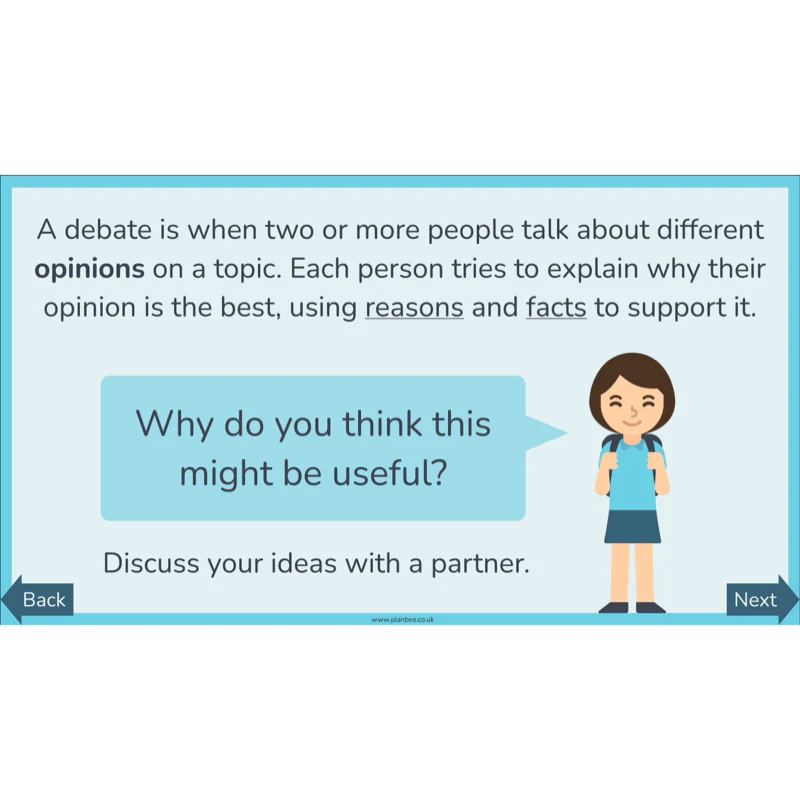
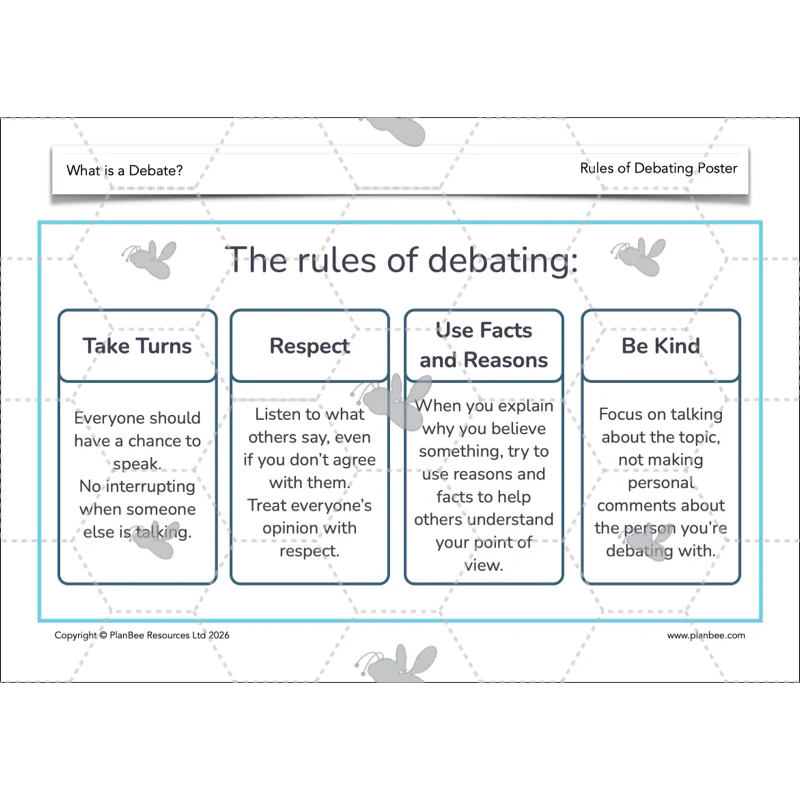
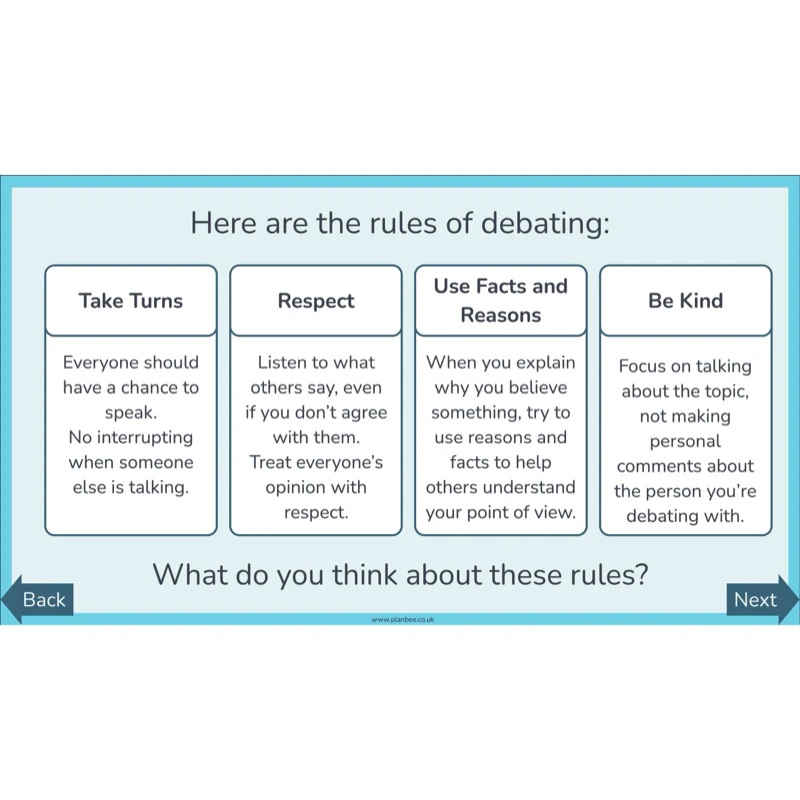
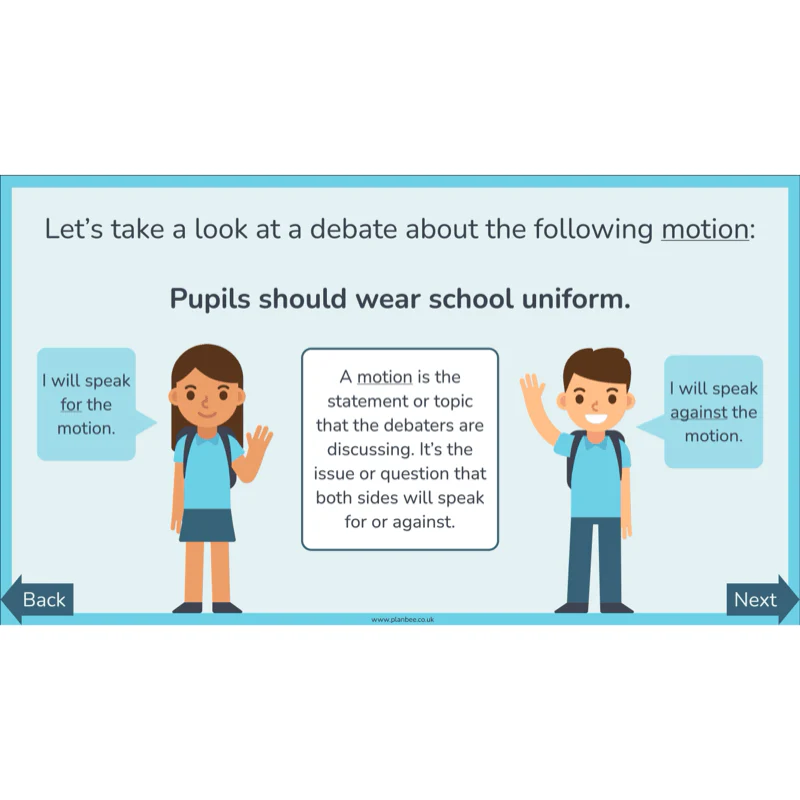
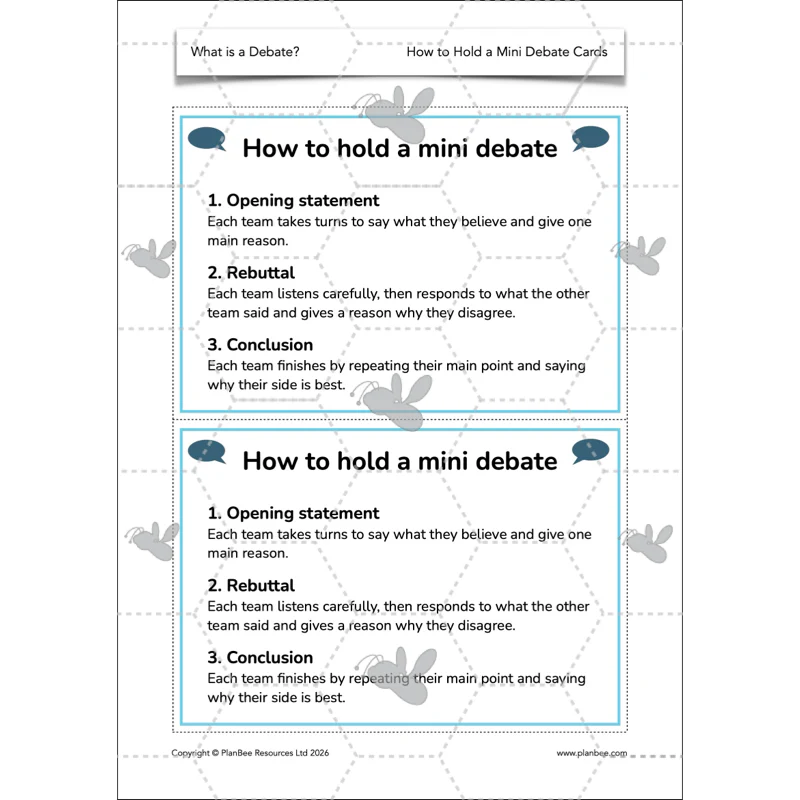
In this first lesson, children will learn what a debate is and how it is different from an argument. They will explore the rules of debating, look at a simple debate about school uniforms, and discuss the stages of a debate, including opening statements, rebuttals and conclusions.
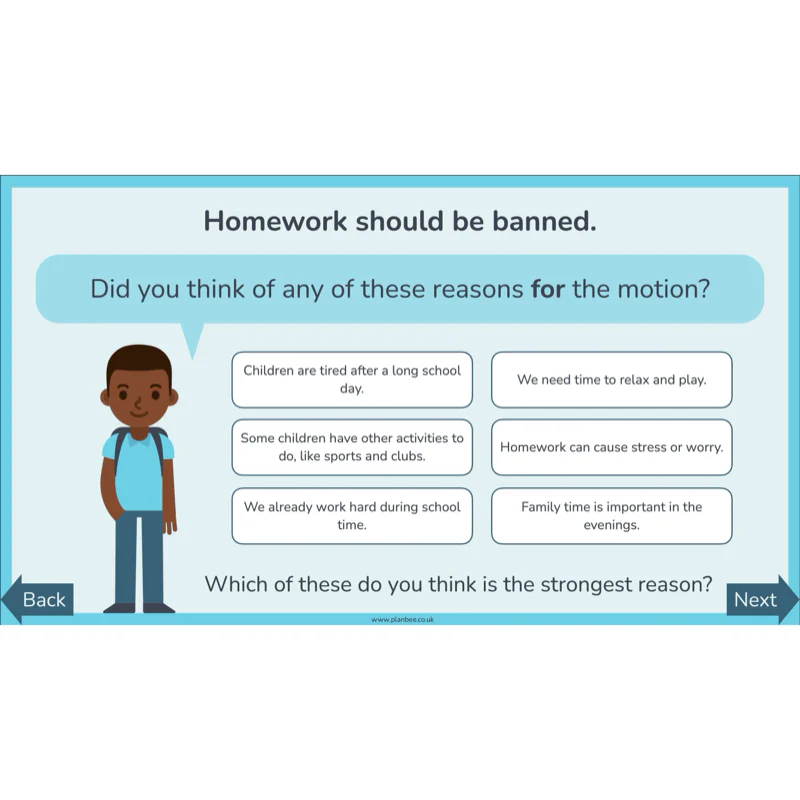
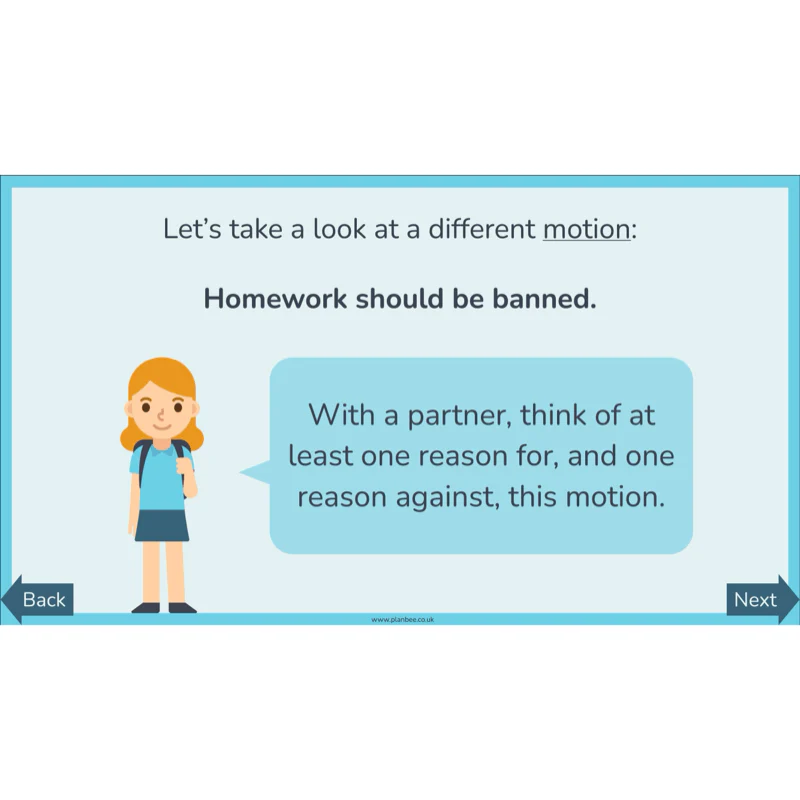
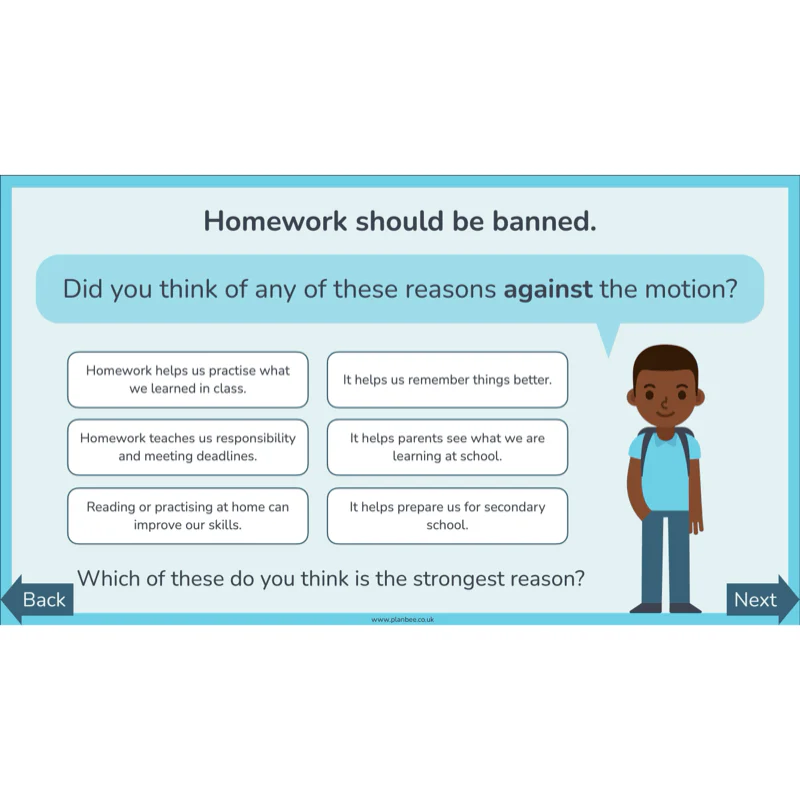
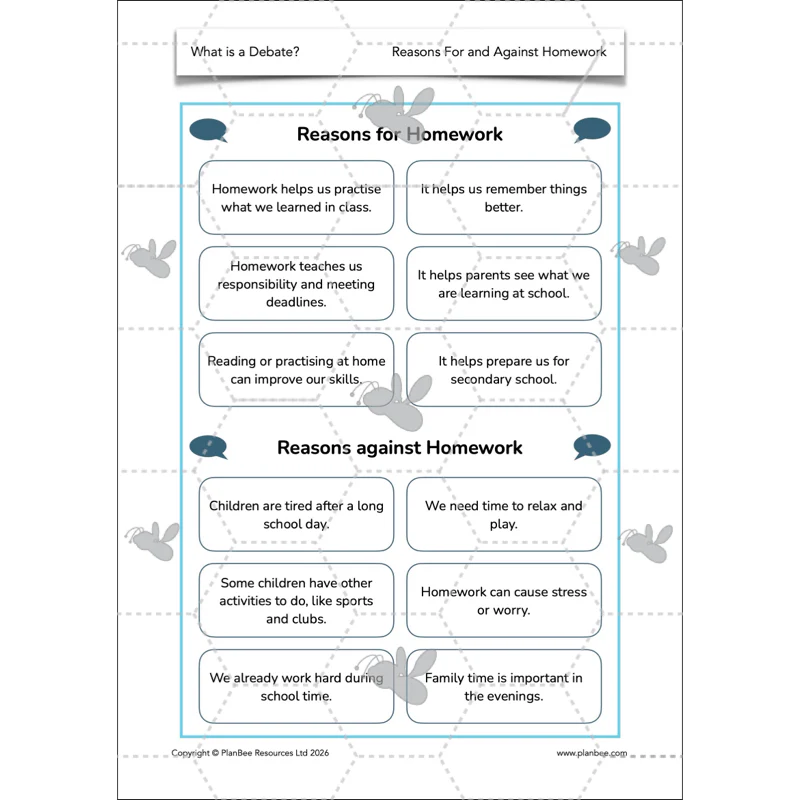
Children will then work with a partner to think of reasons for and against the motion ‘Homework should be banned’ and prepare for a mini debate, considering both sides - even the side they don’t personally agree with - to develop their thinking, speaking and listening skills.
Everything you need for a successful Debate KS2 lesson is in this pack - a detailed plan, a set of informative PDF slides for the teaching input, differentiated activity ideas and a range of printable resources.
What's included:
- Lesson plan
- Slides
- Activity ideas
- Rules of Debating Poster
- How to Hold a Mini Debate Cards
- Reasons For and Against Homework Sheet
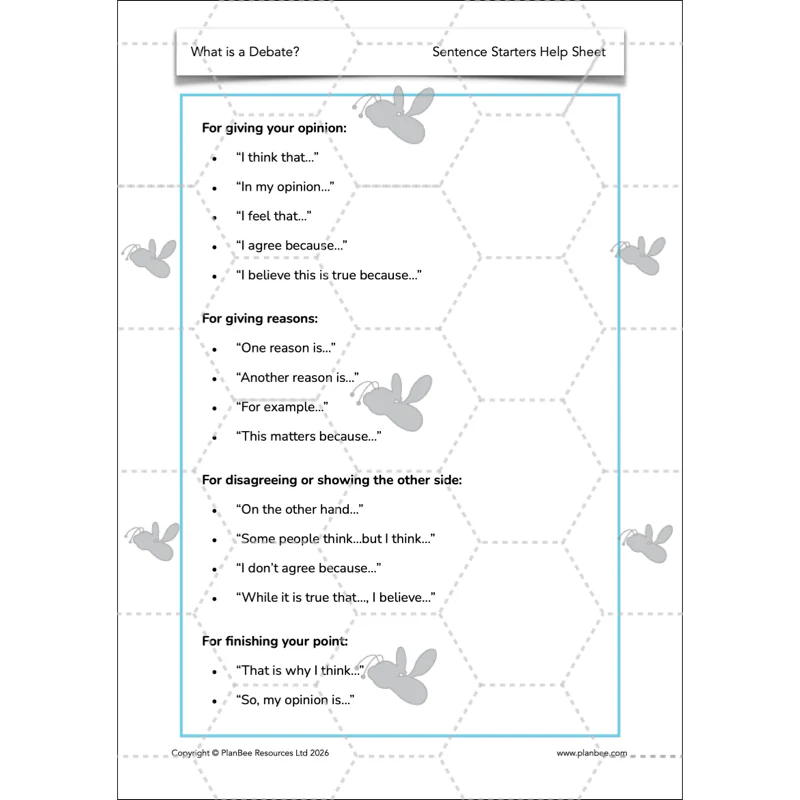
- Sentence Starters Sheet
- For and Against Cards
Lesson 2: Homeschooling vs Traditional School
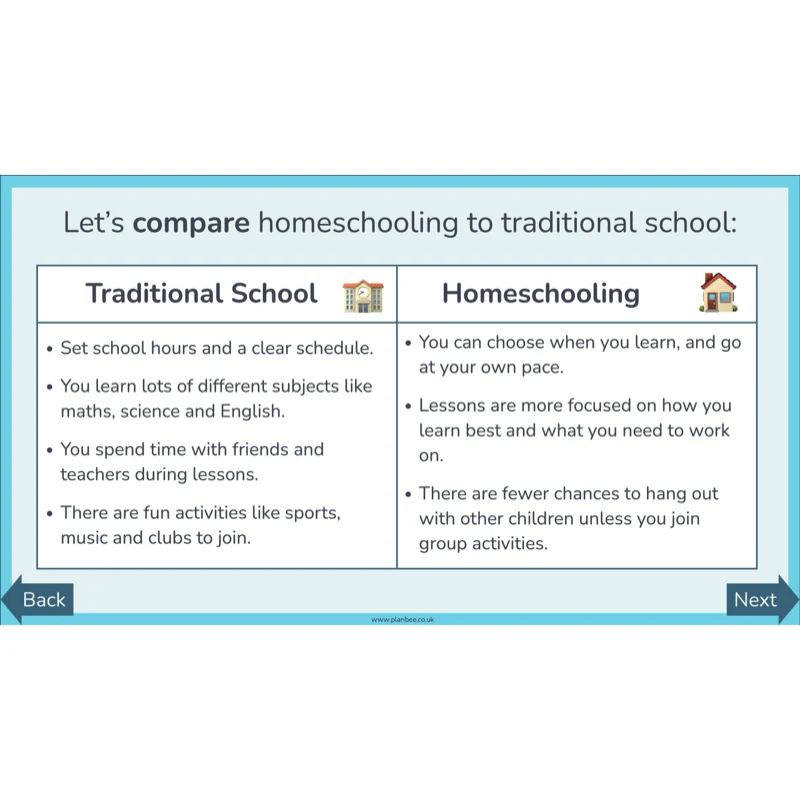
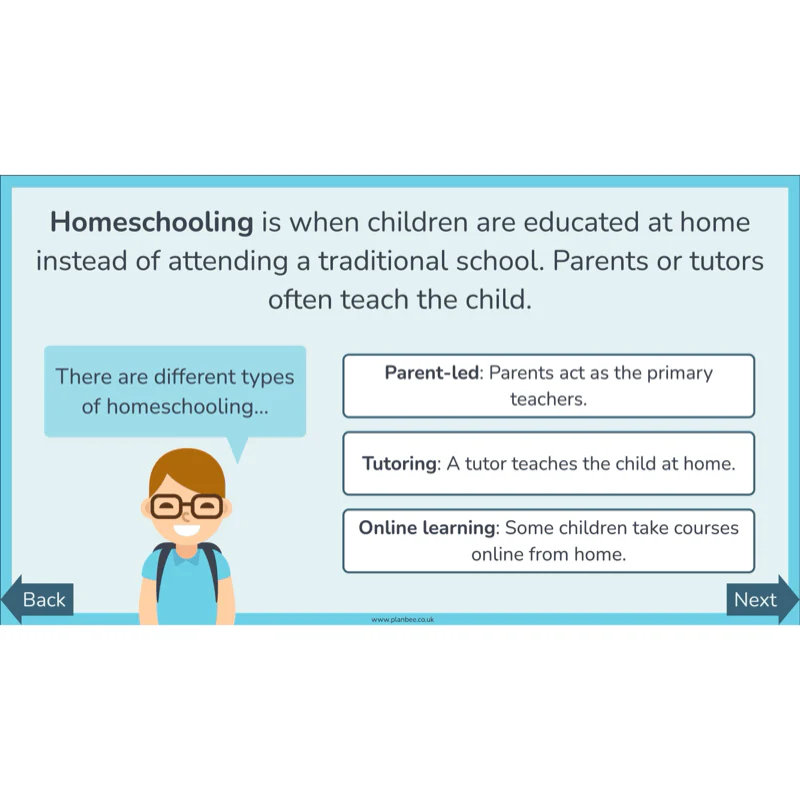
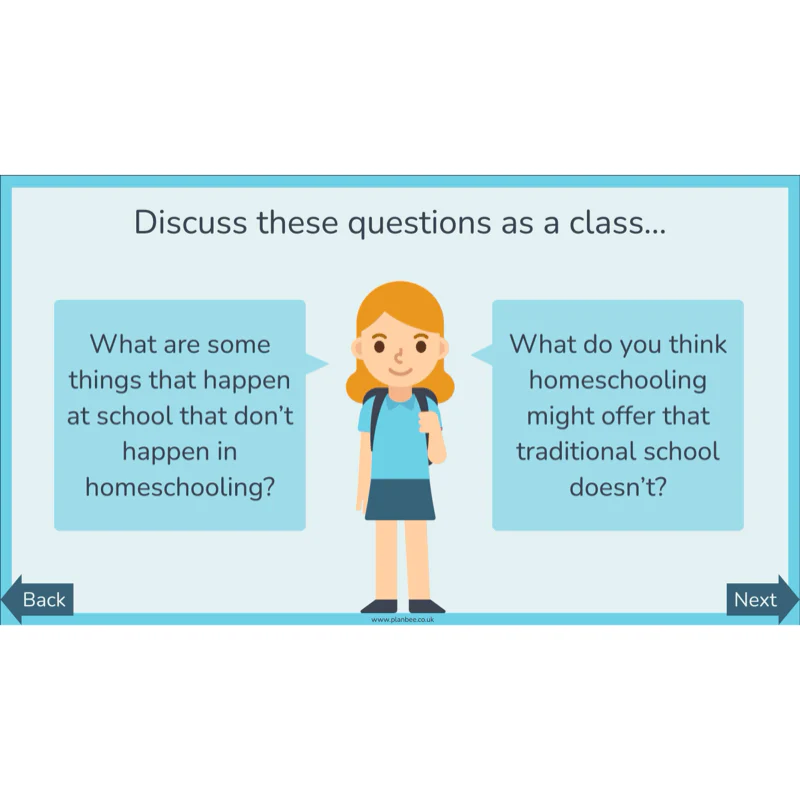
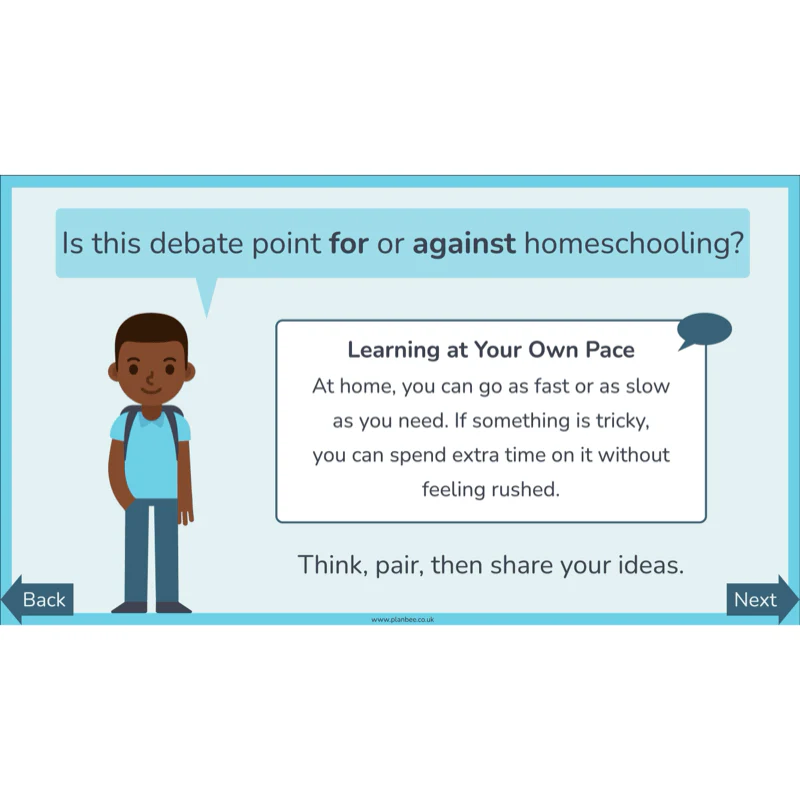
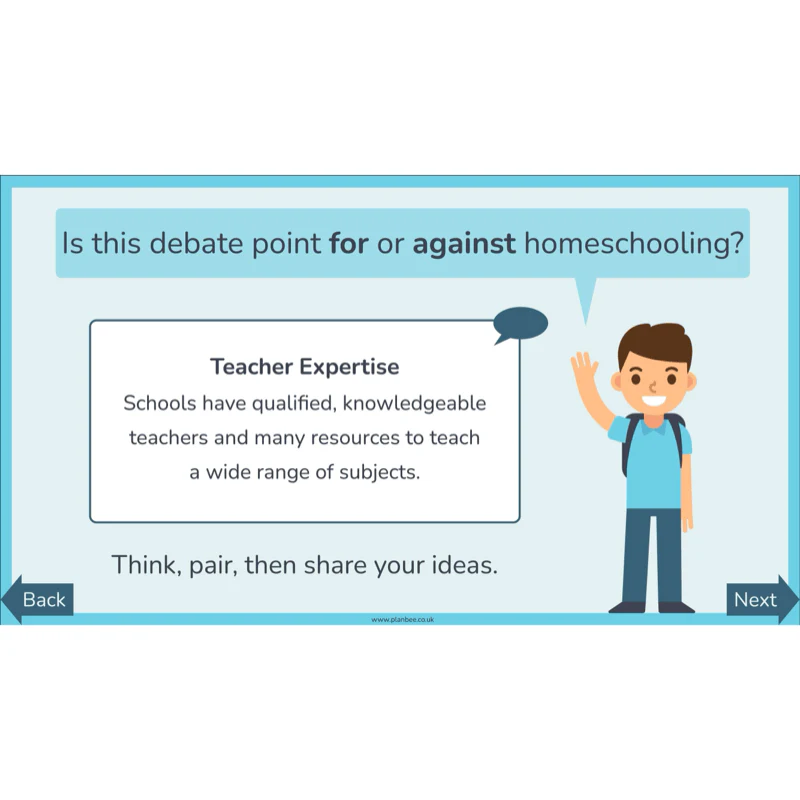
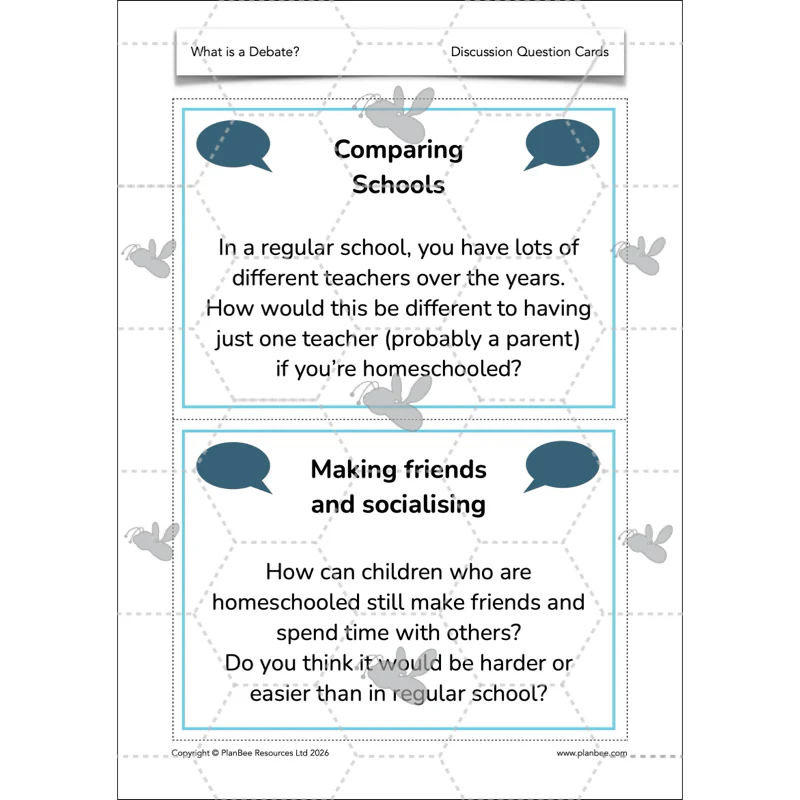
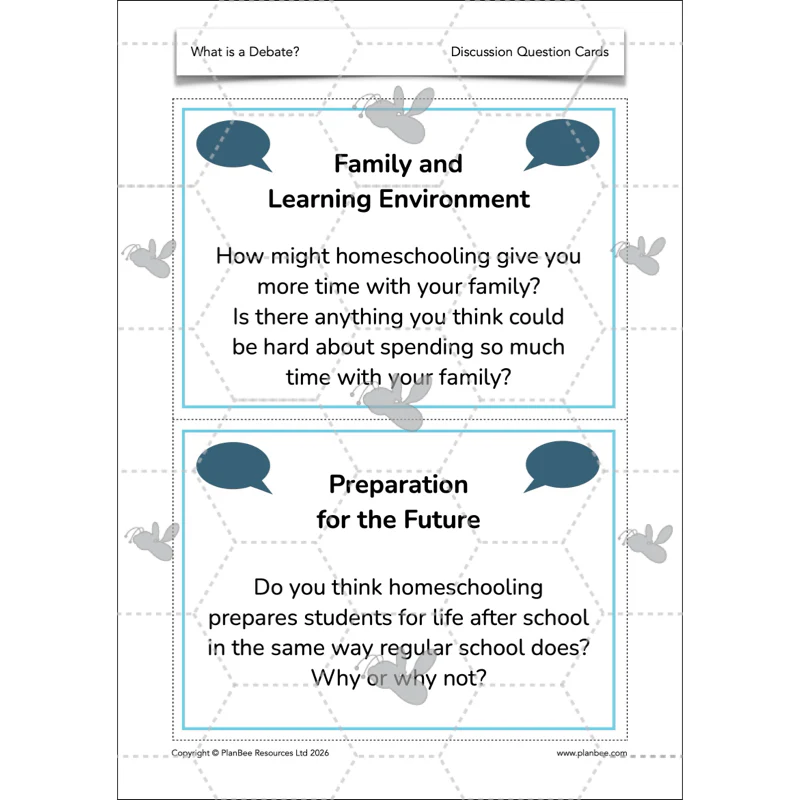
In this lesson, children will learn what homeschooling is and how it is different from traditional school. They will discuss examples of things that happen at school but not in homeschooling, and consider what homeschooling might offer that school does not.
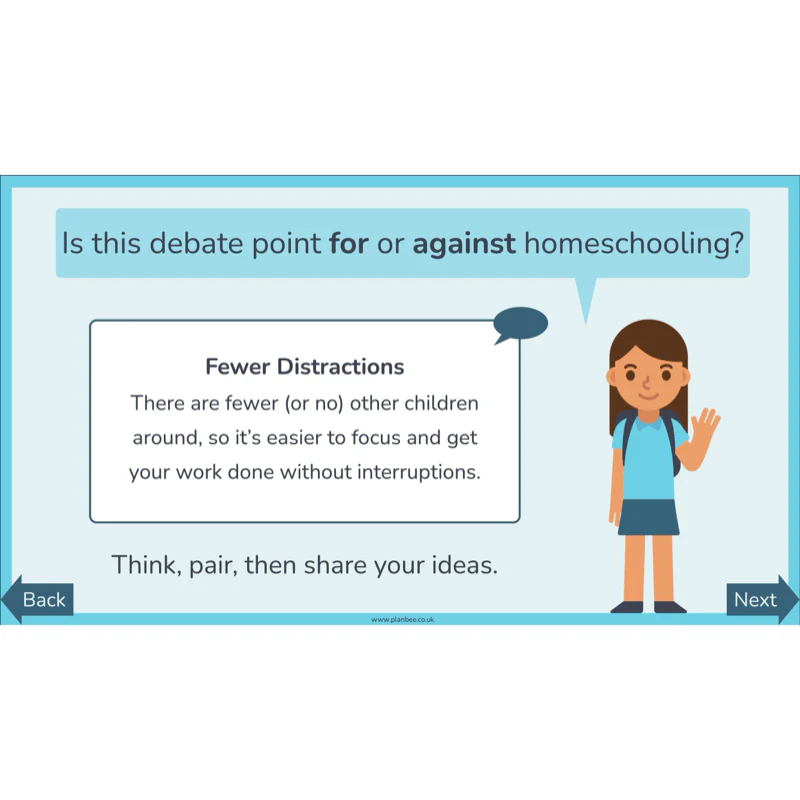
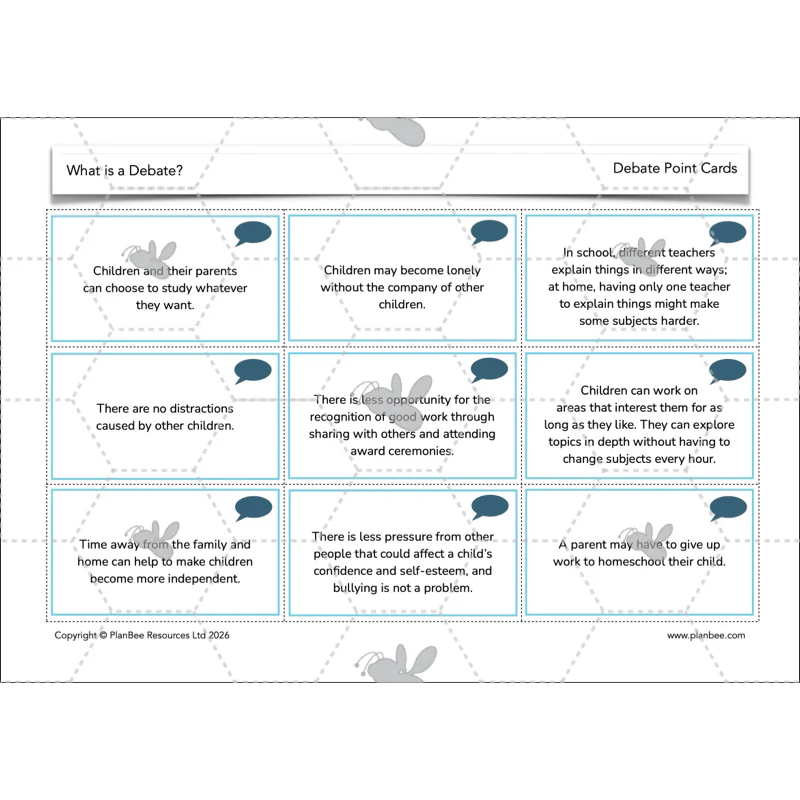
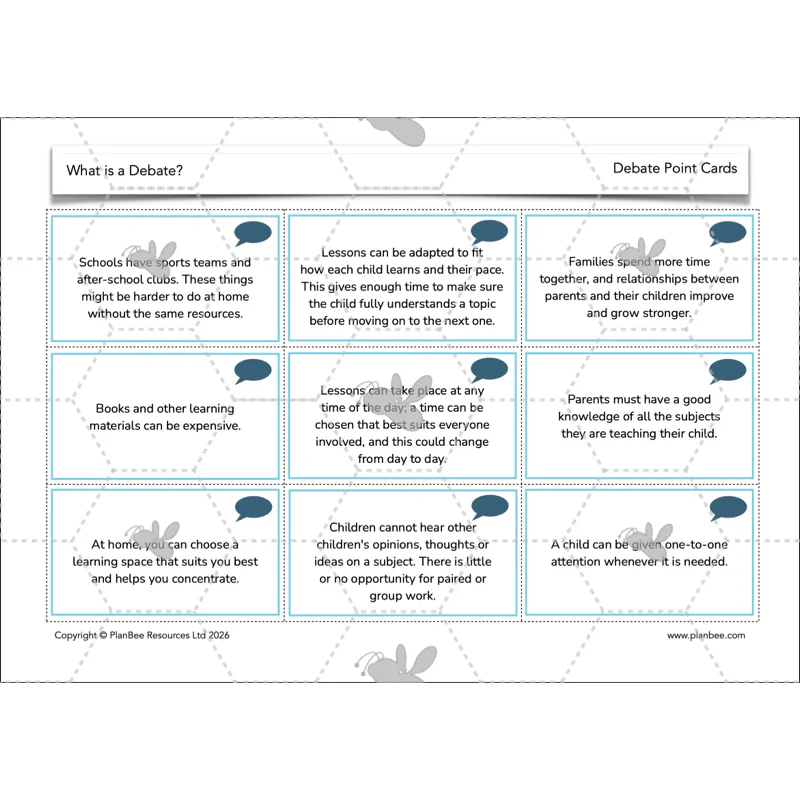
Children will explore debate points for and against homeschooling using class discussion and slides, thinking carefully, explaining their ideas, and listening to others’ viewpoints. They will then sort and rank these points in independent activities, developing their thinking, speaking and listening skills.
An easy-to-follow plan, a set of engaging PDF slides for the teaching input, differentiated activity ideas and printable resources are all included in this ready-to-teach pack.
What's included:
- Lesson plan
- Slides
- Activity ideas
- Debate Point Cards
- Discussion Question Cards
Lesson 3: Persuasive Techniques
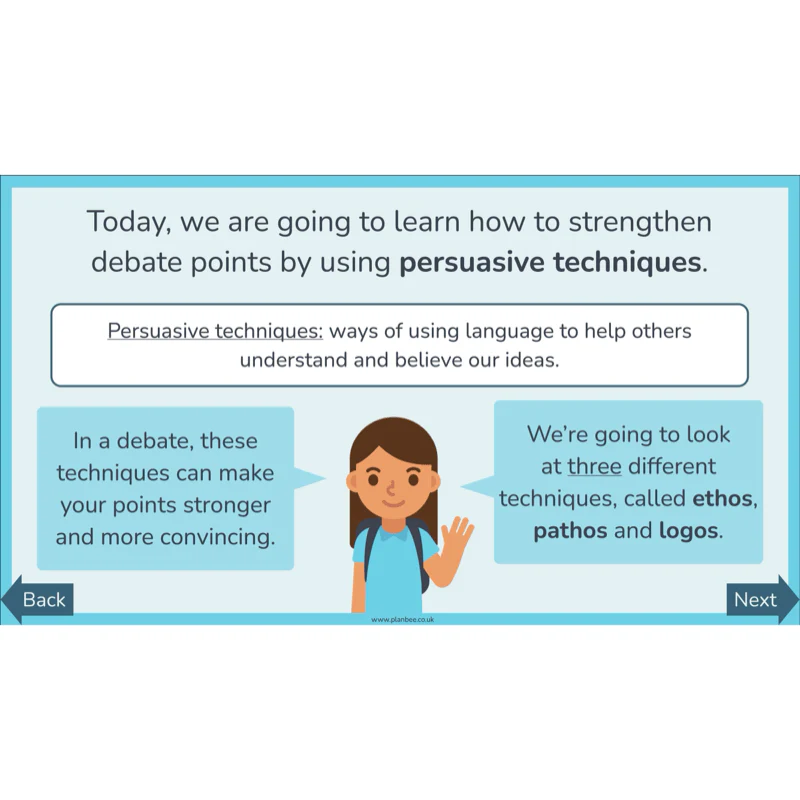
In this lesson, children will build on their understanding of debating by learning how to strengthen debate points using persuasive techniques.
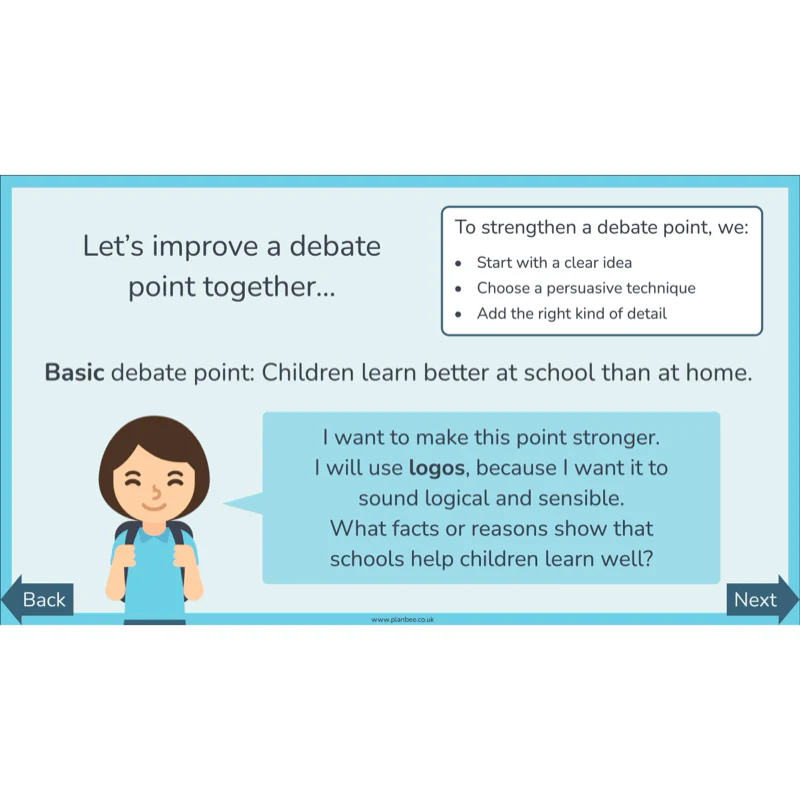
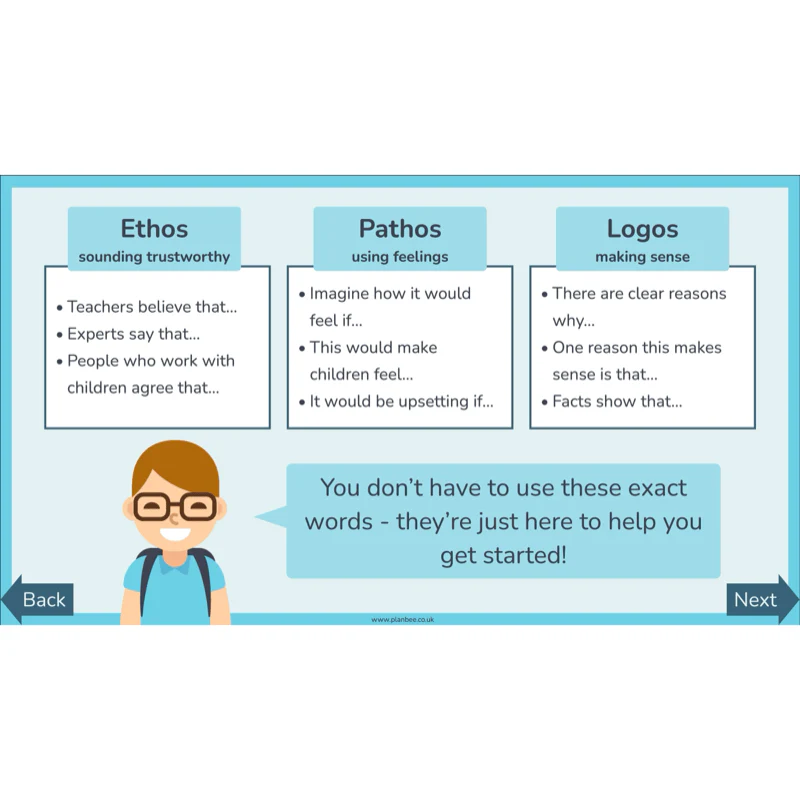
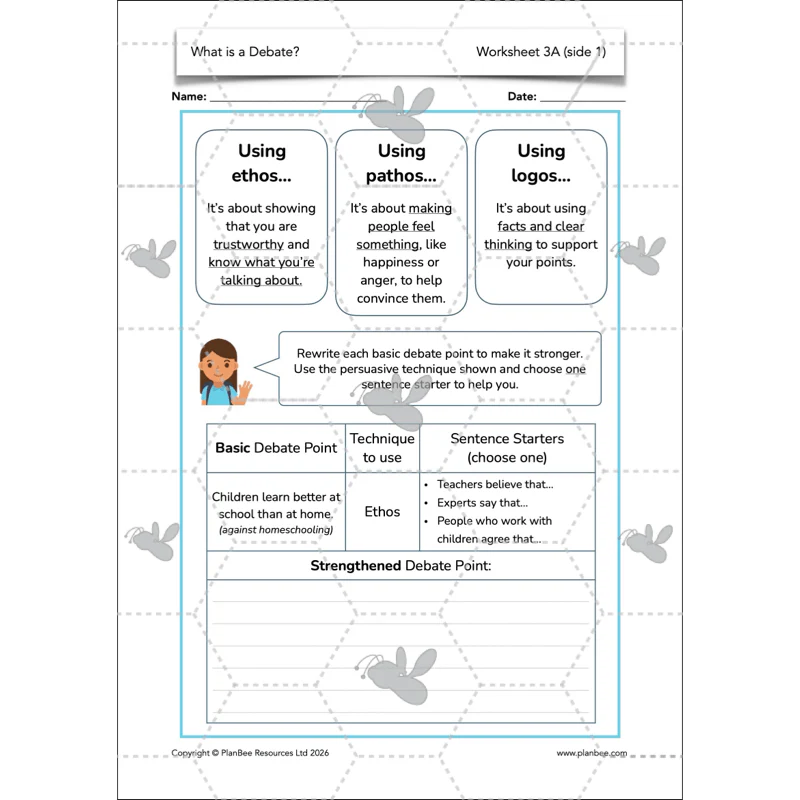
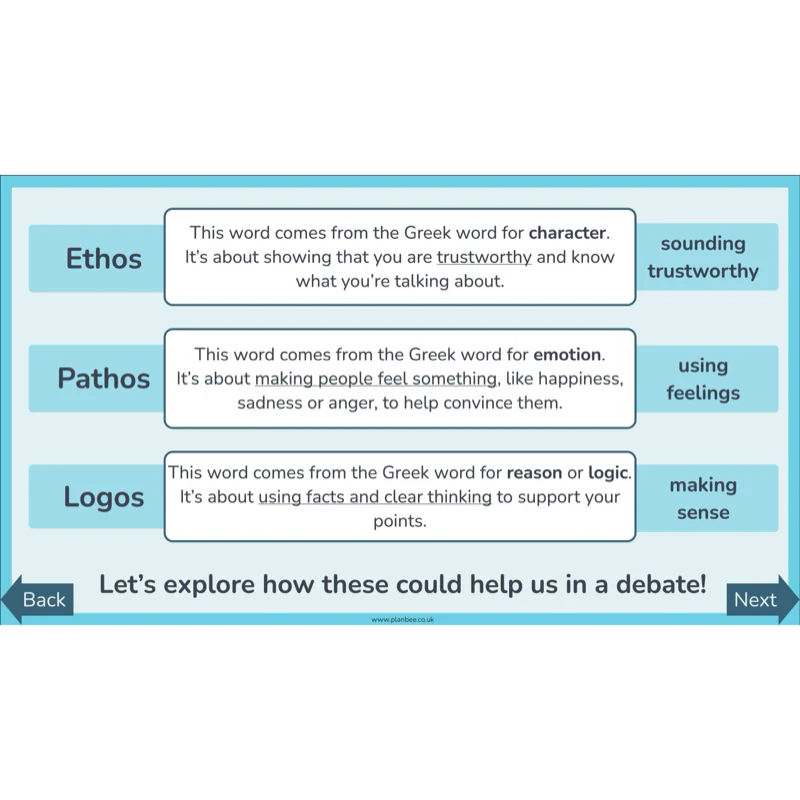
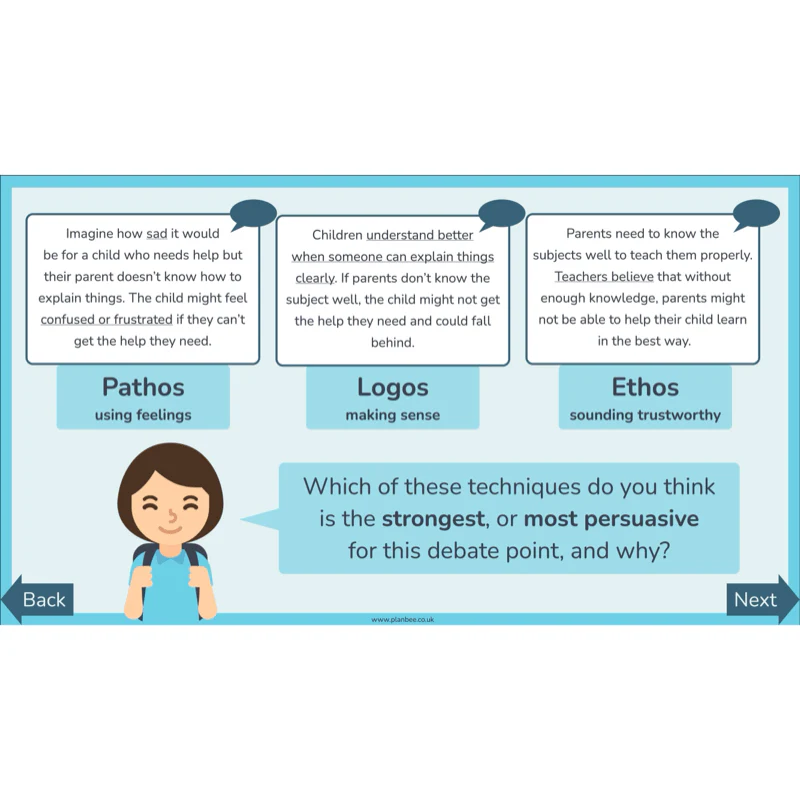
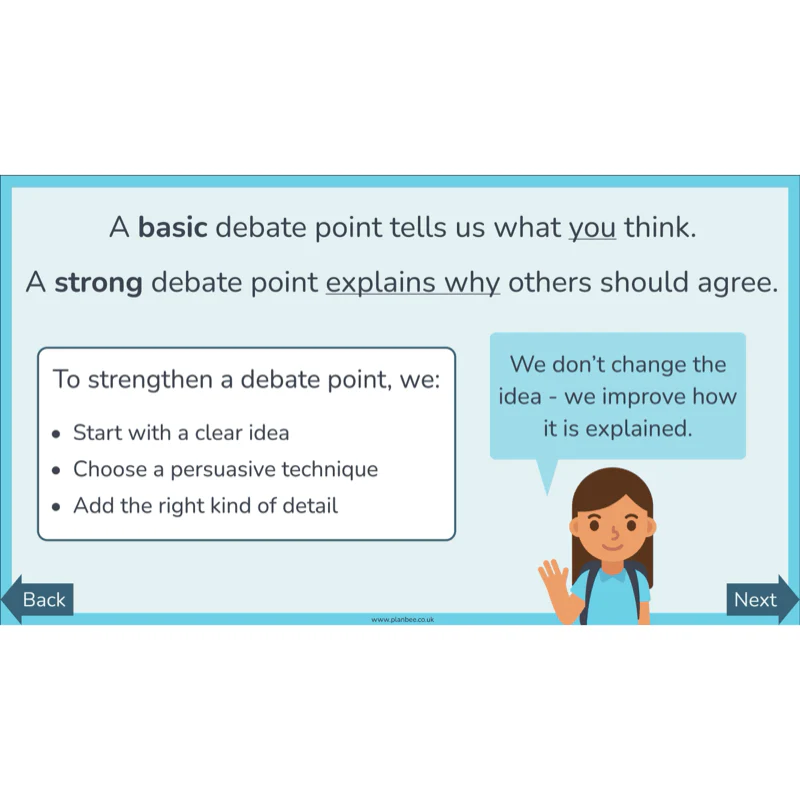
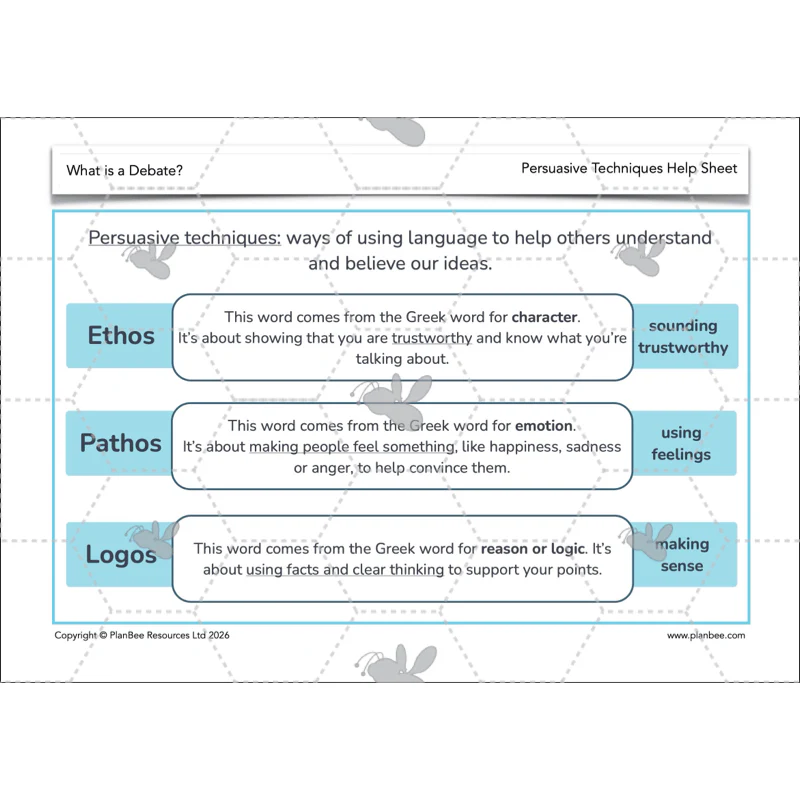
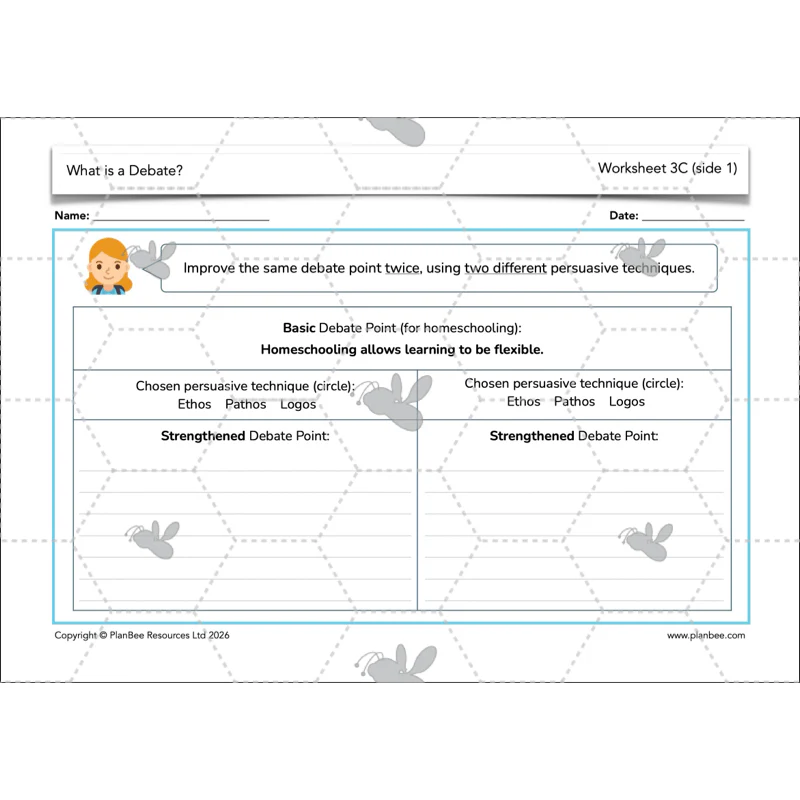
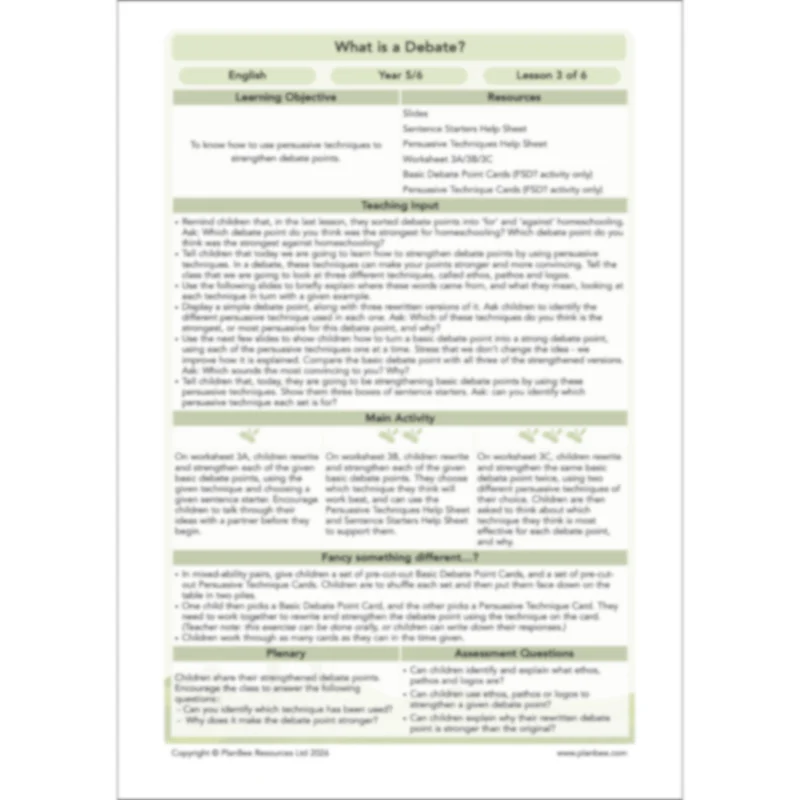
They will be introduced to three persuasive techniques - ethos, pathos and logos - learning where these terms come from and what they mean, using clear explanations and examples. Through teacher modelling, children will explore how a basic debate point can be strengthened in different ways without changing the original idea. In their independent activities, children will practise applying these persuasive techniques to strengthen basic debate points.
This downloadable Debate KS2 pack includes a detailed lesson plan, a set of informative slides for the teaching input, differentiated activity ideas and a range of printable resources to support your class during their independent learning.
What's included:
- Lesson plan
- Slides
- Activity ideas
- Differentiated worksheets
- Persuasive Techniques Help Sheet
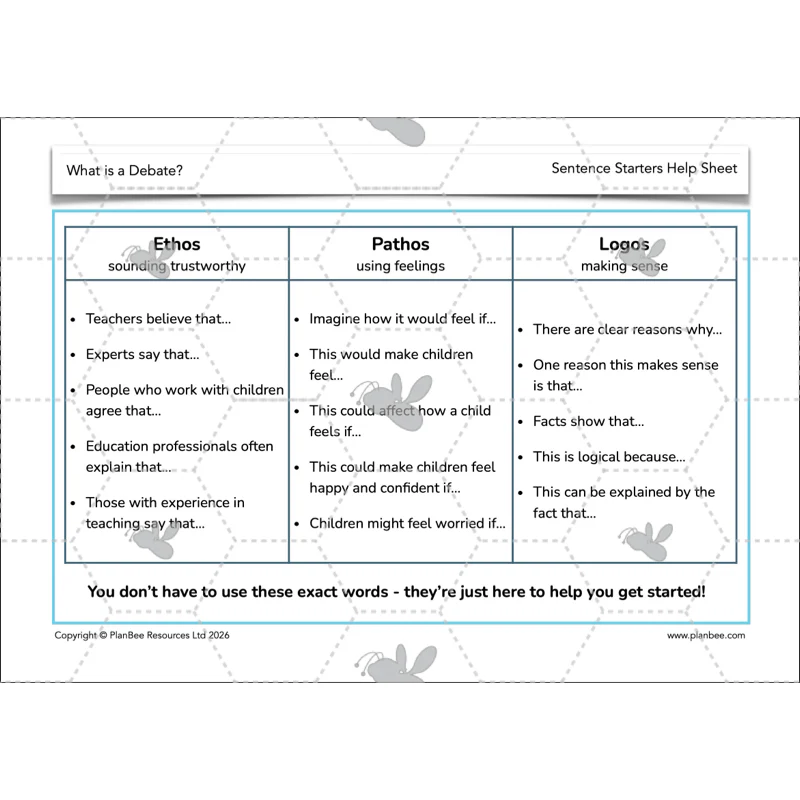
- Sentence Starters Help Sheet
- Basic Debate Point Cards
- Persuasive Technique Cards
Lesson 4: Counter-arguing and Refuting
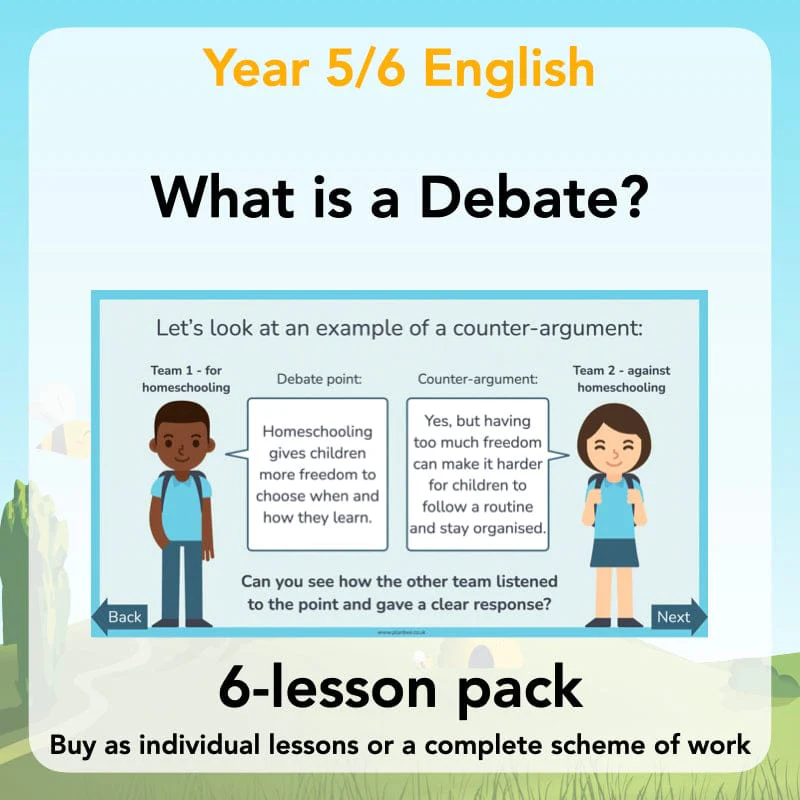
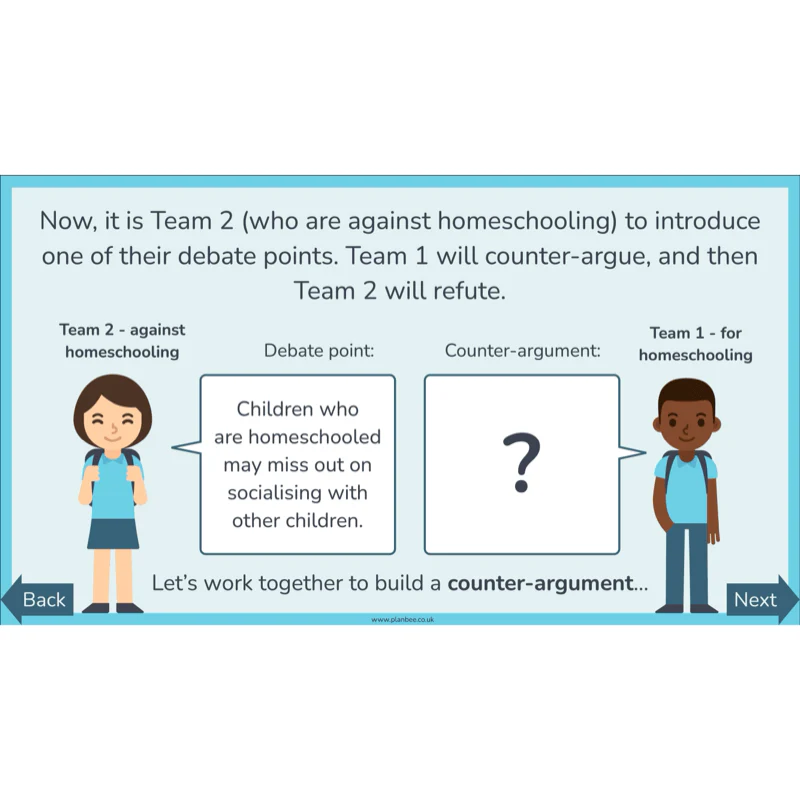
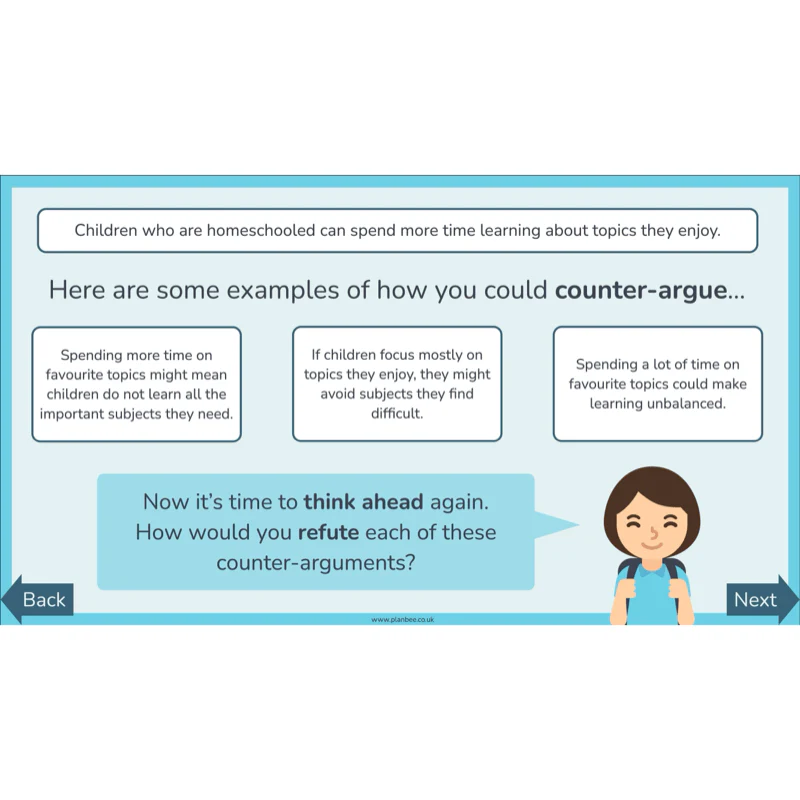
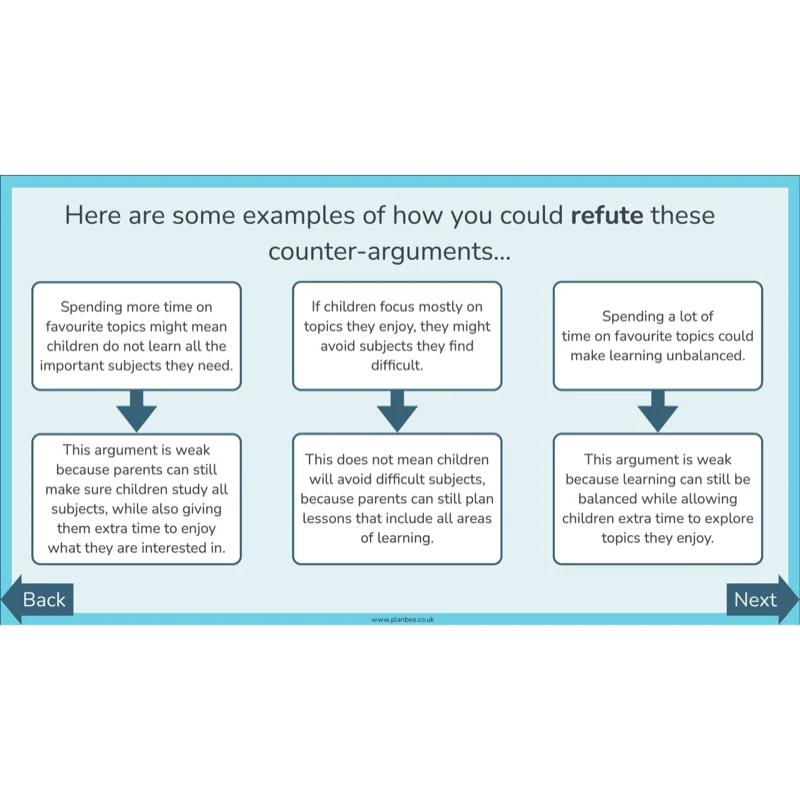
In this lesson, children build on their understanding of debating by learning how to respond to opposing viewpoints using counter-arguments and refutations.
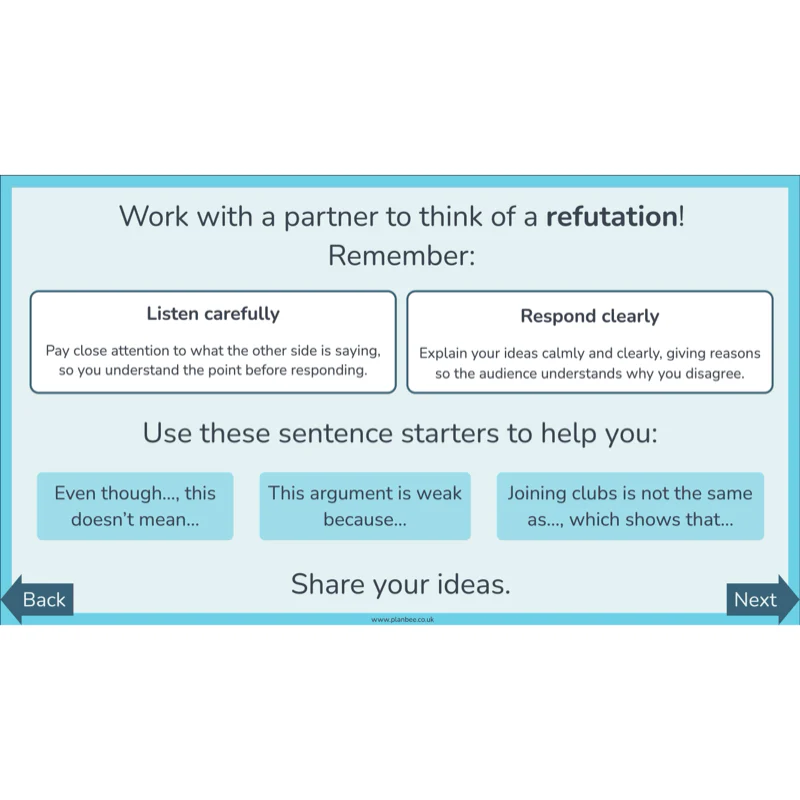
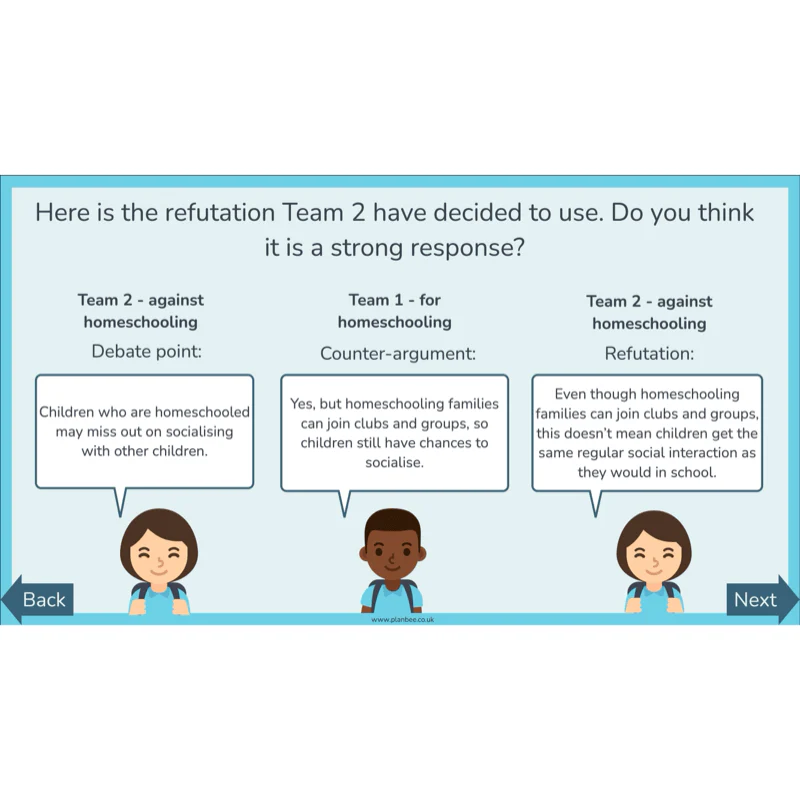
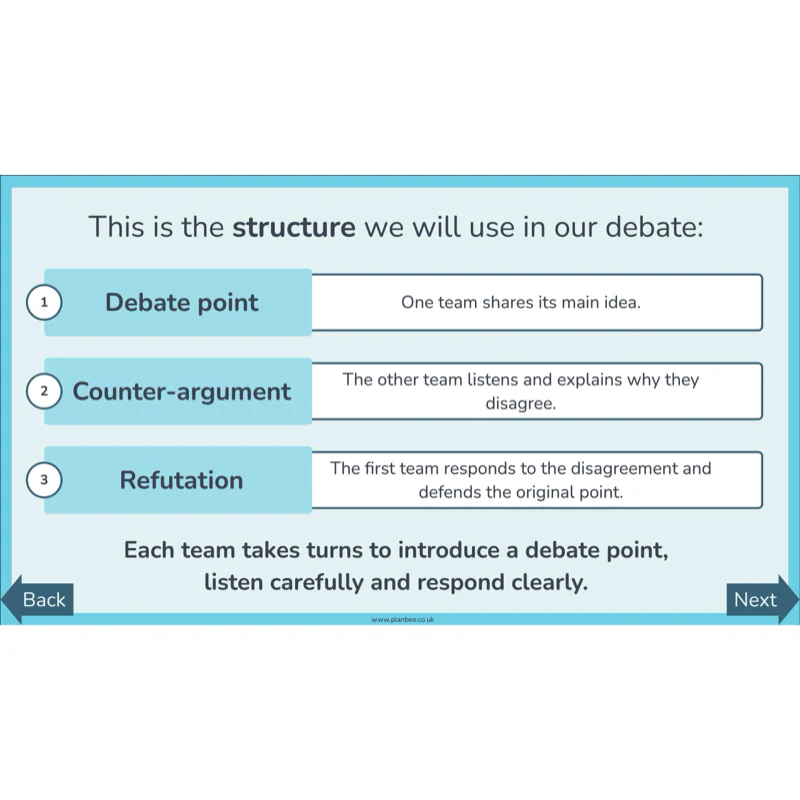
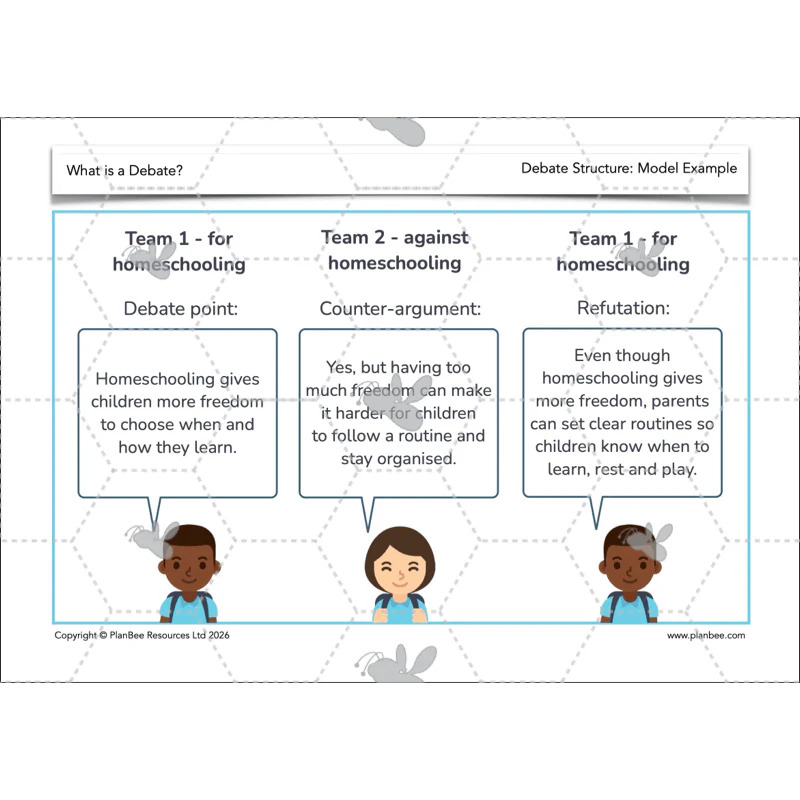
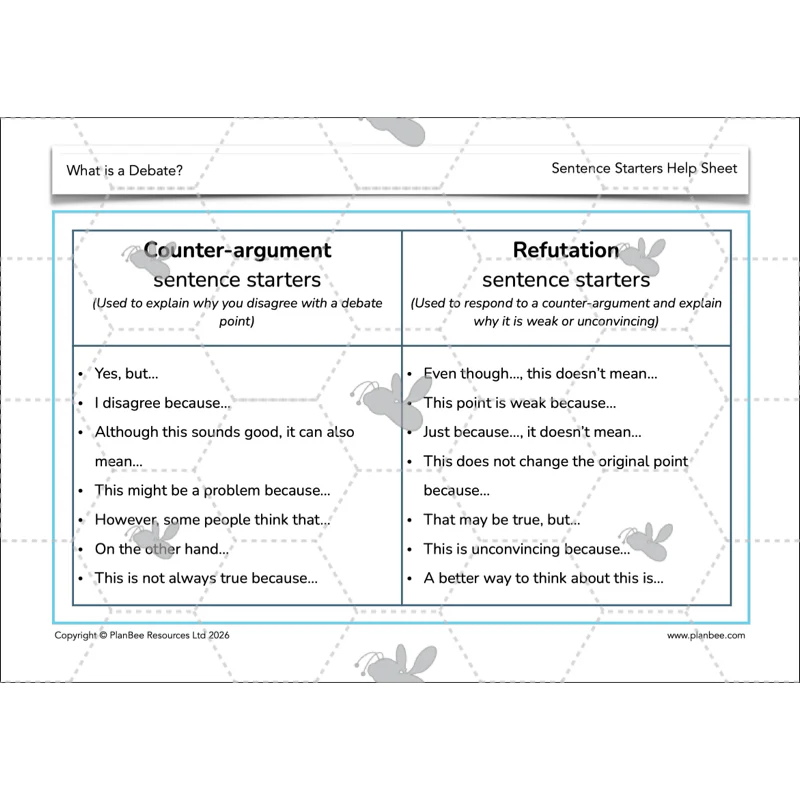
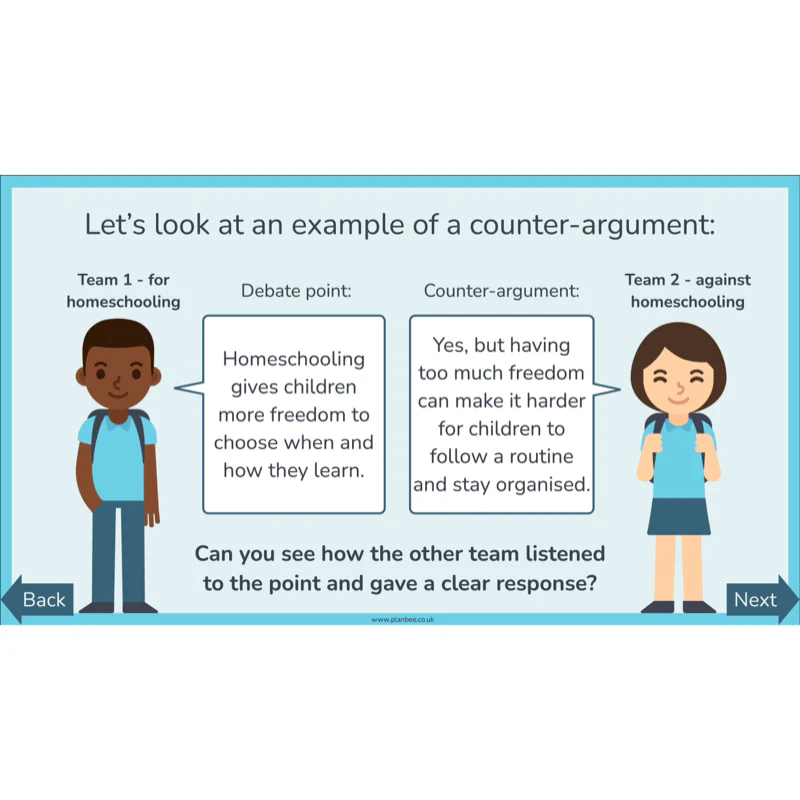
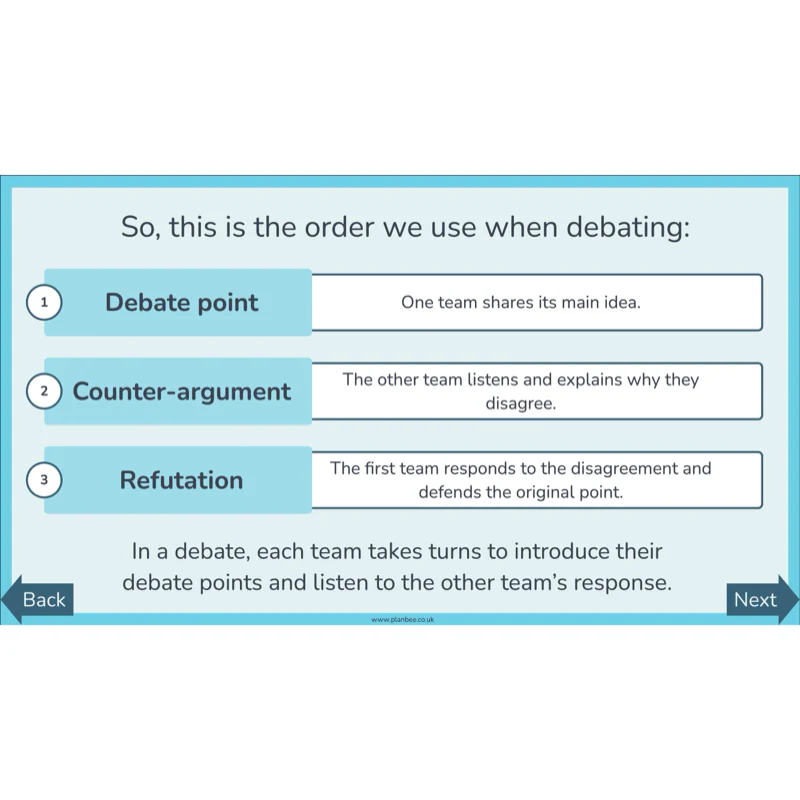
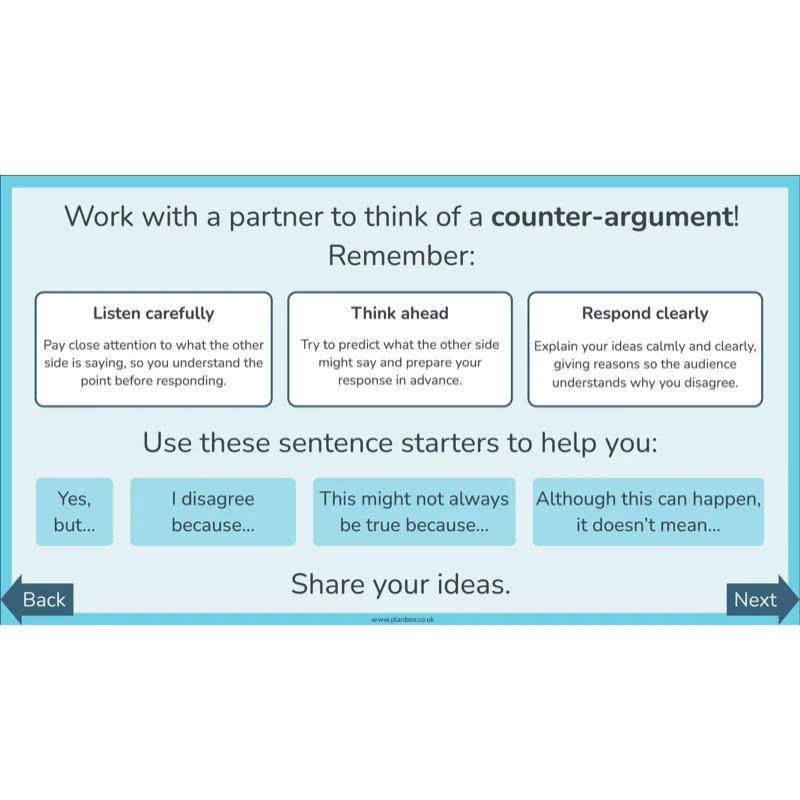
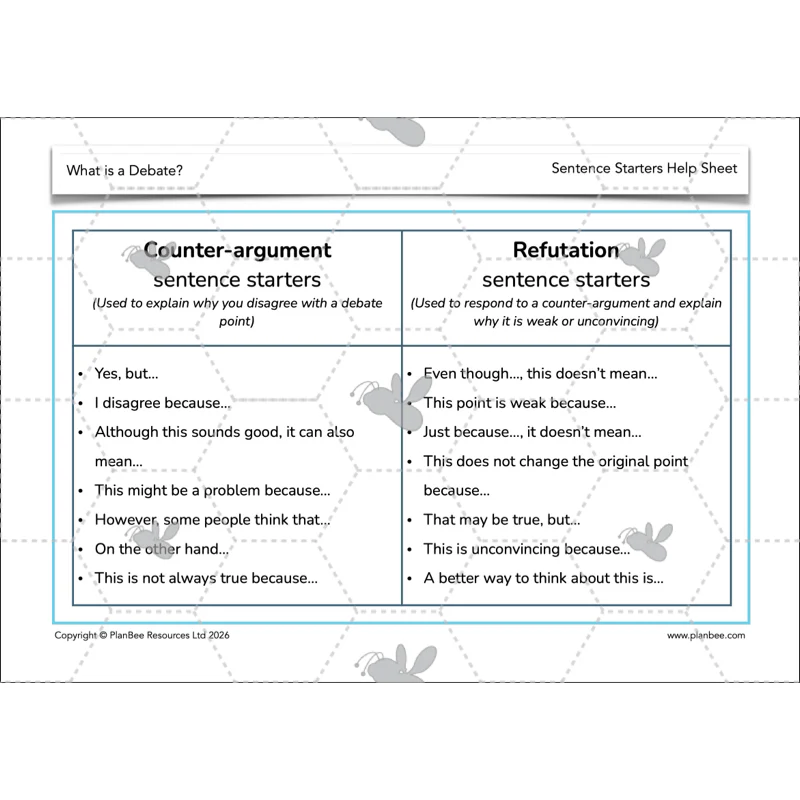
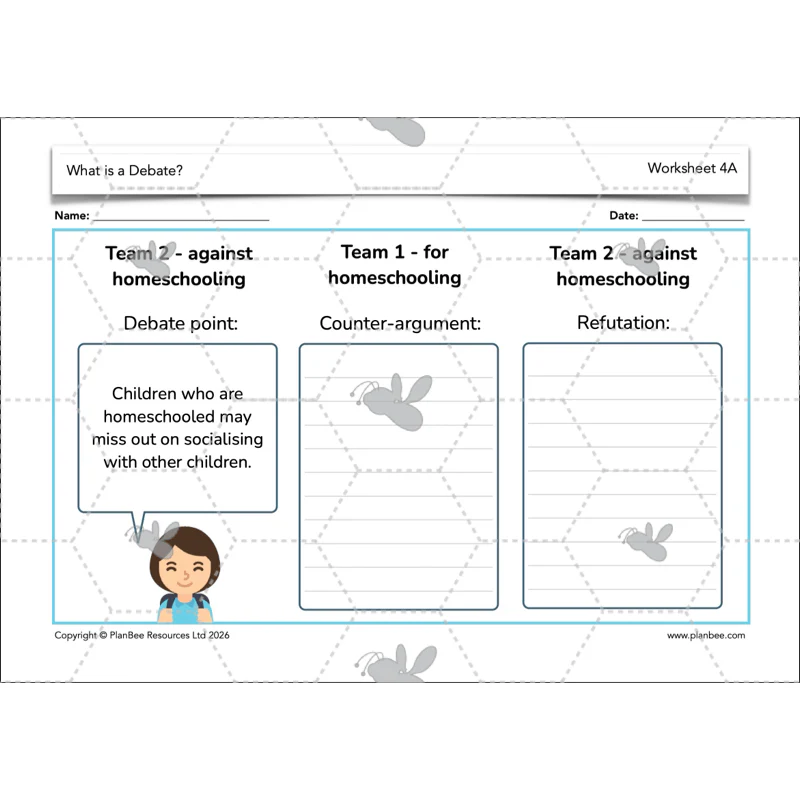
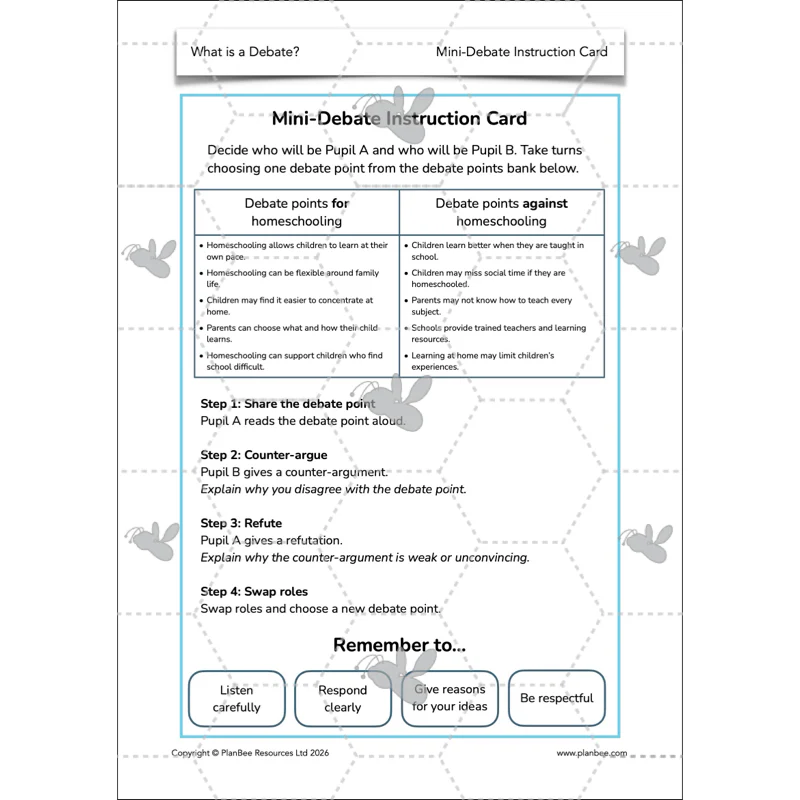
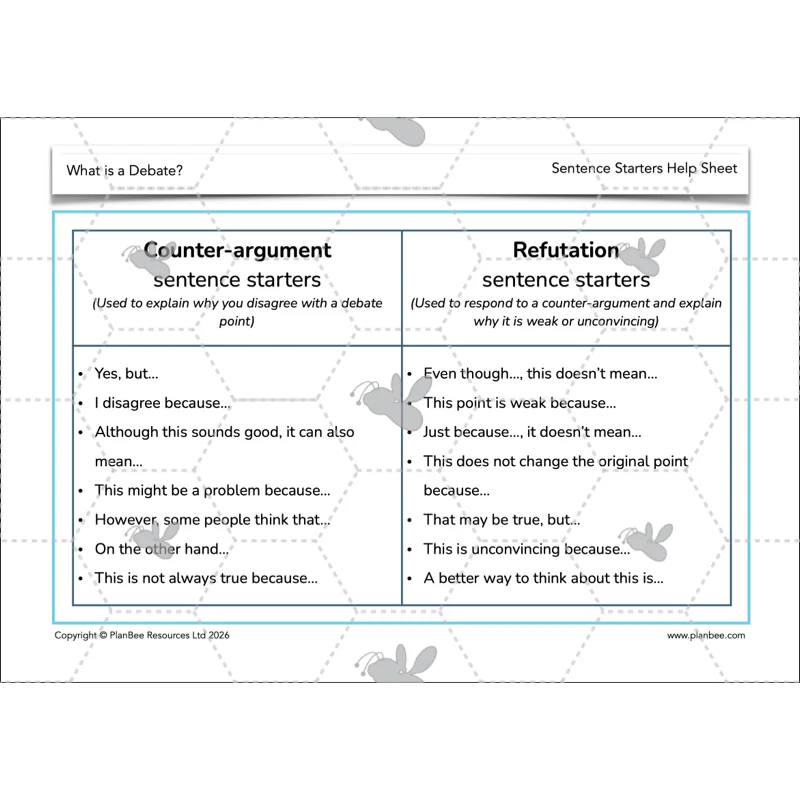
Your class are introduced to counter-arguments as a way of explaining disagreement with another team’s point, and to refutation as a response that explains why a counter-argument is weak or unconvincing. Through teacher modelling, discussion and paired activities, children explore the structure of a debate and practise building counter-arguments and refutations using sentence starters and examples for support.
Everything you need for a successful lesson is in this pack - a detailed plan, a set of informative PDF slides for the teaching input, differentiated activity ideas and a range of printable resources.
What's included:
- Lesson plan
- Slides
- Activity ideas
- Differentiated worksheets
- Debate Structure: Model Example
- Sentence Starters Help Sheet
- Template Debate Sheet
- Mini-Debate Instruction Card
Lesson 5: Preparing for a Debate
In this lesson, children prepare for a class debate by applying the persuasive skills they have learnt.
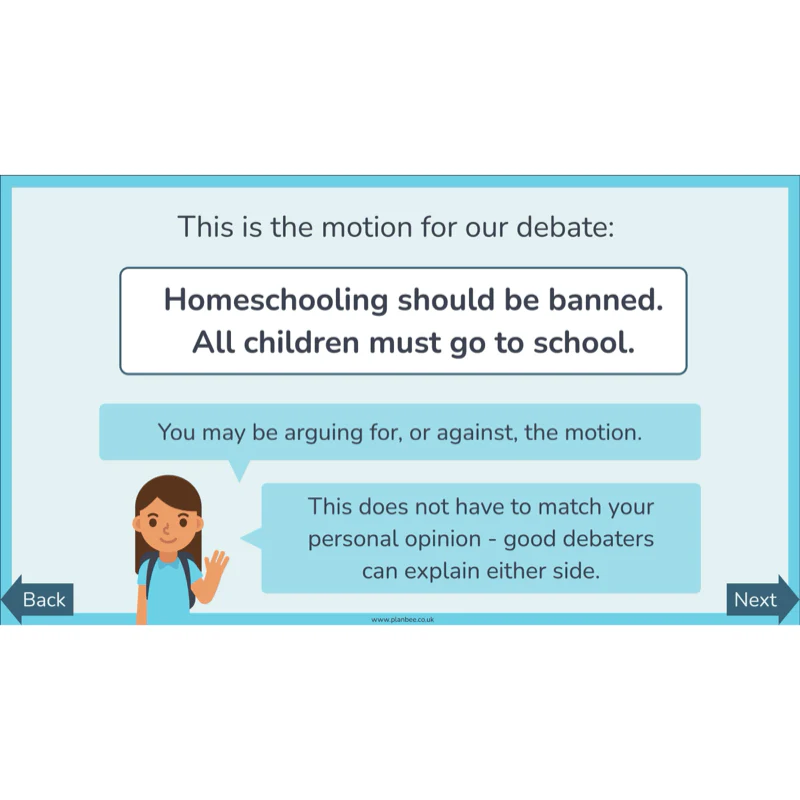
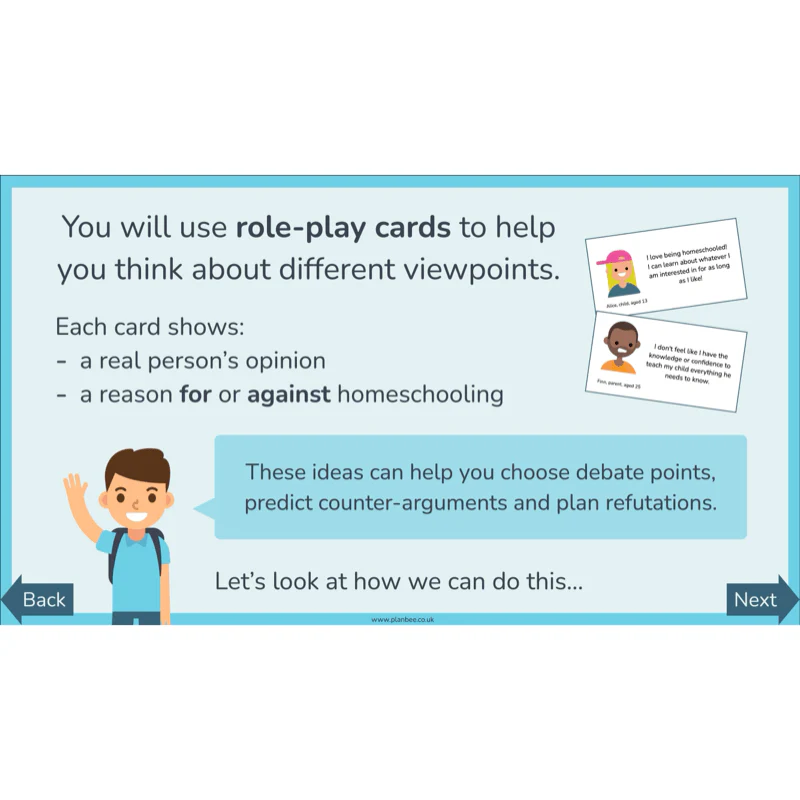
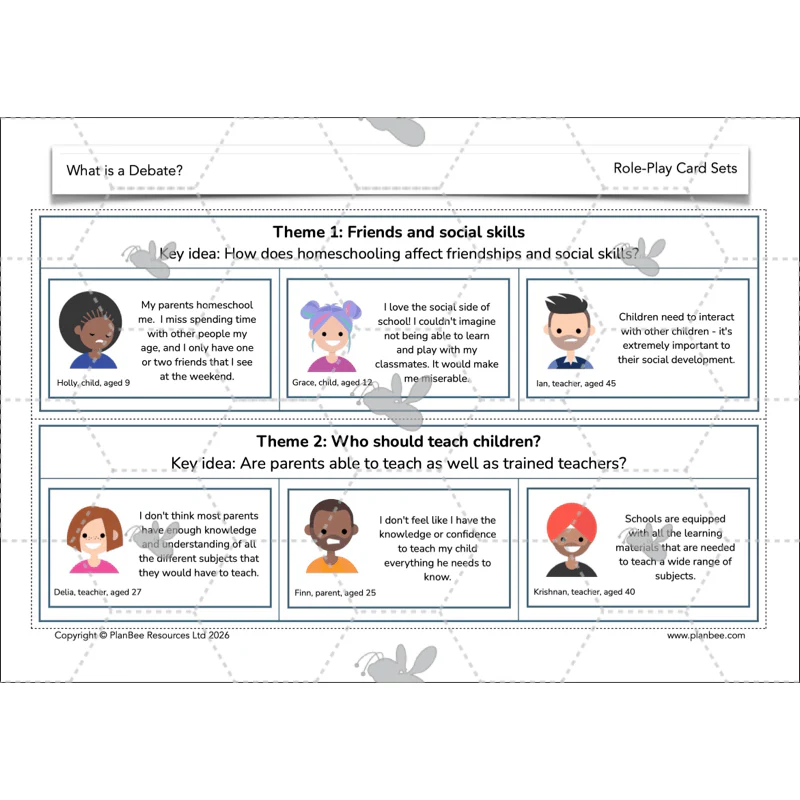
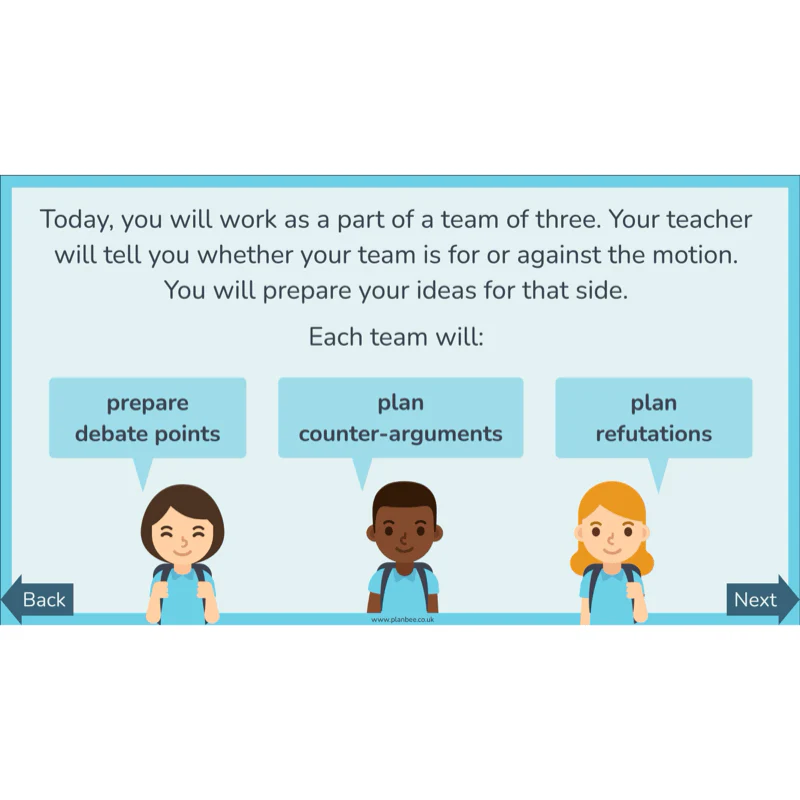
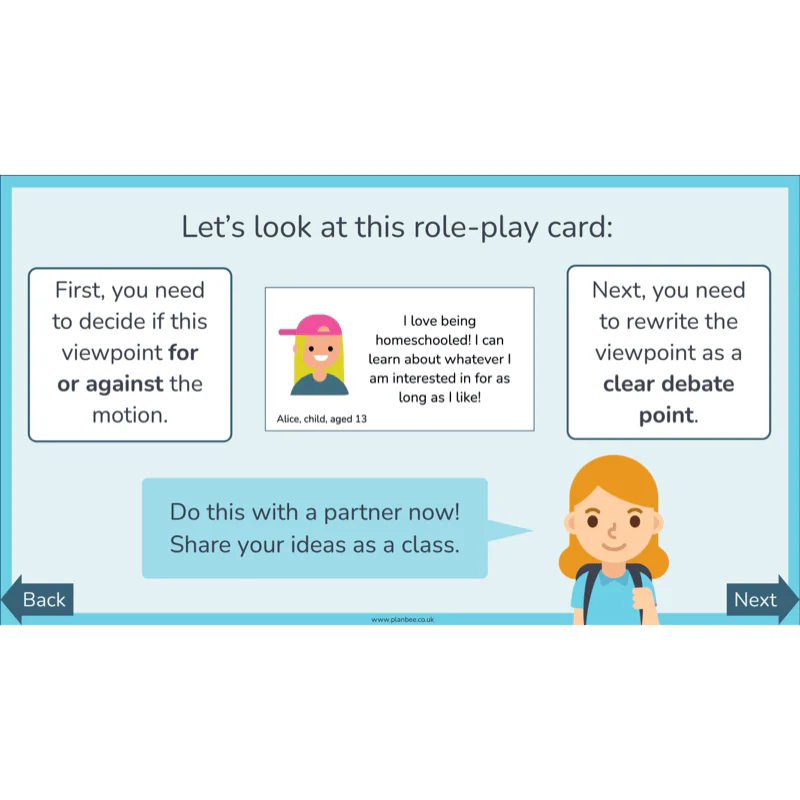
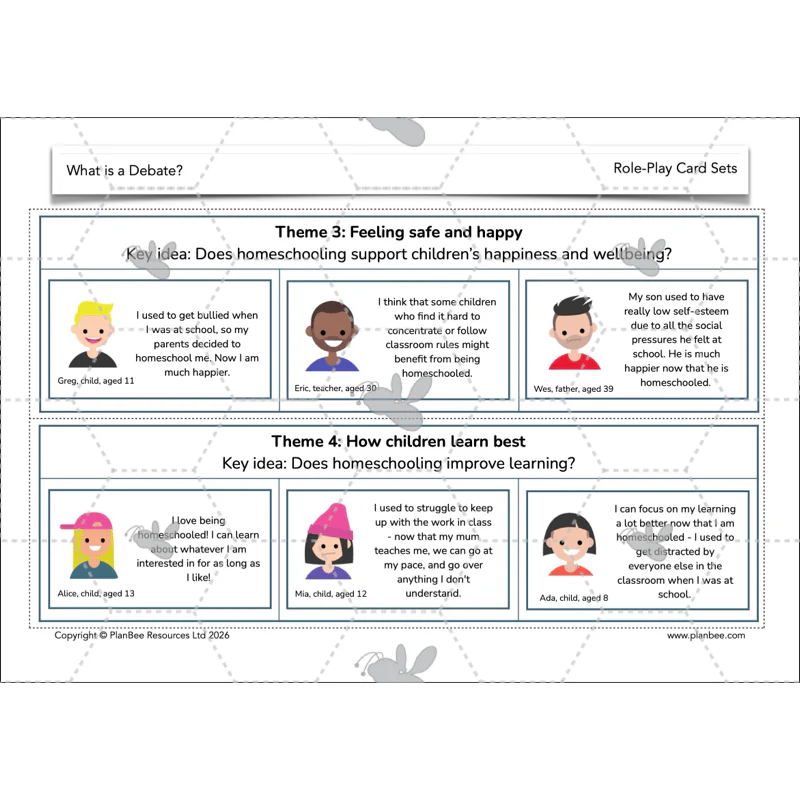
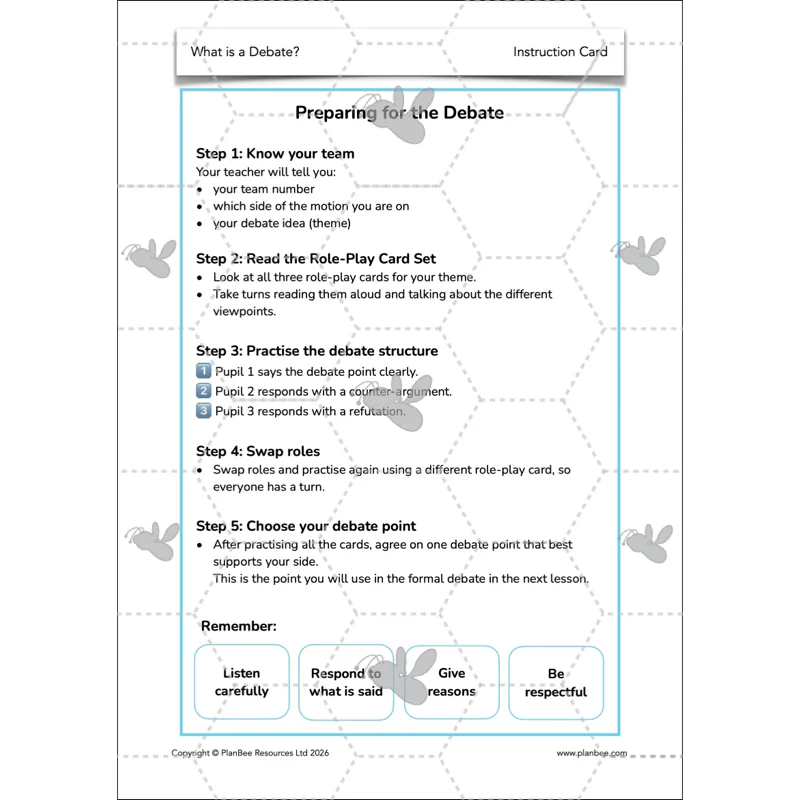
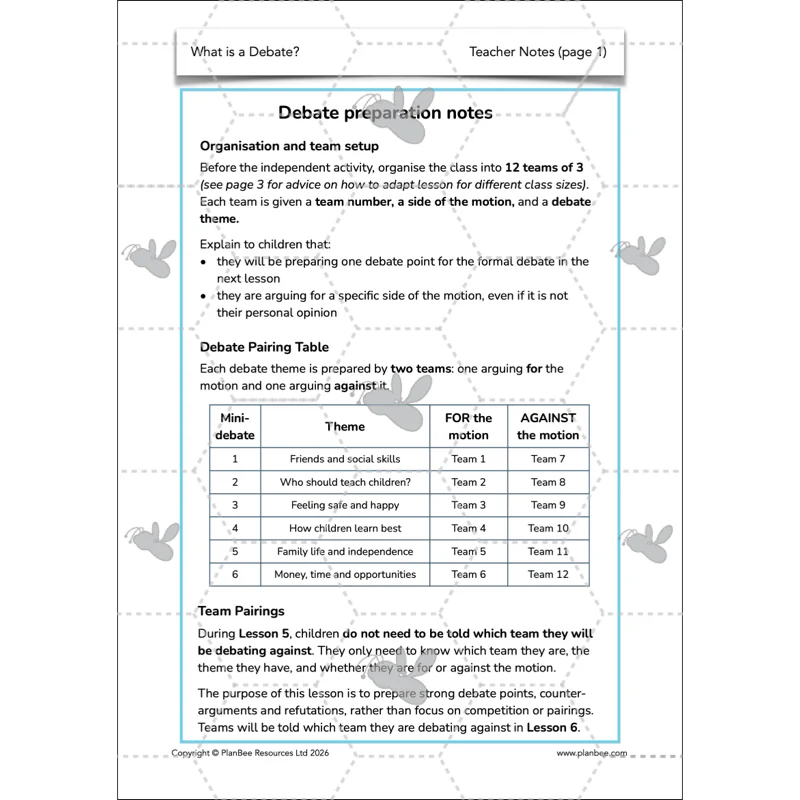
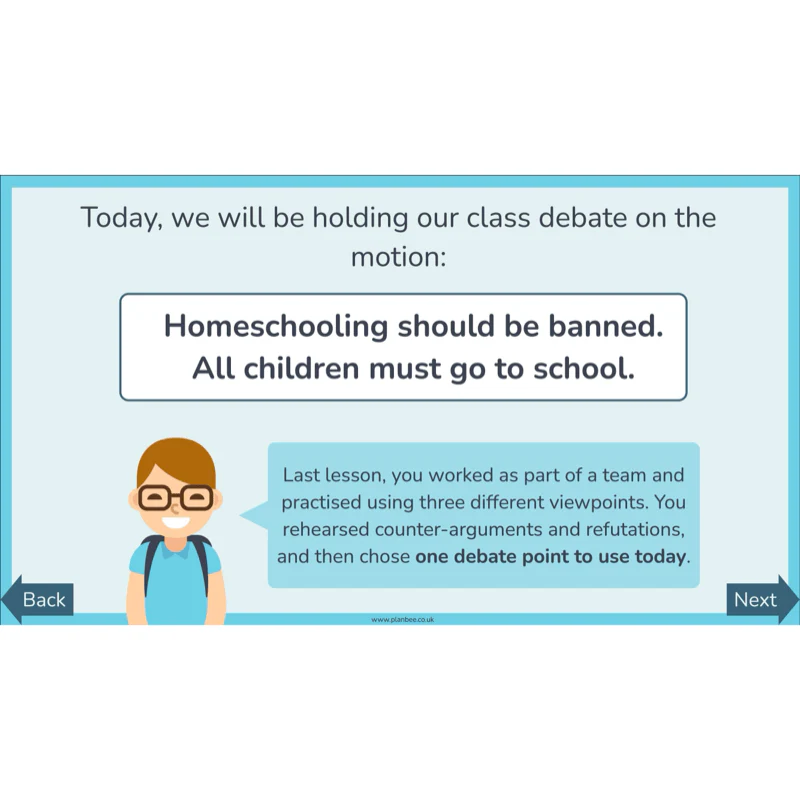
They are introduced to the debate motion and reminded that effective debaters can argue for or against a motion regardless of personal opinion. Through teacher modelling and discussion, children revisit the structure of a debate and explore how role-play cards can be used to generate debate points, counter-arguments and refutations. Working in teams of three, children orally rehearse the debate structure using different viewpoints before agreeing on one debate point to use in the formal debate in the next lesson.
This downloadable Debate KS2 pack includes a detailed lesson plan, a set of informative slides for the teaching input, differentiated activity ideas and a range of printable resources to support your class during their independent learning.
What's included:
- Lesson plan
- Slides
- Activity ideas
- Teacher Notes
- Instruction Card
- Sentence Starters Help Sheet
- Role-Play Card Sets
Lesson 6: Taking part in a Debate
In this final lesson, children take part in a class debate using the debate points they prepared in the previous lesson.
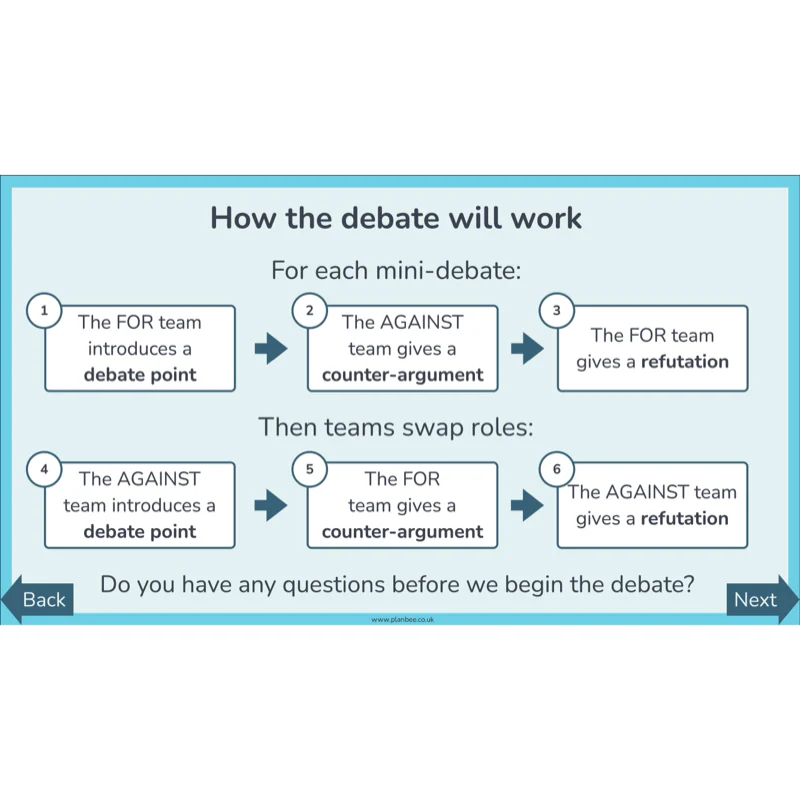
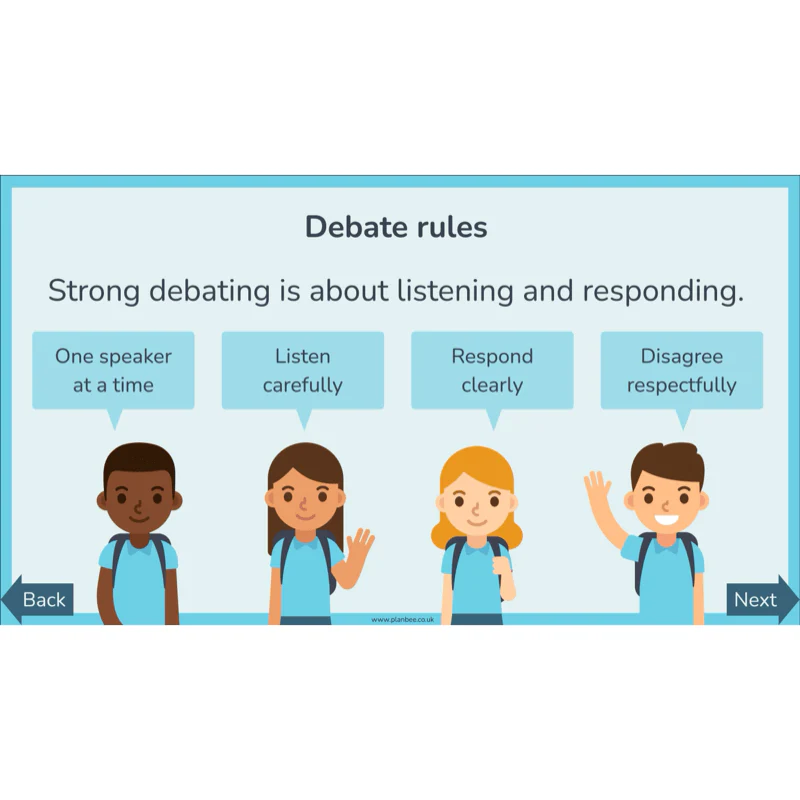
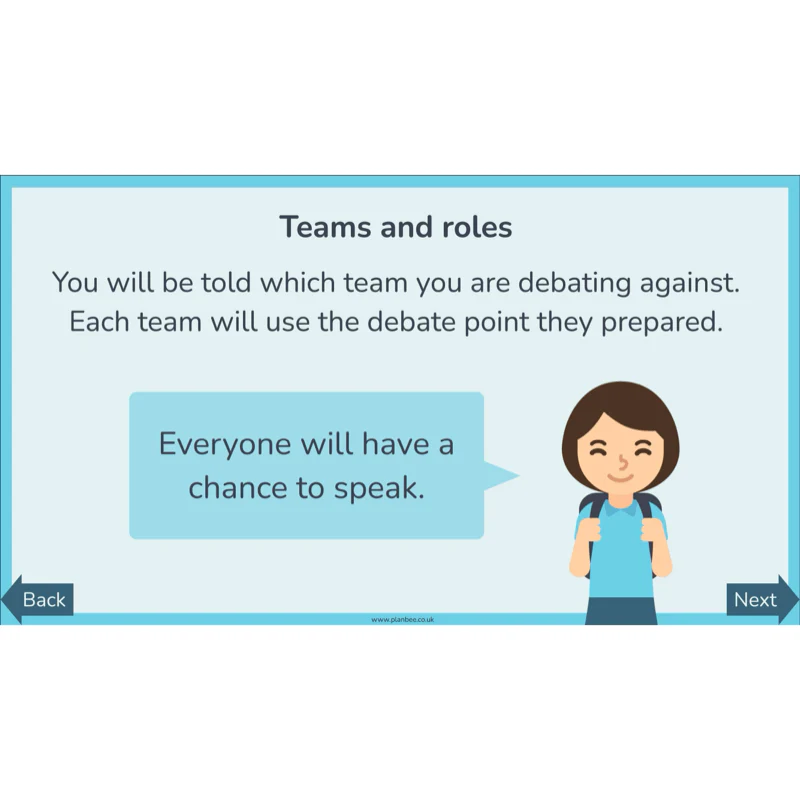
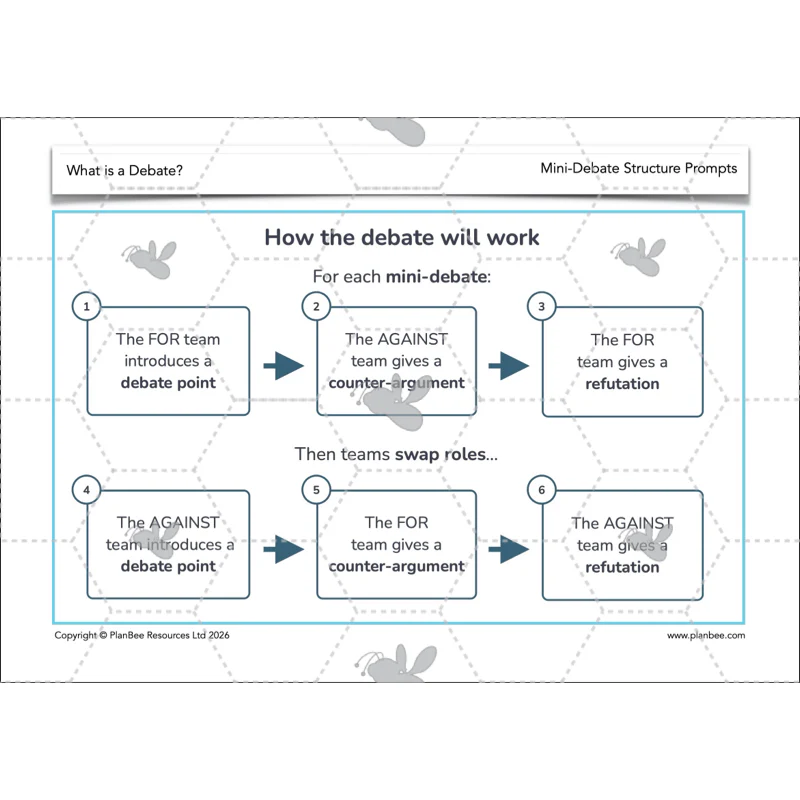
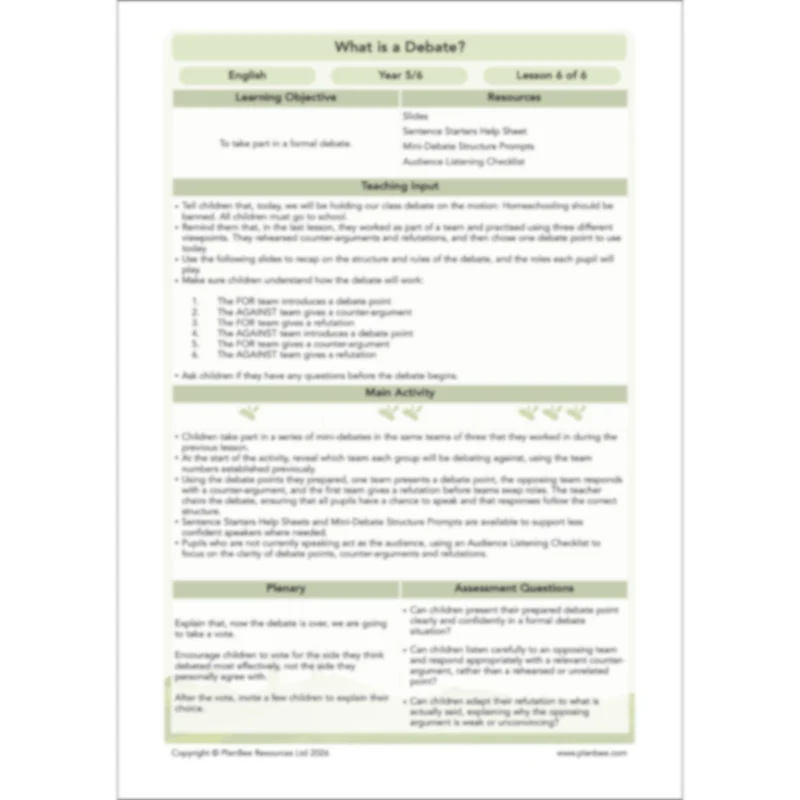
They are reminded of the debate motion and how they worked in teams to explore different viewpoints before selecting one debate point to use. Through teacher-led recap and discussion, children revisit the structure and rules of a formal debate and clarify the roles they will play. Working in the same teams of three, children take part in a series of mini-debates, responding to opposing points with counter-arguments and refutations.
An easy-to-follow plan, a set of engaging PDF slides for the teaching input, differentiated activity ideas and printable resources are all included in this ready-to-teach pack.
What's included:
- Lesson plan
- Slides
- Activity ideas
- Sentence Starters Help Sheet
- Mini-Debate Structure Prompts
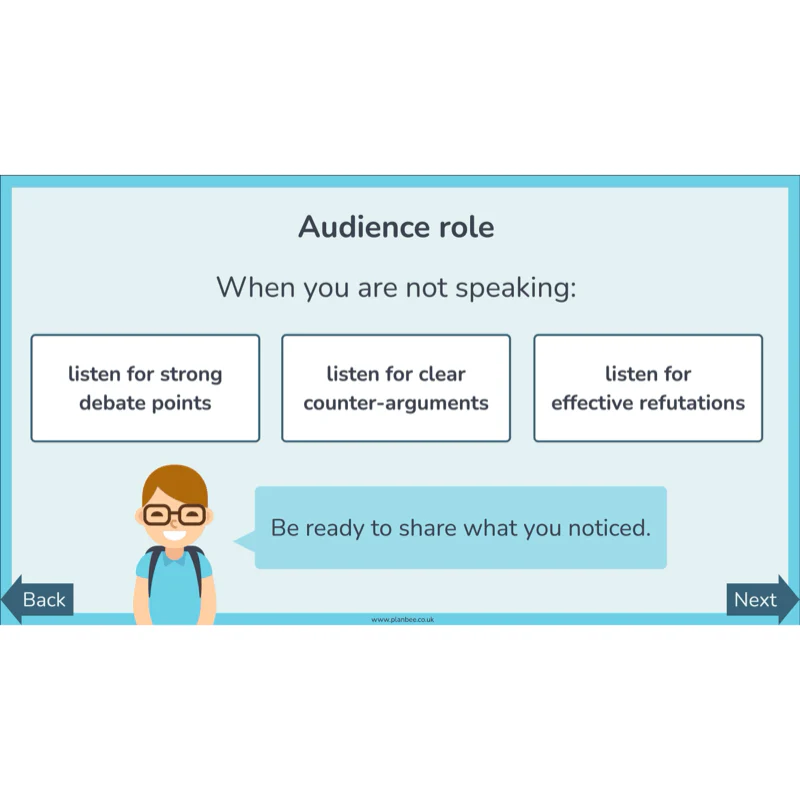
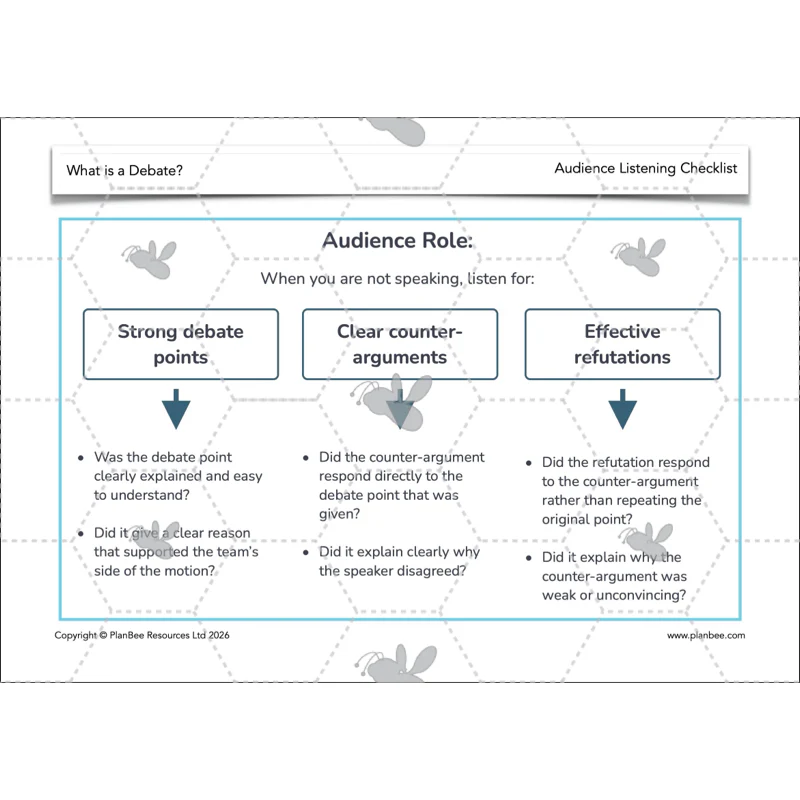
- Audience Listening Checklist
Original: $3.49
-70%$3.49
$1.05More Images
What is a Debate?
Across a series of carefully structured lessons, pupils develop spoken language skills through debate, learning how to build persuasive arguments, respond confidently with counter-arguments and refutations, and take part in a formal class debate on a relevant real-world issue.
Each of the six ready-to-teach lessons includes a detailed plan, a set of engaging and informative PDF slides for the teaching input, differentiated activity ideas and a range of printable resources.
Lesson 1: Exploring a Debate
In this first lesson, children will learn what a debate is and how it is different from an argument. They will explore the rules of debating, look at a simple debate about school uniforms, and discuss the stages of a debate, including opening statements, rebuttals and conclusions.
Children will then work with a partner to think of reasons for and against the motion ‘Homework should be banned’ and prepare for a mini debate, considering both sides - even the side they don’t personally agree with - to develop their thinking, speaking and listening skills.
Everything you need for a successful Debate KS2 lesson is in this pack - a detailed plan, a set of informative PDF slides for the teaching input, differentiated activity ideas and a range of printable resources.
What's included:
- Lesson plan
- Slides
- Activity ideas
- Rules of Debating Poster
- How to Hold a Mini Debate Cards
- Reasons For and Against Homework Sheet
- Sentence Starters Sheet
- For and Against Cards
Lesson 2: Homeschooling vs Traditional School
In this lesson, children will learn what homeschooling is and how it is different from traditional school. They will discuss examples of things that happen at school but not in homeschooling, and consider what homeschooling might offer that school does not.
Children will explore debate points for and against homeschooling using class discussion and slides, thinking carefully, explaining their ideas, and listening to others’ viewpoints. They will then sort and rank these points in independent activities, developing their thinking, speaking and listening skills.
An easy-to-follow plan, a set of engaging PDF slides for the teaching input, differentiated activity ideas and printable resources are all included in this ready-to-teach pack.
What's included:
- Lesson plan
- Slides
- Activity ideas
- Debate Point Cards
- Discussion Question Cards
Lesson 3: Persuasive Techniques
In this lesson, children will build on their understanding of debating by learning how to strengthen debate points using persuasive techniques.
They will be introduced to three persuasive techniques - ethos, pathos and logos - learning where these terms come from and what they mean, using clear explanations and examples. Through teacher modelling, children will explore how a basic debate point can be strengthened in different ways without changing the original idea. In their independent activities, children will practise applying these persuasive techniques to strengthen basic debate points.
This downloadable Debate KS2 pack includes a detailed lesson plan, a set of informative slides for the teaching input, differentiated activity ideas and a range of printable resources to support your class during their independent learning.
What's included:
- Lesson plan
- Slides
- Activity ideas
- Differentiated worksheets
- Persuasive Techniques Help Sheet
- Sentence Starters Help Sheet
- Basic Debate Point Cards
- Persuasive Technique Cards
Lesson 4: Counter-arguing and Refuting
In this lesson, children build on their understanding of debating by learning how to respond to opposing viewpoints using counter-arguments and refutations.
Your class are introduced to counter-arguments as a way of explaining disagreement with another team’s point, and to refutation as a response that explains why a counter-argument is weak or unconvincing. Through teacher modelling, discussion and paired activities, children explore the structure of a debate and practise building counter-arguments and refutations using sentence starters and examples for support.
Everything you need for a successful lesson is in this pack - a detailed plan, a set of informative PDF slides for the teaching input, differentiated activity ideas and a range of printable resources.
What's included:
- Lesson plan
- Slides
- Activity ideas
- Differentiated worksheets
- Debate Structure: Model Example
- Sentence Starters Help Sheet
- Template Debate Sheet
- Mini-Debate Instruction Card
Lesson 5: Preparing for a Debate
In this lesson, children prepare for a class debate by applying the persuasive skills they have learnt.
They are introduced to the debate motion and reminded that effective debaters can argue for or against a motion regardless of personal opinion. Through teacher modelling and discussion, children revisit the structure of a debate and explore how role-play cards can be used to generate debate points, counter-arguments and refutations. Working in teams of three, children orally rehearse the debate structure using different viewpoints before agreeing on one debate point to use in the formal debate in the next lesson.
This downloadable Debate KS2 pack includes a detailed lesson plan, a set of informative slides for the teaching input, differentiated activity ideas and a range of printable resources to support your class during their independent learning.
What's included:
- Lesson plan
- Slides
- Activity ideas
- Teacher Notes
- Instruction Card
- Sentence Starters Help Sheet
- Role-Play Card Sets
Lesson 6: Taking part in a Debate
In this final lesson, children take part in a class debate using the debate points they prepared in the previous lesson.
They are reminded of the debate motion and how they worked in teams to explore different viewpoints before selecting one debate point to use. Through teacher-led recap and discussion, children revisit the structure and rules of a formal debate and clarify the roles they will play. Working in the same teams of three, children take part in a series of mini-debates, responding to opposing points with counter-arguments and refutations.
An easy-to-follow plan, a set of engaging PDF slides for the teaching input, differentiated activity ideas and printable resources are all included in this ready-to-teach pack.
What's included:
- Lesson plan
- Slides
- Activity ideas
- Sentence Starters Help Sheet
- Mini-Debate Structure Prompts
- Audience Listening Checklist
Product Information
Product Information
Shipping & Returns
Shipping & Returns
Description
Across a series of carefully structured lessons, pupils develop spoken language skills through debate, learning how to build persuasive arguments, respond confidently with counter-arguments and refutations, and take part in a formal class debate on a relevant real-world issue.
Each of the six ready-to-teach lessons includes a detailed plan, a set of engaging and informative PDF slides for the teaching input, differentiated activity ideas and a range of printable resources.
Lesson 1: Exploring a Debate
In this first lesson, children will learn what a debate is and how it is different from an argument. They will explore the rules of debating, look at a simple debate about school uniforms, and discuss the stages of a debate, including opening statements, rebuttals and conclusions.
Children will then work with a partner to think of reasons for and against the motion ‘Homework should be banned’ and prepare for a mini debate, considering both sides - even the side they don’t personally agree with - to develop their thinking, speaking and listening skills.
Everything you need for a successful Debate KS2 lesson is in this pack - a detailed plan, a set of informative PDF slides for the teaching input, differentiated activity ideas and a range of printable resources.
What's included:
- Lesson plan
- Slides
- Activity ideas
- Rules of Debating Poster
- How to Hold a Mini Debate Cards
- Reasons For and Against Homework Sheet
- Sentence Starters Sheet
- For and Against Cards
Lesson 2: Homeschooling vs Traditional School
In this lesson, children will learn what homeschooling is and how it is different from traditional school. They will discuss examples of things that happen at school but not in homeschooling, and consider what homeschooling might offer that school does not.
Children will explore debate points for and against homeschooling using class discussion and slides, thinking carefully, explaining their ideas, and listening to others’ viewpoints. They will then sort and rank these points in independent activities, developing their thinking, speaking and listening skills.
An easy-to-follow plan, a set of engaging PDF slides for the teaching input, differentiated activity ideas and printable resources are all included in this ready-to-teach pack.
What's included:
- Lesson plan
- Slides
- Activity ideas
- Debate Point Cards
- Discussion Question Cards
Lesson 3: Persuasive Techniques
In this lesson, children will build on their understanding of debating by learning how to strengthen debate points using persuasive techniques.
They will be introduced to three persuasive techniques - ethos, pathos and logos - learning where these terms come from and what they mean, using clear explanations and examples. Through teacher modelling, children will explore how a basic debate point can be strengthened in different ways without changing the original idea. In their independent activities, children will practise applying these persuasive techniques to strengthen basic debate points.
This downloadable Debate KS2 pack includes a detailed lesson plan, a set of informative slides for the teaching input, differentiated activity ideas and a range of printable resources to support your class during their independent learning.
What's included:
- Lesson plan
- Slides
- Activity ideas
- Differentiated worksheets
- Persuasive Techniques Help Sheet
- Sentence Starters Help Sheet
- Basic Debate Point Cards
- Persuasive Technique Cards
Lesson 4: Counter-arguing and Refuting
In this lesson, children build on their understanding of debating by learning how to respond to opposing viewpoints using counter-arguments and refutations.
Your class are introduced to counter-arguments as a way of explaining disagreement with another team’s point, and to refutation as a response that explains why a counter-argument is weak or unconvincing. Through teacher modelling, discussion and paired activities, children explore the structure of a debate and practise building counter-arguments and refutations using sentence starters and examples for support.
Everything you need for a successful lesson is in this pack - a detailed plan, a set of informative PDF slides for the teaching input, differentiated activity ideas and a range of printable resources.
What's included:
- Lesson plan
- Slides
- Activity ideas
- Differentiated worksheets
- Debate Structure: Model Example
- Sentence Starters Help Sheet
- Template Debate Sheet
- Mini-Debate Instruction Card
Lesson 5: Preparing for a Debate
In this lesson, children prepare for a class debate by applying the persuasive skills they have learnt.
They are introduced to the debate motion and reminded that effective debaters can argue for or against a motion regardless of personal opinion. Through teacher modelling and discussion, children revisit the structure of a debate and explore how role-play cards can be used to generate debate points, counter-arguments and refutations. Working in teams of three, children orally rehearse the debate structure using different viewpoints before agreeing on one debate point to use in the formal debate in the next lesson.
This downloadable Debate KS2 pack includes a detailed lesson plan, a set of informative slides for the teaching input, differentiated activity ideas and a range of printable resources to support your class during their independent learning.
What's included:
- Lesson plan
- Slides
- Activity ideas
- Teacher Notes
- Instruction Card
- Sentence Starters Help Sheet
- Role-Play Card Sets
Lesson 6: Taking part in a Debate
In this final lesson, children take part in a class debate using the debate points they prepared in the previous lesson.
They are reminded of the debate motion and how they worked in teams to explore different viewpoints before selecting one debate point to use. Through teacher-led recap and discussion, children revisit the structure and rules of a formal debate and clarify the roles they will play. Working in the same teams of three, children take part in a series of mini-debates, responding to opposing points with counter-arguments and refutations.
An easy-to-follow plan, a set of engaging PDF slides for the teaching input, differentiated activity ideas and printable resources are all included in this ready-to-teach pack.
What's included:
- Lesson plan
- Slides
- Activity ideas
- Sentence Starters Help Sheet
- Mini-Debate Structure Prompts
- Audience Listening Checklist