Who were the Ancient Egyptians?
Delve into the fascinating world of the ancient Egyptians with this fully-prepared, ready-to-teach Ancient Egyptians KS2 scheme of work. Designed to engage and inform, this seven-lesson series explores all aspects of ancient Egyptian life from powerful pharaohs and the mysterious pyramids to everyday people, incredible inventions and the secrets of mummification. Throughout the series of seven fully-prepared lessons, your Year 3 or Year 4 children will learn to use historical sources, develop enquiry skills and understand how this ancient civilisation has influenced the modern world.
This Ancient Egyptians KS2 scheme includes detailed lesson plans, differentiated activities, slides, printable resources and assessments, saving you hours of planning time. Whether you're introducing ancient civilisations for the first time or building on prior knowledge, ‘Who were the Ancient Egyptians?’ is the ideal KS2 scheme to bring history to life in your classroom.
A Knowledge Organiser is available to support the learning in this scheme. It is included in the Complete Series download or can be purchased individually.
You may also like our Ancient Egyptians Topic Bundle which has four fully-prepared schemes of work all themed around ancient Egypt!
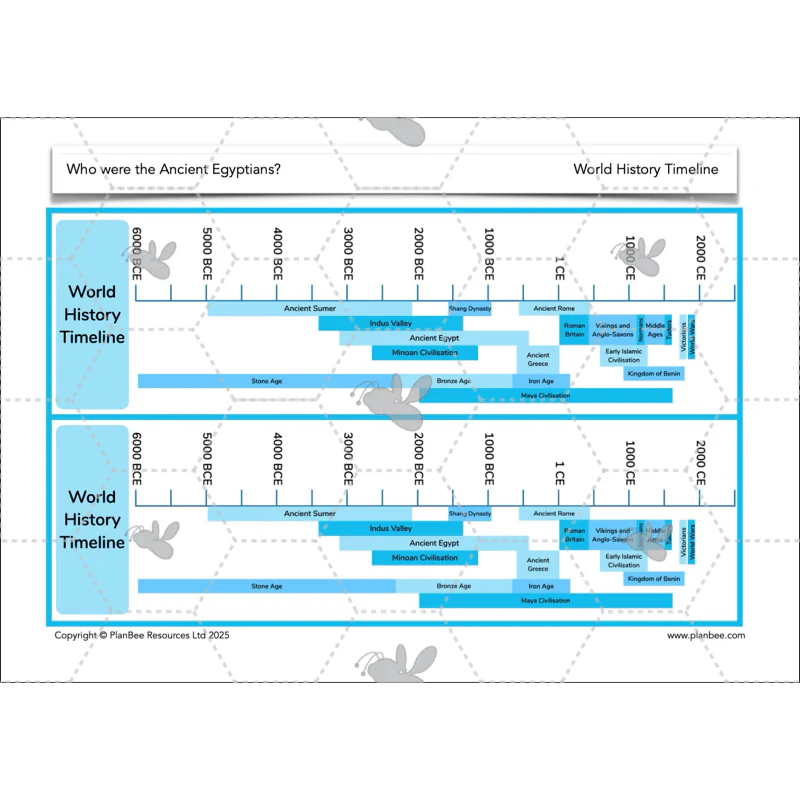
World History Timeline
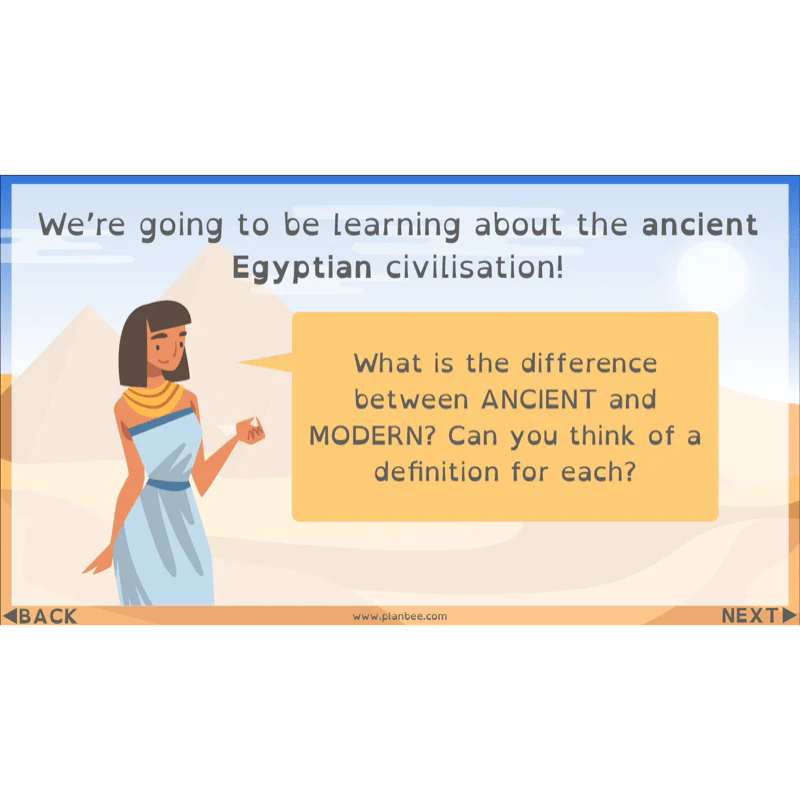
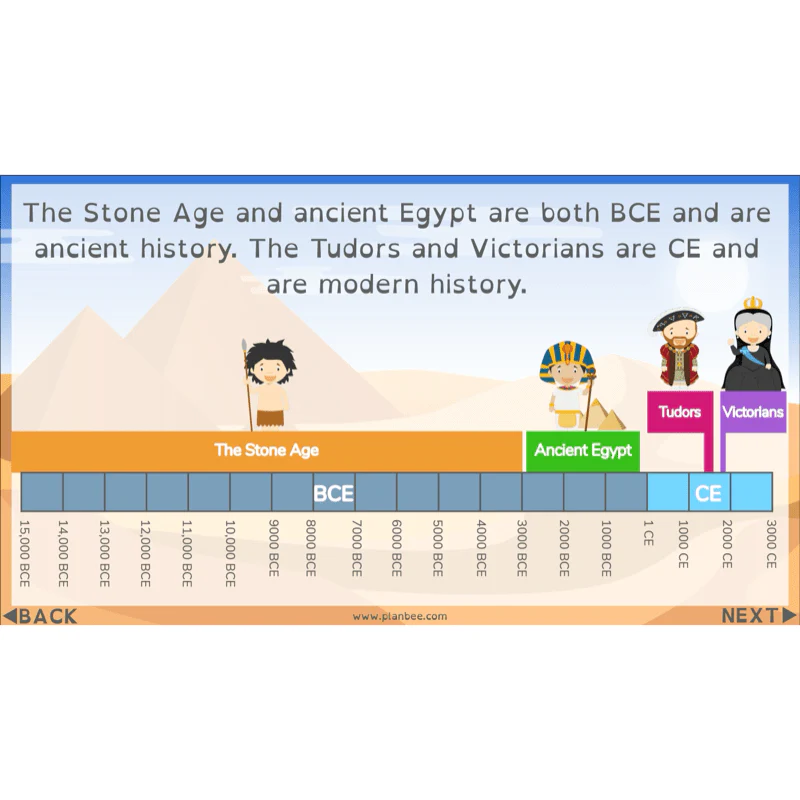
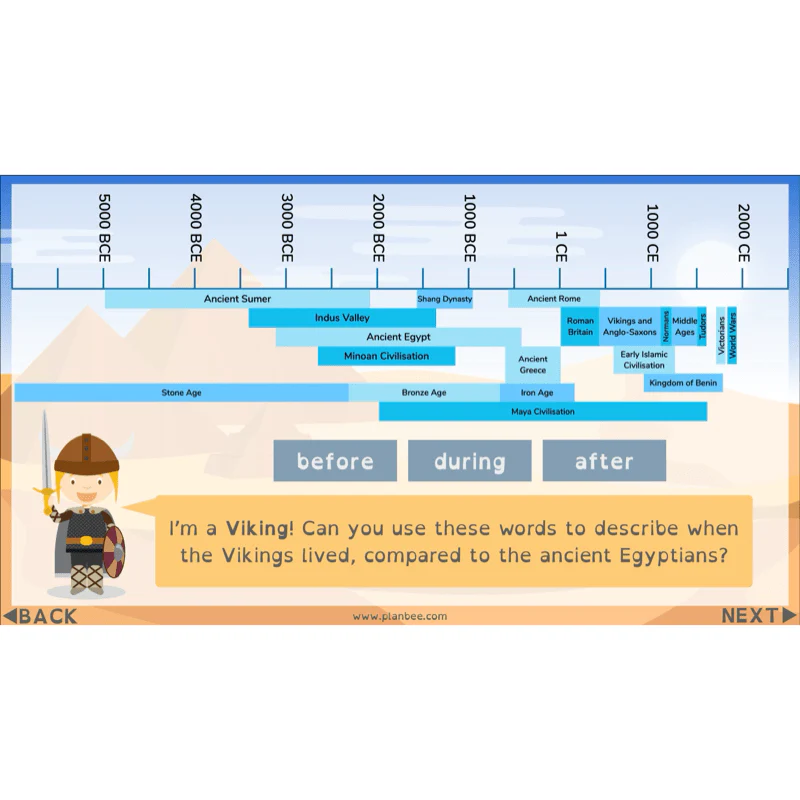
This Ancient Egyptians scheme of work for KS2 starts by defining the terms ‘ancient’ and ‘modern’, and clarifying the difference between BCE and CE. Children will then have the chance to explore world history timelines to sort ancient and modern civilisations chronologically, and compare periods in relation to ancient Egypt.
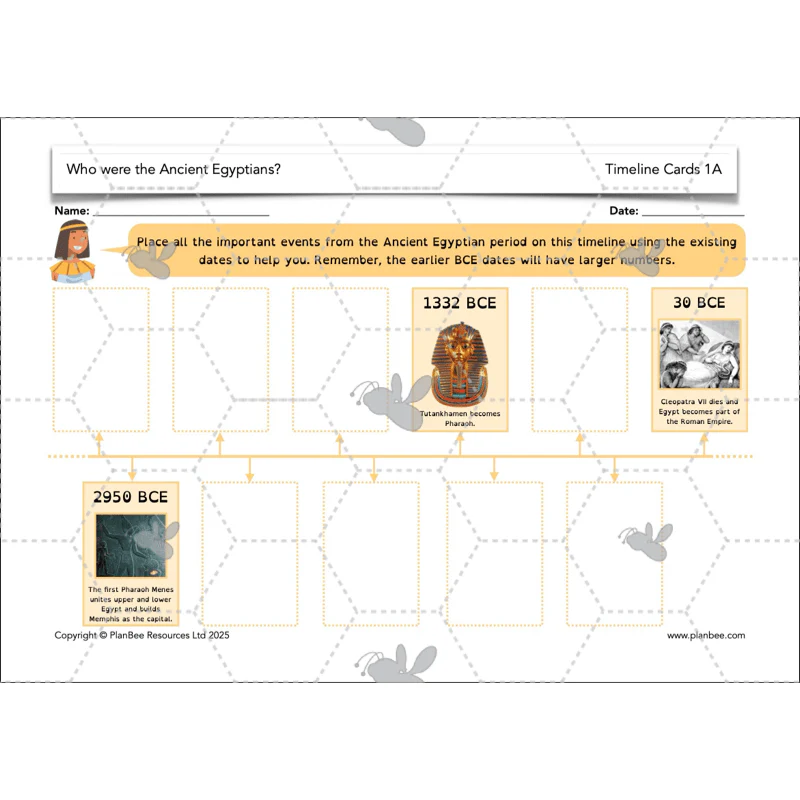
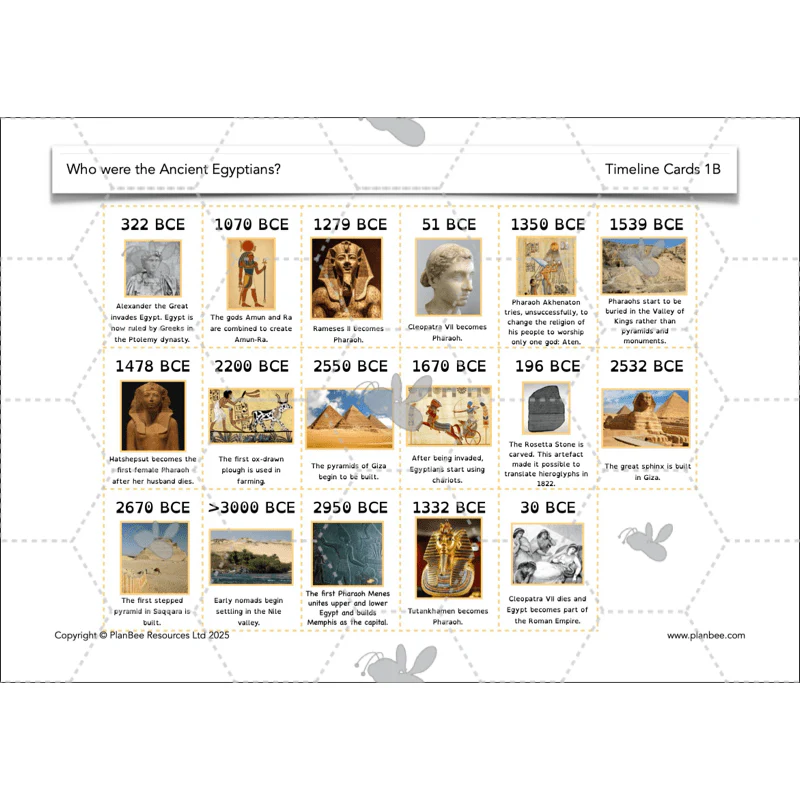
During their independent activities, children can choose to consolidate their understanding of the BCE/CE system by creating a timeline of key events in ancient Egyptian civilisation using differentiated event cards. Alternatively, they can extend their chronological understanding by exploring and sequencing a range of historical time periods, placing ancient Egypt in a wider historical context.
What's included:
- Lesson plan
- Slides
- Activity ideas
- Timeline Sheet
- Differentiated timeline cards
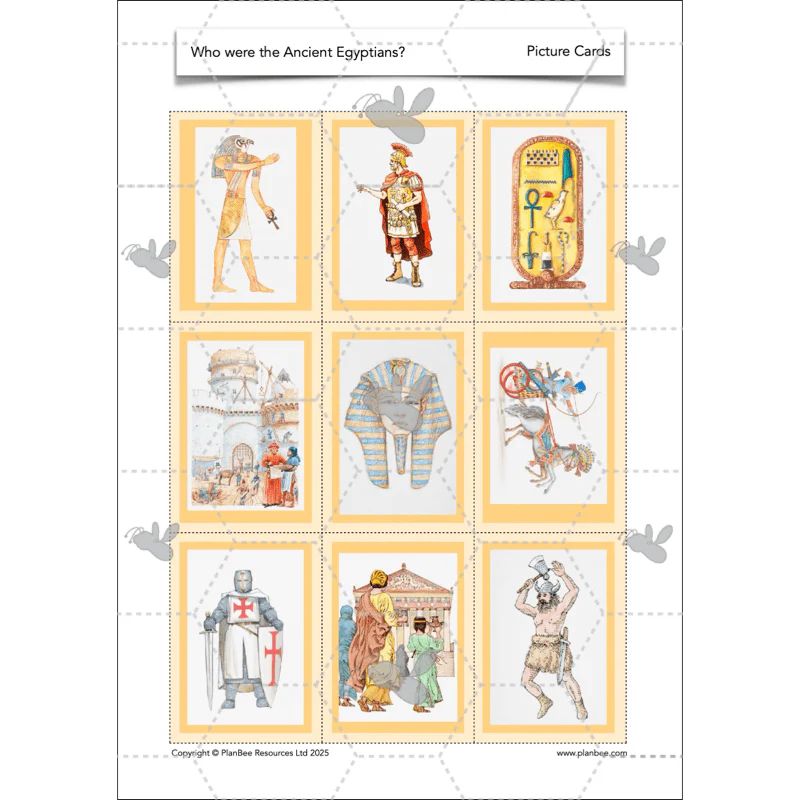
- Picture Cards
- World History Timeline
Artefacts
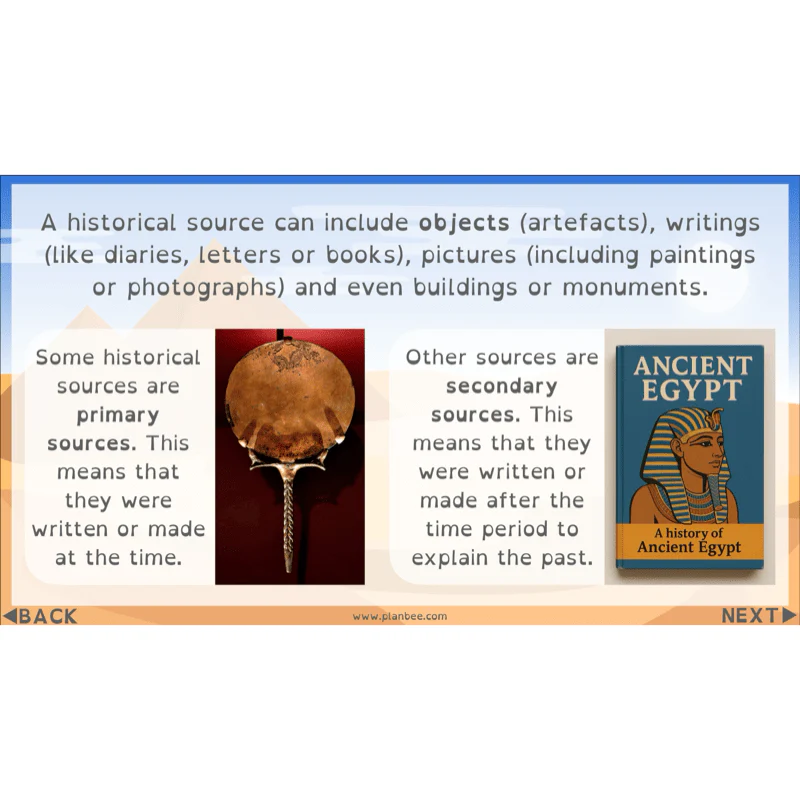
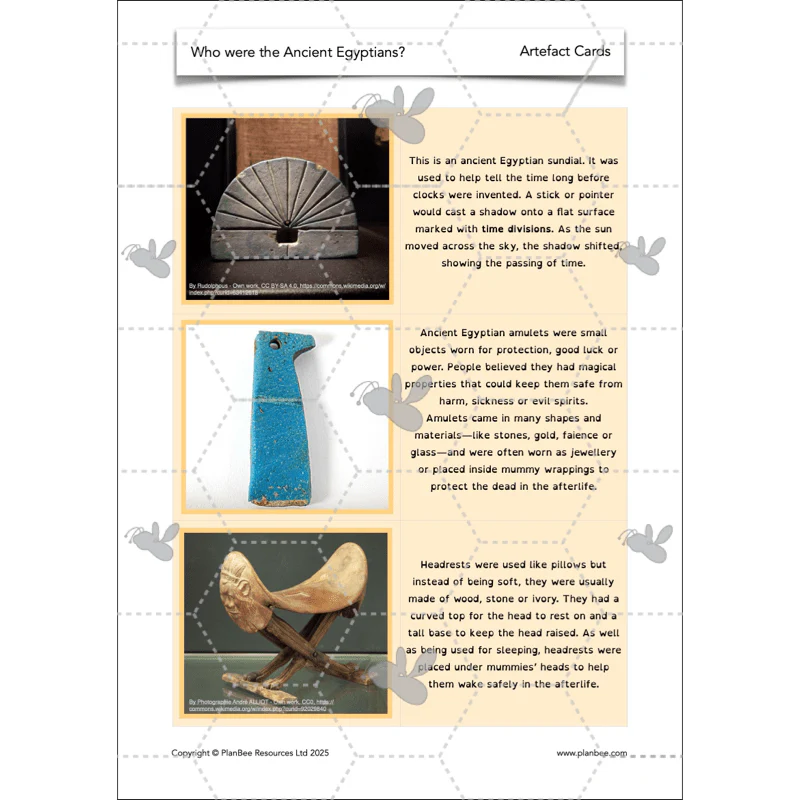
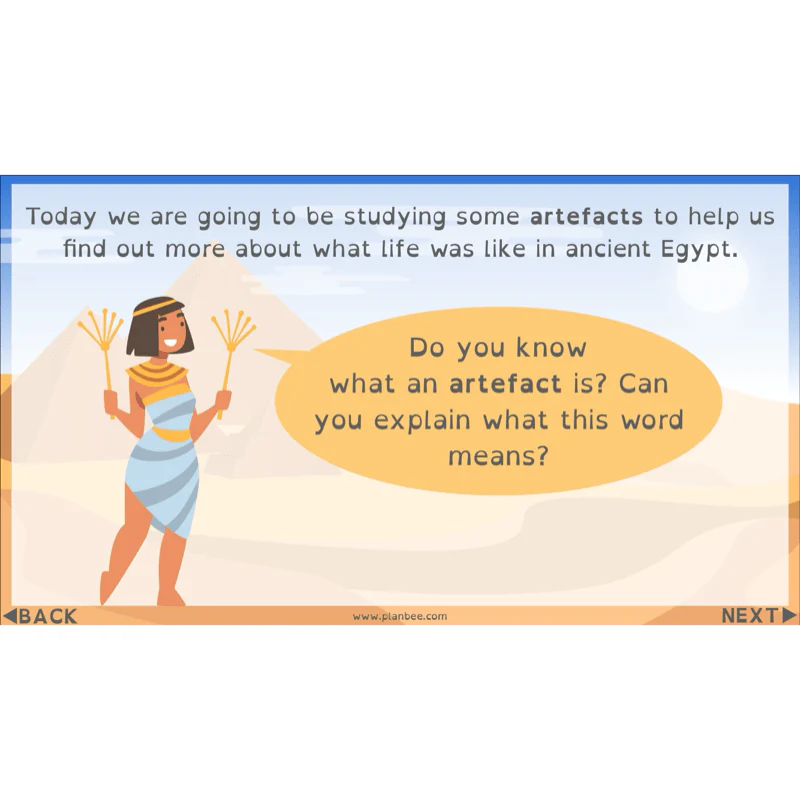
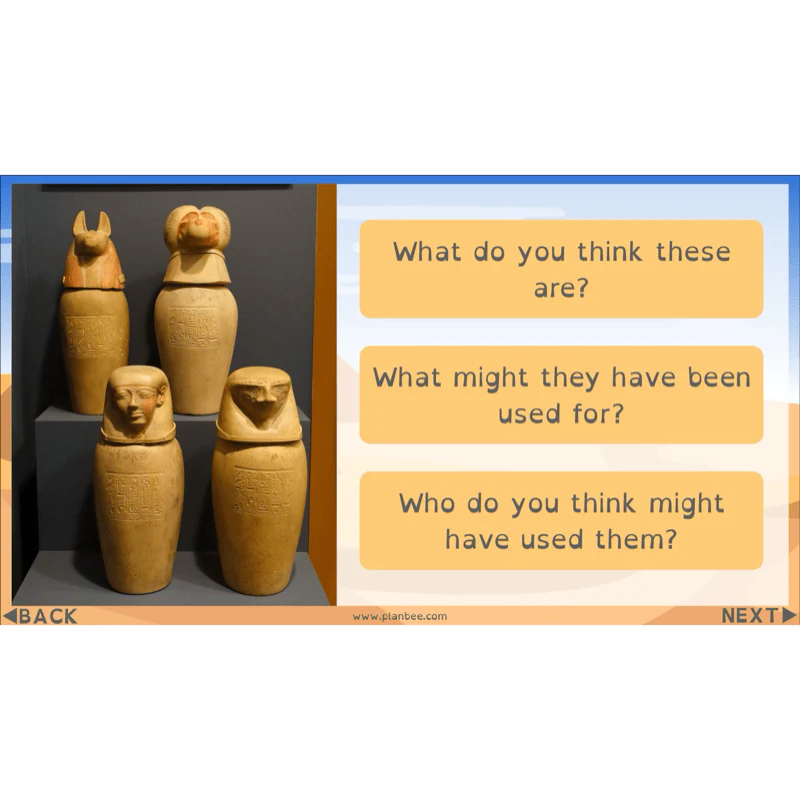
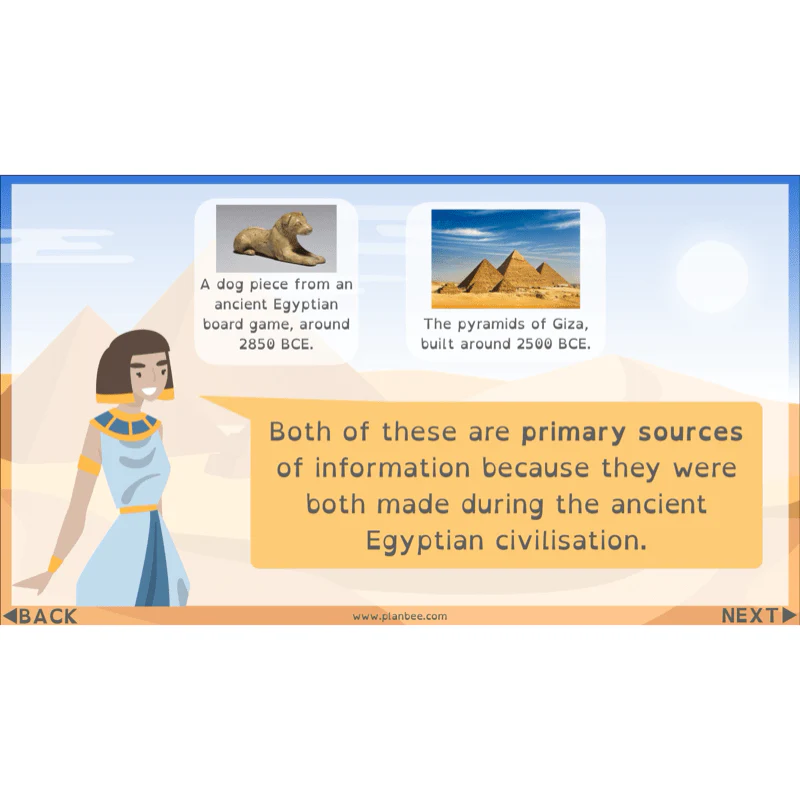
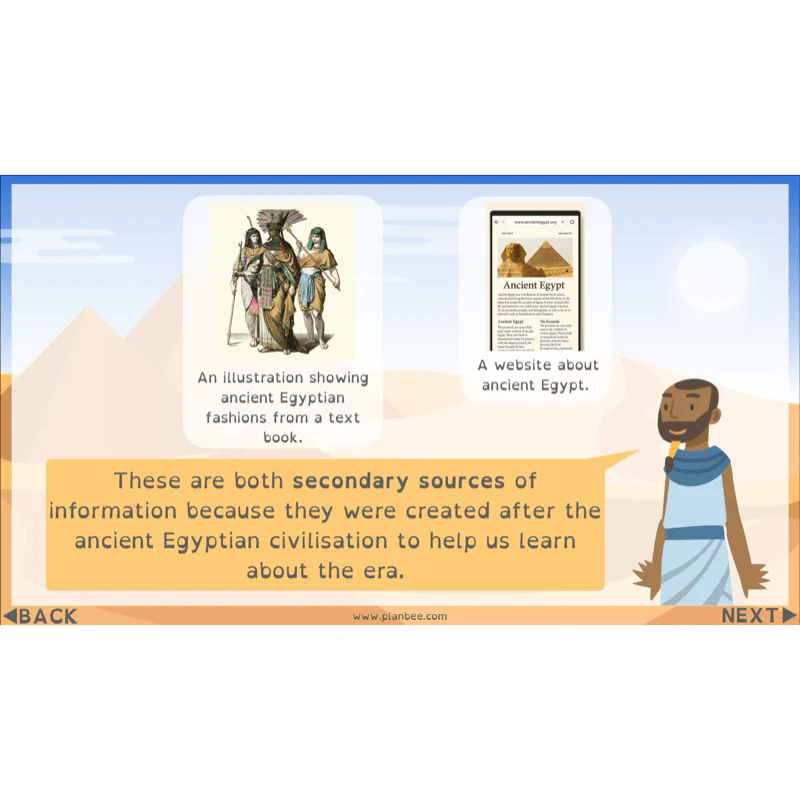
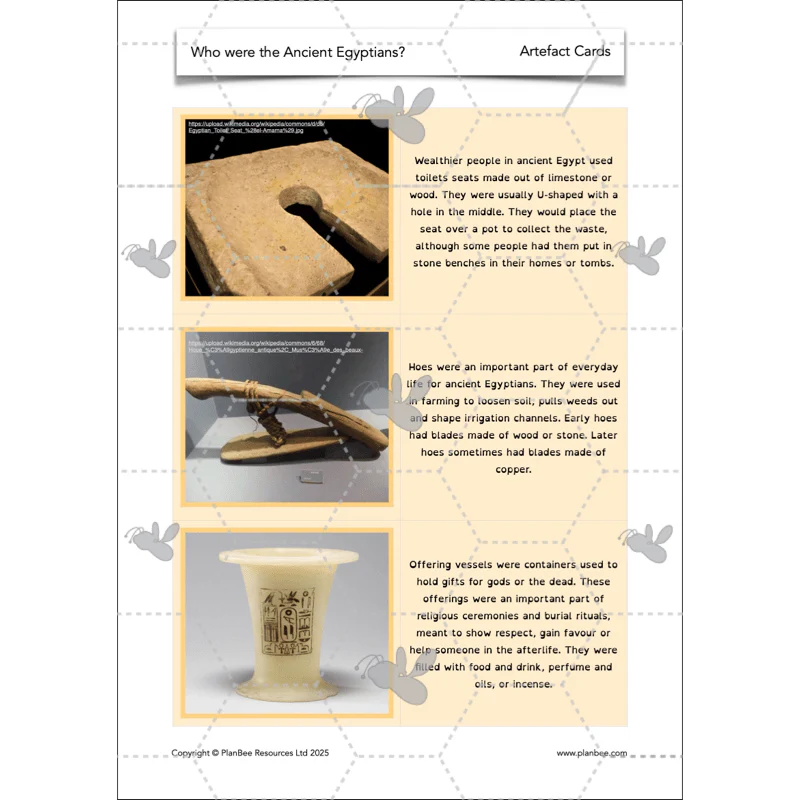
This lesson starts by showing children photographs of some ancient Egyptian artefacts. They will consider what the object is and what it can tell us about life in ancient Egypt before exploring the difference between primary and secondary sources.
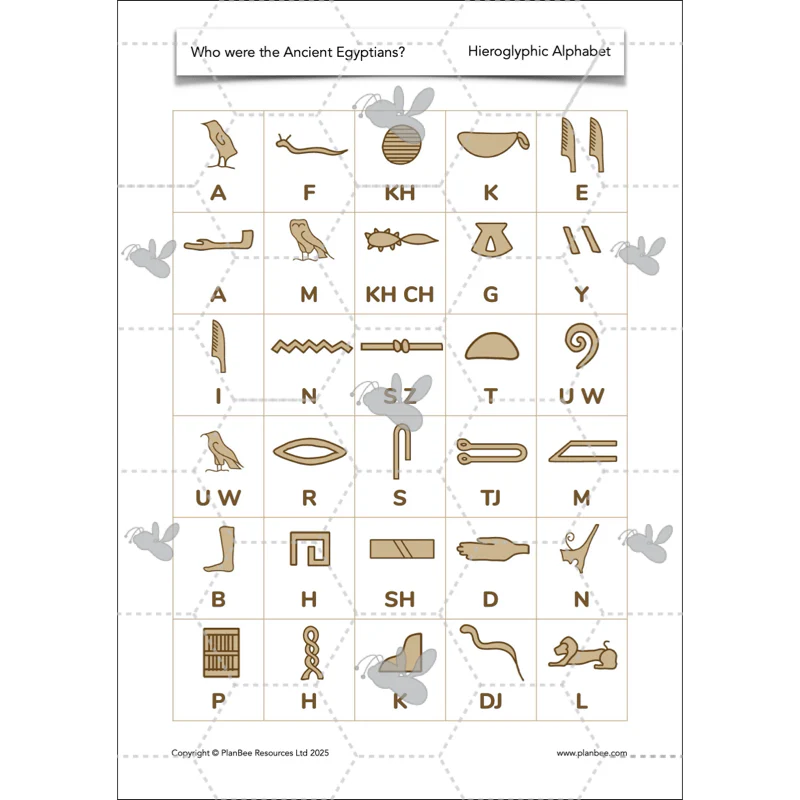
They will then discover the fascinating story of the Rosetta Stone and the vital role it played in unlocking the secrets of ancient Egyptian writing. By learning how scholars used the stone’s inscriptions to finally translate hieroglyphics, children will gain an appreciation for how this breakthrough transformed our understanding of ancient Egyptian language, culture and daily life, revealing details that had been lost for thousands of years.
During their independent learning time, children will then have the opportunity to explore more artefacts in further detail or create their own time capsule to leave for future civilisations.
What's included:
- Lesson plan
- Slides
- Activity ideas
- Artefact Cards
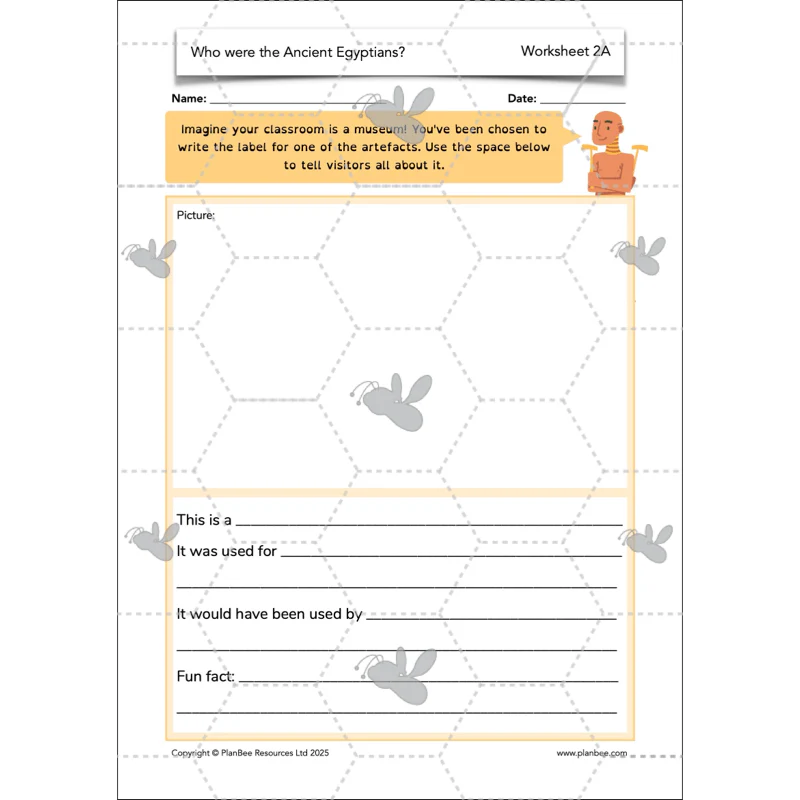
- Differentiated worksheets
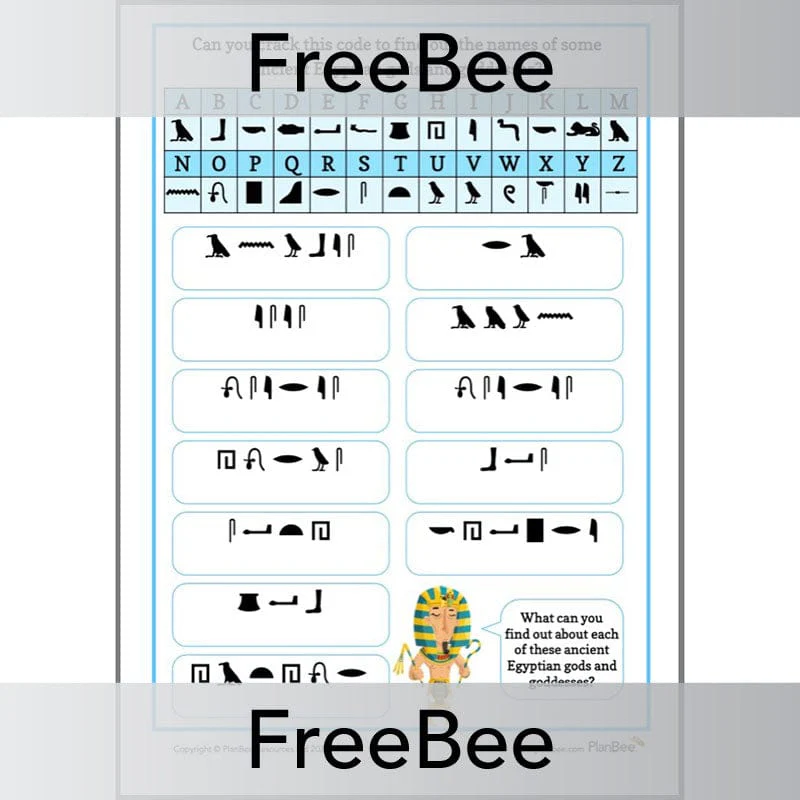
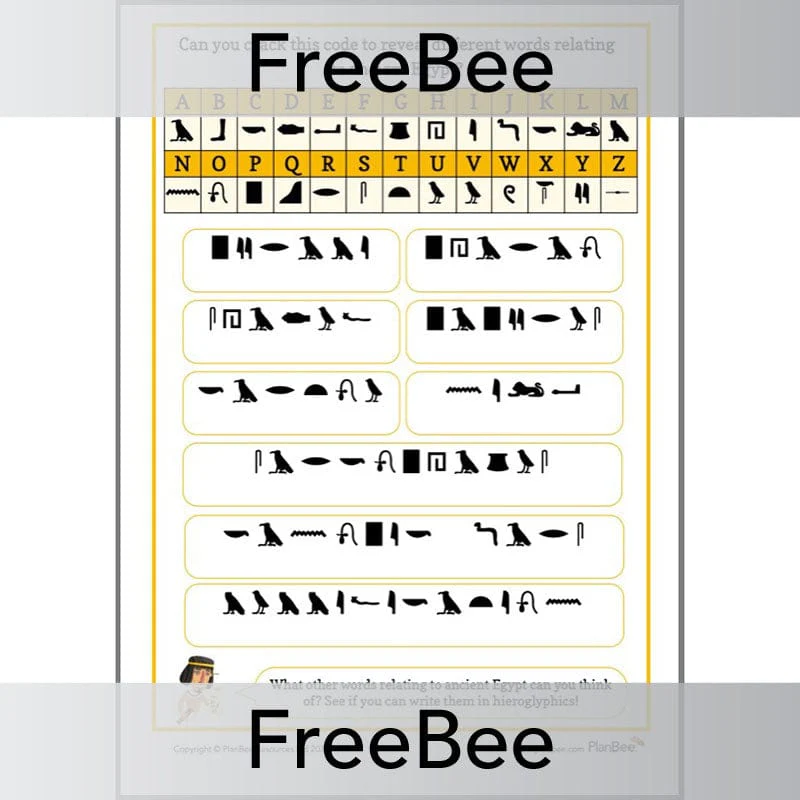
- Hieroglyphic Alphabet
Gods and Goddesses
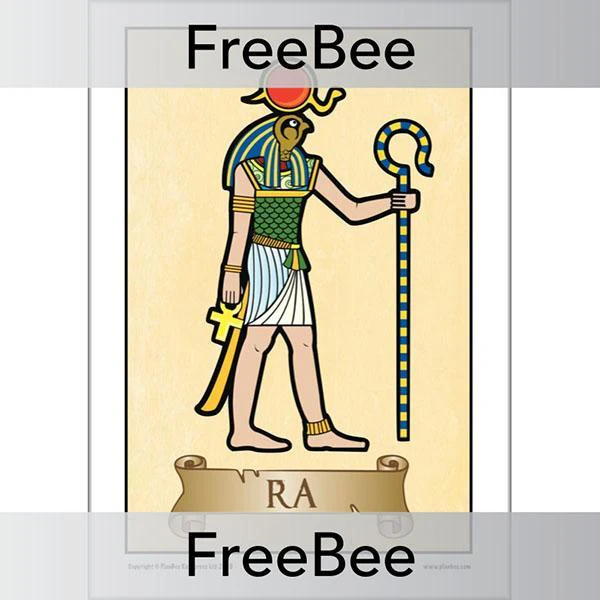
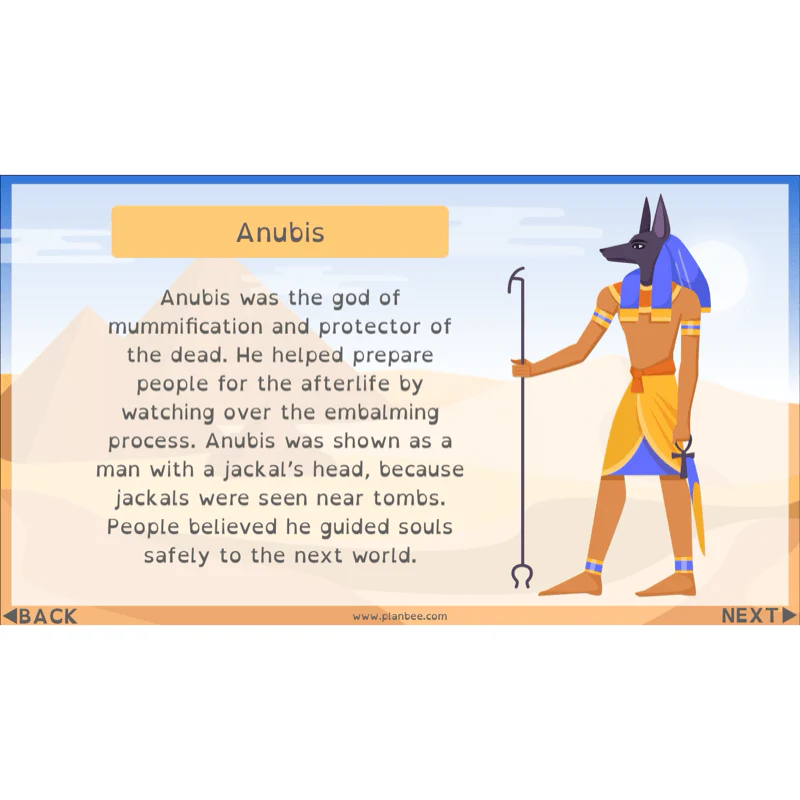
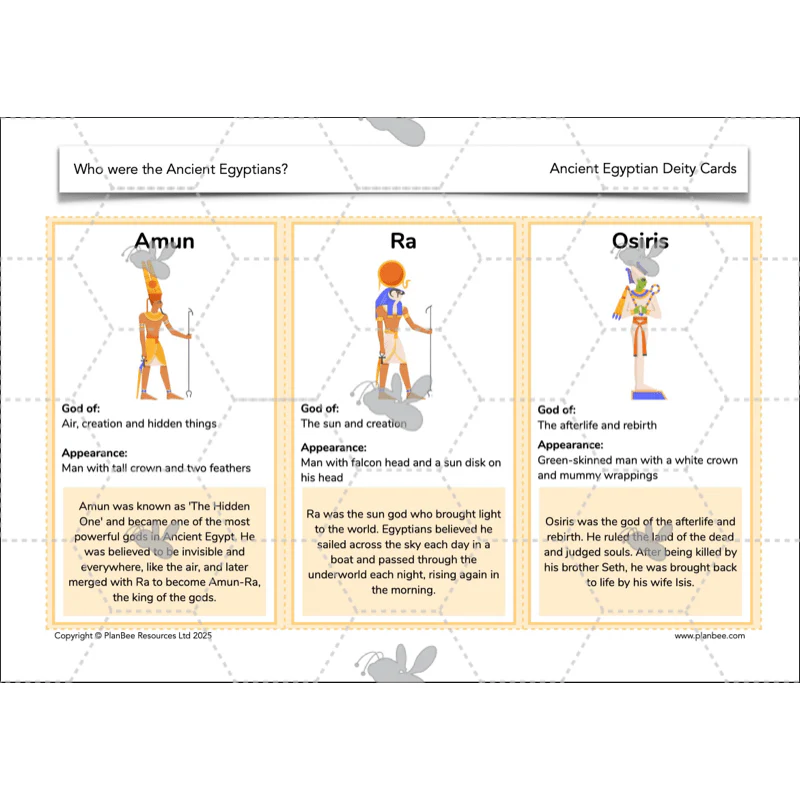
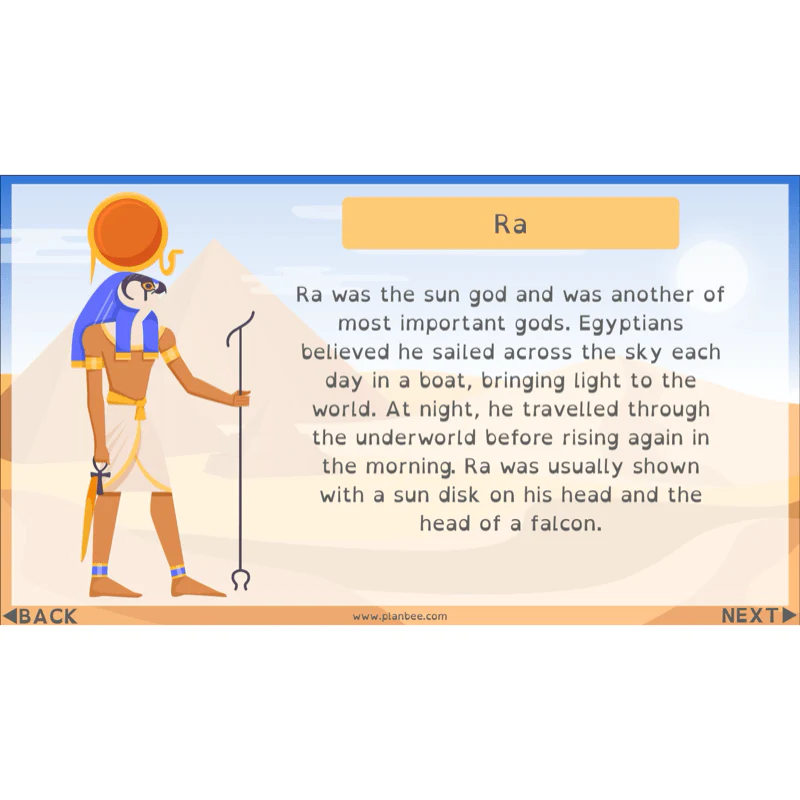
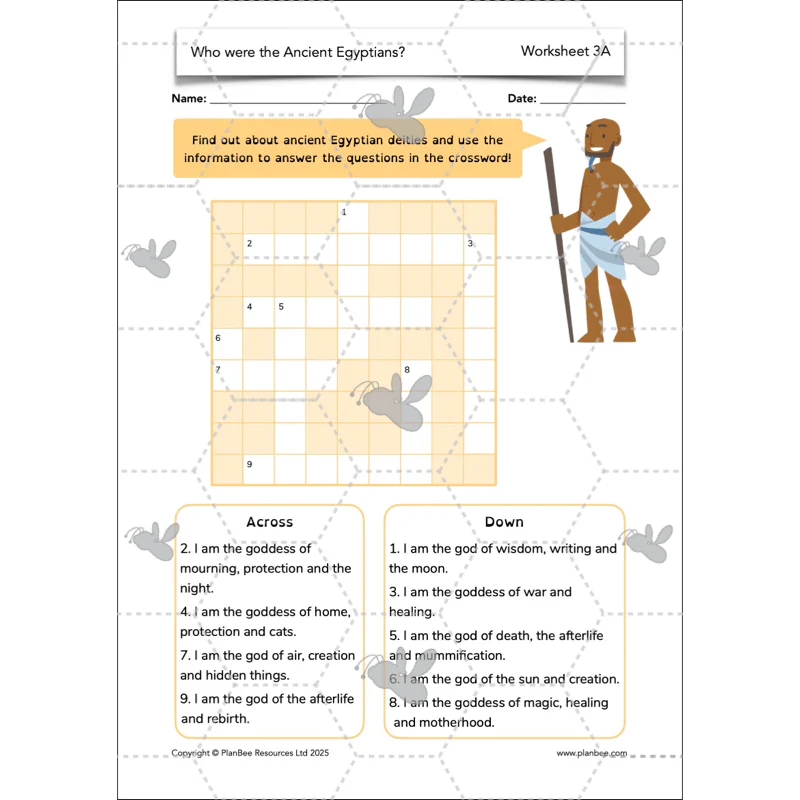
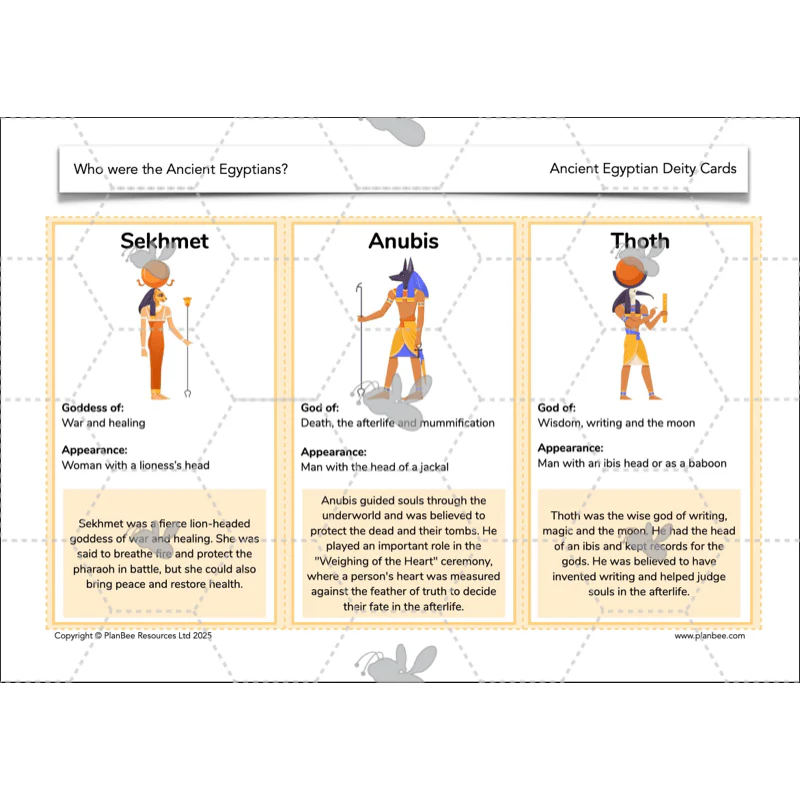
In this lesson, children will explore the rich belief system of the ancient Egyptians, discovering a variety of gods and goddesses and learning about their unique roles and powers. From Ra, the sun god, to Anubis, the god of mummification, pupils will investigate how these deities were worshipped and why they were so important in ancient Egyptian daily life and the afterlife.
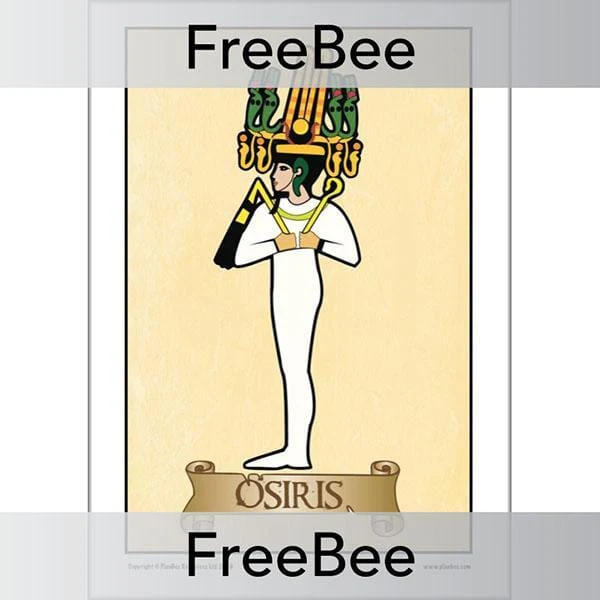
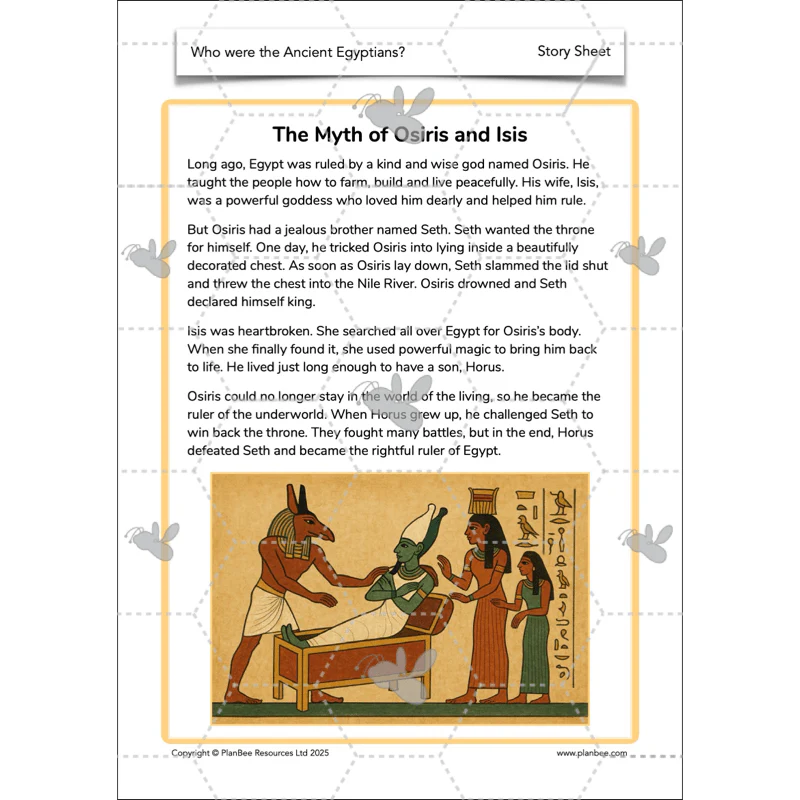
During their independent tasks, children can choose to delve deeper into the pantheon of ancient Egyptian gods and goddesses or explore the myth of Osiris - the powerful story of death, rebirth and the journey to the underworld.
What's included:
- Lesson plan
- Slides
- Activity ideas
- Ancient Egyptian Deity Cards
- Differentiated worksheets
- Story Sheet
- Differentiated comic strip templates
Mummification
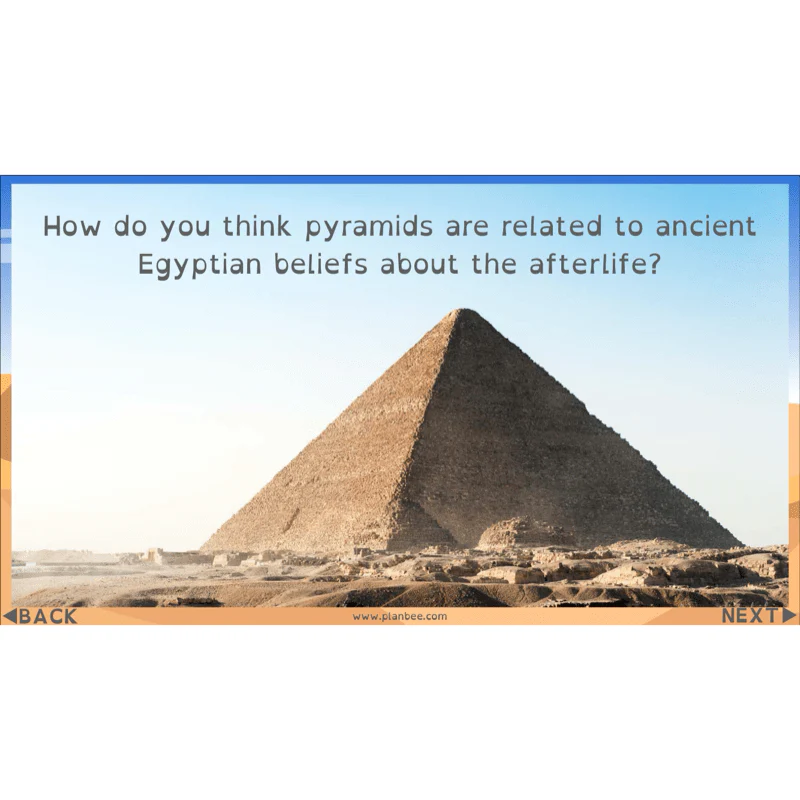
Building on their understanding of ancient Egyptian religion, children will explore beliefs about the afterlife, including the journey through Duat, the underworld, and the importance of being judged by the gods to reach the afterlife.
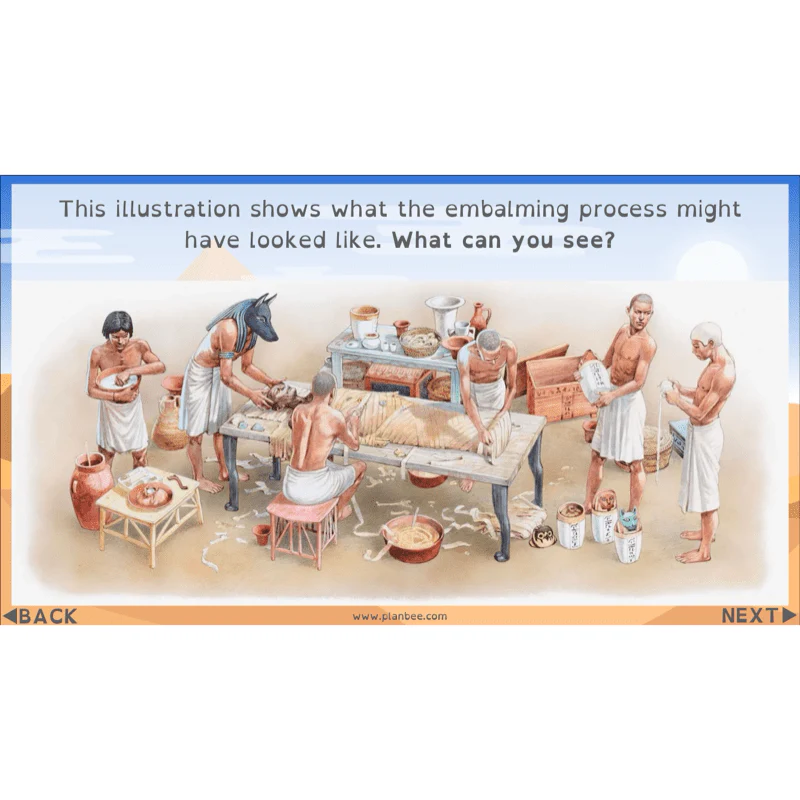
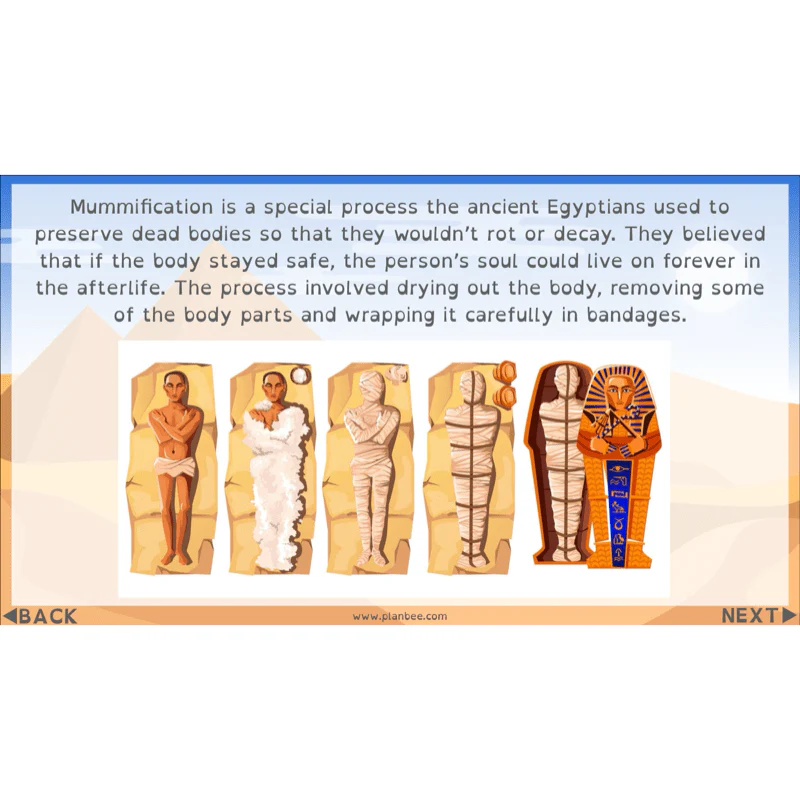
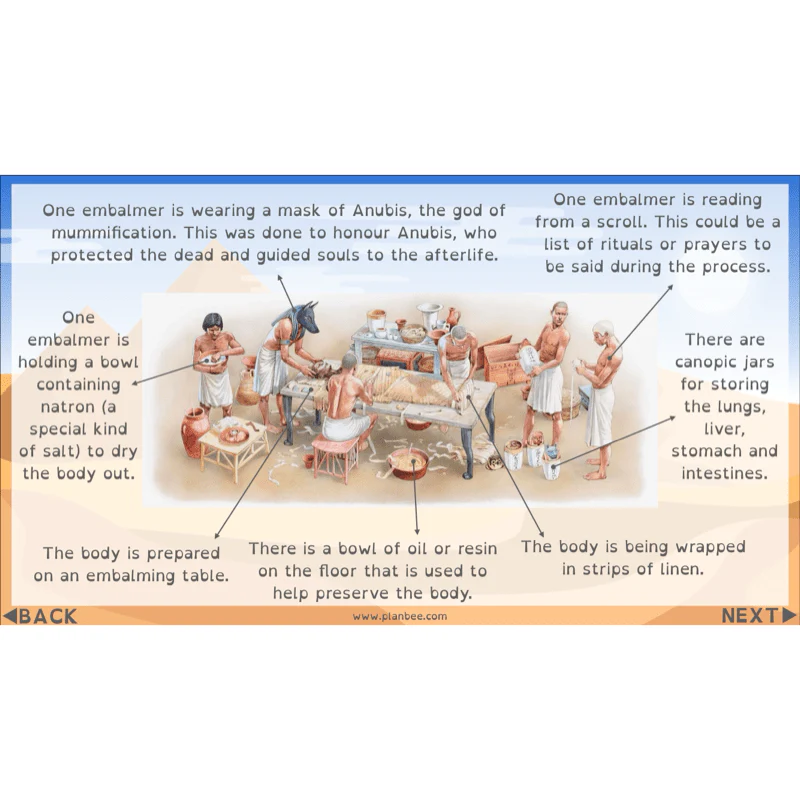
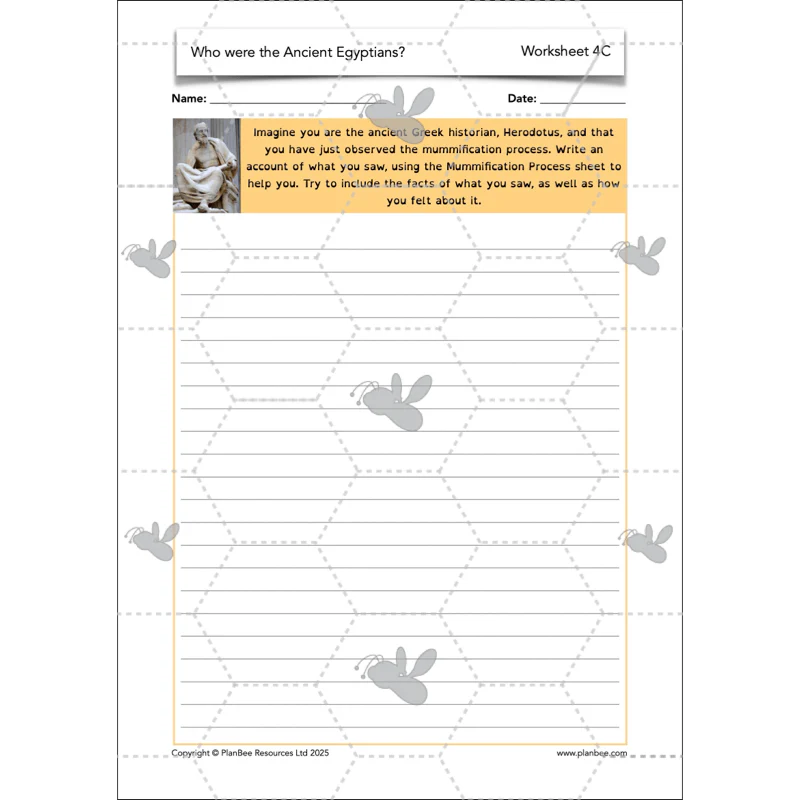
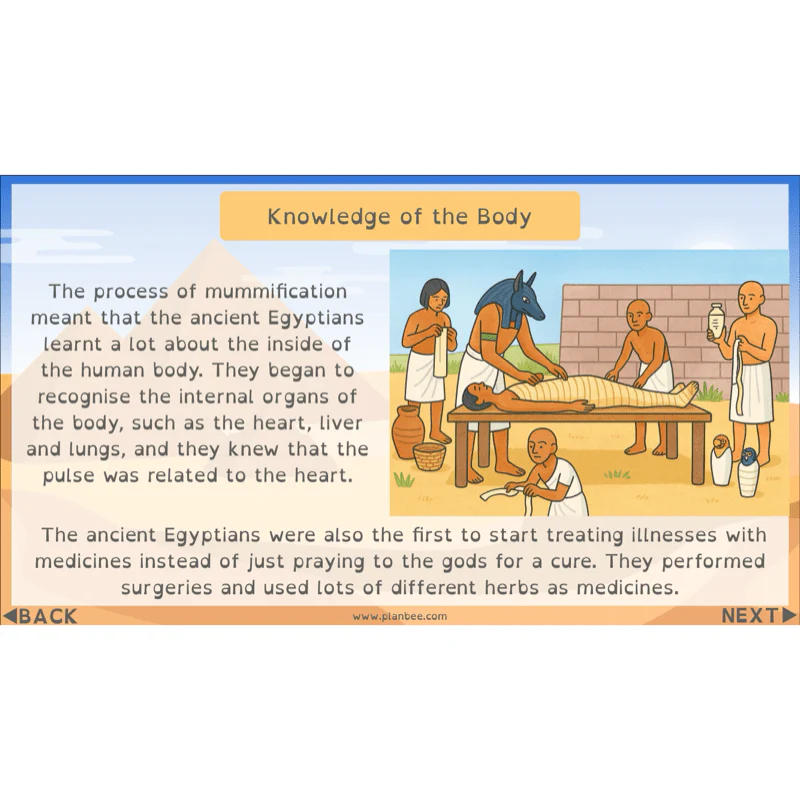
They will then learn why the ancient Egyptians believed it was essential to preserve the body through mummification, and explore the fascinating steps involved in this sacred process. Children will also consider what happened to those who could not afford full mummification, gaining insight into the social and spiritual beliefs of the time.
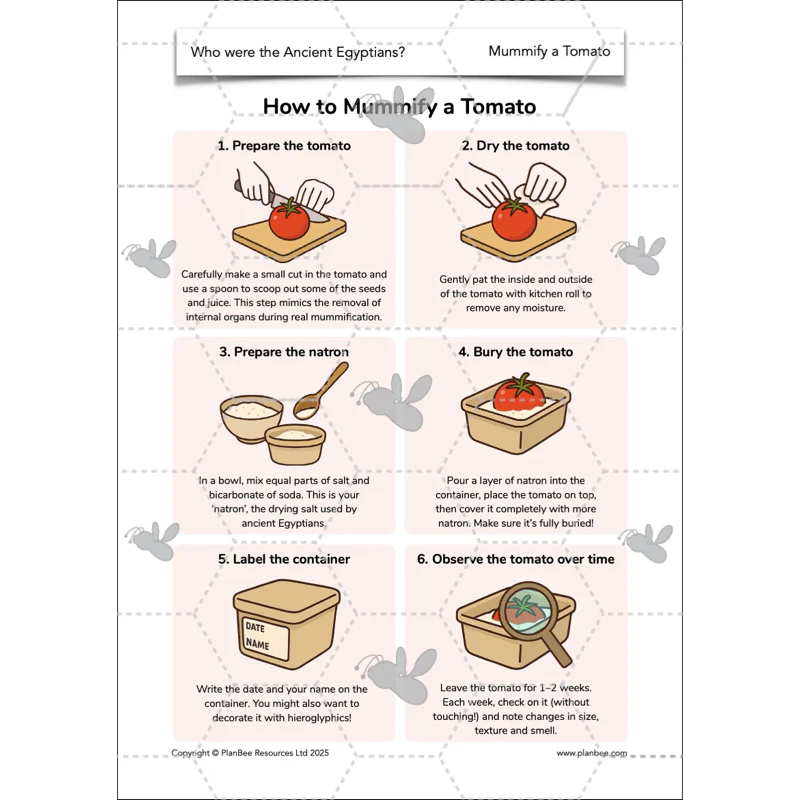
During their independent learning, children can then retell the mummification process in a variety of creative ways or have a go trying out the process for themselves by mummifying a tomato!
What's included:
- Lesson plan
- Slides
- Activity ideas
- Differentiated worksheets
- Differentiated sentence cards
- Mummification Process sheet
- Mummify a Tomato sheet
Howard Carter and Tutankhamen
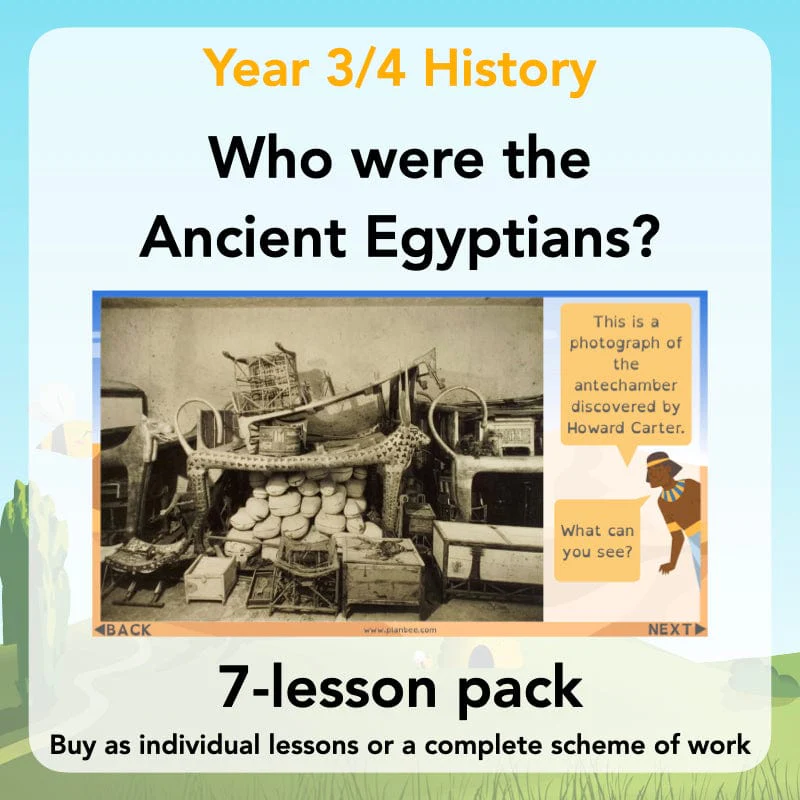
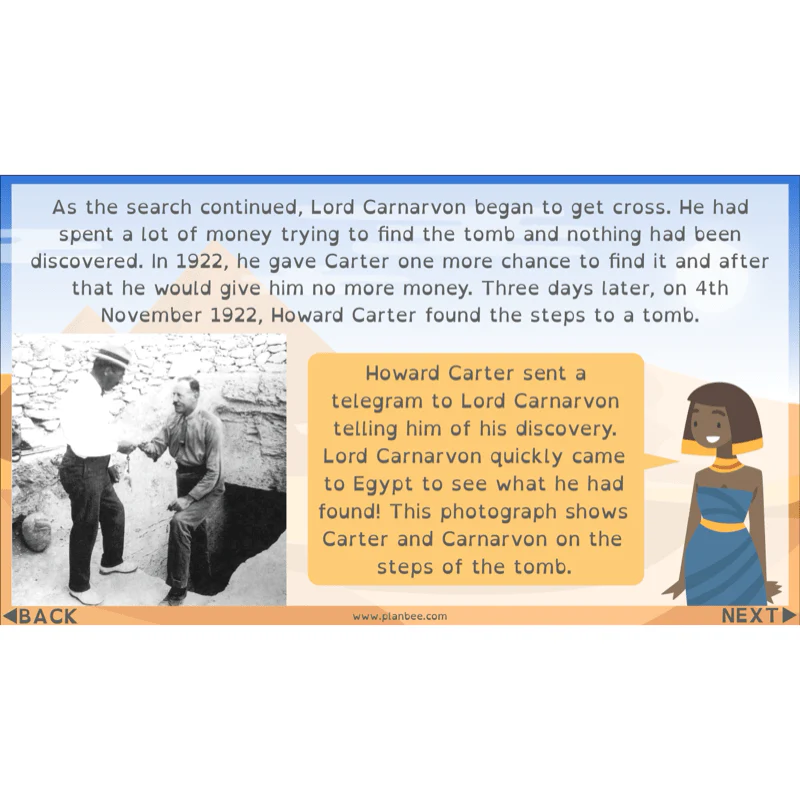
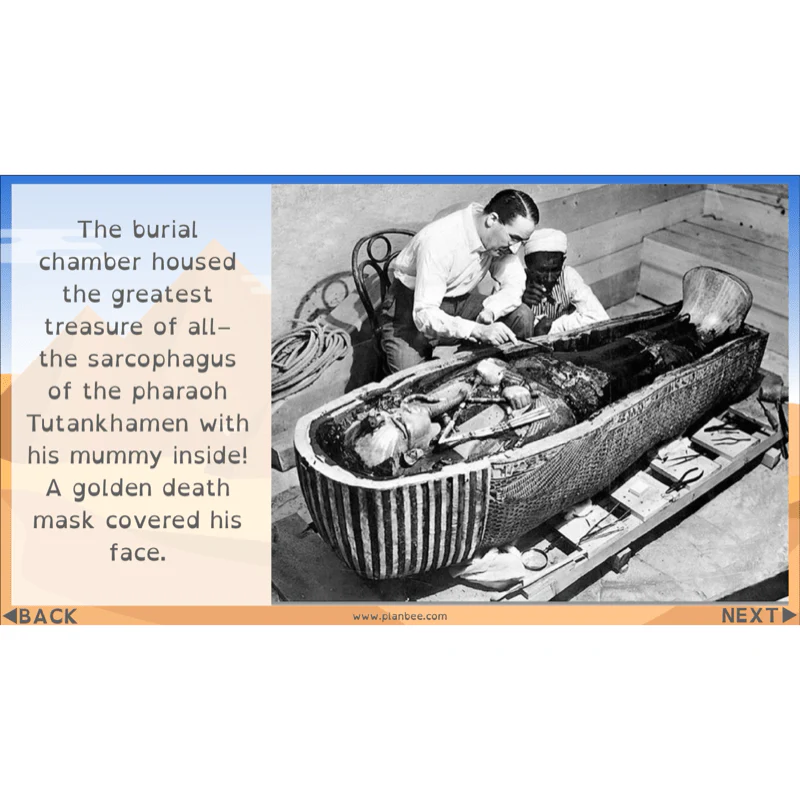
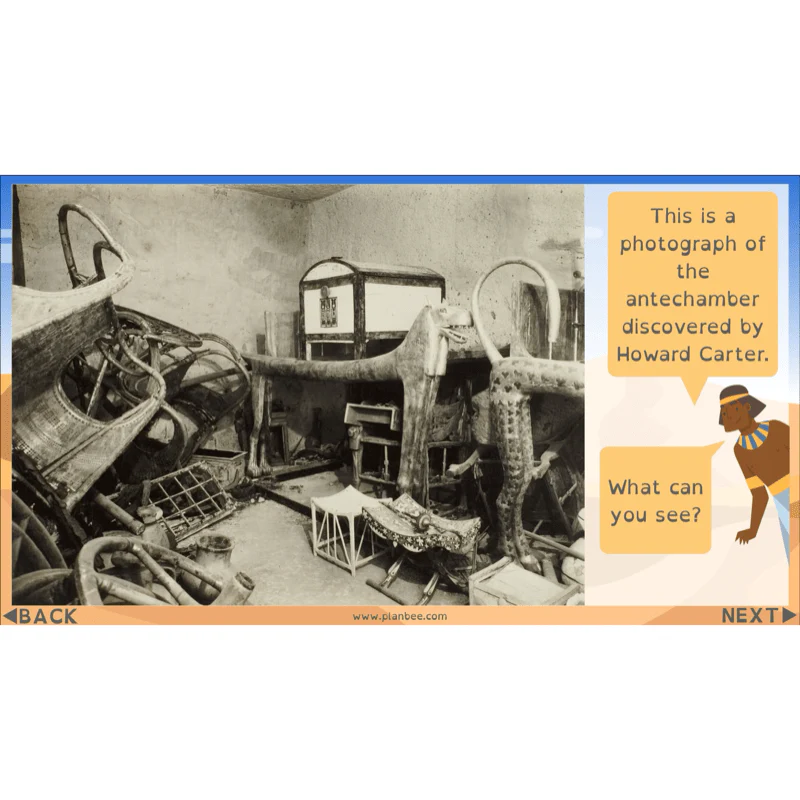
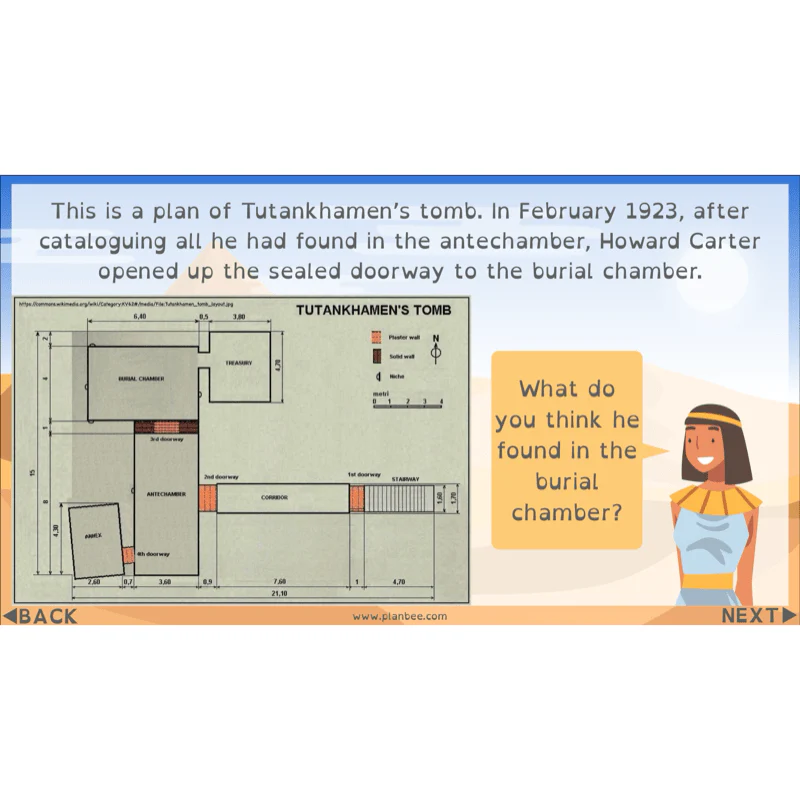
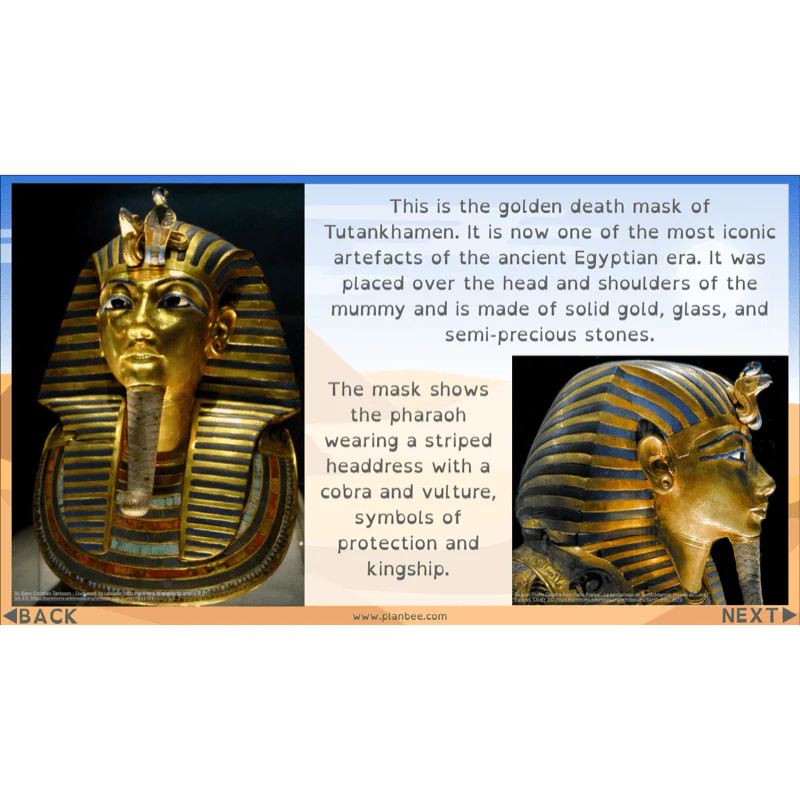
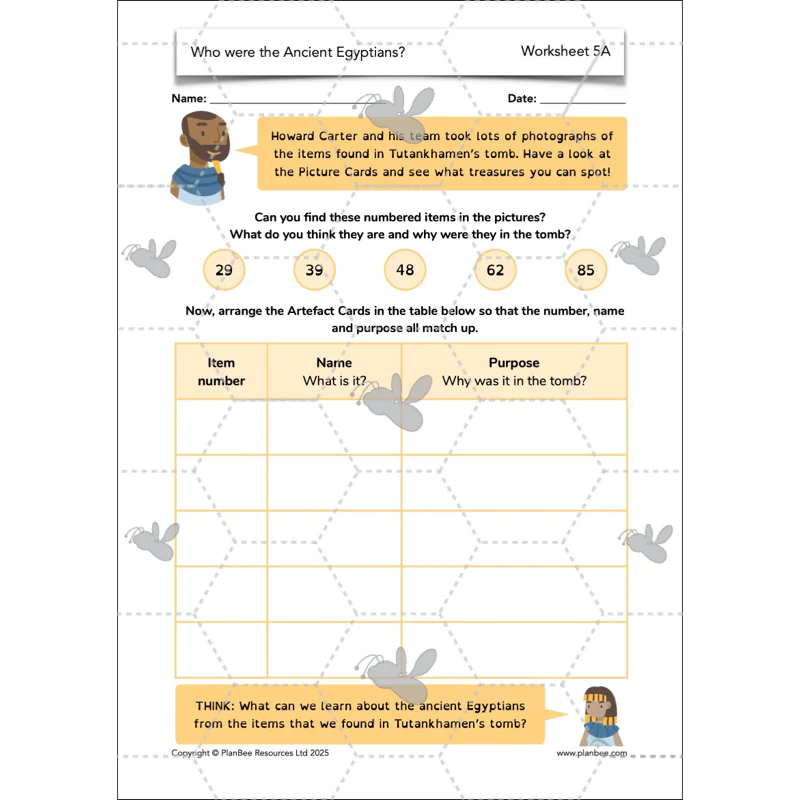
This fascinating lesson explores the story behind one of the most significant archaeological finds of all time. Through engaging slides and activities, children will learn about Carter’s years of searching, the moment the tomb was uncovered, and why this discovery was so important for understanding ancient Egypt.
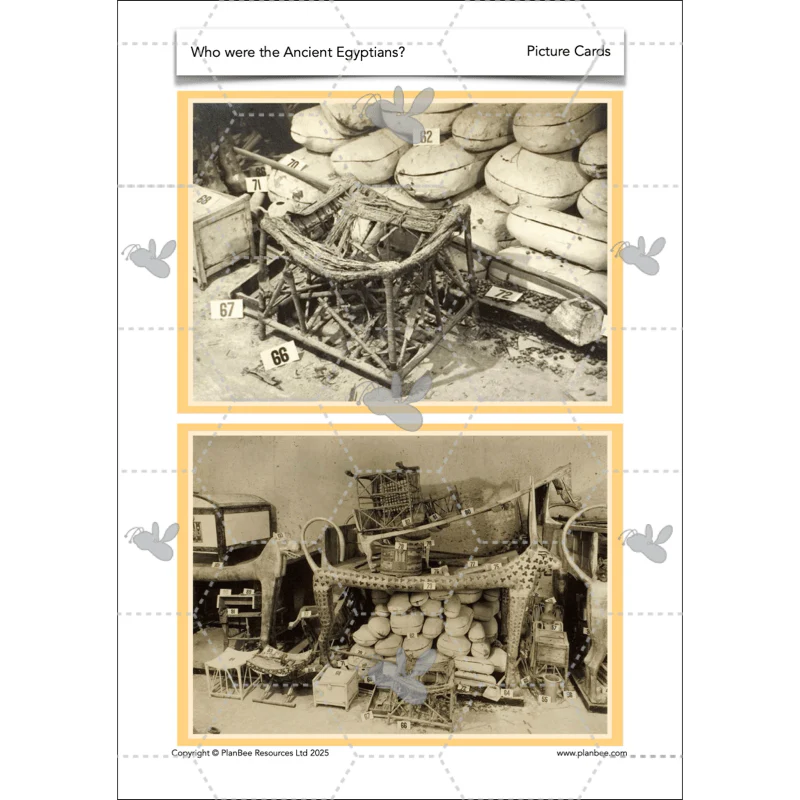
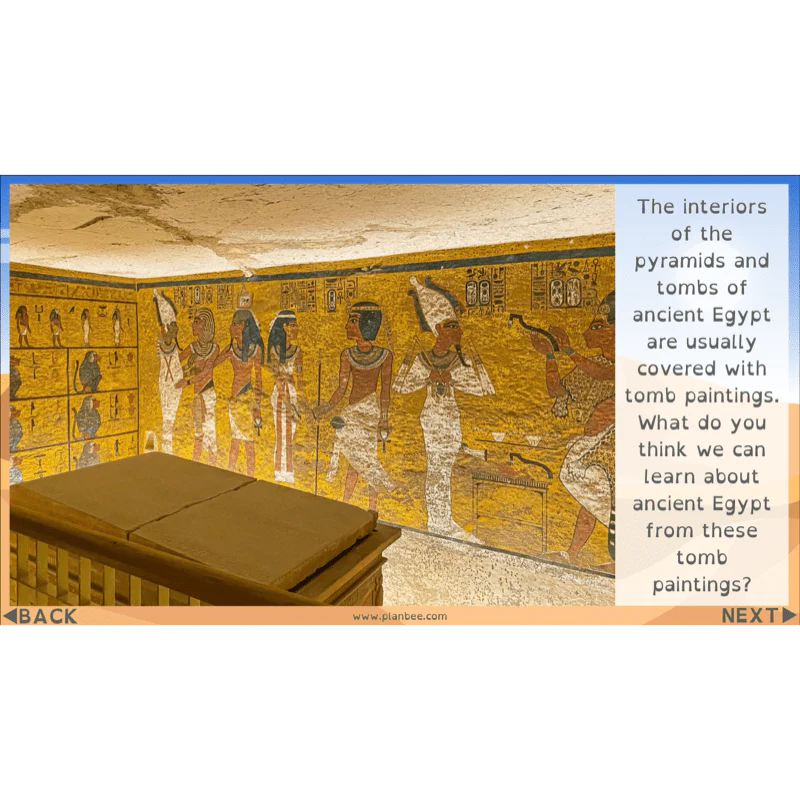
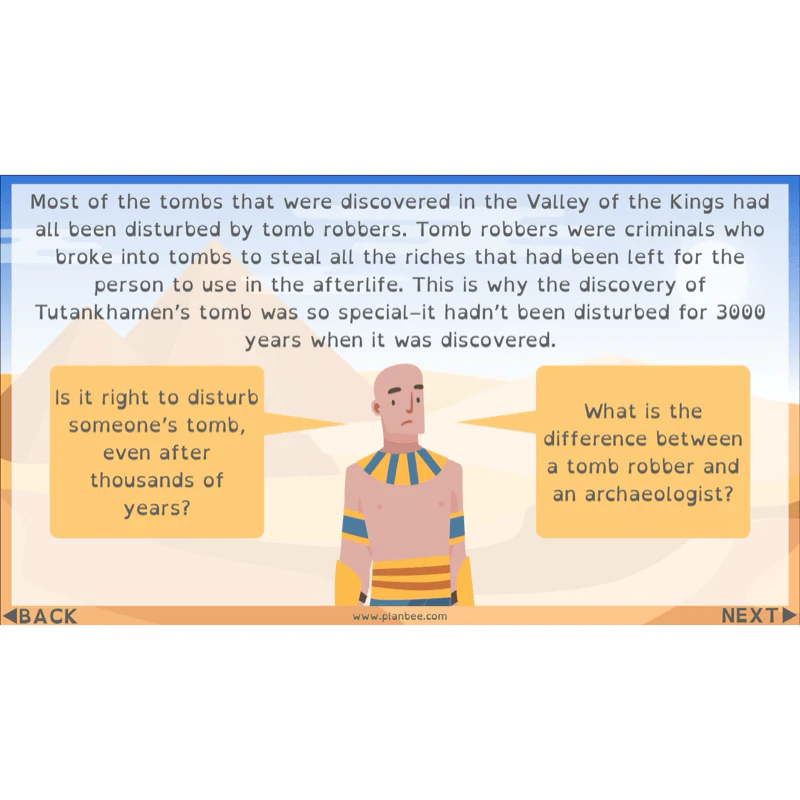
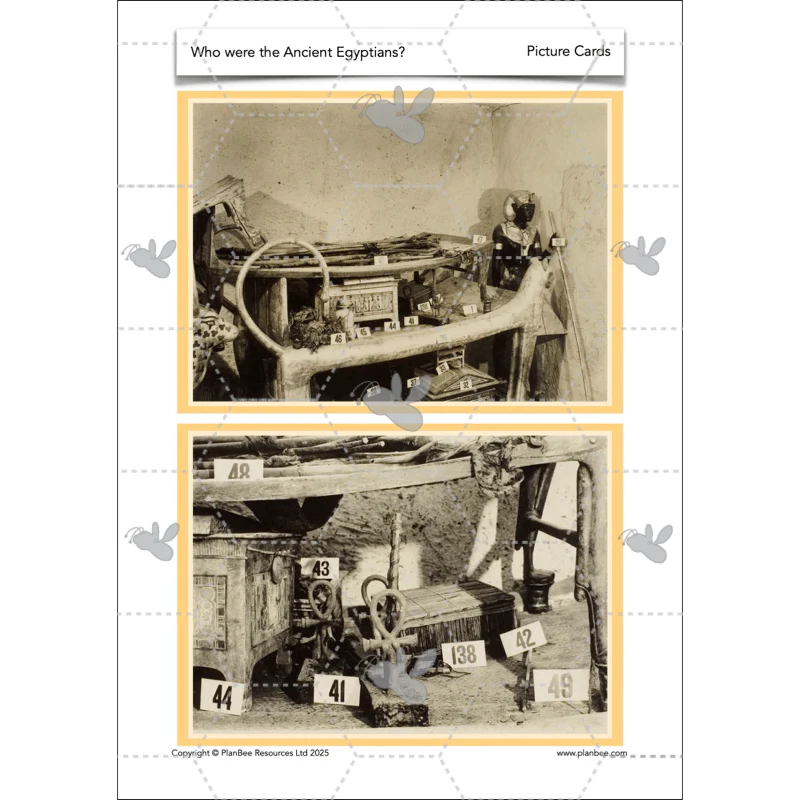
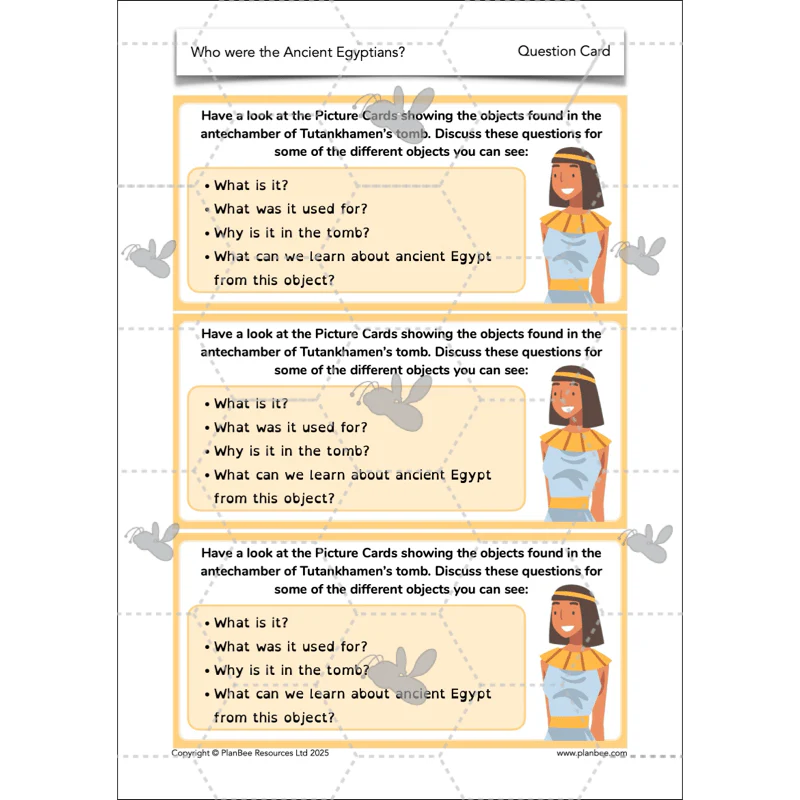
They’ll have the chance to examine photographs and artefacts found inside the tomb and consider what these objects reveal about life, death and beliefs in ancient Egyptian society. Children will also be encouraged to think critically as they explore the difference between an archaeologist and a tomb robber, sparking discussions about ethics, history and the value of cultural heritage.
What's included:
- Lesson plan
- Slides
- Activity ideas
- Question Card
- Picture Cards
- Differentiated Artefact Cards
- Differentiated worksheets
Daily Life
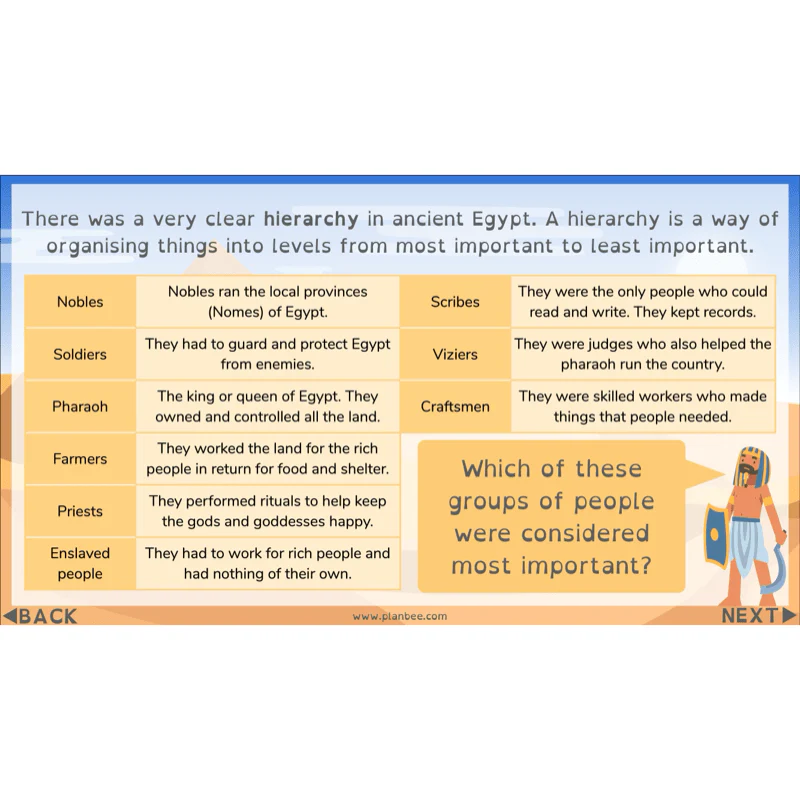
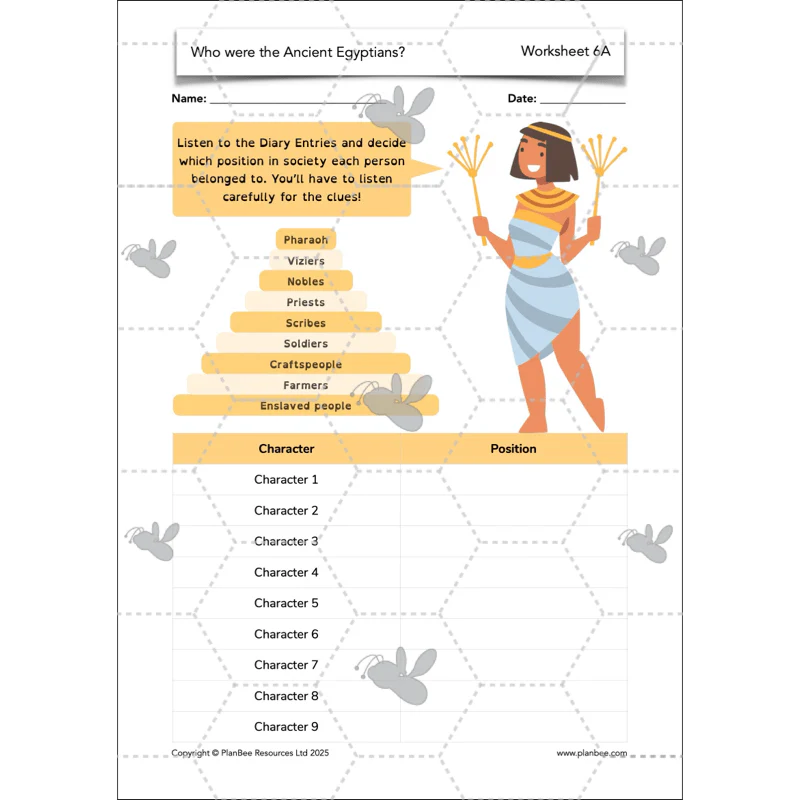
Children will learn about the different roles within the ancient Egyptian social pyramid in this lesson, from the powerful pharaoh at the top to the farmers and enslaved people at the bottom. They'll explore what life was like for people in each group and how society was organised to keep everything running smoothly.
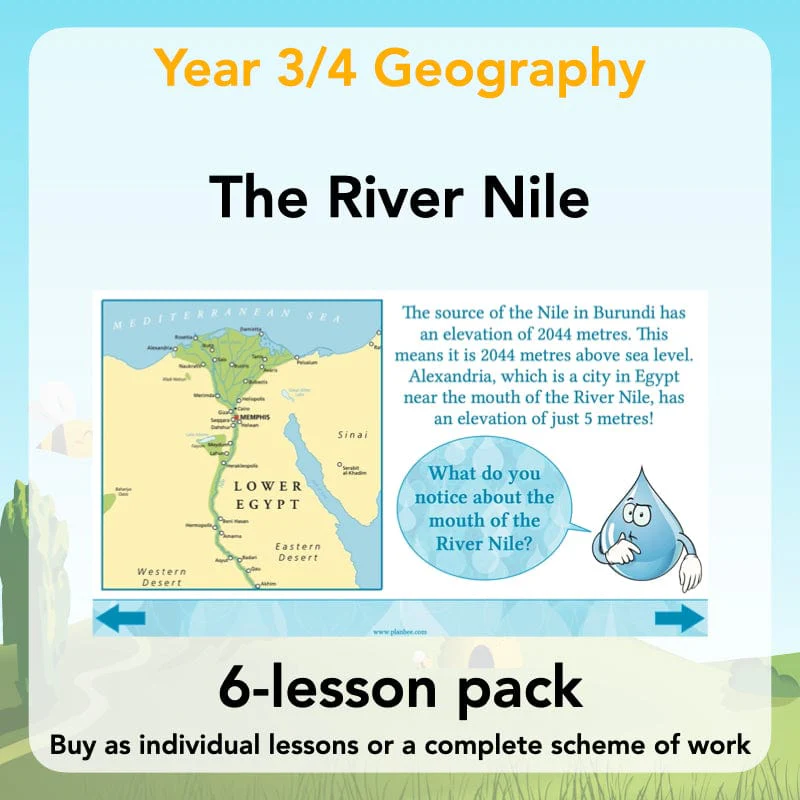
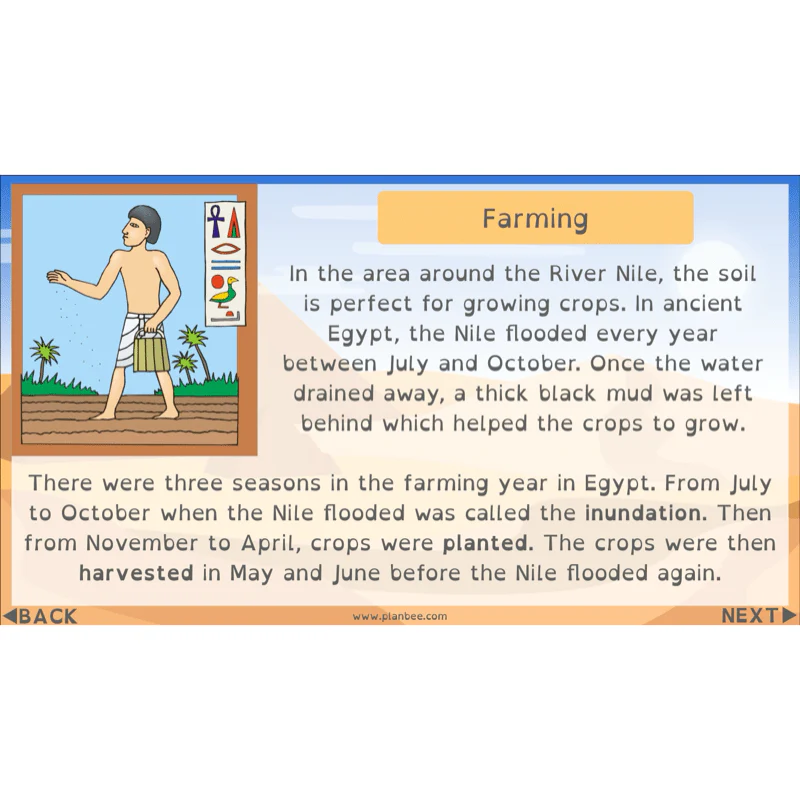
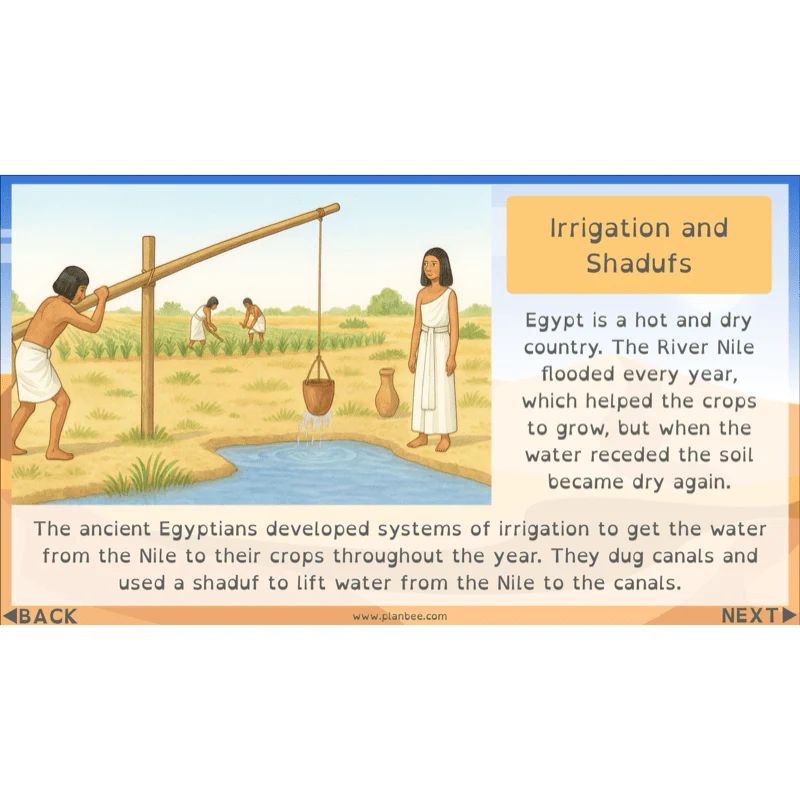
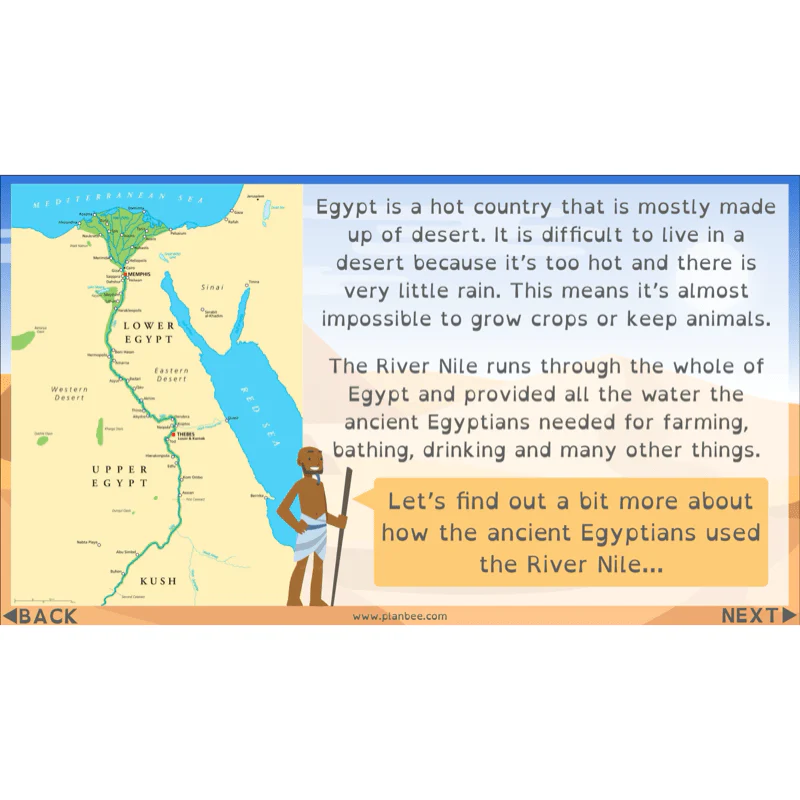
The lesson also highlights the vital role of the River Nile, helping children understand why it was so important for survival, farming, travel, and trade across all levels of society.
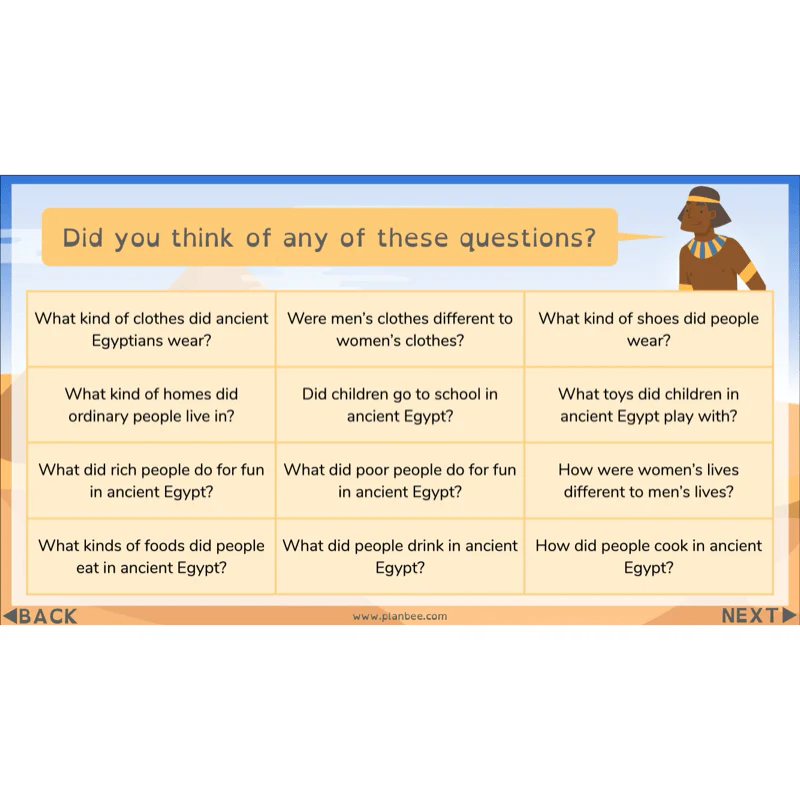
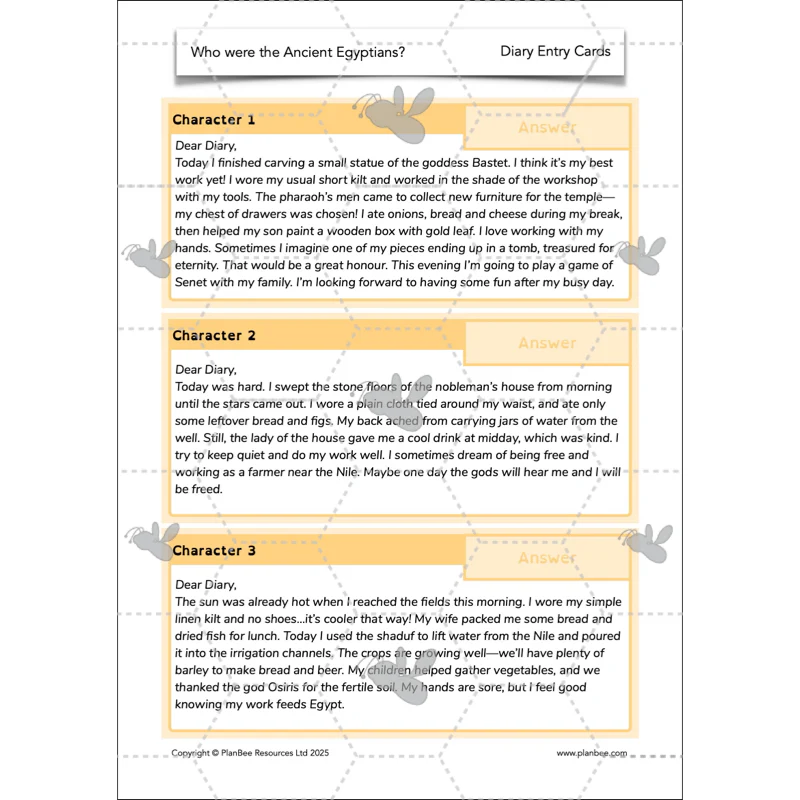
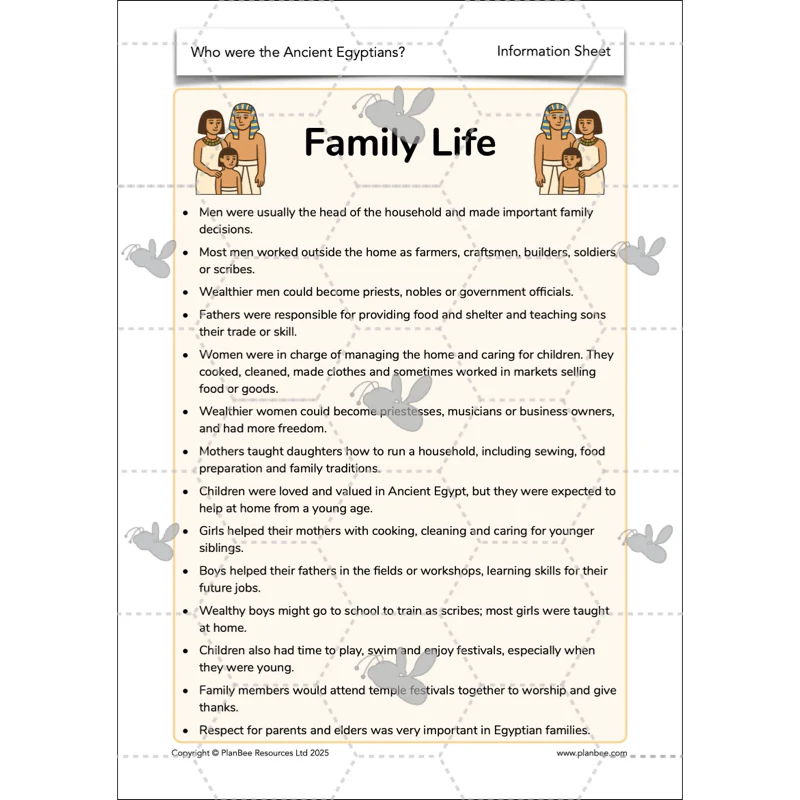
With opportunities for discussion and enquiry, children are encouraged to generate their own research questions and explore aspects of daily life in ancient Egypt using books, provided information sheets or the internet. There is also the chance to explore what daily life was like through fictionalised diary entries from each group of people in the social pyramid.
What's included:
- Lesson plan
- Slides
- Activity ideas
- Audio Diary Entry mp3 files
- Differentiated worksheets
- Diary Entry Cards
- Character Cards
- Social Pyramid
- Information Sheets
- Information Book/Booklet Templates
Inventions and Achievements
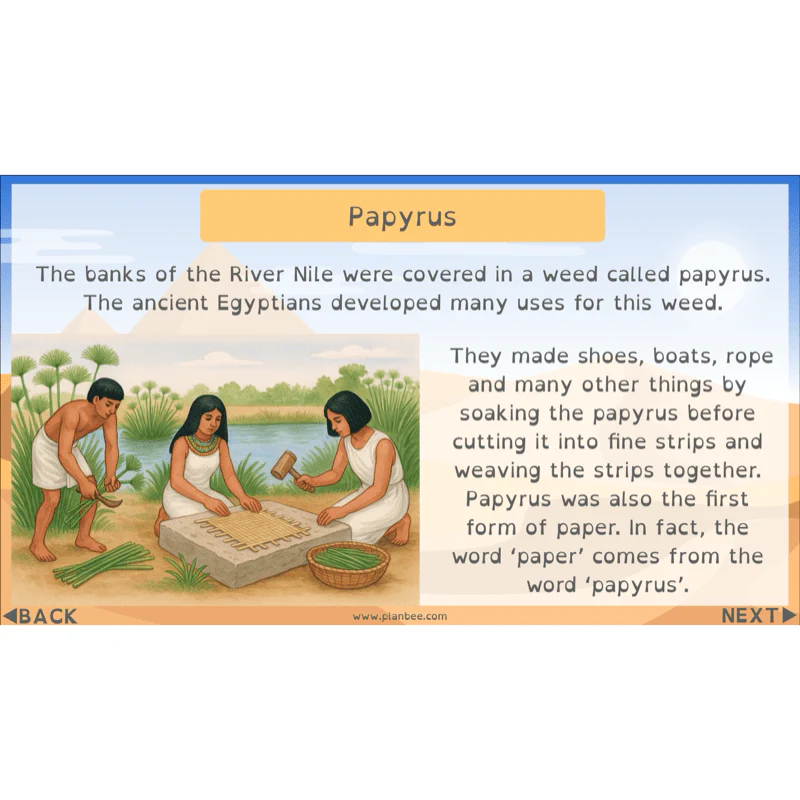
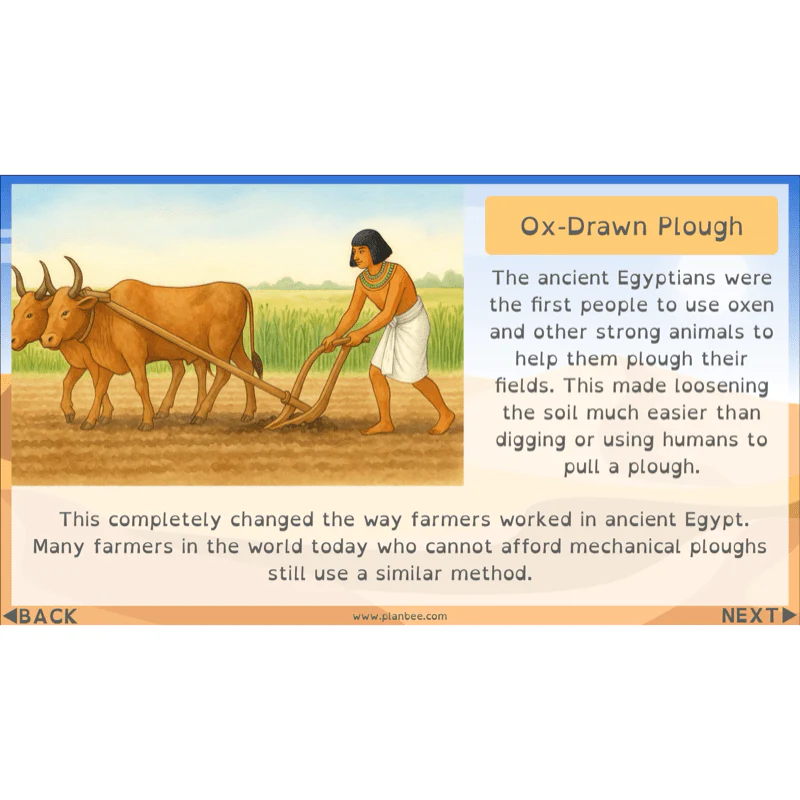
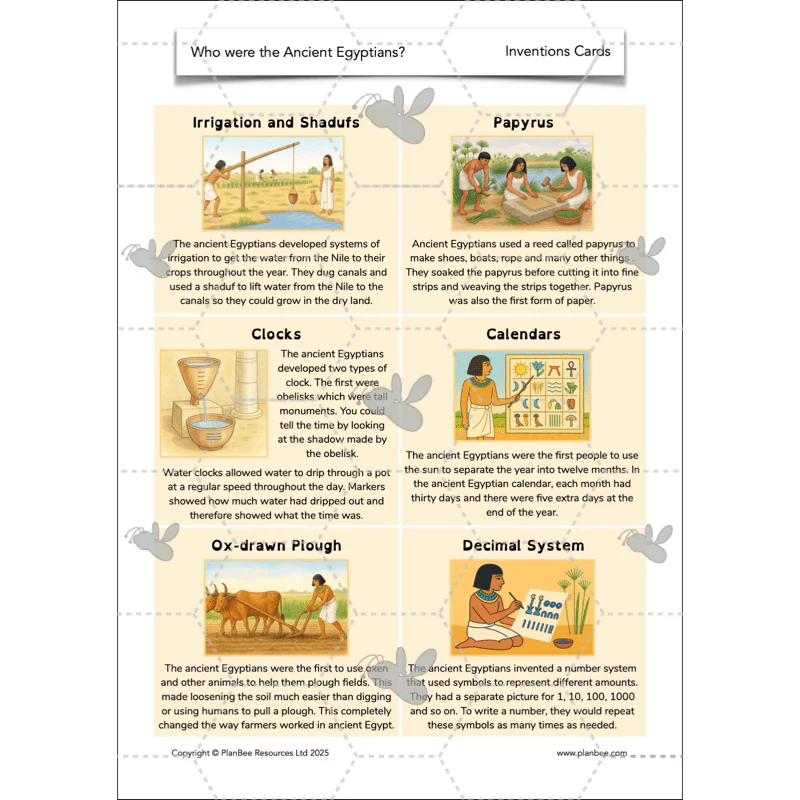
The final lesson in this series starts by considering the similarities and differences between the ancient Egyptian civilisation and modern life based on everything they have learnt throughout the scheme of work. Children will then find out about some of the inventions and achievements of the ancient Egyptians, such as the decimal system, papyrus, clocks and calendars.
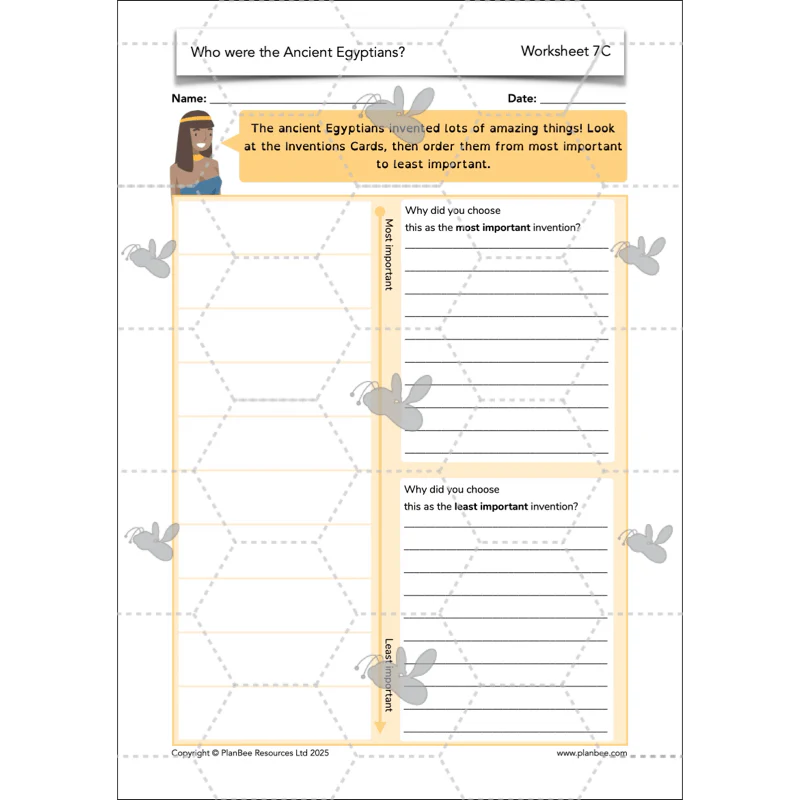
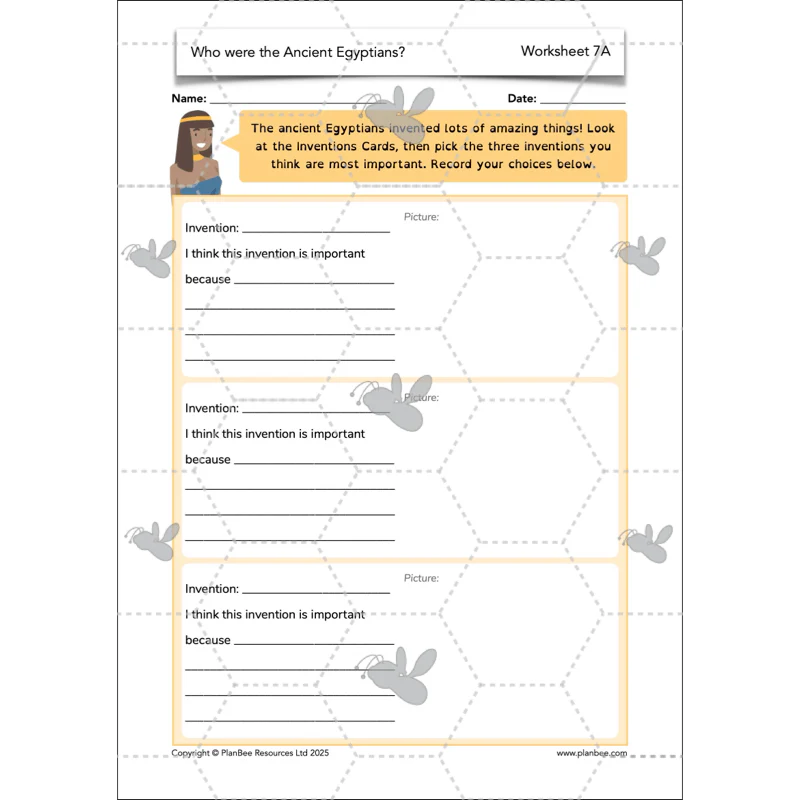
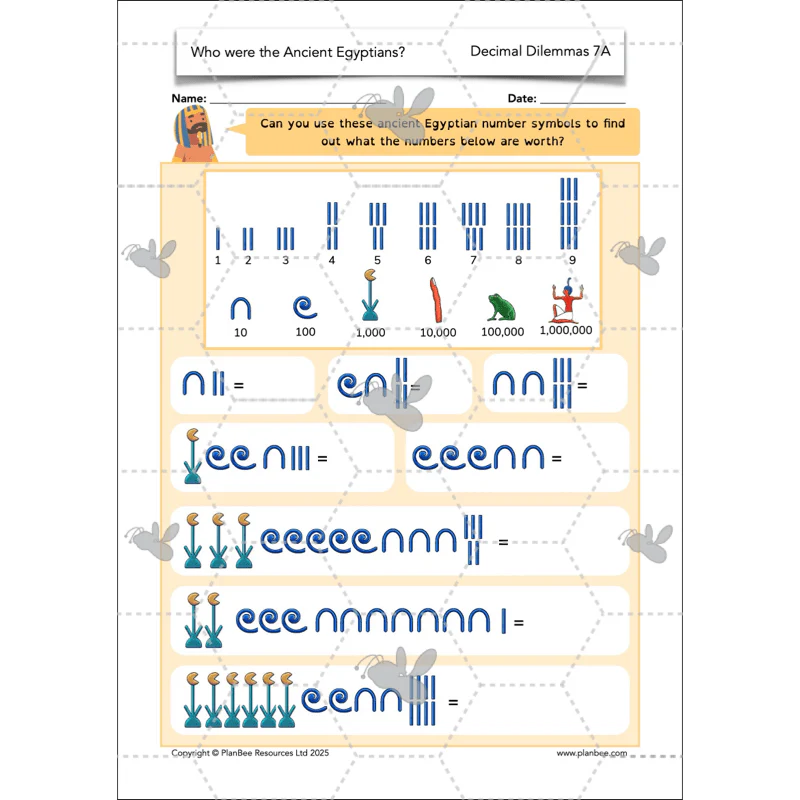
During their independent learning time, children will then think critically to assess which, out of ten given inventions or advancements, they think have had the most impact on the world, and which the least. There is also the chance to try solving some mathematical problems using the ancient Egyptian decimal system!
The scheme of work is then brought together with an End of Unit Quiz to help children think back through everything they have learnt and assess their understanding of the ancient Egyptian civilisation.
What's included:
- Lesson plan
- Slides
- Activity ideas
- Invention Cards
- Differentiated worksheets
- Differentiated Decimal Dilemmas sheets
- End of Unit Quiz
This Year 3/4 History Knowledge Organiser has been created to complement our History Early Civilisations strand. It is designed to support your children’s understanding of key vocabulary linked to this scheme of work. Enquiry questions have been included to encourage your children to think like a historian within this topic.
Original: $1.99
-50%$1.99
$1.00More Images













Who were the Ancient Egyptians?
Delve into the fascinating world of the ancient Egyptians with this fully-prepared, ready-to-teach Ancient Egyptians KS2 scheme of work. Designed to engage and inform, this seven-lesson series explores all aspects of ancient Egyptian life from powerful pharaohs and the mysterious pyramids to everyday people, incredible inventions and the secrets of mummification. Throughout the series of seven fully-prepared lessons, your Year 3 or Year 4 children will learn to use historical sources, develop enquiry skills and understand how this ancient civilisation has influenced the modern world.
This Ancient Egyptians KS2 scheme includes detailed lesson plans, differentiated activities, slides, printable resources and assessments, saving you hours of planning time. Whether you're introducing ancient civilisations for the first time or building on prior knowledge, ‘Who were the Ancient Egyptians?’ is the ideal KS2 scheme to bring history to life in your classroom.
A Knowledge Organiser is available to support the learning in this scheme. It is included in the Complete Series download or can be purchased individually.
You may also like our Ancient Egyptians Topic Bundle which has four fully-prepared schemes of work all themed around ancient Egypt!
World History Timeline
This Ancient Egyptians scheme of work for KS2 starts by defining the terms ‘ancient’ and ‘modern’, and clarifying the difference between BCE and CE. Children will then have the chance to explore world history timelines to sort ancient and modern civilisations chronologically, and compare periods in relation to ancient Egypt.
During their independent activities, children can choose to consolidate their understanding of the BCE/CE system by creating a timeline of key events in ancient Egyptian civilisation using differentiated event cards. Alternatively, they can extend their chronological understanding by exploring and sequencing a range of historical time periods, placing ancient Egypt in a wider historical context.
What's included:
- Lesson plan
- Slides
- Activity ideas
- Timeline Sheet
- Differentiated timeline cards
- Picture Cards
- World History Timeline
Artefacts
This lesson starts by showing children photographs of some ancient Egyptian artefacts. They will consider what the object is and what it can tell us about life in ancient Egypt before exploring the difference between primary and secondary sources.
They will then discover the fascinating story of the Rosetta Stone and the vital role it played in unlocking the secrets of ancient Egyptian writing. By learning how scholars used the stone’s inscriptions to finally translate hieroglyphics, children will gain an appreciation for how this breakthrough transformed our understanding of ancient Egyptian language, culture and daily life, revealing details that had been lost for thousands of years.
During their independent learning time, children will then have the opportunity to explore more artefacts in further detail or create their own time capsule to leave for future civilisations.
What's included:
- Lesson plan
- Slides
- Activity ideas
- Artefact Cards
- Differentiated worksheets
- Hieroglyphic Alphabet
Gods and Goddesses
In this lesson, children will explore the rich belief system of the ancient Egyptians, discovering a variety of gods and goddesses and learning about their unique roles and powers. From Ra, the sun god, to Anubis, the god of mummification, pupils will investigate how these deities were worshipped and why they were so important in ancient Egyptian daily life and the afterlife.
During their independent tasks, children can choose to delve deeper into the pantheon of ancient Egyptian gods and goddesses or explore the myth of Osiris - the powerful story of death, rebirth and the journey to the underworld.
What's included:
- Lesson plan
- Slides
- Activity ideas
- Ancient Egyptian Deity Cards
- Differentiated worksheets
- Story Sheet
- Differentiated comic strip templates
Mummification
Building on their understanding of ancient Egyptian religion, children will explore beliefs about the afterlife, including the journey through Duat, the underworld, and the importance of being judged by the gods to reach the afterlife.
They will then learn why the ancient Egyptians believed it was essential to preserve the body through mummification, and explore the fascinating steps involved in this sacred process. Children will also consider what happened to those who could not afford full mummification, gaining insight into the social and spiritual beliefs of the time.
During their independent learning, children can then retell the mummification process in a variety of creative ways or have a go trying out the process for themselves by mummifying a tomato!
What's included:
- Lesson plan
- Slides
- Activity ideas
- Differentiated worksheets
- Differentiated sentence cards
- Mummification Process sheet
- Mummify a Tomato sheet
Howard Carter and Tutankhamen
This fascinating lesson explores the story behind one of the most significant archaeological finds of all time. Through engaging slides and activities, children will learn about Carter’s years of searching, the moment the tomb was uncovered, and why this discovery was so important for understanding ancient Egypt.
They’ll have the chance to examine photographs and artefacts found inside the tomb and consider what these objects reveal about life, death and beliefs in ancient Egyptian society. Children will also be encouraged to think critically as they explore the difference between an archaeologist and a tomb robber, sparking discussions about ethics, history and the value of cultural heritage.
What's included:
- Lesson plan
- Slides
- Activity ideas
- Question Card
- Picture Cards
- Differentiated Artefact Cards
- Differentiated worksheets
Daily Life
Children will learn about the different roles within the ancient Egyptian social pyramid in this lesson, from the powerful pharaoh at the top to the farmers and enslaved people at the bottom. They'll explore what life was like for people in each group and how society was organised to keep everything running smoothly.
The lesson also highlights the vital role of the River Nile, helping children understand why it was so important for survival, farming, travel, and trade across all levels of society.
With opportunities for discussion and enquiry, children are encouraged to generate their own research questions and explore aspects of daily life in ancient Egypt using books, provided information sheets or the internet. There is also the chance to explore what daily life was like through fictionalised diary entries from each group of people in the social pyramid.
What's included:
- Lesson plan
- Slides
- Activity ideas
- Audio Diary Entry mp3 files
- Differentiated worksheets
- Diary Entry Cards
- Character Cards
- Social Pyramid
- Information Sheets
- Information Book/Booklet Templates
Inventions and Achievements
The final lesson in this series starts by considering the similarities and differences between the ancient Egyptian civilisation and modern life based on everything they have learnt throughout the scheme of work. Children will then find out about some of the inventions and achievements of the ancient Egyptians, such as the decimal system, papyrus, clocks and calendars.
During their independent learning time, children will then think critically to assess which, out of ten given inventions or advancements, they think have had the most impact on the world, and which the least. There is also the chance to try solving some mathematical problems using the ancient Egyptian decimal system!
The scheme of work is then brought together with an End of Unit Quiz to help children think back through everything they have learnt and assess their understanding of the ancient Egyptian civilisation.
What's included:
- Lesson plan
- Slides
- Activity ideas
- Invention Cards
- Differentiated worksheets
- Differentiated Decimal Dilemmas sheets
- End of Unit Quiz
This Year 3/4 History Knowledge Organiser has been created to complement our History Early Civilisations strand. It is designed to support your children’s understanding of key vocabulary linked to this scheme of work. Enquiry questions have been included to encourage your children to think like a historian within this topic.
Product Information
Product Information
Shipping & Returns
Shipping & Returns
Description
Delve into the fascinating world of the ancient Egyptians with this fully-prepared, ready-to-teach Ancient Egyptians KS2 scheme of work. Designed to engage and inform, this seven-lesson series explores all aspects of ancient Egyptian life from powerful pharaohs and the mysterious pyramids to everyday people, incredible inventions and the secrets of mummification. Throughout the series of seven fully-prepared lessons, your Year 3 or Year 4 children will learn to use historical sources, develop enquiry skills and understand how this ancient civilisation has influenced the modern world.
This Ancient Egyptians KS2 scheme includes detailed lesson plans, differentiated activities, slides, printable resources and assessments, saving you hours of planning time. Whether you're introducing ancient civilisations for the first time or building on prior knowledge, ‘Who were the Ancient Egyptians?’ is the ideal KS2 scheme to bring history to life in your classroom.
A Knowledge Organiser is available to support the learning in this scheme. It is included in the Complete Series download or can be purchased individually.
You may also like our Ancient Egyptians Topic Bundle which has four fully-prepared schemes of work all themed around ancient Egypt!
World History Timeline
This Ancient Egyptians scheme of work for KS2 starts by defining the terms ‘ancient’ and ‘modern’, and clarifying the difference between BCE and CE. Children will then have the chance to explore world history timelines to sort ancient and modern civilisations chronologically, and compare periods in relation to ancient Egypt.
During their independent activities, children can choose to consolidate their understanding of the BCE/CE system by creating a timeline of key events in ancient Egyptian civilisation using differentiated event cards. Alternatively, they can extend their chronological understanding by exploring and sequencing a range of historical time periods, placing ancient Egypt in a wider historical context.
What's included:
- Lesson plan
- Slides
- Activity ideas
- Timeline Sheet
- Differentiated timeline cards
- Picture Cards
- World History Timeline
Artefacts
This lesson starts by showing children photographs of some ancient Egyptian artefacts. They will consider what the object is and what it can tell us about life in ancient Egypt before exploring the difference between primary and secondary sources.
They will then discover the fascinating story of the Rosetta Stone and the vital role it played in unlocking the secrets of ancient Egyptian writing. By learning how scholars used the stone’s inscriptions to finally translate hieroglyphics, children will gain an appreciation for how this breakthrough transformed our understanding of ancient Egyptian language, culture and daily life, revealing details that had been lost for thousands of years.
During their independent learning time, children will then have the opportunity to explore more artefacts in further detail or create their own time capsule to leave for future civilisations.
What's included:
- Lesson plan
- Slides
- Activity ideas
- Artefact Cards
- Differentiated worksheets
- Hieroglyphic Alphabet
Gods and Goddesses
In this lesson, children will explore the rich belief system of the ancient Egyptians, discovering a variety of gods and goddesses and learning about their unique roles and powers. From Ra, the sun god, to Anubis, the god of mummification, pupils will investigate how these deities were worshipped and why they were so important in ancient Egyptian daily life and the afterlife.
During their independent tasks, children can choose to delve deeper into the pantheon of ancient Egyptian gods and goddesses or explore the myth of Osiris - the powerful story of death, rebirth and the journey to the underworld.
What's included:
- Lesson plan
- Slides
- Activity ideas
- Ancient Egyptian Deity Cards
- Differentiated worksheets
- Story Sheet
- Differentiated comic strip templates
Mummification
Building on their understanding of ancient Egyptian religion, children will explore beliefs about the afterlife, including the journey through Duat, the underworld, and the importance of being judged by the gods to reach the afterlife.
They will then learn why the ancient Egyptians believed it was essential to preserve the body through mummification, and explore the fascinating steps involved in this sacred process. Children will also consider what happened to those who could not afford full mummification, gaining insight into the social and spiritual beliefs of the time.
During their independent learning, children can then retell the mummification process in a variety of creative ways or have a go trying out the process for themselves by mummifying a tomato!
What's included:
- Lesson plan
- Slides
- Activity ideas
- Differentiated worksheets
- Differentiated sentence cards
- Mummification Process sheet
- Mummify a Tomato sheet
Howard Carter and Tutankhamen
This fascinating lesson explores the story behind one of the most significant archaeological finds of all time. Through engaging slides and activities, children will learn about Carter’s years of searching, the moment the tomb was uncovered, and why this discovery was so important for understanding ancient Egypt.
They’ll have the chance to examine photographs and artefacts found inside the tomb and consider what these objects reveal about life, death and beliefs in ancient Egyptian society. Children will also be encouraged to think critically as they explore the difference between an archaeologist and a tomb robber, sparking discussions about ethics, history and the value of cultural heritage.
What's included:
- Lesson plan
- Slides
- Activity ideas
- Question Card
- Picture Cards
- Differentiated Artefact Cards
- Differentiated worksheets
Daily Life
Children will learn about the different roles within the ancient Egyptian social pyramid in this lesson, from the powerful pharaoh at the top to the farmers and enslaved people at the bottom. They'll explore what life was like for people in each group and how society was organised to keep everything running smoothly.
The lesson also highlights the vital role of the River Nile, helping children understand why it was so important for survival, farming, travel, and trade across all levels of society.
With opportunities for discussion and enquiry, children are encouraged to generate their own research questions and explore aspects of daily life in ancient Egypt using books, provided information sheets or the internet. There is also the chance to explore what daily life was like through fictionalised diary entries from each group of people in the social pyramid.
What's included:
- Lesson plan
- Slides
- Activity ideas
- Audio Diary Entry mp3 files
- Differentiated worksheets
- Diary Entry Cards
- Character Cards
- Social Pyramid
- Information Sheets
- Information Book/Booklet Templates
Inventions and Achievements
The final lesson in this series starts by considering the similarities and differences between the ancient Egyptian civilisation and modern life based on everything they have learnt throughout the scheme of work. Children will then find out about some of the inventions and achievements of the ancient Egyptians, such as the decimal system, papyrus, clocks and calendars.
During their independent learning time, children will then think critically to assess which, out of ten given inventions or advancements, they think have had the most impact on the world, and which the least. There is also the chance to try solving some mathematical problems using the ancient Egyptian decimal system!
The scheme of work is then brought together with an End of Unit Quiz to help children think back through everything they have learnt and assess their understanding of the ancient Egyptian civilisation.
What's included:
- Lesson plan
- Slides
- Activity ideas
- Invention Cards
- Differentiated worksheets
- Differentiated Decimal Dilemmas sheets
- End of Unit Quiz
This Year 3/4 History Knowledge Organiser has been created to complement our History Early Civilisations strand. It is designed to support your children’s understanding of key vocabulary linked to this scheme of work. Enquiry questions have been included to encourage your children to think like a historian within this topic.